
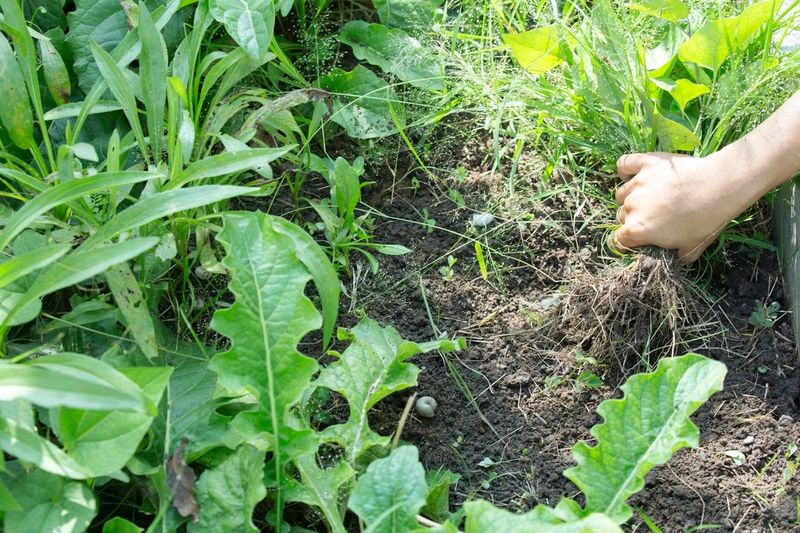
Pulling weeds feels like a losing battle, but those plants showing up in the same spots year after year are actually trying to tell you something. Recurring weed patches can point to real conditions in your yard – wet spots, compacted ground, stressed turf, or areas where the grass never really had a chance.
Learning to read those patterns will not fix your lawn overnight, but it can help you figure out where to look and what questions to ask before you spend money on lime, fertilizer, or herbicides.
Your Weed Patch Is a Clue, Not a Soil Test
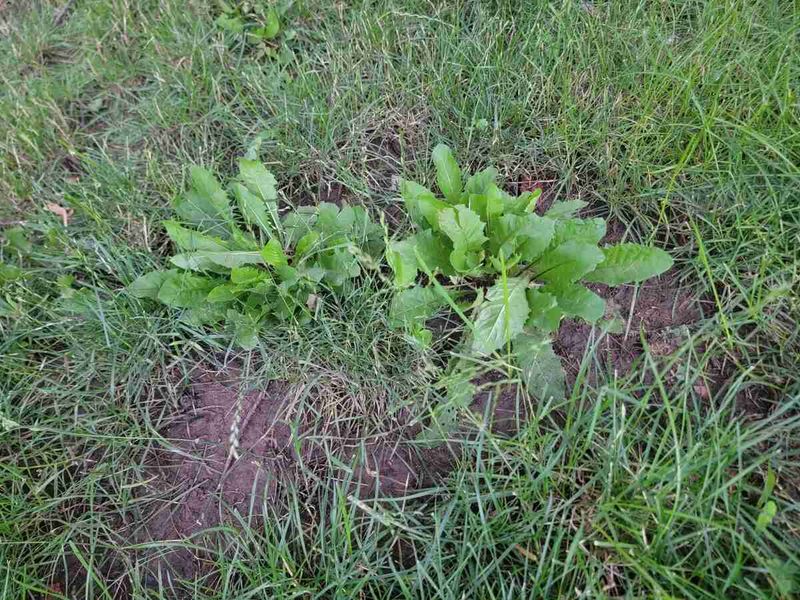
A yard full of weeds is frustrating, but the plants themselves are not the whole story. NC State Extension guidance on weeds makes clear that a species associated with one soil condition – red sorrel and acidic soil, for example – can also survive in very alkaline soil.
That single fact changes how you should read your yard: no weed is a precise instrument, and treating it like one leads to wasted effort and unnecessary products.
The more useful signal comes from patterns. A dense cluster of several species all appearing in the same low corner of the yard, or a broad band of weeds running along a path where people cut across the lawn, carries more weight than one dandelion growing near the mailbox.
University of Florida IFAS research on weeds as soil indicators puts it plainly: heavy infestations or multiple species pointing toward the same condition are more informative than one or two isolated plants.
Think of each weed patch as a prompt to investigate rather than a verdict. The investigation should cover more than soil chemistry.
Light levels, seasonal moisture, foot traffic, mowing height, turf density, prior disturbance, irrigation coverage, and seed availability all shape which plants show up where.
Removing the weed without understanding why it keeps returning is a short-term fix. Starting with observation – walking the yard after a rain, noting which areas dry out fastest, checking where the grass always looks thin – turns a chore into a diagnostic step.
The weeds are not the problem so much as a visible sign that something about the site favors them over the grass you want growing there.
Where the Weeds Gather Often Matters More Than Their Names
Before you look up any plant name, map the pattern. Walk the yard slowly and ask where the weeds concentrate – near a downspout, in a low area that holds water, under the shade of a tree, along the edge of the driveway, or in a strip where the family cuts across the lawn to reach the gate.
Location adds context that the plant name alone cannot provide.
A patch of weeds that consistently appears in a low spot after rain suggests something different from the same species scattered randomly across an otherwise healthy lawn. UF/IFAS guidance on indicator weeds emphasizes that the shape and density of an infestation, and its repeated relationship to a specific site feature, matter as much as species identity when trying to understand what is happening.
Shape is a useful clue on its own. A long, narrow band of weeds running along a compacted path looks very different from a circular patch centered under a dripping air-conditioning unit or a broad fade of thin grass beneath a canopy.
Those differences point toward different causes and different responses.
Iowa State University Extension research on spatial weed distribution notes that many annual weeds tolerate a wide range of soil conditions, which means the location of a patch often narrows down the likely cause more reliably than the plant species does. Keep every interpretation conditional – a weed near a downspout could reflect wet soil, shade, disturbed ground, or simply where seeds landed first.
The location is a reason to look more carefully, not a final answer.
Wet-Loving Weeds Ask You to Trace the Water
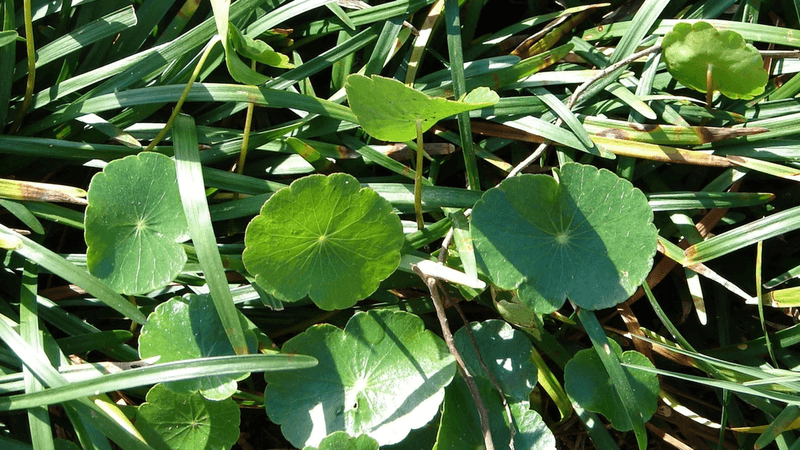
Moss spreading across a shaded corner, dollarweed filling a low area near a downspout, or rushes pushing up through thin turf are all reasons to follow the water. NC State Extension’s weed management guidance lists moss, liverwort, moneywort, pearlwort, rushes, sedges, and annual bluegrass among the species associated with moist or wet soil.
None of these plants proves that the ground is waterlogged, but a dense cluster of several of them in the same spot is a reasonable prompt to check drainage, irrigation coverage, downspout discharge, and low areas where water collects and lingers.
Practical checks matter here more than plant identification alone. Look for standing water after a moderate rain and note how long it stays.
Check whether an irrigation zone is overlapping and soaking one area more than others. Inspect whether a downspout is discharging directly onto a low patch of lawn.
Compacted soil can also trap moisture near the surface, so a wet-looking area may reflect both drainage and soil structure problems at once.
Seasonal wetness and shade often reinforce each other. A spot that stays damp under a large tree may struggle with turf partly because of moisture and partly because grass cannot compete well in deep shade.
Both factors together explain the weeds better than either one alone.
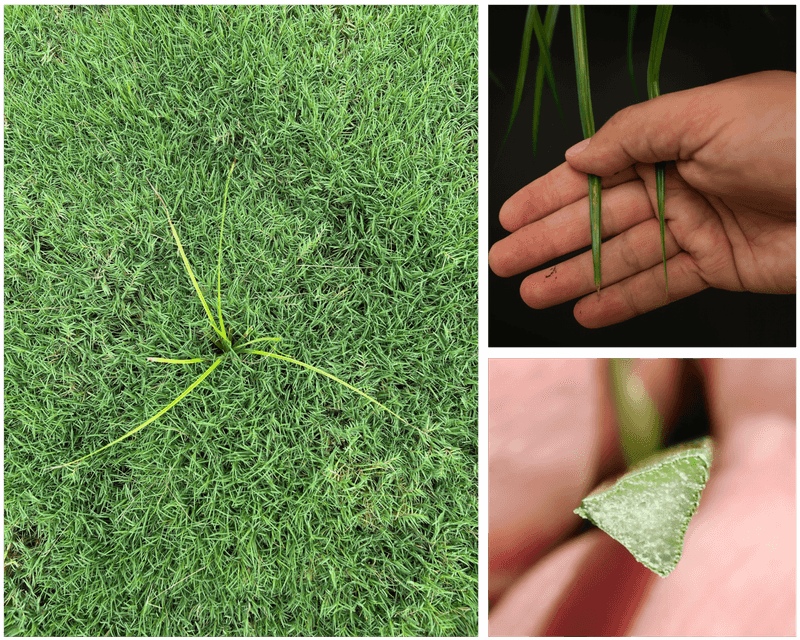
Nutsedge deserves a separate note because it is frequently misread. Yellow and purple nutsedge resemble grasses but have distinctly triangular stems – run your fingers along the stem and you will feel the three sides.
NC State’s guidance on controlling sedges is clear that nutsedges occur on nearly all soil types, even though wet conditions can favor them. Purple nutsedge is more common in North Carolina’s Coastal Plain than in the Piedmont or mountains.
Its presence should prompt a check of moisture and drainage, but it cannot by itself confirm waterlogged soil or any specific water-table depth.
Dry Patches and Bare Spots Point to Stressed Turf
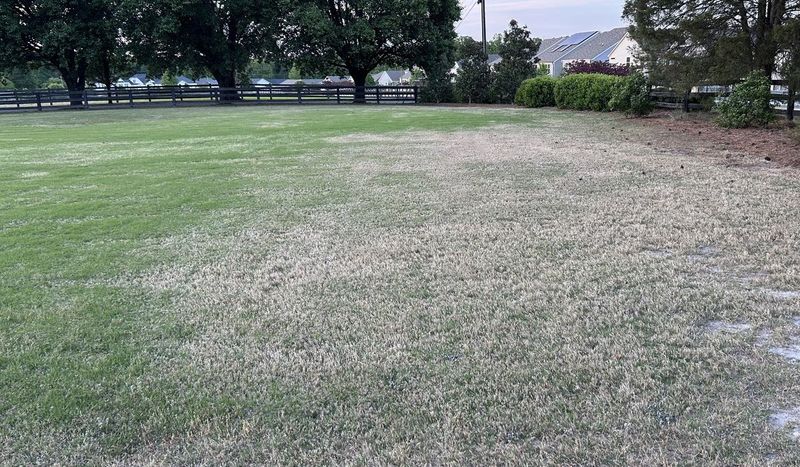
Prostrate spurge hugging the ground along a sidewalk edge, goosegrass filling a worn spot near the gate, or annual lespedeza spreading across a slope that never seems to hold moisture – these plants tend to show up where turf is already losing. NC State Extension identifies prostrate and spotted spurge, black medic, yellow woodsorrel, goosegrass, annual lespedeza, and prostrate knotweed among the species that can appear where grass faces drought stress, thin cover, or unfavorable mowing conditions.
Their presence is a signal to check whether something is weakening the turf before the weeds arrived.
Start with the basics. Is the soil genuinely dry, or does it only look that way on the surface?
Check whether irrigation is actually reaching the area – sprinkler patterns often leave gaps along edges, slopes, or spots blocked by shrubs. Mowing height matters too: cutting cool-season grasses too short during summer heat, or warm-season grasses below their recommended range, reduces root depth and opens the canopy for weeds to germinate.
Compaction often overlaps with dryness in these patches. Foot traffic, repeated mowing on the same route, parking on turf, or construction disturbance can press soil particles together until air and water movement slows to a crawl.
NC State’s lawn management guidance notes that North Carolina’s clay-heavy Piedmont soils are especially prone to compaction from rainfall and regular use, and that compacted ground weakens grass roots and creates exactly the kind of opening that stress-tolerant weeds exploit.
The key observation is that moisture stress, compaction, and thin turf rarely act alone. A slope that sheds irrigation water, gets mowed weekly on the same path, and sits in clay soil may show the same weedy patch for all three reasons at once.
Fixing only one of those conditions usually produces only partial improvement, which is why the investigation needs to consider all of them together before settling on a response.
Possible Fertility Clues Need Confirmation
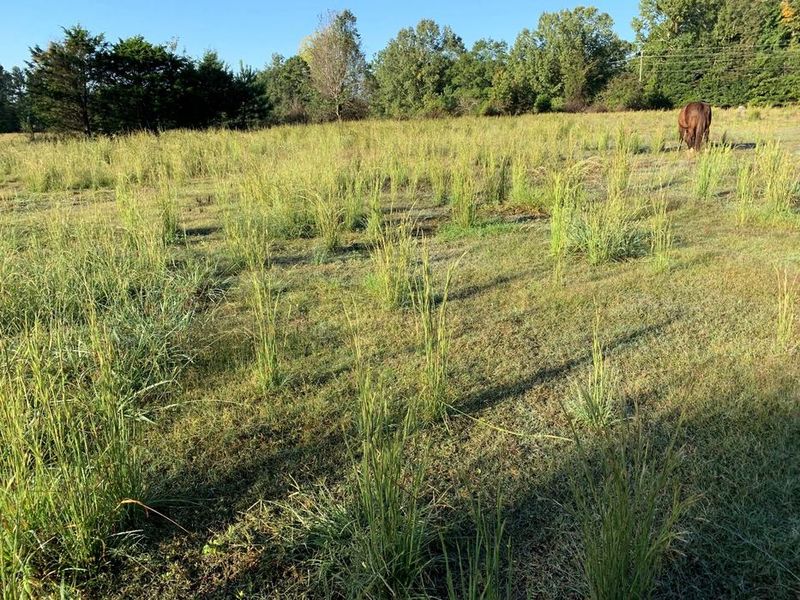
Broomsedge standing in a thin patch of turf, clover spreading where the grass looks pale, or crabgrass filling gaps that appeared after a drought – these plants sometimes show up in extension tables under possible low-fertility or low-nitrogen conditions. The connection is real enough to take seriously, but it is far from a reliable diagnosis.
NC State Extension’s weed chapter lists broomsedge, clovers, black medic, birdsfoot trefoil, hawkweed, moss, and crabgrass among plants associated with low fertility, while also making clear that turf competition, mowing, moisture, shade, and species-specific adaptation can produce the same weeds in soils with adequate nutrients.
Iowa State University Extension research on spatial weed distribution adds an important caution: many widely repeated species-to-nutrient associations are weakly supported or reflect conditions specific to one region, and annual weeds in particular can grow across a broad range of fertility levels. Clover in your yard may reflect low nitrogen available to the grass, or it may reflect mowing height, turf density, or simply that clover seed was present and found an opening.
The practical move is to stop inferring and start measuring. The NCDA&CS Agronomic Services homeowner soil test measures pH, plant-available nutrients, humic matter, and exchangeable acidity.
One thing it does not directly measure is nitrogen, because nitrogen moves through soil quickly and levels change with weather, organic matter breakdown, and recent fertilizer applications. If nitrogen supply is a concern, your county Cooperative Extension office can advise on appropriate timing and rate for your specific turf type.
Sampling correctly matters as much as testing. NCDA&CS sampling guidance recommends collecting 15 to 20 cores per sample and keeping areas with different soil types, fertilizer histories, or visible problems in separate samples.
Submit samples in official NCDA&CS soil boxes, available through your county Extension office. As of 2026 – and this fee schedule is time-sensitive – NCDA&CS homeowner tests are free for North Carolina samples from April 1 through November 30, 2026, and cost $5 per sample beginning December 1, 2026.
Once results arrive, NCDA&CS guidance on reading your soil report is explicit that lime should be applied only based on a current test recommendation, not applied every year as a routine or in response to a weed that is commonly linked to acidity.
Fix the Condition That Lets the Weeds Win
Once observation and testing have pointed toward a likely cause, the most durable response is to address that cause directly. Herbicides can remove individual plants, but they do not change the site condition that made those plants competitive in the first place.
NC State’s integrated lawn care guidance recommends correcting mowing, fertilization, watering, and site-selection problems as the foundation of weed management rather than depending on herbicides alone.
Dense, healthy turf is an important long-term part of that strategy. Grass that is properly mowed at the right height for its species, watered deeply but infrequently, and fertilized based on a soil test recommendation fills in the gaps that weeds need to establish.
Raising mowing height even slightly during summer stress periods can improve turf density and reduce germination opportunities for weeds at the soil surface. NC State’s lawn handbook covers specific height and timing recommendations for the warm-season and cool-season grasses common across the Piedmont, Coastal Plain, and mountain regions of North Carolina.
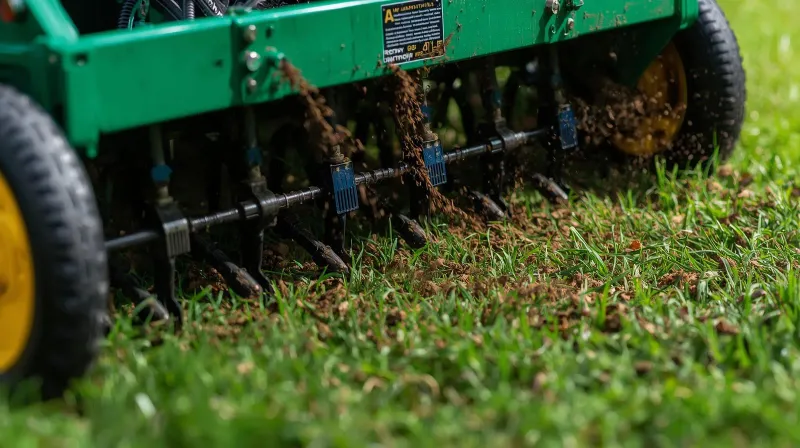
Core aeration is a useful tool when compaction is confirmed or strongly suspected – not a universal fix for every weed problem. Pulling plugs from established turf opens channels for air, water, and nutrients to reach the root zone and can meaningfully improve turf recovery in compacted areas.
Apply it where the evidence points to compaction rather than as a routine annual task with no diagnostic basis.
Some spots may not be worth fighting over. A heavily shaded area under a dense canopy, a chronically wet low spot, or a steep slope with persistent erosion may be telling you that turf is simply the wrong plant for that location.
Applying more inputs to force grass into an unsuitable site wastes money and usually fails. NCDA&CS notes that moisture, weeds, insects, diseases, and physical soil conditions can all limit plant performance independently of fertility, which is a reminder that site fit matters as much as soil chemistry.
Native groundcovers, mulched beds, or shade-tolerant alternatives often succeed where turf cannot, and they eliminate the cycle of repeated herbicide and fertilizer applications that never quite solve the problem.
Remove the Weed Without Creating a New Soil Problem
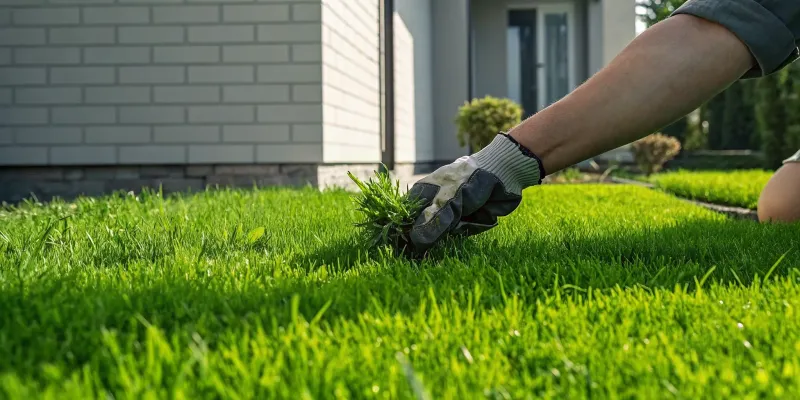
After addressing the site condition that favored the weeds, removing what is already there is a reasonable finishing step. For small infestations, hand-pulling or digging with a spade or trowel works well when you can get the roots out cleanly.
NC State’s organic lawn care guidance recommends this approach for small lawn infestations and notes that timing matters – pulling annual weeds before they set seed prevents the next generation from establishing.
Perennial weeds require more patience. Plants with rhizomes, deep taproots, or underground tubers can regrow from structures left behind after pulling.
NC State’s sedge management guidance specifically warns that pulling nutsedge can sometimes break apart or spread the underground tubers that allow it to return, making repeated mechanical removal less effective than it sounds. For persistent perennial weeds in larger areas, pulling alone is rarely a complete solution.
Herbicides are a legitimate option when used correctly, and correctly means starting with identification. NC State Extension is direct on this point: no herbicide kills every plant, and the product label determines legal use for a specific site and target.
Identify both the weed and the turfgrass species before selecting a product, and read the full label before mixing or applying anything.
Two shortcuts are worth ruling out entirely. Salt-and-vinegar mixtures marketed as natural weed controls can alter soil chemistry, injure desirable plants nearby, and harm beneficial soil organisms.
University of Minnesota Extension cautions that these mixtures lack the tested directions and safety information required of registered products. The other shortcut to skip is reaching for a single broad-spectrum herbicide and assuming it handles every weed in the yard.
Correct identification and label compliance are not optional steps – they are what connects the diagnostic work you did earlier to a treatment that actually fits the problem.
Read the Yard Again Before You Reach for the Sprayer
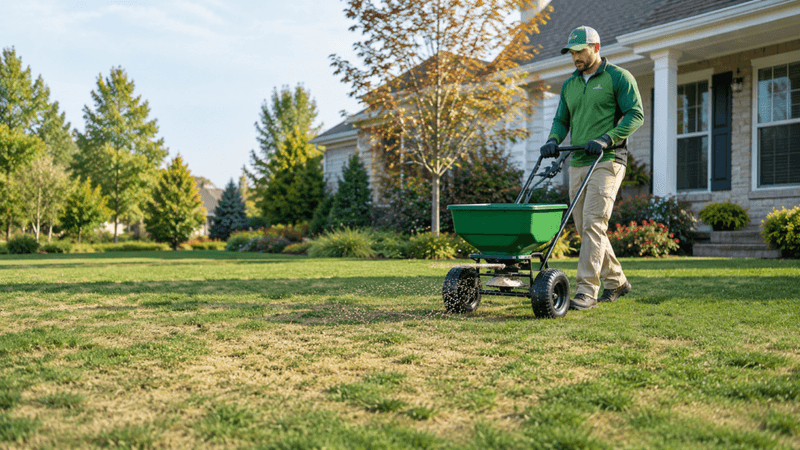
A simple routine covers most of what this article has described. When a weed patch comes back in the same spot for the second or third season, note where it sits in the yard and what surrounds it.
Check for moisture, shade, foot traffic, thin turf, and mowing patterns before reaching any conclusion about soil chemistry. If the pattern involves multiple species or a large area, that cluster deserves more investigation than a single stray plant ever would.
Verify pH and available nutrients with an NCDA&CS homeowner soil test when the site investigation suggests a fertility or pH issue might be contributing. Let the results guide any lime or fertilizer decision rather than letting the weeds make that call for you.
Where turf keeps losing to shade, wetness, slope, or traffic, consider whether a more suitable planting would serve the space better than another round of inputs. NC State’s lawn guidance supports choosing alternative landscape plants in areas where grass cannot compete effectively.
NC State Extension frames it well: the most useful thing a weed can do is prompt you to look more carefully at how your yard actually functions. Observation, test-based amendments, and site-appropriate planting are quieter than a sprayer, but they tend to produce yards that need less intervention year after year.
A recurring weed is not a verdict – it is an opening question worth answering.