
If you have spent any time cutting those stubborn shoots off your crape myrtle only to find them back a few weeks later, you are not alone. Across North Carolina yards, from the Piedmont to the Coastal Plain, homeowners repeat the same cycle of cutting and watching new growth return.
The real problem is not how hard you cut but what you are leaving behind underground. Understanding what actually drives those shoots gives you a practical path to real, lasting control.
Why cutting removes the symptom but not the source
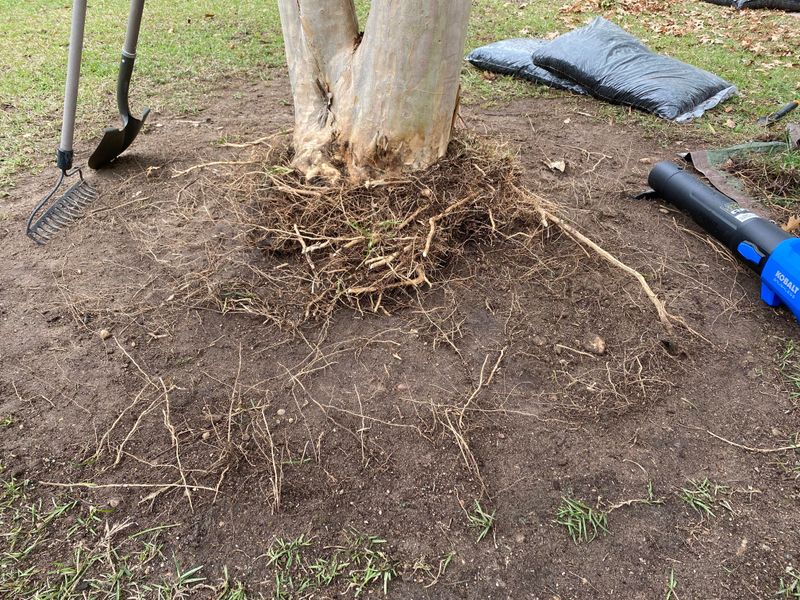
Hard cutting often does not permanently stop crape myrtle suckers because it targets only the visible shoot, not the living system beneath the soil. When you snip or saw off a sucker, the root system, stored energy reserves, and dormant buds sitting at or below the soil line stay completely intact and ready to grow again.
That is the core reason new shoots can reappear in the same spot within weeks, even after a thorough pruning session in your North Carolina yard.
Think of the sucker as the tip of an iceberg. The part you can see and cut is real, but what drives its regrowth sits underground.
Extension specialists confirm that the root system retains stored energy and can repeatedly push out new shoots after pruning or stump cutting. Removing the shoot without addressing the source is, by design, a management step rather than a permanent fix.
Crape myrtles are naturally inclined toward this kind of regeneration. University of Maryland Extension notes that the species is prone to suckering, particularly in plants trained to a tree form.
The NC State Extension plant profile for Lagerstroemia indica reinforces that basal and root shoots are a recognized part of the plant’s growth habit, not a sign that something has gone wrong in your landscape.
Repeated, prompt removal can gradually work down those underground reserves over several growth cycles. One cutting, or even one season of cutting, is unlikely to solve a well-established problem.
The practical takeaway is straightforward: keep cutting, but cut consistently and cut early, knowing that patience across multiple seasons is part of the plan rather than evidence that the approach is failing.
Tree-form crape myrtles naturally produce basal growth
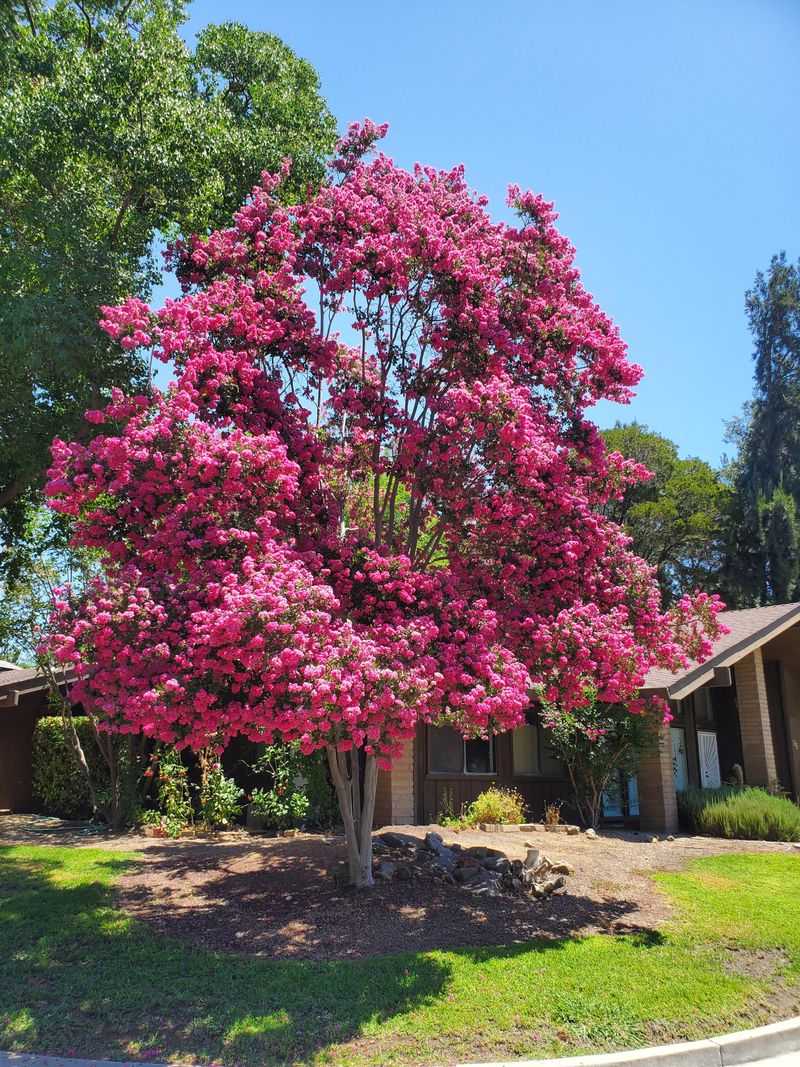
Crape myrtles growing wild or in naturalized settings typically form a spreading, multi-stemmed shrub. When a homeowner or landscaper trains one into a single-trunk or multi-trunk tree form, they are holding the plant to a shape that works against its natural tendency.
Every basal shoot that appears is essentially the plant trying to return to what it would do on its own, and that impulse does not disappear just because the landscape design calls for a clean trunk.
NC State’s plant profile for crape myrtle identifies the species as naturally shrubby and capable of producing multiple stems, which means suppressing basal growth in a tree-form specimen is an ongoing landscape commitment rather than a one-time task. UGA Extension’s crape myrtle pruning guidance echoes this, noting that the species naturally produces sprouts from the base.
Suckering by itself does not mean the tree is struggling. A healthy, correctly planted crape myrtle can still push out basal shoots regularly because that growth habit is built into the species.
That said, unusually heavy sucker production can sometimes point to added stress, including winter damage, root injury, drought, deep planting, or severe pruning history. Seeing a few shoots is normal; seeing an overwhelming flush of new growth from the base each season may be worth investigating further.
The University of Maryland Extension resource on crape myrtle problems and UGA’s ornamental pruning bulletin both frame basal shoot removal as a routine maintenance task for tree-form specimens. Accepting that reality, rather than expecting a permanent fix from a single pruning session, puts homeowners in a much better position to manage the plant effectively over the long term.
Identify the shoot before you remove it
Before reaching for the pruners, spend a moment figuring out exactly where the shoot is coming from. That single step changes both the removal method and the realistic outcome.
Three types of unwanted shoots appear on crape myrtles, and they are not all the same problem.
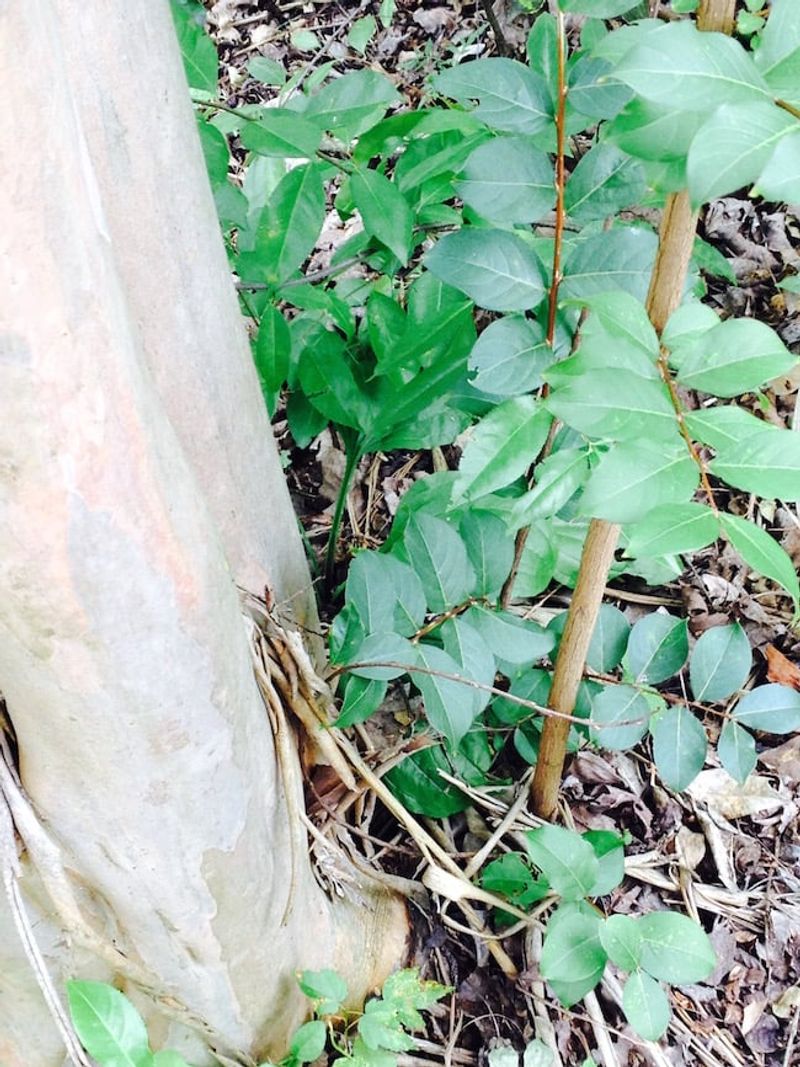
Basal suckers grow from the lower trunk or the root flare, the spot where the trunk meets the soil. These are the most common complaint on tree-form specimens and are best removed by cutting as close to their point of attachment as practical.
Leaving a stub behind tends to encourage more buds to activate at that spot, so a clean, flush cut is worth the extra effort. NC State Extension’s Cumberland County pruning guidance advises removing vigorous sprouts completely rather than leaving stubs.
Root suckers emerge from lateral roots that extend away from the trunk, sometimes appearing several feet from the base of the tree. Mowing them at ground level may look tidy, but the underground source stays alive and pushes new growth again.
Utah State University Extension’s pruning guidance notes that root suckers originate from below ground and require removal at the root to be most effective. When feasible, digging a few inches to expose and remove the shoot at its base gives better results than a surface cut alone.
Water sprouts are a third category, and they are easy to confuse with the others. These are fast-growing, upright shoots that arise from branches or old pruning wounds higher up on the tree, not from the soil or root system.
University of Maryland Extension distinguishes water sprouts from basal and root suckers based on their origin point. Knowing which type you are looking at determines whether close cutting, careful pulling, or a bit of digging makes the most practical sense.
Why hard cutting can restart the cycle
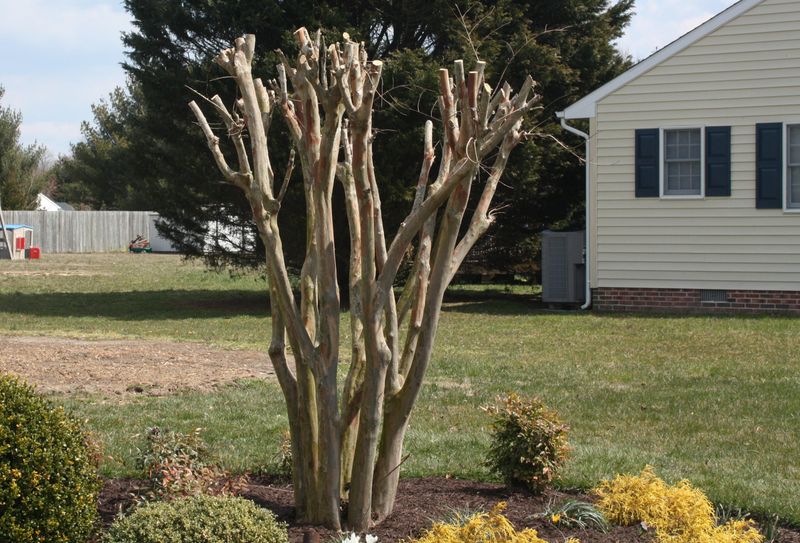
Cutting a sucker removes stems and leaves, but the living tissue below the soil line stays in place. Dormant buds along the root system and at the root flare can respond to that removal by activating, sometimes producing several new shoots where only one existed before.
That pattern can make it feel as though cutting is making the problem worse, but what is actually happening is that the root system is drawing on stored reserves to regenerate, and multiple buds may respond at once.
It would be an overstatement to say that every cut directly doubles the number of suckers. What the evidence does support is that the root system remains capable of regeneration as long as it holds stored energy, and that repeated regrowth can occur across multiple seasons even with consistent removal efforts.
The Ask Extension resource on crape myrtle suckering notes that the root system can continue activating dormant buds after pruning, which explains why several new shoots may appear following a single cutting session.
Here is a detail that matters for your removal timing: shoots that are allowed to leaf out and photosynthesize can send energy back into the root system, replenishing the very reserves that fuel the next round of growth. Extension specialists explain that prompt removal, before shoots have a chance to develop full leaves and manufacture food for the roots, is the approach most likely to gradually draw down those underground reserves over time.
Patience is genuinely part of the strategy here. Repeated, timely removal across several growth cycles may reduce regrowth progressively as root reserves decline.
One season of cutting, even aggressive cutting, is unlikely to exhaust a well-established root system. The University of Maryland Extension frames repeated suckering as a natural consequence of the living root system, not as evidence that a removal approach is fundamentally flawed.
Use a consistent routine to reduce unwanted shoots
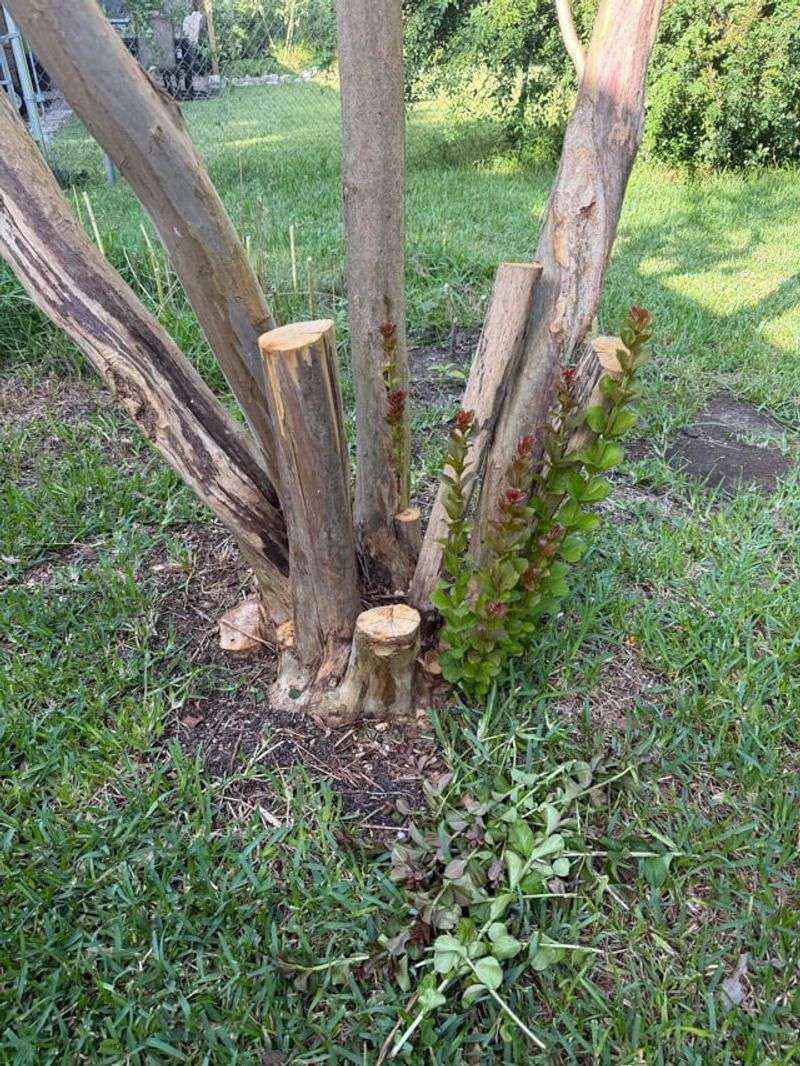
For homeowners who want to keep their crape myrtle and simply manage the shoots it produces, a consistent removal routine is the most practical tool available. The timing of each removal session matters more than most people realize.
Young, tender shoots pulled or cut before they develop a full set of leaves have not yet had the chance to photosynthesize and return energy to the root system, so removing them early gives you the best chance of gradually reducing regrowth over time.
NC State Extension advises removing vigorous sprouts completely, taking each one as close to its point of origin as practical rather than leaving a stub. A stub left behind gives dormant buds nearby a place to reactivate, which can result in more shoots than you started with.
Whether you cut or pull, the goal is a clean removal at the attachment point, not a surface trim.
Root suckers that appear well away from the trunk deserve a slightly different approach. Mowing them off at ground level is convenient, but it leaves the underground connection intact and the shoot simply regrows.
Extension guidance on crape myrtle sucker management suggests that digging a few inches to expose and remove the shoot at its base is more effective when the location allows it. Use caution when digging around established trees: cutting through a major lateral root to reach a sucker can cause more harm than the sucker itself.
UGA Extension’s ornamental pruning bulletin and Ask Extension resources both reinforce that one removal session is rarely enough for an established plant. Plan to check for new shoots every few weeks during the growing season, remove them promptly, and repeat the process across several growing cycles.
Progress may be gradual, but consistent early removal is the approach most likely to reduce the problem over time without harming the parent tree.
Reduce stress without blaming every sucker on the site
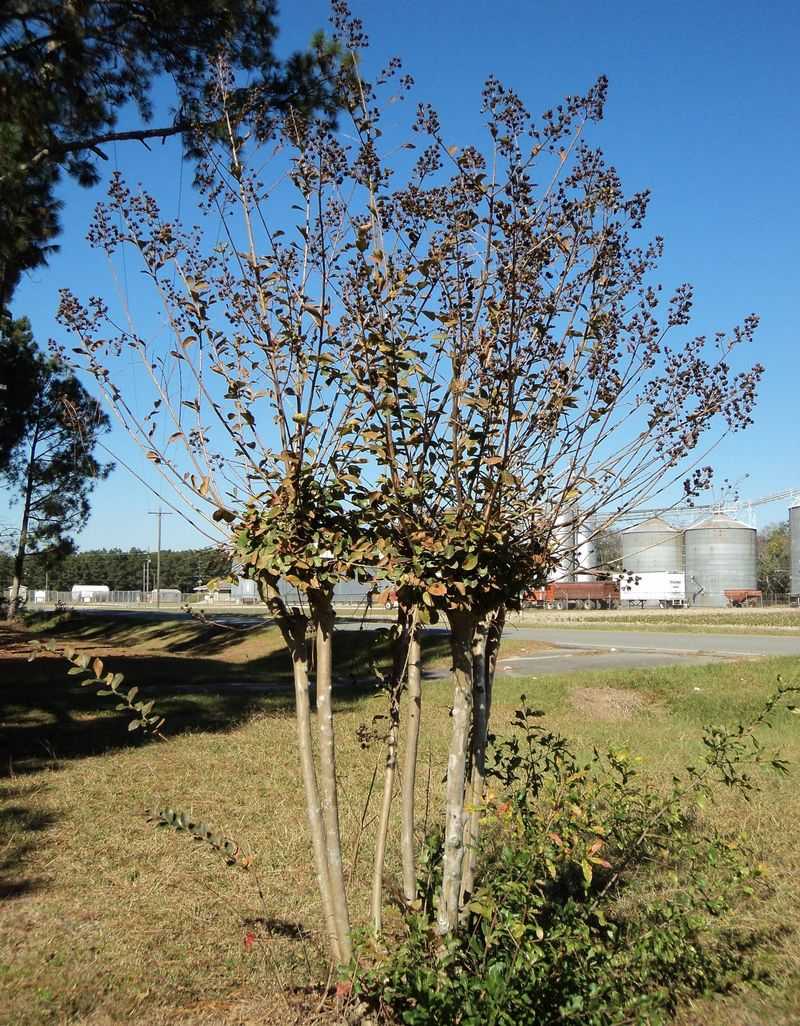
Suckering is a normal growth habit for crape myrtle, but certain site and pruning conditions can push production higher than usual. Before assuming the plant is simply unmanageable, spend a few minutes checking the planting site for factors that may be adding stress on top of an already active growth habit.
Start at the base of the tree. The root flare, the visible widening where the trunk meets the soil, should be above ground and clearly visible.
If soil or mulch has crept up against the lower trunk over the years, the tree may be stressed in ways that can amplify suckering. Ask Extension guidance on mulching practices and University of Maryland Extension’s resource on trees planted too deeply both identify buried root flares and excessive mulch as stressors that can affect tree health and growth patterns.
Mulch is generally recommended at about 2 to 3 inches deep and kept several inches away from the trunk, as outlined in UMD Extension’s tree and shrub planting guidance.
Drought, root injury from digging or construction, and winter damage are other possible contributors to heavier-than-normal sucker production. In North Carolina’s mountain counties especially, a hard winter can kill back above-ground growth, and the plant responds by pushing vigorous shoots from the base and roots.
That flush of regrowth after cold injury is a survival response, not a pruning failure.
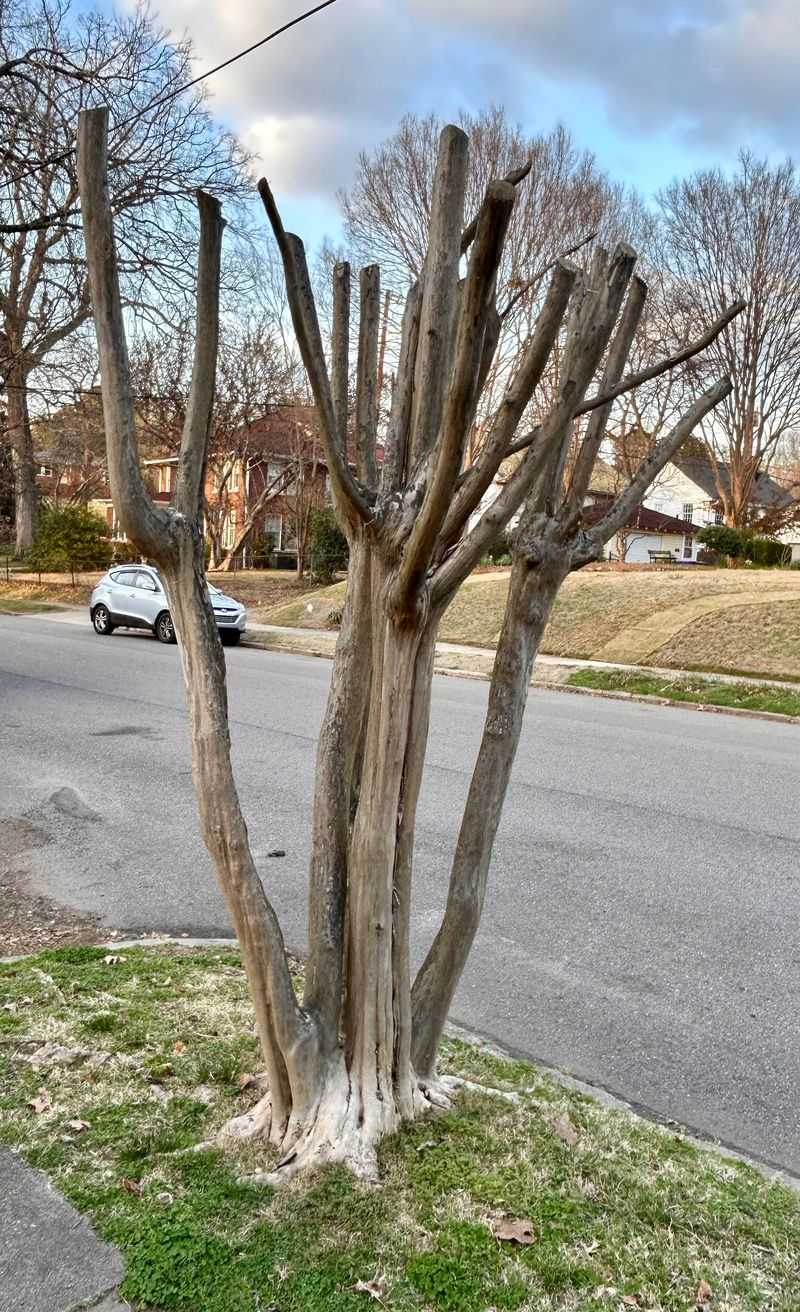
Severe annual pruning, sometimes called crape murder, can also stimulate repeated vigorous regrowth. NC State Extension and the NC State Before the Cut resource both explain that severe heading cuts are unnecessary for size control and can harm the tree’s long-term form.
Henderson County Extension’s crape myrtle pruning guidance and the NC State plant profile both recommend selecting a cultivar that fits the available space rather than relying on repeated hard cuts to manage a tree that has outgrown its spot.
Treat chemical controls as limited, label-dependent options

Chemical shortcuts can be tempting when mechanical removal feels like a never-ending task, but using the wrong product in the wrong way can injure the crape myrtle you are trying to protect, damage nearby desirable plants, and create legal liability. A few clear boundaries are worth knowing before reaching for any chemical product.
Glyphosate, the active ingredient in many broad-spectrum herbicides, is nonselective. The National Pesticide Information Center’s glyphosate fact sheet explains that the product kills or injures most plants it contacts.
Spraying it around a crape myrtle to knock back suckers risks damaging the parent tree through root uptake or spray drift, and it risks injuring other desirable plants in the area. That approach is not recommended.
Cut-stump herbicide treatments are a separate category, but they carry their own risks near living trees. EPA-registered herbicide labels warn that treated stumps or sprouts may share roots with untreated desirable trees, creating a pathway for herbicide injury to travel.
Any chemical treatment must follow the current label for the exact product, plant type, site, application method, rate, and timing. The EPA pesticide label system and the EPA pesticide product label database are the authoritative sources for confirming what a specific product is legally registered to do.
Some growth regulator products, such as those containing naphthaleneacetic acid (NAA), are described as sucker inhibitors or suppressants for use after pruning. UGA Extension’s crape myrtle pruning resource and integrated pest management references describe these products as possible suppressants, not guaranteed permanent solutions.
Product availability, permitted uses, and label requirements vary, so always read the current label before purchasing or applying any product.
Remove the viable stump or roots when regrowth must end
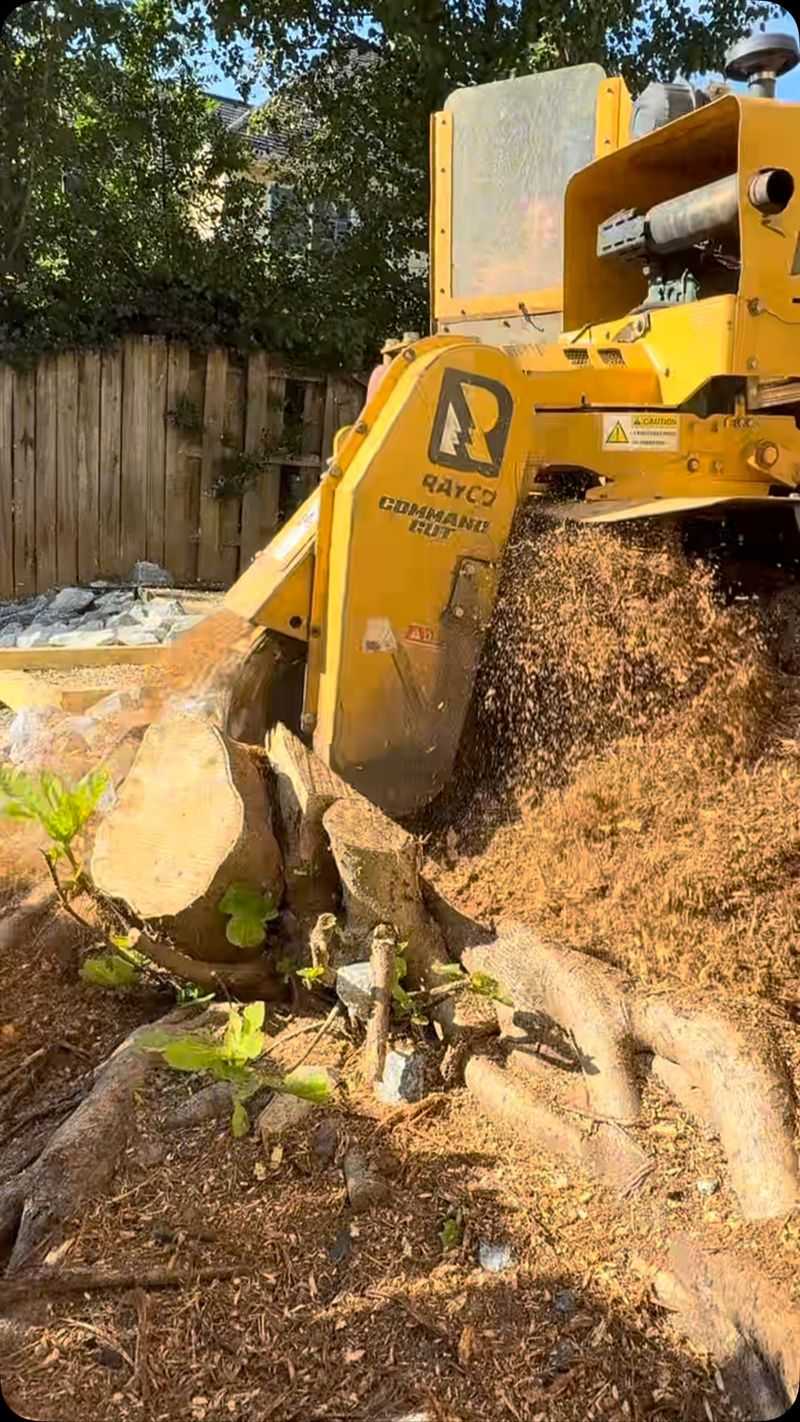
Sometimes the original crape myrtle has already been cut down, and the homeowner simply wants the new shoots to stop. If growth keeps appearing from the old site after the tree is gone, the most likely explanation is that a viable stump, connected root tissue, or both remain alive underground and continue producing new shoots.
That is worth confirming before taking action, because shoots appearing some distance away could also come from a separate connected root system rather than the stump itself.
Once the source is identified, the most definitive mechanical approach is stump grinding or physical removal of the remaining viable stump and root tissue. Ask Extension guidance on stump and regrowth management identifies stump grinding or removal as the most reliable way to stop continued shoot production from a removed tree.
Grinding the stump below the soil surface eliminates the primary regeneration point, though lateral roots extending away from the stump may still carry enough stored energy to push out a few additional shoots for a season or two.
Repeated cutting of shoots from a removed tree is not a reliable path to permanent control because it does not address the living tissue driving regrowth. Each time a new shoot leafs out, it can replenish root reserves and extend the cycle.
Grinding or removing the stump interrupts that cycle at its source rather than managing only the visible result.
Choose ongoing management or a complete reset
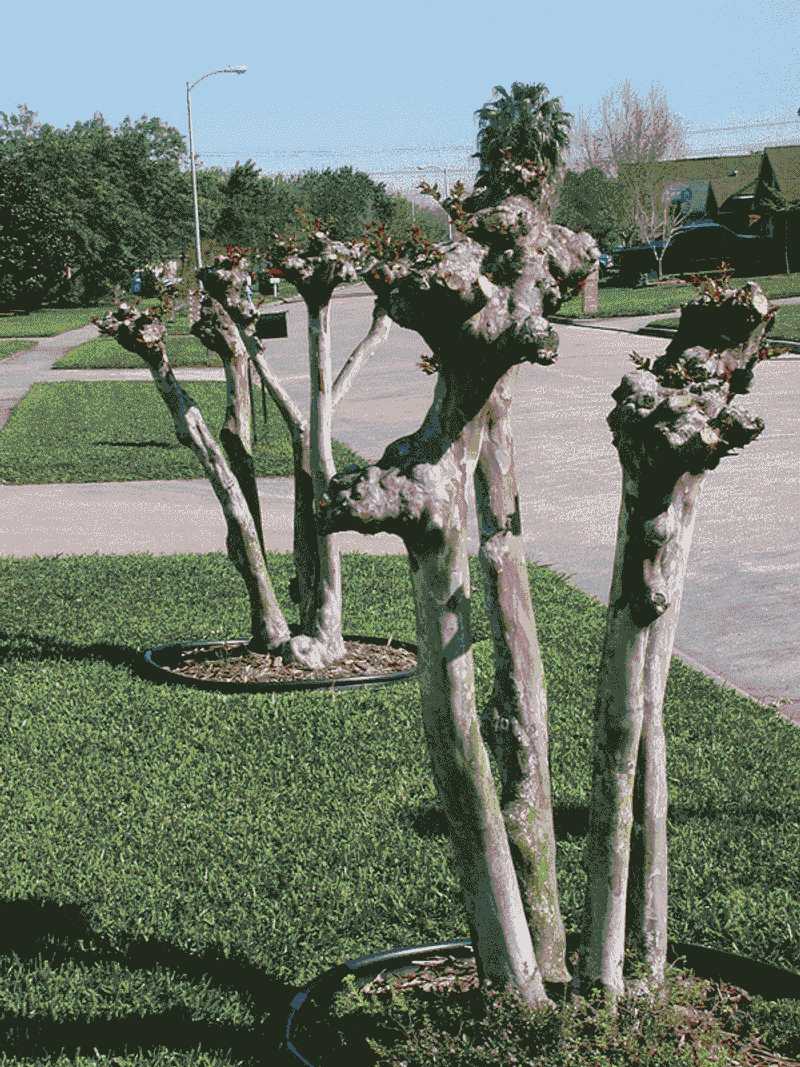
Two clear paths exist for homeowners dealing with persistent crape myrtle suckers. If the tree is worth keeping, the plan is periodic sucker removal carried out early and consistently, combined with correcting any site or pruning stresses that may be amplifying the problem.
That is a maintenance commitment, not a one-time fix, and it works best when expectations are set accordingly.
If keeping the plant is less important than stopping the growth entirely, removing the viable stump and root system gives the most reliable mechanical outcome. Extension specialists and the NC State crape myrtle profile both frame suckering as a natural growth habit tied to living tissue, and University of Maryland Extension confirms that the species is inherently prone to producing basal and root shoots.
Persistent regrowth is not evidence that the homeowner has failed to cut hard enough. It is evidence that living tissue remains, and the plant is doing exactly what crape myrtles do.