
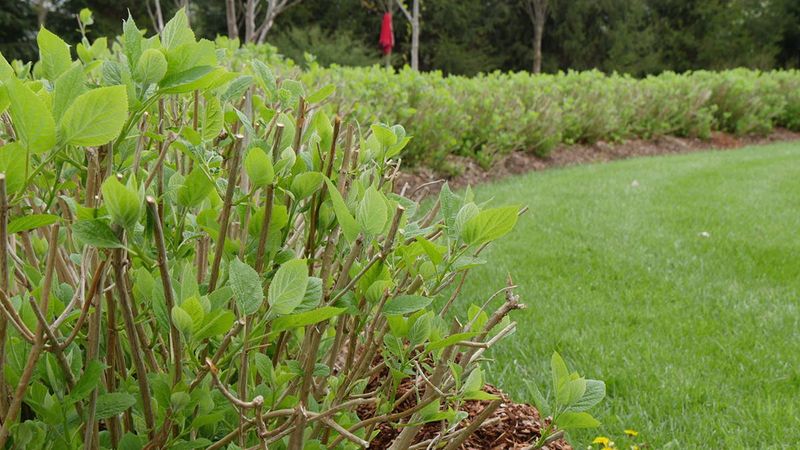
Few garden frustrations match walking out to a hydrangea full of healthy green leaves and finding not a single bloom. Southern gardeners especially feel this sting, since warm, unpredictable climates add extra variables that can quietly steal an entire flowering season.
The good news is that the plant itself offers clues worth reading before you reach for the pruners or a bag of fertilizer. Understanding those clues – starting with where your hydrangea forms its flower buds – gives you a real path back to blooms.
Flowering wood offers the first useful clue
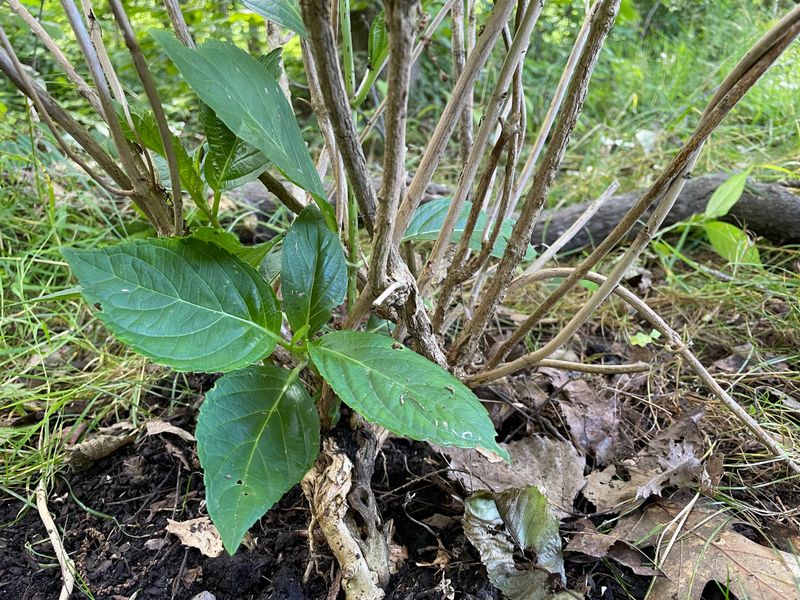
A hydrangea packed with leaves but empty of flowers is not necessarily a sick plant. The most useful starting clue is not a leaf color, a wilting pattern, or a stem texture – it is the type of wood on which that particular hydrangea forms its flower buds.
Determining whether buds develop on last year’s stems, on current-season growth, or on both narrows the list of likely causes faster than any visual symptom alone, according to Penn State Extension’s guidance on nonblooming hydrangeas.
Old-wood bloomers carry next season’s buds on stems that survived from the previous year. If those stems were cut, frozen, or browsed before the buds opened, the plant can look perfectly healthy and still produce no flowers.
New-wood bloomers set buds on fresh growth each spring, so the same pruning timing that harms a bigleaf hydrangea leaves a panicle hydrangea unaffected.
Flowering wood is a strong starting point, but it does not close the case on its own. Light levels, soil moisture, excess nitrogen, transplant stress, and pest pressure can all reduce flowering even when the right stems survive intact.
Read the wood type first, then work through the other variables before settling on a cause.
Identify the hydrangea before touching the pruners
Grabbing the pruners without knowing which hydrangea you have is one of the most common reasons a plant goes flowerless the following year. The four types most common in Southern landscapes each follow a different schedule, and a rule that helps one can hurt another.
Penn State Extension’s pruning guide by species lays out those differences clearly.
Bigleaf hydrangeas (Hydrangea macrophylla) are the classic mopheads and lacecaps with large rounded or flat-topped flower clusters. They generally bloom on old wood, meaning buds formed on last year’s stems.
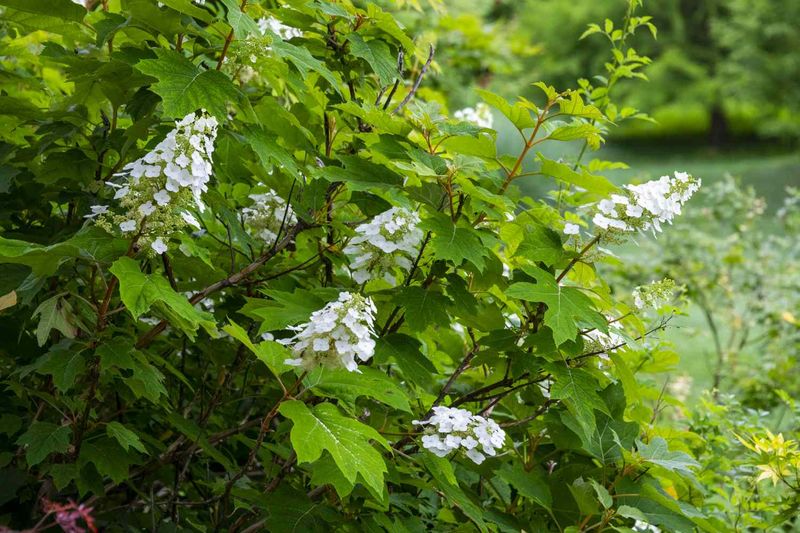
Oakleaf hydrangeas (H. quercifolia) have distinctive lobed leaves resembling oak foliage and cone-shaped white flowers; they also bloom on old wood. Both types need careful pruning timing to protect next season’s buds, as UGA Cooperative Extension’s bigleaf hydrangea guide explains.
Smooth hydrangeas (H. arborescens, including the well-known ‘Annabelle’) and panicle hydrangeas (H. paniculata, including ‘Limelight’) bloom on new wood formed each season. Mississippi State University Extension confirms that these types can tolerate late-winter pruning without sacrificing their flower buds.
Some newer bigleaf cultivars, such as those in the Endless Summer series, are bred to bloom on both old and new wood, making them more forgiving – though Virginia Cooperative Extension’s bigleaf hydrangea fact sheet cautions that severe damage or hard pruning can still reduce their flower count. When the cultivar label is unavailable, hold off on pruning until you can confirm the type.
Old wood may have lost the season’s flower buds
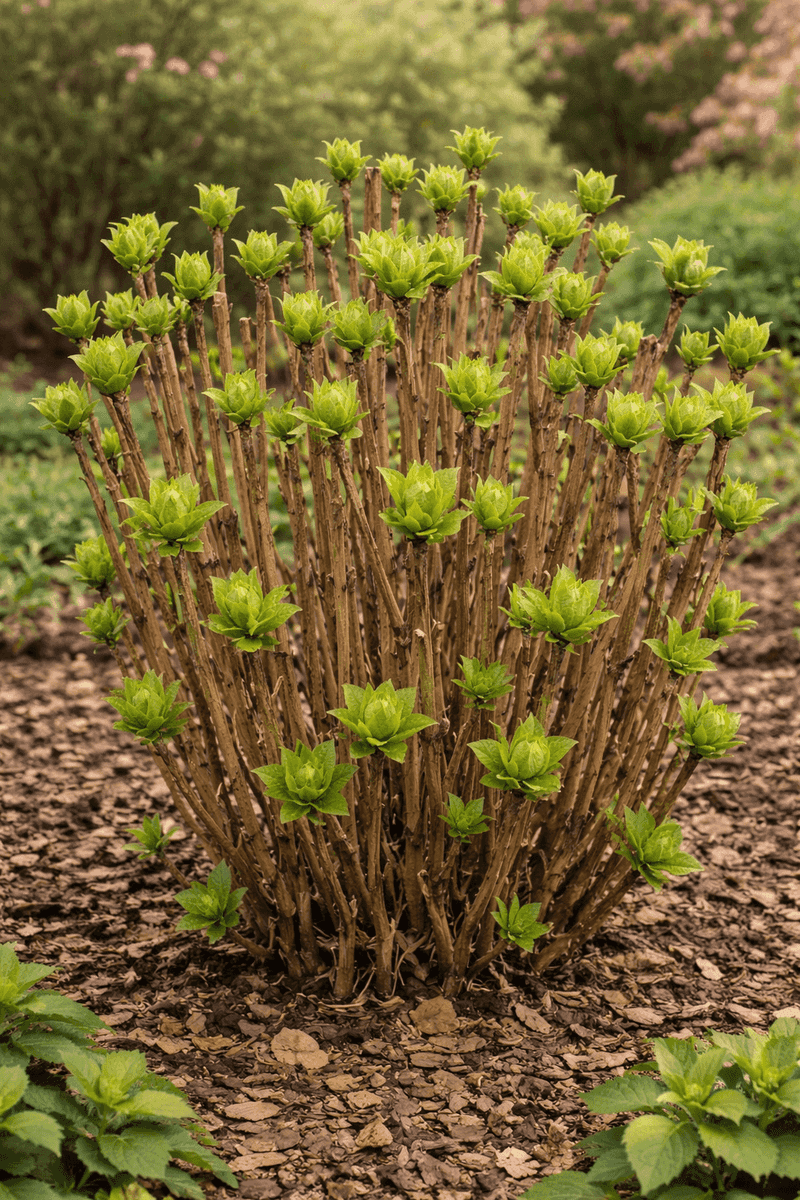
Pruning at the wrong time is the most straightforward way to lose a season of bigleaf or oakleaf hydrangea blooms, but it is far from the only way. Fall, winter, or early-spring cutting on these old-wood types removes the very stems that carry next year’s flower buds.
Many gardeners tidy up their shrubs in late fall without realizing they have just eliminated the following season’s flowers.
Winter injury and late freezes create the same result through a different mechanism. A cold snap can kill the flower buds inside stems that otherwise look fine and leaf out normally in spring.
Penn State Extension notes that a healthy-looking plant can produce little or no bloom after its old-wood buds were killed by a damaging winter or spring freeze – even when the foliage recovers completely. A stem being alive does not confirm that its flower buds survived.
Deer and rabbits add another layer. Deer can strip leaves, buds, and small branches from old-wood stems, while rabbits often leave clean, angled cuts lower on the plant.
Either type of browsing can remove flowering wood just as effectively as a pruning cut, according to University of Minnesota Extension guidance on deer and rabbit pressure. If the current season’s buds were already removed by pruning, freezing, or browsing, the plant is unlikely to recover flowers this year.
The practical goal becomes protecting new growth so it can mature into next season’s flowering wood.
Match pruning timing to the flowering wood
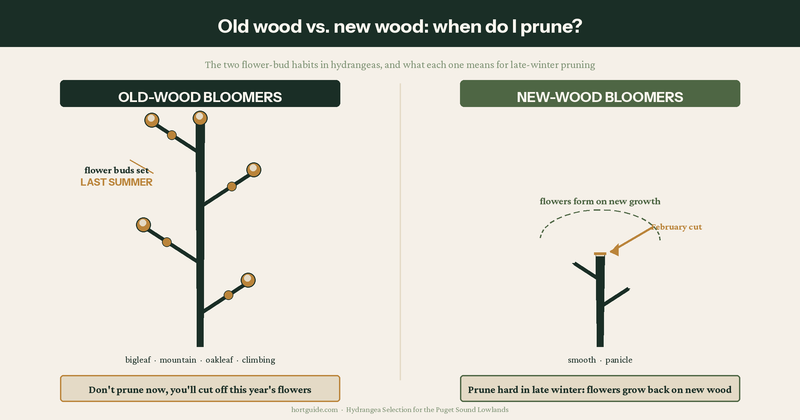
Once you know which hydrangea you have, pruning timing becomes a straightforward decision rather than a guessing game. For bigleaf hydrangeas, the window that protects next year’s flowers is right after the current blooms fade – generally by late summer – and before the plant begins forming new buds on those stems.
Penn State Extension’s species-specific pruning guide confirms that routine fall, winter, and early-spring cutting should be avoided on bigleaf types unless you are removing clearly dead or damaged wood.
Oakleaf hydrangeas follow a similar logic: prune after flowering if pruning is needed at all, as cutting earlier risks removing buds that were already set for the following season. Mississippi State University Extension reinforces this timing for Southern gardeners who grow oakleaf types in warm-climate conditions.
Smooth and panicle hydrangeas operate on an entirely different schedule. Because they bloom on current-season growth, late-winter or early-spring pruning generally does not sacrifice their flowers.
University of Minnesota Extension’s pruning guide notes that smooth hydrangeas can tolerate a substantial cutback once established, and panicle hydrangeas are commonly shortened before spring growth begins. A useful clarification from Penn State’s master gardener pruning resource: “old wood” does not mean every stem must be left untouched permanently.
Selective removal of dead, damaged, or crossing branches is still appropriate on old-wood types – the key is keeping the timing right and limiting how much healthy stem is removed before buds have a chance to open.
Check light, moisture, and nitrogen before adding anything
Even when stems are alive and pruning timing was correct, growing conditions can quietly prevent flowering. Bigleaf hydrangeas tend to perform best with morning sun and afternoon shade, particularly in the heat of Southern summers.
Excessive shade can reduce the energy available for bud formation, while hot, dry, full-sun exposure can stress the plant and push it toward survival mode rather than reproduction. UGA Cooperative Extension’s bigleaf hydrangea guide recommends evenly moist, well-drained soil and notes that drought or repeated wilting can reduce performance even in otherwise healthy plants.
Moisture management matters most during bud formation and peak summer heat. Deep watering that wets the entire root zone is more effective than frequent shallow watering, and a layer of mulch helps the soil hold moisture between rain events.
Waterlogged soil creates a different problem – persistently wet roots can lead to root rot and reduced flowering, so good drainage is as important as regular irrigation. Florida gardeners in particular should factor in site drainage and regional rainfall patterns, since UF/IFAS landscaping guidance for Florida shade conditions notes that site selection, irrigation, and drainage all affect how well hydrangeas perform across different parts of the state.
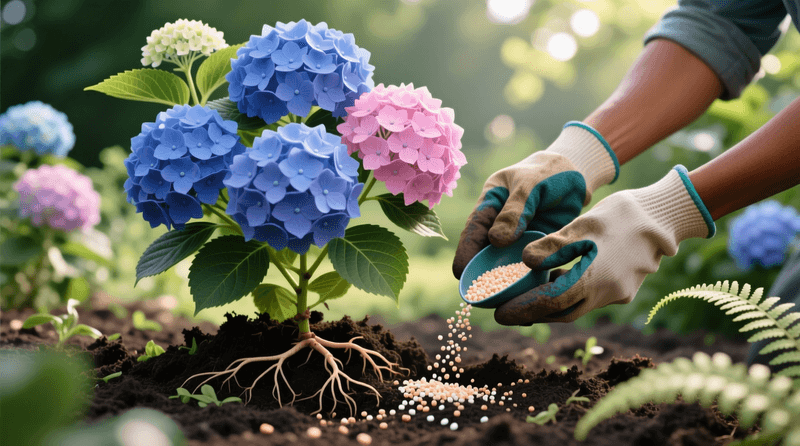
Nitrogen is worth examining before you reach for fertilizer. Excess nitrogen pushes a plant toward leafy green growth at the expense of flowers, so a lush but bloomless hydrangea may actually be over-fertilized rather than starved.
Adding more fertilizer without knowing your soil’s current nutrient levels can make the problem worse. Run a soil test first, then fertilize based on actual need rather than assumption.
Inspect for browsing and freeze damage
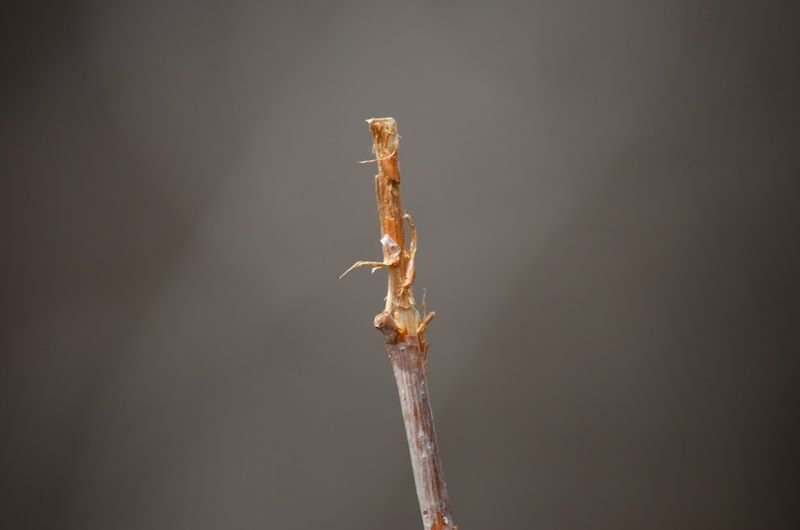
Browsing damage and freeze injury can look similar to a pruning mistake from a distance, but each leaves different evidence on the plant. Deer tend to tear rather than cut, leaving ragged, shredded tips on upper branches where they can reach.
They can strip buds, leaves, and small branches in a single visit, effectively removing an old-wood hydrangea’s entire season of flowers overnight. Rabbits work lower on the plant and leave a telltale clean, angled cut that resembles a pruning shear.
University of Minnesota Extension’s deer and rabbit guide recommends physical barriers as more dependable protection than repellents or the assumption that any plant is off-limits to wildlife.
Freeze damage is subtler. A late frost in early spring can kill flower buds on old-wood stems even when those stems green up and leaf out normally over the following weeks.
The plant looks fine, but the buds inside the stem were already killed by the cold. Penn State Extension and UMN Extension’s deer damage management resource both point to the importance of checking stem condition carefully rather than judging bud health by foliage alone.
A useful inspection sequence: check stem tips for ragged or angled cuts that suggest browsing, note whether any late freezes occurred after buds began swelling, and review your pruning history from the previous fall and winter. All three factors together give a clearer picture than any one clue alone.
Do not confuse flower color with flower production
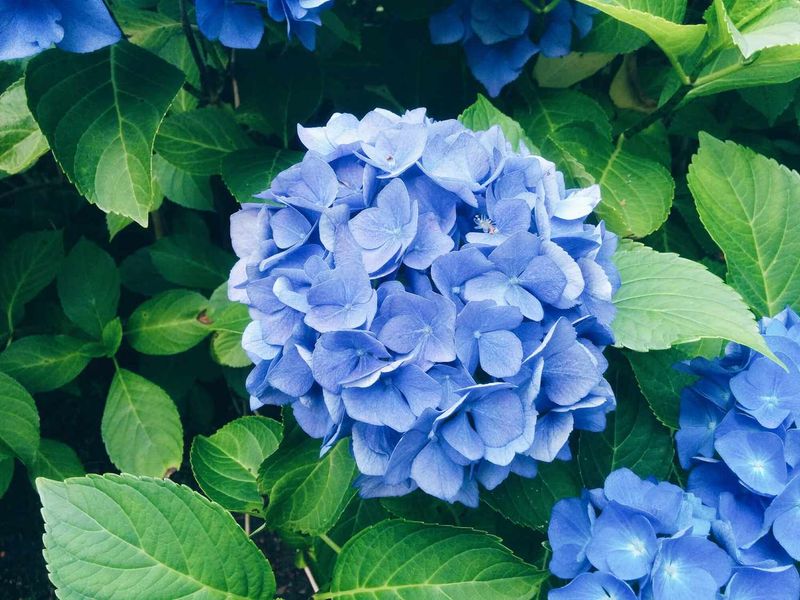
Soil pH is one of the most misunderstood topics in hydrangea care, partly because it produces a visible and dramatic result – blue flowers can shift toward pink or vice versa in certain bigleaf cultivars – which makes it tempting to treat pH as a general bloom remedy. The reality is narrower: pH and aluminum availability affect flower color in some bigleaf hydrangeas, but they do not cause missing buds to reappear.
White cultivars generally do not change color with soil chemistry, and panicle hydrangeas are not managed like color-changing bigleaf types at all, as UGA Cooperative Extension makes clear.
Several popular home remedies circulate online as bloom cures, and none of them hold up. University of Minnesota Extension’s review of common soil health remedies finds that used coffee grounds have not been shown to consistently lower soil pH, and that applying Epsom salts without a documented magnesium deficiency can interfere with calcium uptake and cause nutrient imbalances.
Aluminum sulfate applied without testing can damage roots. Extra fertilizer, as covered earlier, risks producing more foliage at the expense of flowers.
The safer path is a soil test before adding anything. University of Minnesota Extension’s soil health guidance confirms that soil testing is the reliable way to determine whether nutrients or pH adjustments are actually needed.
Treating the right problem with the right amendment, in the right amount, protects the plant from unnecessary stress while addressing a real deficiency if one exists.
Protect healthy growth for the next bloom cycle
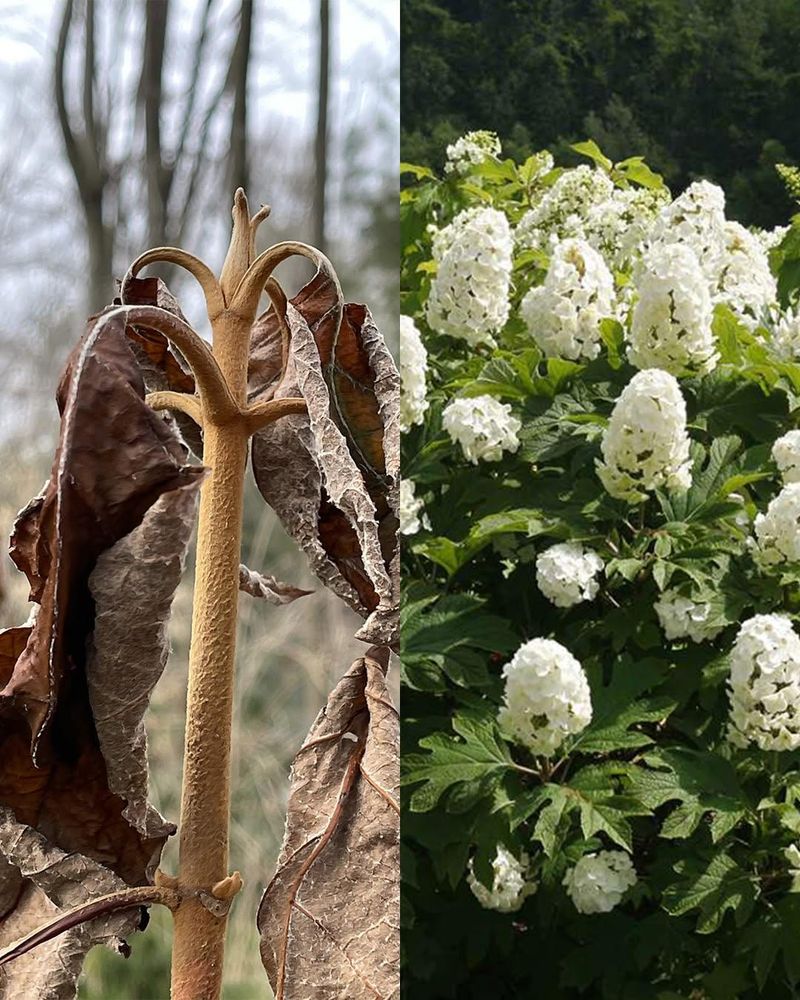
Recovery from a lost bloom season is less about dramatic intervention and more about removing the obstacles that caused the problem in the first place. Start by confirming the cultivar so you know whether it blooms on old wood, new wood, or both.
Then stop any pruning that falls outside the safe window for that type – for old-wood bloomers, that means waiting until after flowering to do any cutting beyond clearly dead or damaged wood. Penn State Extension and UGA Cooperative Extension both emphasize that preserving healthy new growth is the most practical step a gardener can take after old-wood buds have already been lost.
Improve light and moisture where the site allows, hold off on fertilizer unless a soil test shows a real deficiency, and put physical barriers in place if deer or rabbits have been active. New-wood types such as smooth and panicle hydrangeas can follow their normal late-winter pruning schedule without concern.
Newly transplanted hydrangeas and florist-sold plants may need an additional season to establish before blooming reliably outdoors, as Penn State Extension notes.
The stems that survive this season are the ones that carry next year’s flowers. Keeping them intact, healthy, and protected is the clearest signal you can send back to the plant.