
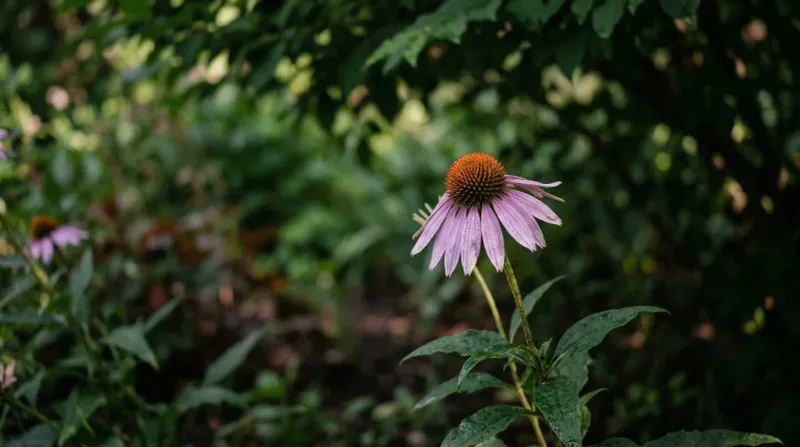
Purple coneflower is supposed to stand tall, but sometimes it just leans and flops no matter how much attention you give it. Before you pull the plant or reach for a fertilizer bag, the most useful first step is a close look at where it is growing.
The planting spot – how much light it gets, how wet the soil stays, how crowded the bed is – explains a lot of weak-stem problems. That said, the spot is not always the whole story, and knowing how to read the clues will help you choose the right fix.
Confirm that the plant is purple coneflower
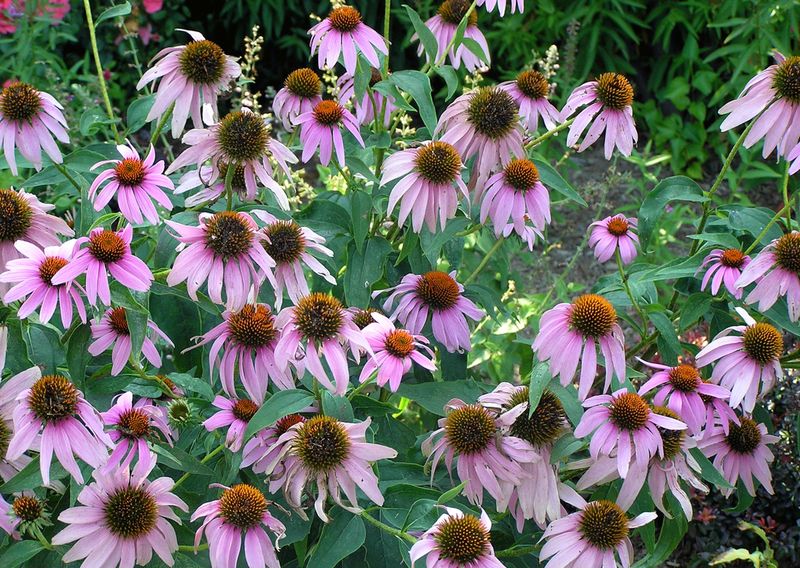
Not every plant sold as a coneflower is the same species, and that matters when you are trying to figure out why yours is flopping. The purple coneflower, Echinacea purpurea, is the most common garden coneflower in the South, and NC State Extension describes it as an upright perennial that tolerates a range of well-drained soils and grows in full sun to partial shade.
Its petals are typically rose-purple and droop slightly backward from a raised, spiky orange-brown center cone.
Rudbeckia species – black-eyed Susan and its relatives – are also sold under the coneflower label, but they have yellow petals, different moisture preferences, and different height habits. Sweet coneflower (Rudbeckia subtomentosa) can reach five feet or more, which means a floppy Rudbeckia and a floppy Echinacea may call for different responses.
Confirming the species first prevents you from following advice written for the wrong plant.
Once you know you have Echinacea purpurea, the next step is a calm inspection rather than a quick fix. Clemson Cooperative Extension notes that Echinacea species generally have strong stems, which means a plant that is leaning or collapsing is giving you useful information about its conditions, its cultivar, or possibly its health.
Work through planting conditions first, then consider cultivar habit, weather, and disease before drawing conclusions.
Measure the light instead of guessing

Shadows move more than most gardeners realize. A bed that looks bright in the morning can sit in shade by early afternoon once a nearby oak leafs out fully, and a spot that seemed sunny when you planted in spring may be significantly shadier by midsummer.
The only reliable way to know what your coneflowers are actually receiving is to observe the bed at two-hour intervals across a full day during the growing season, and to repeat that check if trees or structures have changed since you first planted.
Iowa State University Extension uses six or more hours of direct sunlight as the practical benchmark for full-sun perennials. NC State Extension recommends full sun for purple coneflower as a general rule, and insufficient light is one of the most straightforward reasons stems grow long and weak rather than compact and upright.
Southern heat adds a layer of nuance that a single rule cannot cover. In Florida especially, UF/IFAS guidance lists purple coneflower as tolerant of partial shade and shade conditions, recognizing that some protection from intense afternoon sun can actually suit the plant in hotter, more humid climates.
If your garden gets six-plus hours of morning light but is shaded by mid-afternoon, that arrangement may serve a Florida or Gulf Coast coneflower better than unbroken all-day exposure. The goal is enough direct light for the cultivar and your local climate, not necessarily the maximum possible hours.
Check whether rich or wet soil encouraged weak growth
Counterintuitively, a coneflower that is being fed and watered generously can end up weaker than one that is left mostly alone. Iowa State University Extension specifically identifies excessive fertilizer and water as causes of lush, abundant growth that the stems cannot support – the plant puts energy into soft tissue rather than sturdy structure, and the result is a stem that leans or collapses under its own weight.
Before adding anything to the soil, check a few basics. How often is the bed irrigated, and does the soil stay damp between waterings?
Has the bed received compost, slow-release granules, or liquid fertilizer recently? Does water pool near the plant after rain, or does it drain away within an hour or two?
Clemson Extension recommends well-drained soil for Echinacea, and NC State Extension describes the preferred site as moist to occasionally dry – not consistently saturated.
Established purple coneflowers are genuinely drought tolerant, so a mature plant rarely needs the irrigation schedule that a vegetable bed or a newly seeded lawn demands. University of Maine Cooperative Extension notes that newly transplanted Echinacea needs regular watering to get established, but once roots are settled, backing off on water is appropriate.
If you suspect fertility is the issue, get a basic soil test from your county Extension office before adding anything – adding fertilizer to already-rich soil is one of the fastest ways to create more flopping, not less.
Inspect crowding, airflow, and root competition
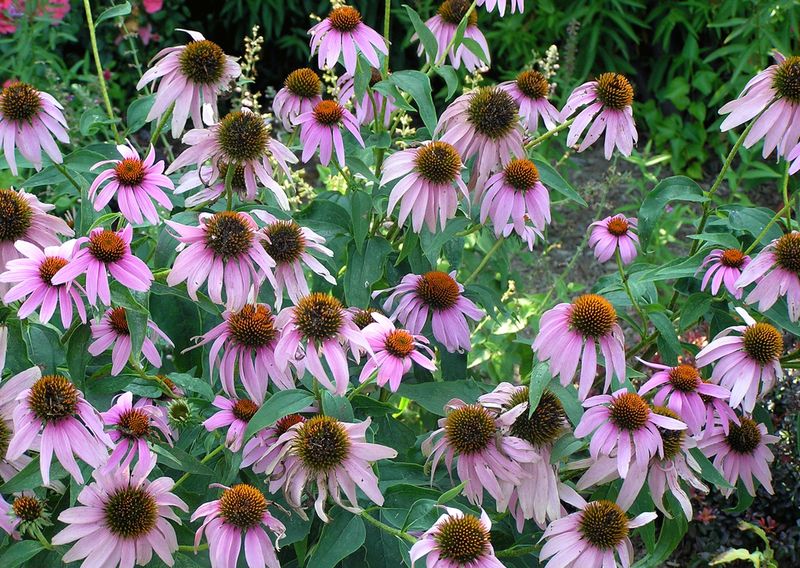
A bed that looked well-spaced two seasons ago can become a tangle quickly as perennials spread and neighboring shrubs fill in. When purple coneflowers are pressed against other plants, airflow drops and stems have less room to grow upright without leaning toward open space or light.
Reduced airflow also raises the humidity around foliage, which can increase the risk of fungal problems that weaken plants further.
UF/IFAS Extension lists 18 to 24 inches as a spacing guideline for purple coneflower, and Clemson Extension also recommends proper spacing as a way to reduce disease risk. That range is a useful starting point, but it does not mean every plant outside those measurements will flop – spacing is one variable among several, and the goal is to see whether crowding is contributing to the problem rather than to treat it as a guaranteed cause.
Tree roots are easy to overlook because they are invisible, but a shallow-rooted tree nearby can draw moisture and nutrients from the surrounding soil in ways that affect plants several feet away. Iowa State Extension connects root competition to changes in moisture and nutrient availability even when the soil surface looks fertile.
Walk around the bed and notice whether turf, groundcover, or tree roots are encroaching from the edges. That inspection both helps you troubleshoot the current season and informs smarter spacing decisions when you redesign or expand the bed.
Account for cultivar habit and weather
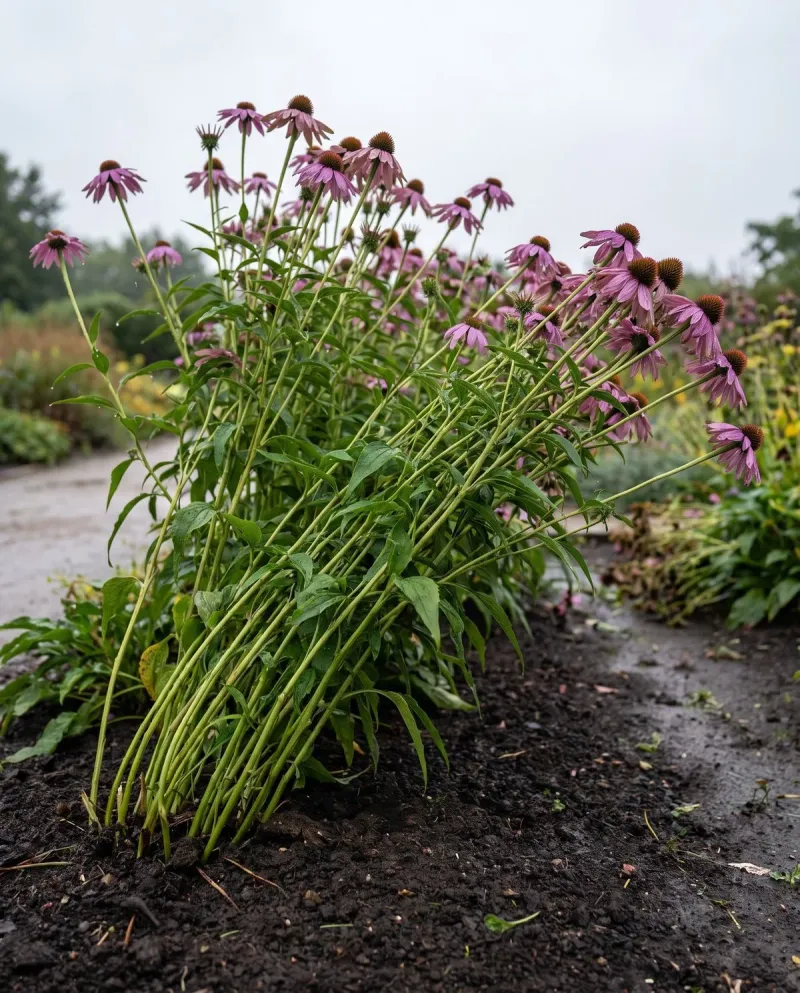
Even a well-sited coneflower can lean if its genetics favor height over compactness. Echinacea breeding has produced dozens of cultivars that differ meaningfully in stem strength, plant height, flower size, and overall habit.
Chicago Botanic Garden’s comparative evaluation of Echinacea cultivars found real differences among taxa, with some compact selections showing consistently better garden habit and less tendency to need support than taller or more heavily flowered types.
The Chicago Botanic Garden’s Echinacea plant evaluation notes reinforce that selecting for sturdy, compact growth is a meaningful factor in whether a coneflower performs well without staking. A cultivar bred for large, heavy flower heads on tall stems is going to be more vulnerable to flopping than a shorter, naturally branching selection, regardless of how good the planting spot is.
Clemson Extension acknowledges that individual plants and cultivars may still need support even when Echinacea is generally described as strong-stemmed.
Weather is another variable the planting spot cannot control. A heavy rain combined with wind can knock over plants that have been standing upright all season, and a period of cloudy, wet weather can soften stems temporarily.
If one clump in your bed is flopping while similar plants nearby are standing fine, that pattern points toward cultivar habit or a localized exposure issue rather than a bed-wide problem. Observing which plants are affected and which are not is often more informative than inspecting the soil alone.
Choose support, pruning, or relocation for a healthy plant
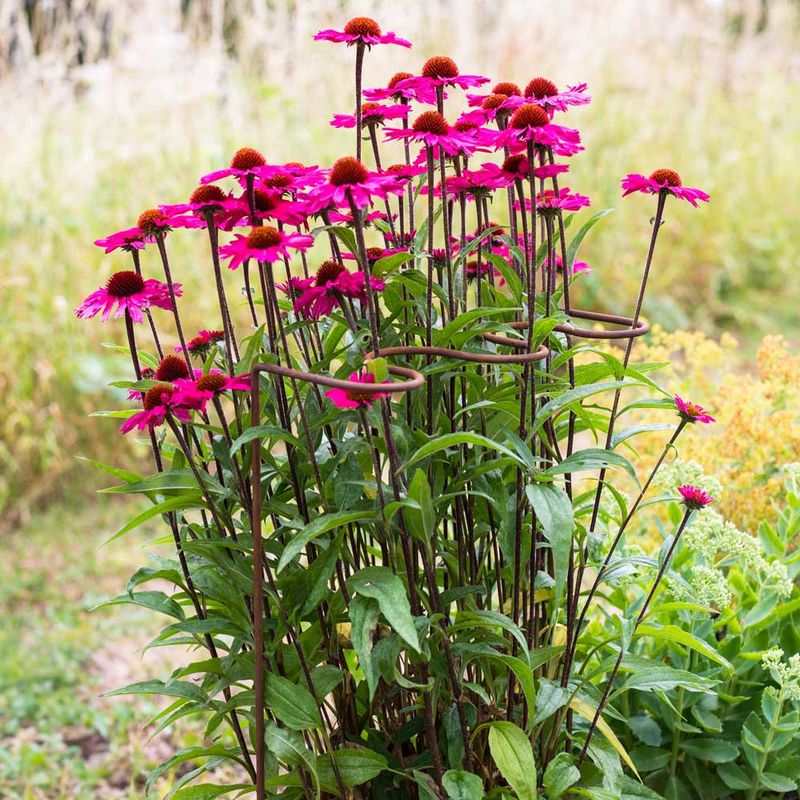
When the plant looks healthy – good color, no distorted growth, no yellowing – but is simply leaning under the weight of its flowers, a support is often the fastest and least disruptive fix. Iowa State University Extension’s staking guide recommends placing support before stems reach full height and before flowers open, because a stem that has already bent at an angle is harder to correct cleanly than one caught early.
Wire hoops, bamboo and twine, or sturdy neighboring plants that the coneflower can lean against all work without looking heavy-handed in the bed.
For future seasons, cutting some stems back by roughly one-third to one-half early in the growing season can produce shorter, more branched plants that are less prone to flopping later. Iowa State Extension lists purple coneflower among the perennials that may benefit from this technique, sometimes called the Chelsea chop.
Keep in mind that cutting back delays flowering, and Southern timing should follow your local growing conditions rather than a calendar written for northern gardens – check with your county Extension office if you are unsure when to cut in Florida or Texas.
If the site genuinely lacks adequate light or drains poorly and the plant is otherwise healthy, relocation is a reasonable option. University of Maine Cooperative Extension recommends digging with as much of the root system and surrounding soil as possible, moving on a cool or overcast day, watering thoroughly after planting, and using mulch to reduce moisture loss while the plant re-establishes.
Avoid keeping the roots in saturated conditions during and after the move. University of Wisconsin Extension also notes that Echinacea can establish well when given appropriate conditions after transplanting.
Recognize symptoms that point to disease
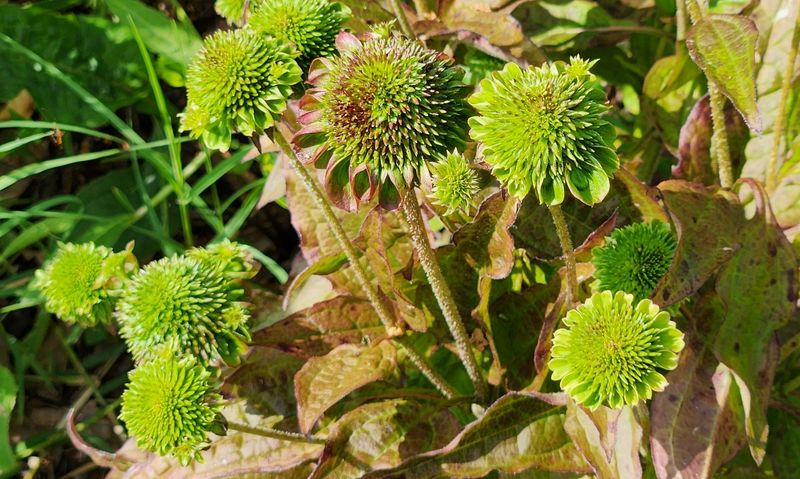
Ordinary flopping looks like a stem bending under weight or leaning toward light. Disease looks different – and knowing the distinction can save you from treating a sick plant the same way you would treat a healthy one in a bad spot.
Aster yellows is one of the more common diseases affecting purple coneflower, and its symptoms go well beyond a leaning stem. Illinois Extension’s guide to aster yellows on coneflower describes symptoms that can include yellowing foliage, overall stunting, green or distorted petals, clusters of small secondary flowers growing from the center cone, and witches’-broom growth where stems proliferate abnormally.
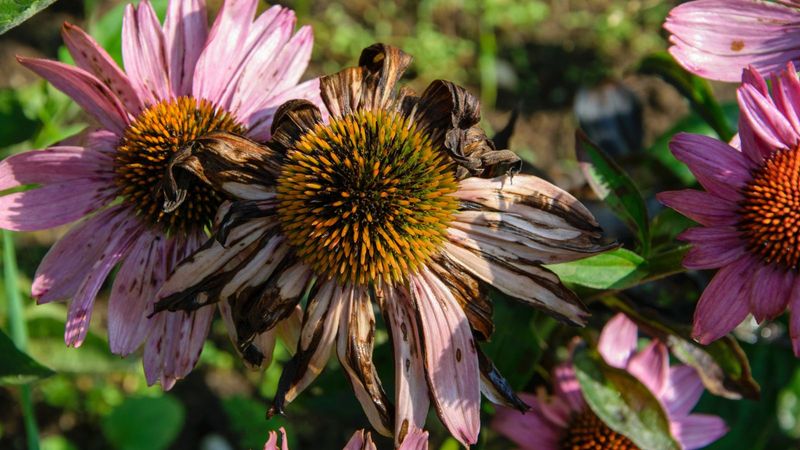
Coneflower rosette mites can produce flower distortion that looks similar at first glance, but mite damage tends to stay concentrated in the flower heads rather than spreading to the rest of the plant. University of Illinois Extension explains that distinguishing between mite damage and aster yellows can be difficult from a photograph alone, which is why looking at the whole plant matters.
If distortion is limited to the bloom and the rest of the plant looks normal, mites are more likely. If yellowing, stunting, and abnormal growth appear throughout the plant, aster yellows becomes a stronger possibility.
University of Maryland Extension and Clemson Extension both note that aster yellows has no cure. Iowa State University Extension identifies sanitation and removal of infected plants as the primary management steps.
Remove and bag affected plants rather than composting them, and do not apply insecticides expecting them to solve the problem – they will not reverse the disease and may harm the beneficial insects that visit your coneflowers.
Match the remedy to the diagnosis
Working through a short checklist before acting makes the difference between a fix that lasts and one that misses the real problem. Start by confirming you have Echinacea purpurea, then measure actual direct light hours during the growing season.
Check drainage and recent fertilizer or irrigation history, and inspect spacing and any nearby tree roots or competing plants. From there, consider whether cultivar habit, recent weather, or disease symptoms explain what you are seeing.
Each diagnosis points to a different response. Poor light or drainage calls for site correction or relocation.
Crowding calls for thinning. A healthy but top-heavy plant may only need a discreet support or an optional early-season cutback in a future season.
A plant showing broad aster yellows symptoms warrants removal and sanitation rather than any attempt at rescue. NC State Extension and UF/IFAS both provide regionally relevant baseline guidance, but local conditions matter enormously.
Florida gardeners should consult resources like the UF/IFAS Nassau County purple coneflower guide for advice that accounts for local heat, humidity, and soil. Texas gardeners can use the Texas A&M AgriLife Earth-Kind Plant Selector to match plant choices to local conditions by region.
A coneflower that thrives in the Texas Hill Country may behave very differently in the Houston clay belt – and the right fix in one yard may not transfer directly to another.