
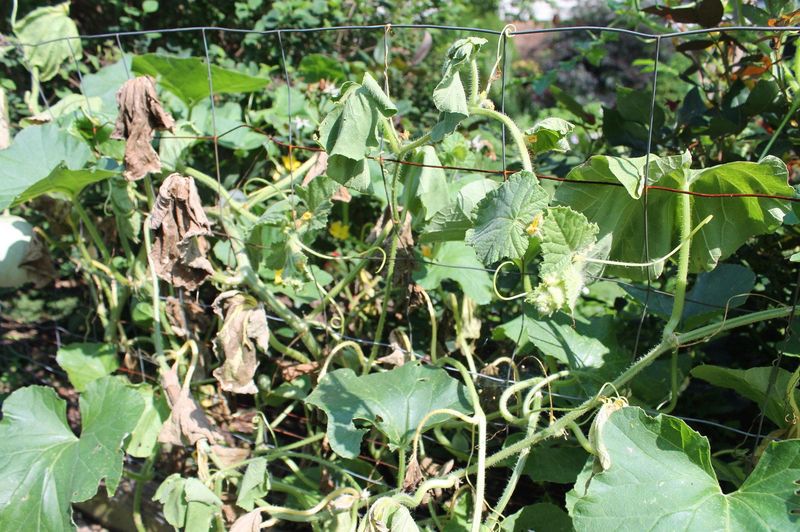
Late summer can be rough on cucumber vines, and pale or washed-out leaves are one of the most alarming things a gardener can find. The tricky part is that heat alone does not explain the color change — several different problems can make cucumber foliage look faded, and treating the wrong one wastes time and can make things worse.
Working through a short sequence of checks — soil moisture, leaf undersides, disease patterns, and nutrient clues — gives you a much better shot at finding the real cause and helping your vines recover.
Pale leaves are a clue, not a diagnosis
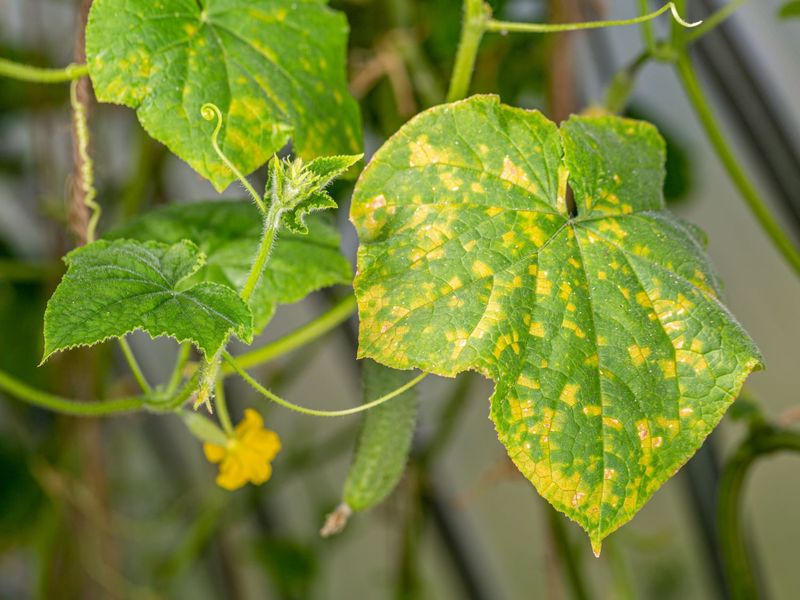
Faded cucumber leaves in late summer can send a gardener straight to the fertilizer bag or the hose, but pausing before you treat is the smarter move. Heat can push up your vine’s water demand and create favorable conditions for spider mites, but it more reliably causes wilting, scorching, bitter fruit, and poor fruit set than it produces one predictable pale-leaf pattern.
University of Georgia Cooperative Extension guidance on home cucumber production confirms that heat-related problems are wide-ranging rather than tied to a single symptom.
Before reaching any conclusion, train yourself to read a few specific clues: which leaves are affected (older ones near the base, or the newest growth at the tips), where the color change sits on each leaf (uniform fading, spots, or yellowing between veins), and whether fine stippling, angular blotches, or soggy soil are part of the picture. University of Minnesota Extension’s cucumber leaf discoloration diagnostic lists nitrogen deficiency, overwatering, spider mites, downy mildew, aphids, whiteflies, viruses, and natural leaf aging as separate causes that all show up as some form of discoloration.
The care reset in this guide moves through a logical inspection order: protect the plant during active heat, then check soil moisture and drainage, scout for pests, look for disease patterns, and finally consider nutrients. That sequence keeps you from treating a symptom while missing the actual problem.
Protect a heat-stressed vine while you inspect
When temperatures are soaring and your cucumber vine looks visibly wilted or scorched, a couple of low-risk steps can protect the plant right now while you continue figuring out what caused the paling. These actions are not a diagnosis — they buy the vine time and reduce immediate stress without committing you to a particular fix.
Start at the root zone. Push your finger about two inches into the soil; if it feels dry at that depth and the vine is drooping, water thoroughly rather than waiting.
University of Minnesota Extension’s vegetable garden watering guidance is clear that a plant showing active drought stress should not be left without needed water while you troubleshoot other possibilities. Apply water slowly at the root zone and avoid soaking the foliage.
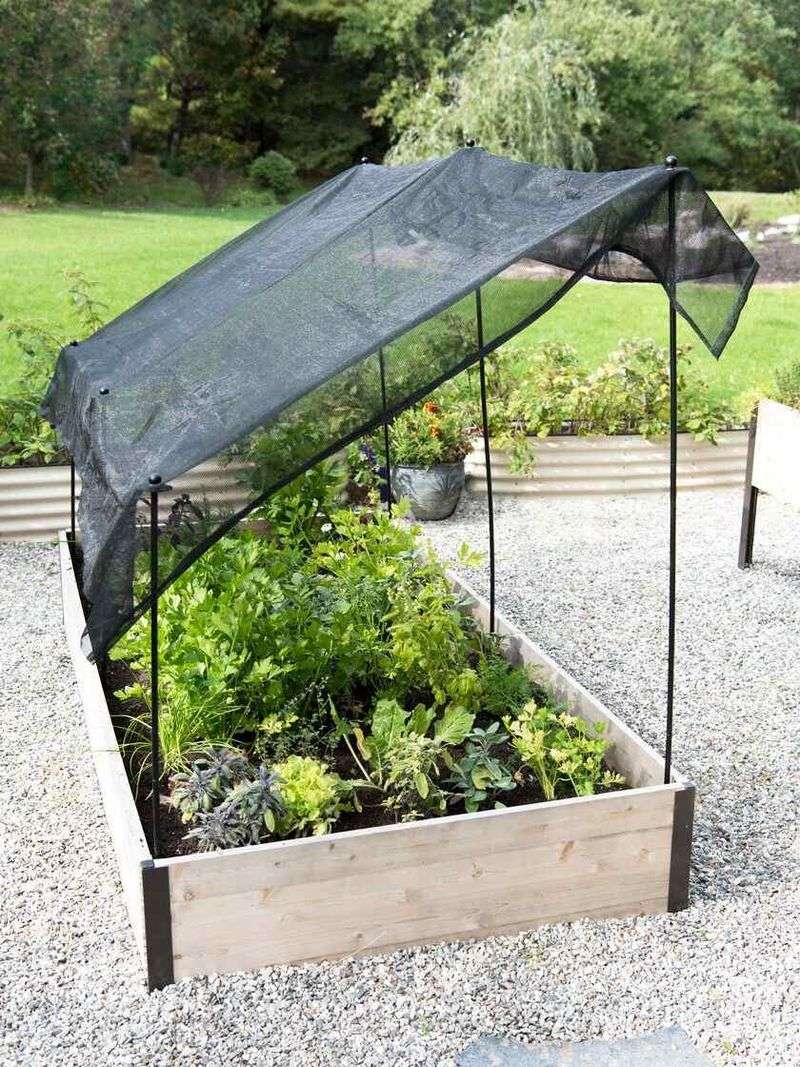
Temporary afternoon shade can also help during an exceptional heat event. University of Minnesota Extension’s heat-gardening guidance mentions 30-to-40 percent shade cloth as a moderate option during peak heat.
Cucumbers need substantial sunlight to produce well, so this should stay temporary and targeted — not a permanent heavy cover. Once the worst of the heat passes or you identify the real cause, adjust accordingly and keep your inspection moving forward.
Check moisture and drainage at the soil line
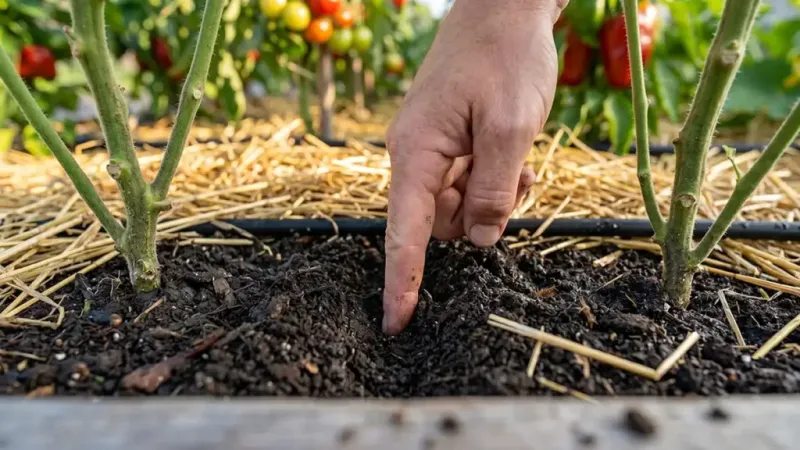
Soil moisture is one of the first things to verify, and the only reliable way to check it is to actually test the soil rather than guess from the surface. Push your finger or a screwdriver about two inches down: if the soil feels dry at that depth, the vine may be under drought stress; if it feels soggy and has been wet for days, the roots may be struggling from lack of oxygen.
Two important moisture-related problems to check are drought stress and oversaturated roots — neither one is automatically the culprit, but both can cause pale, unhealthy-looking foliage.
Drought limits the movement of water and dissolved nutrients through the plant, so foliage can look nutritionally stressed even when the soil contains adequate fertility. On the other side, University of Minnesota Extension’s irrigation strategies for vegetables explains that excessive irrigation reduces root-zone oxygen, promotes root problems, and can leach mobile nutrients out of the root zone before the plant can use them.
Poor drainage compounds both risks, especially in heavy clay soils or low spots in the yard.
When you do water, apply it slowly and directly at the root zone using drip irrigation, a soaker hose, or a low-flow hose held near the base of the plant. UC IPM guidance on downy mildew in cucurbits notes that routinely wetting foliage and splashing soil onto leaves can increase disease pressure, particularly for downy mildew.
Keeping water at ground level protects both the roots and the leaves.
Match watering and mulch to the growing setup
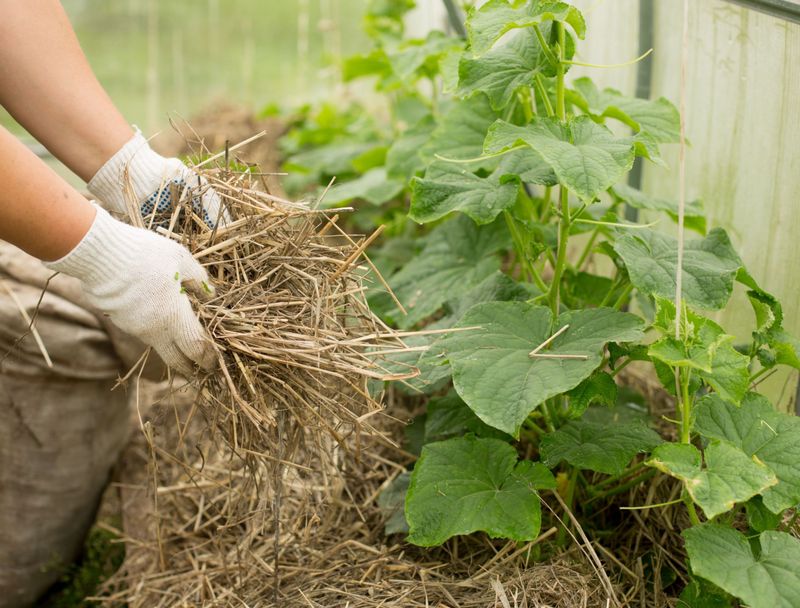
How often to water a cucumber vine depends on more variables than most gardeners expect. For in-ground beds, roughly one inch of water per week can serve as a flexible starting point during the growing season, but that figure needs to move up in hot, dry weather and down after significant rainfall.
Oklahoma State University Extension’s mid-to-late-July horticulture tips suggest one to one-and-a-half inches per week during hot conditions, while OSU’s cucumber production fact sheet recommends about one-and-a-half inches every seven to ten days during the hottest months. Soil texture, mulch depth, plant size, and whether vines are trellised all shift what that number means in practice.
Containers follow a different set of rules entirely. Potting mix dries out much faster than garden soil, especially in summer heat, and the smaller the container, the faster it happens.
Container gardeners should check the potting mix frequently and may need to water daily during hot weather, depending on container size, sun exposure, plant size, and how well the container drains. Checking the mix itself rather than watching a calendar is the most reliable approach.
A two-to-four-inch layer of organic mulch, kept a few inches away from the stems, can reduce evaporation, moderate soil temperature, and help stabilize moisture between waterings. University of Minnesota Extension’s mulching guide recommends straw specifically for vegetable gardens.
Mulch supports consistent moisture but does not fix discoloration caused by pests, disease, or nutrient problems. Gardeners in Florida face sandy soils that drain quickly and can leach nutrients, while Texas A&M AgriLife Extension’s home vegetable gardening guide reflects the wide variation in soil type and rainfall across different Texas regions — local conditions should always shape the final watering decision.
Inspect leaf undersides for spider mites
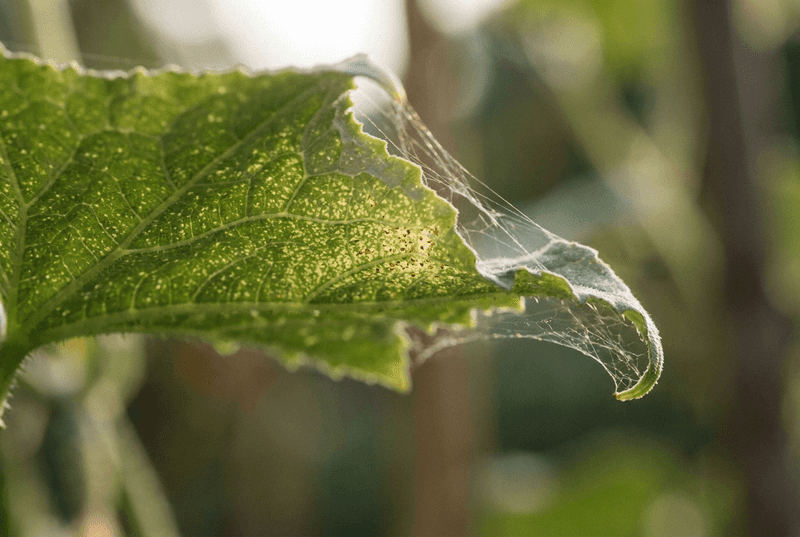
Hot, dry weather is peak season for spider mites, and cucumber leaves are a favorite target. The damage they cause looks different from general nutrient paling: look for fine yellow or white stippling scattered across the leaf surface, a bronzed or dull appearance, and in heavier infestations, fine webbing on the undersides or where leaves meet stems.
University of Minnesota Extension’s spider mite guide notes that populations can build rapidly at temperatures above 90 degrees Fahrenheit, which makes late-summer scouting especially important in Southern gardens.
Get into the habit of flipping leaves and checking the undersides every few days during dry, hot stretches. A hand lens helps confirm mite presence because the insects are tiny.
For a light infestation, a strong stream of water directed at the undersides of leaves can dislodge mites effectively and is a good first response before reaching for any spray product.
If populations are larger, insecticidal soap or horticultural oil are options, but only when the product label specifically lists cucumbers as an approved crop. UC IPM’s spider mite resource emphasizes thorough coverage of leaf undersides and notes that repeat applications are often necessary.
Homemade dish-soap mixtures should not be used — they can burn cucumber foliage and are not formulated for consistent results. Broad-spectrum insecticides should also be avoided because they can kill the natural predators that help keep mite populations in check, sometimes making outbreaks worse rather than better.
Angular spots and unusual patterns point elsewhere
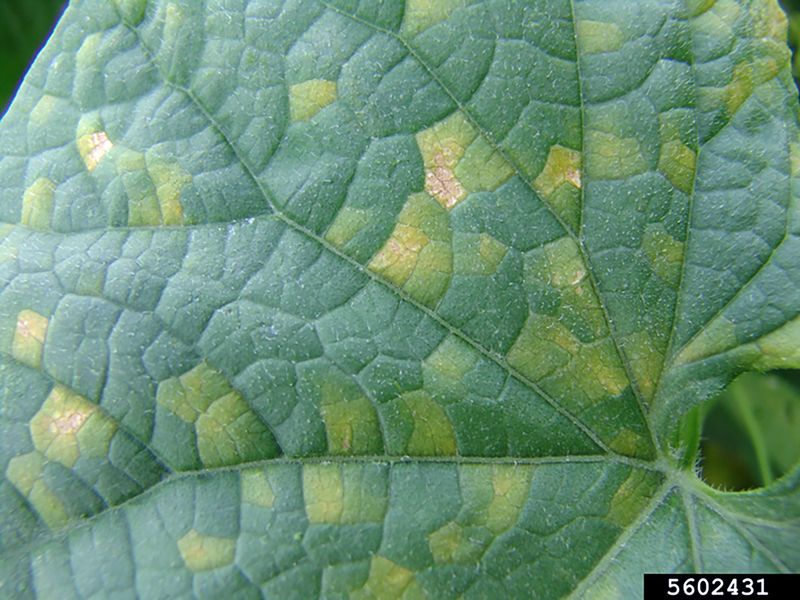
Some symptoms on cucumber leaves do not fit the pattern of water stress or mite damage, and reading those differences carefully can save you from misdiagnosis. Pale or yellow spots that are sharply angular and bounded by the leaf veins are a key visual clue.
When those spots are accompanied by a gray, purple, or whitish fuzzy growth on the underside of the leaf, downy mildew becomes a much stronger possibility than general heat stress or thirst. UC IPM’s downy mildew on cucurbits resource describes this angular, vein-bounded spotting pattern as a distinguishing feature of the disease.
If downy mildew is suspected, remove severely affected leaves to reduce spore load, improve airflow around the vine, and stop overhead watering immediately. Local extension services or your state plant diagnostic lab can confirm the diagnosis and provide current fungicide recommendations, since resistance patterns and available products vary by region.
University of Minnesota Extension’s cucumber discoloration diagnostic tool is a useful starting point for narrowing down possibilities before seeking local guidance.
Other patterns deserve attention too. Rapid yellowing combined with leaf curling, stunting, or unusual vein discoloration can point toward virus infection or whitefly-associated disease rather than a correctable cultural problem.
A vine that stays wilted in wet soil, rather than recovering after irrigation, suggests root injury or persistent drainage problems. In those cases, adding fertilizer or continuing to water more heavily will not help and may cause additional harm.
When symptoms are spreading quickly, unusual, or severe, local diagnosis is the most reliable next step.
Read the yellowing pattern before feeding
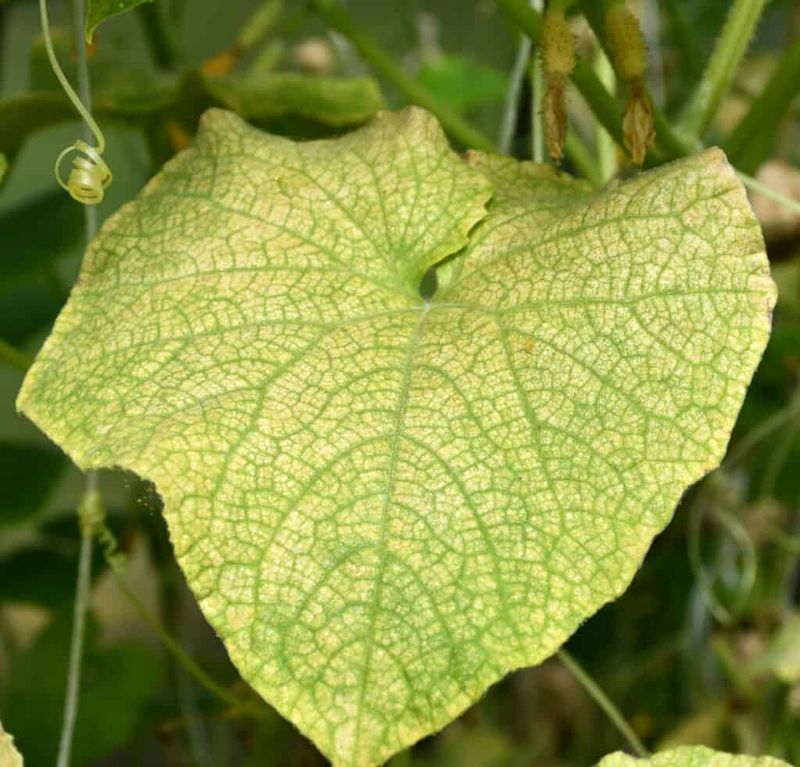
Yellowing location and leaf age can suggest possible nutrient problems, but visual symptoms alone are not enough to confirm a deficiency or prescribe a fix. Older leaves near the base turning pale yellow-green first, paired with slow or stunted overall growth, fits a possible nitrogen shortage pattern.
Young leaves at the vine tips showing yellowing between the veins while the veins themselves stay relatively green can point toward an iron or manganese availability issue. Yellowing or browning that starts along the margins of leaves fits a possible potassium pattern, while interveinal yellowing that appears on older leaves rather than new ones is more consistent with a magnesium concern.
Utah State University Extension’s vegetable nutrient management guide and University of Florida IFAS Extension’s fertilizer management guidance for vegetable production both note that water stress, poor drainage, soil pH, root injury, pests, and disease can all produce discoloration that closely mimics nutrient deficiency. That is exactly why a soil test should come before any amendment.
University of Minnesota Extension’s soil testing guidance explains that a test can identify pH problems and major nutrient gaps that visual inspection alone cannot reliably separate.
Resist the urge to add nitrogen just because leaves look pale. Excess nitrogen can injure roots, push the vine into heavy vegetative growth at the expense of fruit, delay or reduce fruiting, and contribute to nutrient loss through leaching, especially in Florida’s sandy soils.
If a test confirms nitrogen is genuinely needed, use a fertilizer labeled for vegetables and follow the recommended rate. Treating the vine for a deficiency it does not have is one of the more common ways a well-intentioned reset goes sideways.
Judge the reset by new growth
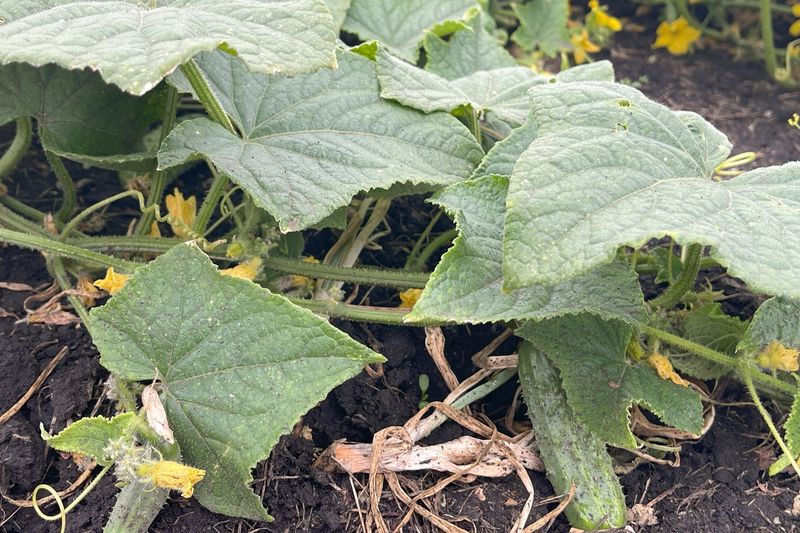
Once you have worked through the inspection sequence and made any needed corrections, the most useful thing to watch is what the vine does next. Existing leaves that were damaged by mites, nutrient stress, or disease may not regain their color, and waiting for them to green up is not a reliable measure of recovery.
The meaningful signal is whether new leaves emerge looking healthier, whether the vine continues to flower, and whether fruit is setting and developing normally.
Heat can affect fruit set in some production settings at temperatures near 90 degrees Fahrenheit, but that figure should not be treated as a hard failure point for every cucumber variety. Penn State Extension’s high-tunnel cucumber production guidance and University of Georgia Cooperative Extension’s home cucumber guide both make clear that cultivar selection, nighttime temperatures, humidity, soil moisture, and the growing system all influence how a vine handles heat.
A vine in a well-mulched in-ground bed with consistent moisture may hold up better than one in a small container in full afternoon sun, even at the same air temperature.
Check new growth every few days after making changes. If the vine stabilizes, continues producing, and fresh leaves look normal, the reset is working.
If symptoms continue to spread, production drops noticeably, or something about the pattern still does not fit, contact your local cooperative extension office or state plant diagnostic lab for hands-on help. A healthy vine will tell you it is recovering through what grows next, not through what the old leaves do.