

If you live in a fire-prone part of California, the first five feet around your home matter more than almost anything else in your yard. Fire officials call this the ember-resistant zone, and they keep pointing to the same popular landscaping plants as trouble.
The surprising part is that most of these plants look harmless and even beautiful, so homeowners rarely think twice about them. Here are the plants that keep getting flagged, and what you can swap in to keep your yard alive, water-wise, and safer.
1. Juniper Shrubs
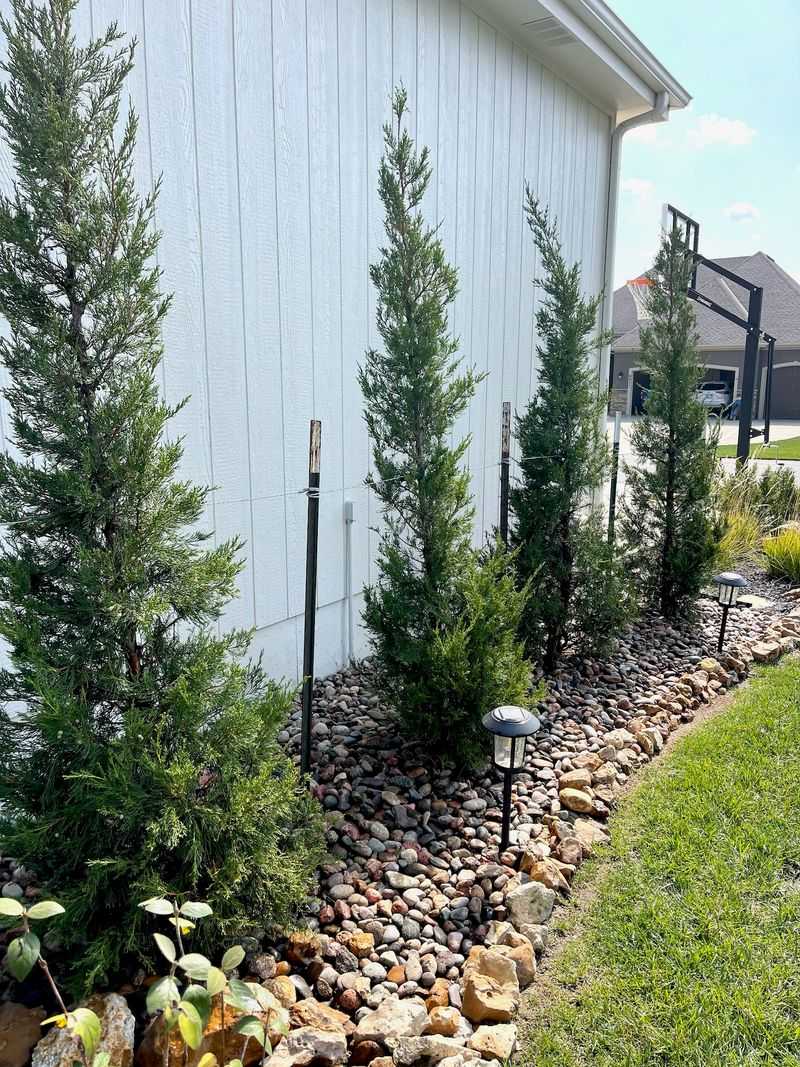
Landscapers love junipers because they are tough, cheap, and thrive in California’s dry summers. That same drought-hardiness is exactly why fire crews wince when they see them hugging a wall.
Junipers build up a layer of dead, resinous needles inside the plant that acts almost like kindling. The natural oils in the foliage catch fast and burn hot, which is why some firefighters half-jokingly call them gasoline bushes.
Within five feet of your house, that is the last thing you want. An ember landing in that dry interior can turn a decorative shrub into a torch pressed right against your siding.
If you want that same low, evergreen look, try swapping in well-spaced clumps of deergrass or a low manzanita variety set back from the wall. Keep the immediate five-foot band to gravel, pavers, or hardscape instead.
You lose almost nothing in curb appeal and gain a real buffer.
2. Italian Cypress
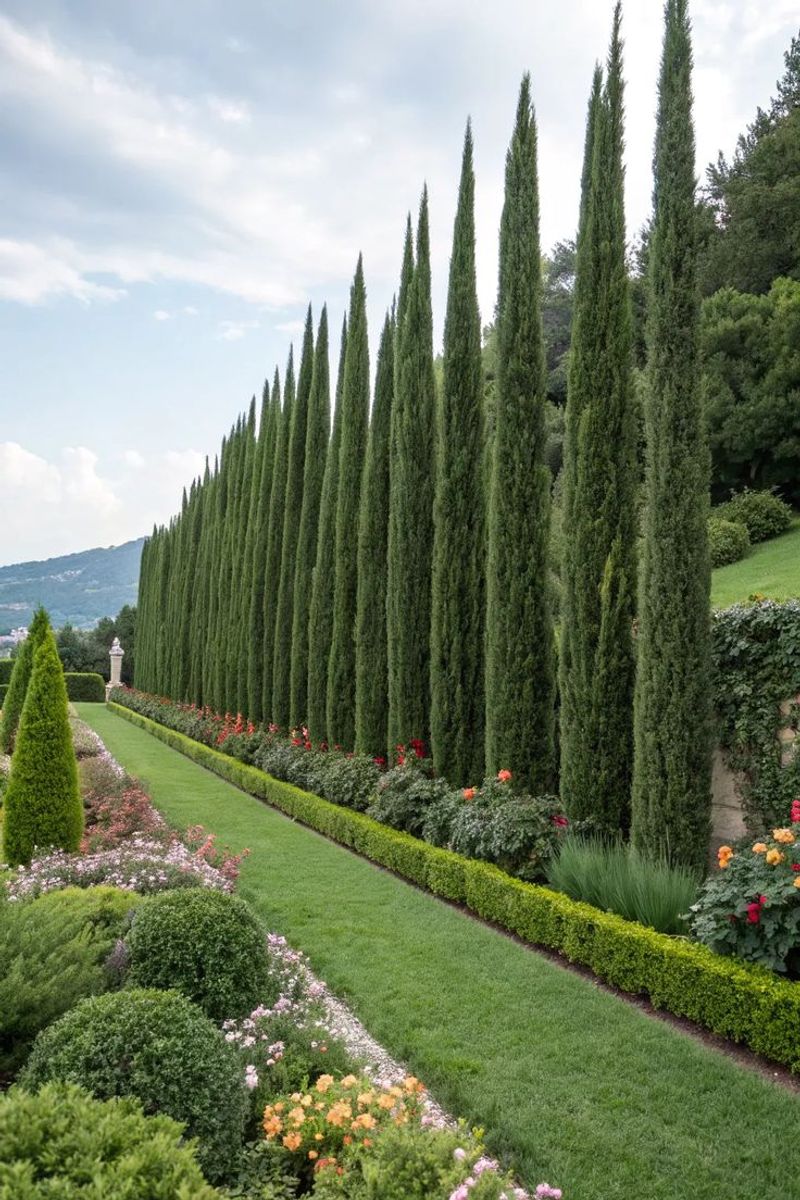
Those tall, elegant columns flanking so many California driveways came straight from Mediterranean garden fantasies. They look timeless, which is why homeowners plant them close to entryways and walls without a second thought.
The problem is what happens inside that narrow shape. Italian cypress hold onto dead needles and dry debris in their dense cores, and their height lets flames climb quickly, carrying fire upward toward eaves and rooflines.
When planted tight against a house, a burning cypress can act like a wick reaching straight for your roof. Fire officials often flag them specifically because their vertical form pulls fire into the most vulnerable part of a structure.
You do not have to give up that stately vertical accent entirely. Move cypress well away from the home, or use a slender native like a pruned toyon set back from the wall.
Keeping height away from the eaves makes a genuine difference during ember storms.
3. Ornamental Bamboo

Homeowners plant bamboo for one big reason: instant privacy. It shoots up fast, screens out neighbors, and gives a yard that lush, green resort feel almost overnight.
What most people miss is how much dry, papery litter bamboo drops at its base. That fine, loose material ignites in an instant, and running bamboo varieties can also creep right up to the foundation where you least want fuel.
During fire season, a bamboo screen along a fence line becomes a continuous ribbon of dry leaves connecting one part of the property to your home. Embers love that kind of fine fuel.
For privacy without the fire load, consider a fire-resistant hedge of well-spaced, well-hydrated shrubs kept back from the house, or a solid fence panel paired with lower plantings. If you adore the bamboo look, keep it far outside the five-foot zone and clean the litter often.
4. Pampas Grass
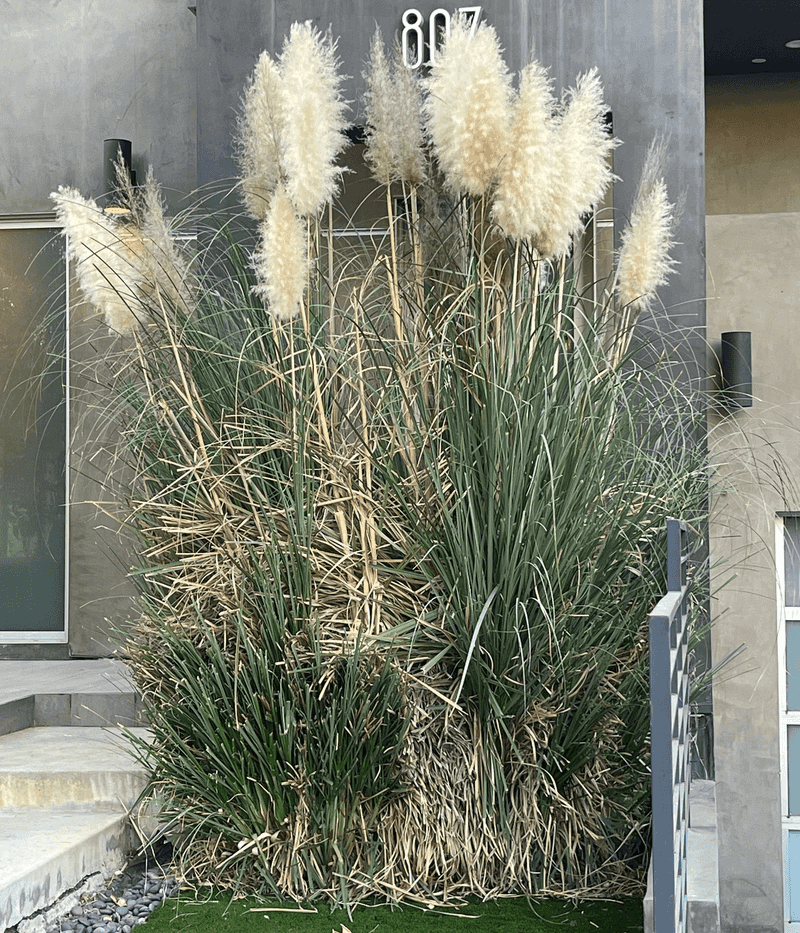
Few plants say backyard drama like pampas grass, with its towering plumes swaying in the breeze. It is also drought-tolerant and nearly impossible to kill, which is part of the appeal.
Here is the catch. A mature clump is mostly dry, fibrous blades that ignite with almost no effort and throw off burning fragments that travel on the wind.
Set close to a wall, a single pampas clump can spread fire faster than a homeowner can react. On top of the fire risk, it is considered invasive across much of California, so it causes trouble well beyond your property line.
Swap it for a native bunchgrass like deergrass planted in spaced clumps outside the five-foot zone. You keep the soft, waving texture and the low-water benefit without the flammable, invasive baggage.
Your neighbors and the local watershed will thank you.
5. Rosemary Hedges
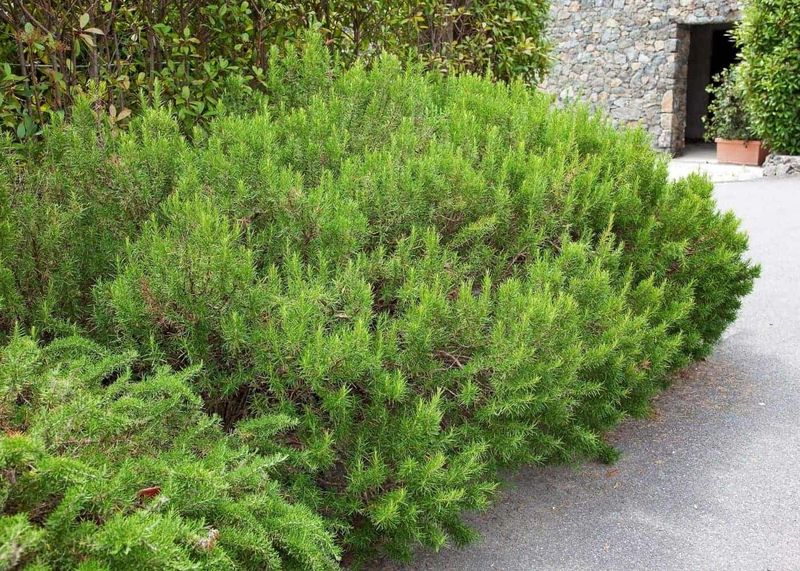
Rosemary feels like the ultimate California win: fragrant, edible, drought-proof, and buzzing with bees. It is no wonder it ends up tucked right along foundations and walkways.
The trouble hides in the plant’s chemistry. Rosemary is loaded with volatile aromatic oils, the same ones that make it smell wonderful, and those oils are highly flammable.
An older, woody rosemary hedge packed against your siding is essentially a scented bundle of oil-rich fuel. Fire crews often note that many Mediterranean herbs, rosemary included, ignite readily when planted in that critical zone.
You can absolutely keep growing rosemary for the kitchen and the pollinators, just move it out past the five-foot band and keep it pruned so dead wood does not build up. Fill the immediate zone with gravel, succulents in pots, or hardscape.
The bees will still find your herbs a little farther out.
6. Arborvitae
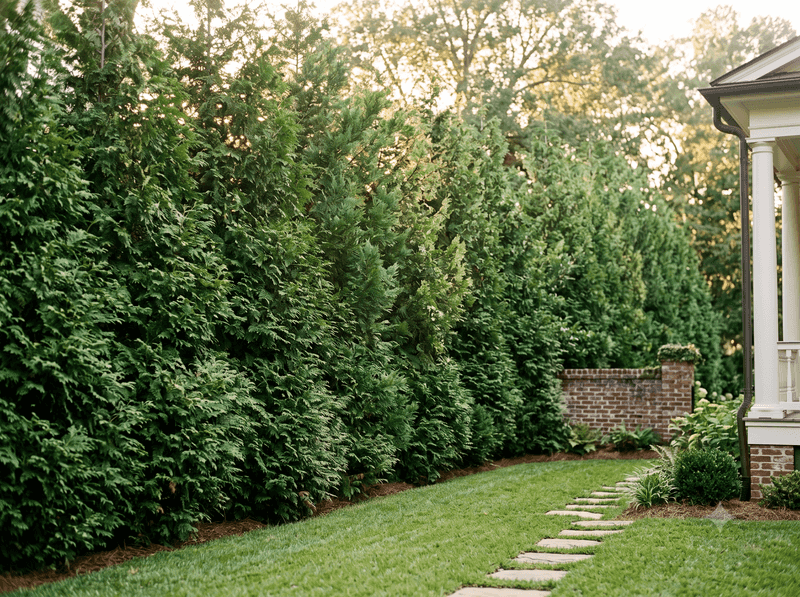
Neat, green, and fast-growing, arborvitae has become the go-to privacy plant for suburbs across the state. Homeowners line them up like living fences, often right against the house.
Underneath that tidy exterior, arborvitae holds dense, resin-rich foliage and a core that browns and dries out over time. When planted in a tight row, one plant catching fire can pass flames straight down the line and into the structure.
Because they are usually placed so close together and so close to walls, they create an unbroken wall of fuel exactly where you need a gap. That combination is why they show up on so many flagged-plant lists.
If screening is the goal, break the row up, hydrate what you keep, and pull everything back from the foundation. A staggered planting with spacing between shrubs slows fire far better than a solid green hedge pressed to your siding.
7. Eucalyptus
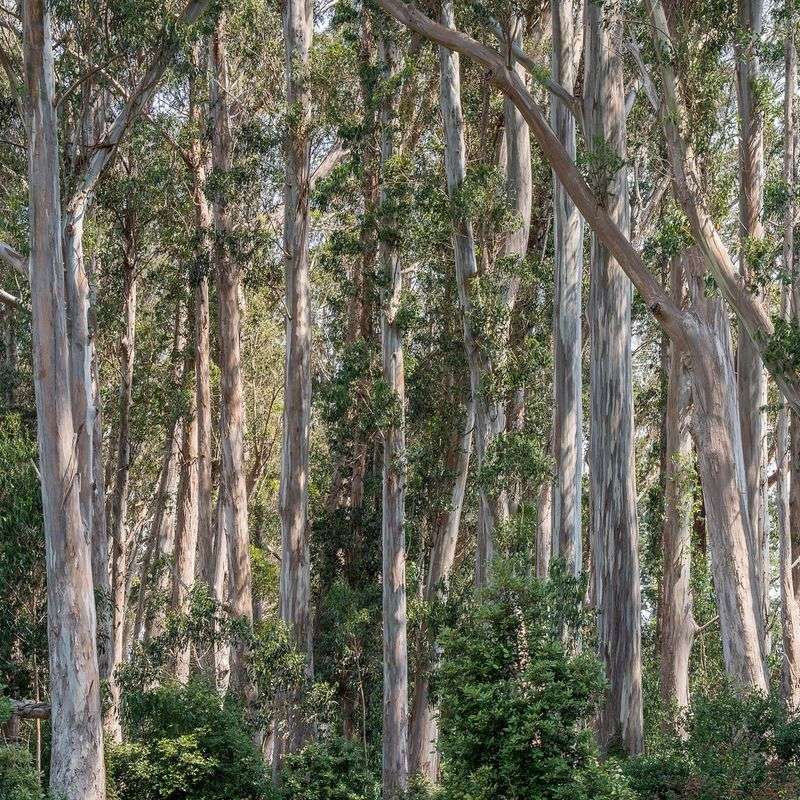
Iconic in the California hills, eucalyptus trees seem like they belong here, and their fast growth once made them a landscaping favorite. Many older homes still have them looming close by.
Almost every part of a eucalyptus is a fire hazard. The leaves and bark are packed with flammable oils, the peeling bark builds up as loose fuel, and the trees shed a constant carpet of dry litter beneath them.
In a wildfire, eucalyptus can throw burning bark far ahead of the flame front, launching embers onto roofs blocks away. Having one within striking distance of your home stacks the odds against you.
Did you know eucalyptus is not even native to California? It was widely imported from Australia in the 1800s.
If a large one sits near your house, talk to a certified arborist about removal or serious limbing-up, and never let its litter pile up in that five-foot zone. It is one of the highest-payoff changes a hillside homeowner can make.