
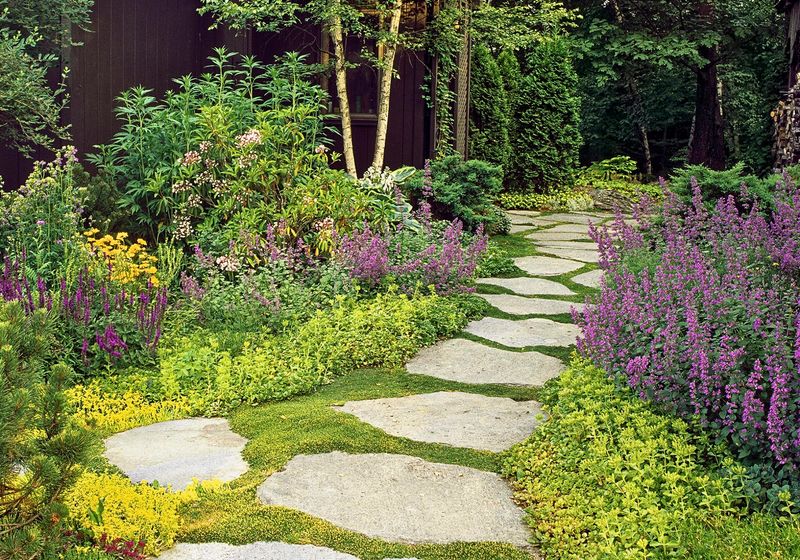
Weeds love bare soil, and every open patch in your yard is basically an invitation for them to move in. The smart fix in California is not more mulch or more weeding, it is planting a living carpet so thick that weed seeds never find the light or space to sprout.
These drought-friendly groundcovers handle our dry summers, save water, and keep beds looking full without constant fussing. Here are ten reliable choices that blanket the ground and quietly shut weeds out.
1. Creeping Thyme (Thymus serpyllum)
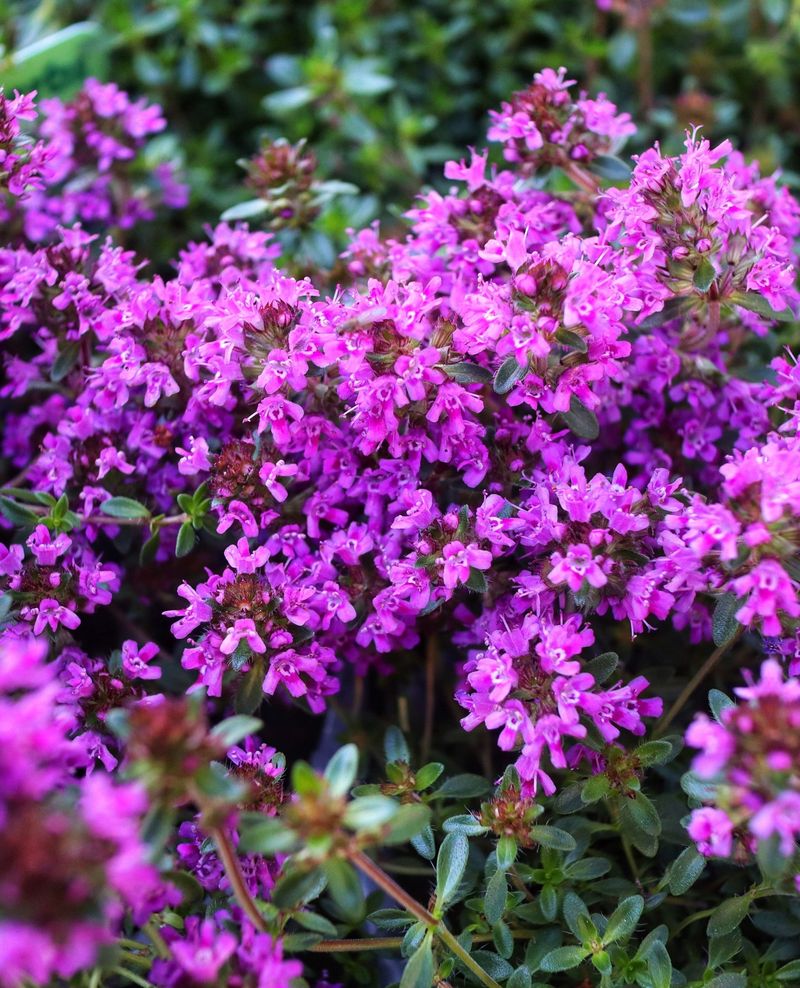
Step on a patch of creeping thyme and you get a soft crush of herbal scent, which is a nice bonus for a plant that is mostly working underground to crowd out weeds. It knits into a low, tight mat that leaves almost no bare dirt for opportunists to grab.
Thyme thrives in the hot, dry conditions that define most California summers. Once established, it needs very little water, which makes it a solid pick for water-wise homeowners trying to shrink their thirsty lawn.
Plant it in full sun with well-draining soil, and space plugs closer together if you want fast coverage. The tiny summer flowers pull in bees and other pollinators, so you are feeding beneficial insects while you starve the weeds.
It handles light foot traffic too, which makes it a great filler between pavers and along garden paths.
2. Kurapia (Lippia nodiflora)
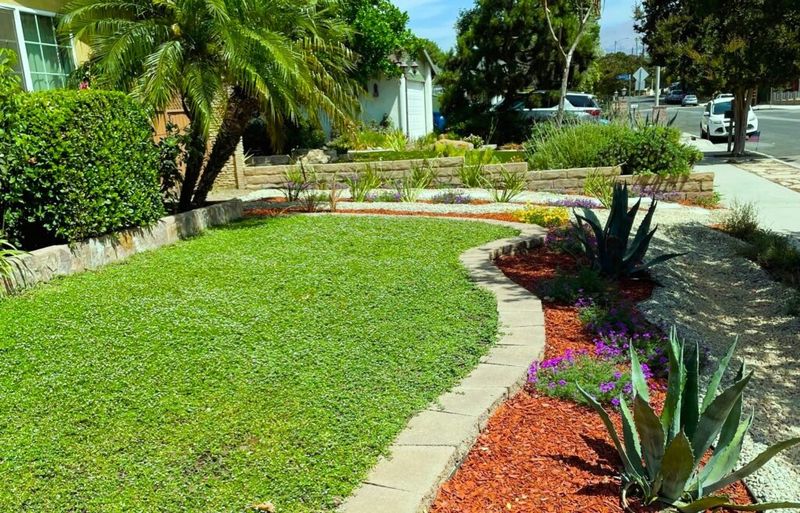
Homeowners tearing out lawns to meet water restrictions keep landing on Kurapia, and for good reason. It forms a dense green carpet that looks lawn-like from a distance but drinks a fraction of the water a traditional turf demands.
The growth is so thick and interlocking that weed seedlings rarely break through. That density is the whole point here, giving you a low-maintenance surface that fights invaders on its own.
It handles California heat and inland valley sun without complaint, and its small white flowers attract pollinators through the warm months. You can mow it low for a tidy look or let it flower for a softer, meadow feel.
Because it spreads by runners rather than aggressive seeding, it tends to stay where you plant it. That makes it a friendly lawn replacement for suburban front yards.
3. Trailing Rosemary (Salvia rosmarinus ‘Prostratus’)
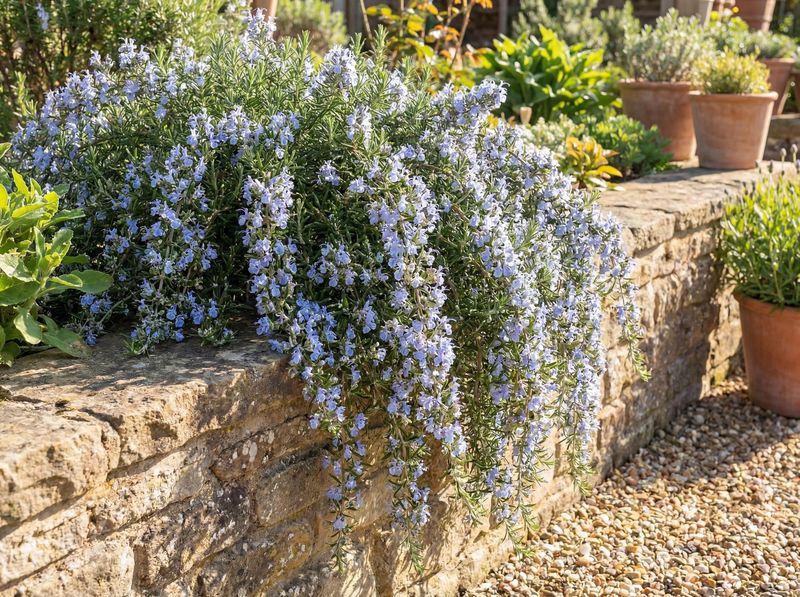
Rosemary usually gets planted for the kitchen, but the trailing variety earns its spot as a rugged, weed-smothering groundcover on slopes and dry banks. It sprawls into a woody, evergreen blanket that leaves little room for anything else to establish.
On fire-prone hillsides, gardeners like it because it holds soil in place and stays low, though you should always check your local defensible-space guidance before planting near structures. Its deep roots make it remarkably tough once settled in.
Blue flowers appear through the cooler months and draw in bees when little else is blooming. The aromatic foliage also tends to be left alone by browsing deer, a real advantage in wildland-interface neighborhoods.
Give it full sun and lean, fast-draining soil, and it will spread wide with almost no summer watering.
4. Silver Carpet (Dymondia margaretae)
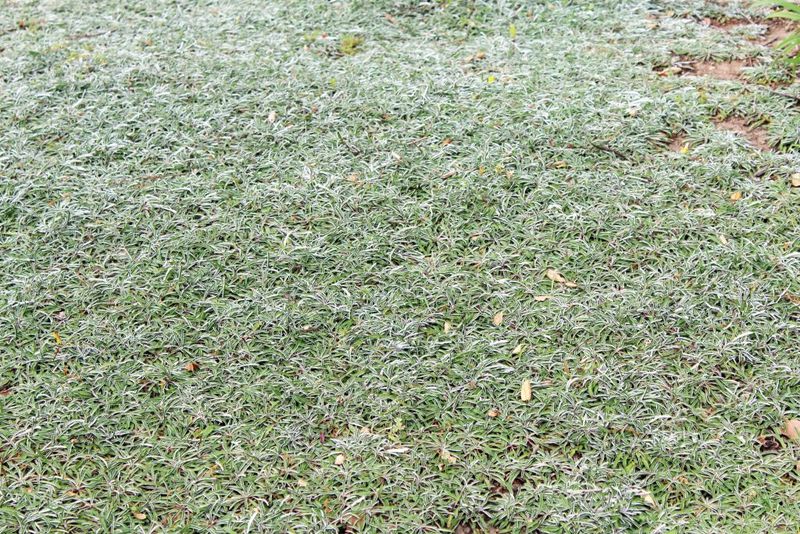
Few groundcovers hug the earth as flatly as Dymondia, whose silvery-green leaves press down into a carpet barely an inch tall. That flatness is exactly why weeds struggle, since there is almost no open soil and no light reaching seedlings below.
It shines in coastal and mild inland California gardens, tolerating salt air and reflecting heat with those grayish leaves. Once its roots dig in, it shrugs off drought and asks for very little.
Because it takes moderate foot traffic, it works beautifully filling the gaps between flagstones and along walkways. Tiny yellow daisy flowers pop up in warm weather for a subtle splash.
Patience pays off here, as it starts slow but eventually locks together into a seamless, low-water surface.
5. California Lilac (Ceanothus ‘Yankee Point’)
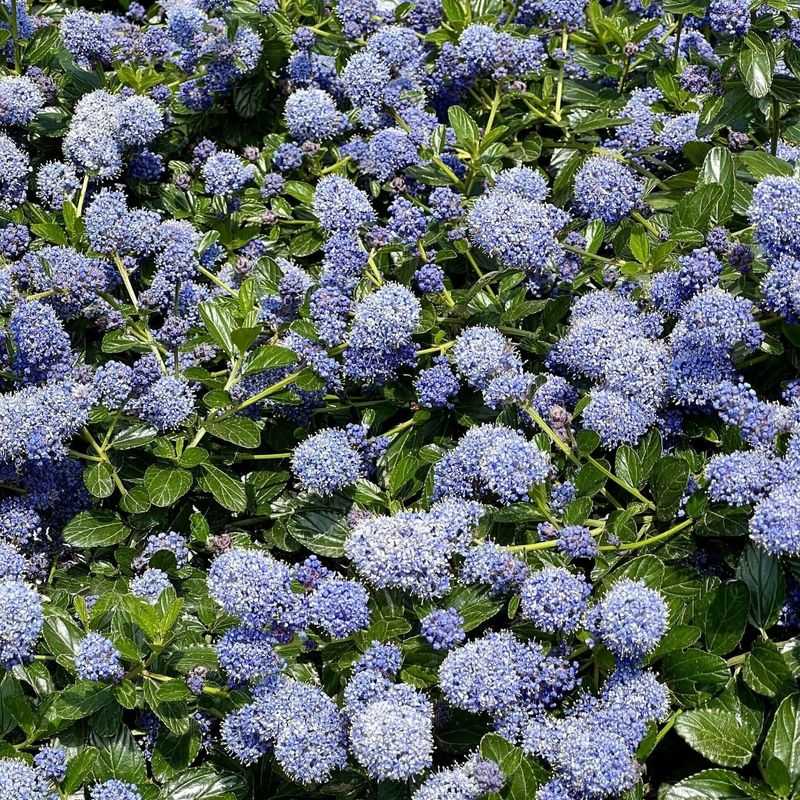
Blue flowers so intense they look almost electric make the low-growing forms of Ceanothus a showstopper, but the real story is coverage. Varieties like ‘Yankee Point’ spread wide and dense, mounding into a living quilt that shades out weeds beneath.
As a California native, it belongs here in a way imported plants never quite manage. It supports native bees and butterflies that evolved alongside it, so you are building real habitat while you cut down on weeding.
Drought tolerance is a given once it is established, and it actually resents summer irrigation. Plant it on a sunny slope with good drainage and leave it alone.
The spring bloom is a pollinator magnet, turning a practical groundcover into one of the prettiest weeks of your gardening year.
6. Woolly Yarrow (Achillea tomentosa)
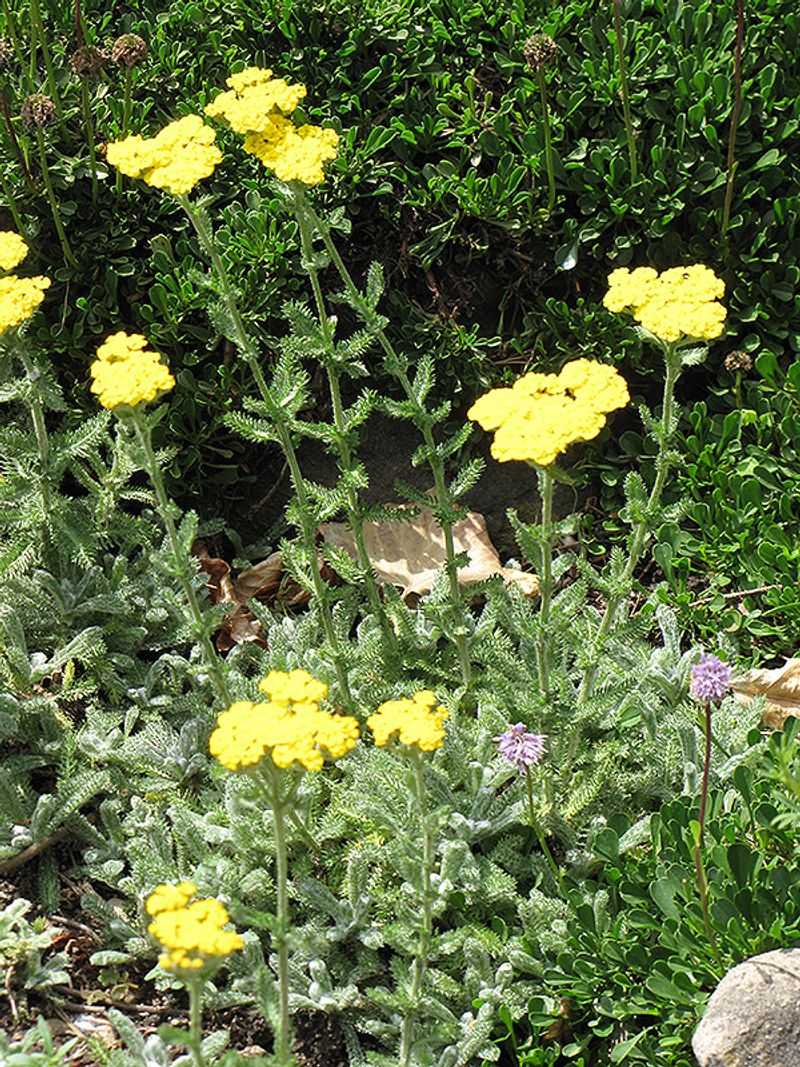
Run your fingers over woolly yarrow and you feel the soft, fuzzy texture that gives it its name, a mat of fern-like foliage that spreads fast and fills in bare ground. That quick spread is what makes it such an effective weed blocker.
It laughs at heat and poor soil, thriving in the dry inland valleys where fussier plants sulk. Yellow flower clusters rise above the foliage in summer and bring in beneficial insects.
Mow it occasionally if you want a tidier look, or let it flower for a relaxed cottage feel. Either way it needs little water once its roots are down.
For a lawn replacement that stays green and low without a sprinkler running all summer, it is hard to beat.
7. Point Reyes Ceanothus (Ceanothus gloriosus)
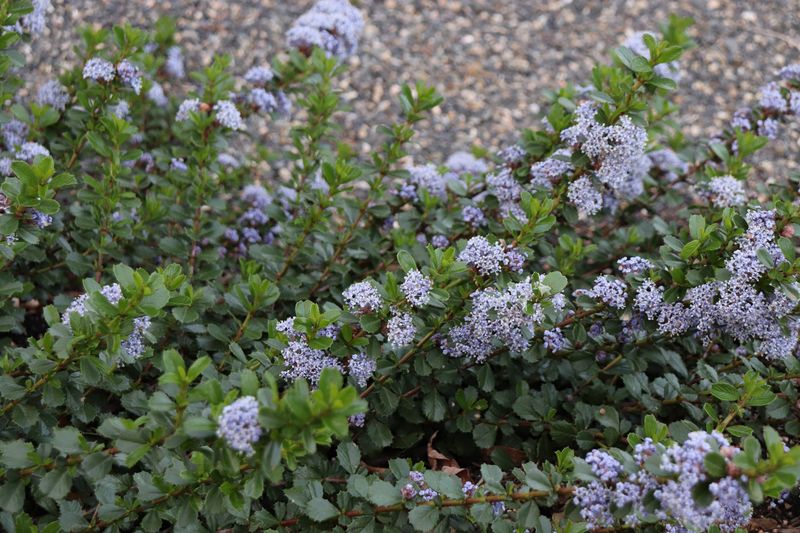
Named for the windswept California coast where it grows wild, this creeping ceanothus is built for tough spots. It layers glossy evergreen leaves into a thick, low blanket that keeps bare soil covered all year long.
Coastal and hillside gardeners appreciate how it grips slopes and resists the dry summer months without extra care. As a true native, it quietly supports the local pollinators and birds that depend on plants like it.
Pale blue spring flowers dot the surface, drawing bees while the dense foliage keeps weeds shut out below. It stays lower and tighter than many of its lilac cousins, making it ideal for filling large banks.
Once it settles in, you can nearly forget about it, which is the whole appeal of a groundcover that does its own defending.
8. Sonoma Sage (Salvia sonomensis)
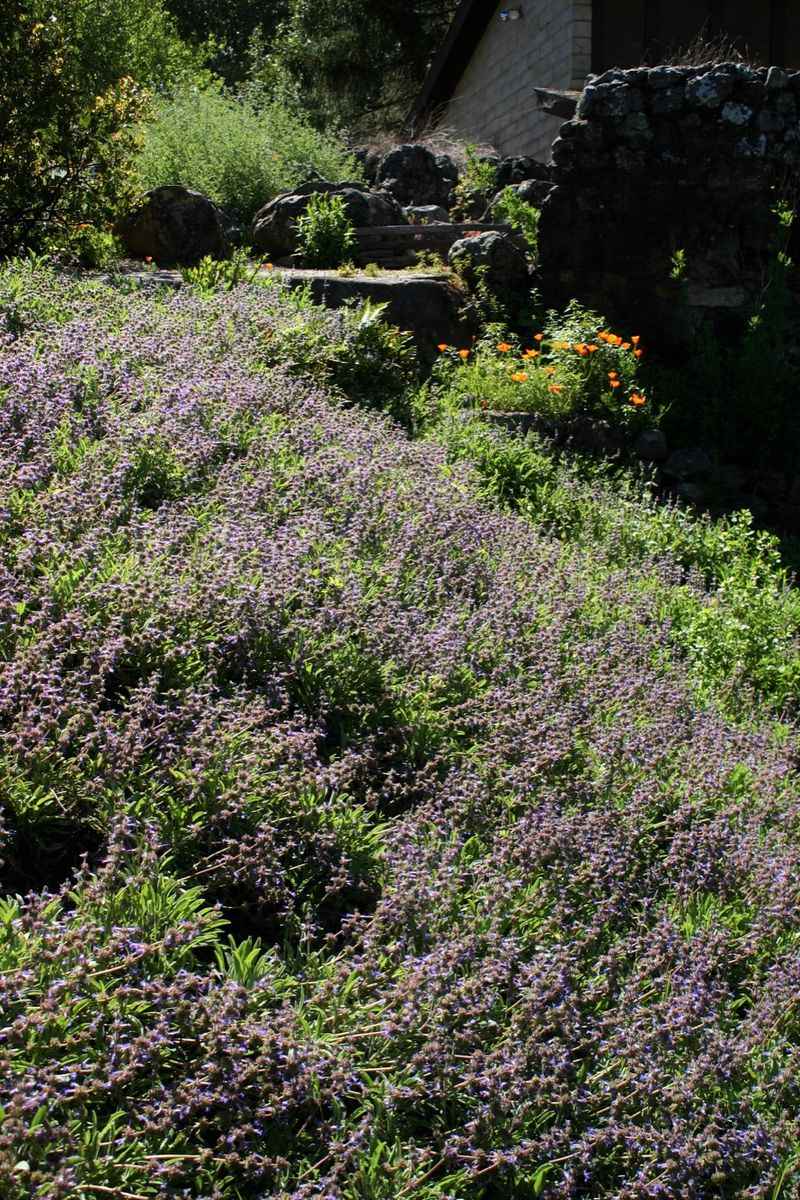
A native sage that crawls instead of standing tall, Sonoma sage forms a fragrant gray-green mat that hugs dry ground and slopes. Brush past it and the aromatic leaves release a scent that also happens to keep deer at a polite distance.
Purple flower spikes climb up in spring and buzz with native bees and hummingbirds. That combination of habitat value and dense coverage makes it a stewardship-minded choice for California yards.
It wants excellent drainage and full to partial sun, and it truly prefers to stay dry through summer. Overwatering is the fastest way to lose it, so lean into its drought-loving nature.
Tucked onto a hot bank, it spreads into a tidy, weed-resistant blanket that asks for almost nothing in return.
9. Beach Strawberry (Fragaria chiloensis)
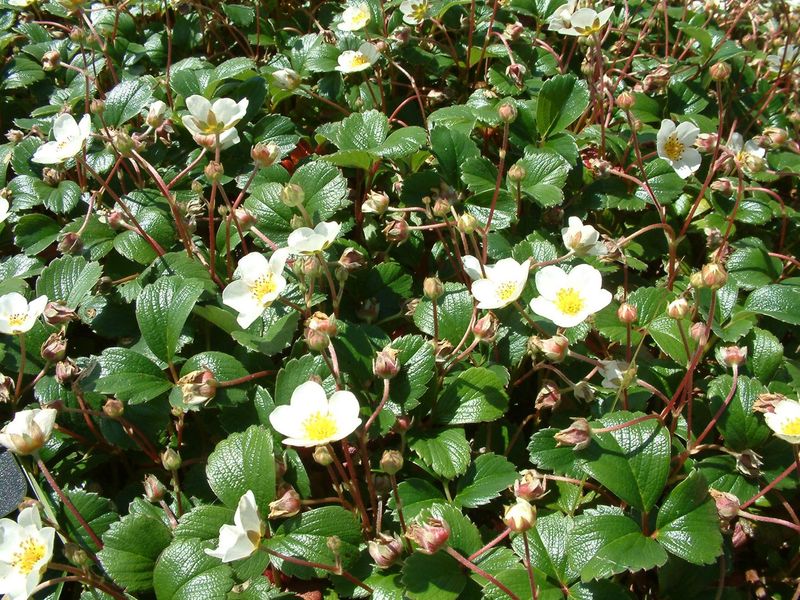
Glossy, dark green leaves and cheerful white flowers make beach strawberry look almost too pretty to be such a workhorse. It sends out runners in every direction, weaving a dense living mat that quickly closes ranks against weeds.
A California native, it feeds pollinators with its blooms and offers small edible berries as a bonus for you and the birds. That makes it a genuine habitat plant rather than just decoration.
It handles coastal salt spray and moderate inland conditions, staying green with modest water. Give it sun to part shade and let the runners do the spreading work.
For homeowners who want a wildlife-friendly, edible, and self-filling groundcover, it checks a lot of boxes at once.
10. Manzanita (Arctostaphylos ‘Emerald Carpet’)
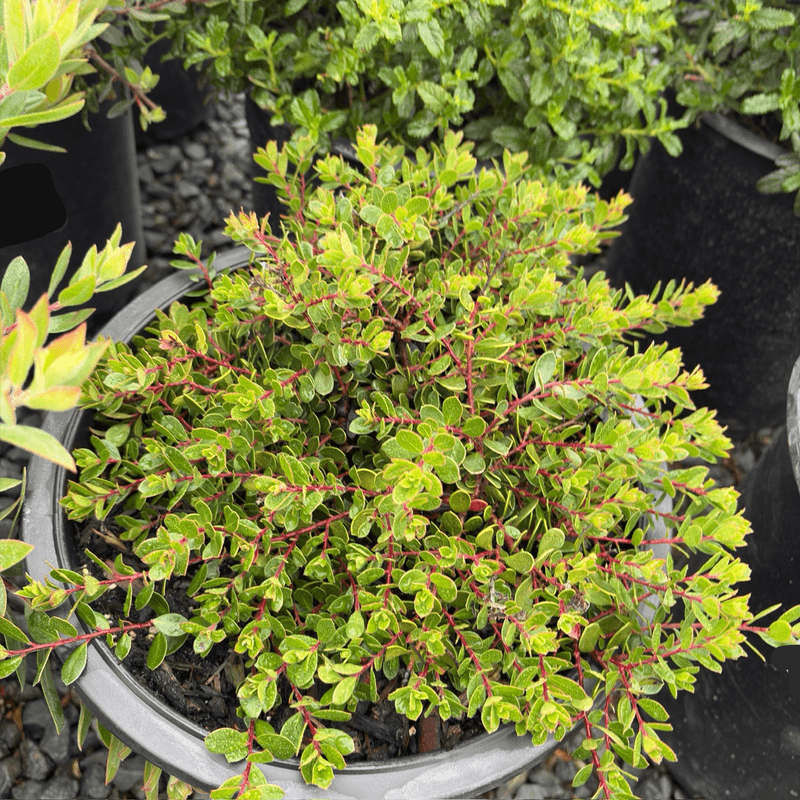
Most people picture manzanita as a sculptural shrub with red bark, but the low ‘Emerald Carpet’ form flips that image on its head. It spreads into a bright green, tightly packed carpet only about a foot tall, leaving weeds nowhere to sneak in.
Being a California native, it supports native bees with its tiny urn-shaped winter flowers and feeds birds with its small fruit. It is a true four-season worker in a water-wise yard.
It tolerates a bit more summer water than many natives, which gives beginners some breathing room while still staying drought-smart. Full sun to light shade and good drainage keep it happy.
The evergreen coverage means your beds stay full and weed-free even in the quiet depths of a California winter.