
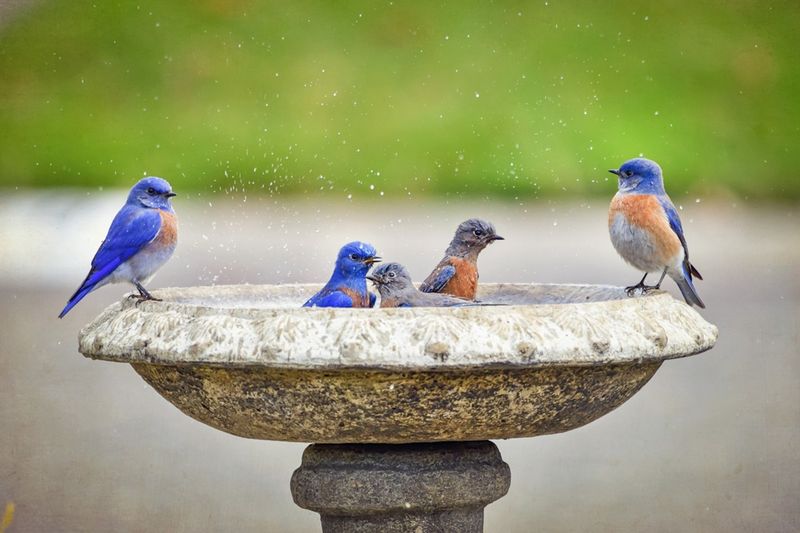
Spotting a flash of blue and rusty orange in your California yard can stop you in your tracks. Many homeowners assume the birds disappeared for the winter and have now come back, but the real story is more interesting than a simple return trip.
Understanding what actually draws Western Bluebirds to a yard, and what keeps them there, can help you make smarter choices about your outdoor space, whether you want to encourage a quick visit or something more lasting.
A sudden sighting does not prove a long return migration
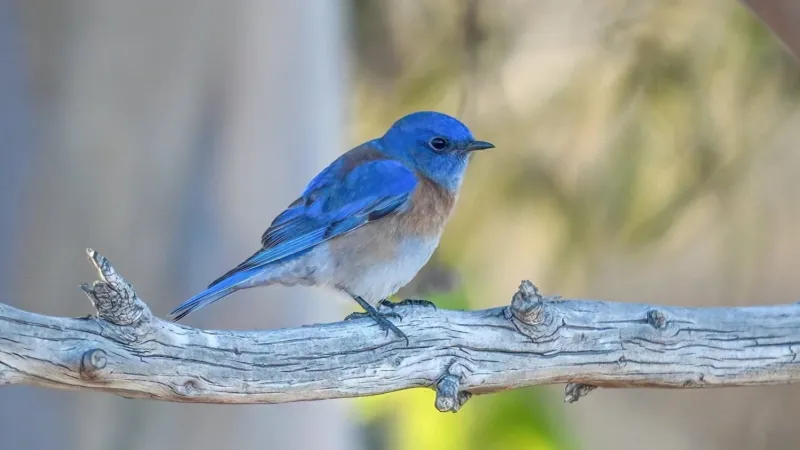
Seeing a brilliantly colored bluebird appear in your yard after weeks of absence feels like a homecoming, but that framing may not fit what the bird is actually doing. The California Department of Fish and Wildlife species account for Western Bluebirds describes them as year-round residents across much of the state, meaning many individuals never leave the region at all.
A bird that seems to have “returned” may simply be one that shifted its range slightly in response to changing local conditions.
California Western Bluebirds make local and irregular movements rather than the kind of long-distance migrations people associate with, say, warblers heading to Central America. The U.S.
Forest Service Fire Effects Information System review of the species notes that some populations move between elevations or habitats as food supplies, berry crops, water sources, and weather conditions shift through the seasons. A bird showing up in your yard in November may have simply followed a toyon full of red berries, not completed a cross-country journey.
That reframe matters because it changes the question worth asking. Instead of “Why did they return?” the more useful question is “What conditions may have brought these birds here now?” Food availability, open foraging structure, seasonal fruit, water during a dry stretch, or a change in a neighboring property can all pull birds into a new patch of habitat.
The American Bird Conservancy’s Western Bluebird profile reinforces that the species responds to habitat quality and food resources rather than fixed migration routes tied to calendar dates.
First confirm which bluebird you are seeing
Before acting on any of the advice in this article, it helps to be confident about which bird you are actually watching. California is home to three bluebird species, and they can share overlapping territory depending on the season and elevation.
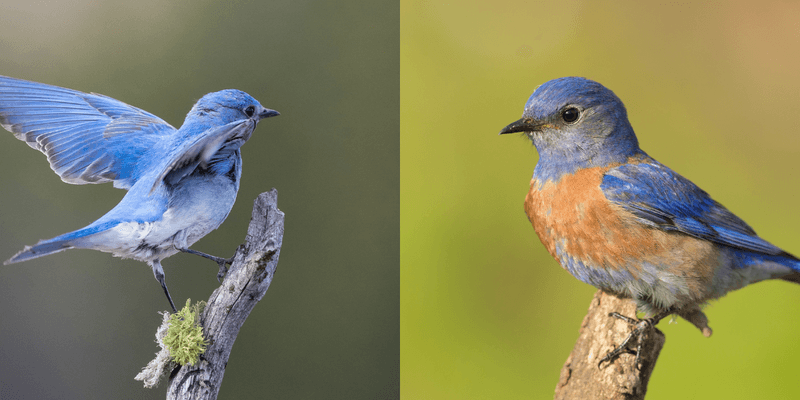
The Mountain Bluebird, for example, is a cleaner sky blue with no rusty orange on the chest, while the Eastern Bluebird occasionally appears in parts of California but is rarely seen west of the Rockies. Misidentifying the species leads to mismatched habitat choices.
A male Western Bluebird is distinctive once you know what to look for. Cornell Lab’s Western Bluebird life history account describes the male as having a deep blue head, back, wings, and tail combined with a rusty orange chest and sides, with the orange sometimes extending onto the upper back.
Females are much more subdued, showing gray-brown tones with a pale orange wash on the breast and blue-tinged wings and tail. Juveniles are spotted and can be genuinely tricky to pin down.
The most reliable approach is to cross-check your sighting against a trusted field guide or a free platform like Cornell’s All About Birds, using both appearance and habitat clues. The American Bird Conservancy’s species page also provides range maps and photos that can help rule out lookalikes.
The rest of this article assumes the bird in your yard is a confirmed or strongly suspected Western Bluebird, and the habitat guidance applies specifically to that species.
Open ground and seasonal food make a yard useful
Habitat structure matters as much as any single plant or feature. Western Bluebirds hunt by watching from a low perch, then dropping to open ground to grab an insect.
Cornell Lab describes their preferred foraging habitat as open woodlands, woodland edges, orchards, savannas, and riparian corridors where short grass or bare soil sits within easy striking distance of a fence post, low branch, or utility wire. A yard packed edge-to-edge with dense shrubs or tall ornamental grasses does not give them the sight lines and landing zones they need.
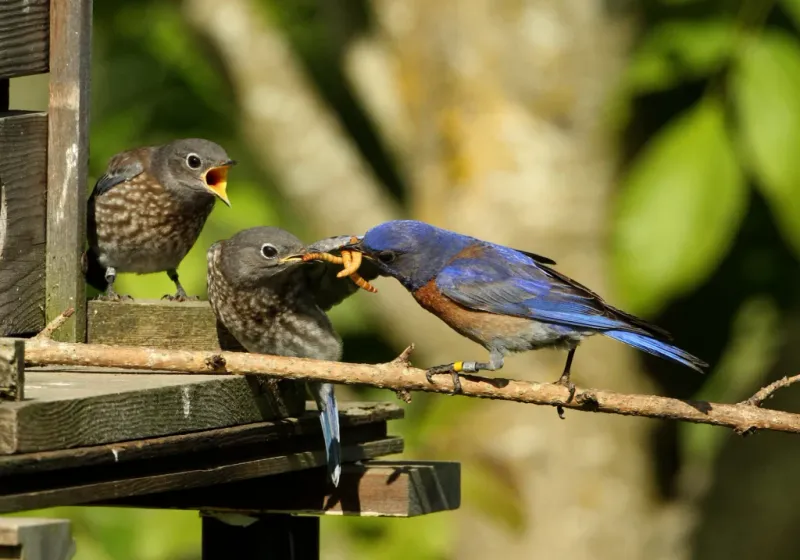
Diet shifts dramatically through the year. During the breeding season, the Audubon field guide confirms that Western Bluebirds rely heavily on ground-dwelling invertebrates: grasshoppers, caterpillars, beetles, ants, wasps, pillbugs, spiders, and even snails.
Nestlings are fed almost entirely on insects, so a yard that supports a healthy insect community during spring and summer is genuinely more valuable to breeding birds than any feeder or supplemental food. By fall and winter, the diet pivots toward berries and small fruits, which is when berry-producing native plants become the stronger draw.
Seed feeders are worth mentioning only to set aside. The California Department of Fish and Wildlife account and the Forest Service species review both treat Western Bluebirds as insectivores and fruit eaters, not granivores.
Grain-based seed mixes do not replicate the protein-dense invertebrates or sugar-rich berries the birds actually seek. If you want a yard that functions as reliable bluebird habitat, the starting point is open foraging space over short vegetation paired with a food base of insects and seasonal fruit, not a tube feeder filled with sunflower seeds.
Build a food-rich California yard without overpromising
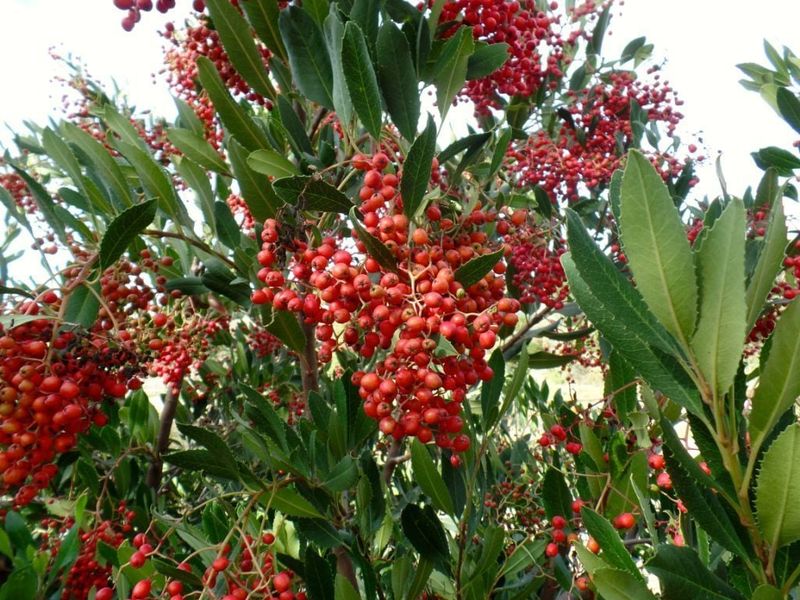
Translating diet evidence into planting choices starts with selecting California natives that serve double duty: supporting insects during the warmer months and producing fruit or berries in fall and winter. UC Agriculture and Natural Resources identifies several plants as useful winter food sources for bluebirds in California, including toyon, elderberry, California grape, serviceberry, redberry, juniper, mistletoe, madrone, manzanita, California rose, and certain Prunus species.
Not every plant on that list suits every California climate zone, so check local water availability and your specific region before planting.
Toyon is worth calling out by name because it is widely adapted across California’s coastal and inland zones, tolerates drought once established, and produces dense clusters of red berries that ripen in late fall and persist through winter, which is exactly when bluebirds are shifting their diet toward fruit. Elderberry and California grape are similarly practical choices that also support caterpillars and other insects during summer, effectively feeding the food chain that bluebirds depend on during breeding season.
Cornell Lab’s life history account reinforces that insect availability during the breeding season is a core driver of habitat quality for the species.
Pesticide reduction pairs directly with native planting. Cornell Lab’s guidance on supporting aerial insectivores explains that broad-spectrum insecticides remove the invertebrate base that insect-eating birds depend on, and some compounds can harm birds directly or accumulate through the food chain.
Reducing or eliminating broad-spectrum sprays in areas where bluebirds might hunt gives the insect community room to recover and keeps the food supply intact for adults and nestlings alike. That said, planting natives and cutting pesticide use supports visits and improves habitat quality; it does not guarantee that bluebirds will appear or stay.
A visiting bird and a nesting pair need different things
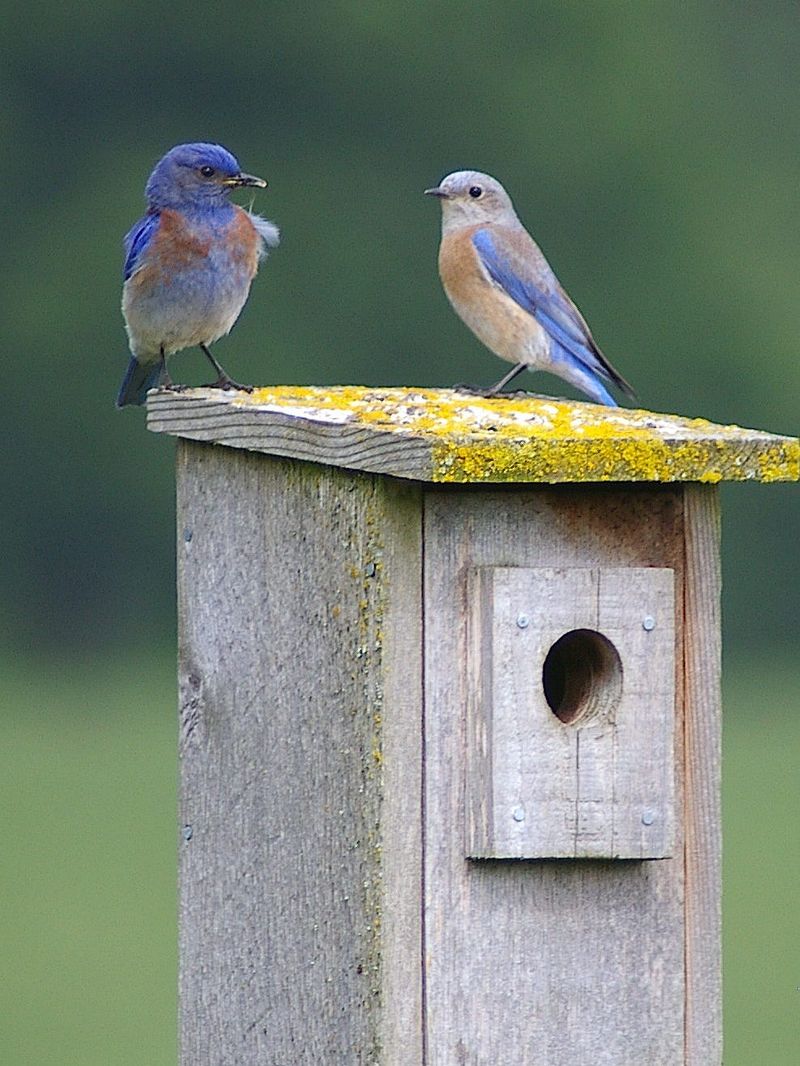
Watching a bluebird work your yard for ten minutes is a very different event from a pair settling in to raise a brood. Foraging visits can happen in yards that would never support nesting, and understanding the gap between the two helps set realistic expectations for what yard changes can actually accomplish.
A bird passing through needs a perch, a patch of open ground, and something to eat. A nesting pair needs all of that plus a usable cavity, a territory large enough to supply food for growing nestlings, tolerable competition from other cavity-nesting species, and a predator pressure low enough that incubating a clutch of eggs is not a losing proposition.
The California Bluebird Recovery Program notes that Western Bluebirds may require roughly two to five acres of hunting territory to support a breeding pair. A standard suburban lot, even a generous one, rarely meets that threshold on its own.
What a small yard can do is contribute useful foraging habitat within a larger connected landscape, and if neighboring properties also offer open ground, native plants, and low pesticide use, the cumulative habitat may be large enough to support a territory that overlaps your yard.
The practical takeaway is that general habitat improvements, open space, native plantings, and reduced pesticide use, can legitimately raise the odds of foraging visits and may contribute to a breeding territory if the surrounding landscape cooperates. The California Department of Fish and Wildlife account and UC ANR guidance both treat cavity availability as a separate and additional requirement for nesting, which is why addressing that specific gap calls for a different kind of intervention.
Use a nest box to address a possible cavity shortage
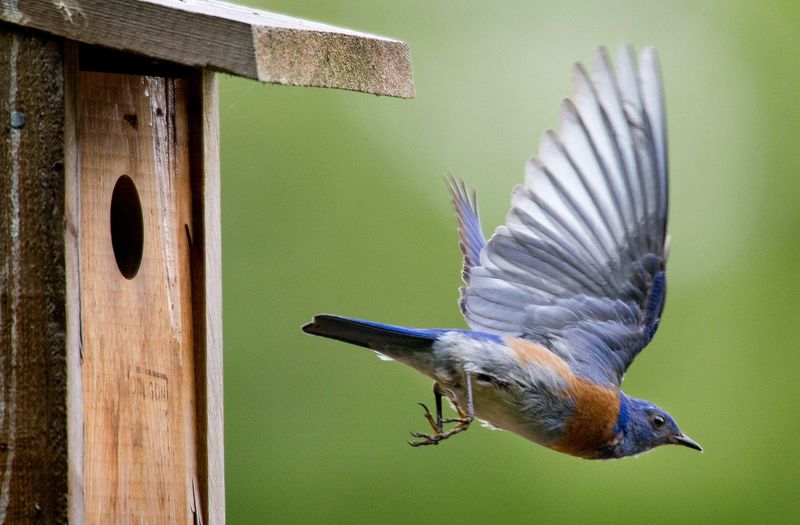
When the surrounding habitat can support a breeding territory but natural cavities are scarce, a properly designed nest box is the most direct way to address that specific gap. Western Bluebirds are secondary-cavity nesters, meaning they cannot excavate their own holes and depend on abandoned woodpecker cavities, natural tree hollows, or nest boxes to breed.
The California Department of Fish and Wildlife account identifies cavity availability as a factor that can limit local populations, particularly in landscapes where dead trees have been removed and woodpecker activity is low.
Nest boxes work because they substitute for the natural cavities the birds would otherwise seek. Cornell Lab confirms that Western Bluebirds readily accept nest boxes when the design and placement are appropriate, and recovery programs across California have documented population increases in areas where monitored box trails have been established.
That history gives a homeowner reasonable grounds to try a box, as long as the surrounding habitat can actually support a territory.
Two important qualifications apply. First, the California Bluebird Recovery Program is clear that other cavity-nesting species, including House Wrens, Tree Swallows, House Sparrows, and European Starlings, may claim a box before bluebirds do.
Second, installing a box never guarantees occupancy or successful nesting. A box placed in a yard that lacks adequate food, open foraging space, or reasonable predator control may attract no birds at all, or may attract the wrong species.
The box addresses one specific limiting factor; the rest of the habitat has to do its part.
Place and monitor the box for the whole habitat
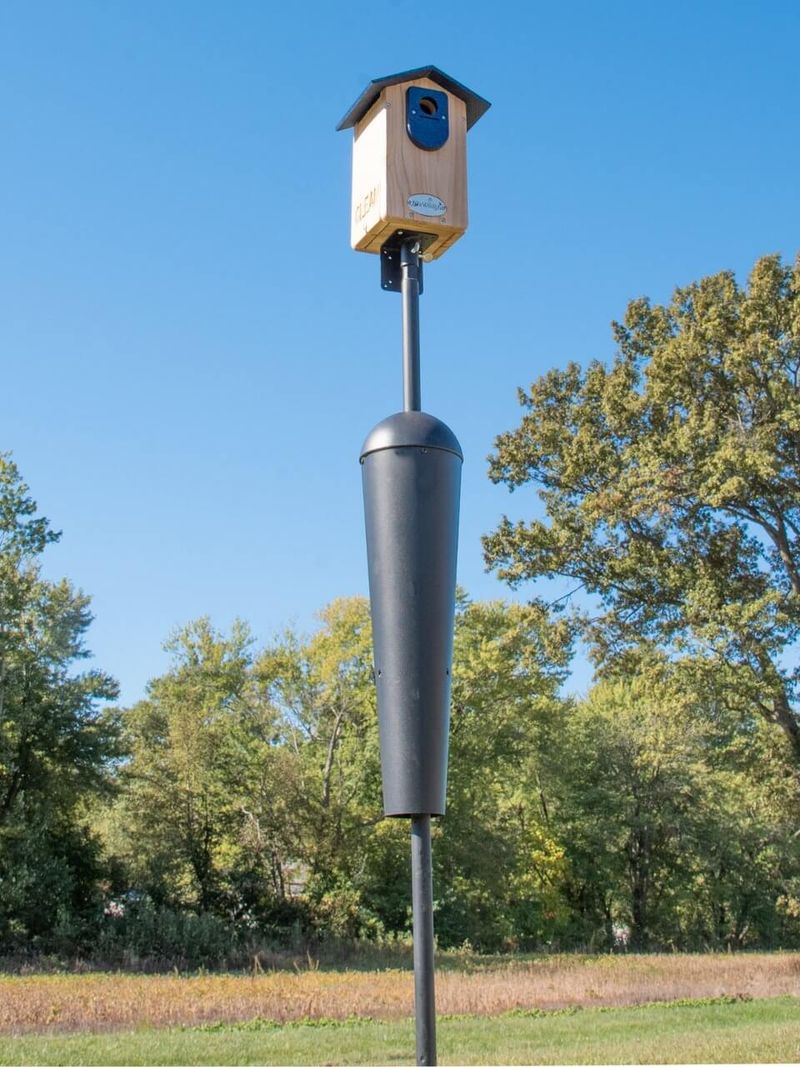
Box design and placement together determine whether a nest box helps or harms the birds you want to support. UC Agriculture and Natural Resources recommends an untreated, natural-looking box with no exterior perch (perches help predators and competitors more than bluebirds), an entrance hole of approximately 1.5 inches in diameter, ventilation gaps near the top, and drainage holes in the floor.
Mount the box at least five feet above the ground and add a predator guard, either a metal baffle on the pole or a metal collar around the entrance, to reduce the risk of snakes, raccoons, and cats reaching the nest.
Spacing and territory size both matter for placement. The California Bluebird Recovery Program suggests placing Western Bluebird boxes roughly 100 yards apart and notes that a breeding pair may need approximately two to five acres of hunting territory.
Those are useful benchmarks, not rigid rules, and local conditions including food density, vegetation structure, competing species, and disturbance levels will ultimately shape whether a given location works. A single box in a yard that backs up to open grassland or an orchard has a better shot than the same box in a heavily landscaped subdivision with no open foraging space nearby.
Monitoring is not optional. Check the box every week or two during nesting season, ideally in the morning when adult birds are less likely to be disturbed.
Remove House Sparrow nests promptly, as that non-native species can evict or kill bluebirds. Clean the box thoroughly at the end of each nesting season to reduce parasites and prepare it for the following year.
Keep a simple log of what species use the box, when eggs appear, and how many young fledge, both for your own satisfaction and because programs like the California Bluebird Recovery Program accept data from citizen monitors. Success is never guaranteed, but attentive management gives the birds a meaningfully better chance.
Remove risks before adding an attractant
Adding water, boxes, or plants to a yard that still has major hazards in place can concentrate birds near dangers rather than help them. A clean, shallow water source may genuinely help during California’s dry months.
The California Department of Fish and Wildlife account notes that Western Bluebirds drink regularly but may reduce their use of supplemental water when berries are available, so a birdbath is a reasonable addition rather than a decisive lure. Keep the water fresh and scrub the basin at least twice a week to prevent algae and mosquito breeding.
Feeders and baths both require consistent sanitation. U.S.
Fish and Wildlife Service guidance recommends cleaning feeders at least every two weeks, removing moldy or wet seed immediately, and taking feeders down temporarily if sick birds appear nearby. Disease can spread quickly at congregation points, and a contaminated bath or feeder can do more harm than good.
Because Western Bluebirds rarely visit seed feeders, the sanitation concern applies mainly to any fruit or mealworm offerings and to shared water sources used by other yard birds.
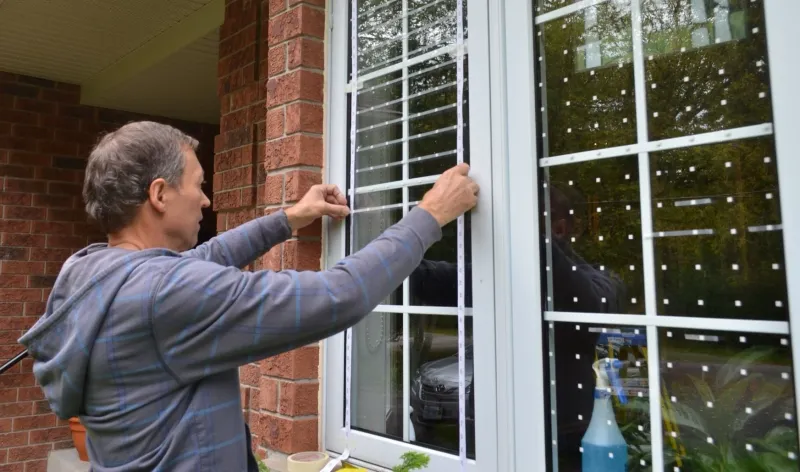
Window collisions kill a significant number of birds each year, and the risk goes up when birds are attracted to a yard. Cornell Lab’s window-safety guidance recommends exterior screens, collision-deterrent film, or closely spaced markings on the outside of glass; one or two decorative decals are not enough to break up the reflection.
Outdoor cats are a separate and serious concern. Cornell’s outdoor cat FAQ documents the scale of bird mortality caused by free-roaming cats, even well-fed ones.
Keeping cats indoors or using a secure outdoor enclosure is one of the most effective protective steps a homeowner can take before encouraging birds to spend more time in the yard.
Dead wood deserves a careful, case-by-case look. Snags and dead limbs can provide natural cavities and hunting perches that benefit cavity nesters, and Cornell’s habitat importance overview supports retaining them where feasible.
In California, however, fire safety, defensible-space regulations, tree stability, and local ordinances take priority. A dead tree that is structurally sound and well away from structures may be worth keeping; one that poses a fall risk or violates your local fire-zone requirements should be assessed by a certified arborist rather than preserved on principle.
The goal is a yard that is genuinely safer for birds, not one that trades one hazard for another.