
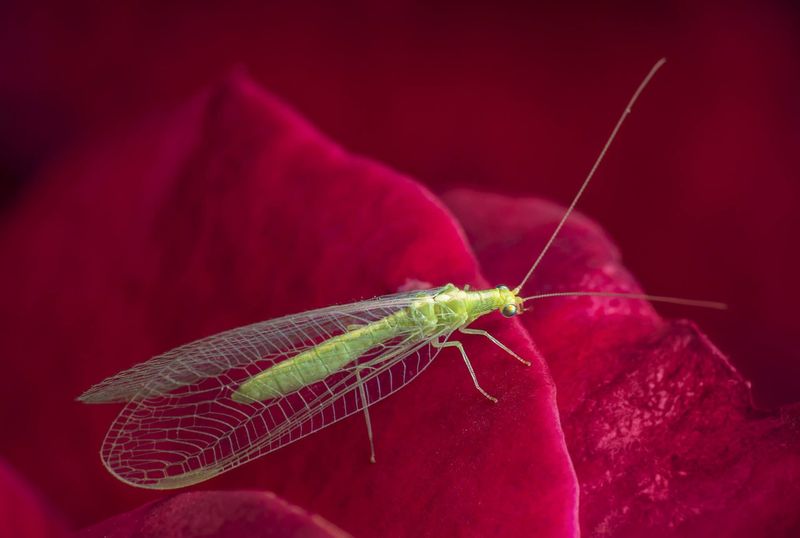
Somewhere on your rose canes right now, a tiny insect larva may be hunting the aphids you have been meaning to spray. Green lacewings are a diverse group of insects found across California, and their larvae are capable predators of soft-bodied pests like aphids and mealybugs.
Most rose growers never notice them, and many accidentally wipe them out before they get a chance to help. Understanding what these insects actually do, and what they cannot do, can change how you manage your roses all season long.
What lacewings may contribute to a rose garden
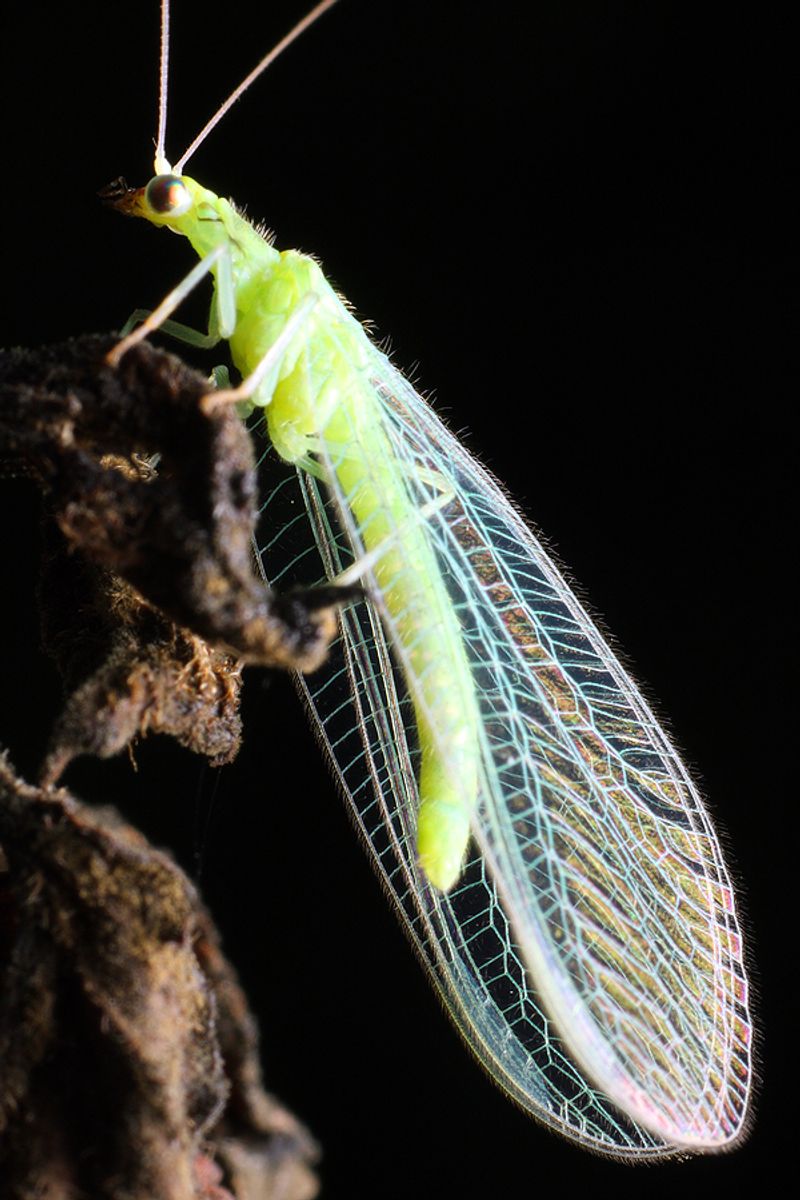
Green lacewings are not one insect but a broad group, with UC IPM recording at least 37 species in 11 genera occurring in California. That diversity matters because behavior, prey preference, and even whether an individual is native to California can vary considerably across species.
Seeing a green lacewing in your yard tells you something useful, but it does not tell you which species you are looking at or confirm that the insect is native.
The pest-control contribution most people associate with lacewings comes almost entirely from the larval stage. Larvae are active hunters that prey on aphids, mealybugs, scales, thrips, mites, and other soft-bodied pests.
Adults, by contrast, commonly feed on honeydew, nectar, and yeasts. Some adult lacewing species are also predatory, but others are not, so the adult stage should not be counted on as a reliable source of pest control in your rose bed.
Even the larvae are not a guaranteed solution. How much they contribute depends on pest species, pest density, life stage, plant structure, and how easily the larvae can physically reach the insects they are hunting.
UC IPM describes natural enemies as helpful components of an integrated pest-management system, not as stand-alone exterminators. Lacewings belong in that framing: potentially useful contributors whose effect varies with conditions, and one piece of a broader plan that still includes monitoring, mechanical controls, and targeted treatment when warranted.
Learn to recognize the stages that share the garden
Adult lacewings are slender, delicate insects, typically green or brownish, measuring roughly three-quarters of an inch in length. Four large, net-veined wings fold rooflike over the body when the insect is at rest, and the eyes catch light with a distinctive golden sheen.
Spotting one resting on a rose leaf or flying near your garden at dusk is a reasonable sign that lacewings are present in the area, though it says nothing definitive about species identity or whether that particular individual is native to California.
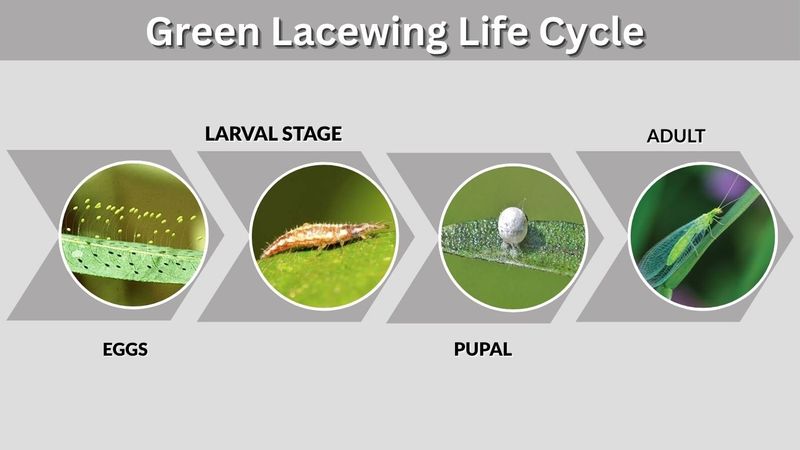
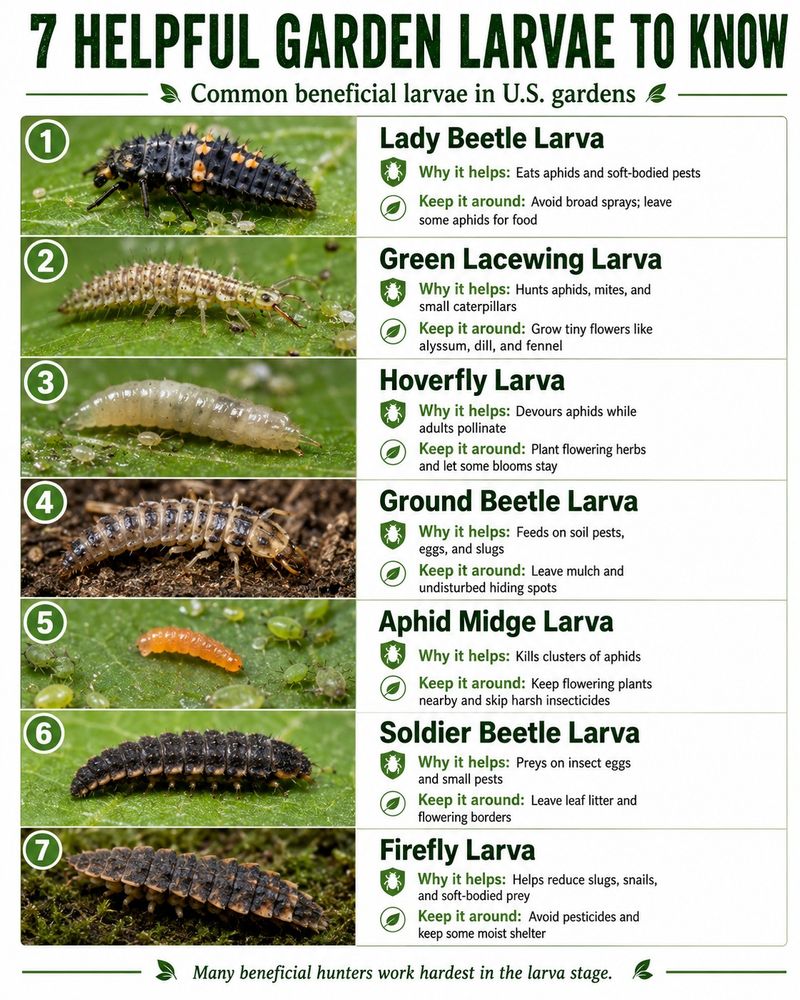
The larval stage looks nothing like the adult. UC IPM describes lacewing larvae as flattened, alligator-like, and legged, with prominent sickle-shaped mouthparts they use to seize and drain prey.
Color ranges from cream and tan to yellow, brown, or greenish, sometimes with faint stripes or spots. The larval stage is where the actual predation happens, so training your eye to recognize it is more practically useful than identifying the adult.
Eggs are the easiest stage to overlook and the most distinctive once you know what to look for. Each egg is laid individually on a slender silken stalk, lifting it slightly off the leaf surface.
That stalk is a reliable field marker because very few other garden insects lay eggs this way. Finding stalked eggs on your rose foliage is a good sign that a female lacewing has been active nearby, and that larvae may appear within days.
None of these features establish species identity with certainty, but together they help you recognize lacewings across their life cycle and avoid mistaking larvae for pests.
Assess the rose before you intervene
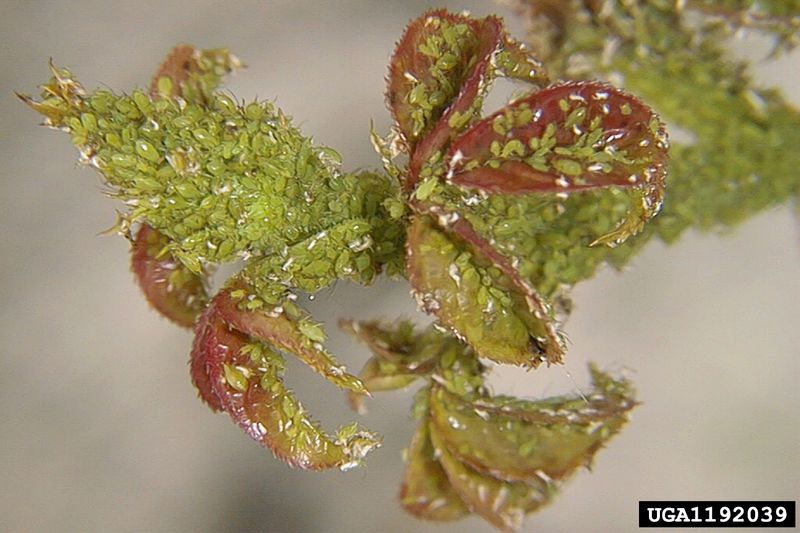
Aphids on roses tend to cluster on the most actively growing parts of the plant: new shoots, unfolding leaves, and flower buds. A light scattering of aphids on healthy, vigorous growth usually causes little measurable harm.
Problems escalate when populations build to the point where honeydew accumulates on foliage, black sooty mold begins to coat leaves, buds become distorted, or developing flowers come out noticeably smaller than usual.
UC IPM notes that in California, rose aphid pressure is often most significant for roughly six weeks in spring and early summer, with high summer temperatures naturally reducing populations afterward. That window is a useful planning guide, but it should not be treated as a fixed calendar rule.
Coastal gardens, inland valleys, and shaded microclimates all behave differently, and your own observations over a season are more reliable than any general timeline.
Mealybugs require a separate assessment. They are a broad pest category, not a single species, and their waxy body coverings, tendency to shelter in crevices, and variable life stages can limit how effectively any predator, including lacewing larvae, can reach them.
UC IPM identifies lacewings among the naturally occurring predators of mealybugs, alongside lady beetles, spiders, minute pirate bugs, and predaceous midge larvae, while recommending inspection and cultural practices as part of a broader management approach.
Before reaching for any treatment, spend a few minutes looking at both pest density and the presence of predators. Lacewing larvae, parasitic wasp mummies, and other beneficial insects are often already working on a light infestation.
Spraying before you have assessed the full picture can eliminate allies that were making progress.
Start with monitoring and the least disruptive response
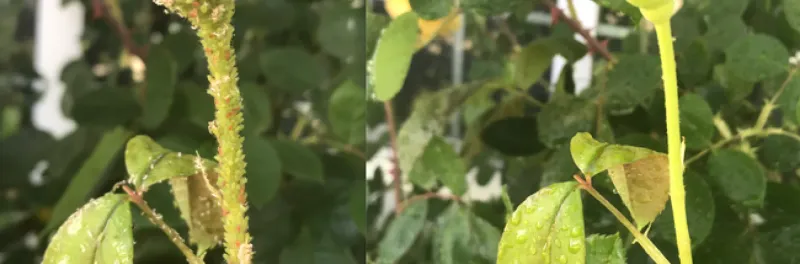
Patience is a practical tool, not just a philosophical one. When aphid numbers are low and the rose is putting out healthy new growth, waiting and watching for a week or two often reveals that natural enemies, weather, or simple plant vigor are already holding the population in check.
UC IPM recommends preserving existing natural enemies and using cultural or mechanical controls before reaching for any spray product, including lower-impact options.
A strong stream of water directed at aphid colonies on sturdy rose canes is often the first physical intervention worth trying. UC IPM notes that water applied this way can knock aphids off the plant and may be sufficient in many landscape situations.
Applying it early in the morning gives foliage time to dry before evening and reduces the moisture conditions that can encourage fungal problems. Aphids that fall to the soil rarely make it back onto the plant in significant numbers.
Water is not a perfect solution, though. It can dislodge beneficial insects along with pests, and it does nothing for mealybugs sheltered in tight crevices or protected by heavy wax.
Repeat applications may be needed as new aphids hatch or migrate from nearby plants. Think of a water spray as a way to buy time and reduce pressure while you continue monitoring, not as a treatment that resolves the problem in a single pass.
If numbers climb back quickly or damage becomes visible, the next steps in your IPM plan become relevant.
Improve conditions for resident natural enemies
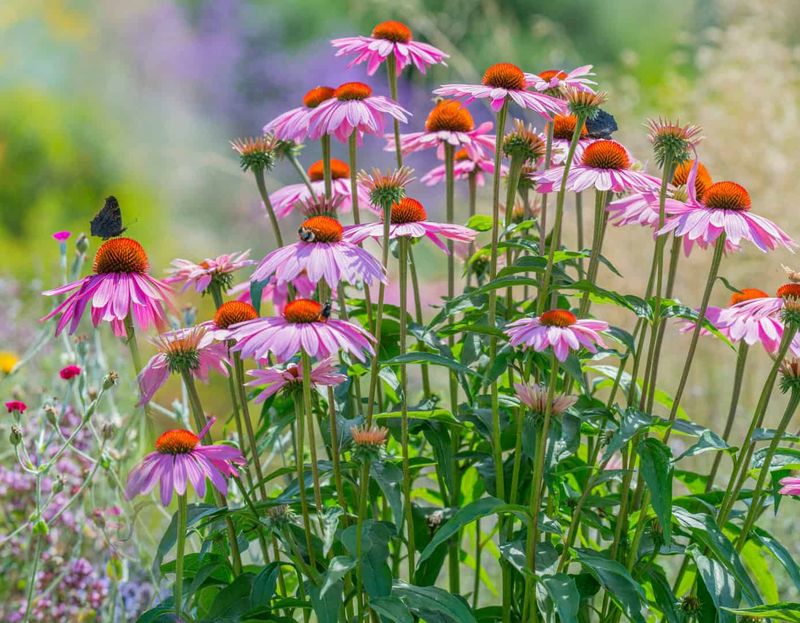
One of the most reliable things a rose grower can do for lacewings and other beneficial insects is to make the surrounding garden less hostile. UC IPM recommends growing diverse flowering plants that supply nectar, pollen, food, and shelter for adult lacewings and other natural enemies.
Small-flowered plants that are easy for insects to access, such as sweet alyssum, yarrow, dill, and fennel, are commonly mentioned in this context, though no specific plant has been shown to reliably increase lacewing control on roses to a measurable degree.
The honest framing here is that diverse flowering habitat improves general conditions for beneficial insects. It does not guarantee that lacewings will appear in numbers large enough to handle a pest outbreak, and no particular flower can be promised to deliver that result.
Think of it as reducing barriers rather than engineering a solution.
Ant management is a separate but related step. Ants actively tend aphid colonies, protecting them from predators and moving them to new plant growth.
When ants are running up and down your rose canes, they can physically interfere with lacewing larvae and other natural enemies trying to reach the pest colony. Controlling ant access to the plant, using sticky barriers on canes or trunk-based ant deterrents around the base, can give natural enemies a better opportunity to do their work.
UC IPM lists ant control as one of the habitat-support practices that can benefit biological control, while being clear that it supports rather than replaces monitoring and other management steps.
Avoid treatments that disrupt biological control
Broad-spectrum insecticides applied without a clear reason are one of the most common ways gardeners unknowingly eliminate the natural enemies already working in their yards. Materials such as carbaryl, malathion, and many synthetic pyrethroids can harm bees, lacewing larvae, and other beneficial insects present at or after the time of application.
The problem is not that these products are always wrong to use, but that using them reflexively, before monitoring shows a genuine need, trades away biological control for a temporary reduction in pest numbers.
UC IPM recommends choosing selective or nonpersistent products when treatment is necessary and avoiding broad-spectrum materials whenever the pest problem does not require them. Toxicity is not a fixed property of a product category.
It depends on the specific material, how it is applied, which species are present, what life stage those insects are in, and environmental conditions at the time of application. A product described as lower impact in one situation can still harm exposed beneficials in another.
Spinosad deserves particular attention. UC IPM specifically notes that spinosad can harm bees and certain natural enemies for a period after application and should not be applied to plants that are in flower.
This is not a reason to never use spinosad, but it is a reason to read the label carefully, avoid application when beneficials are actively foraging, and consider whether the target pest actually requires it.
The practical takeaway is not a blanket prohibition on any product. Relative toxicity data for common insecticides and miticides can help you compare options when treatment is genuinely needed.
Reserve the most disruptive materials for situations where monitoring has confirmed that the pest level justifies the trade-off, and time applications to minimize contact with natural enemies and pollinators.
Treat a damaging infestation precisely when needed
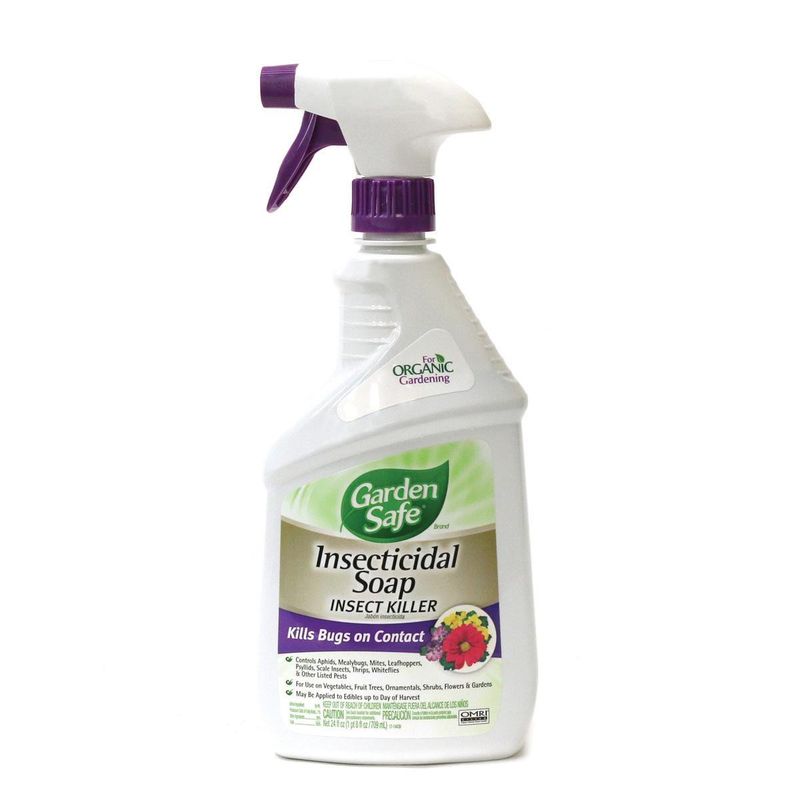
When monitoring confirms that aphid or mealybug populations are rising, causing visible damage, or not responding to mechanical controls, a more targeted treatment may be warranted. Registered insecticidal soaps and horticultural oils are the most commonly recommended contact options for these pests on roses.
UC IPM explains that insecticidal soap and horticultural oil suppress pests by direct contact, which means thorough coverage of the infested plant surfaces is essential. Spraying the tops of leaves while missing the undersides or the interior of crowded growth will produce incomplete results.
These products work on pests present at the time of application. They leave little residual activity, so a single treatment rarely resolves a heavy infestation.
Repeat applications spaced according to the product label are often necessary, particularly if new aphid generations are hatching or if mealybugs are sheltered in waxy coatings or tight stem crevices that are difficult to penetrate.
Homemade dish-soap mixtures are not a safe substitute for registered insecticidal soaps. Household detergents are not formulated for plant use, are not tested for phytotoxicity on rose cultivars, and do not carry a legal pesticide label.
UC IPM guidance on rose pest management consistently points to registered products labeled for roses and the specific target pest. Use only those products and follow the individual label completely, including any instructions about application rates, timing, and plant-sensitivity testing.
Cultivar sensitivity to oils and soaps is real but varies by product and rose variety. EPA-registered product labels, including specific registered formulations for ornamental use, may include warnings that certain rose varieties can experience flower or foliage damage from particular formulations.
Follow the label’s specific testing and application instructions rather than assuming all rose treatments carry the same risk. Avoid spraying in direct sun or during hot weather, and avoid spray drift onto beneficial insect habitat nearby.
Conserve lacewings without expecting a guaranteed cure
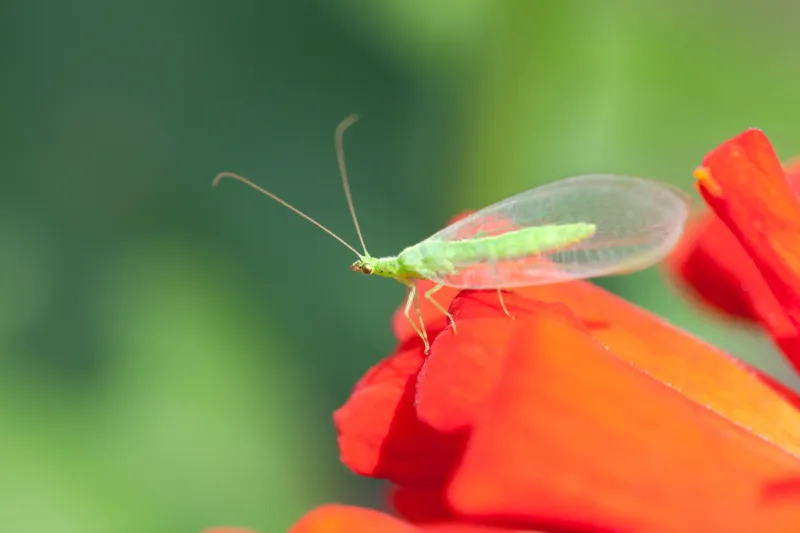
Conserving resident lacewings is a worthwhile habit, but it is a different thing from buying and releasing them. UC IPM specifically reports that releasing green lacewings against rose aphids did not produce significant control in research trials.
That finding does not mean resident lacewings are useless on roses, but it does mean you should not expect a commercial release to clear an infestation. The conditions that make biological control effective, including the right prey density, plant structure, and absence of disruptive pesticides, have to be present for any natural enemy to contribute meaningfully.
Lacewing larvae also come with a complication that commercial release promoters rarely mention. As generalist predators, they may consume other beneficial insects, including other lacewing larvae.
Research on intraguild predation among generalist insect predators has found that this kind of competition among natural enemies can reduce overall suppression of a pest population. Releasing large numbers of lacewing larvae into a garden with existing predators can sometimes work against the biological control system rather than reinforcing it.
The realistic sequence for managing rose pests with lacewings in mind runs like this: identify the pest accurately before taking action, monitor both pest numbers and natural-enemy presence, support habitat conditions that allow beneficial insects to persist, use mechanical controls such as water sprays when populations are manageable, manage ants that protect aphid colonies, and apply a registered selective product only when monitoring shows the pest level justifies it. Every step in that sequence is compatible with protecting lacewings, and none of them requires lacewings to perform beyond their actual capacity.
Success in this framework does not mean an aphid-free rose. A garden where natural enemies are present and pest outbreaks are less frequent and less severe is a garden that is working well.
The lacewings you never noticed were probably already part of that picture.