
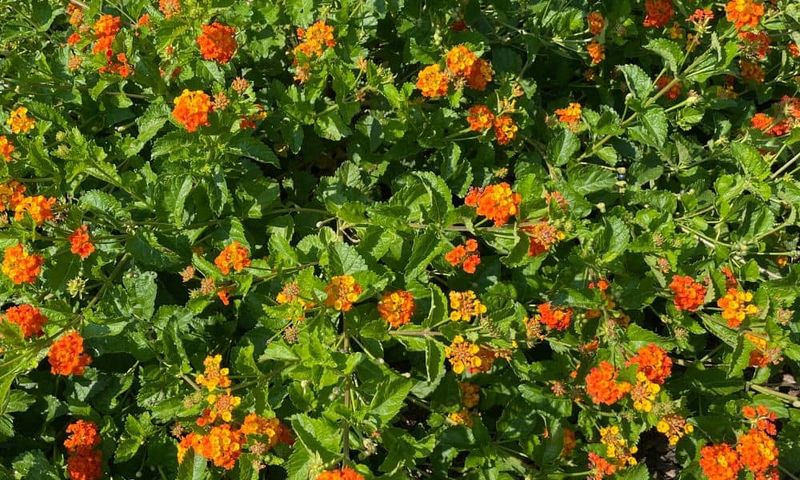
Most Texas gardeners spend money every spring replacing plants that didn’t survive winter, but there’s one native shrub that can skip that whole cycle. Texas lantana, a tough deciduous perennial, can die back to the ground in cold weather and then push up fresh growth from its roots when temperatures warm again.
When it’s planted in the right spot, this plant can return year after year with little fuss, blooming from spring through fall while handling the kind of heat that finishes off most ornamentals.
Texas lantana can make the promise—but only in the right yard
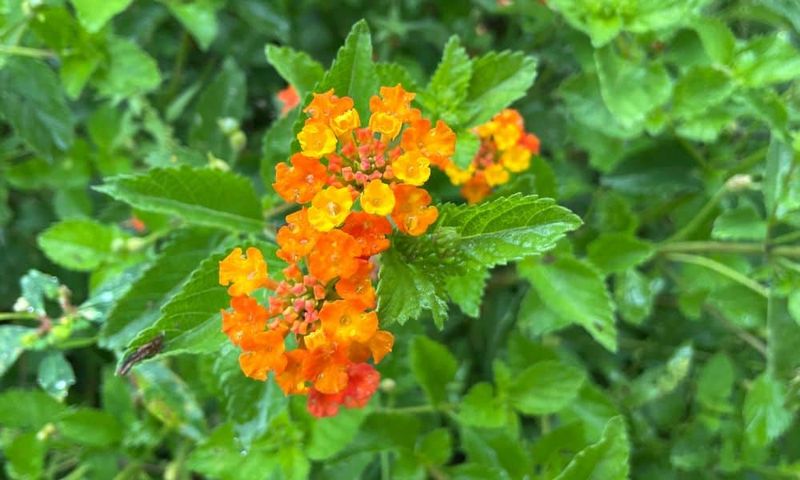
Few plants match the appeal of something you put in the ground once and watch return on its own schedule, but that promise needs a realistic frame before you head to the nursery. The plant best suited to this role in Texas yards is Texas lantana, known scientifically as Lantana urticoides.
Some Texas sources also list it under the name Lantana horrida, a reflection of how tangled lantana taxonomy can get, but both names point to the same tough native shrub.
What earns it a place in this conversation is its growth habit. Texas lantana is a deciduous perennial shrub, meaning it can lose its visible top growth in winter before regrowing from established roots or the crown when warmer weather arrives.
That cycle, rather than annual replanting, is the real promise behind the title. Texas A&M AgriLife Extension describes it as a low-maintenance perennial shrub, hardy in USDA Zones 8 through 11, with a long bloom period running roughly April through October and strong drought tolerance once it’s settled in.
The corrected version of the title’s promise is this: Texas lantana can return year after year with little routine care when planted in a suitable Texas location. Its documented range covers the Coastal Prairie, East Texas, the Edwards Plateau, North-Central Texas, and South Texas, according to the University of Texas Plant Resources Center, though Texas A&M Kingsville’s Caesar Kleberg Wildlife Research Institute notes it is not commonly found in the northwestern part of the state.
Full sun, well-drained soil, and a fair establishment season are the conditions that make the return reliable, not a guarantee printed on a nursery tag.
Its winter disappearance is part of the perennial cycle
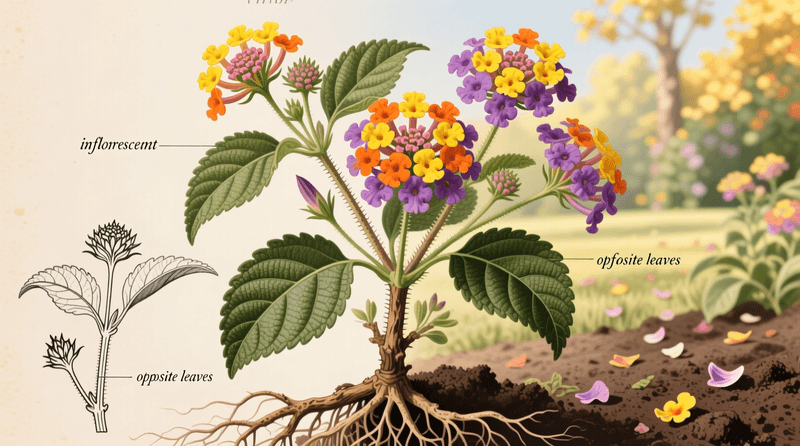
Every winter, a well-placed Texas lantana can look like a total loss. The stems turn brown, the leaves drop or shrivel, and the whole plant seems to have given up.
For gardeners used to evergreen shrubs, that kind of dieback reads as failure, but with Texas lantana it’s actually the perennial cycle working as expected.
Texas lantana is deciduous, not evergreen. Caesar Kleberg Wildlife Research Institute describes it as a deciduous shrub that can die back in cold weather, and Texas A&M AgriLife Extension confirms the plant’s ability to regrow from established roots after winter dormancy.
The visible top growth may disappear entirely, but the root system of an established plant can hold enough energy to push up new stems once soil temperatures rise in spring. Patience matters here: don’t pull the plant in February just because nothing looks alive above ground.
The key word in all of this is “established.” A plant that went into the ground last fall with good drainage and adequate early watering has a meaningfully better chance of coming back than one that was planted in compacted soil or shallow clay and never properly settled in. Unusually severe cold, a poorly exposed site, or a winter with repeated hard freezes can still prevent recovery even in plants that survived previous seasons.
Perennial doesn’t mean indestructible, and the Texas climate varies enough that no single winter plays out the same way across the state. Waiting until late spring before writing off a dormant plant gives Texas lantana its best chance to prove it’s still there.
Choose a sunny, well-drained site that fits its mature spread
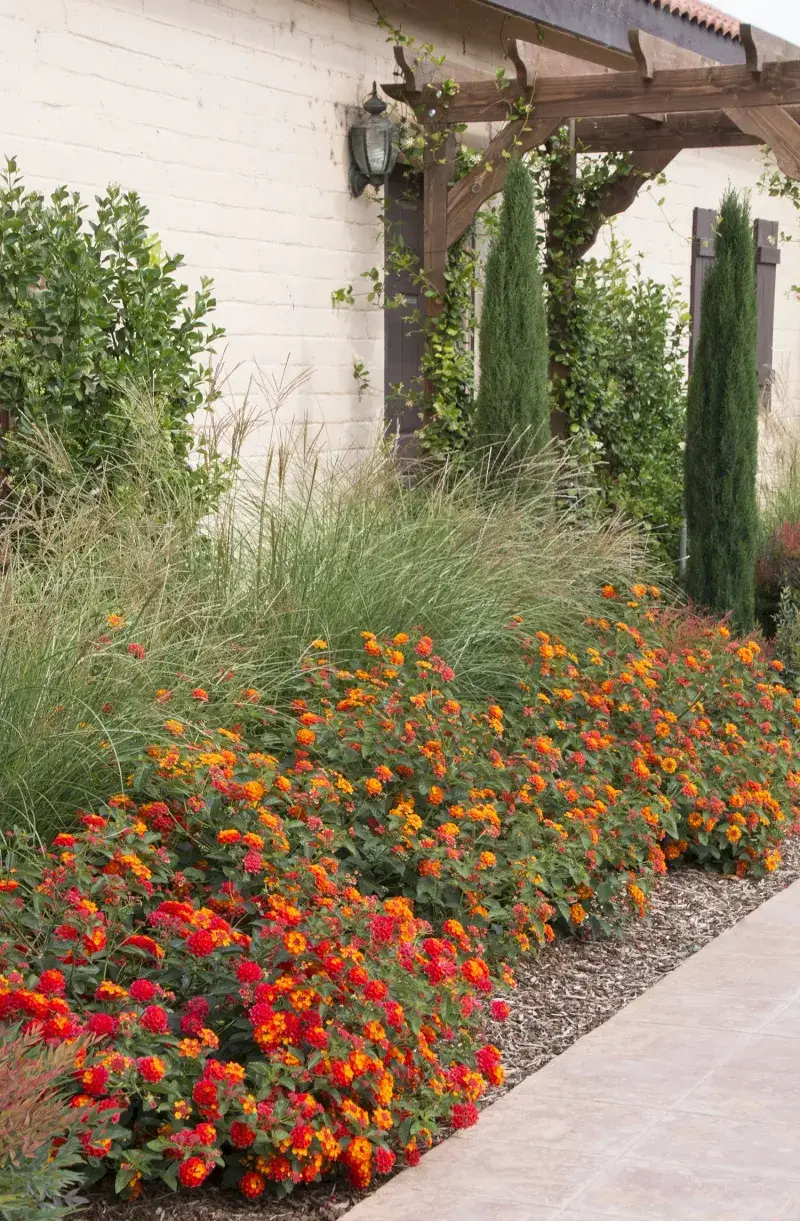
Placement is where this plant either thrives for a decade or slowly declines no matter how much attention you give it. Texas A&M AgriLife Extension recommends at least six hours of direct sunlight and soil that drains freely, and those two requirements aren’t negotiable.
A shady corner or a low spot where water pools after rain will work against the plant from day one.
Drainage deserves more emphasis than it usually gets. Excess water and poor drainage pose a greater threat to Texas lantana than ordinary dry conditions.
A site that stays soggy after rain, or a bed that receives heavy supplemental irrigation meant for neighboring plants, can kill an established Texas lantana faster than a missed week of watering ever would. Sandy loam, rocky caliche soil, or even a raised bed all work well.
Heavy clay that holds moisture is a setup for root problems.
Size is the other planning detail that surprises unprepared gardeners. Texas lantana can mature into a wide-spreading shrub reaching approximately 4 to 6 feet in height and spread, with stems that can become prickly as the plant ages.
Texas A&M San Antonio landscape documentation reflects its use in open, sunny plantings rather than confined spaces. A sunny border, a xeric bed along a fence line, or an open foundation planting where the shrub has room to spread are all practical fits.
A narrow walkway where pedestrians brush against the plant every day is not a good match, both because of the eventual spread and because of those prickly stems. Plan for the mature plant, not the small container it comes home in.
Establish the roots before you expect low maintenance
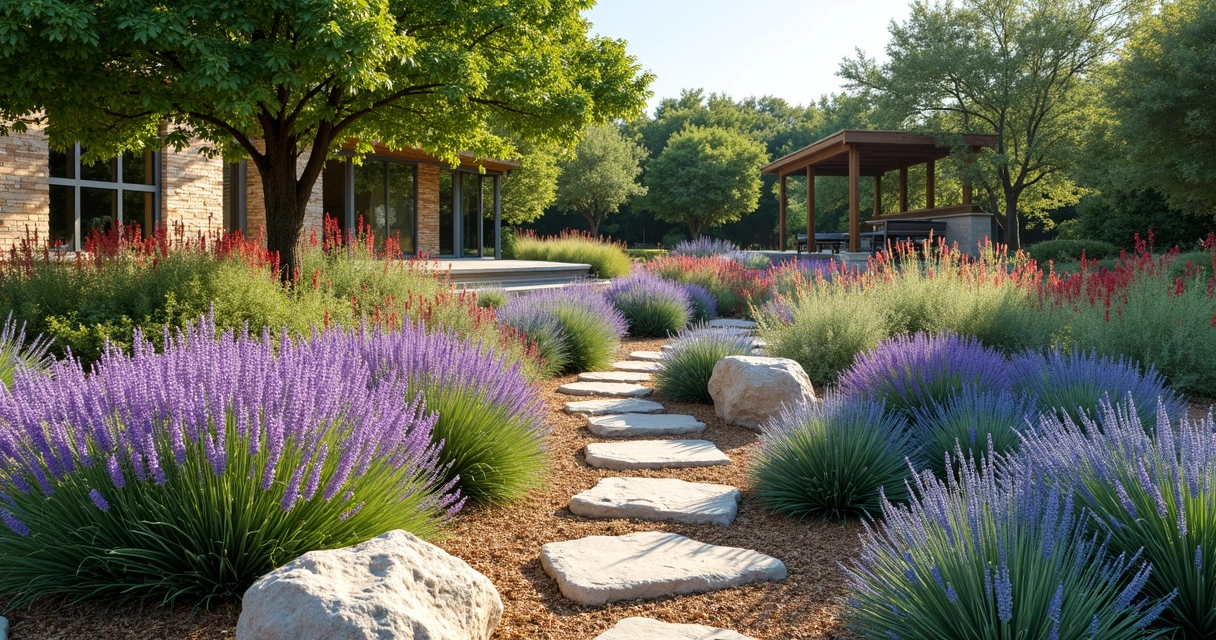
The low-maintenance reputation Texas lantana has earned applies to established plants, not brand-new ones. Getting a plant through its first season requires more attention than the long-term care routine suggests, and skipping that early investment is the most common reason a promising plant doesn’t come back the following year.
Fall is a favorable planting window for Texas natives. Texas Parks and Wildlife has noted that fall planting allows roots to develop before the harshest summer heat arrives, giving the plant time to anchor itself in cooler, more forgiving soil conditions.
TPWD’s water-wise yard guidance also supports native plant choices as a way to reduce long-term irrigation needs once plants are settled. If you plant during hot weather instead, supplemental irrigation becomes especially critical because the root system hasn’t had time to reach moisture deeper in the soil profile.
During establishment, water deeply and consistently rather than giving the plant frequent shallow drinks. Deep watering encourages roots to follow moisture downward, which builds the drought resilience the plant is known for.
Texas Superstar program guidance makes clear that even drought-tolerant plants need adequate moisture during initial establishment. Texas A&M AgriLife Extension adds that even after the plant is fully settled in, deep weekly watering during intense summer heat remains a sensible practice.
The distinction to hold onto is this: drought tolerance means the plant can handle dry stretches without collapsing, not that it performs identically with zero water input regardless of conditions. Give the roots a real first season, and the plant is far more likely to deliver on the low-maintenance promise in year two and beyond.
Use seasonal pruning instead of annual replacement
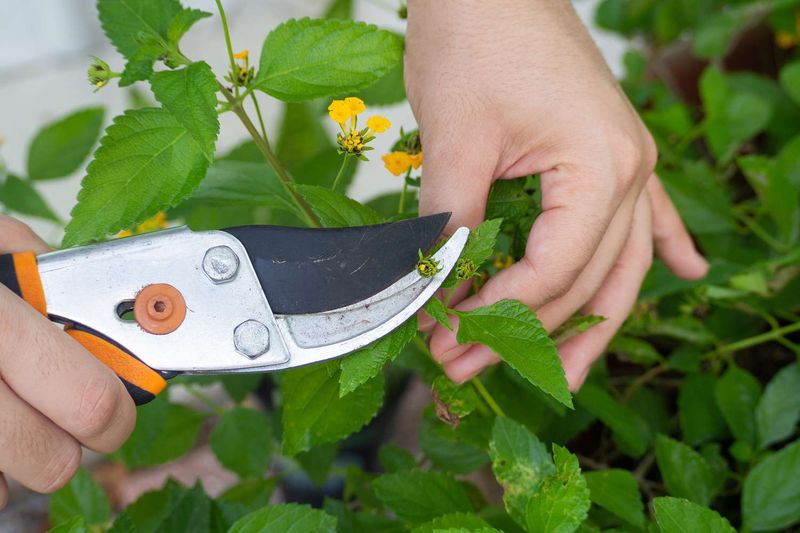
Come early spring, a dormant Texas lantana can look ragged enough that the impulse to pull it out and start over feels reasonable. Resist that impulse.
What looks like a dead shrub is often a plant with an intact root system ready to push up new growth once the soil warms, and a simple pruning session is all the intervention it needs.
Texas A&M AgriLife Extension recommends cutting Texas lantana back to approximately 8 inches in early spring to encourage fresh, vigorous growth after winter dormancy. Removing the old woody stems makes room for new shoots and keeps the plant from becoming a tangled mass of dead wood.
This is seasonal cleanup, not replanting, and it takes a few minutes rather than a trip to the nursery.
Outside of that annual spring cutback, established Texas lantana asks for very little. The bloom period runs roughly April through October, so once new growth appears, the plant moves quickly toward flowering with minimal prompting.
Occasional deep watering during the hottest stretches of summer remains useful even for established plants, as noted in the previous section. Beyond that, the maintenance calendar for a well-placed Texas lantana is remarkably short.
No deadheading is required to keep blooms coming, and the plant doesn’t need fertilizing to perform in the lean, well-drained soils it prefers. The annual pruning is the task that keeps the whole cycle running cleanly, and it’s a far better trade than buying a flat of annuals every May.
Verify the species before you bring lantana home
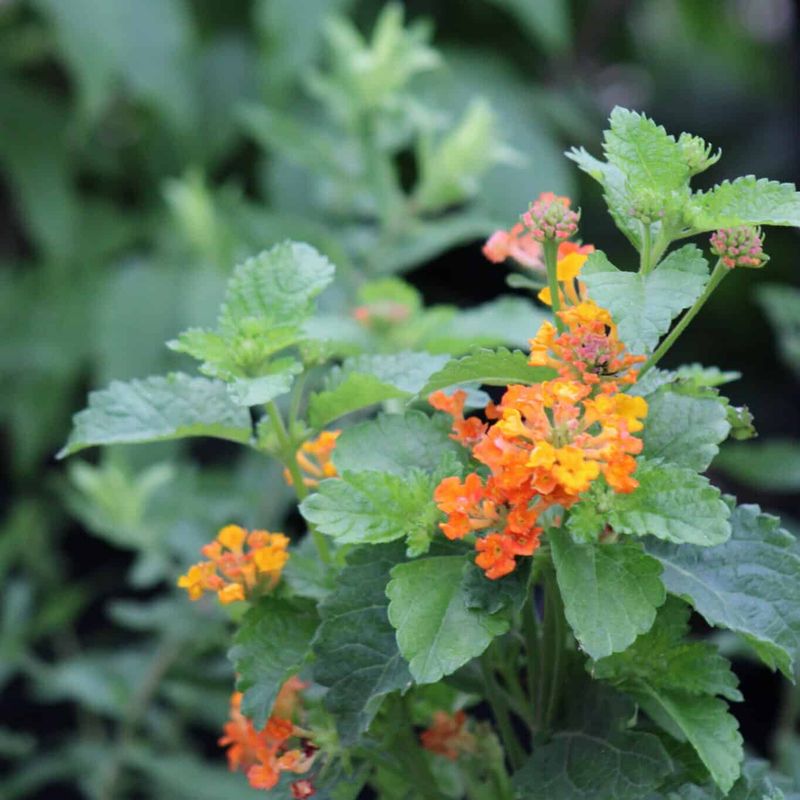
A tag that reads “lantana” at a garden center tells you almost nothing useful. Cultivated lantanas come in many varieties, some are hybrids, some are species selections, and not all of them share the same regional performance, wildlife value, or legal status depending on where you live.
Getting the right plant starts with knowing which plant you’re actually looking for.
The specific species for Texas yards is Texas lantana, Lantana urticoides. The University of Texas Biodiversity Center notes that lantana taxonomy can be complicated, and some Texas sources use the name Lantana horrida alongside or instead of Lantana urticoides.
Both names have appeared in Texas literature for the same native species, so either name on a label from a reputable Texas native plant nursery is a reasonable sign you’re looking at the right plant. What matters most is verifying the scientific name rather than relying on a common name or a generic “lantana” label.
The Florida situation is a separate matter entirely and worth addressing directly for any reader who gardens across state lines. UF/IFAS classifies common lantana, Lantana camara, as invasive in Florida and advises against planting it there.
UF/IFAS gardening solutions guidance points Florida gardeners toward locally appropriate native species or sterile cultivars instead. The Texas native recommendation in this article does not transfer automatically to Florida, and Florida readers should check UF/IFAS resources before selecting any lantana for their yard.
Buying from a reputable nursery that stocks and labels Texas natives correctly is the most reliable way to make sure you’re planting what the label says.
Enjoy the flowers while treating the plant as unsafe to eat
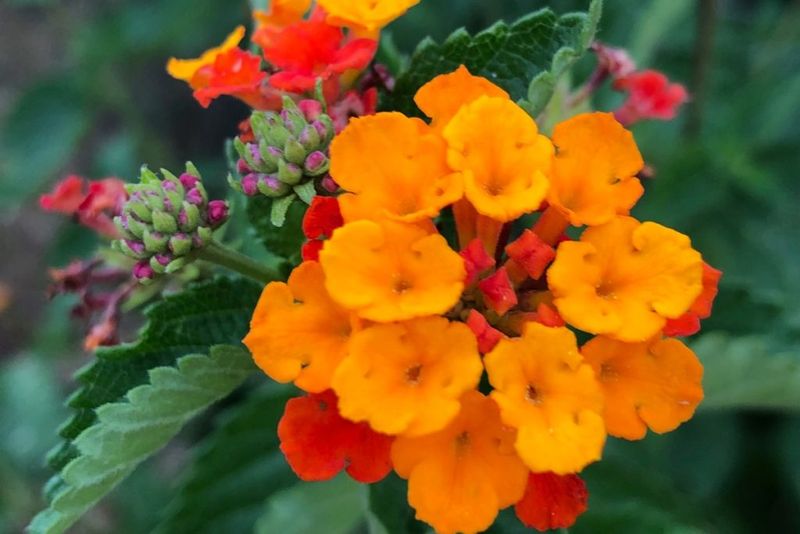
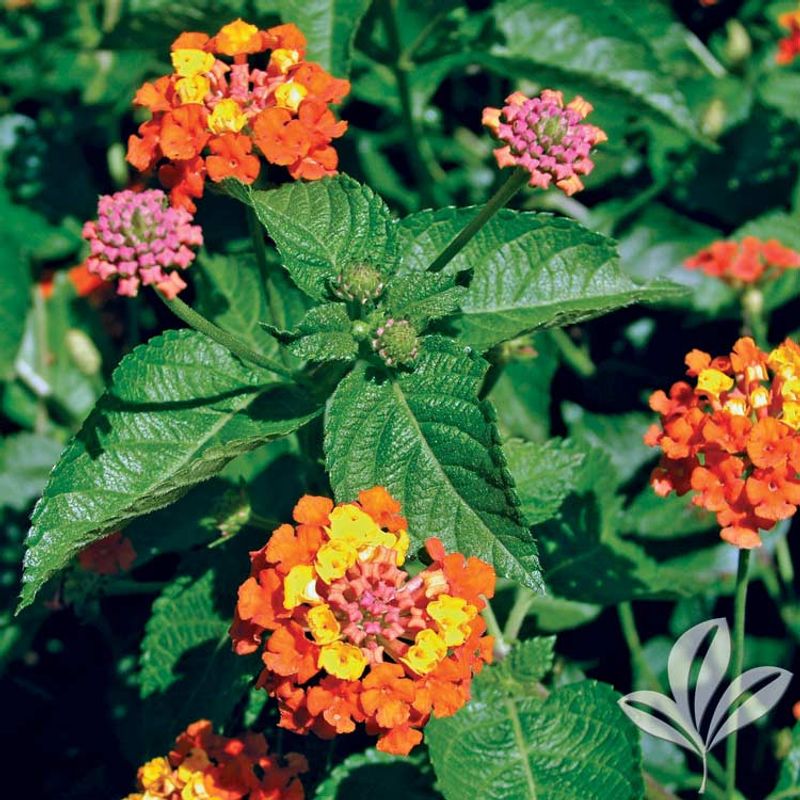
The flowers on a blooming Texas lantana are genuinely striking, small clusters of orange, yellow, and sometimes red that keep appearing from spring through fall. That long display also serves a practical wildlife function beyond looking good in the border.
The blooms attract bees and butterflies, and Texas A&M AgriLife Extension identifies Texas lantana as the primary food source for the lantana scrub hairstreak butterfly, a specific and meaningful ecological role that not every flowering shrub can claim.
Texas Parks and Wildlife supports native plants as beneficial to local wildlife and better adapted to Texas conditions, and Texas lantana fits that framing well in the right yard. That said, wildlife value varies by species and cultivar, so the attraction you see with Texas lantana in a documented Texas setting shouldn’t be assumed to apply equally to every lantana sold at a general nursery.
The safety warning belongs right alongside the wildlife appeal. Caesar Kleberg Wildlife Research Institute and UF/IFAS both document toxicity concerns associated with lantana foliage and unripe berries.
Children, pets, and grazing livestock must not eat any part of the plant. The berries are not edible, and the foliage carries compounds that have caused documented harm in livestock.
Plant Texas lantana where it has room to be enjoyed visually without being accessible to animals that graze or children who might pick the berries out of curiosity. The visual payoff is real, and so is the need to keep the plant out of reach of anyone who might treat it as food.
Plant it once only when the site can support its return
Before buying a Texas lantana, run through a short checklist. Full sun for at least six hours a day – check.
Soil that drains quickly and doesn’t hold standing water – check. Enough open space to accommodate a shrub that can reach 4 to 6 feet in height and spread – check.
Willingness to cut it back to about 8 inches each early spring and water it deeply during its first season and during severe summer heat – check. If those conditions match your site, Texas A&M AgriLife Extension’s documented guidance supports the expectation that this plant can return year after year with very little routine effort.
If those conditions don’t match, the promise in the title won’t hold. Shade, heavy clay, poor drainage, or a location in the documented exception zone of northwestern Texas all reduce the likelihood of reliable return.
Caesar Kleberg Wildlife Research Institute confirms that the plant’s natural distribution doesn’t extend uniformly across the entire state. The corrected takeaway is honest but still compelling: correct species selection and a site that genuinely fits the plant’s needs create the conditions for reliable return, not a generic promise attached to any sunny corner.
Texas lantana isn’t a plant for every yard, but for the yard where the site fits, it’s one of the most capable native shrubs available to Texas gardeners. One planting, done right, can deliver years of color without annual replacement.