
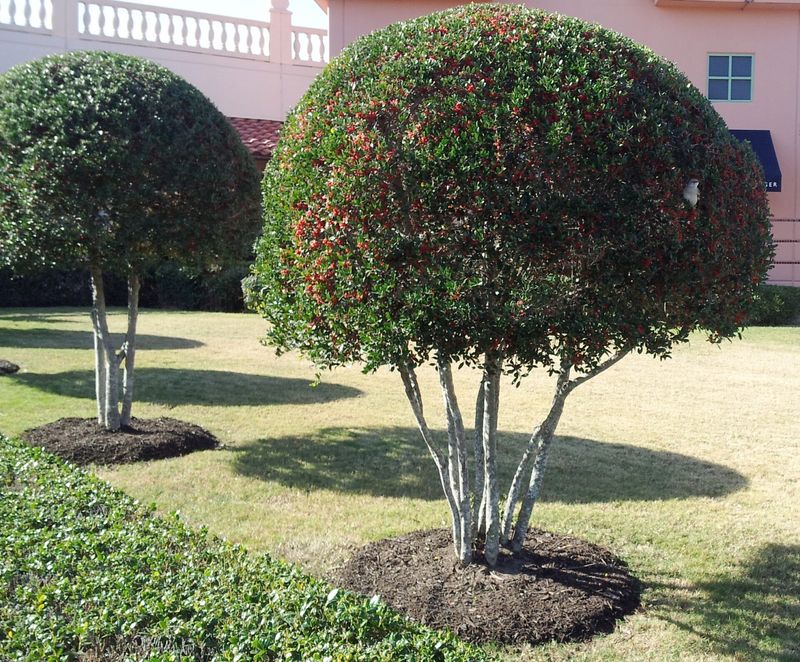
Finding a foundation shrub that holds up through a Texas summer and still looks good planted against heavy clay soil is harder than it sounds. Most homeowners end up replacing plants every few years after another brutal August does them in.
Dwarf yaupon holly has earned a reputation as one of the toughest, most adaptable foundation shrubs available for much of Texas and the South, and understanding exactly why, and how to plant it right, makes all the difference.
Why dwarf yaupon belongs on the shortlist for hot Texas foundation beds
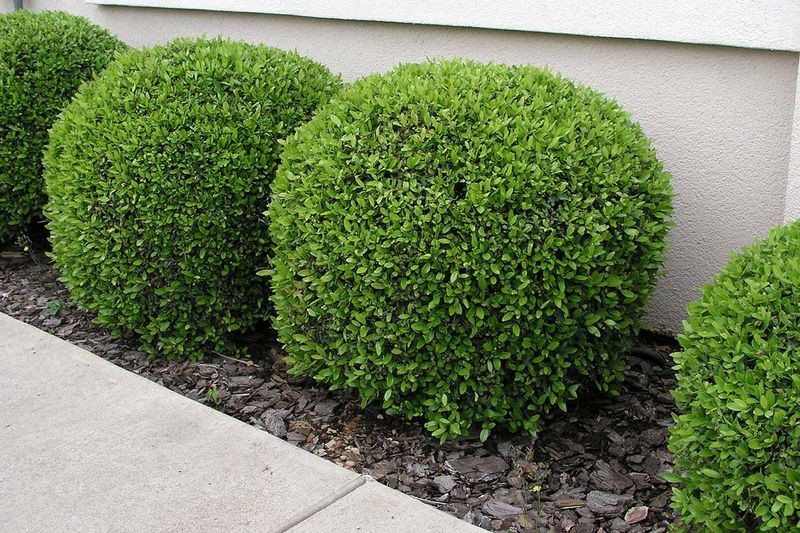
Gardeners across the Gulf Coast have been reaching for yaupon holly for decades, and the reasons are well documented. Texas A&M’s WaterSmart program lists yaupon holly among its “Five that Survive” shrubs for the Upper Texas Gulf Coast, a region defined by extreme heat, heavy rainfall, and periodic drought.
That kind of regional endorsement from an agricultural university carries real weight for homeowners who want a plant backed by evidence rather than just nursery marketing.
Dwarf yaupon holly is evergreen, meaning it keeps its structure and color year-round instead of going bare in winter. It handles clay and alkaline soils, tolerates occasional flooding, and bounces back from drought conditions that would stress less-adapted plants.
UF/IFAS documentation on ‘Schilling’s Dwarf’ specifically describes it as a dense, low-growing foundation plant with high drought tolerance and documented adaptability to clay and slightly alkaline soils.
None of that makes yaupon the only shrub that can handle Texas conditions. Other well-regarded options, including dwarf wax myrtle, cenizo, Barbados cherry, and red yucca, also bring credible heat and drought tolerance to the table.
The honest case for dwarf yaupon is that it combines evergreen structure, broad soil adaptability, and documented regional performance in a single plant, which puts it near the top of the shortlist for many demanding foundation sites. That combination, rather than any claim of invincibility, is what makes it worth considering first.
Choose the cultivar by mature size, not by the word dwarf
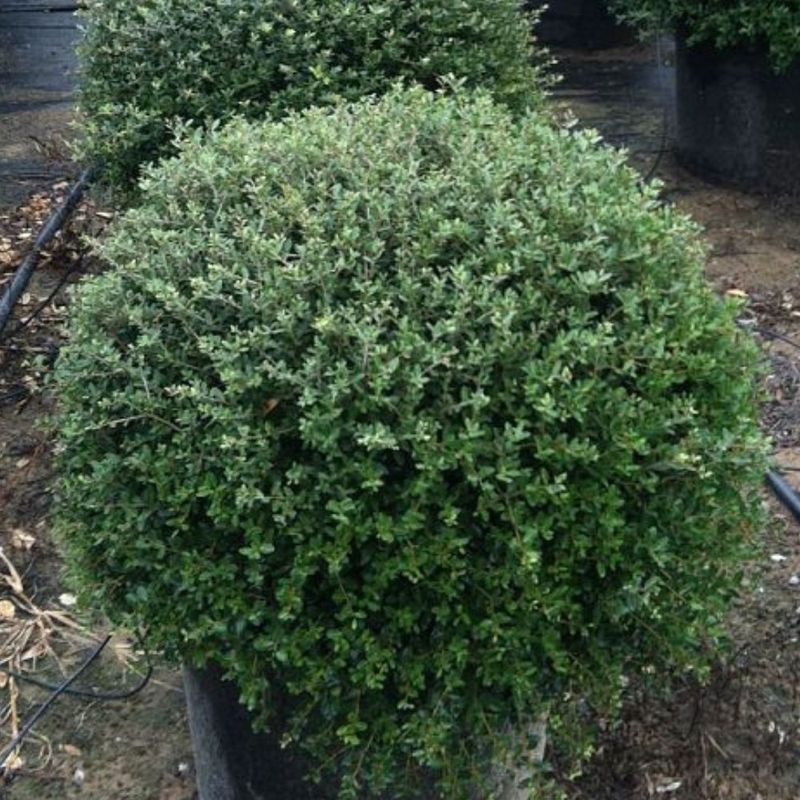
The word “dwarf” on a plant tag can be misleading, and with yaupon holly it pays to read past the label. The standard species, Ilex vomitoria, can reach roughly 12 to 20 feet tall and 10 to 15 feet wide depending on conditions.
Austin’s municipal plant guide notes that a standard yaupon planted too close to a structure or walkway may eventually demand substantial pruning to keep it in check.
That is a very different plant from what most people picture when they think “foundation shrub.”
‘Schilling’s Dwarf’ is one of the most commonly recommended selections for low foundation beds. UF/IFAS identifies ‘Schilling’s Dwarf’ specifically for foundation use and lists it at roughly 4 to 7 feet tall with a spread of 6 to 10 feet.
That mature width is the number to plan around, not the height. A shrub that grows wider than it is tall will eventually crowd a walkway, block an HVAC unit, or push against siding if placed too close at planting.
Other dwarf selections with similar profiles exist, and a local nursery that knows your county’s conditions can be a useful resource for confirming which cultivars perform reliably in your specific area. USDA hardiness zone information matters here too. ‘Schilling’s Dwarf’ is generally listed for Zones 7 through 10, which covers most of East, Central, South, and coastal Texas, but gardeners in higher-elevation or colder pockets of the state should verify cultivar hardiness before buying.
One more detail worth knowing before purchase: ‘Schilling’s Dwarf’ is a male cultivar. UF/IFAS confirms that ‘Schilling’s Dwarf’ and ‘Nana’ are male, fruitless selections, so if you are expecting the red berries often pictured on yaupon holly, you will need to select a female plant instead.
Knowing this before you buy saves a frustrating surprise later.
Clay tolerance does not cancel the need for drainage

Yaupon holly’s reputation for clay tolerance is real, but it describes a range of conditions, not an unlimited one. UF/IFAS documentation on Ilex vomitoria confirms that the species tolerates clay, sand, loam, acidic soil, alkaline soil, wet conditions, and well-drained conditions.
That is a genuinely broad profile. The problem comes when gardeners interpret “tolerates wet conditions” as “thrives in permanently standing water,” because those are not the same thing.
Heavy clay that stays saturated for extended periods deprives roots of oxygen. Compacted clay makes this worse by slowing water movement and leaving roots sitting in an oxygen-poor environment even after rain stops.
Yaupon can handle occasional wet spells, but a site where water never fully drains will stress the plant and shorten its life regardless of how well-adapted the species is.
A simple test helps identify problem sites before you plant. Dig a hole roughly one foot deep, fill it with water, and check it again after 24 hours.
UGA Extension’s guidance on landscape watering points to slow drainage as a sign that site correction may be needed before planting. If water is still sitting in that hole a day later, the site likely needs grading improvements, a raised bed, or another drainage solution before any foundation shrub goes in.
One approach that does not work well is filling the individual planting hole with sand or a dramatically different soil mix. UGA Cooperative Extension’s ornamental planting guidance explains that creating a small pocket of sharply contrasting soil in heavy clay can actually trap water around the root ball rather than move it away.
Broad bed preparation across the entire planting area, or raising the bed grade, addresses drainage more reliably than a hole-by-hole amendment strategy. Texas A&M AgriLife Extension’s soil preparation resources reinforce this approach for Texas clay conditions specifically.
Plant the root ball level and give the shrub room
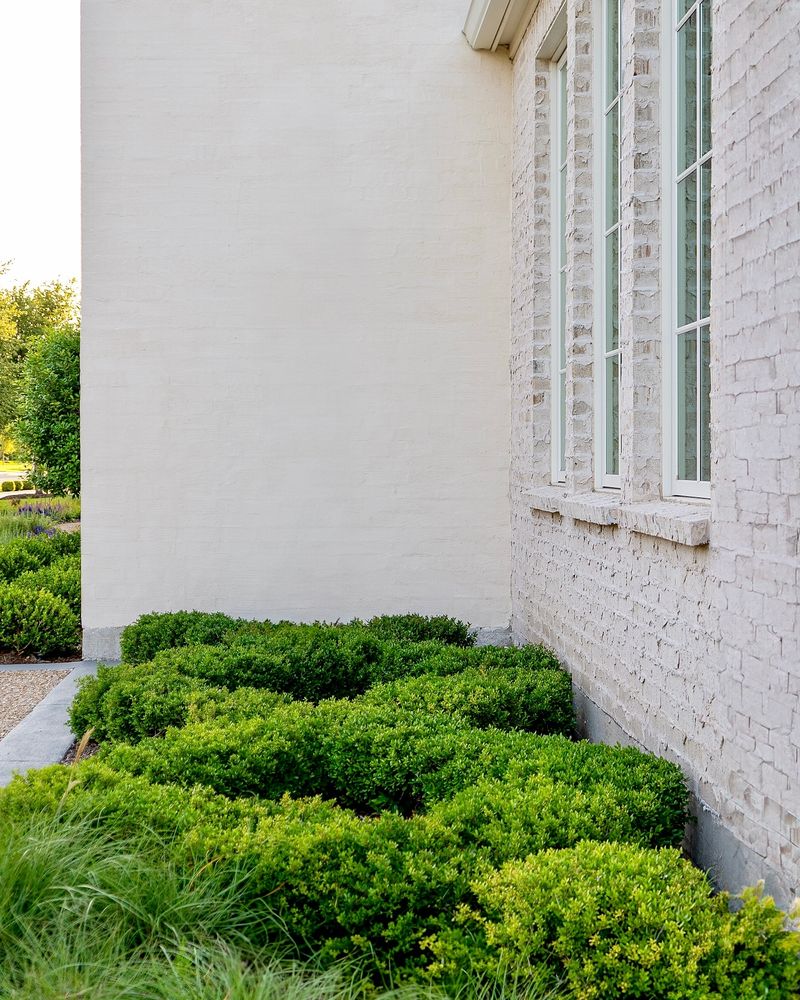
Getting the installation right matters more in clay soil than in almost any other situation, because mistakes made at planting tend to compound over time. The hole should be dug at least twice as wide as the root ball but no deeper than the root ball itself.
UGA Extension’s ornamental planting guidance recommends backfilling individual shrub holes with the excavated native soil rather than creating a contrasting soil pocket. In clay, that consistency matters because a dramatically different fill material can interfere with water movement between the root zone and the surrounding soil.
Planting depth is where many foundation shrubs run into trouble, and clay makes the consequences worse. Set the top of the root ball level with the surrounding soil surface, or slightly above grade if the site is prone to settling.
Burying the root ball too deeply creates a depression where water collects, and in clay that moisture sits against the crown and lower stem longer than it would in sandier soil. Over months and years, that chronic moisture can damage the root flare and weaken the plant from the base up.
Spacing and placement from structures deserves the same careful attention as planting depth. UF/IFAS advises setting ‘Schilling’s Dwarf’ several feet back from walks, driveways, and lawn areas because the plant grows wider than it is tall.
Roof runoff from eaves can also affect the soil moisture directly below, so factor in where rain sheds off the roofline before finalizing placement. Leaving enough clearance for a person to move between the shrub and the wall makes pruning and pest inspection practical rather than a contortion exercise.
Working out the mature spread math before the shovel goes in prevents expensive corrections later. A shrub expected to reach 8 feet wide needs its center placed at least 4 feet from any hard edge it should not touch, and more if pruning access on both sides is a priority.
Establishment watering makes drought tolerance useful
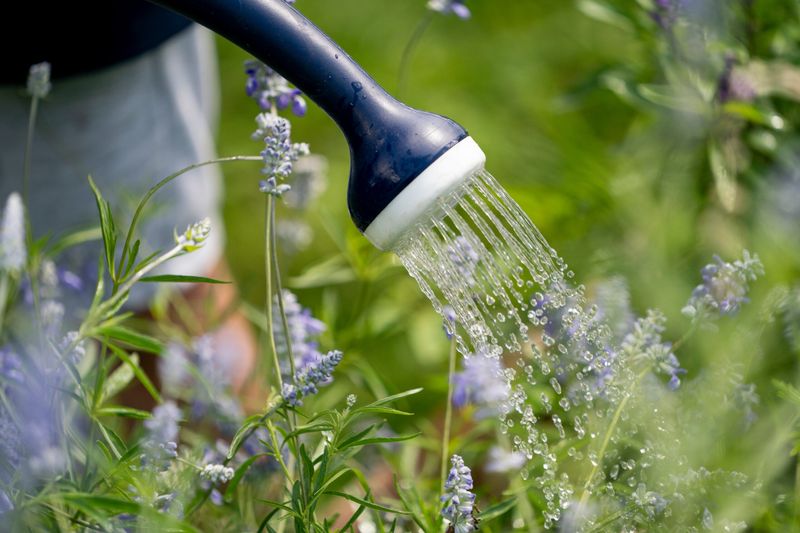
Drought tolerance is a description of what an established plant can handle, not a guarantee that a freshly installed shrub will survive on its own. A yaupon holly that has been in the ground for several years has roots extending well beyond the original planting hole, giving it access to a much larger reservoir of soil moisture.
A plant installed last month has roots that barely reach past the root ball, and during a Texas summer that gap in capacity can be fatal.
UGA Extension’s guide to native landscape plants is clear that drought-tolerant species still need supplemental water during establishment. For most Texas foundation plantings, that means monitoring soil moisture and watering when the top few inches of soil dry out, especially during the first summer.
Thoroughly soaking the root ball at each watering, rather than light frequent sprinkles, encourages roots to grow downward into cooler, more consistently moist soil.
Mulch does a significant amount of work during establishment. Apply roughly 2 to 3 inches of organic mulch over the planting bed, keeping it pulled back from the plant’s crown and stems so moisture does not collect against the bark.
UGA Extension’s ornamental planting guidance explains that mulch moderates soil temperature, slows moisture evaporation, and suppresses weed competition, all of which reduce the stress load on a newly installed plant. In a Texas August, a mulched bed can hold noticeably more moisture between waterings than bare soil.
Once roots have spread into surrounding soil, typically after one to two full growing seasons, the plant’s documented drought tolerance becomes genuinely useful. During exceptional heat or extended dry spells even established plants may benefit from supplemental water.
The goal during establishment is to keep the plant alive long enough for its natural resilience to kick in.
Manage light, spacing, pruning, and sprouts after planting
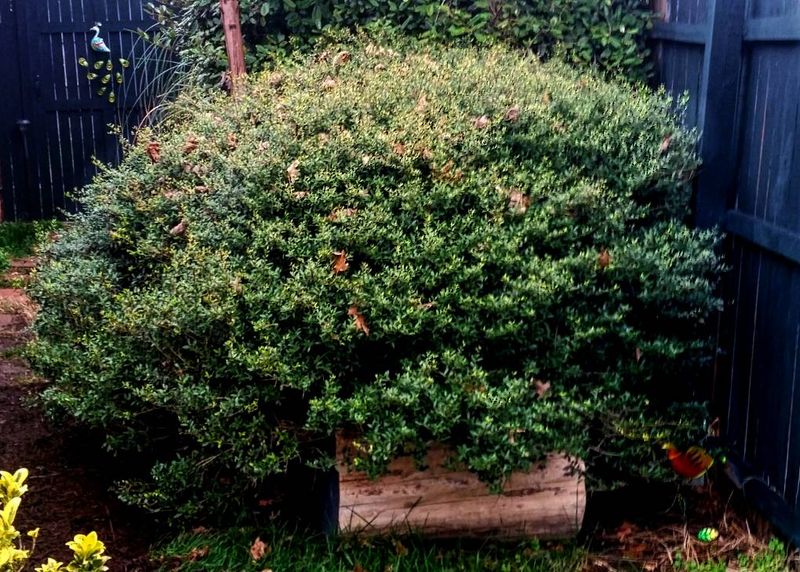
Full sun generally produces the densest, most compact growth on yaupon holly. NC State Extension’s plant profile notes that yaupon holly tolerates partial or even deep shade, but plants grown in lower light may develop a thinner, more open crown.
For a foundation bed along a south- or west-facing wall, that usually means full sun is not a concern. For beds under eaves or on north-facing exposures, expect a slightly less dense appearance.
A point worth making clearly: ‘Schilling’s Dwarf’ remains fruitless regardless of how much sun it receives. UF/IFAS confirms that ‘Schilling’s Dwarf’ is a male cultivar, and no amount of full sun changes that.
Better fruiting in sun applies only to female, fruit-producing yaupon plants. Keep those two facts separate when choosing a cultivar and planning placement.
Pruning approach matters more than pruning frequency with this shrub. Light hand-pruning to shape the outer canopy keeps growth tidy without sacrificing the plant’s natural density.
Constant vertical shearing with hedge trimmers creates a problem over time: the dense outer shell shades the interior branches, which die back and leave the base of the plant bare and woody. Occasional selective cuts into the canopy, rather than flat-topping the whole shrub every season, preserves full coverage from the ground up.
UF/IFAS notes that yaupon holly may produce root or lower-trunk sprouts, particularly where soil near the base is disturbed. In a formal foundation bed, those sprouts can look untidy and should be removed promptly before they develop into substantial stems.
For mass plantings, a starting spacing of roughly 4 to 5 feet between plants is commonly recommended, but mature width and access for maintenance should drive the final number on any specific site.
Decide whether you want fruitless structure or wildlife value
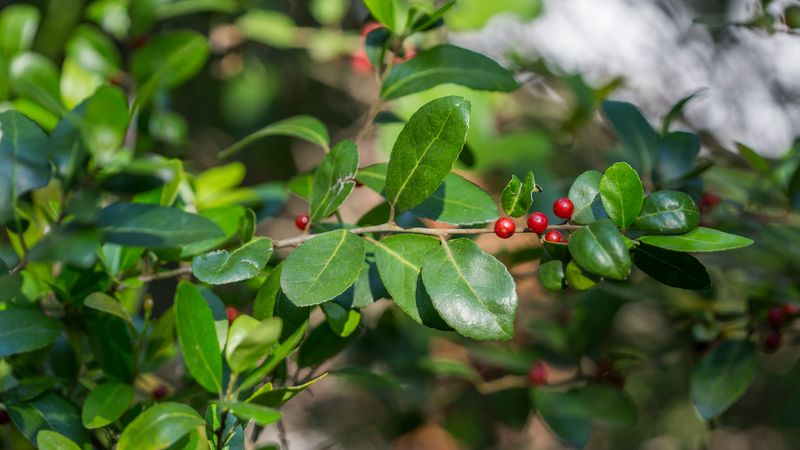
Cultivar selection goes beyond size once you factor in what you want the plant to do for your yard. Male yaupon cultivars like ‘Schilling’s Dwarf’ produce no berries, which keeps the bed looking tidy and removes any concern about fruit drop near walkways.
Female yaupon plants, by contrast, can produce clusters of small red berries that persist through winter. UF/IFAS documents that female yaupon berries provide food for birds and other wildlife, and the small flowers on both sexes can attract pollinators during bloom.
For a homeowner trying to support backyard wildlife, a female plant near a naturalized area offers real seasonal value.
The safety side of that equation needs equal attention. NC State Extension rates yaupon berries as low-severity poisonous to humans, with possible nausea, vomiting, and diarrhea following ingestion.
Poison Control confirms that holly berries can cause gastrointestinal symptoms and should be kept away from children and pets. The fact that birds eat the berries without apparent harm does not make them safe for people or animals.
Poison Control’s pet hazard guidance also flags holly as a concern for household animals.
Placement matters when a berry-producing plant is in the mix. A female yaupon in a back corner of the yard away from play areas is a different situation from one planted directly beside a front door where young children pass daily.
Choosing a fruitless male cultivar for high-traffic areas and reserving female plants for more naturalized spots gives you the wildlife benefit where it helps most while reducing household risk.
Use yaupon as a strong site-matched choice, not an invincibility promise
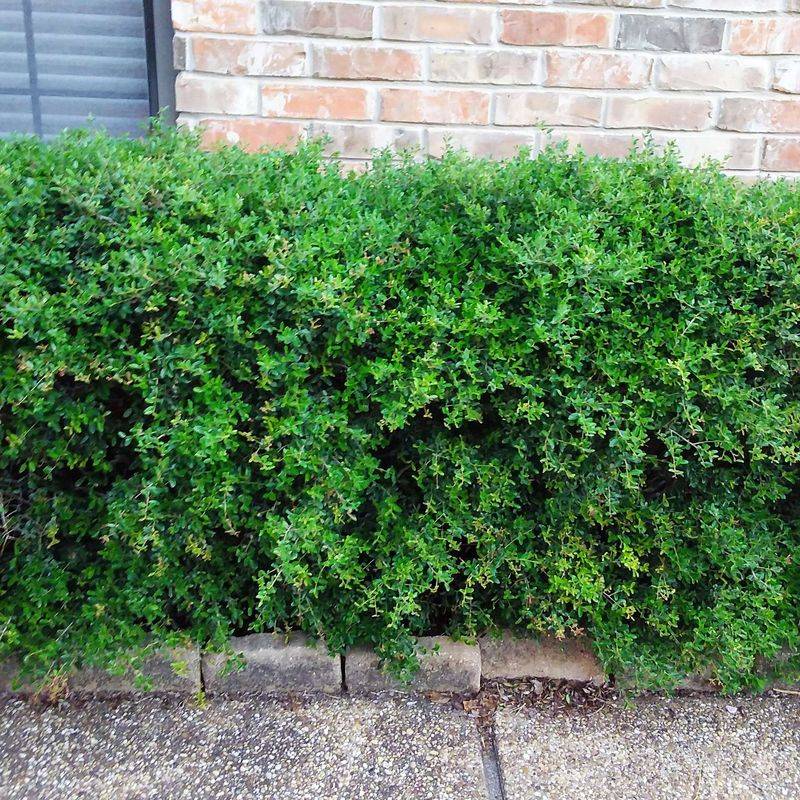
Putting dwarf yaupon holly to work in a Texas foundation bed comes down to a few honest decisions made before the plant ever goes in the ground. Select a dwarf cultivar whose mature width fits the space between your foundation and the nearest hard edge.
Confirm that the site drains adequately, and correct it if it does not. Set the root ball at grade, backfill with native soil, and water consistently through the first growing season while roots establish.
Texas growing conditions vary more than a single recommendation can cover. UF/IFAS lists ‘Schilling’s Dwarf’ for USDA Zones 7 through 10, which fits most of East, Central, South, and coastal Texas well, but drier, colder, or higher-elevation sites may need a different cultivar or a different plant entirely.
Yaupon’s documented soil and moisture adaptability is genuine, and so is the need for drainage, correct planting, and early care. Texas A&M’s regional shrub guidance supports yaupon as a strong performer for Gulf Coast conditions, not as a plant that succeeds on every site without effort.
Match the plant to the site, give it an honest establishment period, and dwarf yaupon delivers what its reputation promises: dependable evergreen structure through Texas heat, adaptable roots in difficult soil, and a foundation bed that holds together year after year. That track record, earned on real Texas sites, is the actual case for putting it near the top of your list.