
A neighbor mentions your trumpet vine is “illegal,” or a social-media post claims your yard plant could cost you thousands in fines, and suddenly you’re wondering if the garden you’ve tended for years is a liability. California does have real rules about certain plants, but the story is more specific than most online warnings suggest.
Whether a plant creates an actual legal obligation depends on its exact identity, where you live, which agency has authority, and whether any formal action has been taken against it.
An invasive-plant label is not automatically a legal ban
Plenty of California homeowners have received a panicked text or seen a viral post declaring that a common garden plant is “banned” and carries a massive fine. The fear is understandable, but the label “invasive” does not, by itself, make a plant illegal to grow in your private yard or expose you to an automatic statewide penalty.
Two of the most frequently cited resources are the California Invasive Plant Council (Cal-IPC) Inventory and the UC Cooperative Extension’s gardening guidance. Both are scientifically credible and genuinely useful for making good planting choices.
Neither one is a law. Cal-IPC ranks plants by ecological impact using categories like High, Moderate, Limited, Alert, or Watch, but those rankings carry no regulatory authority on their own.
A plant that earns a “High” rating on the Cal-IPC list is not automatically prohibited in every California yard, and Cal-IPC itself does not issue fines or removal orders.
The UC Integrated Pest Management program echoes this point, noting that invasive plants near wildlands, roads, flood channels, or waterways deserve particular caution because they can spread into natural areas. That caution is sound ecological advice, not a legal mandate that applies to every unchanged residential garden.
California’s formal legal framework for plants starts with a different document entirely. Food and Agricultural Code section 5004 defines a noxious weed as a plant formally designated by the California Department of Food and Agriculture (CDFA) because it may harm agriculture, forestry, or important native species and is difficult to control.
That formal designation process, not an ecological ranking or a social-media list, is what triggers potential legal obligations.
Whether any obligation actually applies to a specific yard depends on the plant’s exact identity, its designation under state or local law, the condition and location of the planting, and whether an agency has taken a documented enforcement action. An “invasive” label is a starting point for research, not a fine notice.
Which plant designations can create legal obligations?
Homeowners often treat the words “invasive,” “noxious,” “prohibited,” “restricted,” and “banned” as synonyms. They are not, and the difference matters when you are trying to figure out whether your yard actually has a legal problem.
California’s formal noxious-weed framework is built on designations made under Title 3, California Code of Regulations section 4500, which lists plants such as giant reed, tree-of-heaven, alligatorweed, camelthorn, and various thistles. Being on that list signals that the state has made a formal determination about the plant’s threat level, which is a different thing from the Cal-IPC ecological inventory discussed in the previous section.
CDFA assigns each listed pest an A, B, C, D, or Q rating. According to CDFA’s own explanation of weed ratings, these are policy guidelines, not laws or fine schedules.
The rating indicates the likely level of state or county action, not a fixed penalty that attaches automatically to every homeowner who has the plant. A county agricultural commissioner can also impose more stringent measures than the state rating suggests when local conditions warrant it.
A quarantine is a separate category again. Quarantines typically regulate the movement, sale, or transport of a plant or plant material, not necessarily its presence in an established private yard.
The CDFA Plant Quarantine Manual is the right place to look for current movement restrictions by county and commodity.
Tropical milkweed illustrates how sale restrictions and removal requirements can differ. When Marin County acted on tropical milkweed, the county prohibited nurseries and retail centers from selling it but explicitly stated that homeowners who already had the plant growing in their gardens did not need to remove it.
That is a real-world example of a “ban” that applied to commerce, not to possession in an existing yard.
Local landscape ordinances are yet another layer. A city or county rule may restrict which plants can be used in a new permitted landscape project without requiring anyone to dig up an established planting.
The Cal-IPC Inventory is often referenced in those local rules, which is one reason homeowners see it cited alongside legal language, even though the inventory itself has no independent regulatory force.
How state or county abatement can affect a homeowner
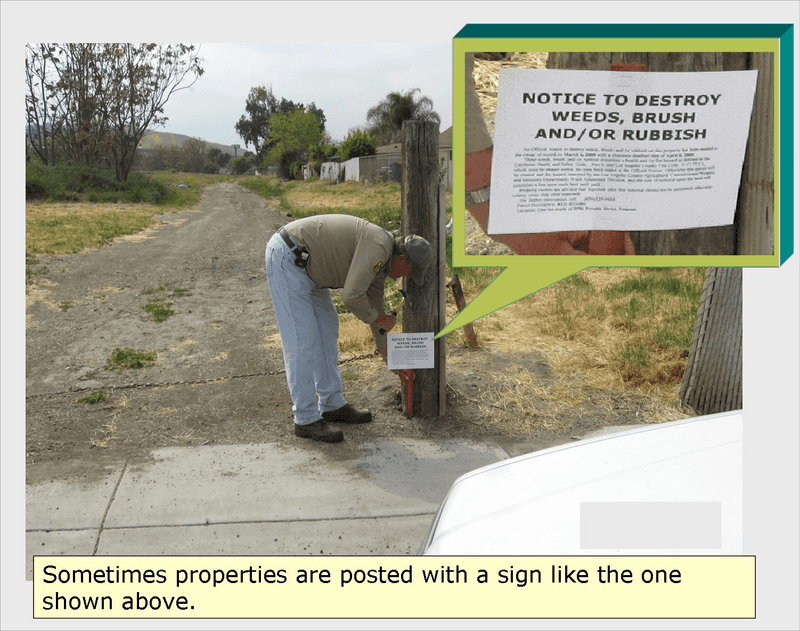
Understanding the enforcement process matters because it shows that consequences for homeowners are tied to specific steps, not to the mere presence of a plant on a list. County agricultural commissioners are the primary enforcement officers for California’s plant-pest and noxious-weed laws at the local level.
Under Food and Agricultural Code sections 5101-5105, a commissioner may inspect property and issue a written notice to the record owner or the person in possession of the land. That notice specifies the pest found, the required action (eradication, destruction, or control), and a deadline for compliance.
The notice is the legal trigger, not the plant’s appearance on a state list.
Once a formal notice is issued and the deadline passes without corrective action, the commissioner gains authority to enter the property and perform the abatement work. The cost of that government-performed work can then become a lien on the property.
That sequence, notice, deadline, government action, and lien, is described in Food and Agricultural Code sections 5421-5436. A property lien is a real financial consequence, but it is not an automatic fine that arrives with a plant’s first appearance in the garden.
A listed plant’s presence alone does not show that an abatement case exists. The commissioner still needs to make a determination that a pest or infestation is present and constitutes the kind of public nuisance the law addresses.
That determination involves inspection and a factual finding, not just a cross-reference to the state plant list.
Summary abatement, meaning government action without the ordinary notice-and-deadline sequence, is possible when officials determine that an immediate hazard exists. Food and Agricultural Code sections 5401-5405 describe the circumstances under which more urgent action may be taken.
For most residential situations involving an ornamental plant, the ordinary notice-based process is the expected pathway, which gives the homeowner time to respond, verify, and act.
Local landscape, nuisance, and fire rules may change the answer
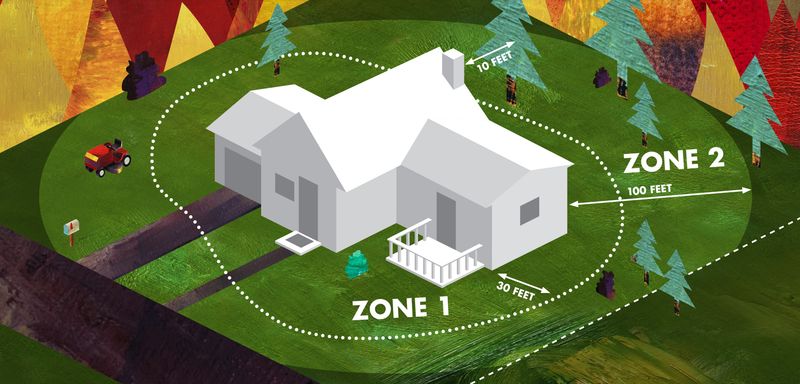
State plant lists are only part of the picture. City and county rules add layers that can apply to homeowners even when a plant is not on any state noxious-weed list, and those local rules do not always apply uniformly to every yard in a jurisdiction.
Ventura County’s landscape regulations are a useful example. Ventura County Ordinance No. 4577 prohibits tropical milkweed and Cal-IPC invasive or watch-list species in specified landscape plantings.
The rule targets certain types of landscape projects and installations, not every unchanged existing yard in the county. A homeowner who planted something years ago, before the ordinance took effect, is in a different position than someone submitting a new landscape plan for a permitted project.
Reading the ordinance carefully, or asking the county planning department, is the only reliable way to know whether a specific situation falls under its reach.
Los Angeles City has its own zoning and landscape design provisions. The Los Angeles zoning code includes plant-related requirements that can apply to new development, additions, or certain permitted work, which again means that context, project type, and location within the city determine whether a rule applies.
Fire-abatement requirements are a separate pathway that homeowners in dry or fire-prone areas need to take seriously. Health and Safety Code section 14875 defines “weeds” for fire-abatement purposes broadly enough to include dry or dangerous vegetation on private property, even when the plant is not a formally designated noxious weed.
If vegetation becomes a fire menace when dry, local fire and weed-abatement programs may require corrective work and recover costs from the property owner.
Los Angeles County’s weed-abatement program illustrates how these local programs work in practice, with inspections, notices, and cost-recovery mechanisms that operate independently of state noxious-weed designations. None of these local examples govern every California yard, but they show why checking city and county rules is essential before concluding that a plant is or is not a legal concern.
What consequences can follow noncompliance?

Real financial consequences exist in California plant law, but they flow from specific legal pathways, not from mere possession of a plant that appears on a list. Separating those pathways makes it easier to understand what you are actually facing if you receive a formal notice.
The agricultural-abatement pathway works like this: after a valid notice is issued under state law and the property owner does not comply within the stated deadline, the county agricultural commissioner may enter the property and perform the eradication or control work. The cost of that government-performed work can be recorded as a lien against the property.
Under Food and Agricultural Code sections 5421-5436, an unpaid lien may accrue a 15% penalty and can ultimately be subject to foreclosure proceedings. That is a serious consequence, but it requires a sequence of events: a formal pest or noxious-weed determination, a written notice, a missed deadline, government abatement, and a recorded lien.
It does not happen because a plant is spotted in a yard.
A separate pathway involves general residential-property nuisance law. California Civil Code section 2929.3 authorizes a governmental entity to impose civil fines on owners of residential property for failure to maintain the property in a way that creates a qualifying public nuisance.
Before any fine is imposed, the statute requires written notice, a reasonable period for the owner to begin and complete corrective action, and an opportunity for a hearing. If those requirements are met and the violation continues, fines can reach up to $2,000 per day for the first 30 days and up to $5,000 per day afterward.
Those amounts are the statutory maximum for qualifying property-maintenance violations, not a standard penalty for growing a listed plant.
Fire-abatement cost recovery is a third pathway. Under Health and Safety Code section 14875 and related provisions, a local fire or weed-abatement authority may perform clearance work on a noncompliant property and charge the cost to the owner, often recorded as a special assessment or lien.
Again, the trigger is a specific finding about fire hazard conditions, not a plant label.
Each of these pathways requires the responsible agency to follow its own procedural requirements. None of them make possession of a listed ornamental plant a standard, automatic offense.
The fine amounts and lien consequences are real, but they attach to a specific process, not to a plant’s first appearance in a garden bed.
Verify the plant and respond carefully before taking action
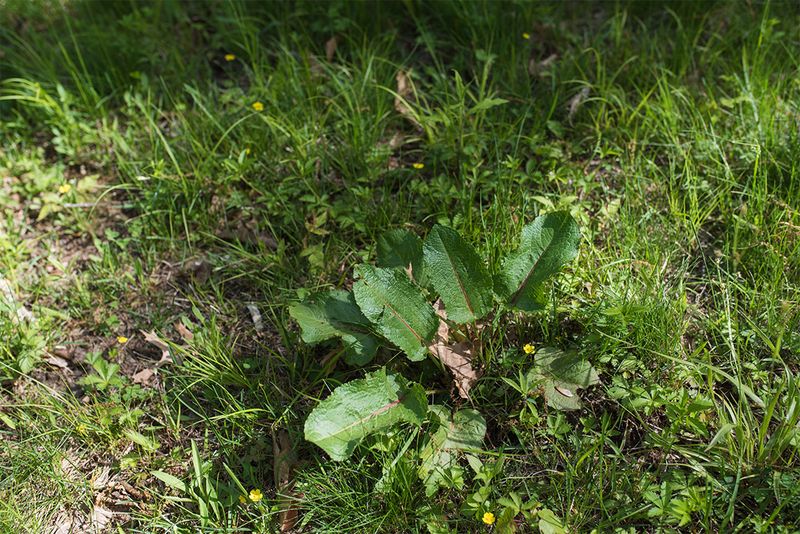
Getting a clear identification before doing anything else is the most important step a homeowner can take. Pulling the wrong plant, or pulling the right plant carelessly, can make a situation worse rather than better.
Start by identifying the plant by its scientific name, not just a common name. Common names are inconsistent and can refer to multiple species with very different legal statuses.
Once you have a scientific name, check the CDFA Encycloweedia resource to see whether the plant appears on California’s noxious-weed list and what designation, if any, it carries. For movement or transport restrictions by county, the CDFA Plant Quarantine Manual is the authoritative starting point.
Contact your county agricultural commissioner’s office directly. Under state law governing commissioner authority, the commissioner is the local expert on which plants are subject to action in your county and under what circumstances.
Staff can tell you whether the plant in your yard is subject to any current pest or quarantine action in your area, which is more reliable than any online list.
Also check your city and county landscape, fire, nuisance, zoning, and development codes. The same plant may be restricted in a new permitted landscape project but not in an existing unchanged yard.
A phone call to the local planning or building department can clarify whether any active rule applies to your specific situation.
If an official notice arrives, preserve it immediately. Photograph the plant, note its location and how far it has spread, and record the name of the issuing agency and the specific statute or ordinance cited on the notice.
Check the notice for the appeal deadline because deadlines can be short. When the cited procedure involves a CDFA-director appeal, the deadline is five days after notice, so acting quickly matters.
On removal: UC IPM guidance on invasive plants cautions that some plants spread through seeds, rhizomes, or other reproductive material. Pulling a plant without preventing those parts from escaping into green waste, waterways, or adjacent habitat can spread the problem rather than solve it.
Plan disposal carefully.
On pesticides: resist the urge to spray immediately. California has separate restrictions on pesticide use, and since January 1, 2025, most nonagricultural outdoor uses of specified neonicotinoid pesticides on ornamental plants, trees, and turf are limited to certified commercial applicators.
Using a restricted pesticide incorrectly creates a separate legal exposure on top of any plant issue. Also note that under Food and Agricultural Code sections 7270-7276, pesticide-law violations are treated seriously by regulators.
Consult your county agricultural commissioner or a licensed pest-control adviser before applying any chemical control.
Use the cited rule—not the plant label—to decide what to do
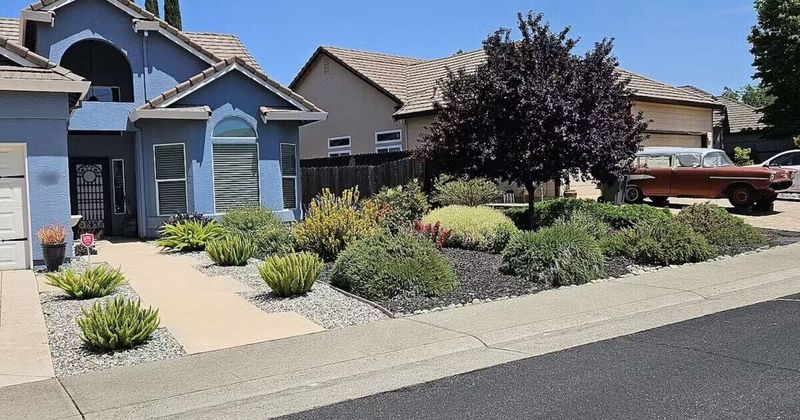
The clearest takeaway from California’s plant-law framework is this: the label on an online list does not decide your legal situation. The cited rule, the issuing agency, the specific plant, and the enforcement process do.
An ecological ranking from Cal-IPC is not a fine. A CDFA noxious-weed designation creates potential obligations, but those obligations depend on the plant’s rating, the county’s pest-action priorities, and whether a commissioner has made a formal determination under Food and Agricultural Code section 5004 and related statutes.
A quarantine regulates movement, not always possession. A local ordinance may apply only to new landscape work, a specific zoning district, or a fire-hazard area.
When financial consequences do arise, they follow a process described in statutes like Food and Agricultural Code sections 5421-5436 or Civil Code section 2929.3: notice, a correction period, a hearing opportunity, and only then a potential lien or civil fine. Skipping that process is not how California plant enforcement ordinarily works.
If you receive an official notice, read it carefully, identify the authority cited, and respond within the stated deadline. If you are simply worried about a plant you saw described as “banned” somewhere online, start with your county agricultural commissioner and your local codes before making any changes to your yard.
The plant label is a reason to ask a question, not a reason to panic or act immediately without checking. California’s rules are specific, and so is the answer to whether any of them apply to your yard.