
Finding fresh holes, mounds, or rolled-up turf in your yard is frustrating, and grabbing a live trap feels like the obvious fix. Many California homeowners assume that catching the animal and driving it somewhere else is a harmless, humane solution.
The actual state rule tends to catch people off guard, and getting it wrong can mean an unlawful release, a stressed or injured animal, and a yard problem that is not really solved.
California generally bars release somewhere else
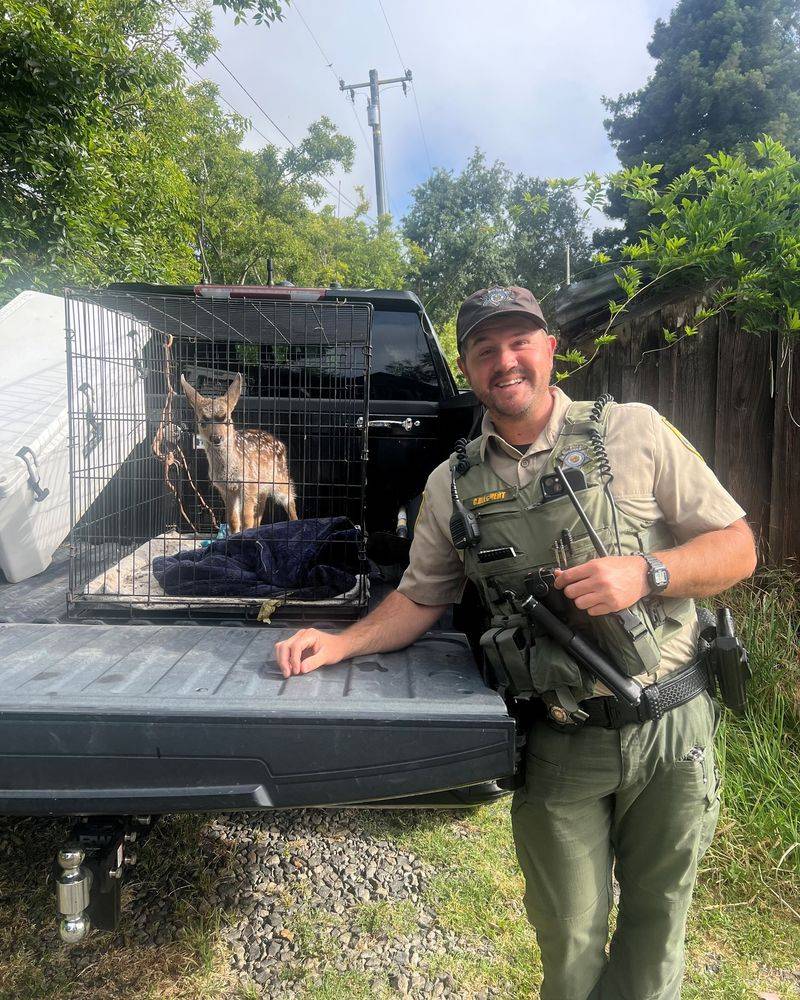
Most homeowners picture the same scene: catch the animal, drive it to a park or open space, and let it go. California law makes that plan much harder to execute legally than people expect.
CDFW’s nuisance wildlife guidance states directly that wildlife cannot be trapped and released elsewhere, and that rule applies to ordinary homeowner situations across the state.
The underlying legal framework reinforces this. Fish and Game Code section 3005.5 prohibits capturing or confining wild mammals except as specifically authorized by statute or regulation, and it similarly restricts releasing wildlife except under commission rules.
Trapping an animal does not, by itself, create any right to choose a new release site. A park, a rural road, or a neighbor’s open space are not legal workarounds under the homeowner nuisance-wildlife framework.
Authorized relocations do exist in California, but they operate under a separate set of permissions. Wildlife rehabilitators working under CDFW rehabilitation regulations may transport and release certain animals as part of permitted care.
Conservation projects or incidental take permits can authorize other specific relocations. Those are narrow, permitted activities that require formal authorization before anyone moves an animal.
For a nuisance mammal caught in a residential yard, the practical options after a lawful capture are limited: release the animal where it was caught, or humanely dispatch it by a lawful method. Transporting it elsewhere requires specific CDFW authorization that most homeowners do not have and cannot quickly obtain.
Understanding that boundary is the starting point for every decision that follows.
Property damage creates limited, species-specific exceptions
California does not ban all nuisance-wildlife trapping outright. Two separate statutory frameworks allow property-damage trapping under specific conditions, and knowing which one applies to your situation matters before you set any trap.
Fish and Game Code section 4152 addresses certain nongame mammals that are injuring crops or other property. Under that provision, the owner or tenant of the premises, along with their employees or agents, may take qualifying animals subject to the code and applicable regulations.
Ground squirrels and pocket gophers are common examples of nongame mammals that may fall under this provision, but the section does not authorize capture of any animal simply because it is present in a yard.
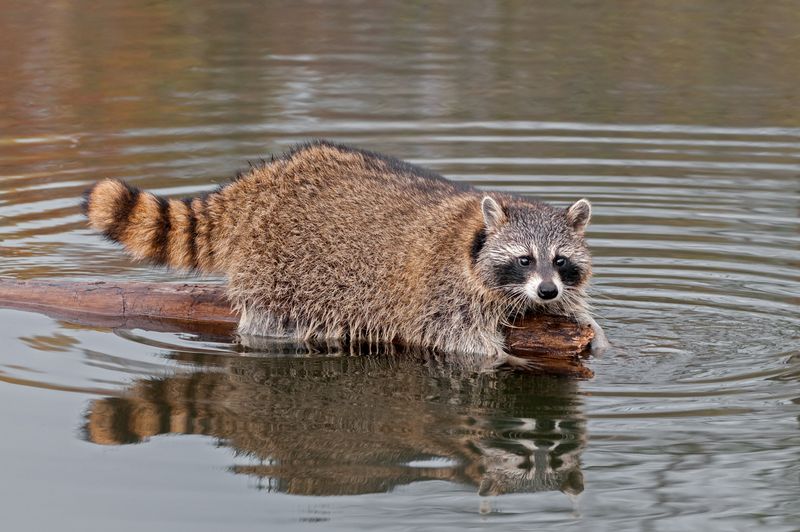
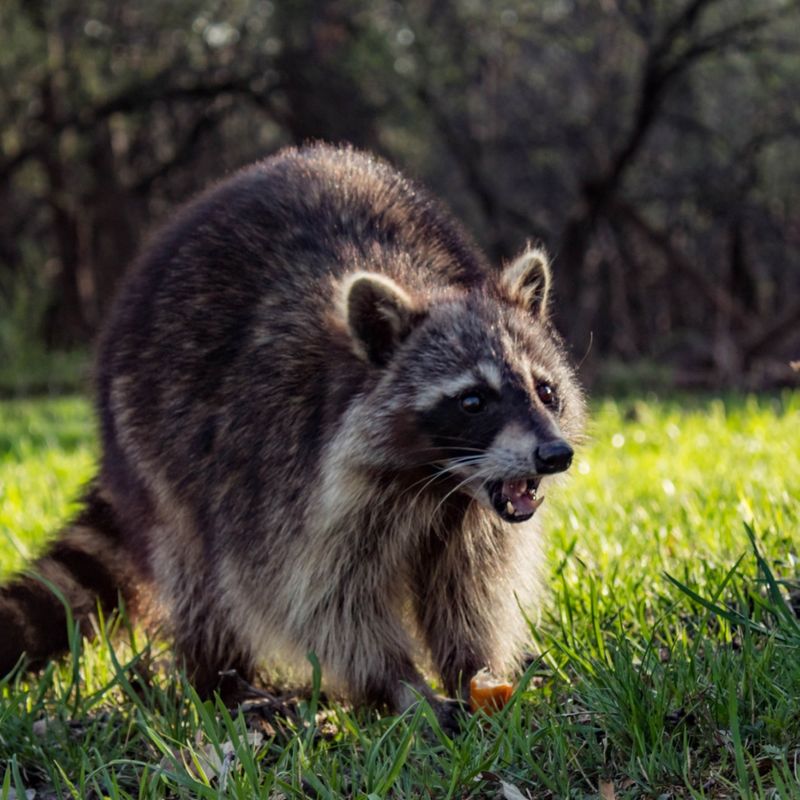
Furbearing mammals, such as raccoons and skunks, fall under a separate rule. Section 4180 provides a parallel property-damage framework for furbearing mammals injuring property, but the categories of people authorized to act and the conditions attached are not identical to those in section 4152.
Treating these two statutes as interchangeable can lead to an unlawful take. California’s trapping provisions and the current CDFW trapping regulations specify what each person in the chain, owner, tenant, employee, agent, or contractor, may legally do under each statute.
A valid property-damage justification does not open the door to relocation. UC IPM guidance on ground squirrels states that live-captured animals must be released immediately on the property where they were caught or euthanized by a legal, humane method.
The same framework applies to raccoons and skunks, for which written CDFW permission is required before any relocation elsewhere is considered. Confirming which statute applies to your species, and which people it authorizes, is not optional.
It is the step that separates a lawful response from an illegal one.
Identify the animal before deciding what to do
Rushing to set a trap before knowing what animal is responsible is one of the most common mistakes California homeowners make. Physical clues in the yard narrow the possibilities considerably, though they are a starting point for identification, not a substitute for it.
Conical holes scattered across a lawn, often with no visible mound, are more likely left by a skunk foraging for grubs and worms than by any other common yard animal. UC IPM notes that raccoons tend to roll up newly laid sod or turf while searching for the same food sources, leaving larger, peeled-back patches rather than individual puncture holes.
Those two damage patterns look different up close, and mixing them up leads to the wrong management approach.
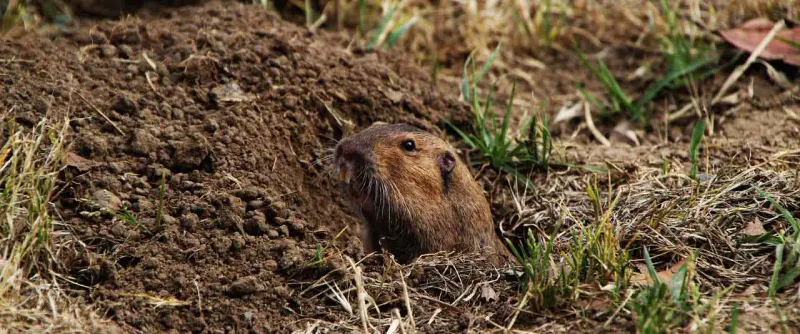
Fresh crescent- or horseshoe-shaped soil mounds, usually with the opening plugged or offset to one side, are a reliable sign of pocket gophers. Pocket gophers are classified as nongame mammals under California law, and a trapping license is generally not required for their removal under the applicable property-damage provision.
Relocation rules still apply, however, so the no-license exemption does not mean no rules apply.
Visible burrow openings with loose soil at the entrance, combined with daytime activity and a tendency to retreat underground when approached, point toward California ground squirrels rather than tree squirrels, which climb rather than burrow. Misidentifying a ground squirrel as a tree squirrel, or a skunk as a raccoon, can mean using the wrong trap type, targeting the wrong statutory provision, or accidentally capturing a nontarget animal that requires completely different handling.
Legal trapping still requires careful compliance
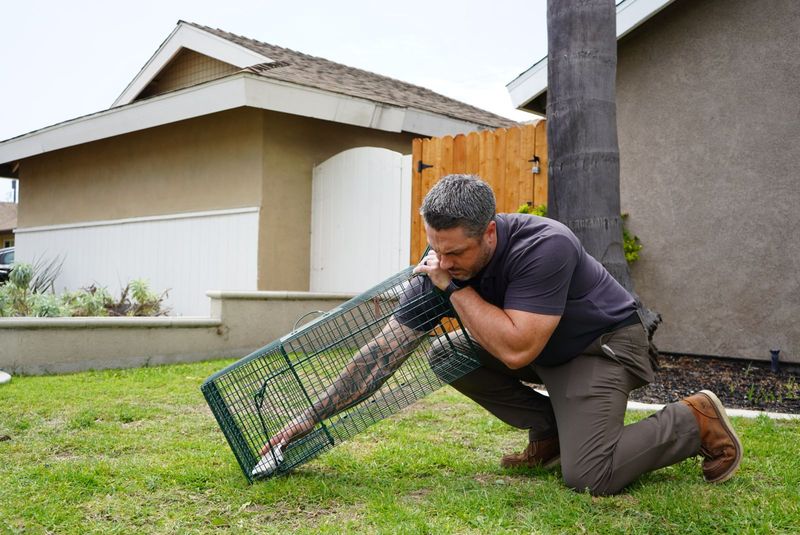
Having a valid property-damage basis for trapping is not the end of the compliance checklist. California imposes operational requirements that apply throughout the trapping process, and ignoring them can turn a potentially lawful capture into a violation.
Under CDFW trapping regulations, traps must be checked at least once daily, and any trapped animal must be removed during each inspection. For animals captured under the property-damage provisions, the required action after capture is immediate release on the property or humane dispatch by a lawful method.
Leaving an animal in a trap indefinitely, even on your own property, does not satisfy those requirements.
Placement rules also matter. Traps generally may not be set within 150 yards of a permanent or temporary residence unless the person setting them controls the property or has written consent from the landowner.
That restriction applies even when a homeowner is trapping on their own parcel if adjacent residences fall within the boundary.
Equipment choices are not discretionary. California prohibits steel-jawed leghold traps for capturing mammals, dogs, or cats.
Body-gripping traps face additional restrictions on where and how they may be used. State law governing trap types and the current regulations together define which equipment is permitted for a given species and location.
Licensing treatment differs depending on who is doing the trapping. A homeowner or tenant acting under the property-damage exception for qualifying animals is generally not required to hold a California trapping license unless they are providing services for compensation.
A paid wildlife-control operator faces additional licensing obligations, which is one reason to verify a professional’s credentials before hiring. Local ordinances and discharge rules may impose stricter limits than the state baseline, so checking with your city or county before proceeding is a practical step, not just a formality.
A park or rural release site is not a legal workaround
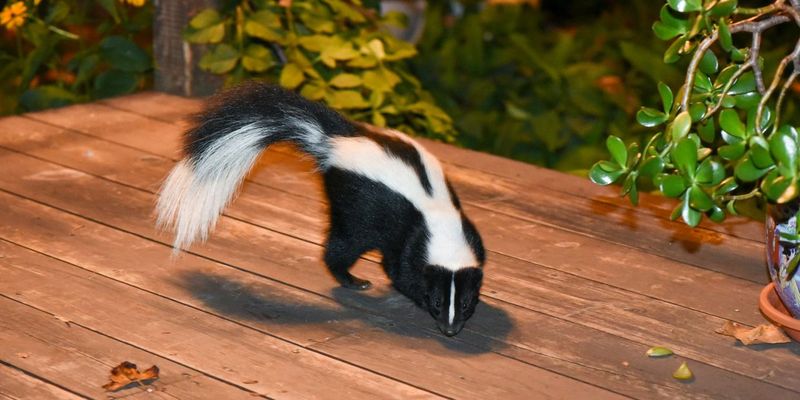
Driving a trapped animal to a park, open space, or rural road and releasing it there feels like a responsible solution. California law and wildlife management guidance both reject that approach for ordinary homeowner situations.
CDFW’s position is clear: wildlife cannot be trapped and released elsewhere without the required authorization. That rule does not bend because the release site looks like good habitat or because the animal seems healthy.
Written CDFW permission or another specific authorization is required before any relocation of a trapped nuisance animal is legally permissible for a private homeowner.
Beyond the legal problem, releasing animals elsewhere creates real-world concerns that UC IPM identifies directly. Raccoons and skunks released in an unfamiliar area may create new conflicts for other residents, and both species present handling and public-health risks that increase when an animal is stressed from confinement and transport.
Raccoons, skunks, bats, and foxes are among the wildlife species commonly associated with rabies exposure in the United States, as CDC rabies prevention guidance notes, and close handling during transport raises that exposure risk.
Releasing an animal in a new territory also does not guarantee it stays there. Animals may travel back toward familiar areas or simply repeat the same behaviors in a new location, meaning the original yard problem may return while a new one starts elsewhere.
The only lawful and practically sound options for a legally trapped nuisance animal remain release on the capture property or humane dispatch by a lawful method, unless a specific CDFW authorization says otherwise.
Exclusion prevents repeat access to buildings and decks
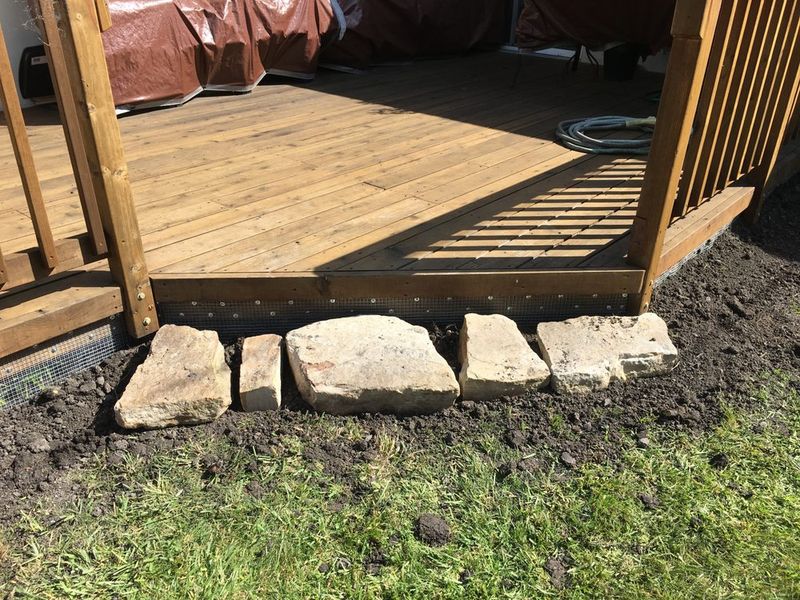
When an animal is denning under a porch, shed, or deck rather than just passing through, exclusion tends to be a more effective long-term answer than trapping. Removing an animal without blocking the entry point often means a replacement moves in within weeks.
The basic method, as described in UC IPM guidance on skunks, involves screening all openings with quarter-inch hardware cloth, which is small enough to block most digging mammals. Where the barrier meets soil, it should be buried at least six inches and angled outward to prevent the animal from digging under the edge.
Attaching the cloth securely to the structure and checking for gaps at corners matters as much as the burial depth.
A one-way door can allow a resident animal to leave on its own before the final seal is installed. That step requires caution.
UC IPM specifically warns that a one-way door is not safe if dependent young are present inside the den, because kits or pups that cannot yet walk will not exit on their own and will be trapped when the adult leaves. Before installing any one-way exit, confirm that the den does not contain young that cannot move independently.
Blocking an occupied den or separating a nursing adult from her young creates a welfare problem and may create a legal one as well.
Exclusion works as a prevention strategy, not as a universal fix for every species or yard condition. Animals foraging across an open lawn for grubs are not candidates for exclusion in the same way a denning skunk is.
Matching the solution to the actual behavior and the actual animal, identified first, keeps the approach both practical and lawful. For raccoons, similar hardware cloth and structural sealing principles apply, as UC IPM raccoon guidance outlines, though the specific gap sizes and anchor points may differ by entry type.
Handle a trapped animal as a safety and welfare problem
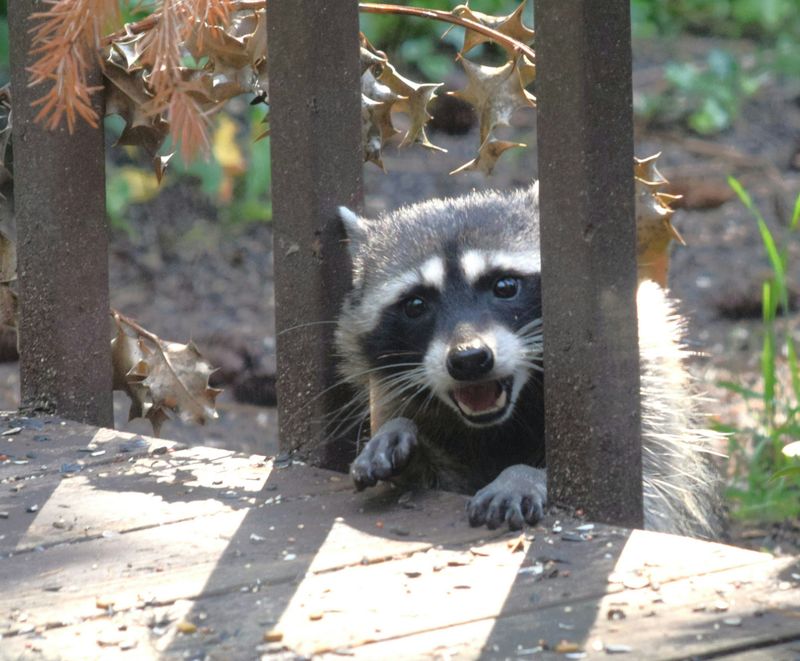
Finding a live animal in a trap changes the situation immediately. The first priority is keeping children and pets at a safe distance and avoiding any direct contact with the animal.
A stressed, confined animal is more likely to bite, scratch, or spray, and even a healthy-looking animal can carry disease.
CDC rabies prevention guidance recommends avoiding all handling of wild animals and keeping pets currently vaccinated against rabies. If a person or pet has been bitten, scratched, or had direct contact with saliva or nervous tissue from a wild animal, CDC public-health guidance advises contacting animal control or public-health officials promptly.
Do not wait to see whether symptoms develop before making that call.
Not every trapped animal qualifies for the same response. A protected, endangered, injured, or diseased animal requires a different path entirely.
An accidentally captured nontarget species, a songbird that entered an open cage trap, for example, should be referred to CDFW, a licensed wildlife rehabilitator, or animal services rather than released or dispatched by a homeowner. CDFW’s nuisance wildlife resources can help identify the right agency contact for unusual captures.
Homeowners who are not experienced with wildlife should not attempt euthanasia on their own. UC IPM guidance on skunks and ground squirrel guidance both state that drowning is not an acceptable or legal euthanasia method for those species.
Improvised methods that cause unnecessary suffering may violate state law regardless of whether the original capture was lawful. For raccoons and skunks especially, UC IPM recommends that inexperienced homeowners hire a professional wildlife-control operator.
If you go that route, verify the operator holds the appropriate California trapping credentials for paid services before work begins.
Use identification and authorization as the decision rule
Every decision about a digging animal in a California yard runs through the same two questions: what species is actually responsible, and which state rule applies to that species and that person? Answering both before touching a trap keeps a homeowner on the right side of the law.
Once the animal is identified, check whether the damage qualifies under the applicable property-damage provision, confirm the trap type and placement are legal under current CDFW trapping regulations, and verify local ordinances before proceeding. CDFW’s nuisance wildlife page is a practical first stop for species-specific guidance and agency contacts.
Do not transport a trapped animal to a park, open space, or another neighborhood. For ground squirrels and pocket gophers, as well as raccoons and skunks, the on-property release option applies only to an animal that was legally captured and is otherwise eligible for release.
An unlawful original capture does not become lawful because the animal is released nearby. When the situation involves a protected, injured, or nontarget animal, or when the correct approach is unclear, exclusion or a qualified professional is the safer path forward.
California’s wildlife rules reward preparation more than improvisation. The homeowner who identifies the animal first, confirms the applicable statute, and chooses exclusion or authorized professional help when trapping is uncertain will usually get a better outcome, for the yard and for the animal, than one who acts first and researches later.