
Red-tip photinia was once the go-to fence shrub across Texas, but many homeowners are watching their hedges turn spotty and thin from recurring disease. A native alternative called evergreen sumac (Rhus virens) has been quietly doing the work photinia cannot handle in parts of Central, South, and West Texas.
For the right site and the right gardener, it offers lower water needs, generally retained foliage, and real value for birds and wildlife. The catch is that no single shrub works everywhere in a state as large and varied as Texas, so this guide helps you decide whether evergreen sumac fits your specific fence line before you buy a single plant.
Evergreen sumac can fit the right Texas fence line
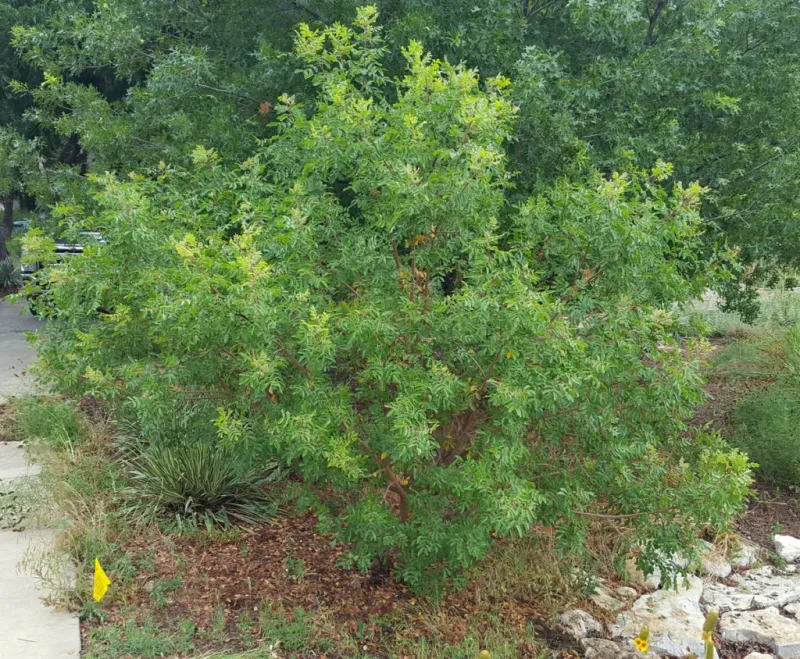
Evergreen sumac, known botanically as Rhus virens, is a native Texas shrub with a track record in some of the state’s toughest growing conditions. Texas A&M’s range plant records document its presence across the Cross Timbers and Prairies, South Texas Plains, Edwards Plateau, and Trans-Pecos regions, making it a well-supported choice for Central, South, and parts of West Texas.
That regional fit matters because it tells you the plant has already proven it can handle the heat, thin soils, and periodic drought those areas regularly deliver.
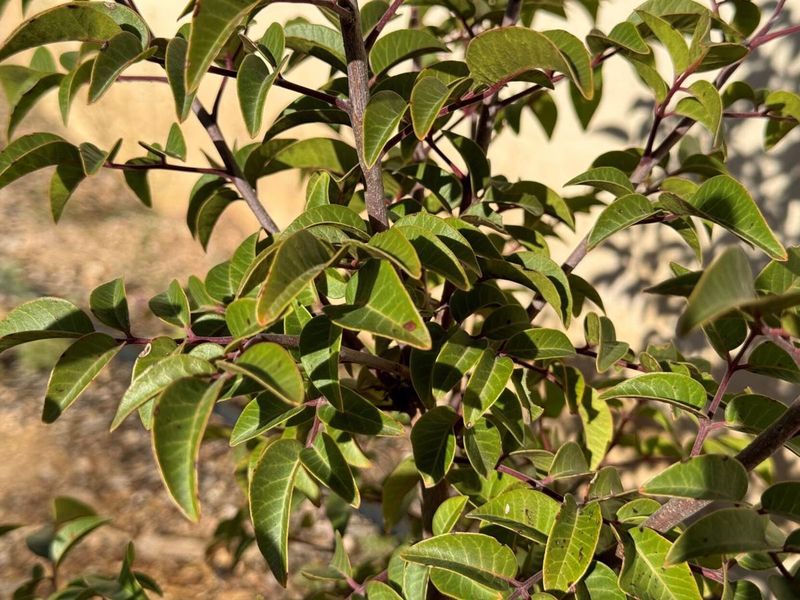
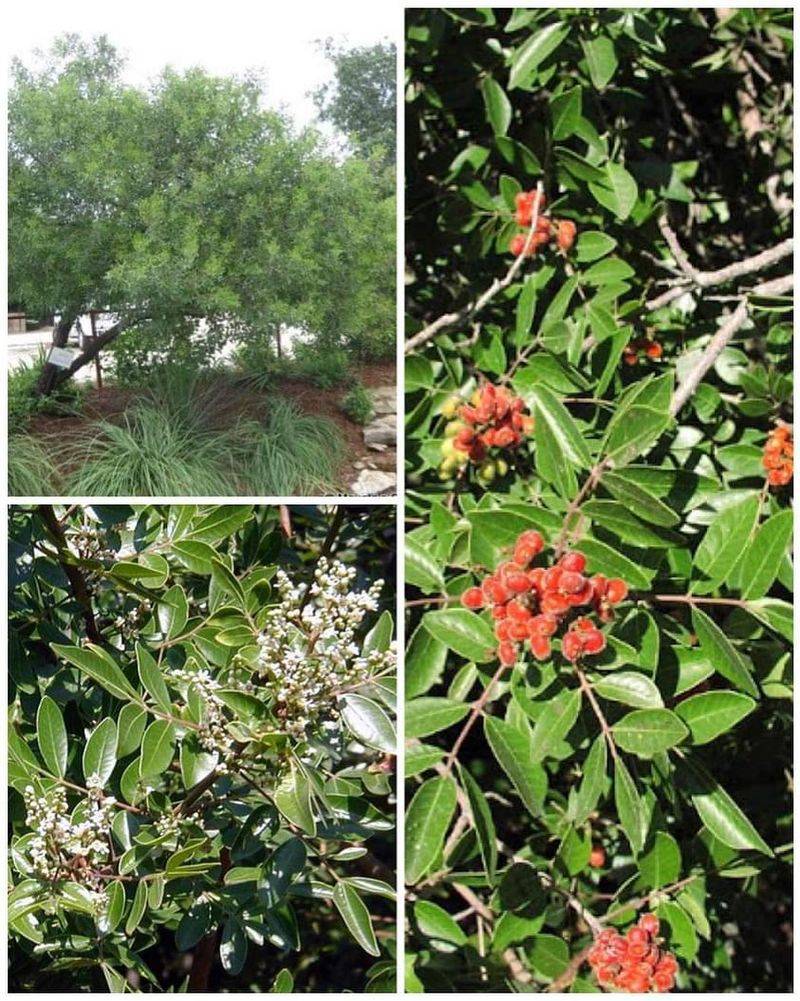
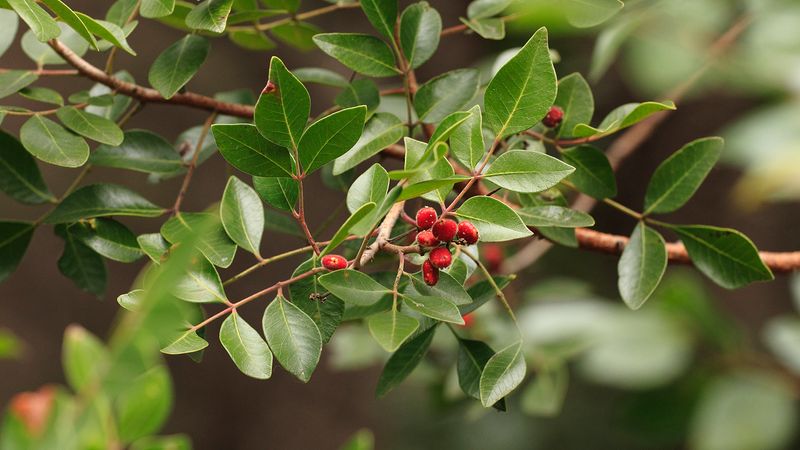
The shrub holds its dark, glossy compound leaves through most winters, which is why it shows up in Texas screening and hedge plant lists. Small cream-colored flowers appear in late summer, followed by fuzzy red fruits that ripen in early fall.
Full sun or part shade both work, and Austin’s official plant guide classifies it as a low-water plant once established, a meaningful distinction in a state where water restrictions are a real part of landscape planning.
One thing to set expectations on before you head to the nursery: evergreen sumac is not a narrow, upright hedge plant. The Native Plant Society of Texas describes its natural form as spreading and informal, which looks different from the tightly clipped photinia rows many Texas homeowners are used to seeing along fence lines.
It can absolutely screen a property, but it does so on its own terms, growing wide and relaxed rather than tall and rigid. Understanding that distinction upfront saves a lot of frustration later.
Why photinia can become a disease-management problem
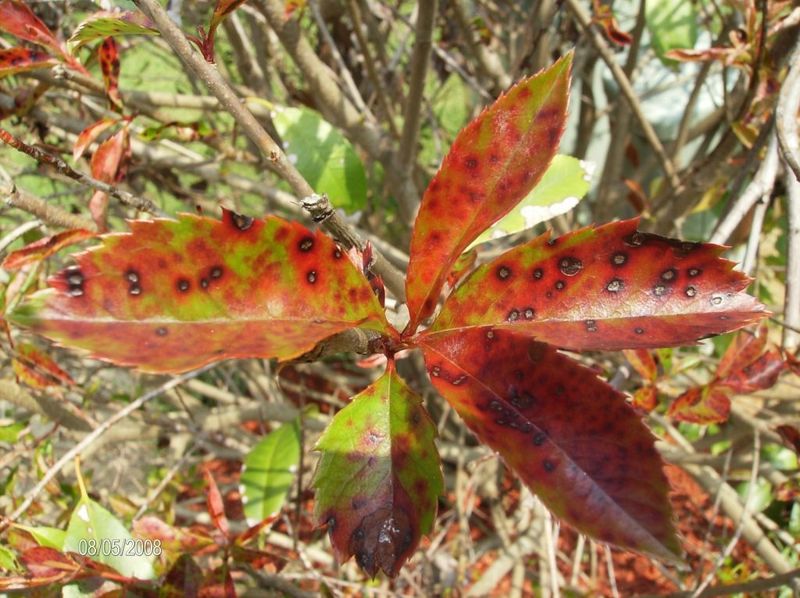
Red-tip photinia earned its place in Southern landscapes partly because of those vivid red new leaves that flush in spring, but that popularity came with a problem many Texas gardeners know firsthand. University of Georgia Cooperative Extension identifies red-tip photinia as highly susceptible to leaf-spot diseases, including Entomosporium leaf spot, along with fire blight, cankers, powdery mildew, and root disease.
That list of vulnerabilities is long for a plant used so heavily as a screening shrub.
Entomosporium leaf spot is particularly stubborn because the conditions that favor a Texas fence line, warm temperatures, occasional humidity, and overhead sprinkler water hitting the leaves, are also the conditions that favor the fungus. Extension guidance on common landscape diseases points to prolonged leaf wetness, poor air circulation, infected leaf debris left on the ground, and overhead irrigation as key drivers of increased disease pressure.
Removing diseased debris, improving air movement around the hedge, and switching to ground-level irrigation can all reduce how quickly the disease spreads, but none of those steps make a susceptible plant immune.
The important qualifier here is that not every struggling photinia hedge has the same diagnosis. Root problems, soil compaction, drought stress, or other issues can cause decline that looks similar to leaf spot from a distance.
If your photinia is in rough shape, getting a clear diagnosis before pulling it out is worth the effort. That said, when Entomosporium leaf spot is the confirmed or likely culprit, replanting with another photinia in the same spot is a decision that tends to repeat the same cycle.
Evergreen sumac offers a potentially better-adapted, lower-water path forward for the right Texas site, not a disease-proof guarantee, but a genuinely different starting point.
Check whether your site suits evergreen sumac
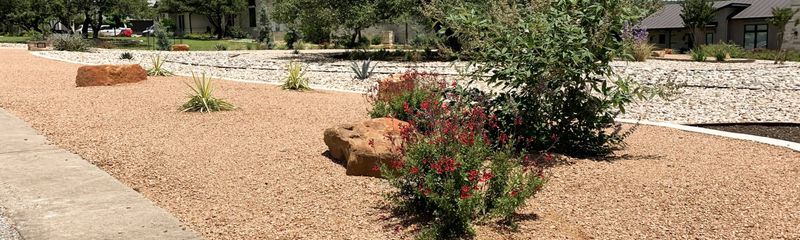
Before purchasing evergreen sumac, run your site through a short checklist. Sun exposure is the first box to tick: the plant performs in full sun or part shade, so a fence line that gets blasted all day or one that catches afternoon shade from a structure can both work.
Drainage is the second, and it is non-negotiable. Austin’s plant guide is direct about this: evergreen sumac is poorly suited to locations that stay waterlogged.
Rocky, well-drained soils common across the Edwards Plateau and Hill Country are a natural match. Heavy clay that holds water after rain is a problem.
Regional fit is the third consideration, and Texas makes this complicated. Texas A&M’s range plant documentation places evergreen sumac in the Cross Timbers and Prairies, South Texas Plains, Edwards Plateau, and Trans-Pecos.
Those records reflect where the plant naturally grows, but they do not mean it performs equally well in every yard within those broad areas. Soil depth, drainage, reflected heat from structures, and local rainfall patterns all affect how well any shrub establishes and holds up over time.
Texas is too large and too ecologically varied to apply a single plant recommendation statewide. Gulf Coast yards deal with higher humidity and heavier soils.
Parts of North Texas face harder freezes. East Texas has more clay and more rainfall than the regions where evergreen sumac is best documented.
If your property falls outside the Central, South, or West Texas zones where the evidence is strongest, or if your soil, drainage, or shade situation does not match, the honest move is to check the Texas A&M Earth-Kind plant selector or contact your county Extension office. Other native and adapted shrubs, including yaupon holly, wax myrtle, and agarita, may be a better fit depending on what your specific site demands.
Design for a broad informal screen, not a clipped green wall
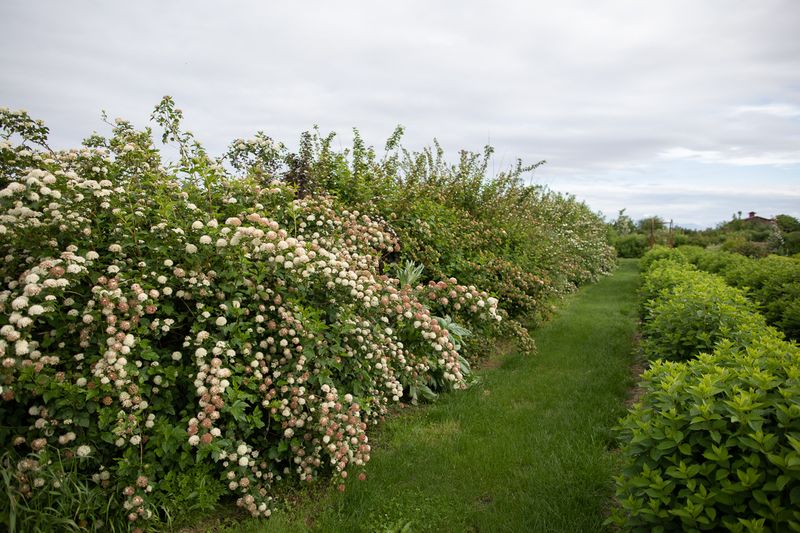
Spacing and placement decisions for evergreen sumac need to start with its mature form, not its size at the nursery. Austin guidance puts the expected mature dimensions at roughly 8 to 10 feet tall and 6 to 8 feet wide, though other Texas plant references give a broader range of 6 to 12 feet tall and 8 to 10 feet wide.
Neither figure is a guarantee because soil quality, water availability, sun exposure, and local conditions all influence how large any individual shrub grows. What the numbers consistently show is that this plant gets wide, often wider than it is tall.
That spread has direct consequences for fence-line planning. The Native Plant Society of Texas describes evergreen sumac as a spreading, informal shrub, and Austin’s plant guide recommends pruning only as needed to maintain the natural form rather than shearing it into a rigid shape.
Planting it flush against a fence, walkway, or structure means you will spend years fighting the shrub’s natural tendency to push outward. Allowing 5 or more feet of clearance from hard edges gives the plant room to do what it does well without becoming a maintenance burden.
Homeowners expecting a formal, tightly clipped hedge similar to photinia’s classic appearance will find evergreen sumac works differently. Foliage is generally retained through winter, which provides a base level of screening, but the coverage is soft and layered rather than dense and uniform.
A Texas Master Gardener source notes that even shrubs described as evergreen can go through brief seasonal leaf replacement, so a perfectly continuous, gap-free screen in every year and every location is not something to count on. What you get instead is a relaxed, layered screen that looks at home in a naturalistic Texas landscape and requires far less intervention than a formal hedge demands.
Establish the roots before relying on drought tolerance
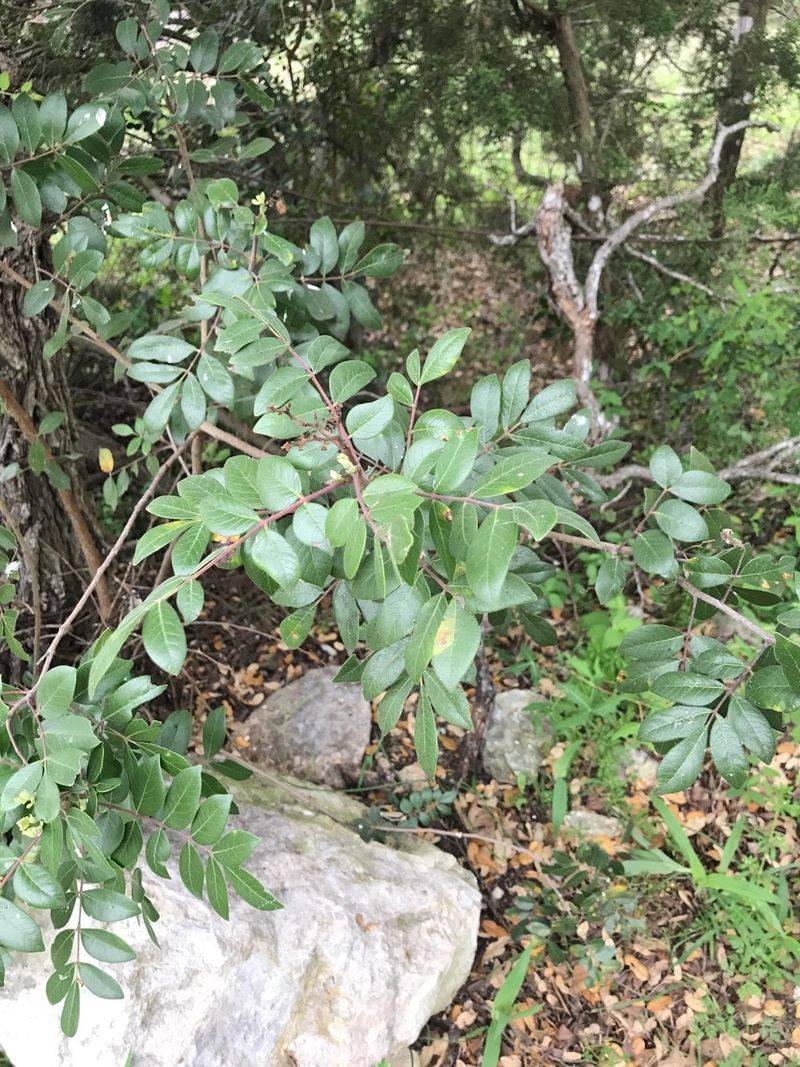
Drought tolerance is one of the most frequently misunderstood labels in Texas landscaping. For evergreen sumac, low water needs are real once the plant is established, but that establishment phase requires consistent attention.
Newly planted shrubs do not yet have the deep, spreading root system that allows mature plants to draw on soil moisture reserves during dry stretches. Without supplemental irrigation in that first year or two, even a drought-adapted native can struggle or fail.
Austin’s plant guide classifies evergreen sumac as low-water after establishment, and Texas Water Resources Institute guidance reinforces that drought-resistant plants still require some irrigation, particularly during extended heat or dry periods. The practical approach is to water deeply and infrequently rather than applying small amounts on a fixed calendar.
Deep watering encourages roots to follow moisture downward into the soil profile, which builds the drought resilience the plant is known for. Shallow, frequent watering does the opposite, keeping roots near the surface where they are most vulnerable to heat and dry spells.
Texas A&M Earth-Kind watering guidance recommends deep, infrequent irrigation adjusted for soil type, weather, and how the plant is responding, rather than a set schedule. Drip or low-volume irrigation is a practical option when it is designed to wet the full root zone adequately, and it has the added benefit of keeping water off foliage, which matters when disease pressure is part of why you left photinia behind.
Mulch is the other piece of the establishment puzzle. Applying roughly 3 inches of plant-derived mulch, such as shredded wood or bark, over the root zone helps retain soil moisture and moderate soil temperature during summer heat.
Keep the mulch pulled back from the stem so it is not sitting against the bark. Texas A&M’s Earth-Kind landscaping guide specifically recommends a 3-inch layer as the target.
Thicker is not better and can create moisture and pest problems at the base of the plant. Finally, timing the planting for late fall or early spring, as recommended in Texas A&M Wildscapes guidance, gives roots several months to develop before the most demanding summer heat arrives.
Prune lightly and use its wildlife value to your advantage
One of the practical advantages of replacing photinia with evergreen sumac is that you can mostly stop fighting the plant. Photinia hedges demand regular shearing to look presentable, and that repeated cutting is part of what keeps new growth cycling through and disease pressure high.
Evergreen sumac asks for something different: prune only when a branch is crossing awkwardly, pushing into a structure, or blocking a path. Austin’s guidance specifically recommends pruning only as needed to maintain the natural form, which is a very different maintenance relationship than a clipped hedge requires.
Aggressive shearing to force a tighter shape works against the plant in two ways. First, it conflicts with the spreading, arching form that evergreen sumac naturally wants to hold.
Second, it removes the flowering and fruiting wood that makes the shrub valuable to wildlife. The Native Plant Society of Texas notes the cream-colored flowers can provide nectar for insects, while the red fruits that ripen in early fall attract birds and other wildlife.
A heavily sheared plant produces less of both.
Deer resistance is worth addressing honestly. Texas A&M lists evergreen sumac among plants that deer tend to avoid, but Earth-Kind deer guidance is clear that hungry deer may browse almost any plant when pressure is high or preferred food is scarce.
Resistance is conditional, not guaranteed, and in areas with heavy deer populations, newly planted shrubs are more vulnerable than established ones.
On the screening side, a Texas Master Gardener reference notes that even shrubs described as evergreen can go through a brief period of leaf replacement. That does not disqualify evergreen sumac as a winter screen, but it does mean gaps are possible in some years or locations.
A light hand with pruning, realistic expectations about screening continuity, and appreciation for the wildlife activity the plant brings all make living with evergreen sumac more satisfying than fighting it into a shape it was not built to hold.
Make the replacement decision site by site
Evergreen sumac earns a genuine recommendation for Central, South, and parts of West Texas when three conditions line up: the site drains well, the homeowner can provide regular irrigation during establishment, and a broad informal screen fits the design goal better than a formal clipped hedge. When those conditions are present, Rhus virens is a well-supported native option that photinia simply cannot match on water efficiency and regional adaptation.
When those conditions do not line up, other plants deserve a look. Yaupon holly handles heavier soils and shadier spots across a wider swath of Texas.
Wax myrtle suits Gulf Coast conditions and tolerates wetter ground. Agarita offers a thorny, wildlife-friendly option for drier Hill Country sites with deer pressure.
The Texas A&M Earth-Kind plant selector rates shrubs by region and site characteristics and is a practical starting point when local soil, drainage, shade, or deer pressure puts evergreen sumac outside its comfort zone.
One identification point matters before any purchase: confirm the scientific name is Rhus virens. Texas A&M’s range plant profile documents the plant clearly under that name.
Do not rely on common names alone, because poison sumac is a different species entirely. Botanical references distinguish poison sumac as Toxicodendron vernix, a plant unrelated to the Rhus genus.
A reputable native plant nursery or your county Extension office can confirm identification before you plant. Evergreen sumac can replace struggling photinia in the right Texas setting, but the site still has to be right.
The plant does the work once it is established; the gardener’s job is making sure the conditions give it a fair start.