
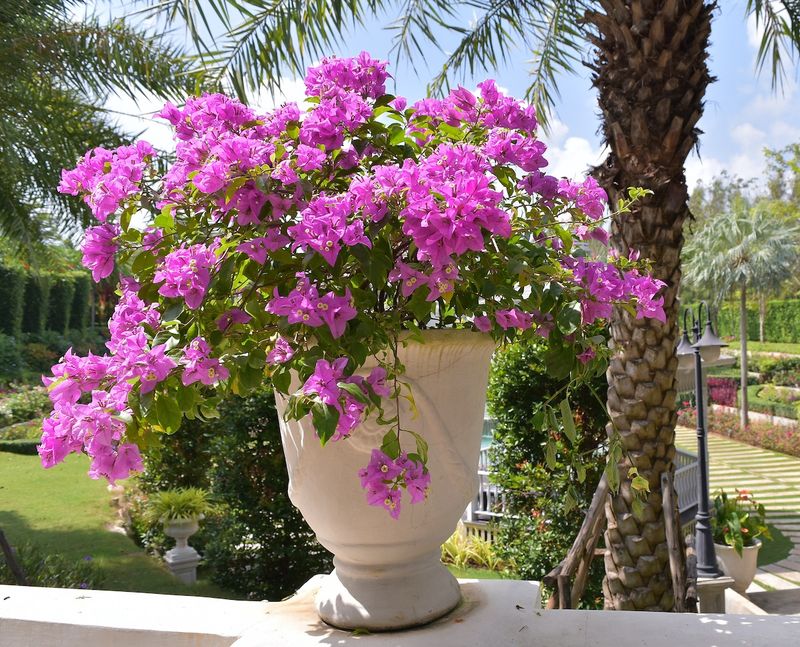
Most Texas gardeners walk past bougainvillea at the nursery without giving it a second look, assuming it belongs in a sprawling landscape bed or a tropical resort garden. The truth is, this tough, heat-loving vine can deliver repeated bursts of vivid color from a single movable pot on a sunny patio, making it a smart pick for renters and anyone short on yard space.
Getting the best out of it takes some honest knowledge about sun, water, support, and regional limits, but the payoff is real vertical color without a single hole dug in the ground.
Bougainvillea can bring repeated summer color to one patio container
Bougainvillea, especially the species Bougainvillea glabra, earns its place on a hot Texas patio by tolerating the kind of punishing heat that wilts most flowering plants by noon. Texas A&M Aggie Horticulture describes bougainvillea as an outstanding patio and deck plant that withstands high temperatures and produces summer color, and that reputation holds up in warm, sunny parts of the state.
For renters or gardeners without a dedicated planting bed, a single container means vivid vertical color with zero ground disturbance.
The showy display you see on a bougainvillea is not actually made up of petals. The color comes from bracts, which are modified leaves that wrap around the plant’s small, tubular true flowers.
Bracts come in pink, magenta, purple, red, orange, white, yellow, and related shades, so there is a color range to suit most patio schemes. North Carolina Extension’s profile of Bougainvillea glabra confirms this structure and notes the plant’s suitability for containers and training.
One thing worth saying plainly: bougainvillea does not guarantee wall-to-wall color every single day of summer. Bloom performance varies with cultivar, sunlight, watering habits, fertilizer choices, pruning timing, and seasonal conditions.
What a well-managed container plant in a warm, sunny Texas location can realistically deliver is repeated or extended color across the warm months, with rest periods in between flushes. That honest framing still adds up to one of the most impressive patio displays available in a single movable pot.
The plant is a thorny, scrambling vine by nature, so it needs a sturdy support structure and regular attention, but it is not a fussy or fragile plant.
Choose a manageable plant, a draining pot, and a sturdy trellis
Starting with the right plant size saves a lot of corrective work later. Full-size bougainvillea can push many feet in length when left unpruned, which is more vine than most patios can absorb.
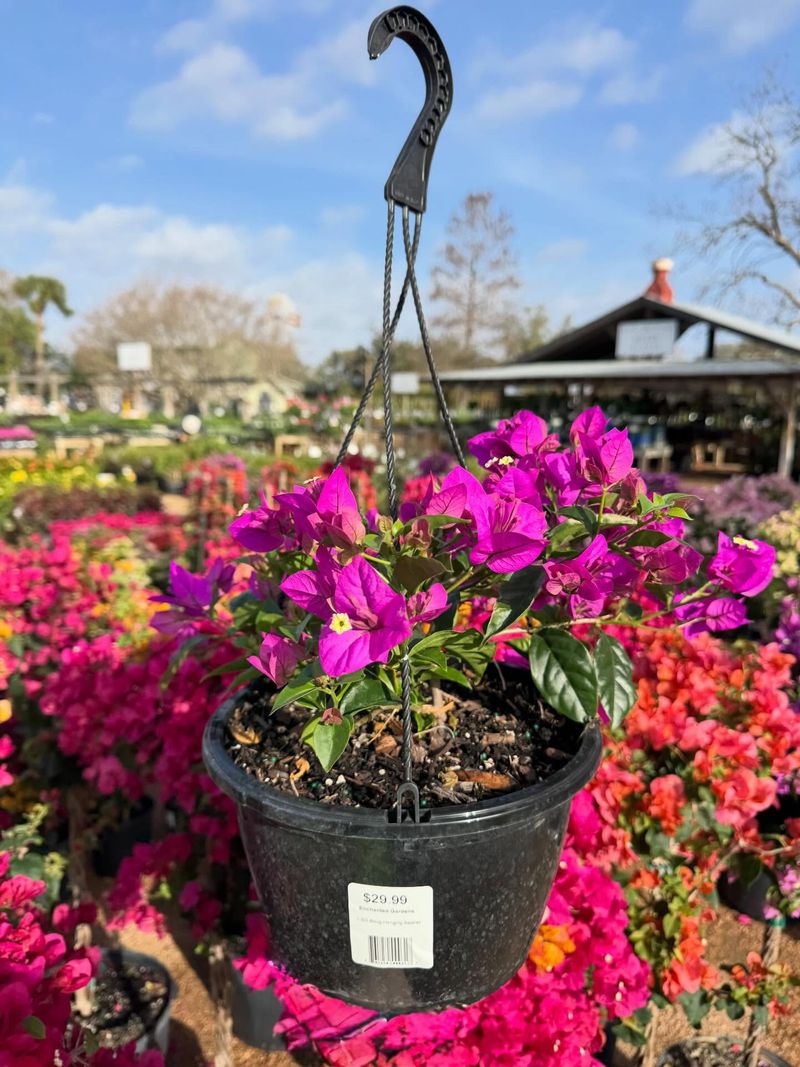
Look for compact or dwarf selections at the nursery, labels often say “dwarf,” “mini,” or list a modest mature size. A smaller starting plant is easier to train, easier to move before a freeze, and more proportional to a single container display.
UC Agriculture and Natural Resources pruning guidance supports choosing a manageable selection and keeping it shaped through regular pruning rather than relying on the pot alone to limit size.
The container matters just as much as the plant. Choose a pot with drainage holes, because standing water around bougainvillea roots causes problems quickly.
Mississippi State Extension’s container bougainvillea guidance warns that poor drainage and overwatering are among the most common ways to damage the plant. A pot holding several gallons of mix gives roots enough room to establish without drying out in minutes during a Texas afternoon.
Skip a universal gallon rule, though; the right size depends on your specific plant, how large you want it to grow, and whether you need to carry it inside before a freeze.
Fill the container with a loose, well-drained potting mix rather than garden soil. Dense soil compacts in a pot and holds too much moisture around the roots.
UGA Extension’s container gardening publication recommends a quality potting mix designed for container use, not native soil. Finally, remember that a pot does not make bougainvillea self-supporting above ground.
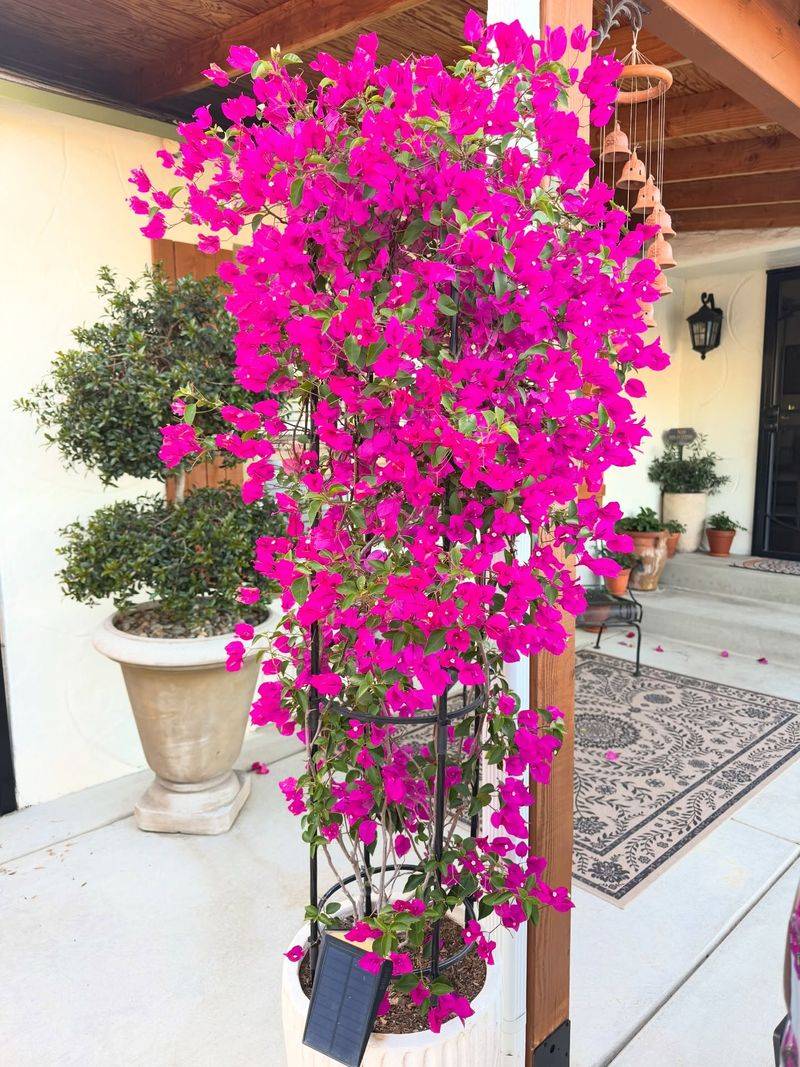
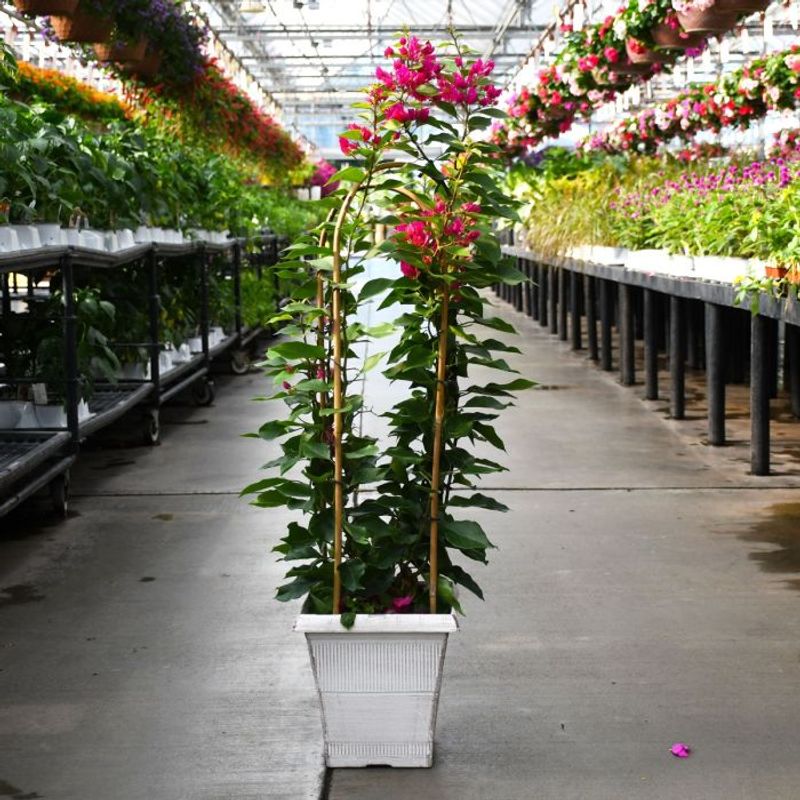
The vine scrambles and climbs by leaning on surrounding structures, so you need a sturdy trellis, stake, or obelisk anchored in or beside the pot. Use flexible ties that you can loosen as stems thicken, because tight ties can girdle and damage expanding branches over time.
Put the container in the brightest available patio location
Sun is the single biggest lever for bougainvillea flowering, and the sunniest spot on your patio is almost always the right spot. Texas A&M’s bougainvillea care guide specifies at least four hours of direct sun as a minimum for bloom, while other extension references lean toward six or more hours for the best performance.
When in doubt, go brighter. A spot that gets afternoon shade in Texas may still work, but a south- or west-facing wall that bakes in full sun is where bougainvillea tends to perform best.
Strong light supports flowering, but it does not guarantee it. A Texas A&M newsletter on bougainvillea notes that long summer days can actually disrupt blooming in some cases, while other extension sources report extended color under high light and good care.
These findings are not necessarily contradictory; cultivar selection plays a role, and bloom cycles can vary by growing conditions and time of year. Think of sun as the foundation that makes flowering possible, not a switch that turns the display on automatically.
UF/IFAS Extension’s bougainvillea overview connects bloom variability to a combination of factors including watering, fertilizer, pruning, and seasonal light changes, reinforcing that the plant responds to its whole growing environment rather than sunlight alone. Watering and feeding choices made in the shade can undercut a perfect sun location.
Position the pot where it gets the most direct light your patio allows, then manage the rest of the care routine to support what strong sun starts.
Water thoroughly, let the mix partly dry, and feed with restraint
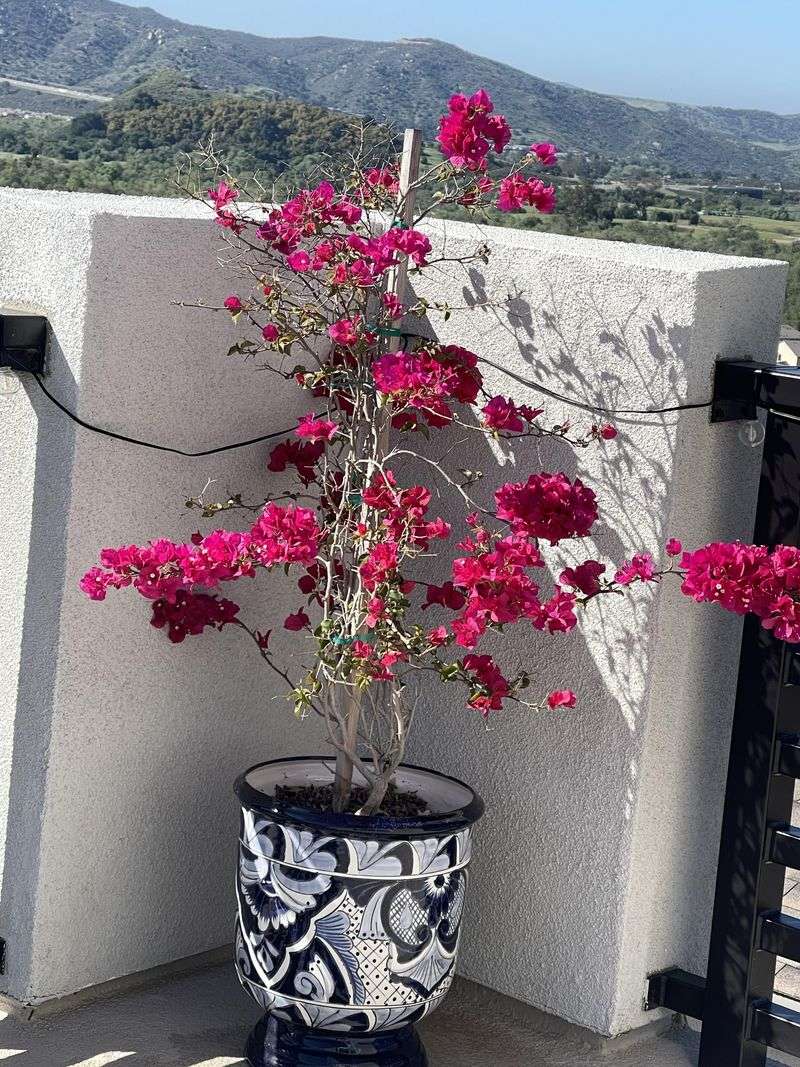
Drought tolerance is a real trait in bougainvillea, but it applies most accurately to established plants in the ground. A container on a hot, windy Texas patio is a different situation entirely.
The mix in a pot dries much faster than in-ground soil, and during a stretch of triple-digit heat, a container can go from moist to dangerously dry within a day or two. UGA Extension’s watering guidance emphasizes that container plants need regular monitoring and thorough watering when the mix becomes dry, not on a fixed calendar schedule.
The right approach is to water deeply when the top inch or two of the mix has dried out, then hold off until it reaches that point again. NC State Extension’s profile of Bougainvillea glabra notes that the plant dislikes constantly wet roots, and overwatering is one of the most reliable ways to cause leaf drop and root problems.
At the same time, letting the container go completely bone dry for extended periods stresses the plant and can disrupt the next bloom cycle. Check the pot every day or two during the hottest weeks, and water until it drains freely from the bottom.
Feeding deserves the same measured approach. Excessive nitrogen pushes the plant toward lush foliage at the expense of bracts and flowering.
UF/IFAS Extension and Mississippi State Extension both caution against over-fertilizing. A balanced or bloom-promoting fertilizer applied according to the product label is a safer starting point than any fixed weekly or monthly schedule.
Watch the plant’s response: pale, weak growth may call for light feeding, while deep green leaves with no bracts in good light often point to too much nitrogen or too much water.
Train and prune the vigorous vine before it outgrows the space
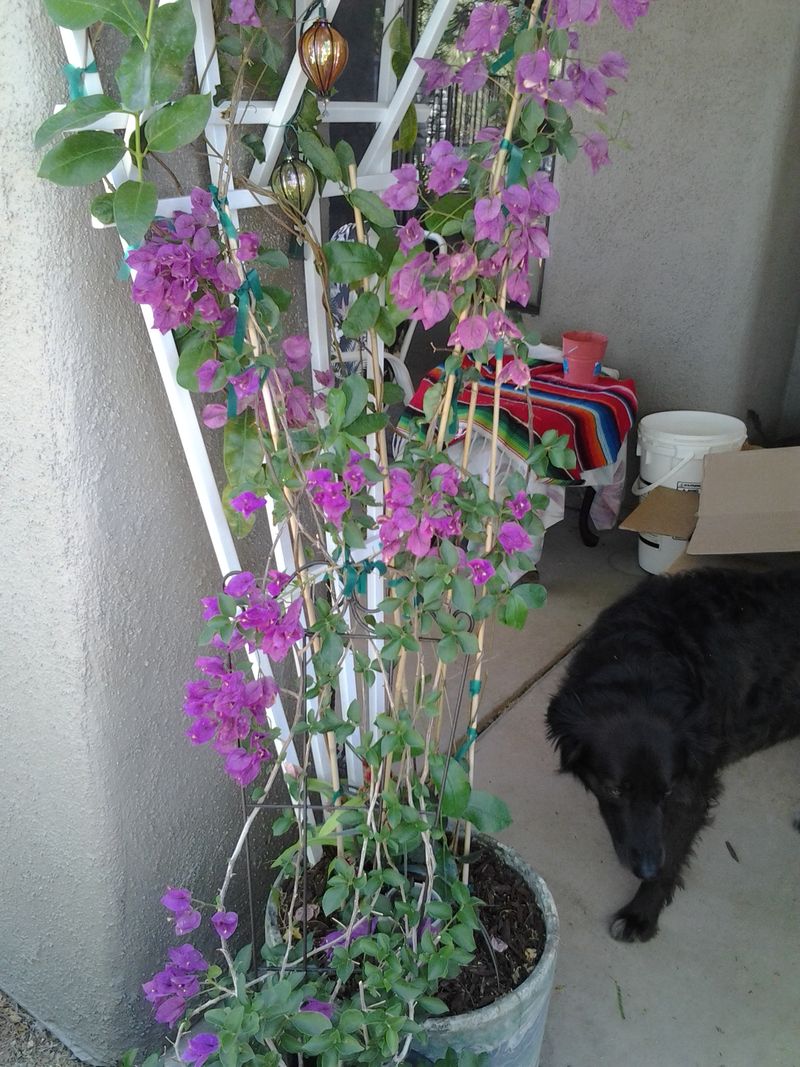
A single pot does not create a small plant above the soil line. Left to its own devices, bougainvillea will sprawl, lean, and reach well beyond the footprint of any container, so training and pruning are not optional extras but regular parts of keeping the plant usable on a patio.
Training means guiding new stems onto the trellis or stake as they grow, using soft ties placed loosely enough to allow the stem to expand. Mississippi State Extension advises using a sturdy support structure and checking ties periodically to prevent girdling as stems thicken.
Pruning serves two purposes: controlling the vine’s size and encouraging new growth where flowers will develop. Bougainvillea blooms on new wood, meaning fresh growth produced after a pruning cut is where the next round of bracts will appear.
UF/IFAS Extension supports light corrective cuts during active growth to redirect wayward stems, combined with more substantial pruning after a bloom flush finishes or in late winter before new growth begins. Heavy or frequent cuts made at the wrong time can push back the next display by removing the growth that would have carried flowers.
A practical rhythm for a patio container is to tip-prune long stems as they outgrow the trellis, remove crossing or crowded branches when they become a problem, and do a more thorough shaping once the main summer flush winds down. UC ANR pruning guidance reinforces that moderate, well-timed pruning produces better results than sporadic heavy cutting.
Wear thick gloves every time you handle the stems. The thorns on bougainvillea are sharp enough to cause real puncture wounds, and even brief contact with bare skin during a pruning session tends to leave a mark.
Use the container to move the plant before a hard freeze
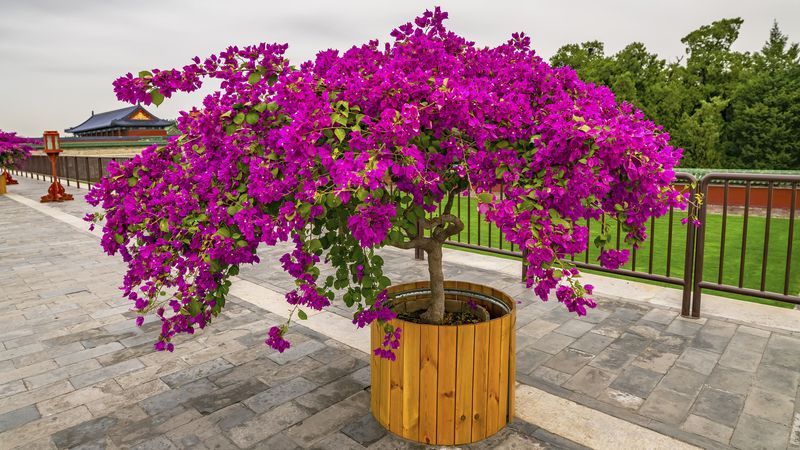
Bougainvillea’s regional limits are worth stating clearly before anyone in North Texas invests in a large specimen. NC State Extension places Bougainvillea glabra in USDA Zones 9a through 11b and describes it as frost-sensitive.
That zone range covers frost-free or nearly frost-free parts of southern Texas, including the Rio Grande Valley and parts of the Gulf Coast, as well as warm parts of Florida. In those locations, bougainvillea can remain outdoors year-round and may even bloom across multiple seasons.
Gardeners in Dallas, Fort Worth, San Antonio, and other parts of central and north Texas face a different reality. Hard freezes happen in those areas, and a bougainvillea left outdoors when temperatures drop well below freezing can suffer severe damage or die to the ground.
Texas A&M AgriLife Extension’s freeze protection guidance recommends moving valuable container plants to a garage or other protected location before a killing freeze rather than relying on frost cloth alone for tender tropicals. A pot on wheels or a plant caddy makes that move practical even for a large, heavy container.
Container culture gives you the option to act when a freeze warning appears, but it does not protect a plant you leave on the patio through the night. UF/IFAS Extension notes that even brief freezing temperatures can damage or kill bougainvillea.
Treat the plant as a seasonal patio display in freeze-prone areas, bring it indoors or into a garage when temperatures are forecast to drop near freezing, and move it back out once the cold passes. That extra step is the honest cost of growing a frost-sensitive tropical vine in most of Texas.
Place thorny stems where people and pets will not brush against them
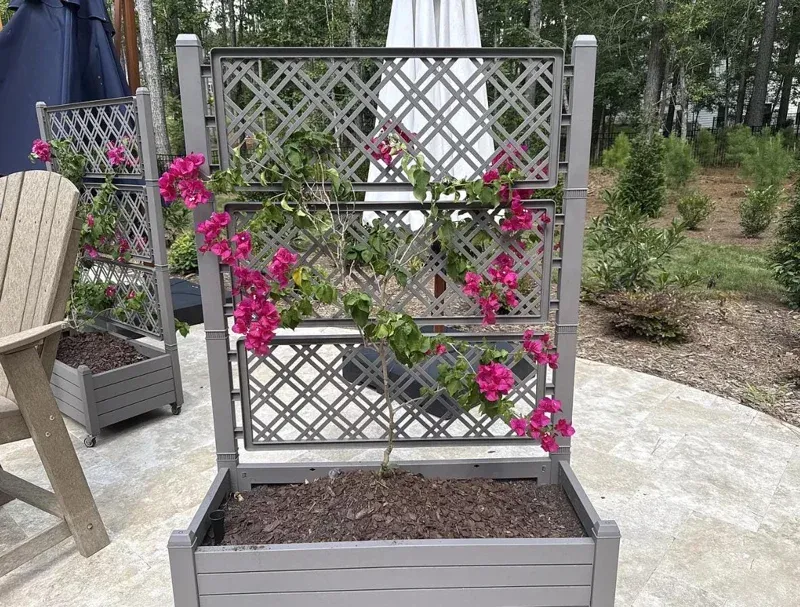
Sharp thorns are a real and consistent feature of bougainvillea, not a minor footnote. The thorns are curved, stiff, and capable of causing painful puncture wounds through light clothing.
UC Agriculture and Natural Resources’ plant safety profile for bougainvillea also notes that the plant’s sap may cause dermatitis on contact with skin and that ingestion of plant material in large quantities raises mild toxicity concerns. These are not reasons to avoid the plant outright, but they are reasons to think carefully about where it lives on your patio.
Keep the container away from narrow walkways where arms and legs brush the plant as people pass through. Children’s play areas and spots where pets spend time unsupervised are also poor locations for a thorny vine.
Dogs and cats that chew on plants should not have access to bougainvillea. Mississippi State Extension recommends thoughtful placement as part of responsible container growing, particularly when the plant is large and actively trained on a support structure.
Gloves and long sleeves are the right gear for any pruning or training session, full stop. Thick leather or puncture-resistant gardening gloves offer better protection than thin fabric gloves when you are working close to thorny stems.
These precautions do not disqualify bougainvillea as a patio plant; they simply define it as one that requires aware, prepared handling. Gardeners who want a thornless or universally child- and pet-friendly vine will be better served by a different plant entirely.
Choose bougainvillea for movable color, not a hands-off bloom guarantee
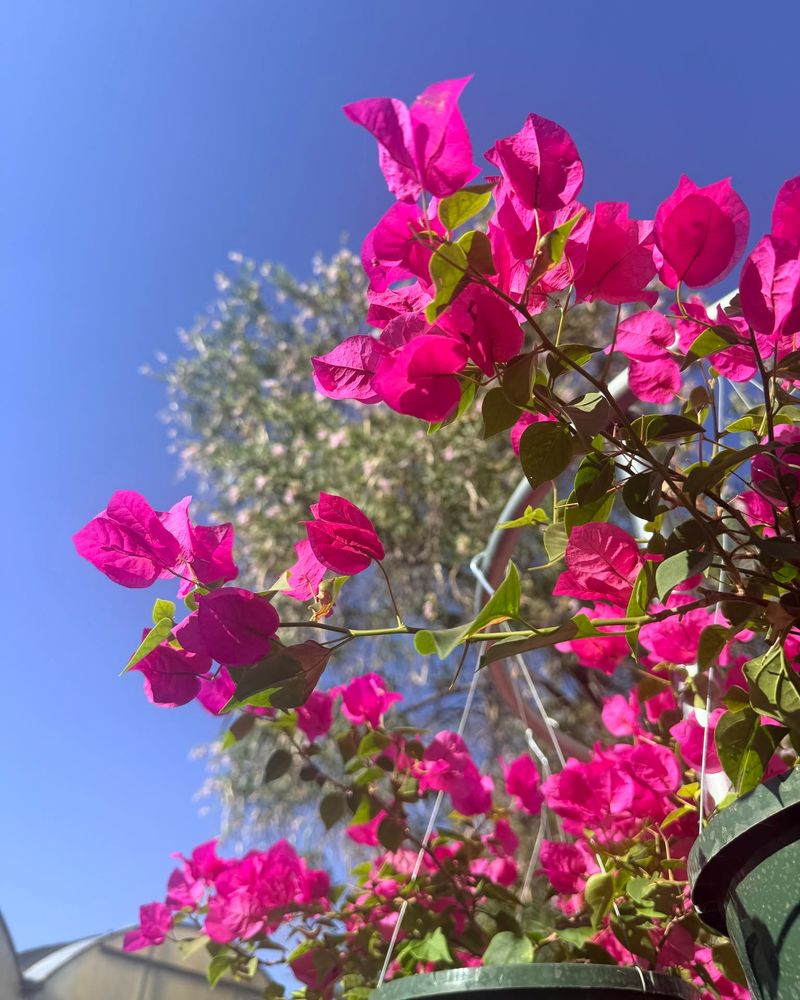
Bougainvillea suits a specific kind of gardener: someone willing to monitor a container through hot Texas summers, provide a sturdy support, prune actively, and move the pot to shelter before a hard freeze. When those conditions are met in a warm, sunny location, the plant can deliver repeated bursts of vivid color across the warm months that few other container vines can match.
Mississippi State Extension puts it plainly: bougainvillea performs best in containers when the grower stays engaged with its needs rather than treating it as a set-and-forget plant.
The complete care formula is straightforward even if it is not hands-off: bright direct sun, a draining pot with a loose mix, thorough but measured watering, restrained fertilizing, a sturdy trellis, regular training and pruning, thorn-aware placement, and freeze protection where your local winters require it. UF/IFAS Extension and Texas A&M AgriLife Extension both support this approach as the path to reliable performance in warm, sunny conditions.
For renters and small-yard gardeners in warm parts of Texas and Florida, a container bougainvillea offers something genuinely useful: vertical color you can take with you when you move. The plant does not promise uninterrupted summer bloom, and it is not the right pick for anyone seeking a thornless, low-maintenance vine.
But for a gardener who wants bold color climbing a trellis on a sunny patio, with the freedom to roll the whole display into the garage on a cold night, bougainvillea is hard to beat.