
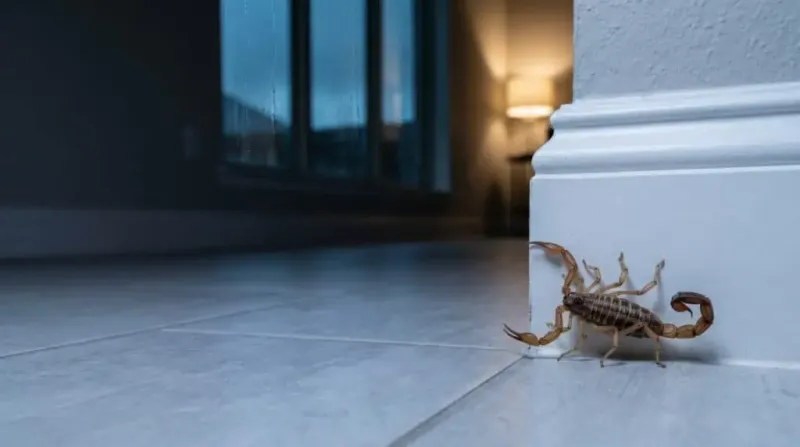
Scorpions showing up inside a Central Texas home can catch anyone off guard, especially when the weather outside has been brutal for weeks. Many homeowners assume a specific storm or temperature drop pushed the scorpion through the door minutes before they found it, but the real picture is more gradual and more useful to understand.
Knowing which conditions make indoor spaces more appealing to scorpions, and which habits keep them out, puts you in a much better position than waiting for a single weather signal that may never come.
What Central Texas Homeowners Are Most Likely to Find
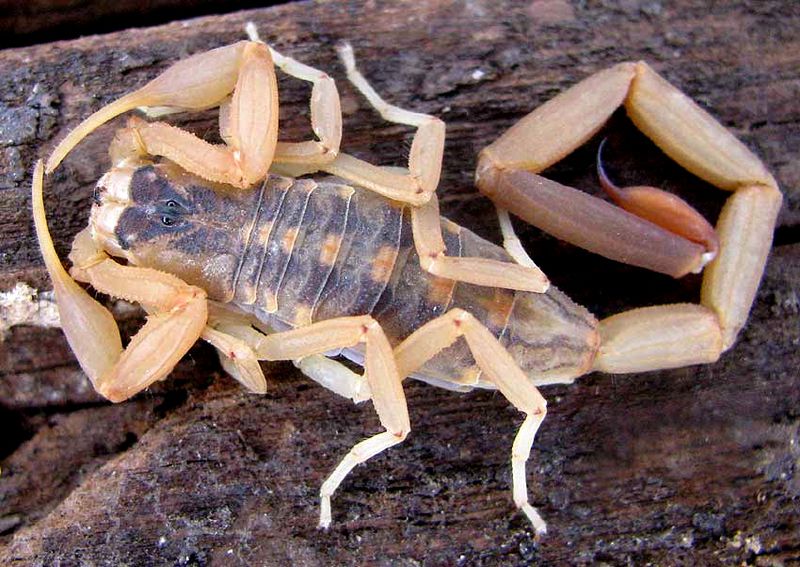
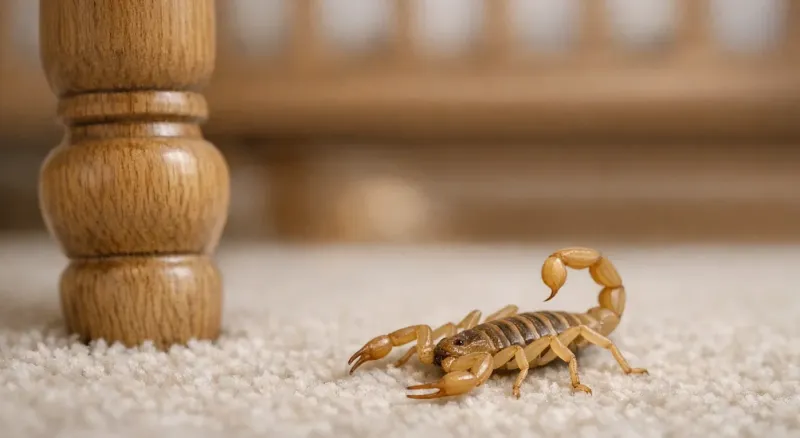
Central Texas has roughly 18 recorded scorpion species, but one shows up in and around homes far more often than any other. The striped bark scorpion, Centruroides vittatus, is Texas’s most common scorpion, and Texas A&M AgriLife Extension’s scorpion guidance identifies it as the species most closely associated with human dwellings and attic spaces across the state.
What makes this species a persistent houseguest candidate is its physical ability. Unlike many ground-dwelling arachnids, the striped bark scorpion climbs readily, moving up trees, exterior walls, and structural surfaces with ease.
That climbing habit means a scorpion can reach a second-story window gap, an attic vent, or a roofline crack that a homeowner might never think to seal.
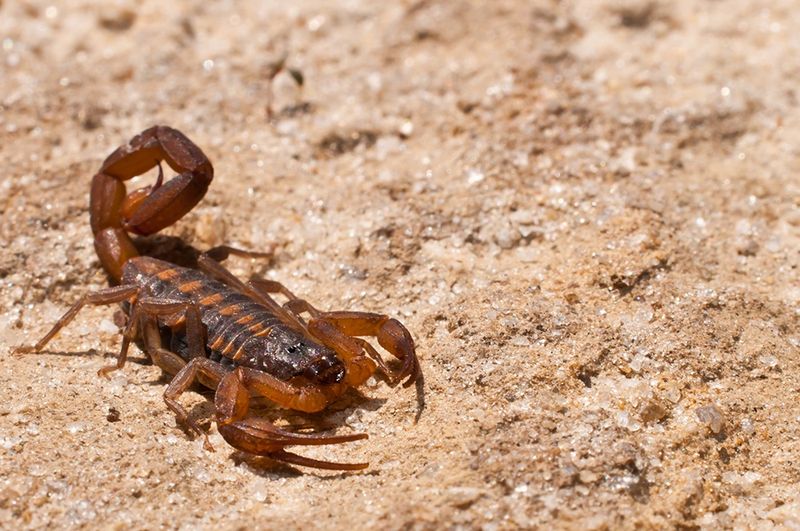
Coloring runs from yellowish-tan to light brown, with two darker stripes running the length of the abdomen. Adults typically measure about two to two and a half inches long.
The body plan is similar to other scorpions, with the curved tail and stinger that make the group so recognizable, but the striped pattern and relatively slender build help distinguish this species from the few heavier-bodied scorpions found in other parts of Texas.
Activity follows a nocturnal schedule. During daylight hours, striped bark scorpions shelter under rocks, loose bark, boards, logs, and debris, or tuck into structural voids and attic spaces.
After dark, they leave those resting spots to hunt insects and other small prey. That nighttime foraging pattern explains why most indoor sightings happen in the evening or early morning rather than midday.
Knowing which species you are most likely to encounter, and understanding how it moves and rests, is the starting point for any practical prevention plan.
Prolonged Heat and Dryness Can Make Indoors More Favorable
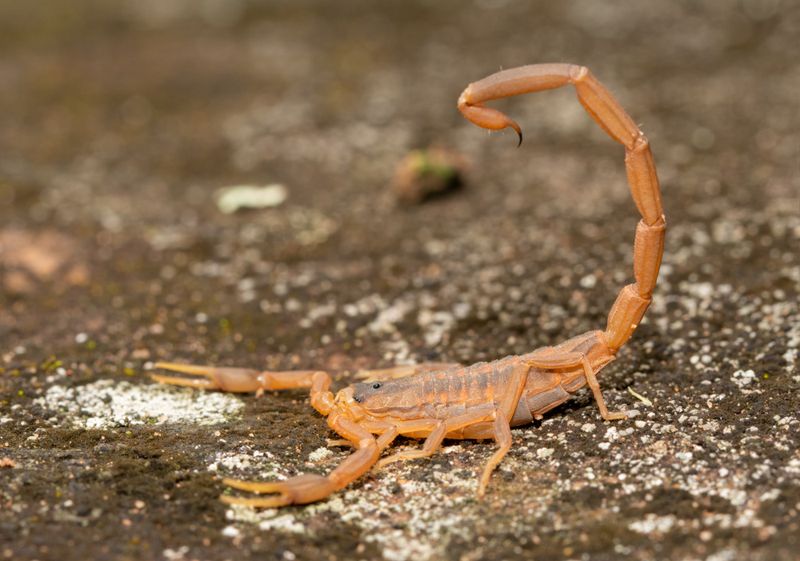
When Central Texas temperatures climb and stay high for days or weeks at a time, conditions inside a home can start to look considerably more hospitable to a scorpion than the environment outside. Texas A&M AgriLife Extension reports that during hot weather, striped bark scorpions may move out of overheated attic spaces and into the cooler living areas below, while Texas A&M Stories coverage of a particularly hot, dry Texas summer noted that scorpions were heading indoors as conditions pushed them toward water and more favorable shelter.
The mechanism worth understanding here is contrast, not a single temperature reading. An attic baking at 140 degrees Fahrenheit on an August afternoon offers almost nothing a scorpion needs.
The living space below, cooler and more humid by comparison, may offer both shelter and a better chance of finding moisture or prey. That gap between outdoor and indoor conditions, rather than any one thermometer reading, is what creates increased risk during a prolonged hot, dry stretch.
Some accounts have described scorpions as being attracted to air-conditioning airflow itself, but the stronger and more carefully supported explanation is simply that indoor areas become more favorable when outdoor conditions become extreme. A Texas Public Radio report quoting an extension entomologist raised the possibility that scorpions move toward cooler indoor spaces during extreme heat, though that specific airflow-attraction claim has not been established by controlled Central Texas research.
The safer framing is that a home’s interior offers better conditions, not that a scorpion is tracking the cool air from a vent.
Equally important: there is no specific temperature threshold, humidity percentage, or number of dry days that reliably predicts when a scorpion will enter your home. The pattern to watch for is sustained heat and dryness over time, not a single day’s forecast.
When that kind of weather settles in, raising your awareness and checking your home’s exclusion measures is a more useful response than waiting for a precise weather trigger that does not exist.
Water, Shelter, and Building Conditions Shape Where They Go
A scorpion that has made its way inside is not necessarily trying to set up permanent residence. According to Alabama Cooperative Extension’s scorpion management guidance, scorpions entering homes may be searching for shelter, water, prey, or simply a route through the structure, and some will eventually die indoors from dehydration or lack of food if conditions do not suit them.
During hot, dry periods, water becomes a particularly strong draw. Bathrooms, kitchens, laundry rooms, and areas near plumbing are reasonable places to focus your inspection because moisture tends to collect there.
Condensation around pipes, slow drips under sinks, and the damp environment near a washing machine or water heater can all attract a scorpion that is searching for relief from dry outdoor conditions. Air-conditioning-related moisture, such as condensate lines and drip pans, adds to that list.
That said, the Texas-specific evidence supports water-seeking as a general behavior rather than giving a ranked probability for each room. A scorpion found in a bedroom or a hallway is not behaving unusually.
It may have entered through a gap near an exterior wall, followed a route through an interior void, or simply moved through the house while foraging after dark.
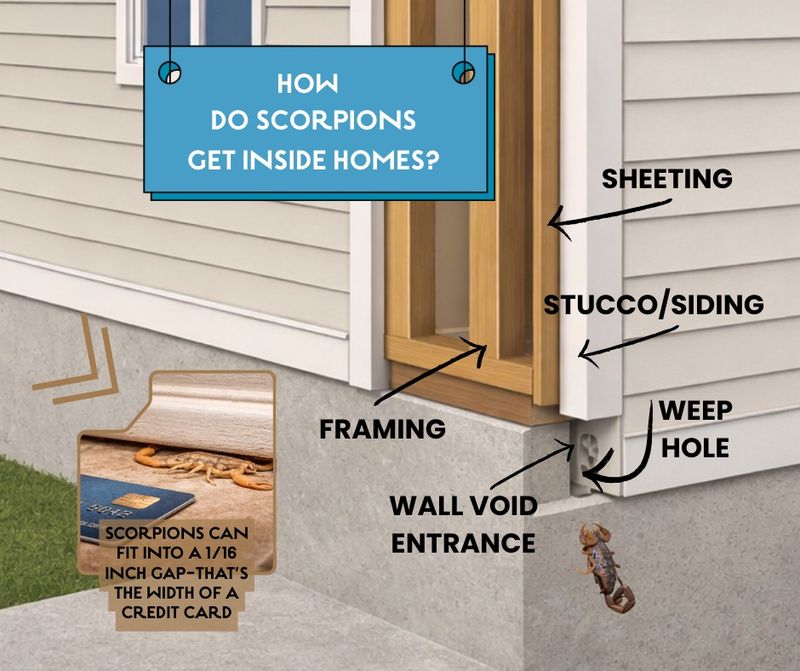
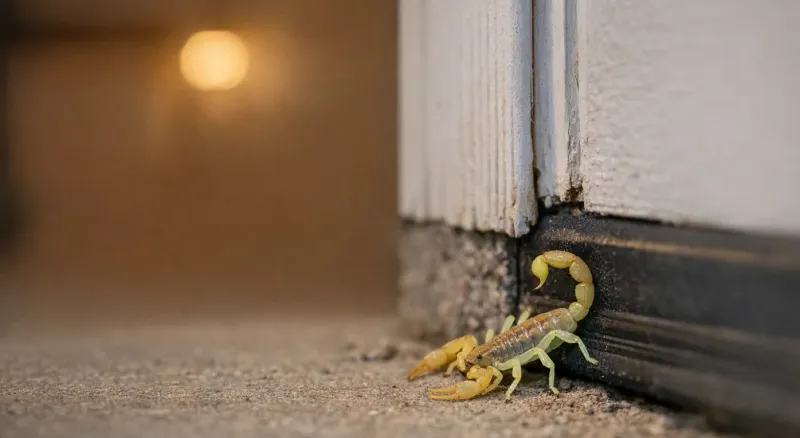
Building conditions matter as much as room location. Gaps around pipes where they enter floors or walls, cracks near the foundation, poorly fitted door sweeps, and unscreened weep holes in brick veneer all create pathways.
A house with good exclusion and low indoor moisture is less likely to offer what a scorpion is looking for than one with open entry points and standing water under a sink. Thinking about your home’s physical conditions alongside its indoor climate gives a more complete picture of where to focus your attention.
Nighttime Activity Makes Sightings More Likely
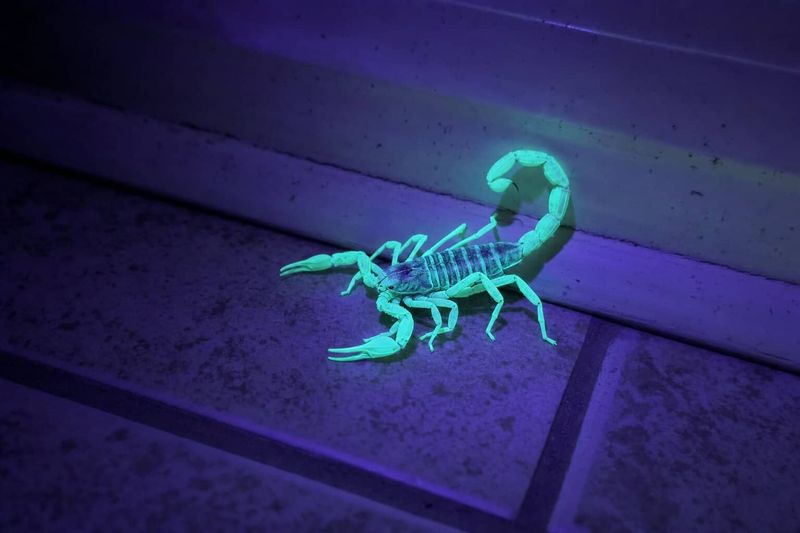
Finding a scorpion at 11 p.m. does not mean a weather shift pushed it through the wall an hour earlier. Striped bark scorpions are primarily nocturnal animals, and Texas A&M’s field guide to the striped bark scorpion confirms that they leave daytime shelters after dark to forage for food.
Nighttime is simply when they are most active and most visible under ordinary conditions, not only during periods of environmental stress.
During the day, these scorpions press themselves into tight spaces: under rocks, inside loose tree bark, beneath boards and landscape timbers, inside woodpiles, and within the structural voids of walls, attics, and crawl spaces. Those hiding places keep them concealed from most homeowners until the sun goes down and the scorpion begins moving.
A sighting at night is consistent with normal scorpion behavior, not proof that something unusual happened moments before you walked into the room.
That distinction matters practically. If you spot a scorpion at night during a stretch of hot, dry weather, the timing is worth noting, but it does not confirm that an army of scorpions just entered the house because of last week’s heat.
The scorpion may have been sheltering inside for days before you happened to cross paths with it.
Nighttime is also the best time to search if you want to locate scorpions proactively. A black light or UV flashlight causes the scorpion’s outer shell to fluoresce, making it visible as a glowing shape against a dark background.
Running a UV light along baseboards, inside closets, around garage walls, and near plumbing areas after dark is a far more effective monitoring method than looking during daylight hours. Use the darkness as a tool for awareness rather than treating every nighttime sighting as evidence of a sudden infestation.
Rain and Cold Can Change Activity Without Creating a Reliable Rule
Rain and cold fronts come up regularly in conversations about scorpions moving indoors, but neither provides a dependable forecast for Central Texas homeowners. Oklahoma State University Extension’s scorpion fact sheet notes that late-spring and early-summer rains can drive scorpions toward drier habitats, while other extension guidance lists cold, rain, and drought together as possible pressures that may prompt scorpions to seek shelter inside structures.
The problem with treating those observations as rules is that “before rain” and “after rain” are not interchangeable, and neither applies universally. Some accounts suggest scorpions move toward drier shelter when rain saturates the soil, while Texas A&M’s Central Texas-focused guidance more strongly emphasizes hot, dry conditions and water-seeking as the central pattern.
Both observations can be true in different circumstances, which means rain alone is not a reliable trigger you can count on in either direction.
Cold fronts present a similar challenge. Cold can reduce scorpion activity, and some extension sources list dropping temperatures as a possible reason scorpions move into structures.
But the Texas evidence reviewed does not establish a predictable surge tied to any particular cold front. A scorpion sheltering in a wall void may become less active when temperatures drop rather than pushing deeper into a home.
Individual responses likely vary with species, the local soil moisture at the time, what shelter is available nearby, prey availability, and the specific construction of the building.
No reliable Central Texas barometric pressure reading, rainfall total, or overnight low has been identified as a scorpion-entry threshold. Replacing the idea of a single dramatic weather trigger with a different oversimplification, such as “scorpions always come in before rain” or “every cold front causes a surge,” would not serve Central Texas homeowners any better.
The honest answer is that weather influences scorpion behavior in ways that are real but variable, and prolonged hot and dry conditions remain the most consistently supported risk pattern for this region.
Seal Entry Routes and Remove Foundation Harborage
The most reliable defense against scorpions is making your home harder to enter and less attractive to shelter near, and the time to do that work is before the next long hot, dry stretch rather than after you find one inside. Environmental modification comes first.
Texas A&M AgriLife Extension specifically states that habitat modification should be the primary control strategy because insecticides alone are difficult to rely on for scorpion management.
Start around the foundation. Move firewood, lumber, loose boards, rocks, bricks, landscape timbers, and any accumulated debris away from exterior walls.
Poison Control’s scorpion guidance recommends keeping firewood and stored materials away from the house rather than stacked against it. Each pile of material sitting against your foundation is potential daytime shelter that a scorpion may not want to leave when evening arrives.
Exclusion work addresses the routes scorpions use to get inside. Repair or replace torn window and door screens.
Install door sweeps on exterior doors and check that weather-stripping creates a full seal when doors close. Caulk gaps around door frames, window frames, roof eaves, and any point where pipes, conduit, or wiring enters the structure.
Pay attention to masonry weep holes in brick veneer, which are intentional openings that can also serve as scorpion entry points.
When it comes to pesticides, the approach that works best is targeted rather than broadcast. EPA’s Integrated Pest Management principles place monitoring, prevention, and lower-risk controls ahead of chemical treatment.
If a pesticide is part of your plan, identify the pest correctly, choose a labeled product, and apply it at entry points and harborage areas rather than spraying indiscriminately across interior surfaces. Exclusion and harborage removal are the foundation; pesticides are a supplement, not a substitute.
Monitor a Sighting Without Creating a Second Hazard
Spotting a scorpion inside your home calls for a measured response, not an immediate assumption that your walls are full of them. EPA’s IPM framework cautions that a single pest sighting does not automatically justify treatment; identification and monitoring should come first.
One scorpion found in a kitchen does not confirm a breeding population or dozens of hidden animals.
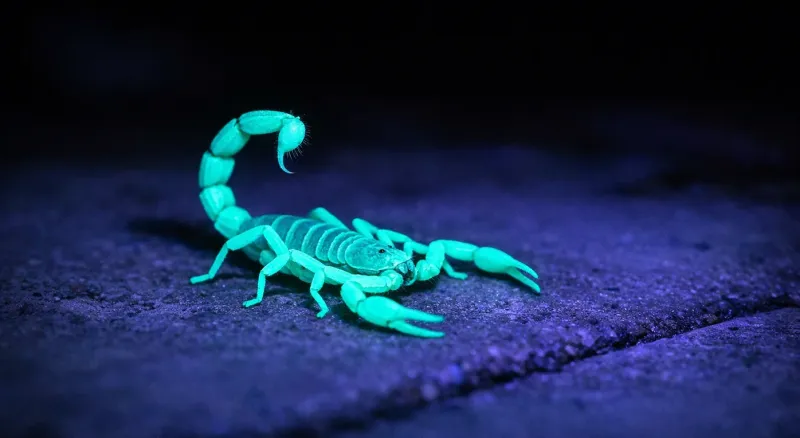
Safe monitoring starts with a UV black light. Scorpion cuticles fluoresce under ultraviolet light, making them visible as a glowing shape in an otherwise dark room.
Running a UV flashlight along baseboards, inside closets, around garage walls, behind appliances, and near plumbing access points after dark is the most effective way to check whether additional scorpions are present. The Texas A&M field guide entry for the striped bark scorpion notes this fluorescence as a practical identification and detection aid.
While searching, avoid reaching blindly into cracks, attics, crawl spaces, woodpiles, or debris piles. CDC guidance for outdoor workers and households recommends shaking out shoes, clothing, bedding, gloves, and towels that have been left on floors or outdoors before putting them on.
Wearing closed-toe shoes and thick gloves when moving rocks, boards, or yard materials is a simple habit that eliminates one of the most common ways people get stung.
If you need to remove a scorpion from inside the house, use a container and a piece of cardboard to capture and relocate it rather than attempting bare-handed contact. Do not handle a scorpion directly, regardless of how still it appears.
After a thorough inspection with a UV light over several nights, you will have a much clearer picture of whether this was a single wandering animal or a sign that entry points need more attention.
Know What to Do After a Sting

A scorpion sting is painful and worth taking seriously, but knowing the right steps in advance keeps the response calm and effective. CDC guidance on scorpion stings recommends washing the affected area with soap and water, then applying ice or a cool compress to reduce pain and swelling.
Do not immerse the area in ice water; a cloth-wrapped ice pack or cool compress placed against the skin is the appropriate method.
After those first steps, contact a poison center or health professional. Texans can reach the Texas Poison Center Network around the clock, and the national Poison Help line, 1-800-222-1222, connects callers to poison specialists any time of day or night.
The Texas Department of State Health Services maintains information on the Texas Poison Center Network, which provides free 24-hour advice statewide. Having that number saved before you need it is a practical step every Central Texas household should take.
Texas A&M AgriLife Extension describes most Texas scorpion stings as producing moderate local reactions, including pain, swelling, and temporary numbness or tingling at the site. However, individual sensitivity varies, and some people experience more significant responses.
Poison Control notes that bark scorpions are the most medically significant scorpion group in the United States, and serious reactions remain possible even when most local stings are not life-threatening.
Seek urgent medical attention if any of the following develop after a sting: trouble breathing, muscle twitching or spasms, unusual eye movements, slurred speech, difficulty swallowing, severe or spreading symptoms, or any of these signs in a young child. Children are at higher risk for serious reactions than healthy adults because of their smaller body size relative to venom dose.
Remaining calm after a sting helps slow circulation and reduces the speed at which venom spreads, so staying still and following these steps while waiting for guidance is the right course of action.
Use the Heat-and-Dryness Pattern as a Prompt to Prepare
Prolonged hot, dry conditions combined with a home’s cooler or more favorable indoor spaces are the most consistently supported risk pattern for scorpion encounters in Central Texas. That combination deserves extra attention, especially after dark, but it does not function as a countdown or a precise entry signal.
Weather shapes the conditions that make indoor spaces more appealing; it does not schedule the moment a scorpion crosses your threshold.
The practical defense does not require waiting for a specific forecast. Seal gaps around doors, windows, pipes, and masonry openings now.
Move harborage materials away from the foundation before the next long hot stretch settles in. Keep a UV flashlight accessible for nighttime checks, shake out footwear and clothing left on floors, and wear gloves when moving outdoor materials.
Save 1-800-222-1222 in your phone before you need it.
EPA’s IPM approach and Texas A&M AgriLife Extension’s scorpion guidance both point toward the same conclusion: a combination of exclusion, habitat modification, careful monitoring, and proportionate response handles this problem far better than any single chemical spray or weather-based alarm. A scorpion found inside is a prompt to check your home’s defenses, not a reason to panic, and a home with solid exclusion is already doing most of the work.