
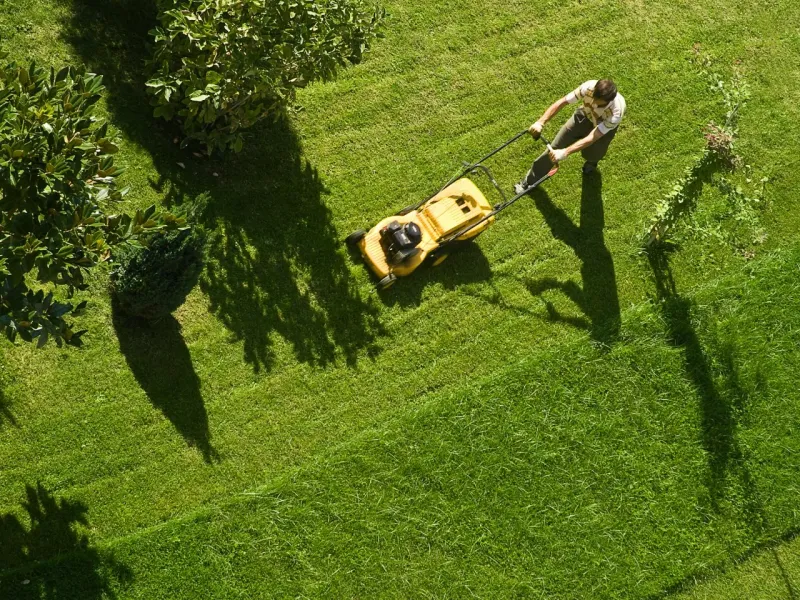
Most Central Texas homeowners who end up with a brown, stressed lawn after mowing never meant to harm anything. They just got busy, skipped a week or two, and then tried to fix the overgrown mess by dropping the mower deck and cutting low.
That catch-up habit, not the heat itself, is the real reason so many Bermuda lawns look scorched by late summer.
The real mistake is catch-up mowing
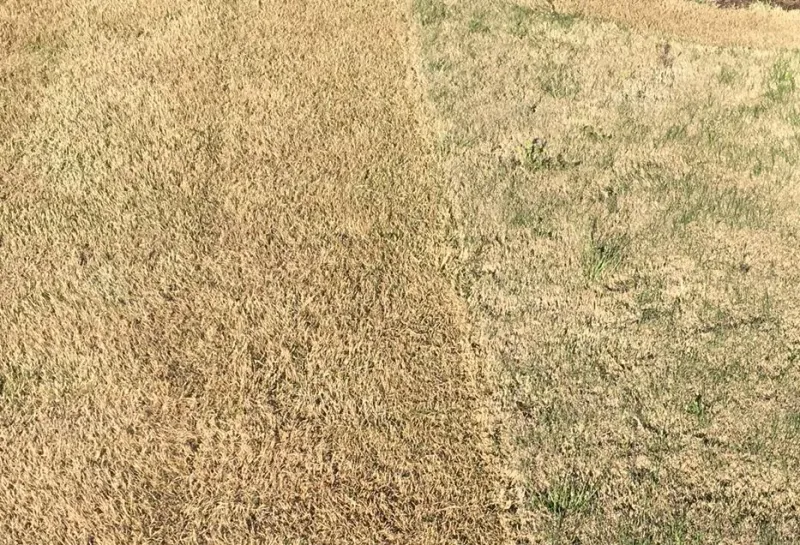
Plenty of homeowners blame the Texas sun when their Bermuda lawn turns brown after a mowing, but the sun is rarely the main culprit. The pattern that quietly does real damage looks like this: life gets busy, the lawn grows past its intended height over a week or two, and then the homeowner drops the mower deck to compensate and cuts everything down in one aggressive pass.
That single decision, removing too much green tissue at once, is what extension specialists call scalping.
Texas A&M AgriLife Extension’s Bermuda home lawn guidance specifically identifies both mowing too low and mowing too infrequently as problems that reduce photosynthesis and carbohydrate storage. The two mistakes often happen together: a homeowner who skips mowings allows the lawn to grow tall, then lowers the deck to get it back to a tidy height, stripping away most of the green leaf tissue in one cut.
The core issue is not that hot weather creates a special mowing hazard at some particular temperature. Bermuda is among the more heat-tolerant grasses used in Texas, and routine mowing during warm weather is normal and necessary.
The damage comes from removing more than one-third of the leaf blade in a single mowing, which is more likely to happen when mowing has been postponed and the lawn has grown well beyond its target height.
A practical example: a homeowner maintaining Bermuda at 1.5 inches skips two weeks. The grass reaches 3 or 4 inches.
To restore it quickly, they lower the deck and cut it back to 1.5 inches in one pass, removing well over half the blade. That is catch-up scalping, and it is the habit behind most mowing-related stress on Central Texas Bermuda lawns.
Brown patches after mowing can have other causes too, including drought, soil problems, pests, or uneven irrigation, so scalping should not be assumed just because the lawn looks rough after a cut.
Why one drastic cut compounds heat stress
Green leaf tissue is where Bermuda grass captures energy. The plant uses that energy to build carbohydrates, which fuel root growth, recovery from traffic, and the ability to push through periods of heat and limited moisture.
When a single aggressive cut strips away most of that green tissue, the plant’s energy production drops sharply at exactly the moment when conditions are already demanding.
Established Bermuda is genuinely resilient. Texas A&M AgriLife notes that Bermuda can tolerate drought stress, but also that drought can cause wilting, blue-gray color, browning, reduced growth, and eventual dormancy.
That tolerance has a ceiling, and a lawn that has just lost most of its photosynthetic tissue is working with a much lower reserve when heat and dry conditions close in.
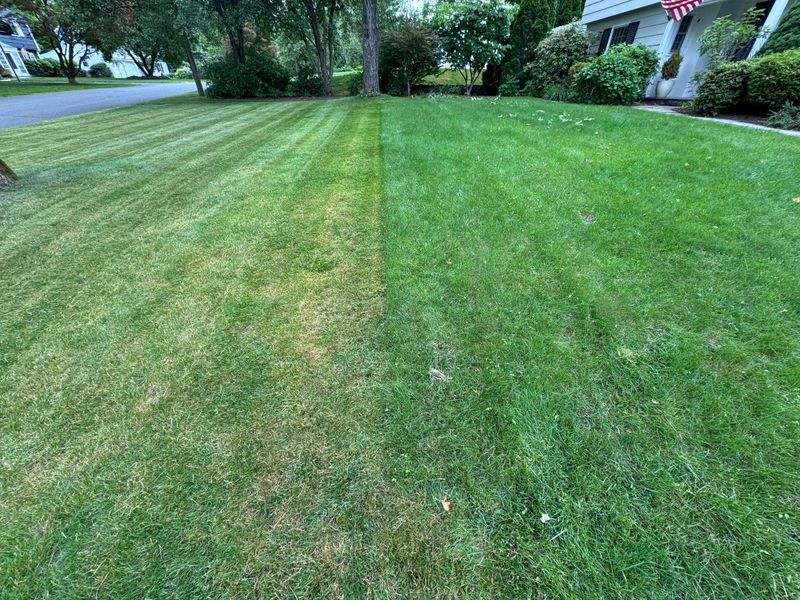
One practical clue homeowners can use: if a lawn looks healthy and green before mowing but turns noticeably brown or tan immediately after, too much leaf tissue may have been removed. AggieTurf’s lawn establishment and maintenance guidance ties that color shift to excessive removal of photosynthetic tissue, meaning the cut went too deep into the plant’s energy-producing zone.
That color clue is useful but not a complete diagnosis on its own. A tan lawn after mowing can also reflect drought stress, compacted soil, disease, shade, pest activity, or uneven irrigation coverage.
What makes severe heat and drought a compounding factor is that the lawn has fewer resources available to recover from any setback, including an overly aggressive cut. The combination of lost leaf area and limited soil moisture is harder on Bermuda than either problem alone, which is why catch-up scalping during dry, hot stretches tends to produce the worst-looking results.
Choose a height your Bermuda can sustain
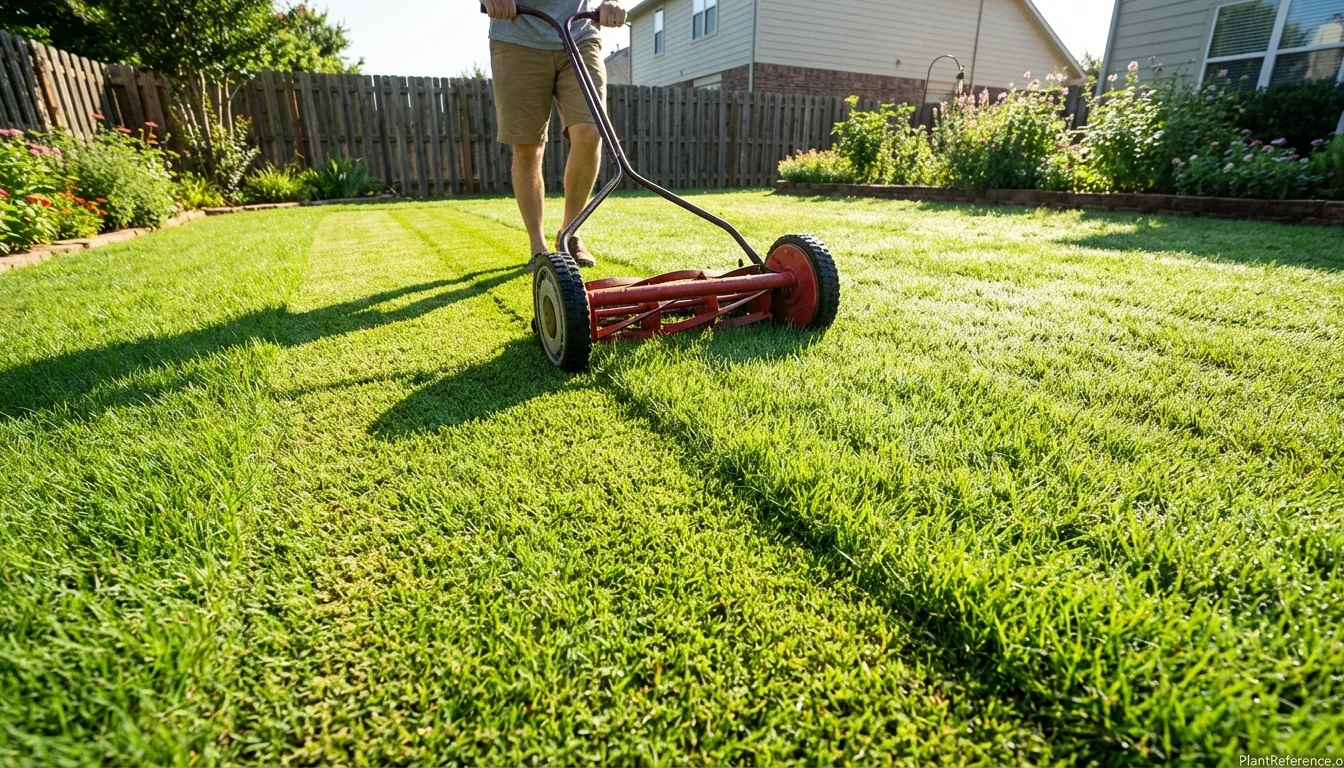
Before worrying about mowing frequency, the right starting point is the correct cutting height for the specific Bermuda lawn in question. Not all Bermuda grass is the same, and a height that works well for one type can stress another.
For most Central Texas home lawns with a standard rotary mower, Texas A&M AgriLife recommends a mowing height of 1 to 2 inches for Bermuda. A newer Texas A&M mowing guide provides a broader breakdown: common Bermuda typically performs well in the 1- to 3-inch range, with an optimum around 1.5 inches, while hybrid Bermuda generally does best between 0.75 and 2 inches, with an optimum closer to 1 inch.
These ranges assume the lawn is mowed at the right frequency to stay within that zone.
Golf-course, sports-turf, and ultradwarf Bermuda cultivars can be maintained at much lower heights, sometimes well under an inch, but that is not a practical target for an ordinary home lawn. AggieTurf’s Bermuda overview makes clear that very low mowing for those specialty types requires reel mowers, high mowing frequency, adequate moisture, and intensive management inputs that are not typical of a residential setting.
One common misconception is that cutting lower saves mowing time. The opposite is true: a lower target height requires more frequent mowing to keep each cut within the one-third limit.
Set the deck to 1 inch and you need to mow before the grass reaches 1.5 inches, which during peak summer growth can mean cutting every four or five days.
Shade, mower type, cultivar, and the overall condition of the lawn can all shift the right setting. Oklahoma State Extension cautions that some hybrid Bermuda types can become stemmy and prone to scalping if maintained above their recommended range, so raising the deck is not automatically safe for every cultivar.
The goal is a height the specific lawn can realistically sustain given the mower, the cultivar, the available moisture, and the mowing schedule the homeowner can actually keep.
The one-third rule sets the mowing trigger
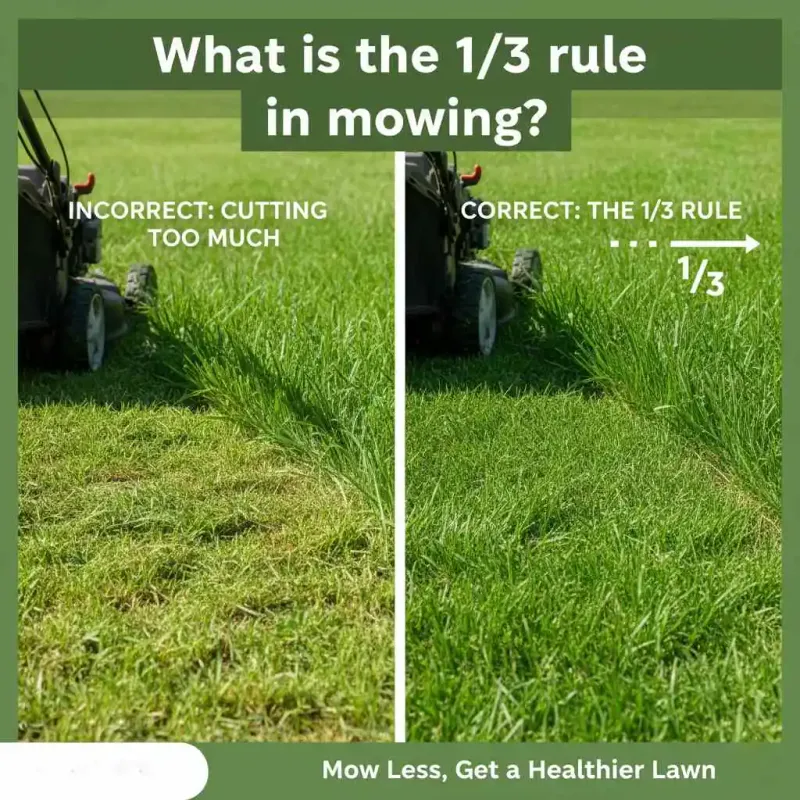
The one-third rule is the most reliable guide a homeowner has for deciding when to mow. The principle is straightforward: never remove more than one-third of the leaf blade in a single mowing session.
If the target height is 2 inches, the mower should roll before the grass exceeds about 3 inches. At that point, cutting back to 2 inches removes exactly one-third of the blade, which is the maximum advisable in one pass.
Texas A&M AgriLife’s Bermuda management calendar and AggieTurf’s lawn maintenance publication both identify this threshold as the practical standard for home lawns. What the rule means in practice is that growth rate, not a fixed day of the week, determines the mowing schedule.
During the rapid growth of peak summer, Bermuda can easily add half an inch or more in a few days, which means twice-weekly mowing may be necessary to stay within the limit. During slower growth periods, once a week or less may be enough.
When a lawn has already grown well beyond the target, do not try to correct it in one cut. Texas A&M’s mowing guide recommends lowering the height gradually over multiple mowings, with each pass removing no more than one-third.
For example, if the lawn has grown to 4 inches and the target is 2 inches, start by cutting to about 2.7 inches, then drop to 2 inches on the next mowing a few days later. That step-down approach avoids the shock of a single drastic cut.
Sharp mower blades support the whole process. Dull blades tear and shred leaf tips rather than cutting cleanly, leaving ragged, straw-colored ends that can invite pathogens and make the lawn look worse than it is.
Checking and sharpening the blade a few times through the growing season is a simple maintenance step that improves cut quality noticeably. That said, a sharp blade cannot substitute for the right height or correct mowing frequency.
A perfectly sharp blade set too low or used after the lawn has grown too tall will still scalp the turf.
Heat calls for more leaf area, not a dramatic haircut
When Central Texas heat and dry conditions combine to push a Bermuda lawn toward stress, the instinct to give it a fresh cut and a good watering is understandable. The problem is that cutting aggressively during a period of heat and drought stress removes the leaf area the plant needs most to sustain itself.
Maintaining more leaf area, not less, is the practical approach when conditions are already hard on the turf.
Oklahoma State Extension’s late-summer drought guidance recommends mowing grass a little higher during drought stress. University of Georgia Extension similarly recommends raising the mowing height by about half an inch in hot weather to help the lawn cope.
For a Central Texas Bermuda lawn, that means moving toward the upper end of the correct range for that cultivar, not raising every lawn to an arbitrary height like 3 or 4 inches that may be outside what Bermuda is designed to handle.
Irrigation decisions should follow the same evidence-based logic. Texas A&M advises watching for wilting and blue-gray turf color as signs that Bermuda needs water, rather than watering on a rigid schedule.
Slope, soil type, rooting depth, rainfall, and shade all affect how quickly moisture is used. There is no useful reason to water automatically after every mowing; irrigation should respond to what the lawn actually shows.
When a Bermuda lawn has essentially stopped growing due to dormancy or severe drought stress, the right call is to postpone mowing entirely. University of Minnesota Extension recommends minimizing mower and equipment traffic on drought-stressed turf and waiting until meaningful growth resumes before cutting again.
Running a mower over a dormant or barely growing lawn adds physical stress without any benefit. Fertilizer is not the answer during this period either; Texas A&M advises against fertilizing Bermuda during hot, dry late-summer conditions when soil moisture is limited, because fertilizing a stressed lawn can make things worse rather than better.
When the lawn still browns, inspect beyond the mower
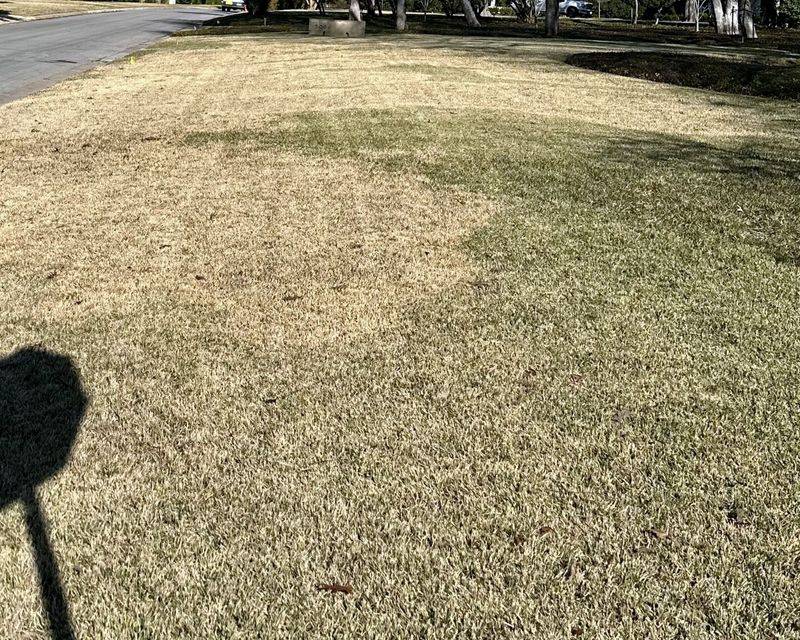
A tan or brown Bermuda lawn after mowing does not automatically mean scalping is the cause. Several other factors can produce similar results, and treating the wrong problem wastes time and money while the real issue continues.
One underappreciated source of localized scalping is the lawn’s physical surface. Texas A&M’s mowing guide identifies uneven ground, high spots, low spots, ruts, and mower-wheel compression as factors that effectively lower the cutting height in specific areas, even when the deck setting looks correct.
A mower passing over a small rise cuts closer to the soil there than it does on flat ground, creating a brown streak or patch that repeats every time the lawn is mowed. Correcting recurring terrain problems, filling low spots and smoothing high ones where practical, reduces that kind of repeated localized scalping over time.
Irregular brown patches that do not follow the mowing pattern, or that persist long after mowing, point toward other causes. Drought stress, disease, shade from trees or structures, soil compaction, and uneven irrigation coverage can all produce discolored turf that looks similar to mowing damage.
Texas A&M’s Bermuda management calendar also notes that pest activity can mimic drought stress in appearance. White grubs, for example, feed on grass roots underground and can produce dying patches that look like the lawn simply dried out; AggieTurf’s white grub resource covers how to identify that kind of damage separately from moisture or mowing issues.
Blade sharpness, mowing height, mowing frequency, water availability, and site conditions all interact. A sharp blade at the right height on a well-irrigated lawn will still produce brown patches if the soil is compacted, if irrigation heads are missing spots, or if a pest is active below the surface.
Working through each variable systematically gives a much clearer picture than assuming the mower is always the problem.
A resilient routine starts with restraint
Before the next mowing, a quick check of a few things makes the whole job more effective. Identify the Bermuda type if possible, because common and hybrid cultivars have different target height ranges.
Set the deck to a height within the appropriate range for that type, keeping in mind the mower being used and how consistently the schedule can be maintained.
Then check how much the lawn has actually grown since the last cut. Texas A&M’s Bermuda management calendar and AggieTurf’s lawn maintenance guide both point to growth rate, not the calendar, as the right trigger.
If the grass has not grown enough to justify removing one-third of the blade, hold off. If it has grown past the one-third threshold, mow promptly to avoid the catch-up problem that starts the whole cycle over again.
Keep the blade sharp, stay within the correct height range, and stop mowing when active growth and adequate moisture are both absent. The damaging pattern is catch-up scalping after neglect, not simply running a mower on a hot afternoon.
Preserving enough green leaf area gives Bermuda a genuinely better chance to stay resilient through heat and dry stretches; the lawn that recovers fastest is the one that never lost too much to begin with.