
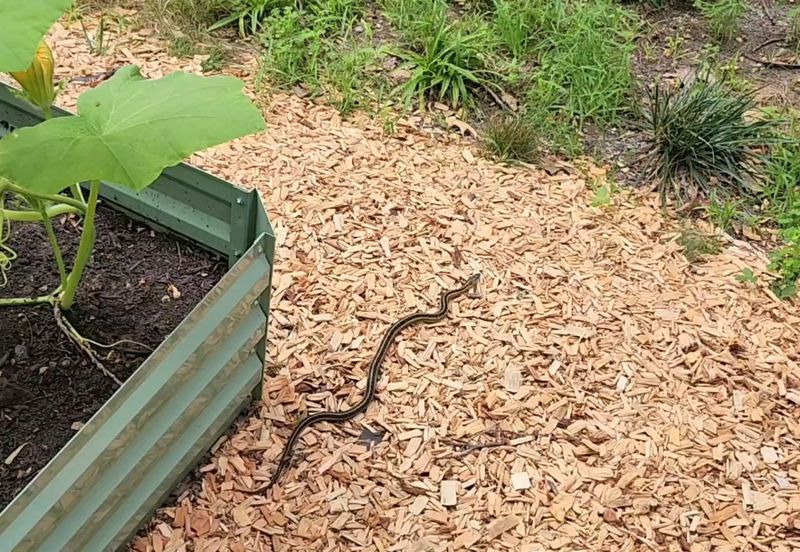
A snake spotted near your foundation bed is enough to make anyone step back and wonder what changed. In many cases, the answer has less to do with the type of mulch in your beds and more to do with how thick, damp, or cluttered that mulch has become over time.
Thick, undisturbed mulch pressed right against a wall can give wildlife a hidden place to rest or move through, and when nearby debris, moisture, and food sources pile up too, the area becomes more appealing to snakes passing through. Understanding what actually draws snakes close to your house puts you in a much better position to do something useful about it.
The real concern is concealed habitat beside the wall
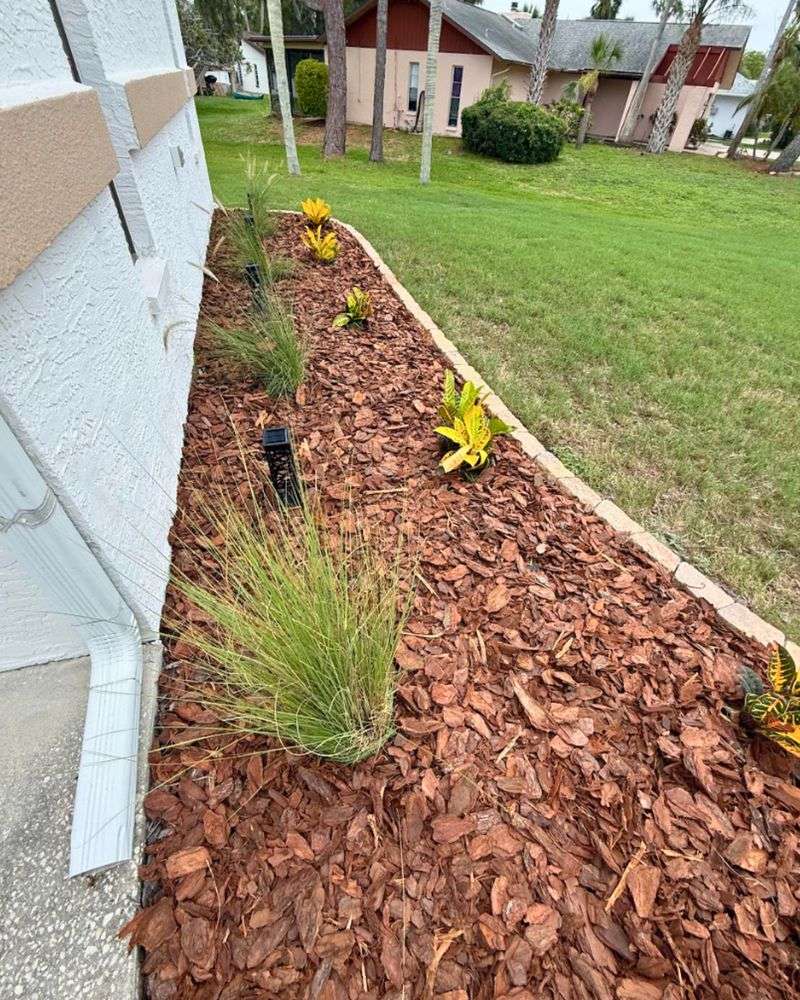
Mulch that has built up thick and damp right beside your house creates something snakes can genuinely use: a hidden corridor where they can rest, move through, or wait out the heat of the day without being seen. That concealment is the core concern, and it applies when any organic material, bark, leaves, or wood chips, is piled deep enough and left undisturbed long enough to form a low-visibility layer at ground level.
What mulch alone does not do is supply all the reasons a snake might linger. UF/IFAS guidance on preventing snake encounters makes clear that nearby vegetation, moisture, debris, rodents, frogs, insects, lizards, and other prey are the conditions that may bring snakes into a residential area.
The mulch may provide cover, but the food and water nearby are what give a snake a reason to stay rather than simply pass through.
Finding a snake in your foundation bed does not prove the mulch caused the encounter. Snakes move through residential landscapes for many reasons, including seasonal travel, prey availability, and proximity to natural habitat.
A single sighting says more about what is happening in and around the bed as a whole than about any one material in it.
The practical concern is concealed habitat immediately beside the structure. When mulch is thick enough to hide a snake from view at ground level and damp enough to stay cool through Florida’s heat, that strip of bed becomes harder to inspect and easier for wildlife to use without being noticed.
Addressing that specific condition, rather than treating every foundation bed as an emergency, is where the useful work begins.
Bark mulch is not a snake magnet
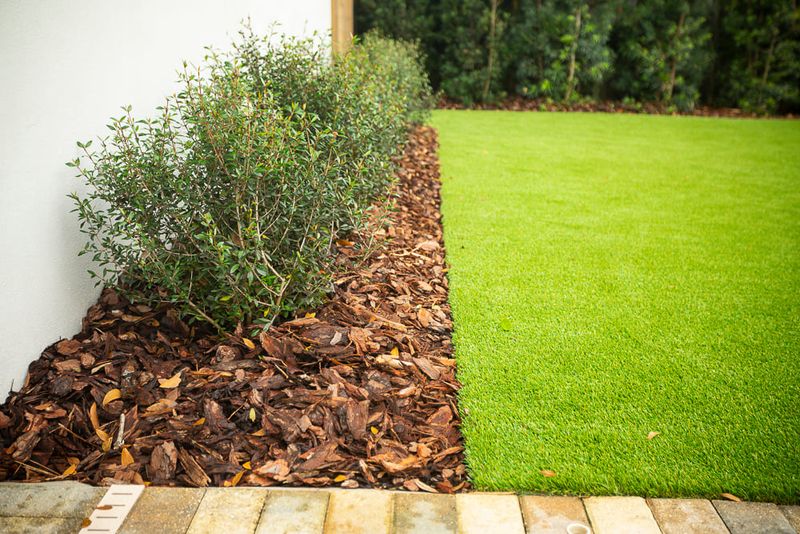
Plenty of homeowners see bark mulch listed near a snake story and assume the material itself is the problem. Florida guidance does not support that conclusion.
UF/IFAS Florida-Friendly mulch guidance recognizes pine bark and other organic mulches as appropriate choices for Florida planting beds, valued for moisture retention, weed suppression, and soil temperature moderation. The material is not flagged as a snake attractant.
Snakes respond to combinations of shelter, food, moisture, and access rather than a specific product brand or mulch type. A properly maintained shallow layer of bark mulch in a tidy bed is a very different habitat than a deep, soggy, debris-filled pile left against a wall for two seasons.
The first provides some ground-level cover; the second can create the kind of thick, undisturbed microhabitat that is more likely to be used by wildlife seeking concealment.
UF/IFAS also notes that mulch piles and compost bins can attract rodents, and rodents may attract snakes. That connection runs through prey, not through the bark itself.
A mulch pile left to accumulate without management is a different situation than a well-placed planting bed kept at an appropriate depth.
Swapping bark mulch for another material does not address the conditions that actually matter: depth, placement, moisture, nearby cover, and food availability. UF/IFAS Gardening Solutions recommends focusing on correct depth and proper separation from walls rather than automatically replacing one material with another.
Redirecting attention from “which mulch” to “how much, how deep, and what surrounds it” is a more productive starting point for any Florida homeowner.
Build a shallow, visible foundation edge
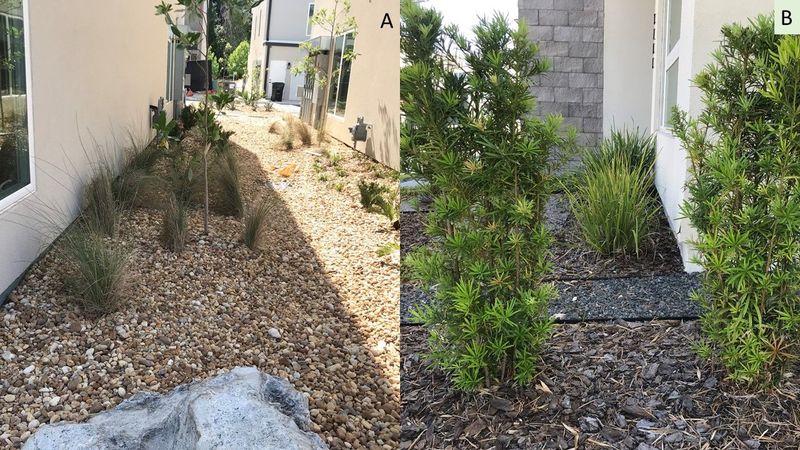
Pulling mulch back from the wall and keeping it thin in that narrow strip is one of the most useful adjustments a Florida homeowner can make to a foundation bed. UF/IFAS guidance on termites and mulch recommends using less than 2 inches of mulch within 12 inches of the foundation, and maintaining about a 6-inch visible inspection space between the siding and the soil or mulch surface.
That open strip lets the soil dry between rain events, keeps the wall surface visible, and makes it far easier to spot anything moving at ground level.
The reasoning behind this guidance is primarily about moisture management and building access. Wet soil and organic material held tight against a foundation can contribute to wood decay, and a covered wall base makes termite inspections more difficult.
Those are the primary reasons extension specialists recommend the open edge, not a specific promise that snakes will avoid the area.
That said, the same open, visible strip that helps the soil dry and supports inspections also reduces the depth of concealed cover immediately beside the wall. A thin, frequently raked layer of mulch does not offer the same hiding conditions as four to six inches of compacted, damp material.
Keeping that edge shallow and clear is a reasonable step, with the understanding that it improves conditions without creating a tested exclusion barrier.
Farther out in the planting bed, away from the wall, UF/IFAS Gardening Solutions recommends about 2 to 3 inches of mulch as the standard Florida-Friendly depth. That range gives plants the moisture and temperature benefits of mulch without creating the excessive depth that can cause problems near the structure.
The transition from a shallow foundation edge to a standard-depth bed a foot or more from the wall is the practical model to follow.
Remove nearby cover and prey attractants
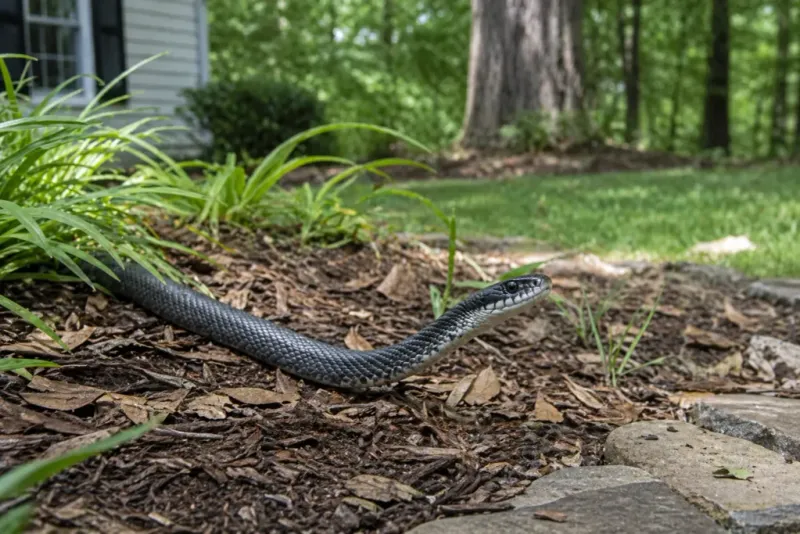
Once the mulch depth near the wall is under control, the next step is looking at everything else in and around the bed. Florida Fish and Wildlife Conservation Commission guidance points to brush, lumber, debris, spilled birdseed, and pet-food scraps as conditions associated with frequent snake sightings near homes, and recommends removing them.
FWC also connects rodent activity to snake presence, so managing rodents is part of the same set of steps.
Shrubs and low-hanging branches that drape over or touch the foundation create overhead cover and can keep the ground underneath shaded and damp. Trimming them back so the base of the wall stays open and sunny helps the area dry faster and makes it easier to see what is moving at ground level.
Moving brush piles and stacked firewood away from the house and play areas removes ground-level hiding spots that wildlife of many kinds, not just snakes, will use given the opportunity.
Birdseed that falls below a feeder and pet food left outside overnight are reliable rodent attractants. Rodents near the foundation can draw snakes that feed on them, so storing seed in sealed containers and cleaning up spills and uneaten food removes one of the more reliable reasons a snake might linger in the area.
Addressing consistently wet spots immediately against the house, from a leaking hose bib or poor drainage, reduces the moisture that keeps the area cool and comfortable for wildlife seeking shelter from Florida’s heat.
These steps address important conditions associated with snake activity. Reducing cover and food availability is more evidence-based than assuming a mulch-type change alone will change snake behavior.
Snakes may still pass through a residential yard because of natural habitat nearby, seasonal movement, frogs, insects, or other prey that these steps do not fully eliminate, but a cleaner, drier, less cluttered foundation area is a less useful stopover for a snake moving through the neighborhood.
Seal the openings that lead indoors
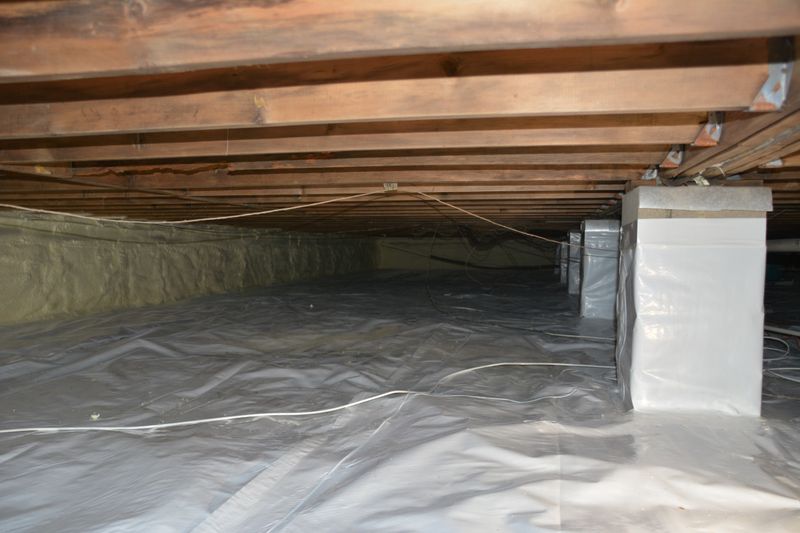
Mulch near the foundation does not push snakes into a house. What gives a snake an entry route is an opening: a gap around a pipe, a crack in the block, a poorly sealed vent, or a space under a door.
UF/IFAS guidance on preventing encounters specifically calls out cracks and openings around foundations, doors, porches, plumbing, wiring, vents, and crawl spaces as entry points to address, and notes that small snakes can use gaps no larger than a pencil in diameter.
Concealed habitat near the structure and structural access are two separate problems that work together. Thick mulch or debris beside the wall may give a snake a reason to be close to the house, but it takes an actual opening for the animal to get inside.
Sealing those openings is a complementary step to bed management, not a replacement for it, and not a promise of total exclusion since gaps are easy to miss and some structures have many of them.
A practical inspection covers the full perimeter at ground level: look for gaps where pipes or conduit enter the wall, check crawl space vents for damaged screens, examine the seal along the bottom of exterior doors, and probe the mortar between concrete blocks where it may have cracked or eroded. Any gap large enough to admit a pencil is worth sealing with an appropriate material, whether that is caulk, hardware cloth, or a door sweep.
Combining a clear, shallow foundation edge with sealed entry points addresses both the concealment and the access side of the problem. Neither step alone eliminates the possibility of encountering a snake near the house, but together they make the area less useful as a resting spot and less accessible as an entry point.
Respond safely when a snake appears
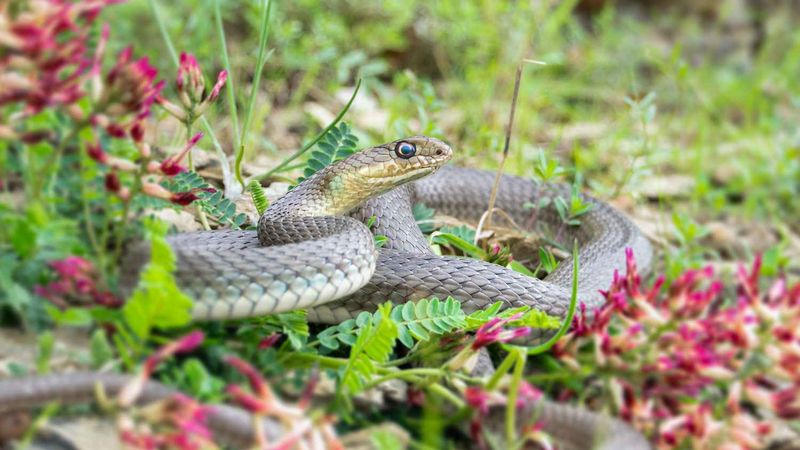
Seeing a snake in a mulched bed is startling, but a calm and measured response is both the safest and the most practical one. FWC notes that most snakes encountered in Florida are nonvenomous and that snakes generally avoid people, usually fleeing when given the chance.
Giving the snake space and time to move on is often all that is needed.
Do not handle, corner, strike at, capture, or attempt to relocate the animal yourself. UF/IFAS is direct on this point: attempting to kill or confront a snake is among the least-safe responses a homeowner can choose.
A large share of snakebites occur when someone tries to handle or kill a snake rather than during an unprovoked encounter, and that risk applies to both venomous and nonvenomous species. Keep children and pets inside or well away from the area until the snake has moved on.
Florida is home to 50 native snake species, and the Florida Museum identifies six venomous species of practical concern: the eastern coral snake, southern copperhead, cottonmouth, eastern diamondback rattlesnake, timber rattlesnake, and dusky pygmy rattlesnake. The other 44 native species are nonvenomous, and many of them are genuinely useful around a yard, eating insects, slugs, and rodents.
Even so, do not try to identify an unfamiliar snake by guesswork based on color, pattern, or head shape. Field identification under stress is unreliable.
If a snake you believe may be venomous is close to people or pets and poses an immediate danger, UF/IFAS Gardening Solutions recommends contacting a qualified wildlife or animal-control professional rather than attempting to handle the situation yourself. Most counties have wildlife services or nuisance animal removal contacts that can respond when a snake needs to be moved safely.
Improve the bed instead of blaming every bag of bark
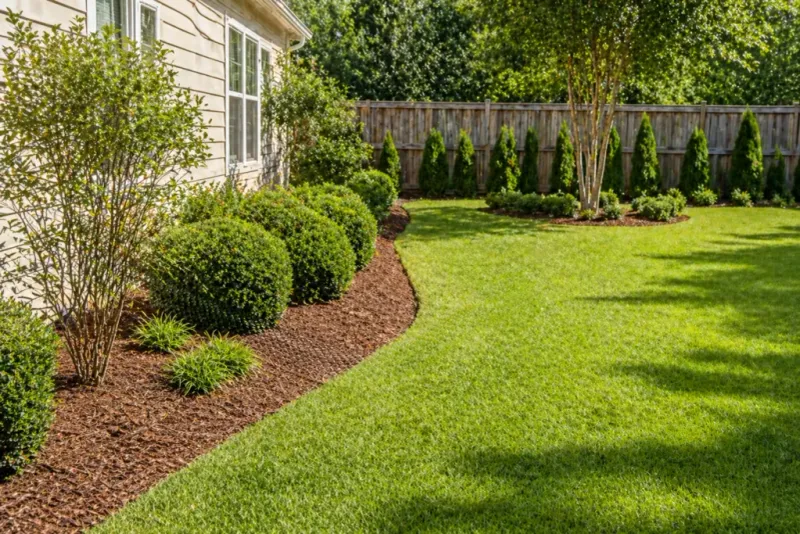
A workable action sequence for any Florida foundation bed starts with pulling mulch back from the wall and reducing its depth in that innermost strip to less than 2 inches, per UF/IFAS termite and foundation guidance. Open up a roughly 6-inch visible gap between the siding and the mulch surface, clear any debris that has collected along the base, and trim shrubs or branches that shade or touch the wall.
From there, secure birdseed and pet food, address any rodent activity, and walk the perimeter to seal gaps in the foundation, around pipes, and at vents. Farther out in the bed, UF/IFAS recommends keeping organic mulch at about 2 to 3 inches where it benefits plants and soil, and there is no reason to strip bark mulch from beds that are properly maintained and positioned away from the wall.
The material still does its job of suppressing weeds, conserving moisture, and moderating soil temperature in Florida’s climate.
None of these steps, taken together or separately, makes a Florida yard snake-free. Snakes are native wildlife that move through residential landscapes for reasons that extend well beyond what any homeowner controls: seasonal travel, natural habitat nearby, and prey populations that shift with the weather.
What improving the bed does accomplish is reducing the concealed, damp, cluttered conditions immediately beside the house that make the area a more useful stopover. A well-managed foundation edge is simply a less interesting place for a snake to linger than a thick, soggy, debris-filled one, and that is a reasonable and realistic goal.