
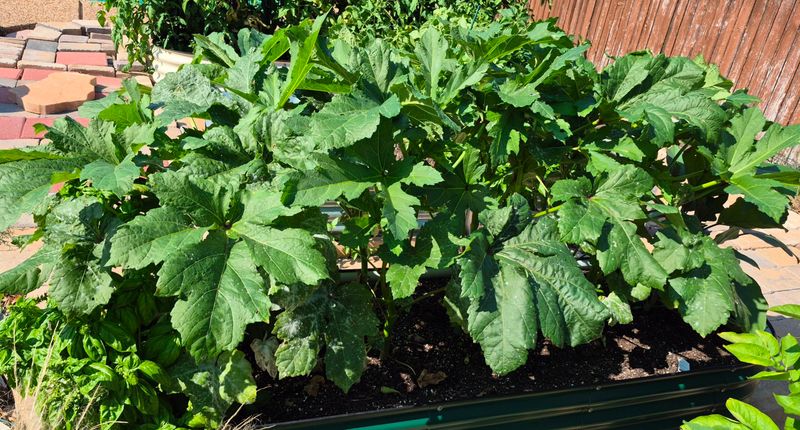
Most Texas gardeners watch their tomatoes give up by July, leaving raised beds half-empty through the hottest weeks of the year. Okra is one of the vegetables best suited to fill that gap, flowering and setting pods through much of the warm season when other crops slow down.
It grows fast, demands relatively little fuss, and rewards gardeners who check on it regularly with a steady supply of tender pods from early summer into fall.
Why okra earns a place among Texas’s most reliable summer vegetables
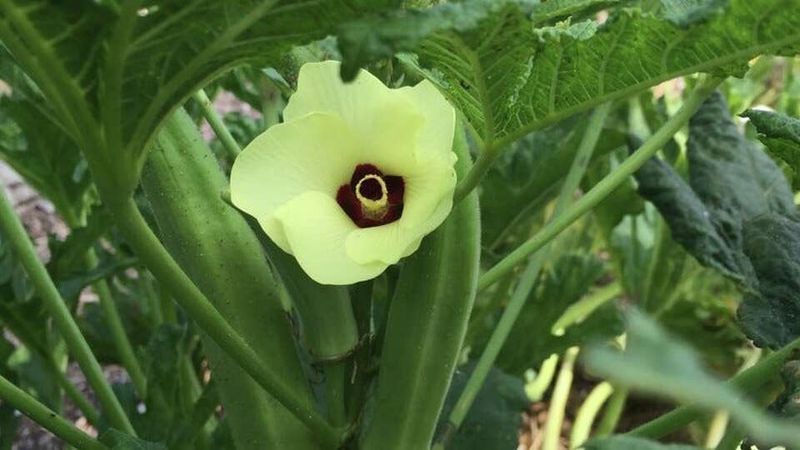
Okra (Abelmoschus esculentus) is a warm-season crop with a long track record in Texas gardens, and for good reason. Oklahoma State University Extension describes okra as heat tolerant and capable of flowering and fruiting throughout summer until first frost, which sets it apart from several popular vegetables that struggle once temperatures climb well above 90 degrees F.
Tomatoes offer a useful comparison. Texas A&M AgriLife’s cultural practices guide notes that high daytime temperatures above 95 degrees F, combined with nighttime temperatures above 70 degrees F, can reduce tomato fruit set and yield significantly.
Cucumbers, peppers, and related crops can show similar problems during heat waves. Okra, by contrast, is built for warm conditions and tends to keep flowering and producing pods through stretches that shut down those other plants.
That said, okra is not the only vegetable that can handle a Texas summer. Southern peas, sweet potatoes, eggplant, and some pepper varieties may also remain productive in hot conditions, depending on the site and season.
Texas A&M AgriLife Extension calls okra a dependable warm-season crop that continues producing when other vegetables slow down, which is the honest framing: it is among the most reliable options, not a guaranteed exception to every weather challenge.
The article’s promise is a long warm-season harvest, not uninterrupted daily production from every plant regardless of conditions. How long and how well okra produces depends on variety, planting date, water availability, soil health, pest pressure, and whether pods get picked on time.
Those factors matter as much as the crop’s natural heat tolerance, and the sections below address each one in practical terms for Texas gardeners.
Plant okra by warm soil and local frost dates
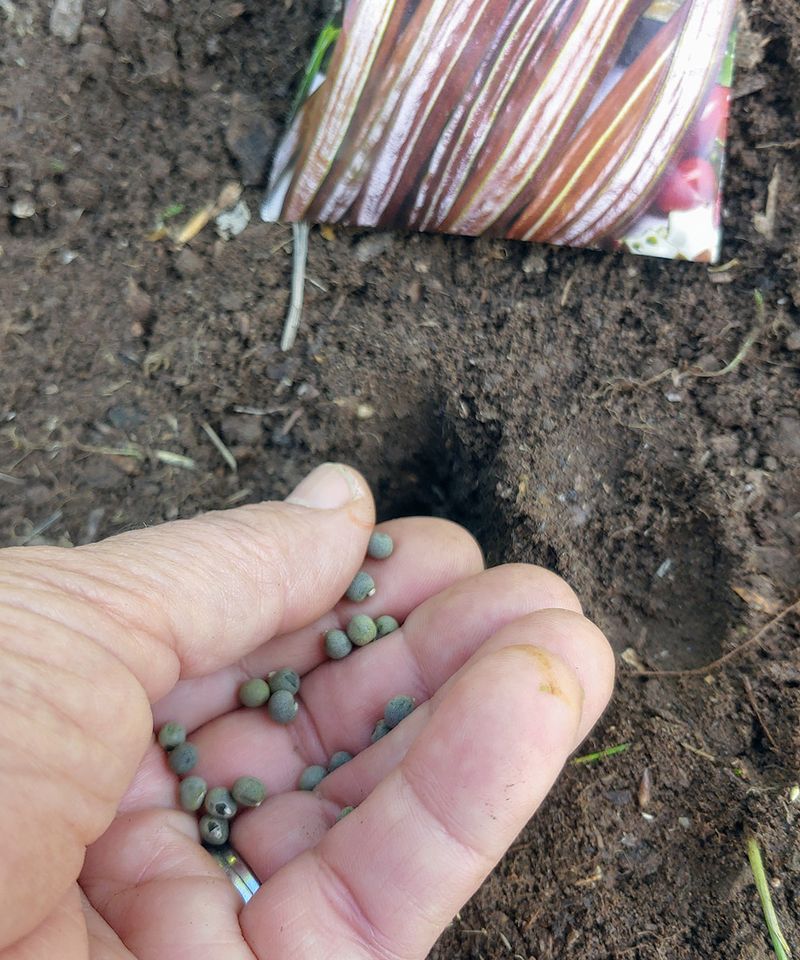
Soil temperature matters more than the calendar when deciding when to plant okra. Texas A&M’s commercial okra guide puts the preferred seed-zone temperature above 75 degrees F, and the home gardening guidance from Texas A&M AgriLife recommends planting in spring two to three weeks after the final frost danger has passed.
Cold soil slows germination and stresses young plants, so waiting for genuinely warm ground is a better guide than a fixed date on the wall calendar.
Direct seeding is the practical approach for most Texas gardeners. Okra has relatively large seeds that germinate well when conditions are right, and the plant does not transplant as easily as some vegetables because it dislikes having its roots disturbed early on.
Soaking seeds overnight before planting can speed germination, especially in drier soil.
Texas is not one climate, and Texas A&M AgriLife’s regional gardening guides classify okra as frost-susceptible and recognize distinct growing regions across the state. A gardener in the Panhandle or North Texas works with a shorter frost-free window than someone along the Gulf Coast or in South Texas, where the warm season extends considerably longer.
Using your local last-frost date rather than a statewide average is the safest way to time your planting.
Site selection shapes how well okra performs all season. Texas A&M AgriLife Extension recommends full sun and fertile, well-drained soil prepared to a depth of about 8 to 10 inches.
Rows should be spaced at least 3 feet apart, and plants eventually thinned to roughly 1 foot apart in home gardens. That spacing gives each plant enough room to grow without crowding and keeps pods within reach when it is time to harvest, which happens more often than most first-time okra growers expect.
Use sun, deep watering, and restrained fertilizer
Okra needs full sun throughout the day. Partial shade, even a few hours of it, tends to reduce flowering and pod production, so choose a bed that gets unobstructed sun from morning through afternoon.
Beyond light, the two care decisions that most affect how long okra keeps producing are how you water and how you fertilize.
Water management comes down to depth and timing rather than frequency. Texas A&M AgriLife Extension and University of Georgia Cooperative Extension both point to roughly 1 to 1.5 inches of water every 7 to 10 days during dry periods as a reasonable starting guideline for home gardens.
That figure is a baseline, not a statewide prescription. Sandy soils drain faster and need more frequent attention; heavy clay holds moisture longer.
Local rainfall, municipal watering restrictions, and visible signs of plant stress all shift the schedule.
Shallow, frequent watering encourages roots to stay near the surface, which makes plants more vulnerable during dry spells. Deep, less-frequent watering pushes roots down into the soil profile, where moisture lasts longer and temperatures stay cooler.
Drip or soaker irrigation is a practical way to deliver water directly to the root zone while keeping foliage drier, which can reduce fungal disease pressure.
Fertilizer deserves a cautious approach. University of Florida IFAS Extension’s okra production guide and Oklahoma State University Extension both note that excess nitrogen can push vigorous leafy growth while delaying or reducing flowering and pod production.
A soil test before planting gives you a more reliable foundation than routine heavy feeding. Once plants are established and flowering, a light side-dressing based on plant appearance and soil test results is generally safer than assuming more fertilizer means more okra.
Harvest young pods often to maintain the crop
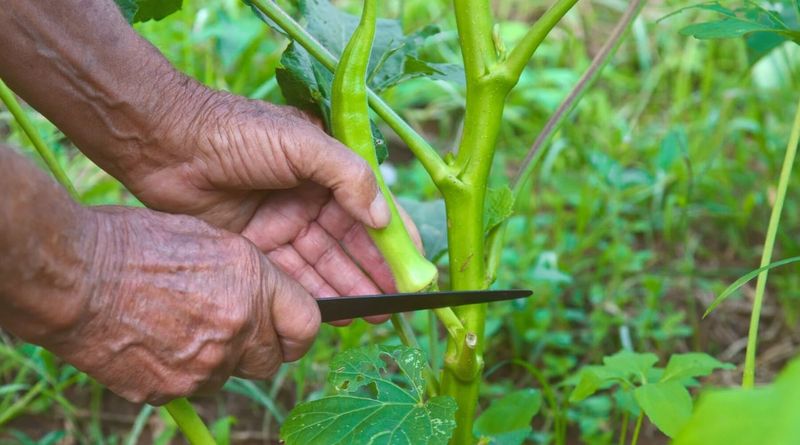
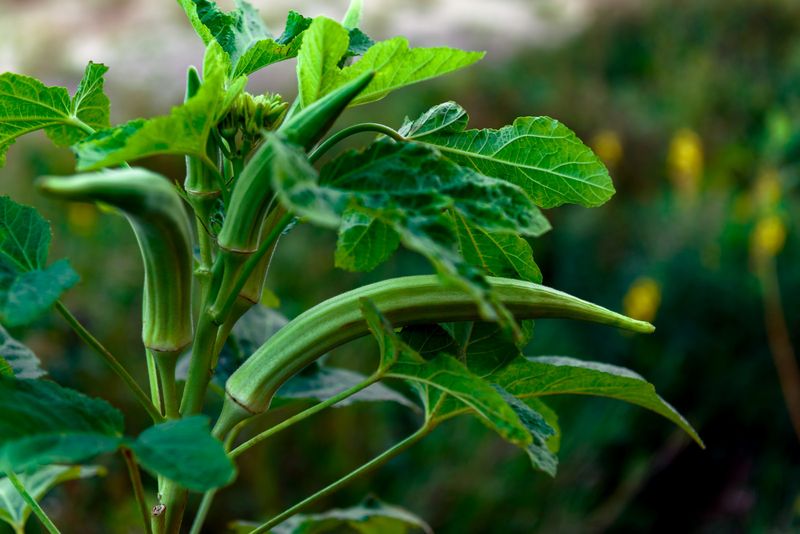
Picking okra on time is the single most important thing a gardener can do to keep production going. Texas A&M AgriLife Extension recommends checking plants every one to two days and harvesting pods that have reached the right size.
During warm weather when growth is rapid, daily harvesting may be necessary to stay ahead of the crop.
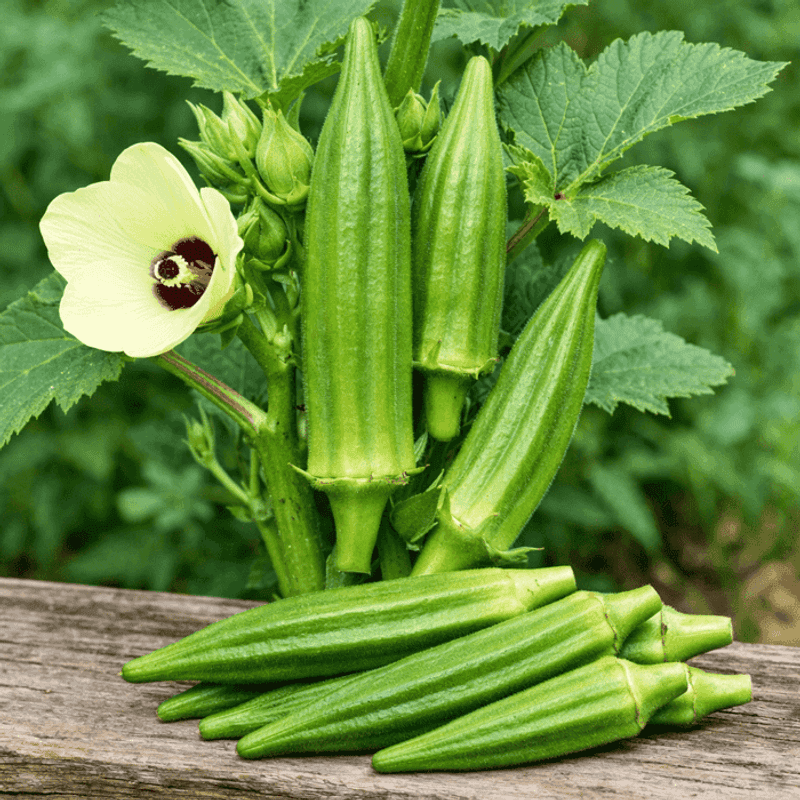
Pod size is the clearest guide to harvest timing. Most okra varieties produce the best-quality pods when picked at around 2 to 4 inches long.
At that size, pods are tender, the seeds inside are still soft, and the texture holds up well whether you fry, roast, or pickle them. Some round-podded varieties stay tender at slightly larger sizes, but the 2-to-4-inch window is a reliable target for most types grown in Texas gardens.
Over-mature pods become fibrous and tough, making them unpleasant to eat. University of Georgia Cooperative Extension notes that pods can go from harvestable to overgrown in just a day or two during hot weather, which is why checking frequently pays off.
Leaving mature pods on the plant can reduce subsequent production, so prompt picking protects both pod quality and the plant’s continued output.
Georgia’s commercial okra production guide notes that rapid growth periods may require daily harvesting to capture pods before they pass peak quality. Getting into a regular harvesting routine, checking every morning during peak season, makes it much easier to catch pods at the right stage before they get away from you.
A basket and a pair of hand pruners or scissors kept near the garden door are all the equipment you need to stay on schedule.
Stagger plantings and choose varieties for your space
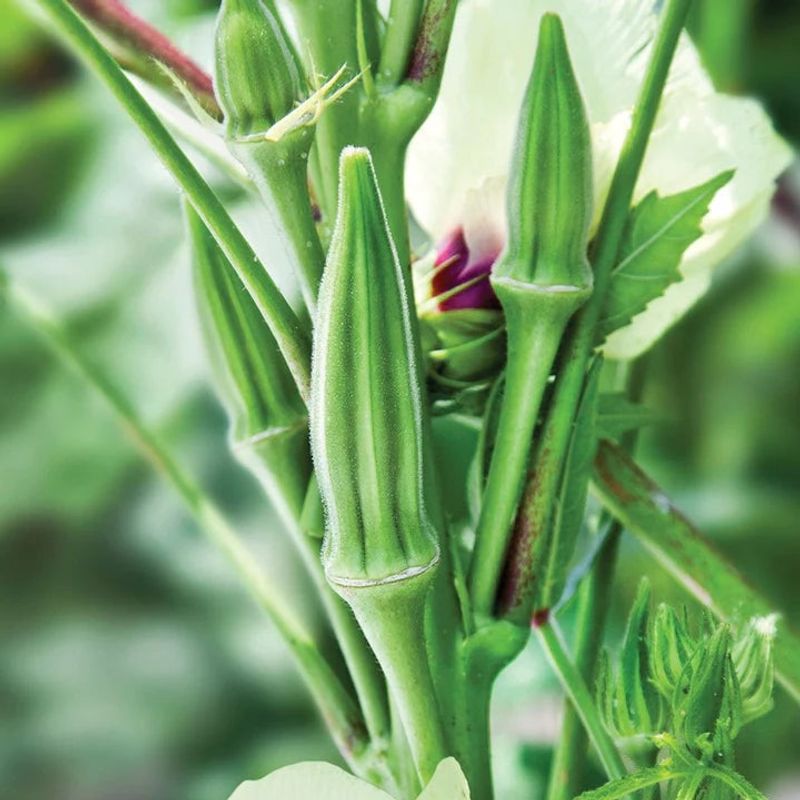
One planting of okra will not produce indefinitely. As the season progresses, older plants slow down, pods become harder to reach on tall stems, and overall output drops.
A second sowing can extend the harvest by bringing younger, more productive plants into the garden as the first batch winds down.
Mississippi State University Extension recommends sowing a second crop roughly six weeks after the first planting so that younger plants can supply tender pods as the initial planting declines. That timing works well in many parts of Texas, but it needs to be adjusted to your local first-frost date and how much warm season remains.
A gardener in South Texas has far more flexibility than one in North Texas or the Panhandle, where the frost-free window is shorter.
Variety selection also shapes how well okra fits your space and how long it stays manageable. Texas A&M AgriLife Extension lists a range of varieties suited to Texas gardens, including Clemson Spineless, Burgundy, Cajun Delight, Emerald, Annie Oakley, Louisiana Green, Lee, and Velvet.
Each has slightly different growth habits, pod color, and plant height.
Compact varieties are a practical choice for smaller yards or raised beds where space is limited and you need to reach every pod without a stepladder. Standard varieties can become quite tall as the season progresses, sometimes reaching six feet or more, which means you may need to plan for access paths between rows.
Burgundy is a popular ornamental choice with deep red pods that stand out in the garden, though the pods turn green when cooked. For a first-time grower, Clemson Spineless remains one of the most widely available and forgiving options across Texas.
Recognize the limits of heat tolerance
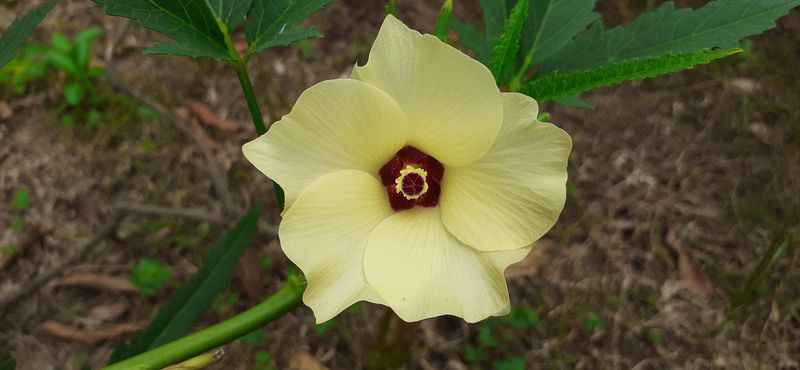
Okra handles heat better than most vegetables commonly grown in Texas, but “heat tolerant” is not the same as “heat proof.” There is a meaningful difference between performing well in hot conditions and being unaffected by extreme temperatures, and understanding that difference helps gardeners set realistic expectations for the summer ahead.
Research reviewed in a Frontiers in Agronomy climate-resilient okra production review indicates that temperatures above about 40 degrees C (roughly 104 degrees F), particularly when combined with low humidity or water stress, can cause flower abortion, reduced fruit set, and poorer pod development. Texas regularly sees stretches where afternoon temperatures push well past that threshold, especially in Central and West Texas during July and August.
A study published in Horticulturae on high-temperature tolerance screening in okra confirms that the crop shows measurable physiological stress at extreme temperatures, with flowering success and pod set both declining under severe heat. The practical takeaway is straightforward: during a prolonged stretch of 105-to-110-degree afternoons, especially without adequate soil moisture, even well-established okra may drop flowers or produce fewer pods than it would during a more moderate hot spell.
Gardeners should watch for flower drop as an early sign that conditions are pushing beyond the crop’s comfort zone. When that happens, keeping soil moisture consistent, avoiding fertilizer that pushes new leafy growth, and being patient usually gets production back on track once temperatures moderate slightly, even by ten degrees.
Okra often resumes flowering and pod set more readily than tomatoes or cucumbers after a heat event, which is part of what makes it one of the better bets for a Texas summer, but it still benefits from attentive management during the hottest weeks.
Check the bed for nematodes and handle plants carefully
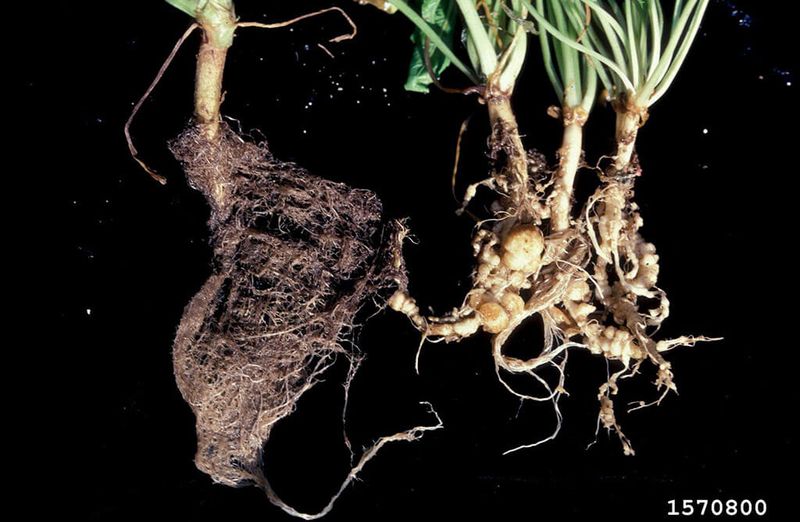
Site history can determine whether okra thrives or struggles before a single seed goes in the ground. Nematodes are microscopic soil-dwelling organisms that attack plant roots, and okra is particularly vulnerable to certain species.
University of Florida IFAS Extension’s nematode management guide specifically warns that okra is highly susceptible to root-knot and sting nematodes and recommends avoiding severely infested ground or using appropriate rotation and management practices to reduce pressure before planting.
Sandy soils, which are common in parts of East Texas and along the Gulf Coast, tend to support higher nematode populations than heavier clay soils. If a bed has a history of stunted, yellowing plants that look nutrient-deficient despite adequate fertilization, nematodes may be the underlying cause.
Pulling affected plants and inspecting the roots for small galls or knots is one of the simplest diagnostic steps. Severe pressure can make a bed a poor choice for okra regardless of how good the weather is.
UF/IFAS okra production guidance and Texas A&M AgriLife Extension both advise rotating crops and considering bed history when planning where to plant. Cover crops, solarization, and rotation away from susceptible hosts can help reduce nematode populations over time, but there is no quick fix for a severely infested bed.
Beyond soil pests, other common problems include aphids, stink bugs, and caterpillars. If you spot a pest and want to treat it, identify it specifically before reaching for any product.
Mississippi State University Extension and Texas A&M both emphasize that any pesticide used on okra must be labeled for that crop, and gardeners need to follow the product’s preharvest interval before picking pods for eating. Finally, wear gloves and long sleeves when handling okra plants during harvest.
Even spineless varieties can irritate sensitive skin, and the leaf hairs and pod surfaces cause itching in some gardeners.
Plant okra for a harvest you can keep up with
Getting a solid okra harvest from a Texas garden comes down to a short list of decisions made consistently from planting through the end of the season. Start by finding your local last-frost date and waiting until soil temperatures are reliably above 75 degrees F before direct-seeding.
Pick a spot with full sun all day, work the bed to a good depth, and choose a variety that fits your space, whether that is a compact type for a raised bed or a standard variety with room to grow tall.
Once plants are established, water deeply rather than often, using Texas A&M AgriLife’s guideline of roughly 1 to 1.5 inches every 7 to 10 days during dry stretches as a starting point, adjusted for your soil and any rainfall. Keep nitrogen fertilizer modest.
Oklahoma State University Extension cautions that too much can push leafy growth at the expense of pod production. Inspect plants regularly for pests, check roots if plants look stressed without an obvious cause, and be ready to adapt when extreme heat temporarily slows flowering.
Harvesting every one to two days, or daily when pods are developing fast, is what keeps the crop moving forward. Climate-resilient okra production research reinforces that the crop’s performance depends on management as much as genetics.
Okra gives Texas gardeners some of the better odds of maintaining a summer vegetable harvest, but weather, soil, water, pests, variety, and picking discipline all shape how long production lasts. A garden that gets checked often and harvested promptly tends to keep delivering long after other beds have gone quiet.