
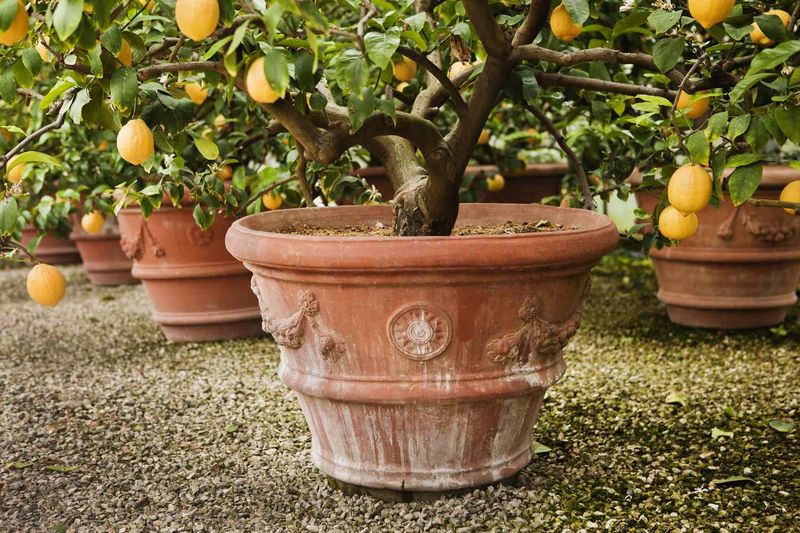
Growing lemons on a Texas patio sounds like a stretch, but a container tree can actually pull it off when you manage a handful of conditions. The secret is not the heat itself – it is what you do around the heat to keep roots cool, moisture steady, and the canopy soaking up sun.
Get those pieces right, and a potted lemon tree can carry fruit through a brutal Texas summer and still be ready to roll indoors before the first freeze. This guide walks through every step, from picking the right tree at the nursery to reading the warning signs before a problem gets out of hand.
Start with a Grafted Meyer Lemon and a Realistic Harvest
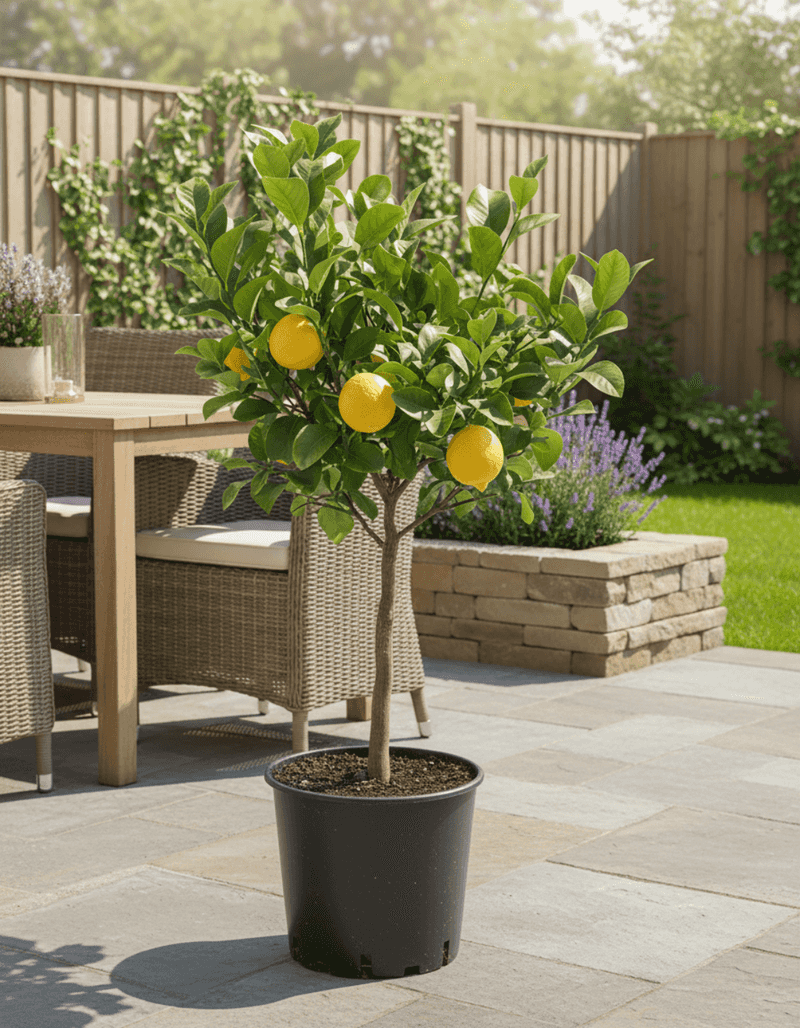
Picking the right tree from the start saves years of frustration. A grafted, named lemon from a reputable nursery gives you a head start that a seed-grown tree simply cannot match.
Texas A&M AgriLife extension guidance on container citrus notes that most budded citrus may produce a few fruits by its second year and commonly begins bearing in its third, while seedlings can take considerably longer and sometimes yield seedy or inferior fruit.
Meyer lemon fits the Texas patio container situation better than most other lemon types. Texas A&M’s citrus variety table classifies it as a small tree with few-seeded fruit and a harvest window running from August through March, which lines up well with the container gardener’s need for a manageable, productive plant.
That said, Meyer is not freeze-proof – its cold hardiness is rated only fair, meaning it needs real protection when temperatures drop.
Other lemon cultivars behave differently enough that they deserve separate consideration. Eureka and Ponderosa lemons are both rated poor in cold hardiness, making them riskier choices for most Texas locations outside the Lower Rio Grande Valley.
Sticking with Meyer for a first container tree is a reasonable decision, not because it handles every challenge automatically, but because its smaller size and extended harvest season suit the conditions most Texas patio gardeners actually face.
One tree is enough to get fruit. Lemons are self-pollinating, so a single plant can set fruit without a companion.
UF/IFAS lemon production guidance and Penn State Extension’s home lemon growing resource both note that flowers on trees kept indoors may need a light hand-pollination pass with a small brush if insects are not visiting the blooms.
Before buying, confirm that the nursery sells legally compliant Texas stock. Texas Department of Agriculture citrus regulations and USDA APHIS guidance on citrus greening and the Asian citrus psyllid both make clear that moving citrus freely across state or quarantine lines is not allowed.
Clean nursery stock from a licensed local source is the only safe starting point.
Build a Pot That Protects the Roots
The container is not just a planter – it is the entire root environment your lemon tree will ever know. Get that environment wrong and no amount of sunlight or fertilizer will fix the outcome.
Texas A&M AgriLife identifies overwatering as the most common cause of poor container citrus performance, and poor drainage is the condition that makes overwatering almost unavoidable.
Every container you use must have unobstructed drainage holes at the bottom. A well-draining potting medium – one formulated for citrus or at minimum for containers rather than garden beds – keeps roots from sitting in water after each irrigation.
Garden soil compacts in a pot, holds moisture too long, and creates exactly the anaerobic root zone that leads to decline. A quality citrus or cactus-blend potting mix paired with a pot that drains freely sets the foundation everything else depends on.
Container size involves a real trade-off that deserves an honest look. A larger pot can support a bigger root system, which can support a larger tree and potentially more fruit.
Texas A&M notes that container size is the primary limiting factor on tree size and, by extension, on yield. But a large pot filled with wet potting mix becomes extremely heavy, and moving a heavy container before a hard freeze is genuinely difficult.
Starting with a manageable size and moving up gradually as the tree grows lets you maintain both root health and the mobility that makes a container lemon tree practical in Texas.
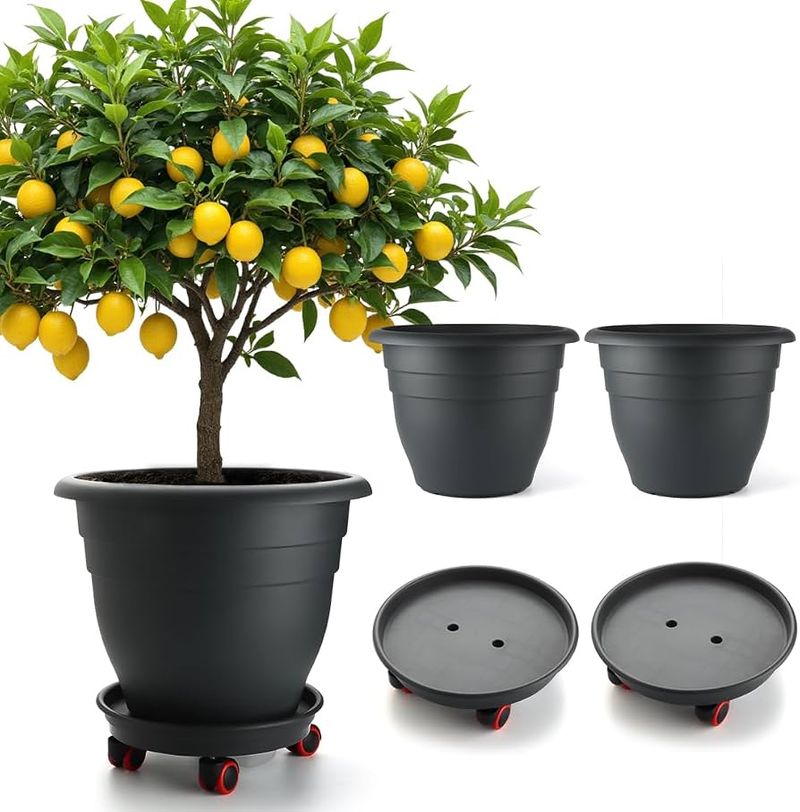
Lighter pot materials like resin or fiberglass make moving easier than clay or concrete. If you prefer the look of terracotta, plan your freeze strategy early – consider a hand truck or a wheeled plant caddy before the pot gets too large to shift on your own.
The goal is a root environment that drains well, supports steady growth, and can still be relocated when winter demands it.
Give the Canopy Sun Without Cooking the Roots
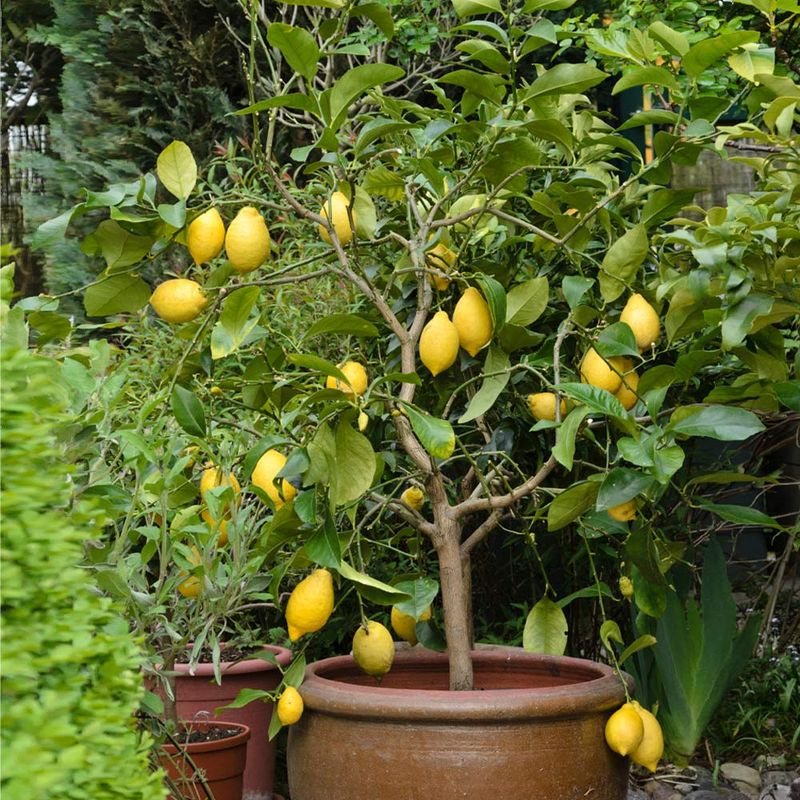
Full sun is what drives fruit production on a lemon tree, and there is no shortcut around that fact. The canopy needs strong, direct light for most of the day to support the photosynthesis that eventually becomes lemons on the branch.
UF/IFAS lemon production guidance supports full sun as the standard for best growth and fruiting.
What gets complicated in Texas is that the same summer conditions delivering all that light are also baking the pot from the outside. A dark container sitting on heat-reflective concrete can reach temperatures at the root zone that stress or damage roots even when the canopy looks fine.
Arizona Cooperative Extension’s container gardening guidance for desert climates points to this root-zone heat problem as a real concern in intense summer conditions, and the logic applies directly to Texas patios. Shading the pot itself – by positioning it near a wall, placing it inside a larger decorative planter, or using a light-colored container – is a practical response, not a guaranteed solution.
Texas A&M’s container citrus guidance also notes that some partial shade can reduce growth stress and make transitions indoors easier for container citrus in especially punishing conditions. This does not mean moving the tree into full shade – it means being thoughtful about placement so the leaves stay lit while the pot and roots stay as cool as the situation allows.
Wind, humidity, and surface exposure all change how quickly a pot dries out. A tree on a south-facing concrete patio with afternoon wind will need water far more often than the same tree tucked against a shaded east-facing wall.
Understanding your specific placement helps you water by what the tree and medium actually need rather than guessing from a schedule.
Water by the Pot, Not by the Calendar
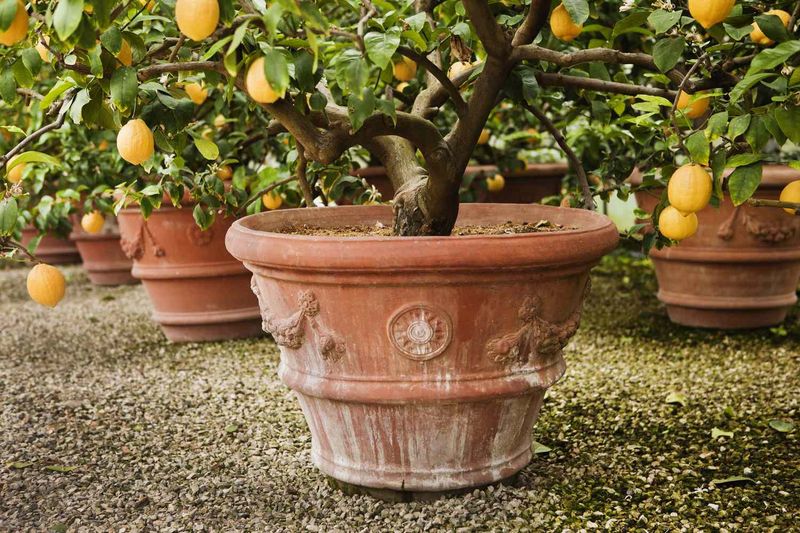
No single watering schedule works for every Texas patio. Pot size, material, potting mix, wind speed, canopy size, humidity, and sun exposure all change how fast a container dries out, sometimes dramatically from one week to the next.
Texas A&M’s container citrus guidance is direct on this point: let the upper inch of the potting medium dry out, then water slowly until excess drains freely from the bottom. That check-and-respond method beats any fixed-day rule for keeping roots in the right moisture range.
Arizona Extension’s citrus problem diagnosis resource notes that high heat, low humidity, and strong winds all increase irrigation needs – conditions that describe a Texas summer patio with accuracy. During those peak weeks, you may need to check the pot daily.
During cooler or more humid stretches, the same pot may hold moisture for several days. The tree’s condition – slightly drooping leaves in the morning, for example – is an additional signal worth reading alongside the medium check.
Consistent moisture through flowering and fruit development matters more than any other single watering habit. UF/IFAS lemon production guidance emphasizes irrigation from flowering through fruit development while warning that overwatering causes decline and that wetting foliage, flowers, and fruit can encourage disease problems.
Water at the base of the plant when possible, and let the medium surface dry slightly between waterings rather than keeping it perpetually wet.
Salt buildup from fertilizer and irrigation water is a separate issue that thorough watering can address. A white crust forming on the medium surface or around the drainage holes, combined with leaf edge burn or twig dieback, often signals accumulated salts.
Periodically run water slowly through the entire pot and let it drain completely – this leaching process flushes salts out before they reach levels that damage roots. If you see those symptoms, leach the pot before adding more fertilizer.
Feed for Fruit, Not Just Foliage
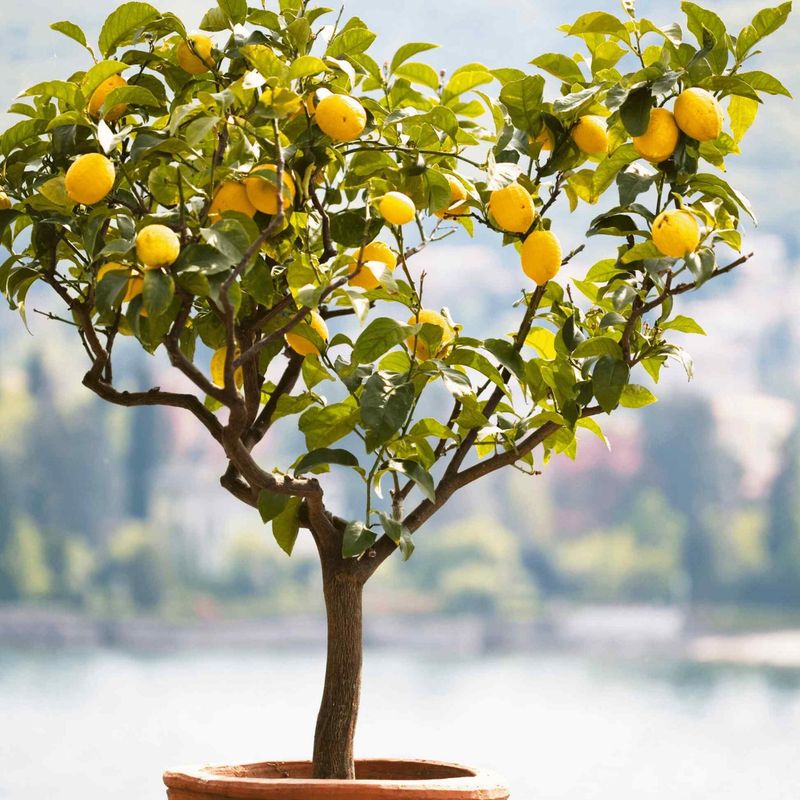
Fertilizer supports the tree, but the label on the bag is the authority on how much and how often to apply it. Use a product formulated for citrus or acid-loving plants and follow its directions rather than estimating a dose.
Texas A&M AgriLife warns that overfertilization combined with low light can produce weak, leggy growth rather than the compact, fruit-bearing canopy you are working toward.
UF/IFAS lemon production guidance adds that excessive fertilization can push luxuriant leafy growth at the expense of fruit production. A tree that looks impressively green but carries no fruit is often one that has been fed too heavily without enough light to balance the nitrogen.
If growth looks weak and leggy, check light levels and root conditions before reaching for more fertilizer.
Salt accumulation connects directly to feeding frequency. Every application adds to the mineral load in the potting medium, and containers do not dilute salts the way garden soil does over time.
Periodic leaching – running water slowly through the pot until it drains freely – should be part of your feeding routine, not just an emergency response. This keeps the root zone from reaching salt concentrations that cause leaf burn or twig dieback even when the fertilizer rate looks correct on paper.
Yellow leaves are not a reliable shortcut to diagnosing nitrogen deficiency. Citrus yellowing can result from root damage caused by overwatering, salt injury, pest activity, disease, poor light, or deficiencies in elements other than nitrogen.
Look at the whole picture – root health, moisture history, drainage, pest presence, and light exposure – before deciding that more fertilizer is the answer. Adding nitrogen to a tree with stressed roots or a drainage problem will not fix the real issue and may make it worse.
Understand What Fruit Drop Can Tell You
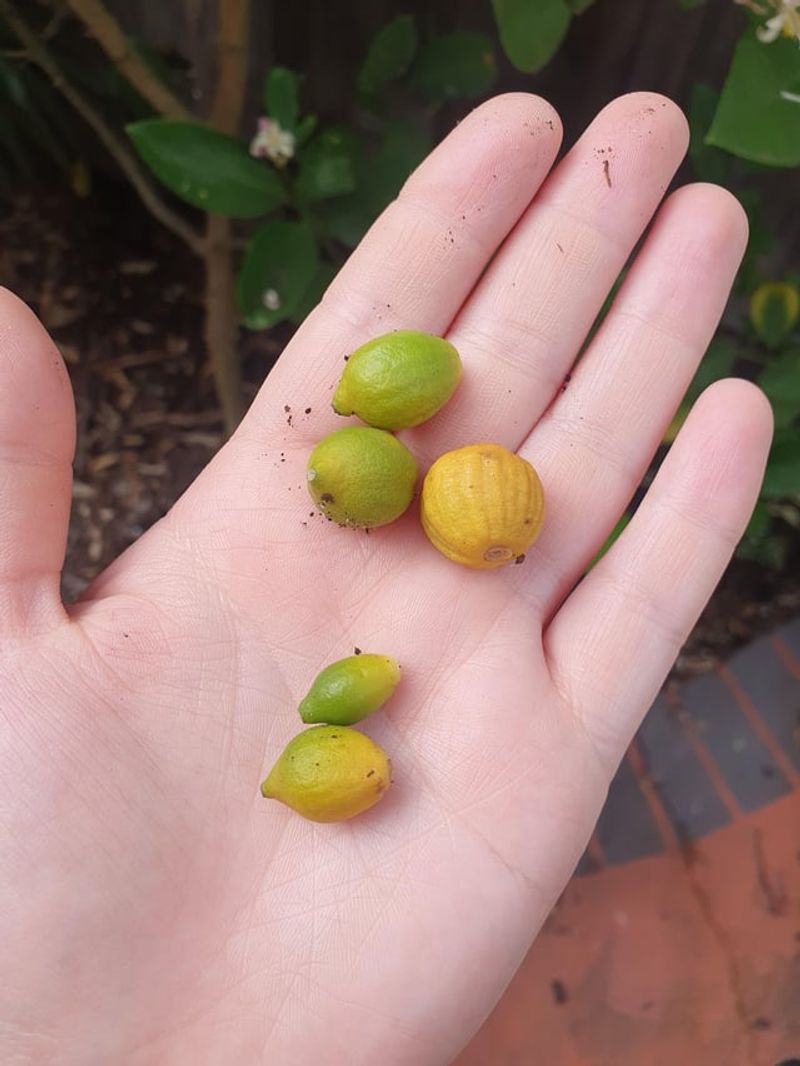
Seeing small lemons fall off the tree before they size up is alarming the first time it happens, but not every dropped fruitlet signals a problem. Citrus sheds flowers and young fruit because it sets far more than it can possibly mature.
UF/IFAS citrus agent resources on early summer fruit drop describe this as a normal thinning process – the tree is editing its load to match what it can actually support.
The concern starts when drop becomes heavier than expected or continues well past the early thinning window. CREC/UF research on citrus fruit drop identifies water deficit and warm temperatures as factors that can worsen later drop.
UF/IFAS guidance on protecting citrus from heat stress further notes that prolonged high temperatures combined with drought, wind, hot roots, or high humidity can reduce fruit quality, cause sunburn on developing fruit, and increase drop beyond what normal thinning explains.
When drop becomes widespread or repeats across multiple flowering cycles, review the basics before concluding something is seriously wrong. Check whether the upper inch of medium has been drying between waterings or whether the pot has been staying too wet.
Look at root zone temperature and drainage. Consider whether wind or exposure has increased stress without a corresponding increase in watering.
These factors interact, and addressing the underlying condition usually slows the drop more effectively than any single intervention.
Pollination is worth checking too, particularly for a tree kept indoors or in an enclosed patio space. UF/IFAS lemon production notes and Penn State Extension’s home lemon guidance both note that self-pollinating lemons can still benefit from hand pollination when insects are not visiting flowers.
A small, clean paintbrush moved gently from flower to flower during bloom takes about two minutes and removes one variable from the fruit-set equation.
Read the Tree Before Reaching for a Spray
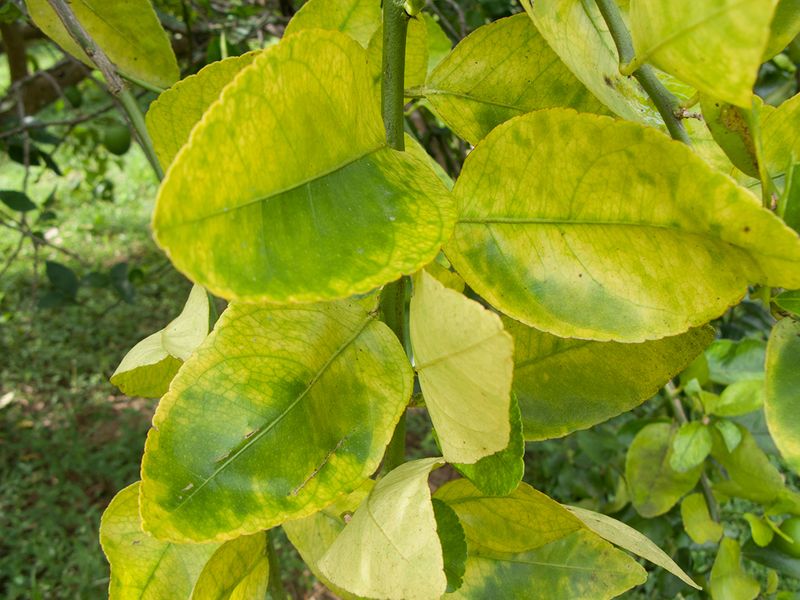
A lemon tree will show you what is bothering it before things get serious, but only if you look closely and interpret what you see carefully. Start inspections on new growth and the undersides of leaves, where pest activity tends to concentrate.
UF/IFAS lemon production guidance identifies scale, mites, and fungal symptoms as common concerns, while the most serious regional threat for Texas growers is the Asian citrus psyllid and the disease it spreads.
Citrus greening, spread by the Asian citrus psyllid, produces fruit that is bitter, misshapen, and poorly colored, and it eventually kills the tree. Texas Department of Agriculture’s citrus greening alert describes the psyllid as an active concern in the state.
TDA’s citrus greening FAQ clarifies that fruit from infected trees is not considered dangerous to eat, but the tree’s declining health and the risk of spreading the disease to other citrus are serious concerns for any home grower.
Yellow leaves often prompt a reach for fertilizer, but that response skips the diagnostic step. Yellowing can result from root damage, overwatering, salt injury, pest activity, disease, insufficient light, or deficiencies in elements other than nitrogen.
Work through the list before acting. Waxy tubules or distorted new leaves point toward psyllid activity.
Sticky residue and sooty mold suggest scale or aphids. Spotty or blotchy patterns on leaves may indicate a fungal issue.
Each symptom has a specific cause and a specific response.
When treatment is genuinely needed, the product label is the legal and practical guide. EPA pesticide label guidance requires that labels be followed exactly, including application timing, preharvest intervals, and pollinator precautions.
EPA pollinator protection guidance specifically addresses timing treatments to avoid harming bees visiting lemon flowers. Monthly preventive sprays, homemade mixtures, and unsupported systemic treatments are not substitutes for a real diagnosis and a label-compliant response.
Plan the Move Before a Texas Freeze

Summer gets all the attention in Texas gardening conversations, but winter is often what actually determines whether a container lemon tree survives long term. Texas A&M’s citrus and subtropical crop guide makes clear that commercial citrus production concentrates in the Lower Rio Grande Valley for a reason – gardeners in North, Central, and inland Texas face genuine freeze exposure that a patio container does not eliminate.
Texas A&M AgriLife’s container citrus guidance explains that container roots are more cold-sensitive than roots insulated by in-ground soil. The pot’s walls offer little buffer against a hard freeze, which means the root system can be damaged or killed at temperatures that a well-mulched in-ground tree might survive.
Moving the tree indoors before freezing weather arrives is the most reliable protection available to a container grower.
Pot weight is not a minor detail when planning for winter. A large container filled with moist potting mix can weigh well over a hundred pounds, and trying to move it in a hurry on a cold night is exactly the scenario that causes injuries and broken pots.
Choosing a lighter pot material, placing the container on a wheeled caddy from the beginning, or keeping the tree in a size you can realistically move are all decisions worth making before summer ends.
Moving a tree from full outdoor sun to a lower-light indoor space too quickly can trigger significant leaf drop. Gradual acclimation – spending a few days in a shaded outdoor spot or a bright garage before moving to the final indoor location – gives the tree time to adjust.
A south-facing window or supplemental grow light helps maintain the tree during the weeks it spends inside. The freeze plan is not an afterthought; it is part of the growing season from the day you bring the tree home.
Balance the Conditions for a Modest Harvest
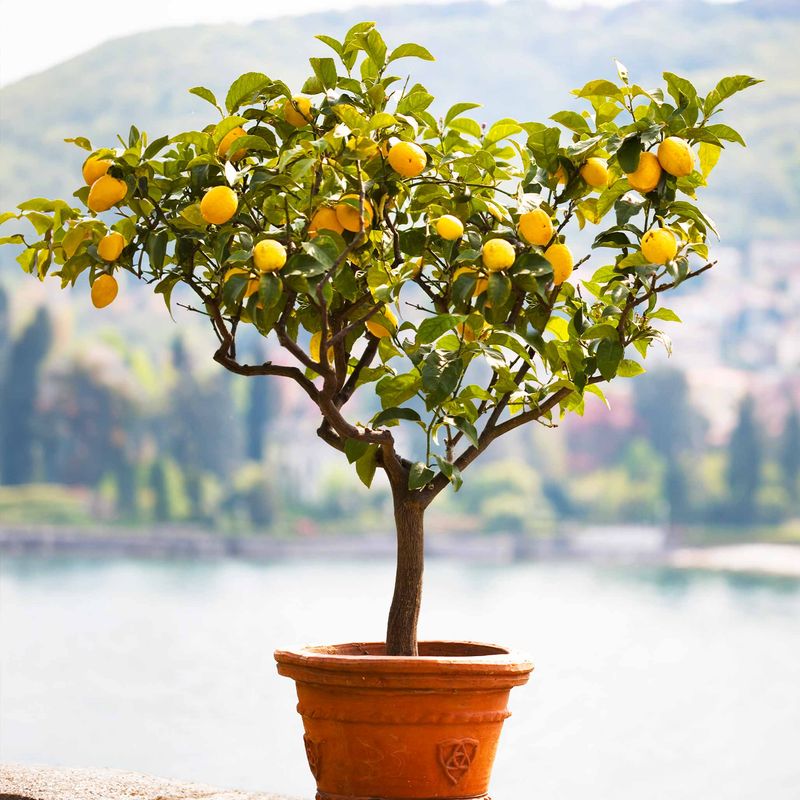
A productive patio lemon tree in Texas is not the result of heat doing the work for you. It is the result of five or six conditions held in balance through an active growing season.
Strong canopy light, a freely draining pot, moisture checked by touch rather than schedule, measured feeding, attentive pest and symptom monitoring, and a real freeze plan all have to come together. Texas A&M AgriLife’s container citrus guidance confirms that container lemons can produce fruit when given enough time, care, and root space – but also that the pot itself limits tree size and keeps yields modest.
UF/IFAS heat stress guidance for citrus is a useful reminder that summer fruiting is achievable, not automatic. Heat combined with dry roots, wind, or inconsistent care can still cause fruit drop, sunburn, or a smaller crop than the tree seemed to promise during spring bloom.
Expecting a modest harvest and managing for it consistently beats chasing a bumper crop that the container’s limits make unlikely.
The movable pot is the real advantage here. It lets a Texas gardener grow citrus in regions where in-ground trees would not survive a hard winter – as long as the move actually happens before the freeze arrives.
Choose a grafted Meyer lemon from a legal Texas nursery, protect its roots through summer, respond to symptoms before they become losses, and treat the freeze plan as seriously as the watering plan. That combination is what makes a Texas patio lemon tree something you harvest from rather than something you replace every few years.