
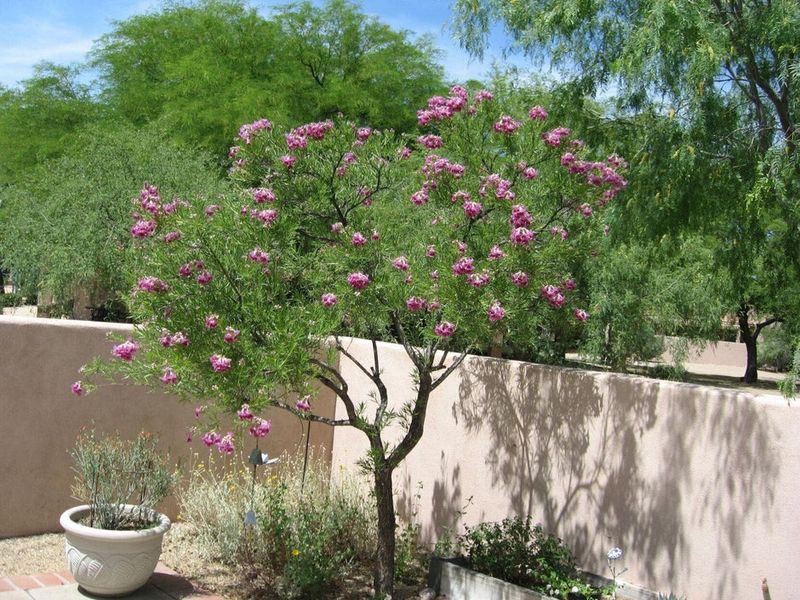
West Texas front yards take a beating every summer, and most trees imported from cooler, wetter climates show it. Desert willow, known botanically as Chilopsis linearis, is a small native tree that actually evolved for this kind of punishment.
For many warm, sunny, well-drained West Texas sites, it offers showy warm-season flowers, real heat and drought tolerance once established, and a relaxed form that suits a xeric front yard. Knowing where it fits, and where it does not, is what this article is about.
Desert willow fits many—not every—West Texas front yard
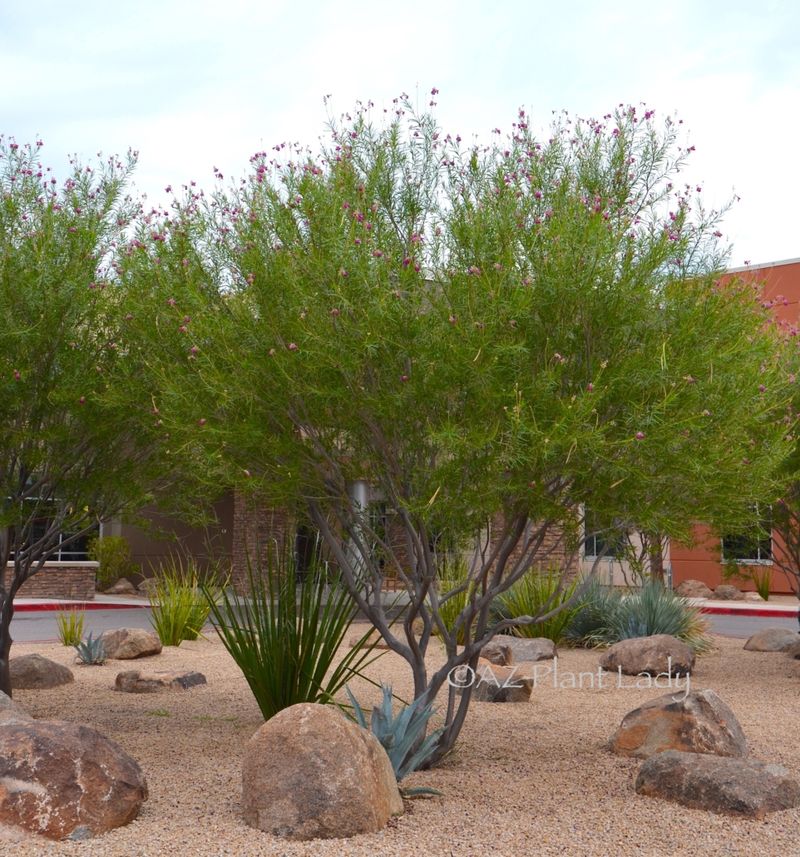
Chilopsis linearis, commonly called desert willow, is a strong native option for many warm, sunny West Texas landscapes. Texas Tech University’s plant resources program describes it as drought-tolerant, heat-tolerant, and well adapted to xeric landscapes in the warmer portions of West Texas, including parts of the Panhandle.
Independently, the Texas A&M Texas Tree Selector classifies it as a small Texas-native tree with dry water needs, tolerance for alkaline soil, and showy pink flowers through spring and summer.
What makes it relevant to front-yard planning is the combination of traits it brings to a single package. It handles intense summer heat without folding, tolerates the alkaline soils common across much of West Texas, stays small enough for a residential lot, and produces colorful blooms during the hottest months when few other trees are putting on a show.
Those qualities line up well with the real challenges of planting and maintaining a tree in a water-restricted, sun-baked West Texas yard.
The article’s broad premise needs a correction before going further. Desert willow is a strong choice for many warm, sunny, well-drained West Texas sites, not a guaranteed fit for every yard in the region.
Texas Tech specifically notes that its broad adaptation applies to warmer areas and excludes colder portions of the Panhandle. The Texas Parks and Wildlife Rolling Plains plant guidance lists it as a regionally appropriate native, but the Trans-Pecos, Rolling Plains, Edwards Plateau, and Panhandle differ substantially in winter cold, elevation, rainfall, and soil conditions.
Site matching matters as much as species selection.
Understand the tree’s open, seasonal form before you plant
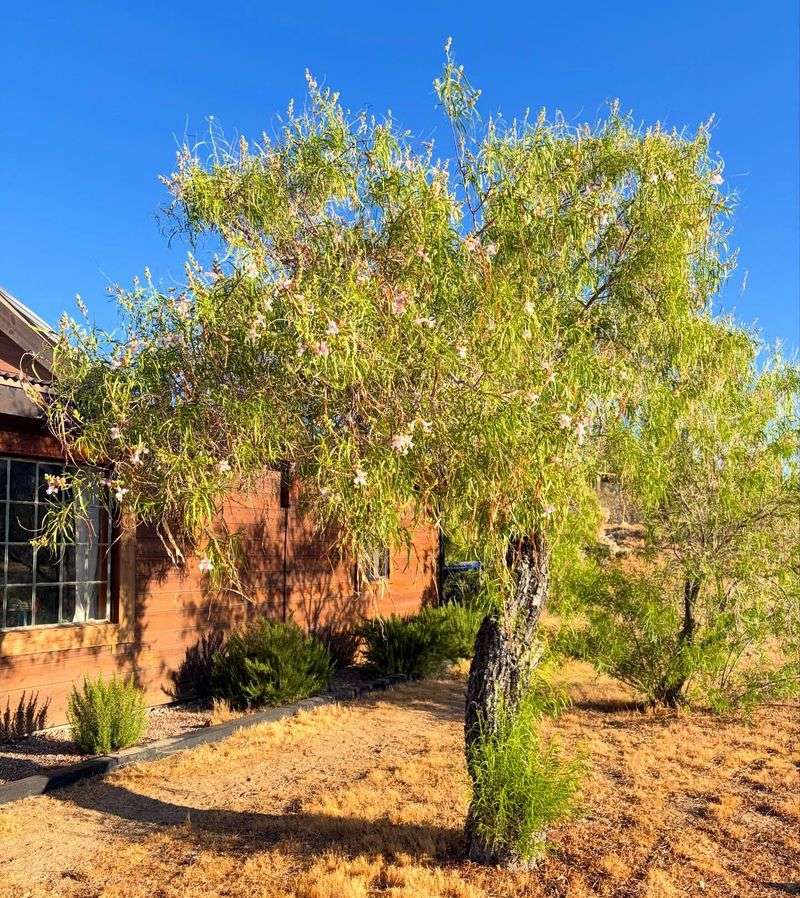
Before buying a desert willow, picture what you are actually getting. Texas Tech’s landscape information sheet describes it as a small tree or large shrub that often develops multiple trunks and an open, somewhat irregular canopy.
Typical landscape height runs roughly 15 to 25 feet, but the USDA Natural Resources Conservation Service plant guide notes that plants in parts of the Southwest can grow larger, so plan your spacing around mature size rather than the size of the tree at the nursery.
Despite the common name, desert willow is not a true willow at all. It belongs to the trumpet-creeper family, and its narrow, lance-shaped leaves are what earned it the willow comparison.
Utah State University Extension’s tree identification resource confirms this distinction and notes the ornamental value of its large, showy flowers. Understanding the name prevents a common misconception: this tree does not need or want the wet soil conditions associated with true willows.
The open, airy canopy is genuinely useful in a xeric front-yard design, but it will not deliver dense shade, a formal symmetrical shape, or a tidy evergreen screen. Desert willow is deciduous, meaning it drops its leaves in fall and stands bare through winter.
Homeowners who need year-round privacy screening or a dense shade canopy for a west-facing porch should factor that into their decision before planting. For those who want a relaxed, flowering small tree that earns its keep during summer heat, the open form is a feature rather than a drawback.
Test the site for sun, drainage, and regional exposure
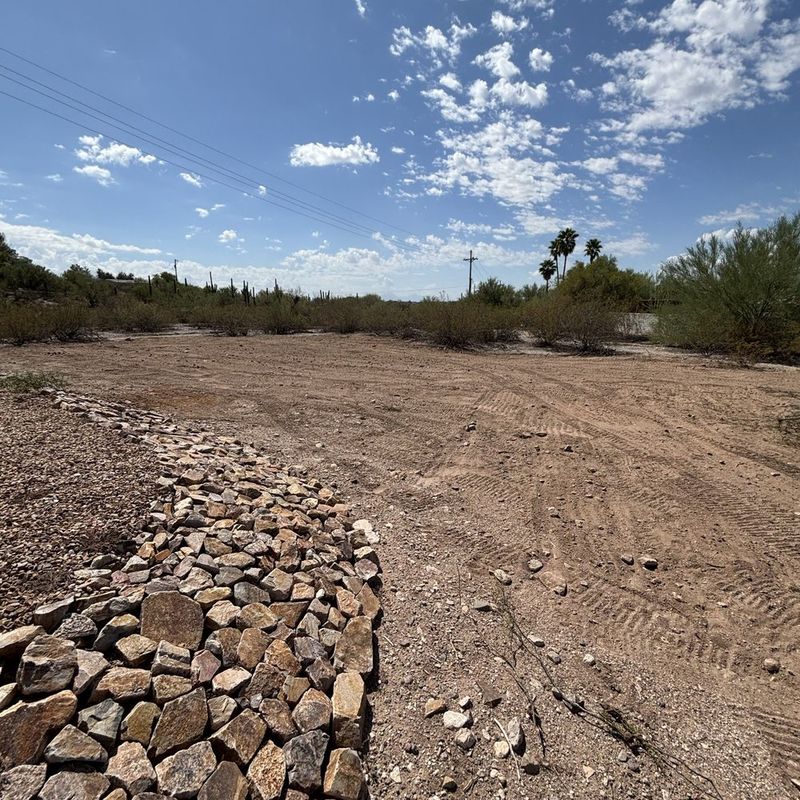
Good site selection does more work than any amount of post-planting care. Desert willow requires full sun, and that means at least six hours of direct sunlight daily.
Texas Parks and Wildlife Wildscapes design guidance recommends confirming light levels before committing to a tree, because a spot that looks sunny in spring may be shaded by a structure or neighboring tree by midsummer.
Drainage is the other non-negotiable. Texas A&M’s Tree Selector profile lists well-drained soil as a site requirement, and the Texas Tech description reinforces that point.
Desert willow tolerates alkaline soil, which is common across much of West Texas, but it does not tolerate persistently wet or waterlogged conditions. If your planting hole fills with water and drains slowly after rain, that spot is a poor match regardless of how sunny it is.
Caliche, the hard calcium carbonate layer common in West Texas soils, deserves specific attention. University of Arizona Cooperative Extension guidance on managing caliche explains that a dense caliche layer can restrict both root expansion and water movement, essentially creating a perched water table in the planting hole.
If you hit a caliche layer when digging, you may need to break through it, amend the planting area, or consider a raised planting bed to ensure drainage.
Desert willow grows naturally near dry washes, ravines, and drainages where it can access subsurface moisture during dry spells. That background explains its drought strategy, but it does not mean urban plantings should go in low spots that collect standing water.
The USDA plant guide describes the species as drought- and heat-tolerant while still noting its natural association with drainages, and landscape sources consistently recommend well-drained sites for residential plantings.
Before finalizing the location, check the mature height and spread against nearby structures, overhead lines, and neighboring plants. Call 811 to locate buried utilities before digging.
In the colder northern Panhandle or at higher elevations, also weigh the risk of late freezes and severe wind exposure, which can affect young trees even when the species is broadly adapted to the region.
Give the young tree the care it needs before drought tolerance matters
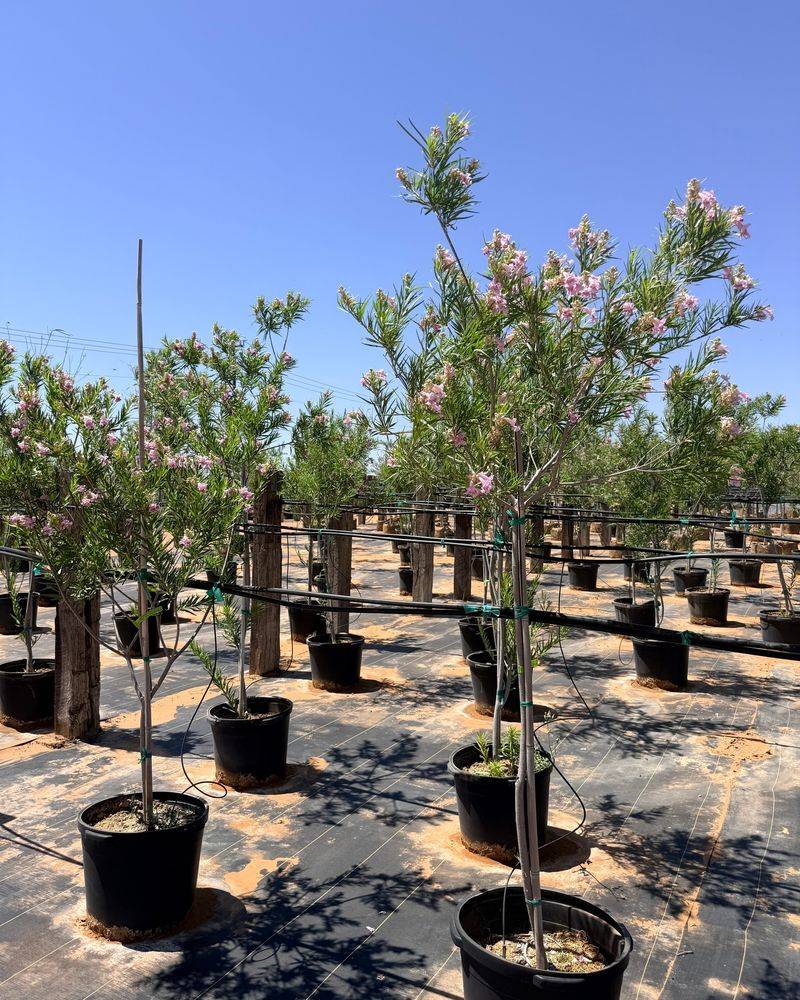
Drought tolerance is a trait that belongs to established plants with root systems that extend well beyond the original container or root ball. A newly planted desert willow has not earned that status yet, and treating it like a self-sufficient plant from day one is one of the fastest ways to lose it.
Establishment care determines how well the tree performs during drought, not some fixed quality built into the species from the start.
Texas A&M AgriLife native habitat and wildscape guidance recommends planting in late fall or early spring when possible, so the tree can develop roots during cooler, less stressful conditions before the hottest and driest part of summer arrives. When you plant, set the root collar at soil level without burying the trunk flare.
Planting too deep is a common mistake that can cause long-term stress and decay at the base of the trunk.
Water thoroughly immediately after planting to settle the soil and eliminate air pockets around the roots. From that point forward, the goal is slow, deep watering rather than frequent shallow sprinklings.
Texas A&M AgriLife drought-watering guidance recommends wetting the root zone deeply and adjusting frequency based on soil type, weather conditions, and how far along the tree is in establishment. Sandy soils drain faster and may need more frequent attention; heavier soils hold moisture longer but can also stay too wet if drainage is poor.
Texas A&M AgriLife Extension planting guidance also stresses keeping a grass- and weed-free zone around the young tree. Grass and weeds compete directly with the tree’s limited root system for water and nutrients, slowing establishment significantly.
Apply roughly 2 to 4 inches of mulch over the root zone to conserve moisture and moderate soil temperature, but keep mulch pulled back a few inches from direct contact with the trunk. Texas A&M AgriLife Extension’s mulching guidance confirms that mulch piled against the trunk can hold excess moisture against the bark and create conditions that invite rot and pest problems.
Even after a desert willow is well established, Texas Water Resources Institute guidance on drought-resistant plants notes that drought-resistant species may still need supplemental water during prolonged drought, extreme heat, or unusually dry urban conditions. Establishment is the foundation, not the finish line.
Flowers and wildlife provide the seasonal reward
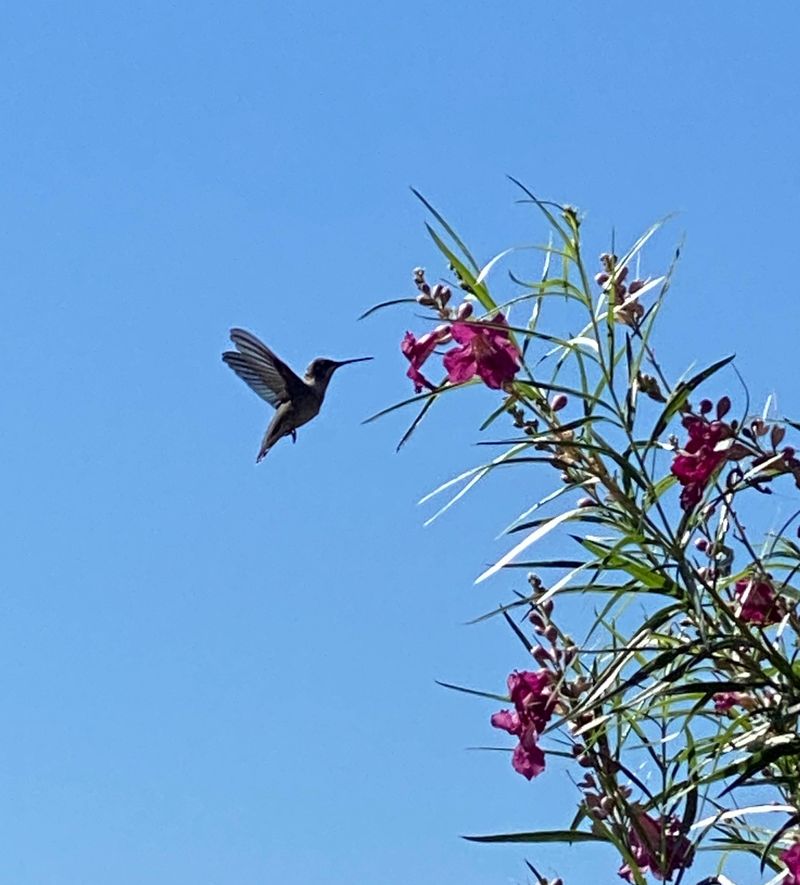
From late spring through summer, desert willow puts on one of the more striking flowering displays available in a small West Texas native tree. The blooms are trumpet-shaped and appear on new growth, which means the tree keeps producing flowers as long as it continues putting out new shoots during the warm season.
Texas A&M’s Tree Selector profile highlights showy pink flowers as a defining ornamental feature, while the USDA plant guide and Texas Tech both note that flower color can range from pink to lavender to white depending on the individual plant or cultivar.
The flowering display is more than decorative. The USDA plant guide for desert willow documents visits by hummingbirds and native bees, and notes that the tree can provide cover and occasional nesting habitat for birds.
These are recorded wildlife uses, not a promise that every planted tree will attract a specific species. Actual visitation depends on flower production, local wildlife populations, competing plants, and the surrounding habitat.
A tree in a yard with other nectar sources and native plantings around it may see more activity than one planted in isolation.
For a xeric front-yard design, the combination of summer color and documented pollinator interest makes desert willow a genuinely functional choice rather than just a low-water substitute for something showier. Texas Tech’s landscape sheet reinforces the ornamental value of the flowers in the context of a dry-adapted landscape.
The open canopy also allows underplanting with native grasses or low-growing perennials, which can extend the wildlife and visual interest of the planting bed through the rest of the season.
Plan for seed pods, winter bareness, and routine maintenance
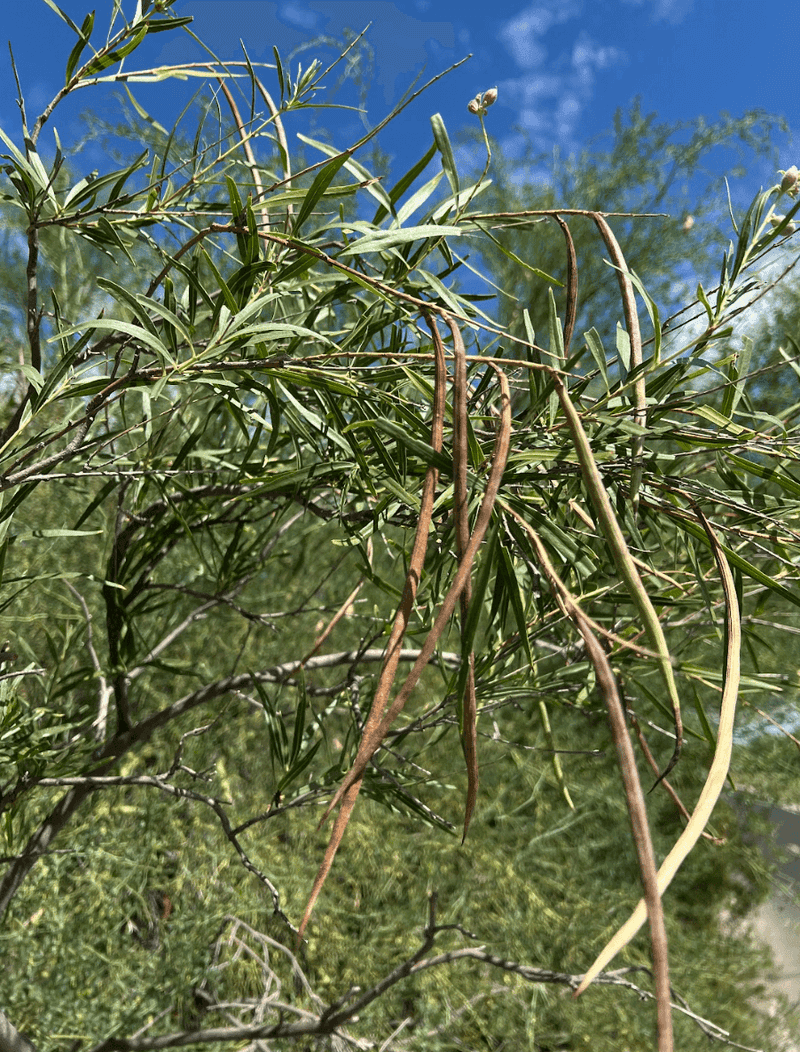
Honest expectations prevent disappointment, and desert willow comes with a few seasonal realities worth knowing before you plant. The tree is deciduous, so it drops its leaves in fall and remains bare through winter.
Anyone hoping for year-round privacy screening, a winter windbreak, or an evergreen backdrop will need to look at a different species. The bare winter silhouette can be attractive in its own right, but it will not provide the cover or visual mass that an evergreen would.
Texas Tech’s plant information sheet notes that desert willow produces elongated seed capsules that can persist on the branches into winter and eventually drop. In a front yard setting, that litter can accumulate on sidewalks, driveways, and mulched beds.
Utah State University Extension’s desert willow entry also mentions the persistent seed pods as part of the plant’s character. If pod litter is a serious concern for your site, ask a nursery about fruitless or lower-seeding cultivars, but only purchase one if the nursery can confirm the specific cultivar and its actual fruiting behavior.
Seed-pod production varies, and a generic label is not a reliable guarantee.
The open, somewhat irregular canopy is well suited to a relaxed xeric design, but it may not satisfy homeowners who want a formally shaped specimen or a dense shade canopy for a patio or west-facing window. The USDA plant guide describes the species as open and spreading, and shade density can vary with cultivar, irrigation level, pruning history, and canopy health.
Young trees may also benefit from structural pruning to encourage a cleaner framework, especially if the multi-trunk habit produces crossing or rubbing branches. Native status does not make any tree maintenance-free, and desert willow is no exception.
Use a site-based decision rule before buying
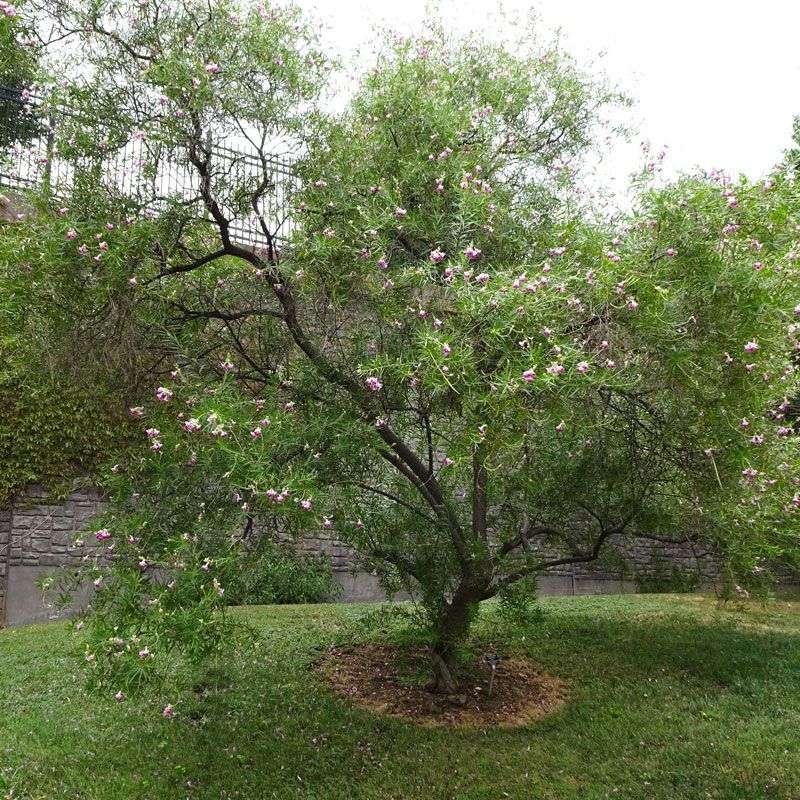
The clearest way to decide whether desert willow belongs in your front yard is to run through a short site checklist before visiting a nursery. Choose it when you have a warm, sunny location with at least six hours of direct light daily, soil that drains well after rain, and enough horizontal and vertical space for a small, open, deciduous tree at mature size.
Factor in your willingness to provide regular establishment watering for the first one to two growing seasons, because that care is what bridges the gap between a container-grown plant and a genuinely drought-tolerant landscape tree.
Reconsider or seek local guidance if your site is in a colder part of the Panhandle where late freezes are common, if the soil has a dense caliche layer that seals the planting hole, if the area collects standing water after rain, or if wind exposure is severe enough to stress a young open-canopied tree. Texas Tech and the Texas A&M Tree Selector both scope the recommendation to warmer, well-drained sites, and Texas Parks and Wildlife Wildscapes tips reinforce that native plants still require thoughtful site matching to perform well.
Desert willow’s advantage in West Texas comes from documented regional fit and real heat and drought tolerance in established plants, not from universal hardiness or zero-maintenance performance. Match the site, give it a proper start, and it can reward you with decades of warm-season color.
A tree that belongs where you put it is always easier to keep than one fighting the conditions from day one.