
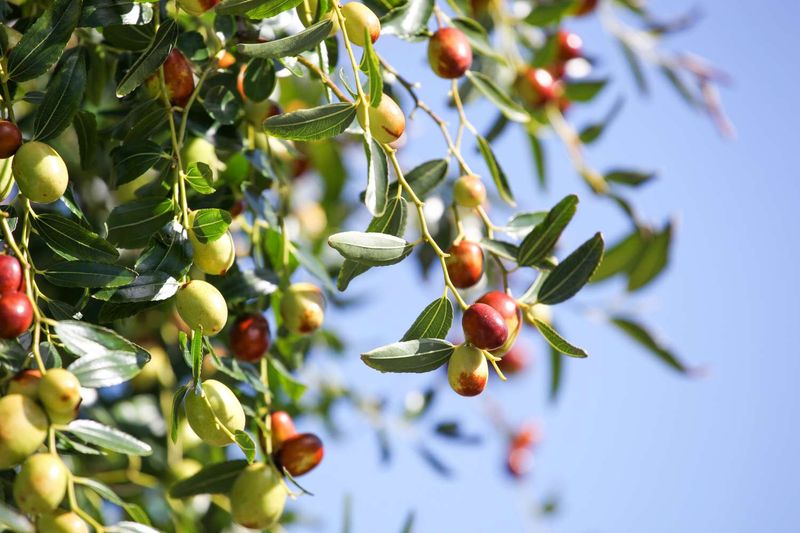
Most fruit trees wave the white flag when a Central Texas summer really gets going, dropping fruit, shutting down, or just barely hanging on until cooler weather. Chinese jujube does something different.
Known also as the Chinese date, this tree thrives where the heat is relentless, the soil is tough, and the rain is unreliable. If you have been searching for a fruit tree that is genuinely well suited to hot, dry Texas conditions, this one deserves a serious look.
Chinese jujube is a particularly strong choice for hot Texas gardens
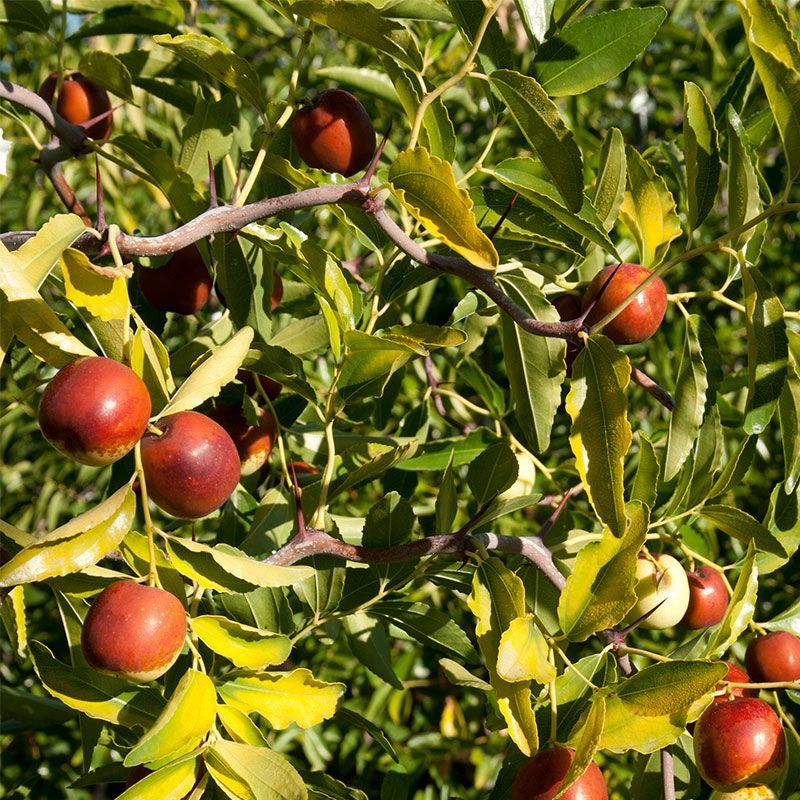
Few fruit trees earn the kind of endorsement that Chinese jujube, Ziziphus jujuba, has collected from Texas A&M researchers over decades of observation. Texas A&M AgriLife Extension describes jujubes as among the easiest fruit trees for Texas home gardeners, citing their drought tolerance, relatively low pest and disease pressure, and ability to produce abundant fruit with modest inputs.
Older College Station trials found jujubes survived both drought and excess moisture better than any other fruit plant tested at that location, a record that few fruit trees in Texas can match.
The tree is also called Chinese date, a name that hints at the fruit’s flavor profile once it dries and sweetens. When fresh, the texture and taste are often compared to a crisp apple.
That range, from apple-like crunch to chewy sweetness, gives the tree appeal for gardeners who want versatility from a single planting.
None of that means jujube is immune to Texas summers or that every tree will produce a full crop through every heat event. The defensible framing, supported by documented performance, is that jujube is unusually heat- and drought-tolerant and better adapted than many common temperate fruit trees to the conditions Central Texas reliably delivers.
Other fruit trees can and do produce in extreme heat, and fruit loss in any species can result from insufficient irrigation, poor pollination, disease, winter injury, or natural crop regulation rather than heat alone.
What makes jujube stand out is the combination of traits it brings to a difficult climate. Paired with the right site, adequate water during dry stretches, and a named grafted cultivar, it gives Central Texas homeowners a realistic path to homegrown fruit when summer peaks and other trees are struggling to hold their crop.
Its flowering and ripening pattern suit a long, hot season
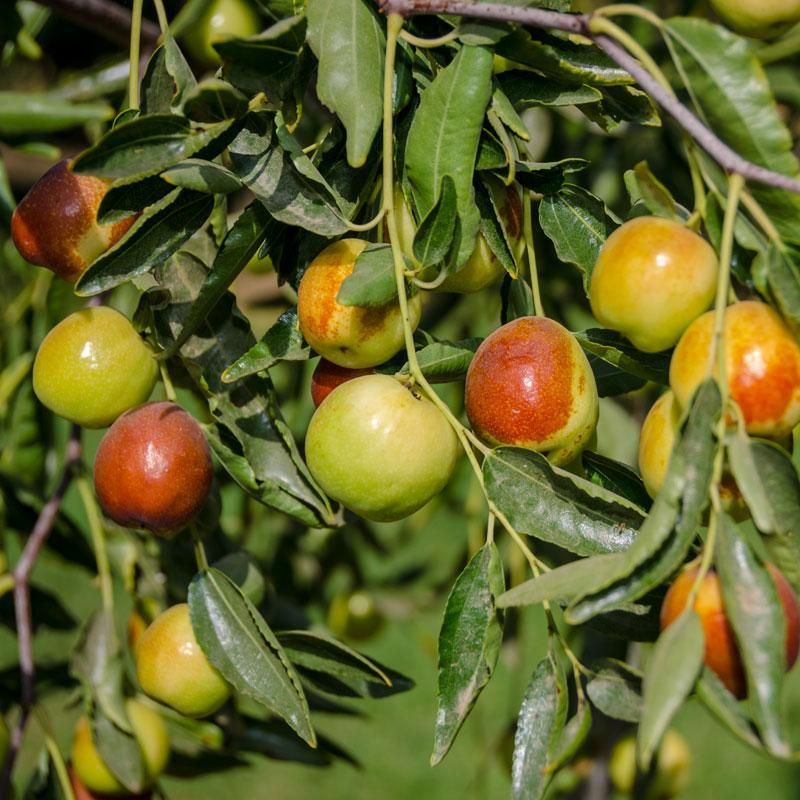
Timing is a big part of why jujube works in Central Texas. Texas A&M’s jujube fact sheet notes that the tree prefers hot, dry conditions and requires a long, warm season to fully ripen its fruit, which is precisely what Central Texas delivers from June through September.
Where a peach or plum struggles to hold fruit once temperatures climb into the upper nineties and stay there, jujube is still working through its natural cycle.
Flowering can extend from late spring well into summer, meaning the tree does not produce one synchronized flush that must survive a single heat event or storm. Instead, blossoms appear in waves over several weeks, and fruit at different stages of development can be found on the same branch at the same time.
That staggered pattern translates directly to multiple picking opportunities rather than one concentrated harvest window that gardeners either catch or miss.
The University of Arizona Cooperative Extension confirms that jujube flowering can stretch from late spring into summer, allowing fruit to mature over several weeks rather than all at once. For a home gardener managing a yard rather than a commercial orchard, that kind of flexible harvest schedule is genuinely useful.
Extended flowering and heat adaptation are not the same as a guarantee that fruit set will continue uninterrupted through every triple-digit heat event. Pollination can still be disrupted by extreme conditions, and water shortage during fruit development will affect size and quality regardless of temperature tolerance.
The advantage jujube holds is that its natural calendar aligns with the Texas summer rather than fighting it, giving the tree more opportunities to succeed even when conditions are difficult.
Match the tree to sun, drainage, and regional conditions
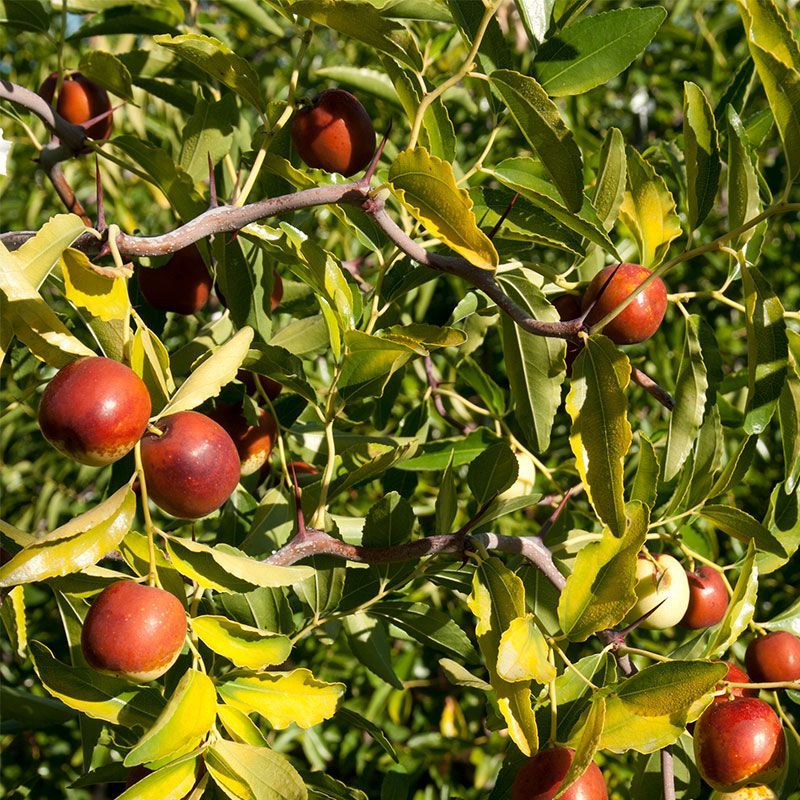
Getting jujube started on the right foot begins before the tree goes in the ground. Full sun is non-negotiable.
Jujube needs direct sunlight for the majority of the day to flower well, ripen fruit fully, and maintain the kind of vigor that keeps pest and disease pressure low. A shaded location will not kill the tree, but it will reduce your harvest significantly.
Drainage matters just as much. Texas A&M’s guidance on jujube notes that the tree tolerates a wide range of soils, including alkaline and even somewhat saline conditions where many other fruit trees would fail.
That flexibility makes it a realistic option for the caliche-heavy, high-pH soils common across much of Central Texas. One caution: even alkaline-tolerant trees can develop micronutrient deficiencies, particularly iron chlorosis, when soil pH is very high.
If leaves start yellowing between the veins on younger growth, consult your local Extension office for a soil-test-based correction rather than guessing.
Avoid any spot where water pools after rain. Jujube can handle dry stretches far better than it handles waterlogged roots, and extended standing water invites root problems that can undo years of growth.
A gentle slope, a raised bed, or a naturally fast-draining site all work well.
Geography matters beyond the individual planting site. Texas A&M describes jujube as better adapted to the arid parts of Texas than to the Gulf Coast, where higher humidity, heavier rainfall, and different soil conditions can change results.
Gardeners in coastal or humid eastern Texas should research local performance and consult their county Extension agent before committing to a full planting.
Florida readers should take an extra step. UF/IFAS identifies Indian jujube, Ziziphus mauritiana, as a potentially invasive plant in Florida that can spread through animal dispersal.
The two species look similar enough that mislabeled nursery stock is a real risk. Before purchasing in Florida, verify the scientific name on the tag and confirm with a local Extension agent or reputable nursery that you are buying Ziziphus jujuba and not its invasive relative.
Drought tolerance does not eliminate irrigation
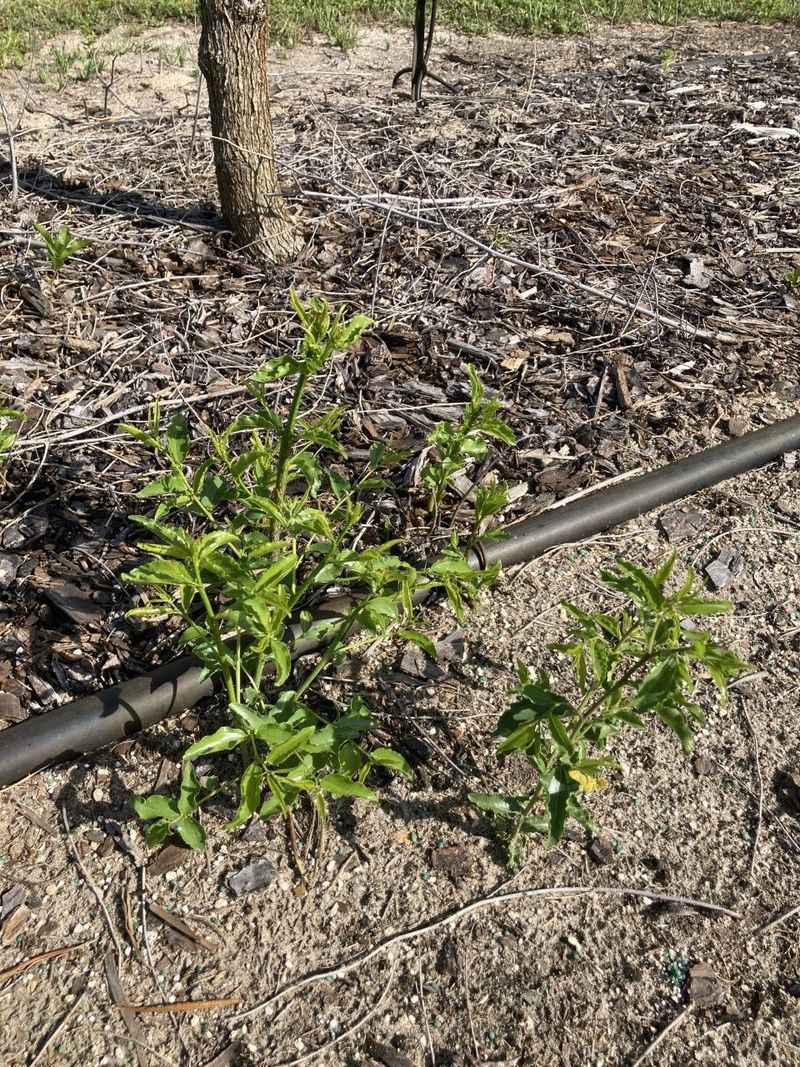
Calling jujube drought-tolerant is accurate, but that label can create a costly misunderstanding. A tree that survives drought is not the same as a tree that produces a full, high-quality crop under drought conditions.
Survival and productivity are different benchmarks, and for a home gardener who wants fruit rather than just a living tree, the distinction matters.
University of Arizona Cooperative Extension guidance on Chinese jujube is direct on this point: regular irrigation is needed for a quality crop, especially while a tree is establishing. A jujube left to fend for itself through a dry Central Texas summer may survive, but the fruit it produces is likely to be smaller, drier, and less flavorful than fruit from a tree that received consistent moisture during development.
Young trees need the most attention. During the first one to three years after planting, deep and consistent watering supports root establishment and sets the foundation for long-term productivity.
Once a tree is established, its water needs decrease, but prolonged dry weather during flowering and fruit development still calls for supplemental irrigation.
Deep watering, which means wetting the soil well below the surface rather than just moistening the top few inches, encourages roots to grow downward where moisture is more stable. Shallow, frequent watering produces shallow roots that are more vulnerable to heat and dry spells.
A slow, thorough soak every week or two during dry periods is a better approach than daily light watering, though exact timing should be adjusted based on your soil type, tree size, and current weather conditions.
Irrigation is not a guarantee against fruit drop, since pollination problems, extreme heat events, and other factors can still affect the crop. However, consistent moisture during the growing season is one of the most controllable variables in jujube production, and neglecting it is one of the most common reasons an otherwise tough tree underperforms.
Buy a grafted ‘Li’ or ‘Lang’ and consider two cultivars
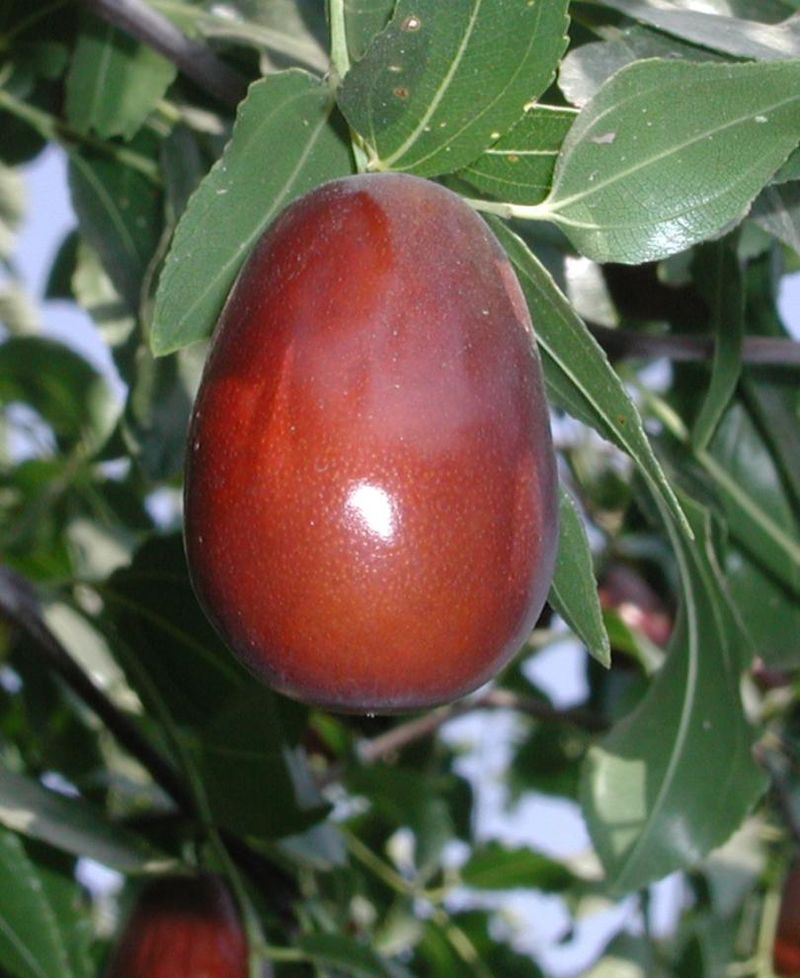
Walking into a nursery and picking up any jujube tree on the shelf is not the same as buying a reliable producer. Cultivar choice and propagation method both affect what ends up in your harvest basket, and the difference between a named grafted tree and an unknown seedling can be dramatic.
Texas A&M identifies ‘Li’ and ‘Lang’ as the most commonly grown Texas jujube cultivars. ‘Li’ is noted for large, flavorful fruit with a round shape and a high fresh-eating quality. ‘Lang’ is a heavy-cropping cultivar that produces large, pear-shaped fruit and is widely grown across the South and Southwest. Both have documented performance records in Texas conditions, which is more than you can say for an unlabeled seedling pulled from a bin.
Seedlings do not reliably reproduce the fruit quality of the parent tree. Texas A&M specifically warns that seedling jujubes can produce small or inferior fruit.
When you buy a grafted ‘Li’ or ‘Lang,’ you know what you are getting. When you buy a seedling labeled simply “jujube,” you are taking a gamble on fruit quality that may not pay off for several years.
Pollination is another reason to consider buying two different cultivars. Most jujube cultivars are capable of producing some fruit on their own, but University of Arizona guidance notes that planting two different cultivars can substantially increase yield.
Bees and flies handle pollination duties, so a yard with some pollinator activity and two compatible cultivars is set up for better production than a yard with a single tree. Planting ‘Li’ and ‘Lang’ together is a practical pairing that many Texas gardeners use successfully.
Neither cultivar is universally best for every site or taste preference, so the right combination depends on your goals and available space.
Harvest crisp or wrinkled fruit and control suckers
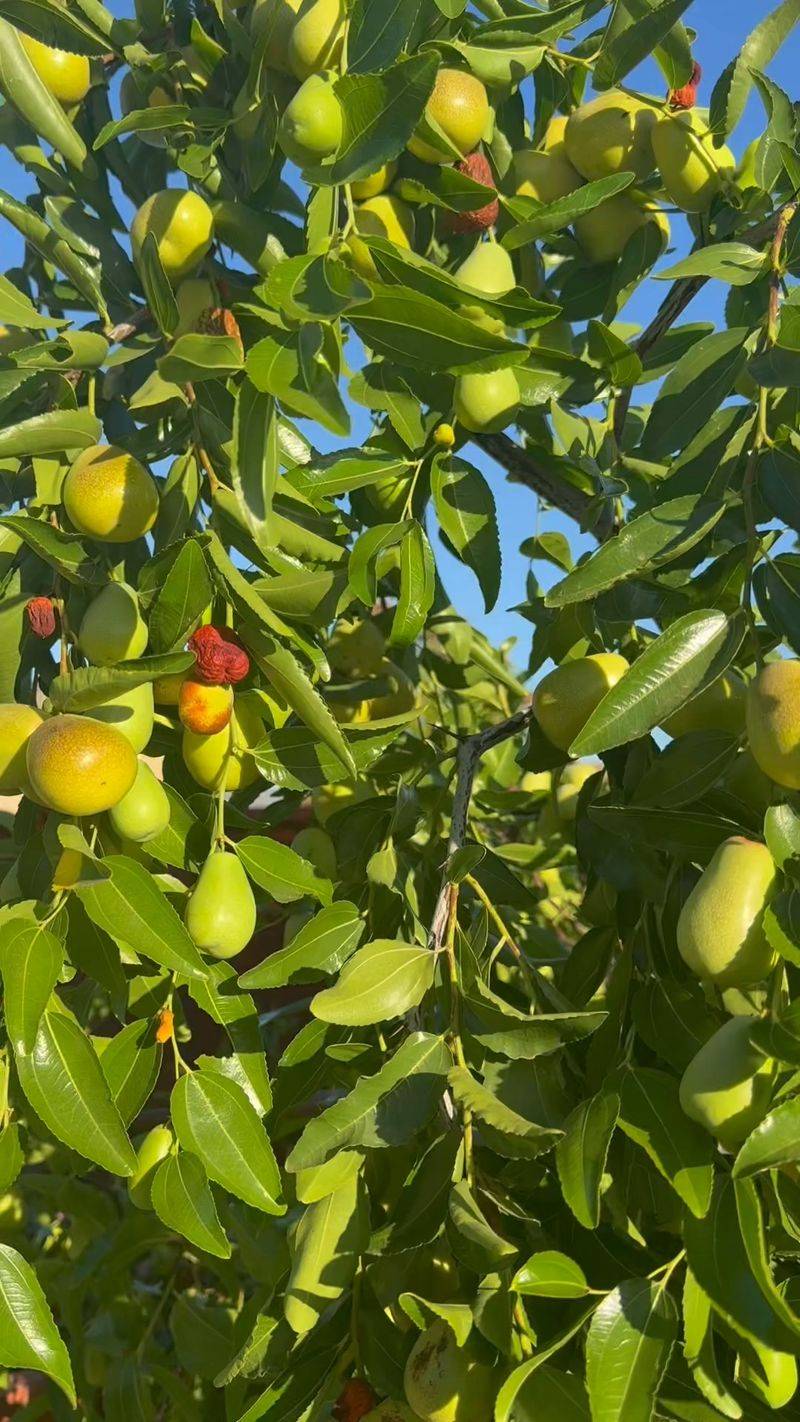
Harvest time on a jujube tree is refreshingly forgiving compared to the narrow windows that define stone fruits and many other common backyard producers. Fruit does not ripen all at once, and that works in the home gardener’s favor.
When the skin on individual fruit begins shifting from green to a yellowish-brown or reddish-brown, the fruit is ready for fresh eating. At that stage, the texture is firm and crisp, often compared to a mild, slightly sweet apple.
Leave the fruit longer and a different result develops. As jujubes continue to ripen on the tree, they soften, the skin wrinkles, and the sugar concentration increases.
The result is a chewy, date-like sweetness that many people prefer for snacking, baking, or drying. Texas A&M notes this staggered ripening pattern, which means a single tree offers multiple picking opportunities rather than one deadline to meet.
A gardener can harvest a portion of the crop at the crisp stage and let the rest develop further, or simply pick over the tree in rounds as different fruit reaches the desired stage.
Maintenance is generally light, but one task that cannot be ignored is sucker removal. Jujube trees can send up root suckers, which are shoots that emerge from the roots some distance from the main trunk.
Left unmanaged, these suckers can spread and form a thicket that competes with the main tree and takes over nearby garden beds. Removing them promptly by cutting them at or below ground level keeps the planting tidy and the main tree productive.
University of Arizona guidance also notes that some jujube cultivars carry thorns on their branches. That detail matters when choosing a planting location near walkways, patios, driveways, or areas where children play.
Wear gloves when pruning or harvesting from thorny cultivars, and site the tree where its branches will not create a hazard as it matures.
Compare jujube with pomegranate without declaring a universal winner
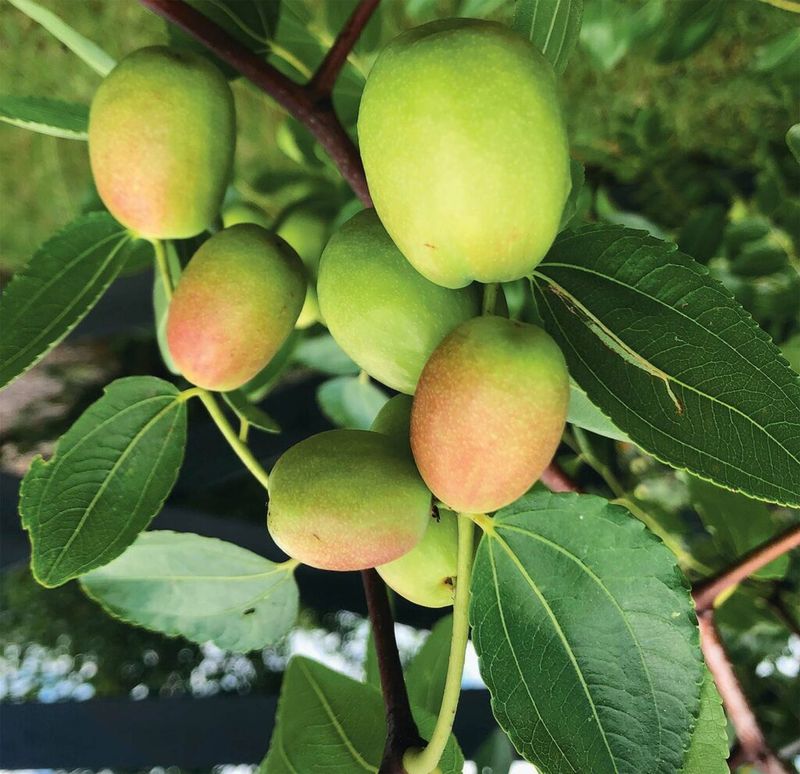
Pomegranate deserves an honest place in this conversation. For Central Texas homeowners who want a heat-tolerant fruit tree, it is a legitimate and well-documented option, not a consolation prize.
Texas A&M AgriLife recommends pomegranate for central, southern, and southeastern Texas, citing its strong heat tolerance and adaptability to a range of conditions across the state.
That said, pomegranate and jujube are not identical performers. Pomegranate generally needs supplemental irrigation for reliable fruit production, and Texas A&M’s pomegranate variety guide lists cultivars such as ‘Russian 18,’ ‘Salavatski,’ ‘Spanish Sweet,’ ‘Sumbar,’ ‘Surh Anor,’ and ‘Wonderful’ with differences in cold hardiness, ripening time, productivity, and fruit quality.
The tree can also experience fruit splitting when irrigation is inconsistent, sunscald during extreme heat events, cold injury in hard winters, and premature fruit drop. These are manageable problems, but they require attention.
UGA Cooperative Extension’s pomegranate production guide reinforces that consistent irrigation is central to avoiding fruit quality problems, particularly splitting, which occurs when dry periods are followed by heavy watering or rainfall. For a gardener willing to manage irrigation carefully and who enjoys pomegranate fruit, the tree performs well in Central Texas conditions.
Jujube may suit gardeners who prioritize drought resilience, very low pest and disease pressure, and a staggered harvest that does not demand precise timing. Pomegranate may be a better fit for someone who prefers its distinctive fruit, wants a showy flowering ornamental, or gardens in a part of Texas where pomegranate has a stronger track record.
Local conditions, soil type, and personal fruit preferences all play a role in the decision. Neither tree is the universal winner for every Texas yard.
Choose the heat-tolerant option that fits your site
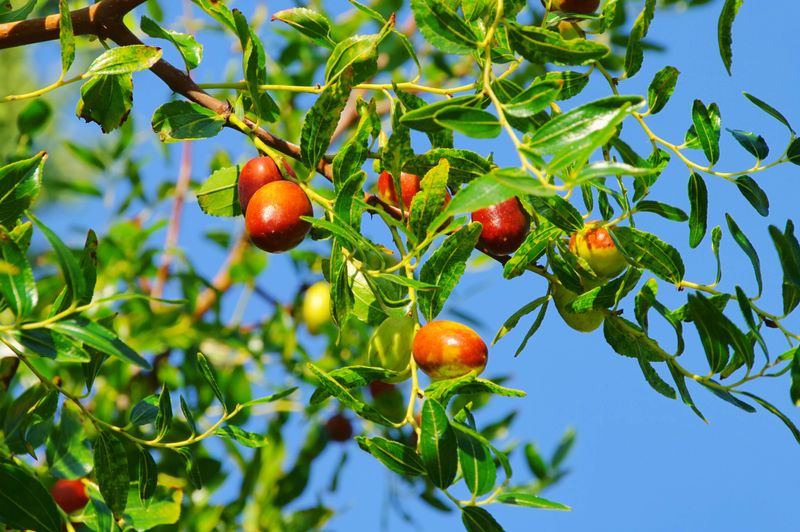
Chinese jujube stands out for Central Texas gardens because of what it combines: strong heat-season adaptation, meaningful drought resilience, extended flowering across late spring and summer, and a staggered ripening pattern that spreads the harvest over several weeks. Those traits do not guarantee a full crop through every extreme weather event, and the tree still needs the right conditions to perform consistently.
The practical checklist is short. Verify that you are buying Ziziphus jujuba, not a different species.
Choose a named grafted cultivar such as ‘Li’ or ‘Lang’ rather than an unlabeled seedling. Plant in full sun with well-drained soil, and avoid spots where water collects after rain.
Water deeply and consistently during establishment and during prolonged dry periods when fruit is developing. Texas A&M AgriLife’s jujube guidance supports each of these steps as the foundation for reliable production.
Consider planting two cultivars to improve pollination and overall yield.
Local climate and site conditions still control the final result. A well-chosen, well-sited jujube is one of the better-adapted fruit trees available to Central Texas homeowners, but no tree eliminates the need for attentive care.
The gardeners who get the most from it are the ones who match the tree to the right spot and then show up with water when the summer gets serious.