
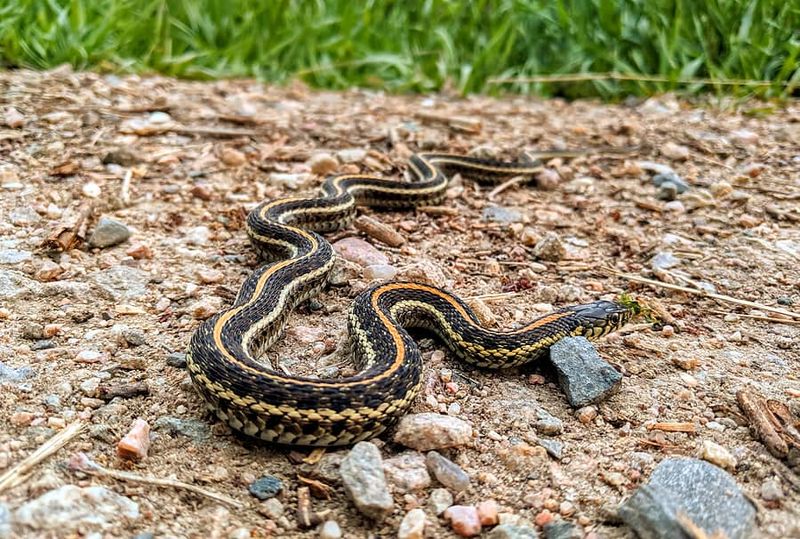
Florida yards are full of wildlife, and snakes are part of that picture whether homeowners want them there or not. Many people want to know if one backyard feature is responsible for most snake visits, and the honest answer is more complicated than a single culprit.
No Florida wildlife authority has ranked one feature above all others, but a poorly managed bird-feeding station is a practical place to start looking, because the mess it creates can quietly set the table for the animals snakes hunt.
Florida has no proven No. 1 snake-attracting yard feature
Headlines love a single villain, but Florida snake biology does not cooperate. UF/IFAS Extension guidance on snake encounters describes snake activity as the result of overlapping food, water, shelter, and prey conditions rather than one dominant backyard feature.
No statewide ranking or comparative study establishes that any single thing pulls more snakes into Florida yards than everything else combined.
That does not mean every feature carries equal weight for every yard. A poorly managed bird-feeding station is one overlooked feature worth inspecting first, mainly because spilled or accessible seed can support mice and rats, and rodents are prey that snakes actively hunt.
That prioritization is a practical suggestion, not a research finding that places feeders above all other conditions.
Other features matter too. Backyard ponds and water gardens can attract frogs, fish, and other wildlife that snakes eat.
Excess water from leaking irrigation can support rodents and amphibians alike. Brush piles, boards, and dense ground cover give both prey and snakes a place to hide.
Unsecured garbage, compost, fallen fruit, and outdoor pet food all add to the food supply that keeps rodent populations healthy near homes.
Florida’s warm climate, abundant wetlands, and expanding residential development mean that snakes and people share space year-round. UF/IFAS residential snake guidance frames the solution as managing the combination of food, water, and shelter conditions around the yard rather than eliminating one feature and expecting results.
Starting with the bird feeder is a reasonable first step, as long as homeowners keep the broader picture in view.
The feeder matters only through the prey it supports
Snakes are carnivores. They do not eat birdseed, sunflower hulls, or suet cakes, so a bird feeder cannot attract them directly.
The connection runs through a different animal entirely.
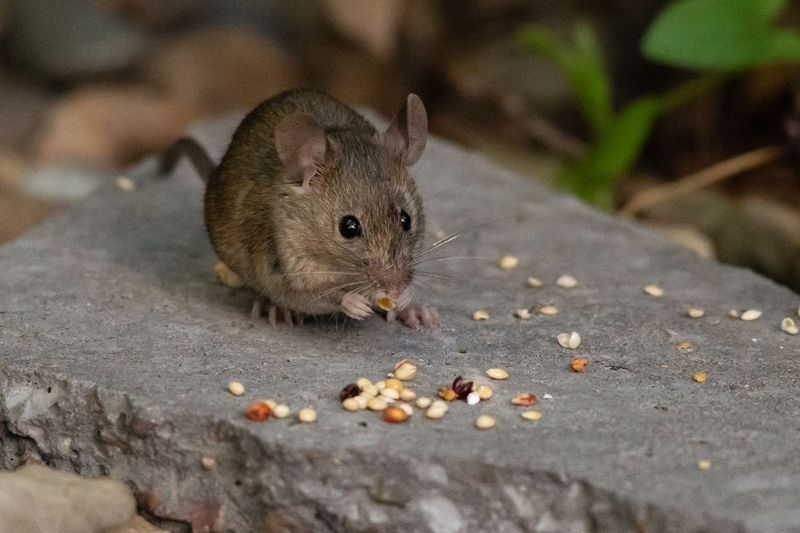
Spilled seed, scattered hulls, and uneaten food left on the ground beneath a feeder can draw mice and rats looking for an easy meal. UF/IFAS bird feeder guidance specifically warns that bird food scattered on the ground can attract rodents, and rodents are exactly the kind of prey many Florida snakes hunt.
The feeder becomes a concern not because of what it offers snakes, but because of what it offers the animals snakes eat.
The prey list for Florida snakes is longer than most homeowners expect. UF/IFAS Extension notes that snakes commonly move through yards while hunting rodents, frogs, anoles, birds, eggs, slugs, insects, and other small animals.
A yard with a messy feeder may be adding rodents to an already rich prey base, which raises the chance that a hunting snake passes through.
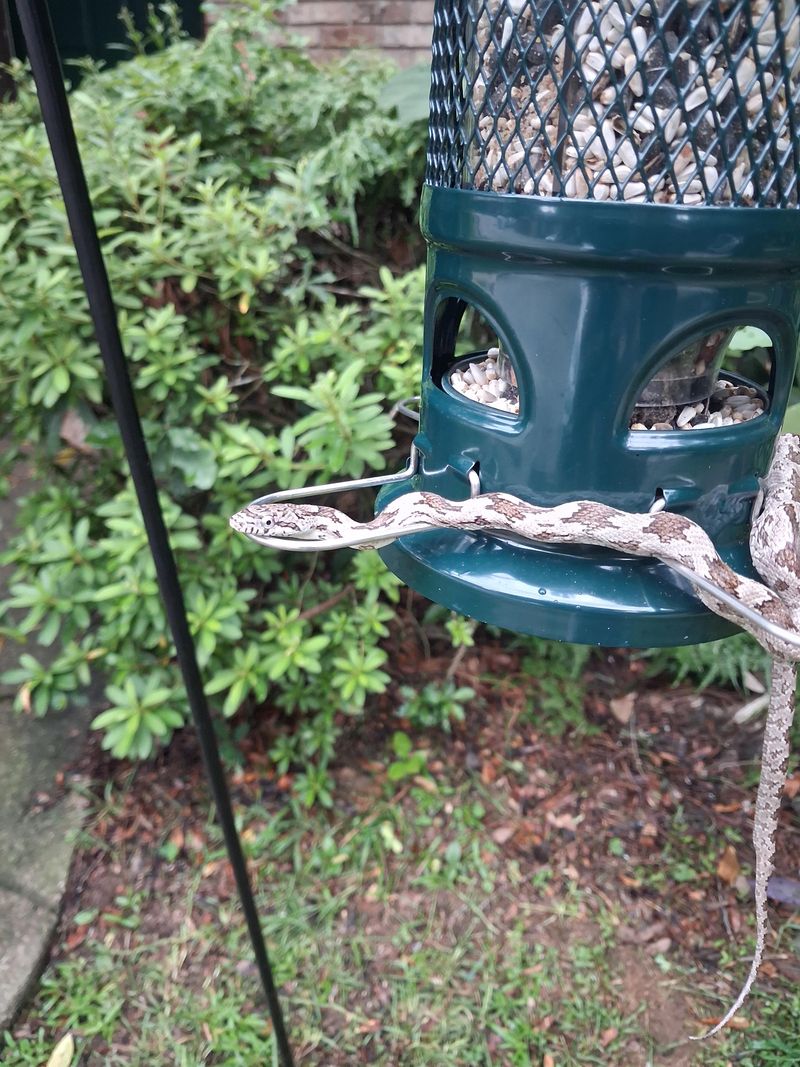
The eastern ratsnake is a useful example of how varied snake diets can be. This large, nonvenomous species feeds heavily on rodents but also eats lizards, frogs, birds, and eggs, meaning it can be drawn to a yard for multiple reasons at once, not just because of a feeder.
Not every snake a homeowner spots near a feeder is a ratsnake, and not every ratsnake sighting links back to a feeder. The point is that the food web around a yard is more connected than it looks, and a feeder that creates a rodent problem is adding one more link in that chain.
Inspect the ground beneath the feeder
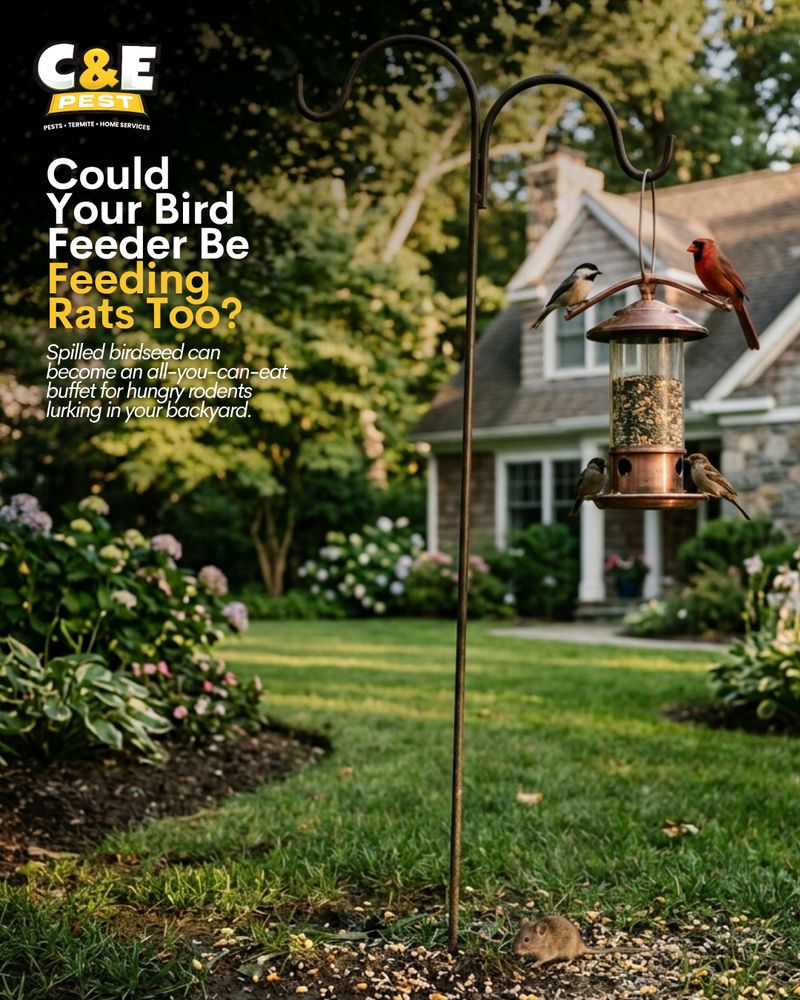
Walk out to the feeder and look down before looking up. The ground directly beneath a feeder tells you more about rodent risk than the feeder itself does.
Scattered seed, accumulated hulls, and uneaten food sitting on the soil are the conditions UF/IFAS identifies as sanitation concerns and potential rodent attractants. A thick layer of decomposing seed mixed with droppings is not just untidy; it is a food source sitting in plain sight for any mouse or rat working the area at night.
Cleaning that material up regularly is a bird-health and sanitation practice, and it also removes one reason for rodents to linger.
While inspecting the area, homeowners may notice other signs of general wildlife or rodent activity: fresh droppings near the base of the feeder pole, gnaw marks on the pole or nearby wood, small burrow openings in the ground, a water source such as a dripping hose or birdbath sitting close by, or dense low cover like a shrub or ground-level debris that gives small animals a place to hide. Any of those observations suggests that conditions around the feeder may be supporting more than songbirds.
None of those signs proves that a snake visited because of the feeder. UF/IFAS Extension notes that snakes move broadly through yards while hunting, so a sighting near the feeder may reflect passing prey activity, nearby cover, or simple movement through the area.
The audit is about identifying conditions worth correcting, not building a case that the feeder caused a specific encounter.
Manage the feeder without giving up backyard birds
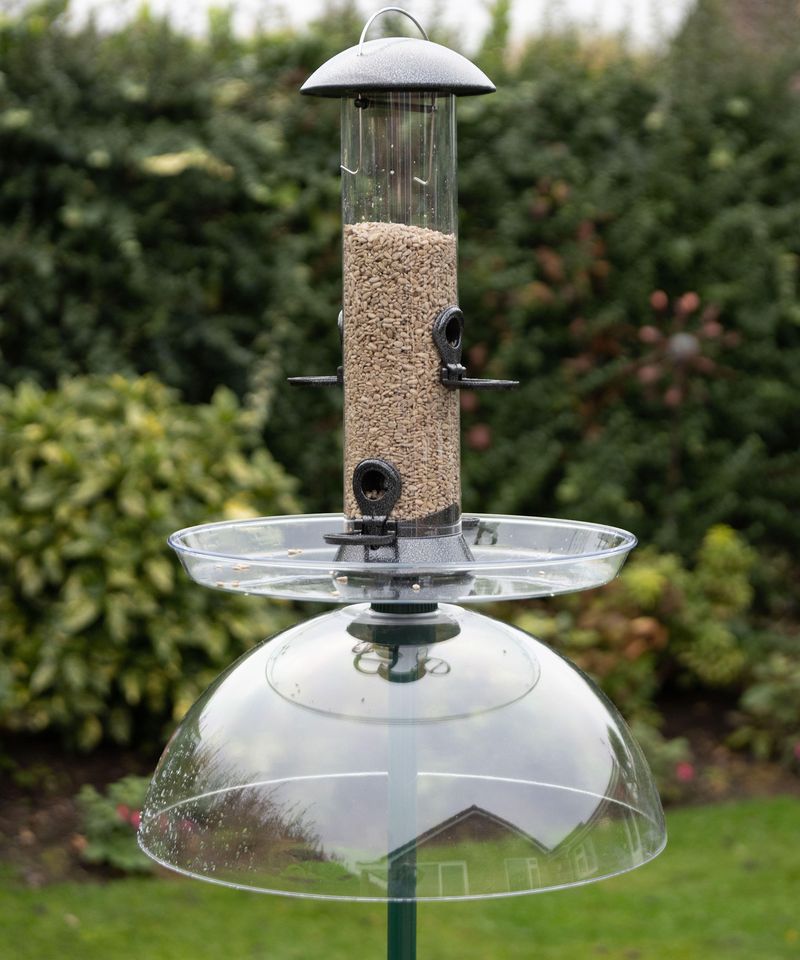
Keeping birds coming to the yard and reducing rodent activity near the feeder are not mutually exclusive goals. A few practical changes make a meaningful difference without requiring homeowners to take the feeder down entirely.
Start with the ground. Clean spilled seed, hulls, and droppings from beneath the feeder regularly, and remove accumulated debris before it builds into a buffet for nighttime visitors.
UF/IFAS recommends storing bird feed in a securely closed metal container rather than a plastic bag or open bin, because rodents can chew through soft materials quickly. Limiting the amount of seed available at one time also helps; smaller, more frequent fills mean less seed sits in the feeder long enough to spill or spoil.
Feeder placement matters for more than aesthetics. UF/IFAS feeder placement guidance recommends positioning feeders 10 to 15 feet from tree trunks and overhanging limbs to reduce squirrel access.
That distance is primarily a squirrel-control recommendation, not a measured snake-exclusion distance, but moving the feeder away from the house and away from dense shrubs or wood piles reduces the chance that the area becomes a sheltered rodent corridor close to your foundation.
Feeder cleaning is a bird-health requirement on its own terms. Ordinary seed feeders benefit from cleaning at least every two to three weeks, and more often during Florida’s hot, wet months when mold and bacteria spread faster.
Hummingbird nectar can ferment quickly in direct sun or high heat, so changing it every three to five days keeps birds safe from spoiled sugar water. Those practices protect the birds you are trying to attract and incidentally reduce the damp, decomposing material that draws rodents.
If rodent activity around the feeder persists despite regular cleaning, consider switching to a birdbath as your primary wildlife feature for a season. Birdbaths attract birds with water rather than seed, which removes the rodent food source from the equation.
Water features have their own wildlife effects, covered in the next section, but they represent a genuine alternative worth considering.
Ponds create a different route to snake activity
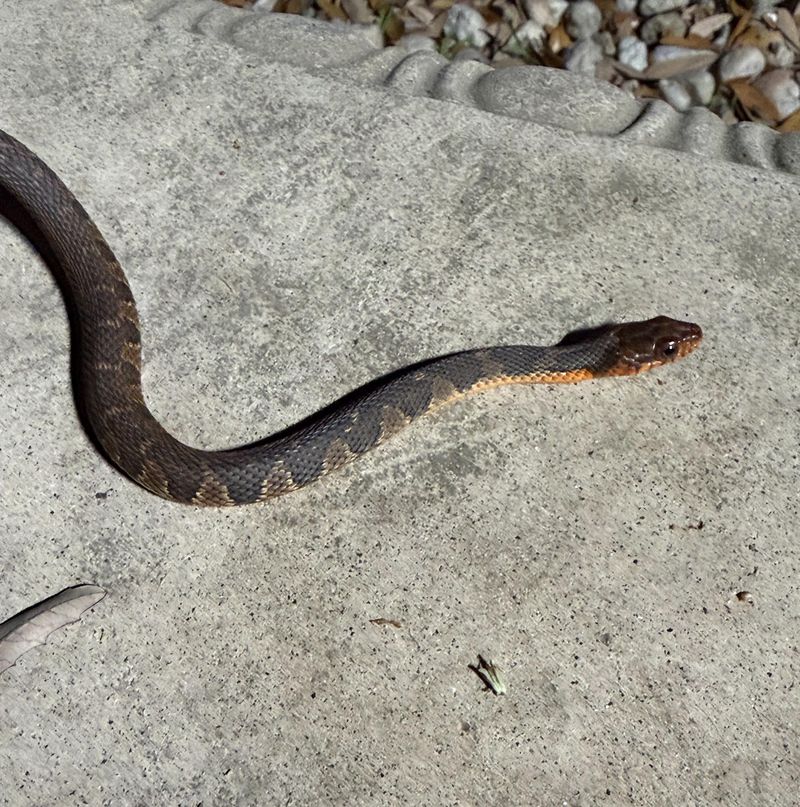
A backyard pond works through a completely different pathway than a bird feeder. Where a feeder can indirectly support rodents, a pond directly provides water and habitat for frogs, fish, and other aquatic wildlife that snakes actively eat.
UF/IFAS Gardening Solutions notes that garden ponds may attract frogs and snakes, and gives the specific example of garter snakes being drawn to ponds that contain frogs. That is direct habitat attraction: the pond creates a food source, and snakes follow the food.
The mechanism is straightforward and worth understanding before assuming a snake near the pond came from somewhere else entirely.
Seeing a snake near the water does not automatically mean the snake is venomous or dangerous. Florida native water snakes are common near ponds, ditches, and retention areas and are frequently mistaken for cottonmouths.
Identification should always happen from a safe distance, and homeowners should not handle any unidentified snake regardless of how harmless it appears.
Leaking hoses, dripping irrigation heads, and chronically overwatered lawn sections create smaller-scale water accumulation that can support frogs and rodents even without a formal pond. UF/IFAS Extension notes that even small amounts of standing or excess water can attract wildlife.
Fixing those leaks is a low-effort step that reduces unintended habitat near the house.
A functioning wildlife pond farther from the home and play areas is a different matter. Removing a well-placed pond solely because it supports frogs and snakes would also remove habitat value for birds, dragonflies, and other beneficial wildlife.
UF/IFAS residential snake guidance recommends managing conditions near structures rather than stripping wildlife habitat from the property as a whole.
Reduce food, water, and shelter around the home
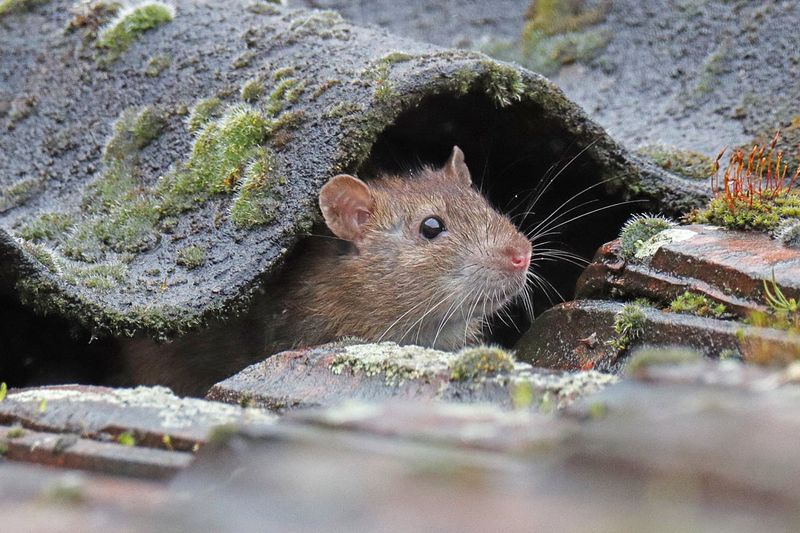
Bird feeders and ponds are two pieces of a larger picture. Yards that see frequent snake activity often have multiple conditions working together: food sources that draw rodents, water that supports frogs and insects, and cover that gives prey animals a place to live safely close to the house.
Outdoor pet food is one of the most overlooked attractants. UF/IFAS habitat modification guidance recommends feeding pets indoors when possible, and if outdoor feeding is necessary, doing so during daylight hours and removing food, dishes, and water bowls before dusk.
A bowl of kibble left out overnight is an open invitation to rats and mice, and the problem compounds when the dish sits near the house.
Garbage, compost bins, fallen fruit, and animal feed stored in accessible containers all contribute to the same rodent-support system. FWC tips for securing attractants emphasize keeping lids secured and removing food waste promptly.
Fruit that drops from citrus trees or ornamentals should be picked up rather than left to rot on the ground, where it ferments and draws both rodents and insects.
Shelter near the home is the third leg of the problem. Brush piles, stacked boards, loose roofing scraps, ground-level debris, and firewood stored directly on the soil all create protected spaces where rodents and snakes can hide within a few feet of the foundation.
UF/IFAS recommends moving that material away from structures and storing firewood on a rack rather than directly on the ground.
UF/IFAS Extension guidance draws a useful distinction between managing the area immediately around the home and stripping the entire property of vegetation. Keep a cleaner, more open buffer close to the house and play areas, and let natural habitat remain farther from structures where snakes and other wildlife can fill their ecological role without conflict.
Protect the home perimeter from repeat encounters
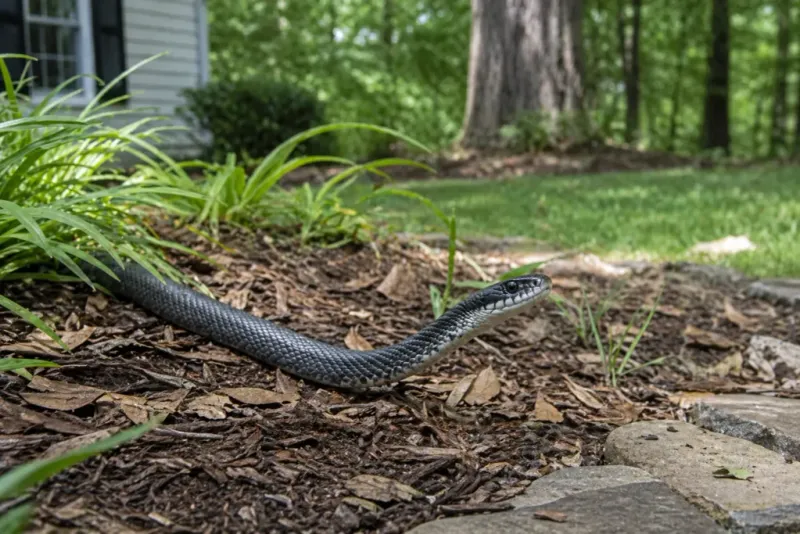
Once food, water, and shelter conditions around the yard are addressed, the next layer of protection is the structure itself. Snakes that are following rodents do not stop at the lawn’s edge; they can follow prey into garages, sheds, porches, and occasionally the home if gaps exist.
UF/IFAS residential snake prevention guidance identifies door gaps, plumbing and wiring penetrations, damaged screens, open vents, and unsealed spaces under porches and decks as common entry points. A snake that finds a mouse trail leading under a door threshold will follow it.
Door sweeps, pipe collars, hardware cloth over vents, and patched screen repairs are low-cost fixes that also reduce rodent entry, which removes the reason for a snake to investigate in the first place.
Vegetation management at the perimeter reinforces those structural fixes. Keep grass mowed, trim shrubs and low branches away from the house, and remove ground-level cover within a few feet of the foundation.
Dense plantings pressed against the exterior give rodents and snakes a sheltered corridor right next to the building.
For specific high-priority areas, such as a children’s play space, a garden bed near an entry door, or a small patio where encounters are genuinely disruptive, snake fencing can be a targeted option. UF/IFAS describes aluminum flashing, quarter-inch hardware cloth, or silt fencing approximately 2 to 3 feet high and buried about 6 inches as materials that can deter many snakes from a defined zone.
Whole-yard exclusion is expensive and labor-intensive and is not a practical solution for most residential properties.
Skip the products marketed as snake repellents. UF/IFAS states that advertised repellents, ultrasonic devices, and sulfur do not work reliably.
Mothballs are not approved for outdoor snake control, and using them that way is illegal and potentially harmful to people, pets, and other wildlife. Rodent poisons carry their own risk: a poisoned rodent that a snake eats can cause secondary poisoning in the snake, in pets, and in wildlife that scavenges the carcass.
Keep your distance when a snake appears
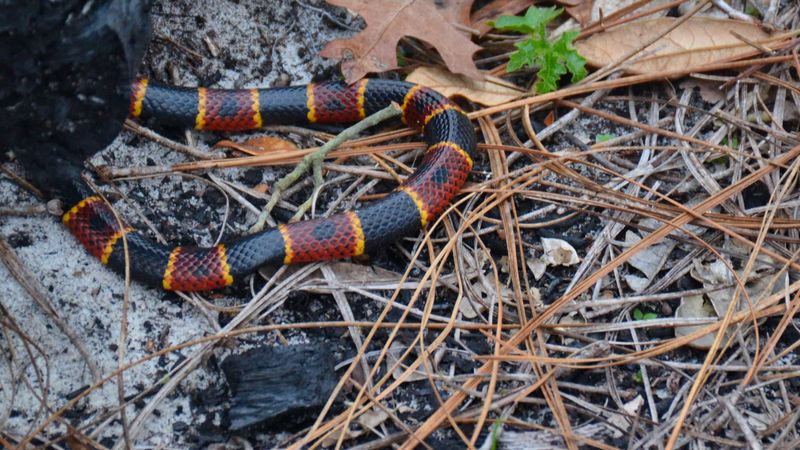
Seeing a snake in the yard is startling, but most encounters end without incident when people give the animal room. The first and most important step is to move children and pets away from the area and resist the urge to approach, corner, or handle the snake.
The Florida Museum of Natural History notes that Florida has approximately 50 established snake species, of which only six are venomous. Most snakes encountered in yards are nonvenomous and will move away on their own when left alone.
Cornering or grabbing a snake, venomous or not, is when bites happen.
FWC notes that a snake spotted in a yard today may be gone by tomorrow, particularly because some larger species cover considerable ground while hunting. Waiting and watching from a distance is often all the response a sighting requires.
If a snake needs to be encouraged to move along and the homeowner can maintain a safe distance, UF/IFAS suggests a gentle spray from a garden hose as a low-risk option. For a venomous snake, a snake inside a living space, or any situation where the homeowner cannot safely manage the distance, contact a professional wildlife removal service.
Do not attempt to identify a snake by picking it up or pinning it down.
A snakebite, however unlikely, requires immediate action. Go to an emergency room or call 911 right away.
CDC guidance is direct: do not cut the wound, do not try to suck out venom, do not apply ice, do not use a tourniquet, and do not delay getting to a medical facility. Those folk remedies cause additional harm and waste the time that treatment requires.
Keep the bitten limb below heart level if possible and keep the person calm while arranging transport.
Start with the seed spill, then manage the whole yard
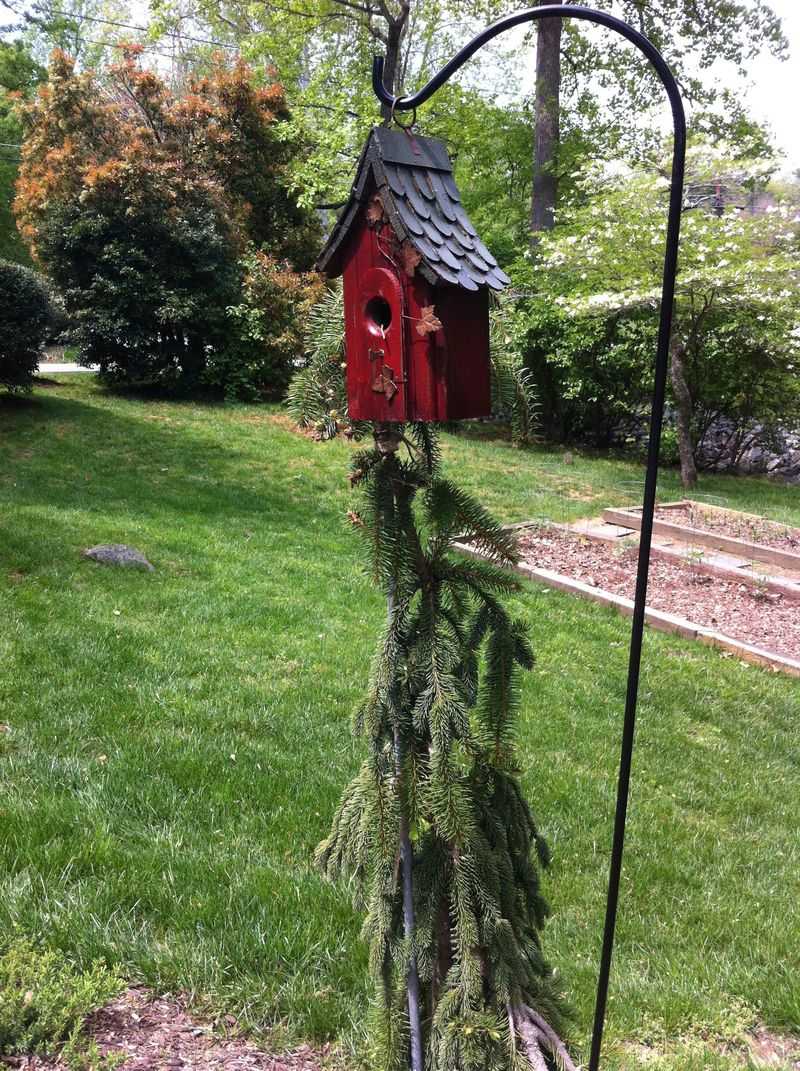
A practical starting point is the area directly beneath the bird feeder. Clean up spilled seed and hulls, store feed in a sealed metal container, and check the surrounding ground for signs of rodent activity.
UF/IFAS bird feeder guidance supports those steps as sanitation practices, and they also remove one condition that can support a rodent population near the house.
From there, work outward. Secure outdoor food sources, fix leaking irrigation, move brush and debris away from the foundation, and seal gaps in doors, screens, and utility penetrations.
UF/IFAS Extension and residential snake prevention guidance both frame snake management as addressing the combination of food, water, and shelter rather than targeting one feature. The feeder is a reasonable first place to look, not a proven statewide No. 1 snake magnet.
Success looks like fewer unwanted encounters near the house and play areas, not a yard emptied of wildlife. Florida’s snakes are part of a functioning ecosystem, and the ones that pass through on their way to somewhere else are doing exactly what they evolved to do.