
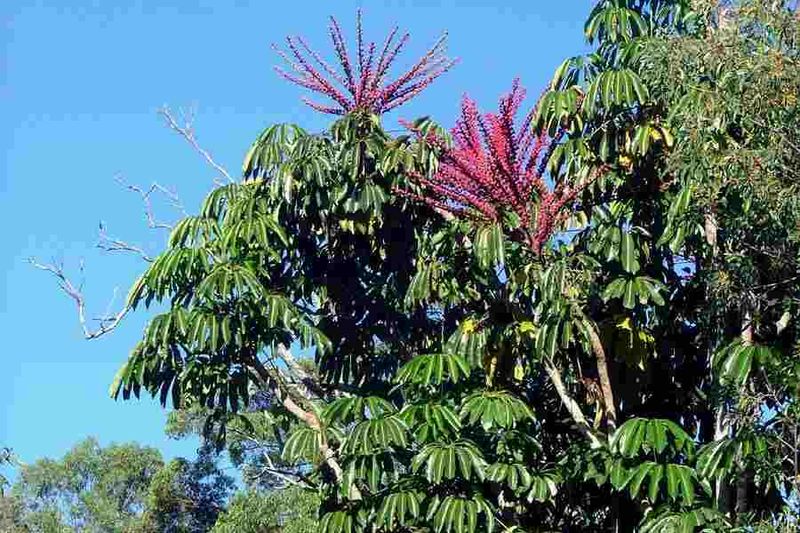
Schefflera can look lush fast, but Florida cold snaps and stormy weather often expose its weak spots. Native shrubs give you that full, leafy, tropical feeling with better odds of bouncing back in real yards.
Many also feed birds, butterflies, and pollinators while handling sandy soil and heat. Here are seven Florida natives that bring beauty, bulk, and less worry to your landscape.
1. Simpson’s Stopper
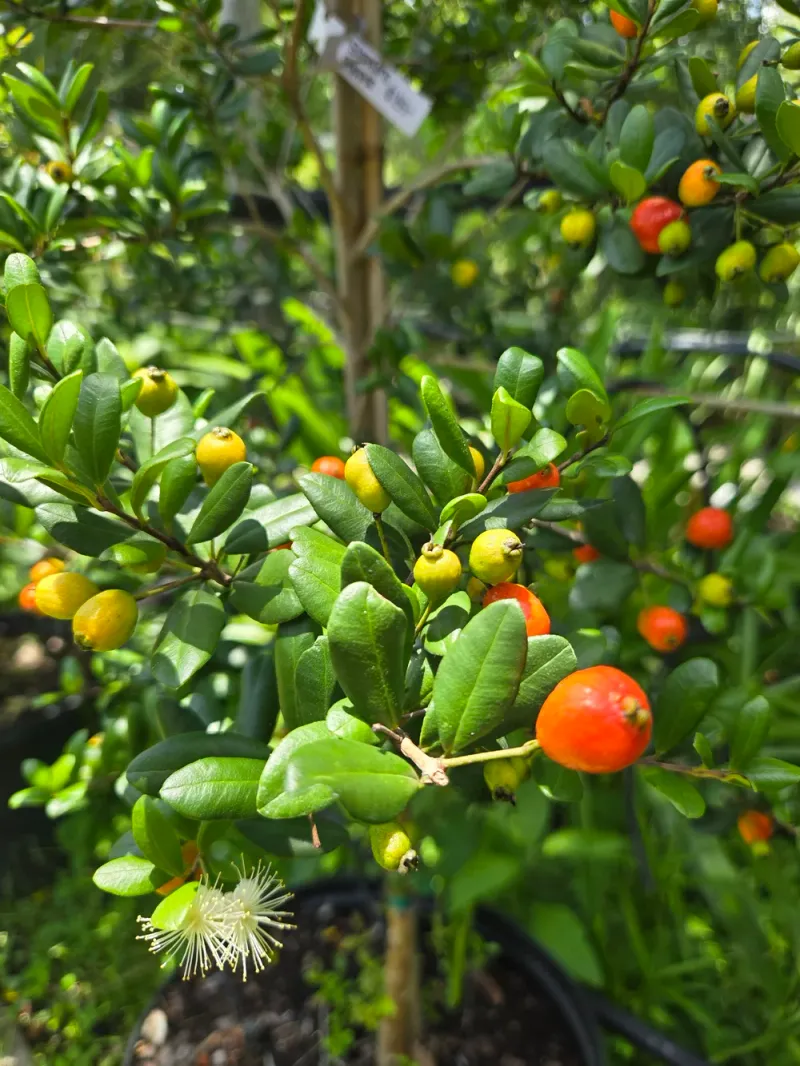
A front walk lined with Simpson’s stopper has that polished, resort-like look without acting fussy about every weather swing. Its glossy leaves stay neat, and the plant can be clipped into a hedge or allowed to grow into a softer, small-tree shape.
Florida gardeners often reach for it when they want structure, privacy, and wildlife value in one plant. Small white flowers bring pollinators, and the red berries are useful for birds, which gives the shrub more life than a plain green screen.
Compared with Schefflera, Simpson’s stopper feels more rooted in Florida’s rhythm. It handles heat, adapts to many well-drained yards, and does not need the same babying after cool nights in many parts of the state.
Use it near entries, along property lines, or as a backdrop for lower native perennials. Give it room if you want a natural shape, or prune lightly after flowering to keep a clean hedge.
2. Firebush
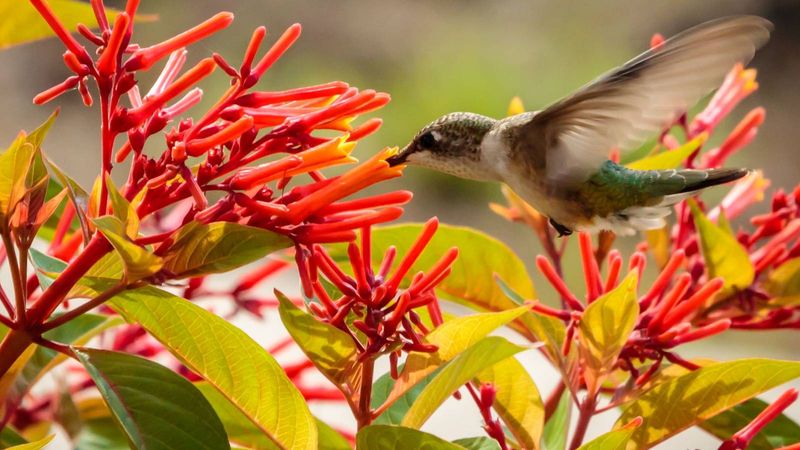
Hummingbirds seem to find firebush before people even finish planting it. The orange-red tubular flowers glow in full sun and turn an ordinary border into a moving, buzzing feeding station.
Firebush earns its place here because it brings tropical color as well as fullness. While Schefflera mostly leans on foliage, firebush adds months of blooms during Florida’s long warm season and keeps pollinators coming back.
In colder parts of North Florida, it may die back after a hard freeze, but established plants commonly return from the roots when warm weather settles in. In Central and South Florida, it can become a big, leafy shrub with a loose, natural shape.
Plant it where you want a casual, wildlife-friendly screen rather than a clipped formal hedge. It works beautifully near patios, sunny fences, and backyard edges where butterflies and hummingbirds can be enjoyed up close.
3. Wax Myrtle
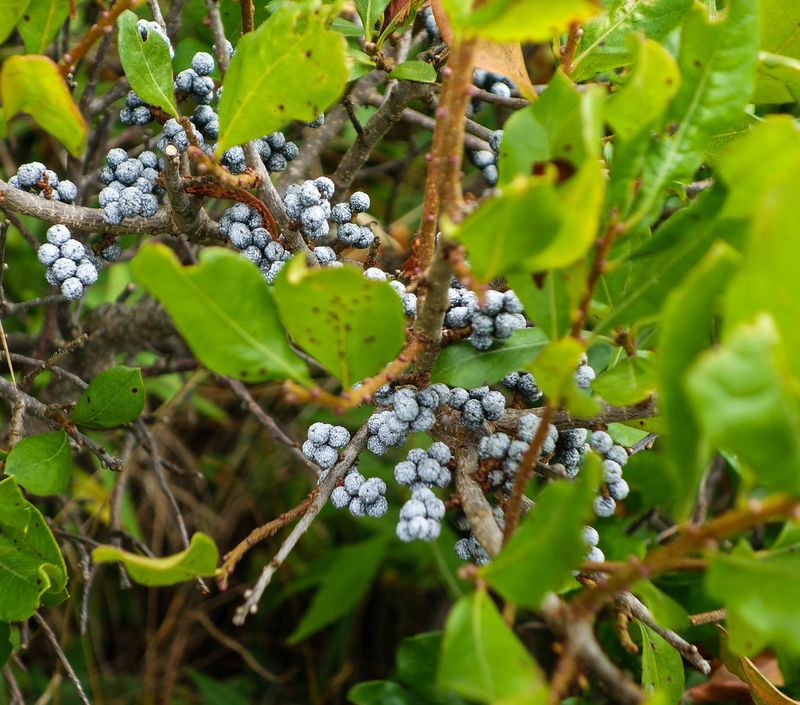
Need privacy in a hurry, but do not want a row of cold-tender tropicals sulking after winter? Wax myrtle is the practical neighbor-fence answer, especially for gardeners who care more about coverage than constant grooming.
Its fine-textured foliage gives a soft green wall that feels lighter than many broadleaf shrubs. The plant can grow quickly, tolerate pruning, and handle a range of Florida conditions once established, including sandy soils and damp spots better than many landscape staples.
Wildlife gets a real benefit, too. The waxy berries feed birds, and the shrub’s dense branching gives them cover, which makes it a good fit for backyard habitat goals.
Wax myrtle is different from the other shrubs on this list because it is a workhorse screen. Use it where you need height, wind filtering, or a green backdrop behind showier natives like firebush, beautyberry, or coontie.
For best results, avoid cramming plants too close together. Give each shrub space to fill out, then prune selectively so air can move through the hedge before storm season.
4. Marlberry
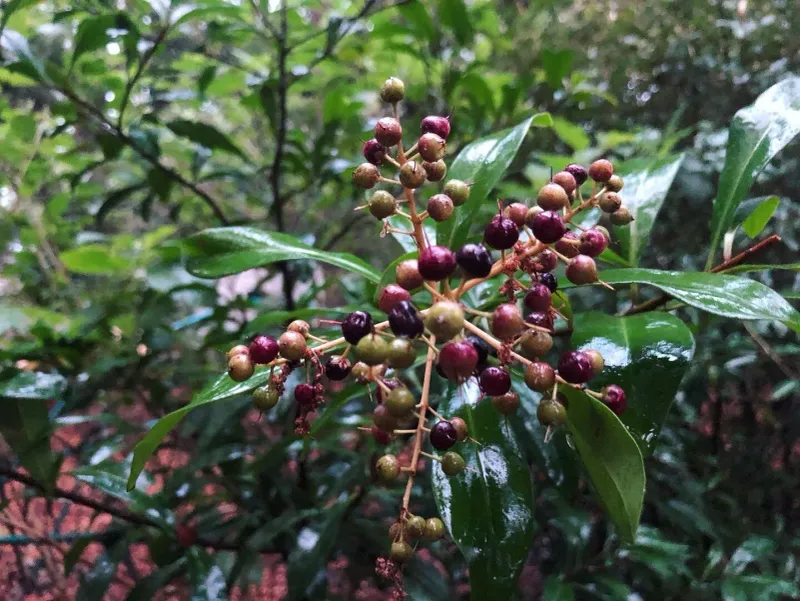
Shady side yards can feel like the place tropical dreams go to fade, but marlberry brings a quiet, glossy richness to those tougher spots. It has the deep green leaves many people like in Schefflera, yet it fits naturally into Florida hammocks and understory gardens.
Marlberry stands out because it performs well in part shade, where some colorful flowering shrubs thin out or stretch awkwardly. Clusters of small white flowers appear, followed by dark berries that birds may use as food.
The look is elegant rather than loud. Think of it as a native substitute for a dim corner near a porch, under high tree canopy, or along a shaded fence where you still want a full, tropical layer.
Gardeners in Central and South Florida may get the most reliable evergreen presence from marlberry, while colder areas should check local suitability before planting. In the right spot, it asks for little beyond decent establishment watering and room to mature.
Pair it with coontie, wild coffee, or native ferns for a layered, natural planting that feels cool even on hot afternoons.
5. Wild Coffee
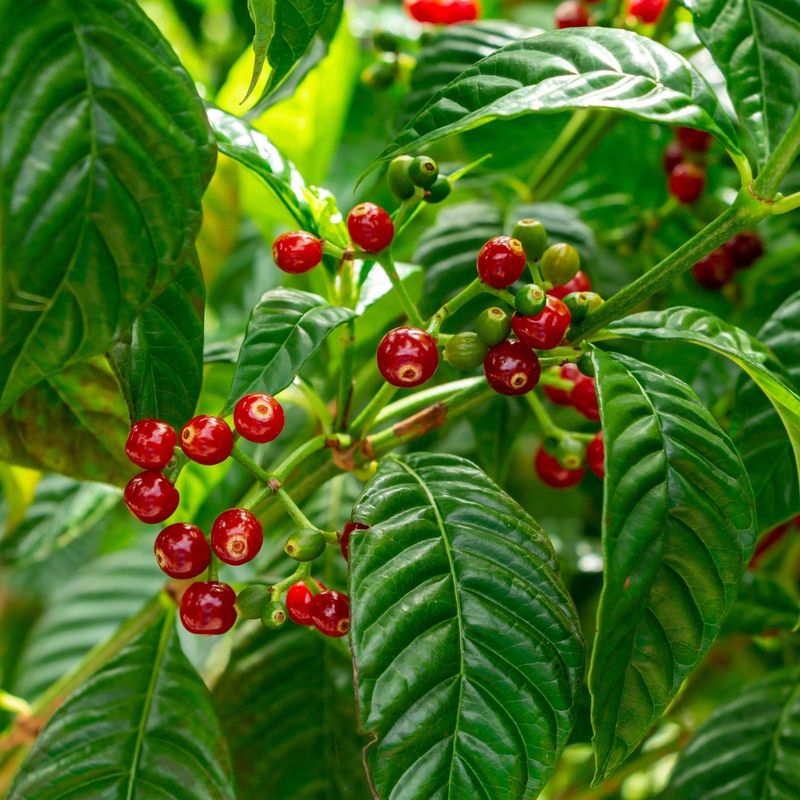
One glance at wild coffee and you can see why shade gardeners love it. The shiny, puckered leaves look lush and tropical, almost like something from a houseplant shelf, but the shrub belongs in Florida landscapes.
Wild coffee is especially useful close to patios, windows, and walkways where details matter. It stays more compact than many screening shrubs, so it can fill the middle layer of a bed without swallowing the path.
Small white flowers are followed by red berries that add color and can attract birds. Although the name sounds like a morning beverage, the berries are not a backyard coffee substitute, so enjoy the look rather than the cup.
Its strongest role is in filtered light. Plant it under palms, live oaks, or along the east side of a house where harsh afternoon sun is softened.
Compared with Schefflera, wild coffee gives a similar leafy mood on a more Florida-friendly scale. It is a smart choice for gardeners who want a tidy, tropical understory instead of a large shrub that may need repeated cutting back.
6. Cocoplum
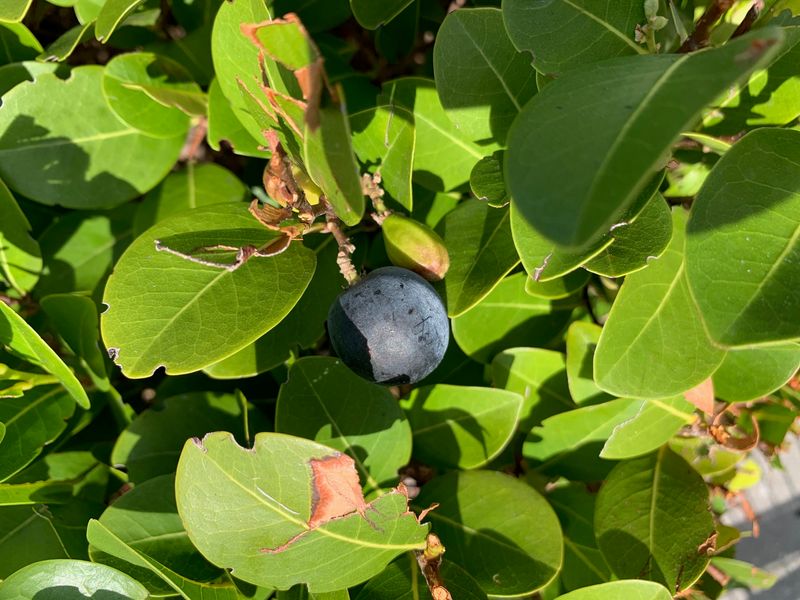
In South Florida neighborhoods, cocoplum is the shrub that quietly holds whole landscapes together. Its rounded leaves, dense growth, and clean outline make it a strong choice for hedges with a tropical feel.
Cocoplum belongs on this list because it brings mass and polish. Some forms have fresh green leaves, while others offer reddish new growth that adds a subtle color shift without needing flowers to carry the show.
It is especially useful near coastal areas and sunny yards where a sturdy hedge has to face heat, sandy soil, and wind. Birds and other wildlife may use the fruit, and the plant can provide cover when allowed to grow thick.
Unlike Schefflera, cocoplum has a long track record as a Florida native landscape shrub in warmer parts of the state. Gardeners in frost-prone areas should be cautious, but in South Florida it can be a dependable backbone plant.
Use it along driveways, around pool cages, or as a green wall behind flowering natives. Regular light pruning keeps it dense, while less frequent pruning gives it a looser, more natural coastal look.
7. Saw Palmetto
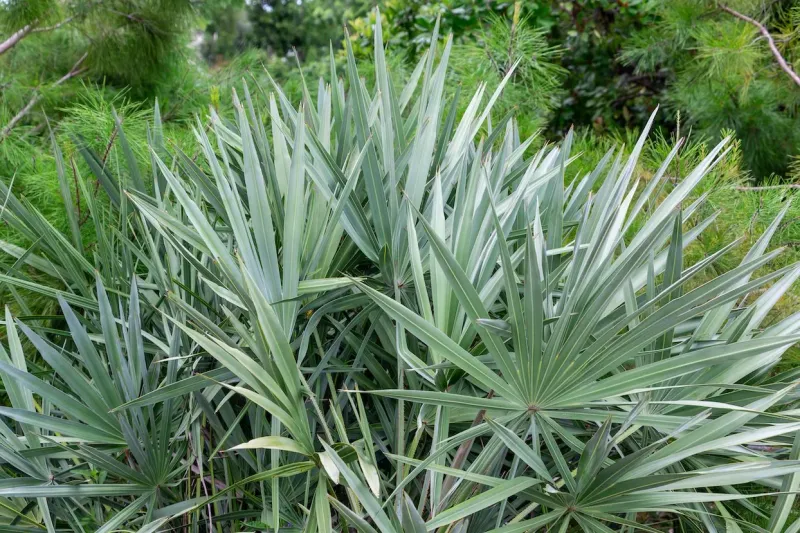
Saw palmetto brings instant Florida character, the kind that looks right beside pines, palms, gravel paths, and sandy beds. Its fan-shaped fronds create a bold tropical silhouette without copying the usual hedge look.
The big advantage is texture. While Schefflera gives broad leaves, saw palmetto adds strong lines, movement, and a grounded native feel that can make a planting look designed instead of simply filled.
Green and silver forms are available, with silver selections looking especially striking in sunny, dry landscapes. Once established, saw palmetto is known for toughness, though young plants need patience because growth is usually slow.
Wildlife value is another reason to consider it. Flowers support pollinators, and the berries are part of the food web for Florida animals, so it does more than sit pretty.
Place saw palmetto where it has room, since the fronds can spread and the leaf stems are armed. It is excellent for corners, foundation gaps, natural screens, and low-maintenance beds where you want a full tropical presence that feels unmistakably Floridian.