
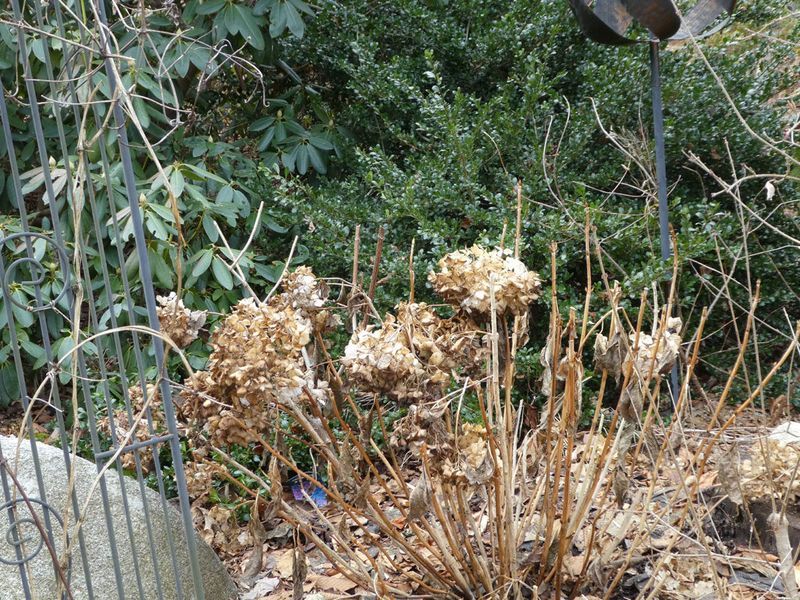
Weak hydrangea blooms are one of the most frustrating things a Southern gardener can face after months of anticipation. The good news is that the cause is often diagnosable, and the fix is more about knowing when to put the pruners down than picking them up.
Understanding what happened this year, and what to protect right now, can make a real difference in what your plant does next spring and summer.
First identify the hydrangea before blaming the pruning
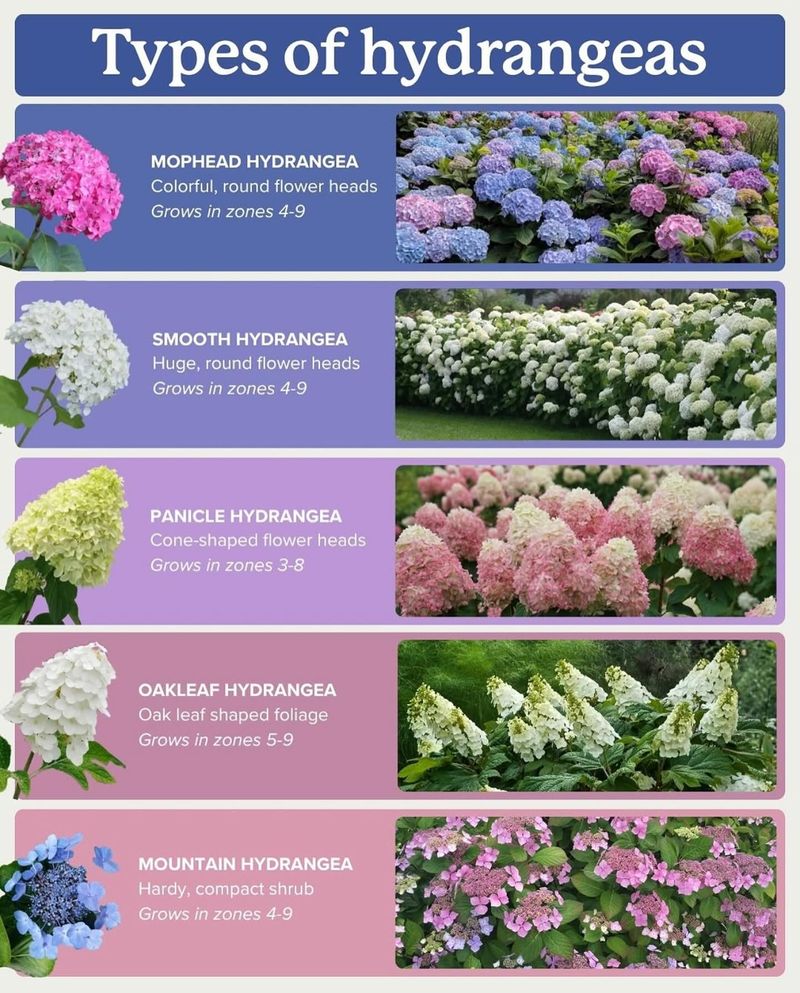
Before pointing a finger at late-summer pruning, the most useful thing you can do is figure out exactly which hydrangea is growing in your yard. Not every hydrangea follows the same rules, and the pruning advice that protects one type can be completely wrong for another.
Bigleaf hydrangeas, which include the familiar mophead and lacecap varieties, along with oakleaf hydrangeas and mountain hydrangeas, are the types most vulnerable to late-summer pruning damage. UGA Cooperative Extension guidance on growing bigleaf hydrangeas explains that these plants bloom primarily on stems produced the previous year, commonly called old wood.
Cutting those stems after the plant begins setting next season’s buds can mean losing the following year’s flowers entirely.
Smooth hydrangeas, including the popular ‘Annabelle,’ and panicle hydrangeas, including ‘Limelight,’ work differently. University of Minnesota Extension’s pruning guide confirms that these types bloom on new wood, meaning stems grown during the current season.
For them, late-summer pruning is not the main explanation for poor flowering, and their proper pruning window falls in late winter or early spring.
Reblooming bigleaf cultivars, sometimes sold under names like Endless Summer, sit in a middle category. Mississippi State Extension’s hydrangea guide notes that these can produce flowers on both old and new wood, making them somewhat less vulnerable to losing an entire season’s bloom if old wood is cut.
Even so, they are not immune to stress, poor site conditions, or other flowering problems, so identifying your plant remains the essential first step in any diagnosis.
A past late-summer cut may explain this year’s weak bloom
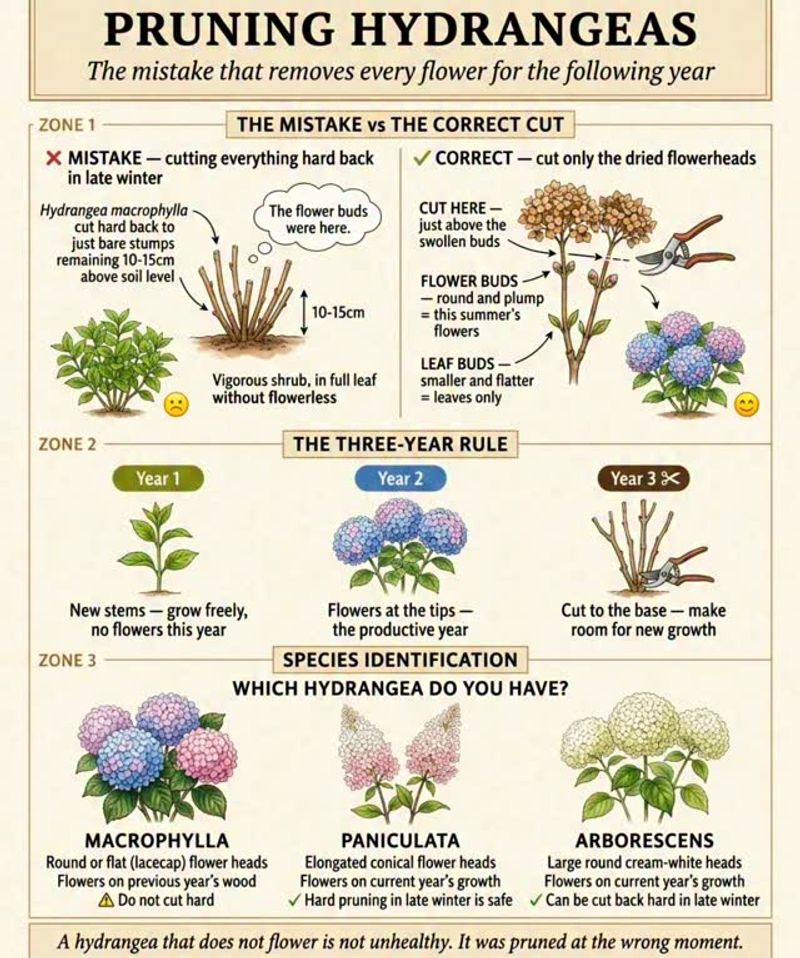
Here is the timing detail that the article’s title glosses over: a late-summer pruning cut made during last year’s growing season can absolutely contribute to weak or absent flowers this season. A cut made right now, in the current late August, cannot reach back in time and explain blooms that already failed.
For traditional bigleaf, oakleaf, and mountain hydrangeas, Penn State Extension’s species-by-species pruning breakdown makes clear that flower buds form on stems produced during the previous growing season. Those stems are what growers mean by “old wood,” and the term does not refer to visibly thick or aged-looking branches.
A perfectly healthy green stem from last summer is old wood, and flower buds may be sitting near its tip even when the plant looks completely normal.
Mississippi State Extension notes that next season’s buds can begin forming as early as August on bigleaf types. Any structural cut made after that point during the previous season had a real chance of removing those buds before they ever had a chance to open.
If your plant put out almost nothing this year, a late-season pruning decision from twelve months ago is one plausible explanation worth reviewing.
The reason late-August restraint matters right now is forward-looking, not backward. Penn State’s guide on why hydrangeas fail to bloom reinforces that protecting stems carrying developing buds is the realistic goal for the current season, not repairing flowers that have already come and gone.
Late August calls for restraint, not structural pruning
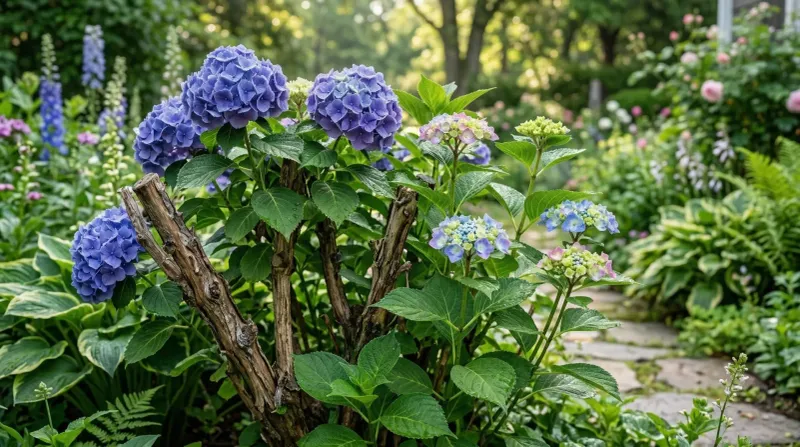
For an established bigleaf, oakleaf, or mountain hydrangea right now, the most protective thing you can do is leave the structural pruning alone. That means no shearing, no reshaping, no cutting stems down because the shrub looks oversized, and no removing healthy branches just because the plant has finished flowering for the season.
UGA Cooperative Extension’s bigleaf hydrangea publication advises against pruning bigleaf types after August 1 in the region, a guideline that reflects when bud formation is likely underway. The Missouri Botanical Garden’s pruning FAQ similarly cautions that late-season cuts on old-wood types risk eliminating next year’s flowers before they ever form.
Restraint at this point is not about giving up on the plant. Buds may already be developing on stems that look perfectly ordinary, and keeping those stems intact gives next year’s flowering cycle its best available chance.
What restraint cannot do is recreate buds that were already removed by a previous cut or killed by cold or drought earlier in the year.
Late-summer structural pruning is one preventable risk for traditional old-wood hydrangeas, not a guaranteed explanation for every weak bloom. Still, stopping that risk now is one of the most concrete actions available to a Southern gardener in August.
Keep cleanup cuts narrow and deadheading shallow
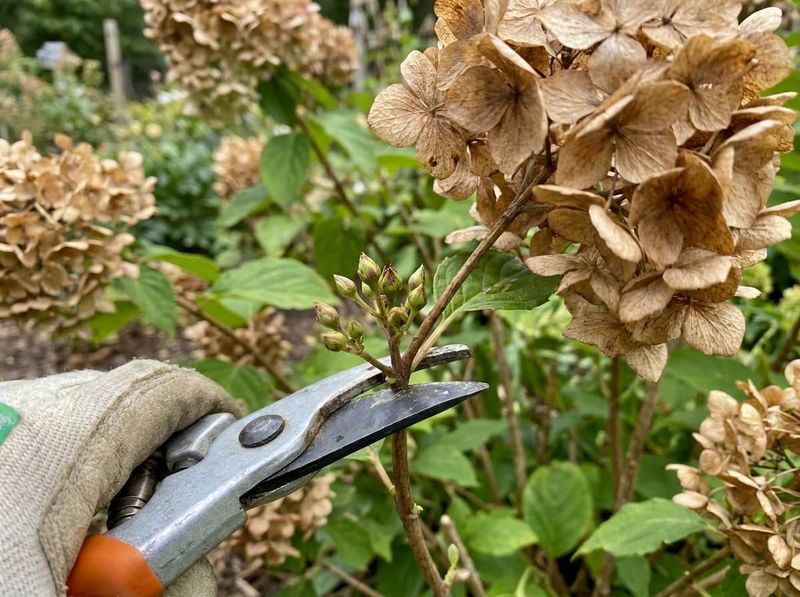
Stopping structural pruning does not mean the plant is completely off-limits. There are specific, narrow tasks that remain appropriate in late summer without putting next year’s buds at risk.
Dead, damaged, or visibly diseased wood can and should be removed whenever you spot it. The rule here is to cut only as far as necessary to reach clearly healthy tissue, then stop.
Missouri Botanical Garden’s pruning guidance supports this targeted approach, distinguishing necessary cleanup from the kind of reshaping that removes healthy stems carrying potential buds. Removing a clearly dead stub is not the same risk as cutting back a live stem.
Faded flower heads are a separate decision. The Royal Horticultural Society’s hydrangea pruning guide and UGA Extension’s bigleaf hydrangea publication both support leaving old flower heads in place until late winter or early spring rather than removing them now.
On mophead types especially, the dried heads can offer a small degree of physical protection to tender buds sitting just below them on the stem.
If you prefer a tidier look before winter, a shallow deadheading cut that removes only the spent bloom and a short section of stem is a reasonable option. The key is to avoid cutting well down the stem, where developing buds are most likely to be present.
Deadheading done carefully may improve appearance, but there is no reliable evidence that it consistently increases next year’s flower count on old-wood hydrangeas.
Check heat, water, shade, and nutrition before cutting again
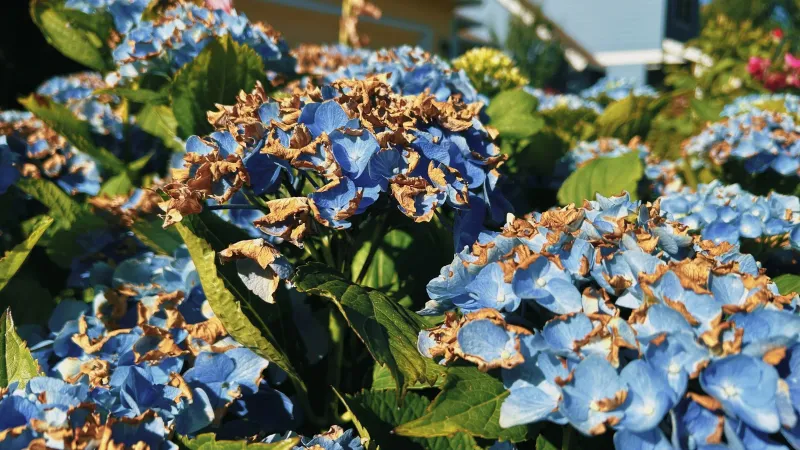
Pruning is one possible explanation for weak blooms, but it shares the list with several other common causes that are worth checking before you reach for the pruners next season. Southern gardeners, especially those in hotter parts of Texas and Florida, often deal with conditions that pruning alone cannot address.
Bigleaf hydrangeas generally perform best with morning sun and afternoon shade, particularly in regions where summer temperatures stay high well into evening. UGA Extension’s Carroll County Master Gardener pruning resource reinforces that exposure and site placement have a direct effect on hydrangea performance.
A plant in a hot, west-facing spot in central Texas or south Florida may struggle regardless of how carefully it is pruned.
Water and drainage deserve equal attention. UGA Cooperative Extension’s ornamental plants landscape guide recommends checking actual soil moisture rather than reacting to afternoon leaf wilt, which can be a normal heat response rather than a sign of drought.
Persistently soggy soil is also a problem, so drainage matters as much as irrigation frequency. A 2-3 inch layer of mulch helps moderate root-zone temperature and retain moisture without waterlogging.
Mississippi State Extension warns that excess nitrogen encourages leafy growth at the expense of flowers. Fertilizer is not a universal remedy for poor blooming, and applying a high-nitrogen product to a struggling plant may make foliage look lush while suppressing next season’s buds.
Penn State’s bloom-failure resource also lists winter cold injury, late-spring freezes, deer or rabbit browsing, excessive shade, plant age, and cultivar-site mismatch as additional causes of weak flowering that pruning changes cannot fix.
Use the correct pruning window next season
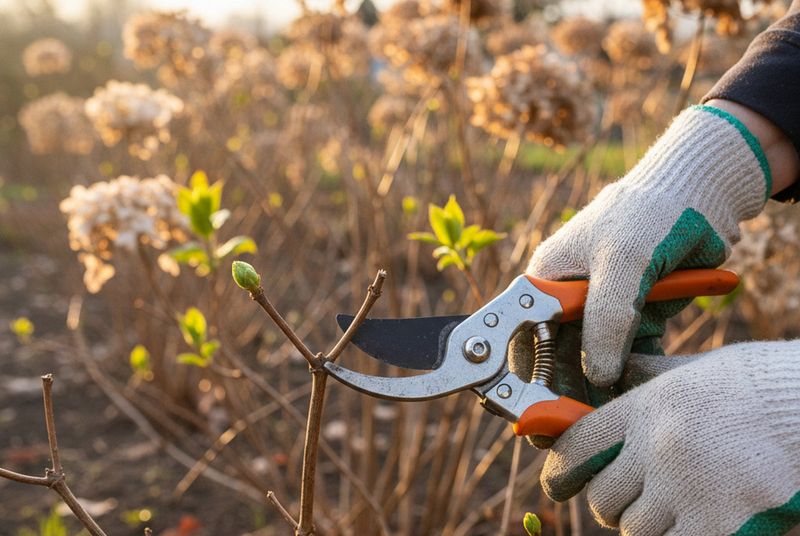
Once you know which hydrangea you have and what caused the weak bloom, building a repeatable pruning plan for the next growing cycle is straightforward. The timing window varies by type, so matching the schedule to the plant is what makes the difference.
For bigleaf and oakleaf hydrangeas, the right pruning window opens shortly after the plant finishes flowering, typically in early to mid summer for most Southern locations. Mississippi State Extension recommends removing roughly one-third of the oldest canes to the ground when a plant needs rejuvenation, but that selective renewal work belongs in the post-bloom window, not after buds have begun forming.
Cutting one stem at a time and checking the interior before removing more gives you control over how much old wood is affected.
Mountain hydrangeas follow a similar old-wood schedule and should be pruned with the same post-bloom timing as bigleaf types. Reblooming bigleaf cultivars have some flexibility because they can produce flowers on new growth after old-wood buds are lost, but University of Minnesota Extension notes that these cultivars remain vulnerable to heat, drought, insufficient light, and other site stresses that limit flowering regardless of pruning timing.
Smooth hydrangeas and panicle hydrangeas use a completely different schedule. Because they flower on current-season stems, UGA Extension confirms that late winter or early spring is the appropriate pruning time for these types, before new growth begins.
Hard pruning that would damage a bigleaf in August is actually the correct approach for a panicle or smooth hydrangea in February or March. Keeping those schedules straight, plant by plant, is the foundation of a reliable annual pruning routine.
Protect next year’s potential without promising a full show
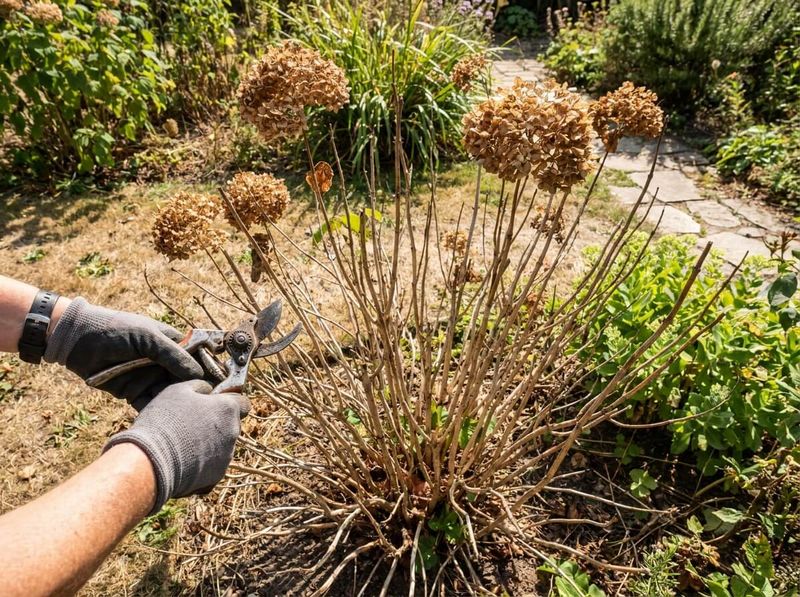
Pulling together everything above leads to a practical decision checklist for right now. Start by identifying your hydrangea type, because the entire approach hinges on whether your plant blooms on old wood or new wood.
For traditional bigleaf, oakleaf, and mountain hydrangeas, stop structural pruning immediately and leave healthy stems in place. Remove only wood that is clearly dead, damaged, or diseased, cutting just far enough to reach healthy tissue.
UGA Cooperative Extension and Mississippi State Extension both support maintaining adequate but not saturated moisture, keeping mulch in place, and ensuring afternoon shade protection, especially on hot or exposed Southern sites.
What this care cannot do is equally important to understand. Buds removed by a previous pruning cut are gone.
Buds killed by a late freeze, drought stress, or animal browsing cannot be restored by summer watering or mulch. Penn State Extension’s bloom-failure guide makes clear that weather injury, site mismatch, and cultivar limitations can all determine the next flowering season regardless of how carefully the plant is managed now.
The realistic goal for late August is to protect whatever buds may still be developing on healthy stems, give the plant stable conditions through the rest of summer, and enter next season with a cleaner diagnosis and a better-timed pruning plan. Good care right now preserves possibility; it does not manufacture it.