
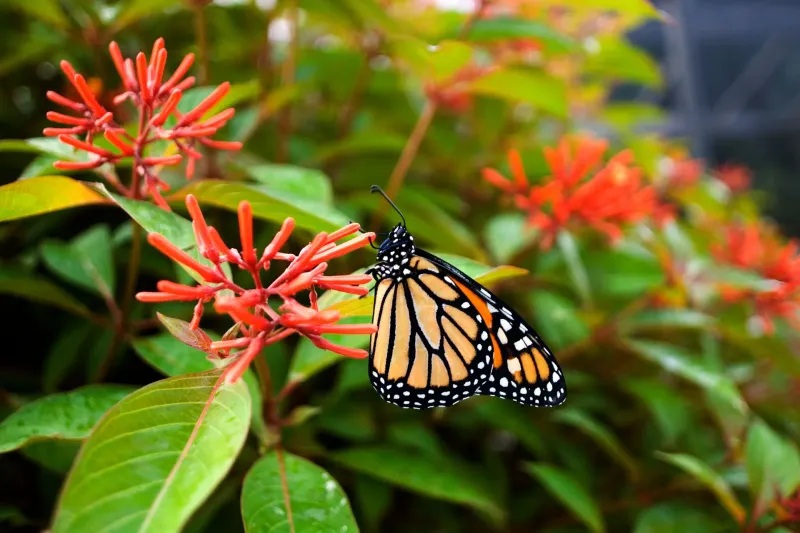
Pentas are pretty, but butterflies need more than quick sips of nectar. Florida native plants can feed adult butterflies, support caterpillars, and handle sandy soil, heat, rain, and salty breezes better than many bedding flowers.
Plant the right mix, and your yard becomes a place butterflies visit, lay eggs, and return to week after week.
1. Firebush
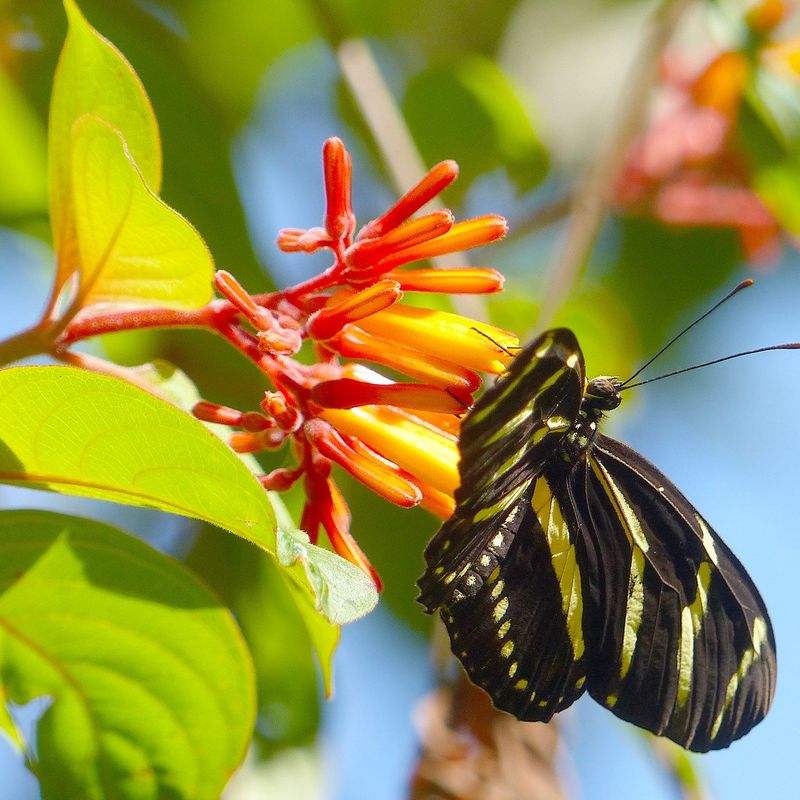
A hummingbird may spot firebush first, but butterflies are rarely far behind. The red-orange flowers look like tiny sparks at the end of each stem, and they keep coming through Florida’s long warm season.
Firebush earns its place because it gives adult butterflies a steady nectar stop without acting fussy about typical Florida problems. Once established, it handles sandy soil, full sun, heat, and short dry spells better than many annual flowers.
In South and Central Florida, it can grow into a large shrub, while colder parts of North Florida may see it die back and return when warm weather settles in.
For best results, plant firebush where it has room to stretch instead of crowding it against a walkway. It works well along a fence, near a patio corner, or at the back of a pollinator bed.
Prune lightly if needed, but avoid constant shearing because the fresh flowering tips are what keep butterflies interested.
Compared with pentas, firebush brings a wilder, more lasting habitat feel. It offers nectar over a long season and also produces berries that birds may use, giving one shrub more backyard value than a short-lived flower patch.
2. Tropical Sage
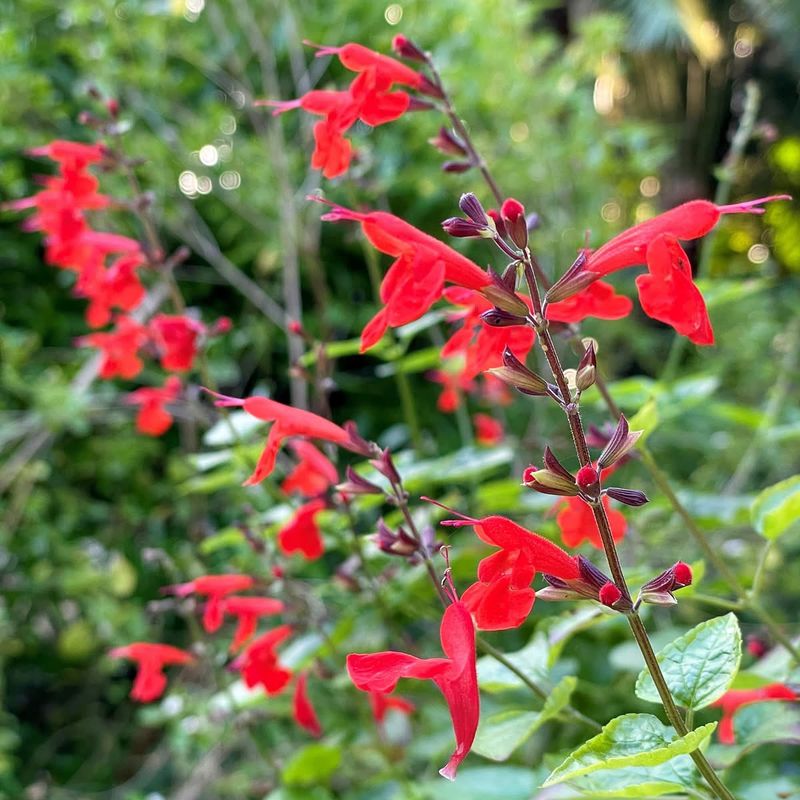
Small flowers can do big work, and tropical sage proves it in a quiet, charming way. Its red blooms are not as showy as a flat of pentas at the garden center, but butterflies learn to check them often.
Tropical sage is different from the bigger shrubs on this list because it fits into tight spaces. Tuck it along a porch bed, mailbox planting, herb garden edge, or between larger natives where you need color without bulk.
It can reseed in friendly little patches, which is helpful if you want a pollinator bed that fills in over time instead of needing constant replanting.
Florida gardeners also appreciate how easily it blends with other natives. Pair it with coreopsis, black-eyed Susan, or blue porterweed for a layered look that offers different flower shapes.
That variety matters because butterflies do not all feed the same way, and a mixed bed keeps the buffet open for more species.
Give tropical sage sun to part sun and well-drained soil. In very dry stretches, a little water keeps it blooming better, but it is still far less needy than many tender bedding plants.
Leave some seed heads if you like a natural look and want the planting to refresh itself.
3. Blue Porterweed
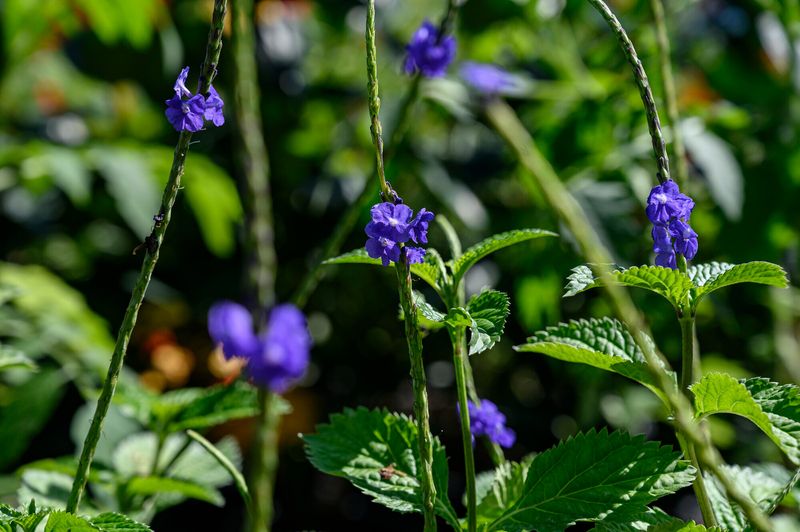
Watch a butterfly work a blue porterweed spike and you will see why gardeners get hooked on it. The flowers open along thin stems like little purple-blue buttons, and pollinators seem to treat them like a favorite neighborhood snack bar.
Blue porterweed stands out because it keeps the action close to eye level in small gardens. It is lower and looser than firebush, so it can soften the front of a border, spill near a path, or fill a sunny pocket where a stiff shrub would look awkward.
In warm parts of Florida, it may bloom for much of the year when conditions are kind.
Use the native blue porterweed, Stachytarpheta jamaicensis, rather than larger nonnative porterweeds sometimes sold in garden centers. The native type has a more relaxed, ground-hugging habit that suits Florida wildlife gardens beautifully.
Checking the botanical name before buying can save you from bringing home a look-alike that behaves differently.
Plant it in sun for the best flowering, and avoid overwatering once it is established. Sandy soil is usually fine as long as the spot drains well.
If stems get leggy, trim them back lightly to encourage fresh growth and more bloom points for visiting butterflies.
4. Scorpiontail
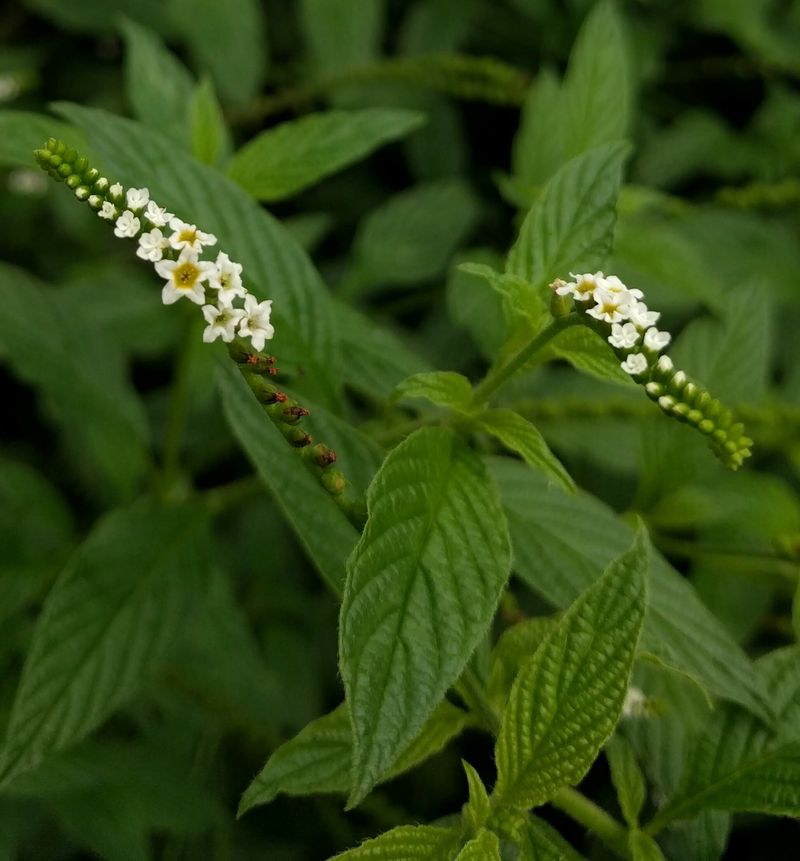
The name sounds a little dramatic, but scorpiontail is a sweet, hardworking wildflower. Its curled flower clusters look like a tiny tail, slowly unfurling as new white blooms open.
Scorpiontail belongs on this list because it shines in places where neat bedding plants often struggle. Hot, sandy, open areas suit it well, especially in natural-style beds, coastal yards, and low-water pollinator patches.
The flowers attract smaller butterflies and other pollinators that may be overlooked when gardeners focus only on big, flashy blooms.
Rather than behaving like a formal border plant, scorpiontail brings a soft meadow look. That makes it useful around mailbox beds, driveway edges, and sunny side yards where you want life and movement without heavy maintenance.
It can reseed where it is happy, so give it room to mingle instead of expecting every plant to stay in a perfect little circle.
Florida yards often have fast-draining soil, and scorpiontail uses that to its advantage. Avoid rich, soggy conditions, which can make many dry-site natives unhappy.
A light hand with fertilizer is best because too much feeding can push leafy growth at the expense of flowers.
Pentas may draw attention fast, but scorpiontail helps build a more complete pollinator scene. It adds texture, supports smaller visitors, and keeps a Florida-native bed from looking like every other yard on the block.
5. Swamp Milkweed
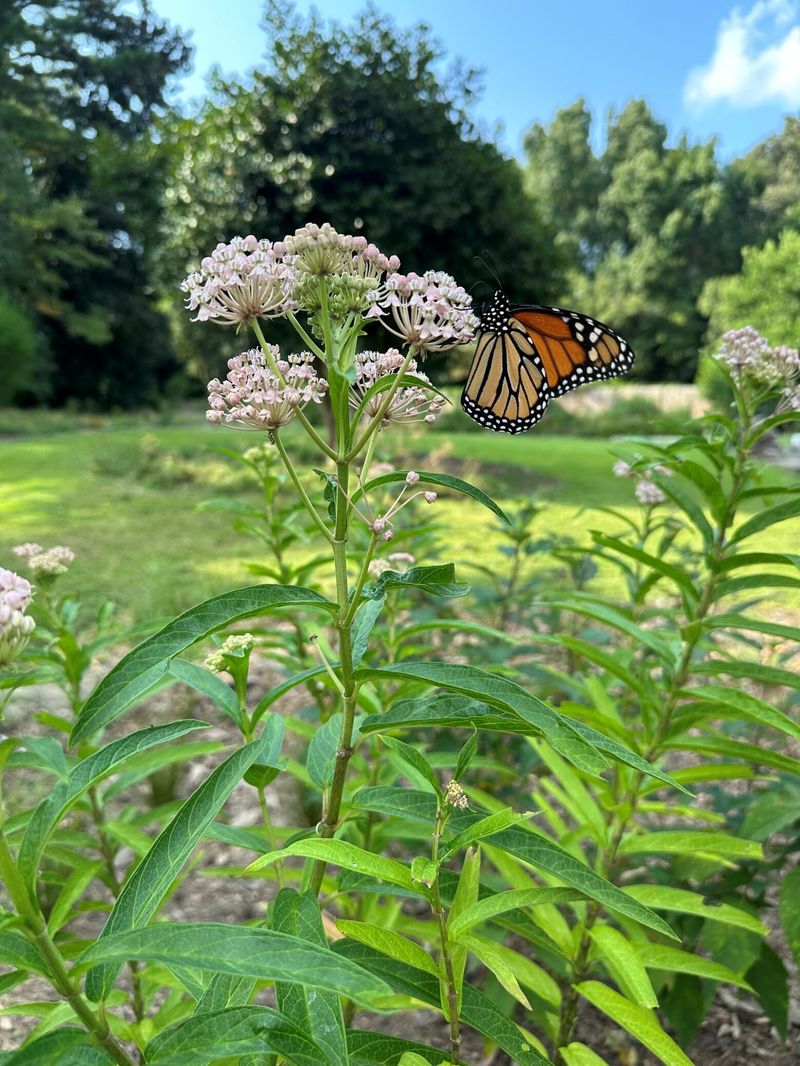
Monarchs do not just need flowers, they need milkweed. Swamp milkweed gives them both nectar and leaves that their caterpillars can eat, which is the key difference between a butterfly visit and a butterfly nursery.
In Florida gardens, swamp milkweed is especially useful for rain gardens, low spots, pond edges, and beds that stay a little moister than the rest of the yard. Many homes have areas that collect water after heavy storms, and this plant can turn one of those tricky spaces into habitat.
It prefers sun and consistent moisture, though it still needs a site that does not stay stagnant for long periods.
Pink flower clusters bring adult butterflies, while the foliage supports monarch caterpillars. Do not panic if the leaves get chewed.
That is part of the point, and a bare-looking milkweed often means it has done its job.
Choose Florida-appropriate native milkweed when possible, and avoid treating it with pesticides. Even products used for other pests can harm caterpillars or reduce the value of the plant.
If aphids show up, a strong spray of water or patient tolerance is often better than reaching for chemicals.
Compared with pentas, swamp milkweed keeps butterflies around longer because it supports a full life cycle. Nectar brings them in, but host plants give them a reason to stay.
6. Coontie
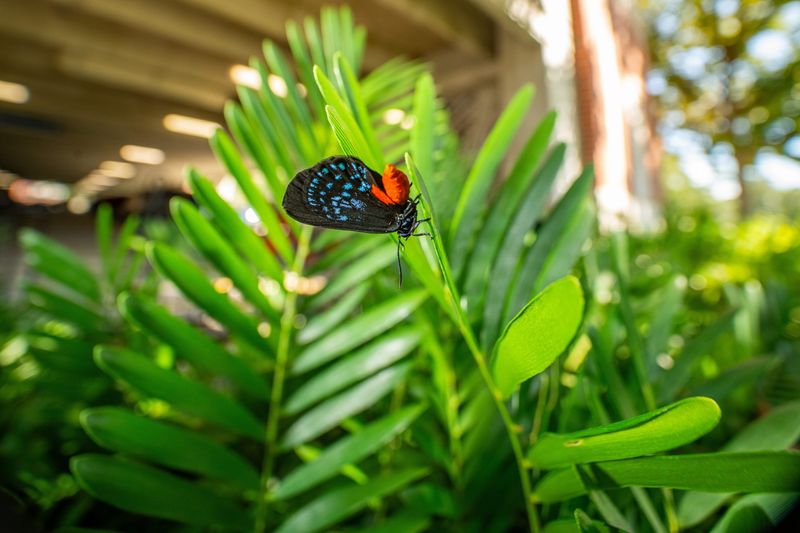
A plant can look tidy enough for a front entry and still be a butterfly powerhouse. Coontie does exactly that, with glossy palm-like fronds and a tough attitude toward Florida conditions.
Coontie is not famous for nectar. Its real magic is as the host plant for the atala butterfly, a striking black butterfly with bright blue spots and a red-orange body.
For gardeners who want something more exciting than another flower bed, coontie can help support one of Florida’s most memorable butterfly comeback stories.
This native cycad works well in foundation beds, under high tree shade, along walkways, and in low-maintenance landscapes. It tolerates sun to shade, though leaf color and growth may vary by exposure.
Once established, it is usually drought tolerant, which makes it a smart match for sandy soils and water-conscious yards.
Atala caterpillars may chew the foliage, sometimes heavily. Healthy coontie usually rebounds, so try to view the damage as wildlife activity rather than failure.
Planting several coonties together spreads out the feeding and makes the landscape look fuller.
Because coontie is slow growing, buy the right size for the space and be patient. Pentas can offer fast color, but coontie adds structure year-round and gives a special Florida butterfly a plant it truly depends on.
7. Wild Lime
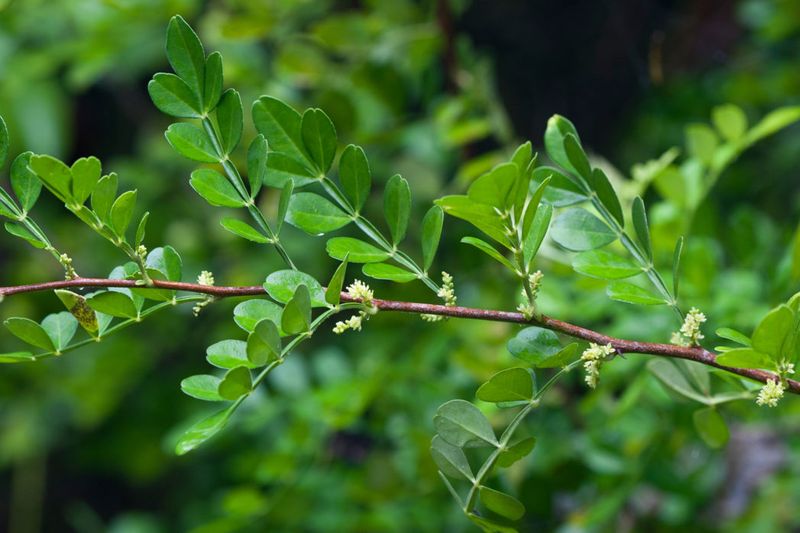
If you have ever watched a giant swallowtail float through a yard, you know it feels almost too elegant to be real. Wild lime helps invite that moment by giving this butterfly a native host plant for its young.
Wild lime is a thorny shrub or small tree in the citrus family, and that thorniness is part of its usefulness. It can become a wildlife-friendly hedge, a back-of-the-border screen, or a protective planting along a property edge where you do not need constant access.
Small flowers provide nectar for pollinators, while the leaves feed giant swallowtail caterpillars.
The caterpillars have a funny defense trick: they look a lot like bird droppings when young. It is not glamorous, but it helps them avoid becoming lunch.
For families or curious gardeners, that odd little detail can make wild lime one of the most interesting plants in the yard.
Give wild lime sun to part sun and well-drained soil. It can handle many Florida landscapes once established, but place it thoughtfully because the spines are real.
Keep it away from narrow paths, children’s play zones, and spots where pets race through.
Pentas may win for instant bedding color, but wild lime brings drama, structure, flowers, and butterfly life-cycle support. In a Florida native garden, that combination is hard to beat.