
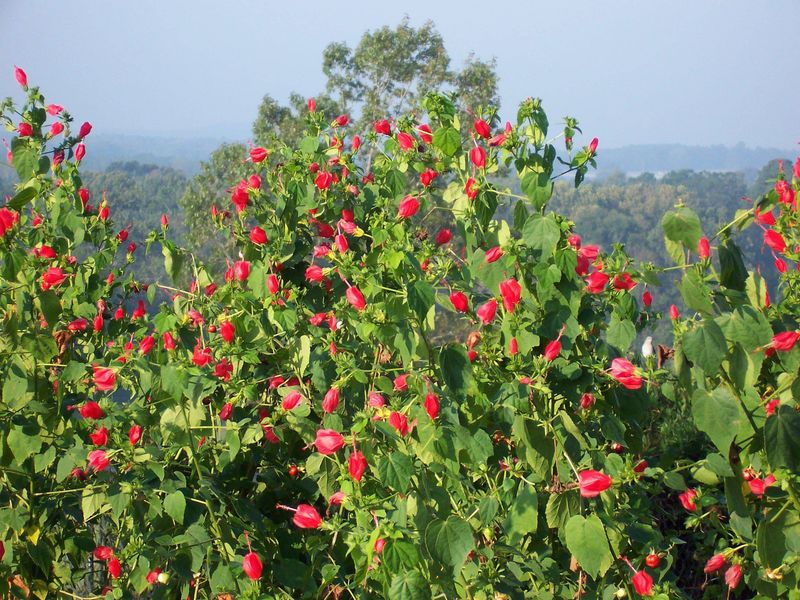
When summer temperatures climb past the point where most garden plants give up, Texas gardeners need a reliable bloomer that does not quit. Turk’s cap – known botanically as Malvaviscus arboreus var. drummondii – is a strong candidate for that job, producing bright red, hibiscus-like flowers through the hottest and driest stretches of a Texas summer.
This Texas-native perennial shrub earns its place not because it delivers a nonstop wall of color in every yard, but because it keeps cycling through blooms when conditions are genuinely tough. Read on to learn what Turk’s cap actually delivers, where it performs best, and how to set it up for the most dependable summer display possible.
A Better Summer Promise: Turk’s Cap
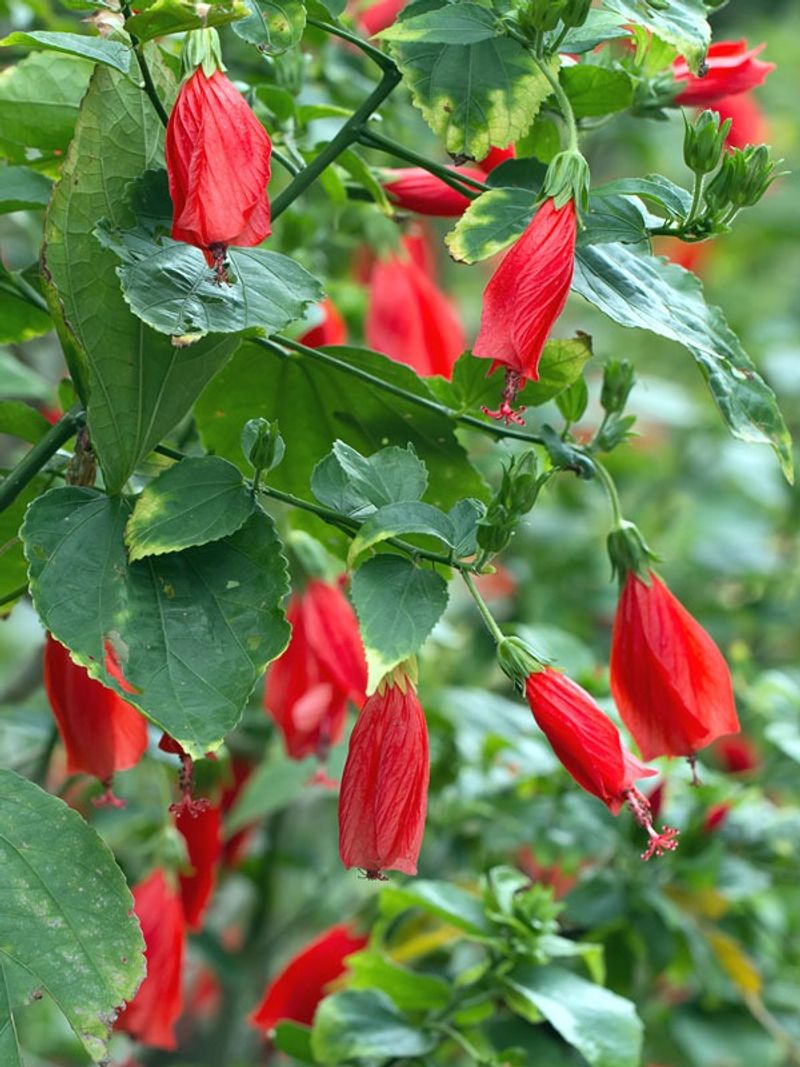
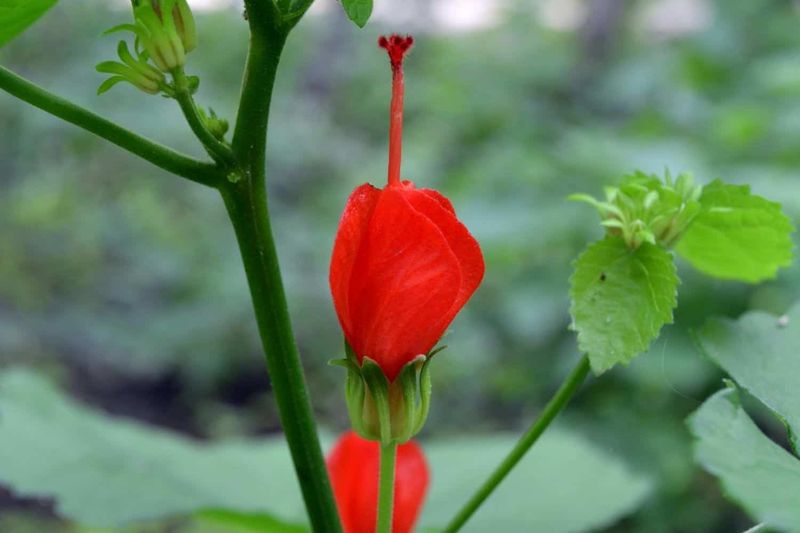
Turk’s cap goes by several names – Texas mallow, sleeping hibiscus, and its botanical name Malvaviscus arboreus var. drummondii – but the flower itself is unmistakable. Each bloom stays partly closed, with bright red petals twisted together into a shape that genuinely resembles a Turkish turban.
The staminal column pokes out from the center, giving the flower a distinctive, almost exotic silhouette that stands apart from a fully open hibiscus.
What makes this plant worth talking about is where and when it blooms. The University of Texas Wildflowers of Texas database documents Turk’s cap as a showy woodland flower that may bloom nearly year-round, and specifically notes that it can remain in flower during the driest, hottest portions of summer.
That is a meaningful observation for any Texas gardener watching other plants wilt and stall by July.
The plant is native across eastern, central, coastal, north-central, and southern Texas, so it has deep regional roots rather than being a transplanted ornamental pushed into a climate it was not built for. Its red-flowered form is the classic landscape choice, though pink and white cultivars also exist – a detail that matters when you are shopping specifically for that bold summer color.
One correction to the original headline is worth making upfront: Turk’s cap can produce repeated hot-weather color from roughly late spring through fall, but Texas Parks and Wildlife magazine coverage of the plant makes clear that bloom performance varies by site, moisture, and conditions. Reliable and repeated is an accurate promise.
Nonstop, fire-engine-red, and guaranteed are not.
What Its Summer Blooming Actually Looks Like
Understanding what Turk’s cap actually delivers through summer requires separating two different things: what the sources document and what a gardener might imagine when they read “blooms all summer.” The University of Texas observation is specific and useful – this plant has been documented flowering during the hottest and driest parts of summer, when many other plants have already stalled or shut down. That is the strongest evidence behind the heat-survival angle.
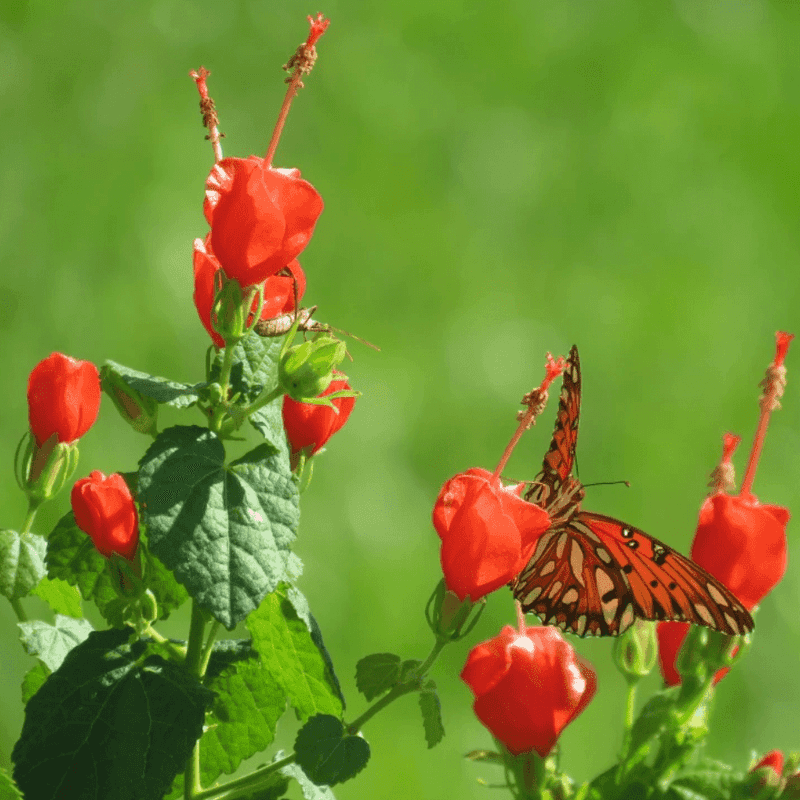
The reported flowering window runs from roughly May through November, according to Texas plant references. Texas Parks and Wildlife magazine’s profile of Turk’s cap places it among plants associated with moist woodlands and describes it as producing blooms that attract both hummingbirds and butterflies well into the warm season.
That range is real, but it should be read as a reported window across many sites and years, not a personal guarantee for every garden.
Individual Turk’s cap flowers are short-lived, opening and dropping within a day or two. The plant keeps producing new buds, which is what creates the impression of continuous color.
How many buds open at any given time depends on moisture levels, how well-established the plant is, how much light it receives, and what the regional conditions are like that particular summer. A young plant in its first season will likely produce noticeably less color than a well-rooted, established specimen.
During severe drought, the leaves may wilt even while the plant continues to push out flowers. That detail is worth knowing before planting: Turk’s cap can keep blooming under difficult conditions, but it is not immune to the effects of heat and water stress.
Adequate moisture during establishment and reasonable soil moisture through summer will support the most dependable flowering performance.
Use Shade to Protect Its Summer Display
One of Turk’s cap’s most practical qualities is its comfort in shade – a feature that separates it from most other red-flowering summer plants. While many bold-colored bloomers demand full sun to perform, Texas SmartScape lists Turk’s cap as suited to partial shade, and multiple Texas references identify shade or part shade as a preferred landscape position rather than a compromise.
For gardeners dealing with overheated, empty beds under trees or along north- and east-facing foundations, that shade tolerance is a genuine solution. Woodland edges, shaded mixed borders, pollinator gardens tucked beneath a canopy, and foundation plantings that receive afternoon protection are all reasonable placements.
Texas Parks and Wildlife magazine associates Turk’s cap with moist woodlands and stream edges, reinforcing that filtered light and some canopy cover reflect its natural habitat rather than a suboptimal workaround.
Full sun can support Turk’s cap, and in some settings the plant will flower well in an exposed location. The problem tends to show up in the foliage rather than the flowers.
Texas Prairie’s nine-natives-for-shade guide notes that intense exposure combined with limited moisture can cause the leaves to become rougher, smaller, darker, and puckered. A plant that continues flowering but looks battered from the outside is a poor trade when afternoon shade could have protected both the foliage and the overall display.
The practical recommendation: site Turk’s cap where it receives morning sun and afternoon shade, or where the light is consistently dappled throughout the day. That placement usually produces the best combination of flowering performance and healthy, attractive foliage through the hardest weeks of a Texas summer.
Water It Early and Plant It in Drained Soil
Drought tolerance is a real feature of established Turk’s cap, but it does not mean the plant can be installed and forgotten. Getting a new specimen through its first season requires consistent irrigation while the root system develops.
Texas SmartScape classifies Turk’s cap with a low-to-medium water demand once established, which is a meaningful distinction from zero-water-needed. The establishment phase is the most vulnerable window, and skipping regular irrigation during that period risks a plant that struggles through summer rather than thriving.
Soil choice matters as much as watering frequency. Turk’s cap performs best in reasonably moist, well-drained soil.
Texas Parks and Wildlife magazine connects the plant’s natural habitat with moist woodlands, stream edges, and low grounds – conditions that point to soil retaining some moisture without staying waterlogged. Heavy clay that drains poorly, or sandy soil that dries out within hours of rain, will both make it harder for the plant to sustain consistent flowering through the summer.
Once Turk’s cap has been in the ground for a full growing season and developed a strong root network, its water needs drop considerably. An established plant can carry through stretches of dry weather that would shut down less-adapted ornamentals.
University of Texas documentation notes that it may flower even while its leaves are wilted during extreme drought – a sign of resilience, though not an argument for withholding water when the plant is clearly stressed.
The most reliable approach is to water deeply and consistently during the first growing season, then back off gradually as the plant matures. During prolonged dry spells in subsequent summers, supplemental irrigation – especially at the root zone rather than overhead – will support better foliage condition and more dependable flowering.
Local soil type, regional rainfall patterns, sun exposure, and plant age all shift what “enough water” means in practice.
Plan for a Large, Spreading Native
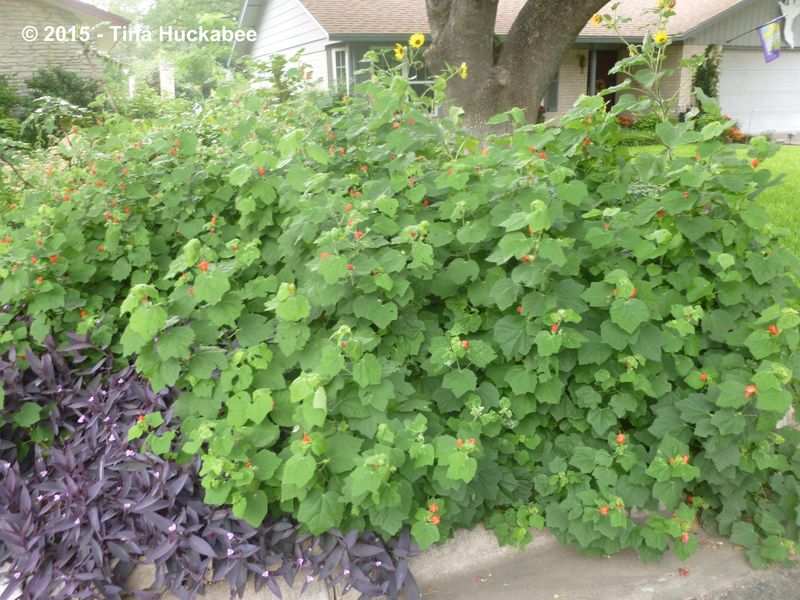
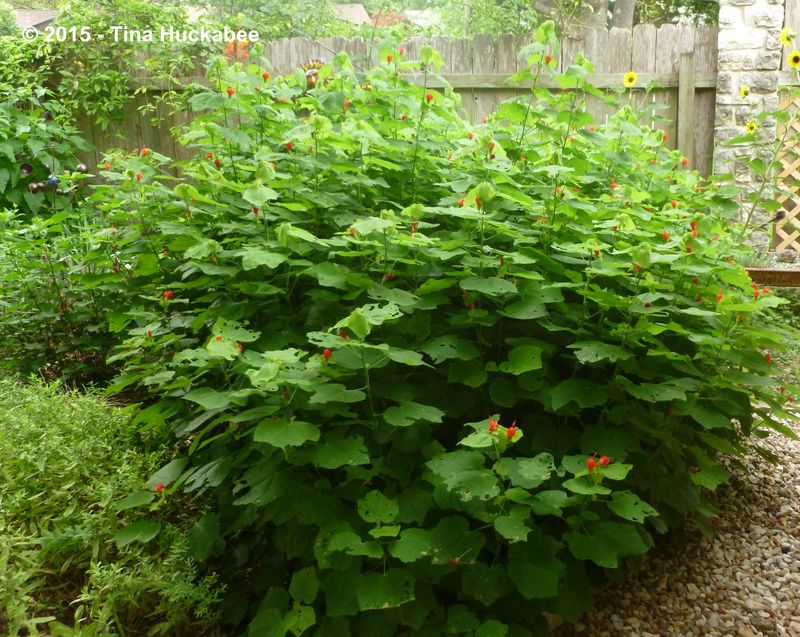
Turk’s cap is not a tidy, compact accent plant. A typical specimen reaches 3 to 6 feet in height, and University of Texas records note that favorable conditions can push plants considerably beyond that range.
In rich soil with adequate moisture and protection from extreme exposure, some plants climb toward 8 to 10 feet. Texas SmartScape lists a spread of roughly 2 to 4 feet, but established colonies can occupy considerably more ground over time.
The plant also spreads. Turk’s cap can form colonies by sending up new stems from the root system, and in a garden bed with rich soil and good moisture, it will gradually expand its footprint.
Texas Parks and Wildlife wildlife management guidance includes Turk’s cap among plants with notable habitat value precisely because of its ability to form substantial colonies – a quality that benefits wildlife but requires a gardener to plan accordingly.
Back-of-border placements, informal screens, roomy mixed beds, and open woodland edges are all appropriate settings for a plant this size. Squeezing it into a small, formal bed near a front walkway is likely to create a maintenance problem within two or three seasons.
Pruning is a practical tool for managing both size and plant health. University of California Agriculture and Natural Resources guidance on Turk’s cap supports a late-winter or early-spring hard cutback as an effective way to control the plant’s dimensions and encourage fresh, vigorous growth before the blooming season begins.
Cutting back to near ground level in late winter will not harm an established plant; it typically responds with strong new stems and a full season of flowering from a rejuvenated base.
Add Habitat Alongside Red Color
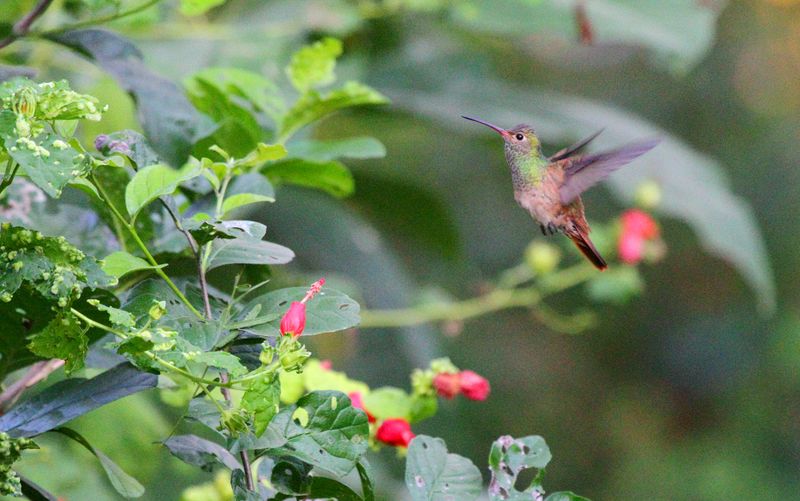
Red flowers and hummingbirds have a well-documented relationship, and Turk’s cap sits at the center of it for Texas gardens. Texas Parks and Wildlife wildlife management documentation lists Turk’s cap among plants providing nectar for hummingbirds, and the plant’s long blooming window overlaps with both the summer resident season and fall migration.
That timing makes it more than just a pretty addition to a border – it functions as a reliable fuel stop during a period when hummingbird traffic through Texas is at its highest.
Butterflies and moths use the flowers as well, drawn by the same nectar that attracts hummingbirds. Texas Parks and Wildlife’s hummingbird resources point to native flowering plants as critical components of a habitat-friendly yard, and Turk’s cap consistently appears in that context.
Planting it alongside other native bloomers with staggered flowering periods creates a more complete pollinator resource through the season rather than a single-species spike.
The red berries that follow the flowers bring a second wave of wildlife activity. Birds and small mammals eat the fruit, which means Turk’s cap contributes to the yard’s habitat value well after the primary bloom season winds down in fall.
The berries are visually distinctive – small, round, and bright red – and they add color to the plant even as temperatures cool.
One firm note: the fruit’s wildlife value should not be translated into casual eating advice for people or pets. Some sources describe the berries as edible, but the article’s focus is on ornamental use and documented wildlife benefit.
Leave the foraging to the birds and mammals that the plant was built to feed, and treat the fruit as a garden feature rather than a kitchen ingredient.
Check the Region and the Flower Color
Turk’s cap is native across a broad swath of Texas – eastern, central, coastal, north-central, and southern regions all fall within its documented range. University of Texas Wildflowers of Texas records confirm its presence across multiple ecoregions, and Texas Parks and Wildlife includes it in plant guidance for both the Edwards Plateau and South Texas Brush Country.
That is a wide footprint, but it does not make the plant equally well-suited to every corner of the state. Arid western Texas presents different soil, rainfall, and temperature conditions than the plant’s core native range, and gardeners in those areas should research local performance before committing to a large planting.
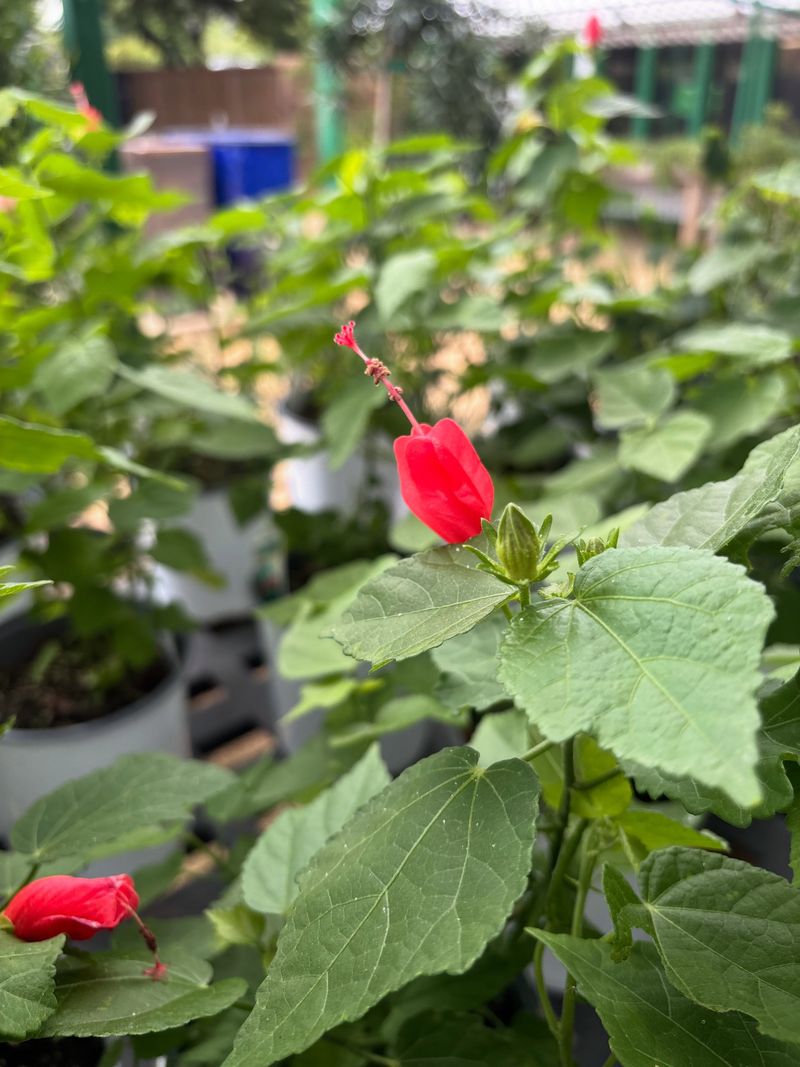
Texas Prairie’s native shade garden guide also flags a detail that matters at the nursery: Turk’s cap comes in red, pink, and white-flowered forms. All three are available in Texas garden centers, and they do not always carry obvious labeling.
A gardener expecting the classic red display needs to verify the flower color of any plant before purchasing. Asking a staff member to confirm the cultivar, or waiting to see a plant in bloom before buying, prevents the frustration of installing a pink-flowered form in a bed designed around red summer color.
Firebush, Hamelia patens, sometimes appears as an alternative recommendation for red summer flowers in Texas. It is a vigorous, heat-loving plant with tubular orange-red blooms that attract hummingbirds, and it performs well in warm climates.
However, UF/IFAS Extension documentation on firebush identifies it primarily as a Florida native, and Texas guidance generally treats it as a tender perennial or annual from Central Texas northward – meaning it may not return reliably after a hard freeze the way an established Turk’s cap will.
For a plant specifically described as a native Texas candidate for red summer flowers, Turk’s cap is the better-supported choice. Firebush can be a useful addition to a warm Texas garden, but it does not carry the same native-range credentials statewide, and its cold hardiness limits its reliability in northern parts of the state.
Texas Parks and Wildlife ecoregion plant guidance consistently points to Turk’s cap, not firebush, as a regionally native summer bloomer.
Choose Turk’s Cap for Resilient, Not Guaranteed, Color
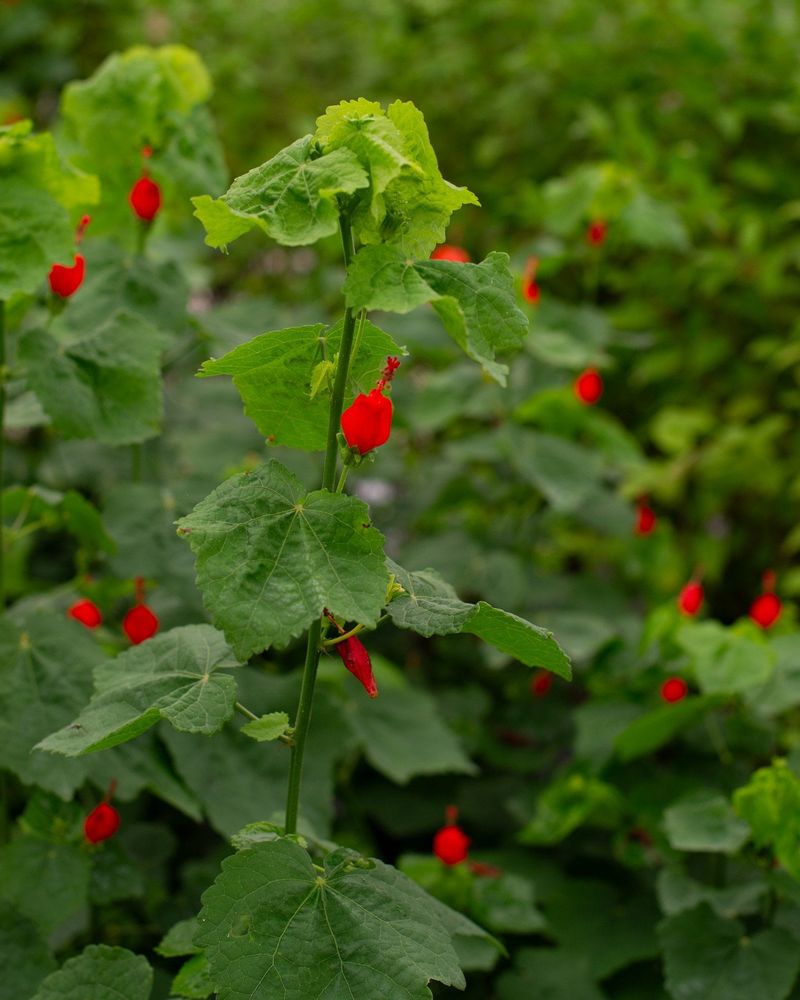
Putting Turk’s cap to work in a Texas summer garden comes down to a handful of concrete decisions. Start by confirming that the plant you purchase carries red flowers – ask at the nursery or wait for a bloom before buying.
Site it where it receives morning sun and afternoon protection, or in consistently dappled shade along a woodland edge or foundation bed. University of Texas documentation supports it as a showy native that can flower through the driest, hottest portions of summer, but shade and adequate moisture will give that performance the best possible conditions.
Water consistently through the first growing season, then pull back gradually as the plant establishes. Texas SmartScape’s low-to-medium water classification reflects what an established plant needs, not a newly installed one.
Allow room for a mature spread of several feet, and plan a late-winter or early-spring hard pruning in years when the plant needs to be kept in bounds. UC Agriculture and Natural Resources pruning guidance confirms that a hard cutback before new growth emerges rejuvenates the plant without setting it back.
The honest takeaway: Turk’s cap can keep a Texas garden supplied with red flowers through genuinely difficult summer conditions and often well into fall, but it works best as a resilient bloomer rather than a guaranteed spectacle. A plant that keeps cycling through flowers when the thermometer is miserable is worth more than one that looks perfect in April and disappears by July.