
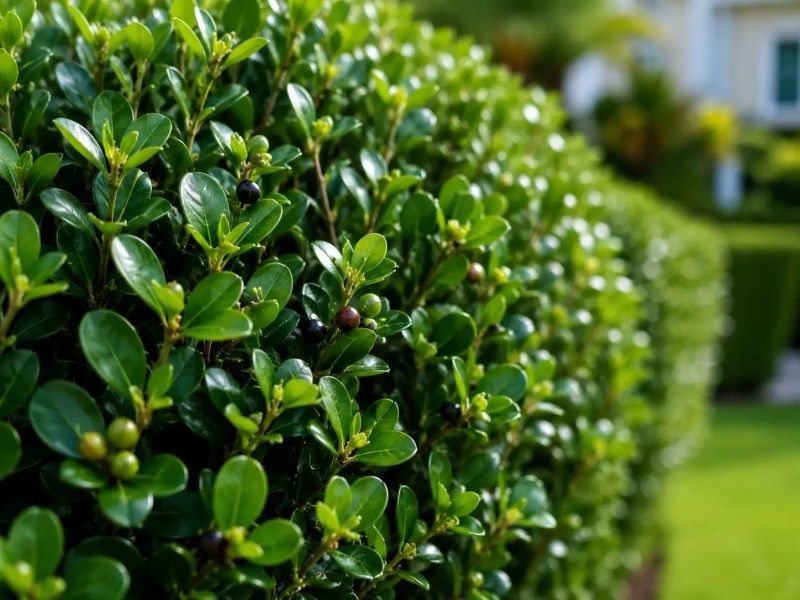
A bare fence line and a patchy lawn can make the whole yard feel unfinished. Florida native shrubs can solve both problems with living color, thicker greenery, and better habitat for birds and pollinators.
Many handle sandy soil, heat, storms, and short dry spells better than fussy imports. Pick the right shrubs, and your yard can look fuller while doing less work.
1. Simpson’s Stopper
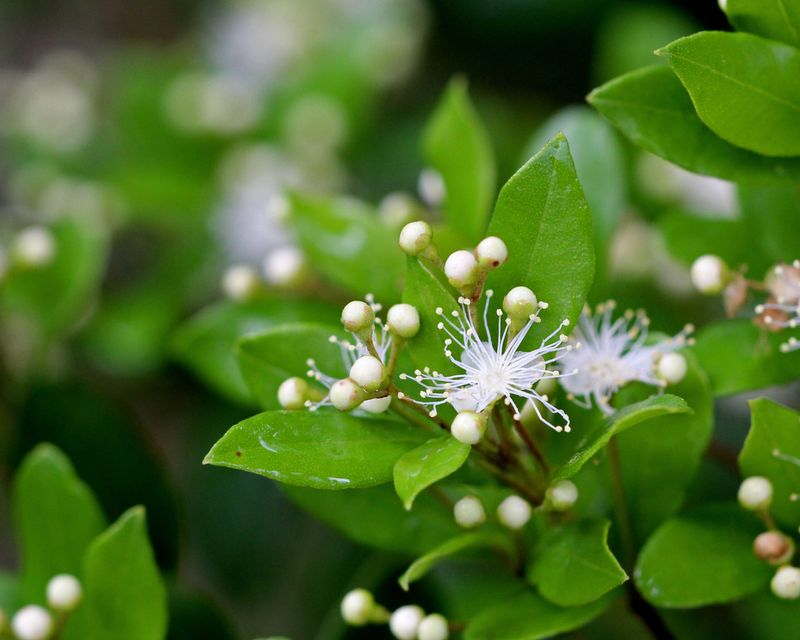
A row of Simpson’s stopper can feel like the neat neighbor who always looks put together, even in August. Its small, glossy leaves create a tidy screen without the stiff, wall-like look of some formal hedges.
For Florida yards with thin grass near a property line, this shrub earns its spot because it can be shaped into a hedge or left a little looser for a softer, cottage-style edge. It usually grows dense enough to block views from the street or next door, especially when planted in a staggered row.
White spring flowers attract pollinators, and the red-orange berries are useful for birds. That wildlife value makes it more than a green barrier, which matters if you want privacy without turning the yard into a blank wall.
Simpson’s stopper handles sun to part shade and is well suited to many Central and South Florida landscapes. Give new plants regular water while they settle in, then prune lightly after flowering to keep the base full instead of bare.
2. Walter’s Viburnum
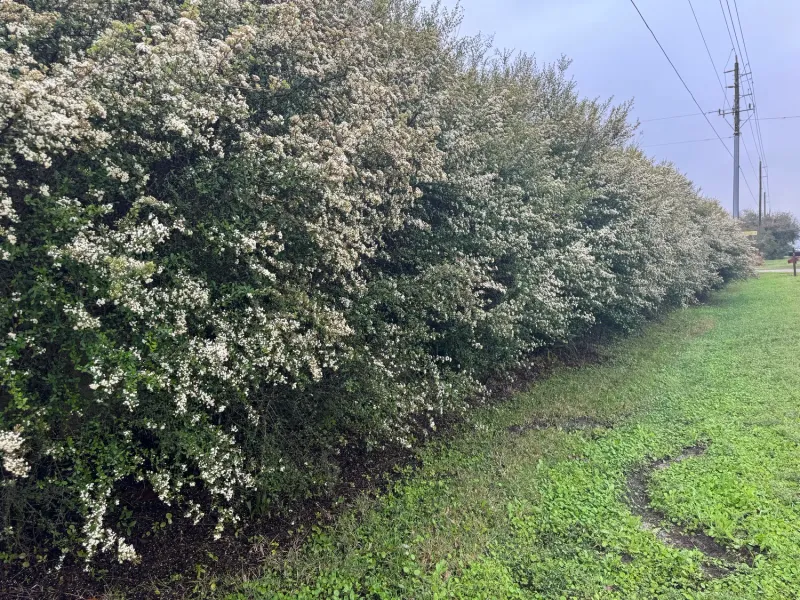
If your dream is a green screen that looks polished from the patio, Walter’s viburnum is one of the strongest Florida-native choices. It has the presence of a classic hedge, but it also brings spring blooms and bird-friendly cover.
Gardeners often choose it where turf struggles along fences, under light tree shade, or beside driveways. Instead of reseeding the same weak grass again and again, you can widen the bed and let Walter’s viburnum create a fuller backdrop.
Different forms are available, from taller screening types to compact selections, so check the mature size before buying. The taller forms can help replace a privacy fence visually, while dwarf types work better as lower foundation shrubs or layered fillers in front of larger natives.
In much of Florida, Walter’s viburnum tolerates heat, humidity, and average sandy soil once established. A simple mulch ring helps protect shallow roots, reduces mowing around the plant, and makes patchy lawn edges look intentional rather than neglected.
3. Yaupon Holly
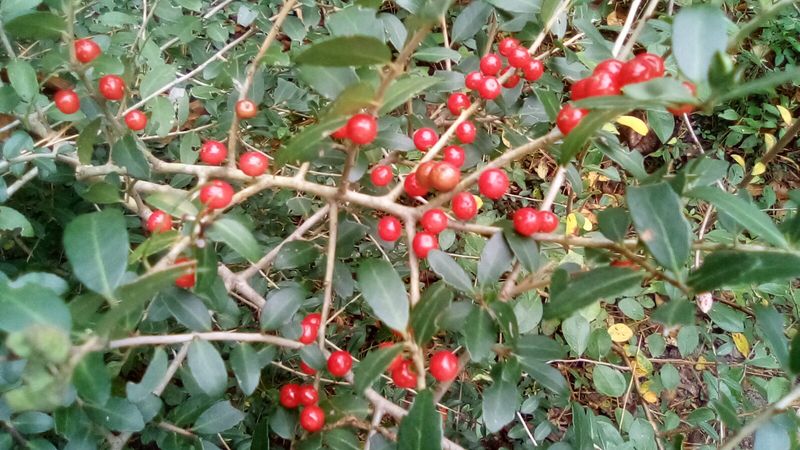
Birds seem to know where the good hiding places are, and a thick yaupon holly hedge can become one of their favorite stops. The small evergreen leaves make a fine-textured screen that suits both neat suburban yards and more relaxed coastal gardens.
Yaupon holly is especially helpful where you want height without huge, heavy leaves. It can be pruned into a narrow hedge along a side yard, shaped near an entry walk, or allowed to grow more naturally for a softer privacy buffer.
Female plants produce red berries when a male plant is nearby, adding winter color and food for wildlife. That seasonal interest helps the shrub carry the landscape during months when many flowering plants are quiet.
Florida gardeners also appreciate its toughness. Yaupon holly handles sun, part shade, sandy soil, salt spray in some coastal settings, and periodic dry spells once established.
Use it to replace thin turf near sidewalks or fence corners where mower traffic keeps tearing up the grass. Plant in a loose zigzag pattern rather than one tight line, and the screen will look deeper, fuller, and more natural as it matures.
4. Wax Myrtle
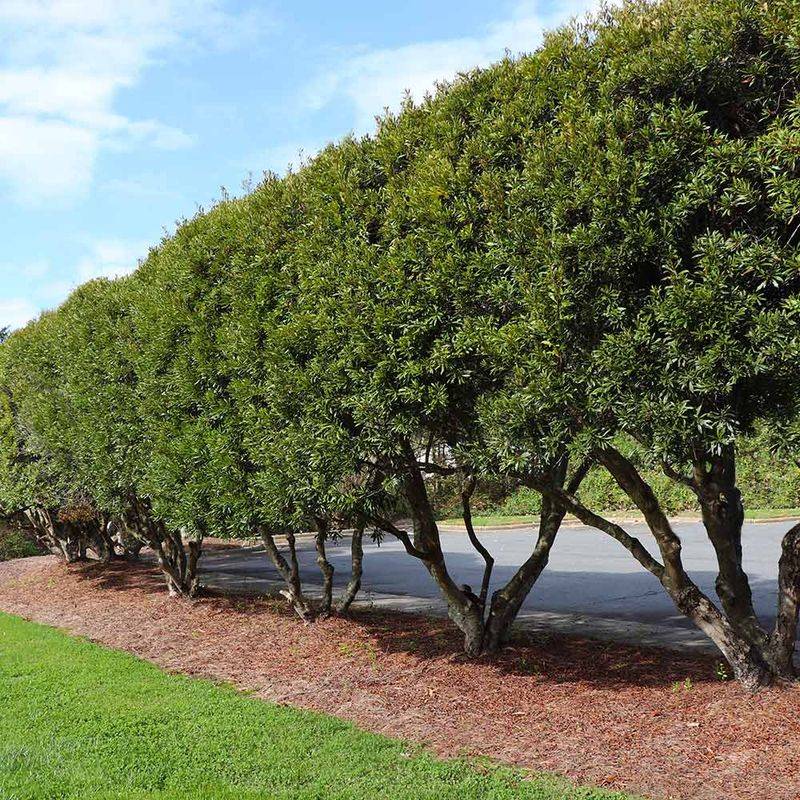
Need coverage before the neighbor’s second-story window becomes your whole view? Wax myrtle is often the fast mover in a Florida native shrub lineup, bringing height and screening while many slower plants are still settling in.
Its loose, airy foliage gives privacy without making the yard feel boxed in. That makes it useful along long fence lines, back corners, utility areas, and open stretches where weak grass bakes in full sun.
Wax myrtle can grow into a large shrub or small tree, so give it room. Crowding it into a tiny bed usually leads to constant pruning, but spacing it well lets the plant become a breezy, natural barrier.
The fragrant leaves are a small bonus when brushed or trimmed, and the berries can support birds. In damp spots, it can be especially useful because it tolerates more moisture than many shrubs, though established plants also handle ordinary sandy soils.
For patchy lawn repair, think in curves instead of narrow strips. Convert a wider section of poor turf into a mulched native bed, place wax myrtle toward the back, and add lower shrubs or groundcovers in front for a finished layered look.
5. Firebush
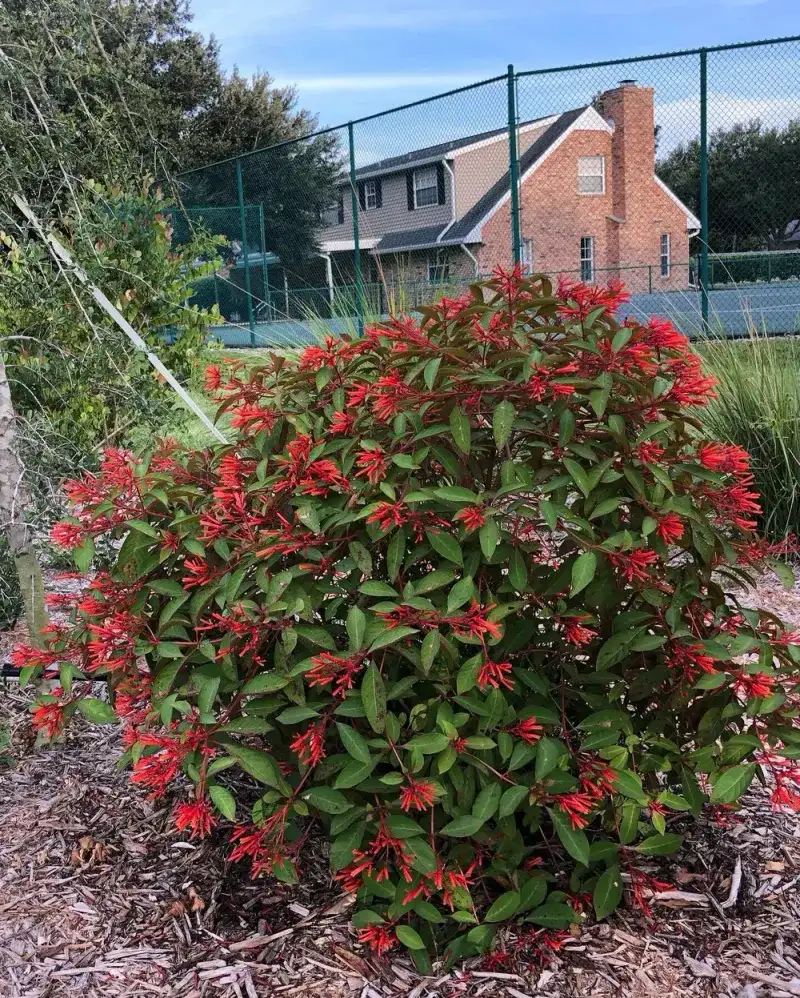
Some privacy plants act like background music, but firebush brings the trumpet section. Its orange-red tubular flowers can pull hummingbirds and butterflies close to patios, pool cages, and sunny fence lines.
Firebush is different from the heavier screening shrubs on this list because it adds bold color while still filling space. In frost-free South Florida, it can become a large, woody shrub.
In cooler parts of the state, winter cold may knock it back, but it often returns when warm weather settles in.
That growth habit makes it a smart choice for seasonal screening, especially where you want summer and fall fullness rather than a perfectly formal wall. It works beautifully in mixed borders with yaupon holly, Simpson’s stopper, or Walter’s viburnum behind it.
Patchy sunny lawn spots near patios are ideal places to use it. Grass often thins where heat reflects off concrete, but firebush enjoys bright light and warm conditions once established.
Give it enough room, avoid overwatering after establishment, and trim only as needed to keep the shape. For the best wildlife value, choose the Florida native firebush, Hamelia patens var. patens, when available from native plant nurseries.
6. Saw Palmetto
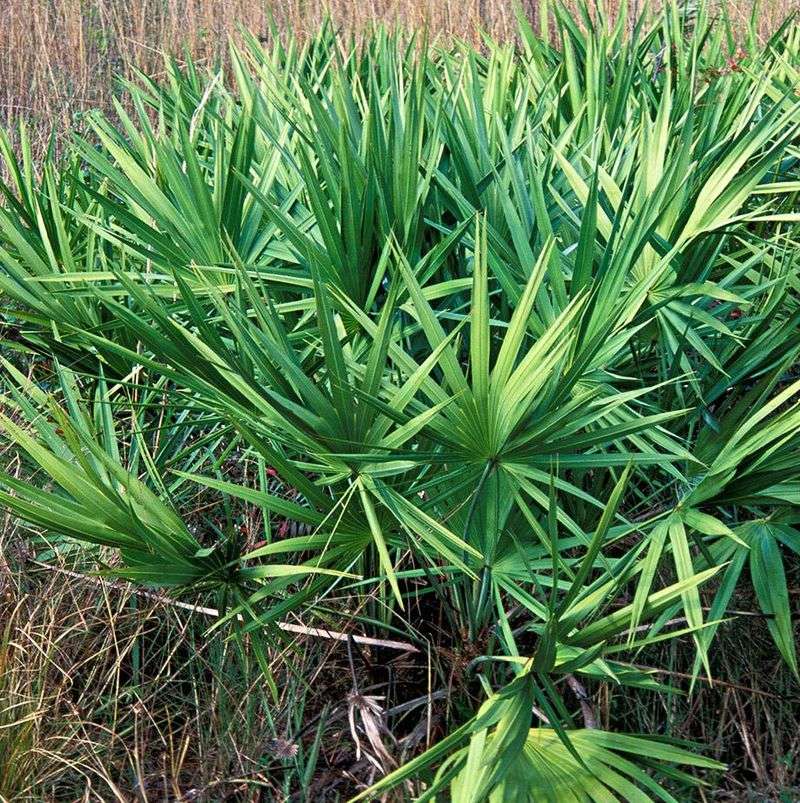
A saw palmetto planting has a wild Florida look that feels right near pines, sandy lots, and coastal neighborhoods. Instead of pretending to be a clipped hedge, it builds privacy with bold fans, low spreading growth, and tough texture.
This shrub is best for homeowners who want to stop fighting poor turf in hot, dry, sandy areas. Saw palmetto can cover ground where grass looks tired, and its dense form discourages foot traffic through side yards or open corners.
Green and silver forms are available, with silver types giving a striking contrast against darker shrubs. The plant grows slowly, but that slow pace is also part of its charm because it asks for very little once established in the right spot.
Wildlife benefits are another reason to use it. The flowers can support pollinators, and the fruits are valuable to birds and other animals, so a saw palmetto bed can become a small habitat patch instead of a bare lawn problem.
Place it where the mature spread will not snag people along narrow walkways. The leaf stems can be sharp, so saw palmetto is better as a boundary, corner filler, or broad privacy planting than a plant for tight entry paths.
7. Cocoplum
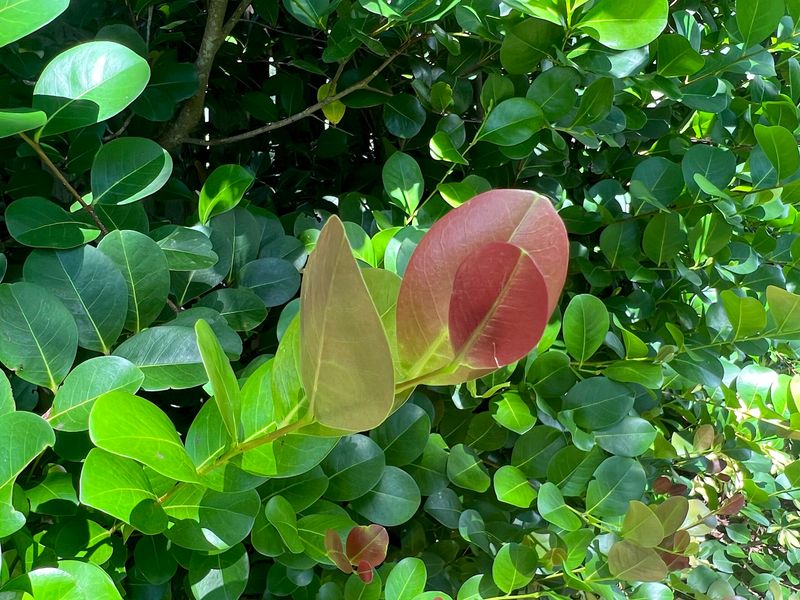
In South Florida, cocoplum has that lush, vacation-yard look without needing to be a delicate tropical diva. Round glossy leaves, reddish new growth, and a dense habit make it a handsome living screen for warm coastal and inland gardens.
Cocoplum stands out because it can look both formal and relaxed. Prune it into a clean hedge near a driveway or let it grow wider and looser along a backyard line where the lawn has become a patchwork of sand and weeds.
The small flowers support pollinators, and the plum-like fruits can feed wildlife. Some people also appreciate the fruits as a quirky edible feature, though quality varies and you should be certain of identification before tasting anything from the yard.
Use cocoplum where winters are mild, especially in South Florida and warmer coastal areas. It is not the best choice for colder North Florida yards that see harder freezes.
For an easy upgrade, remove a strip of struggling turf, plant cocoplum with generous spacing, and mulch deeply enough to cool the soil. As the shrubs fill in, the bed reads as a planned privacy border instead of a problem area you have not fixed yet.