
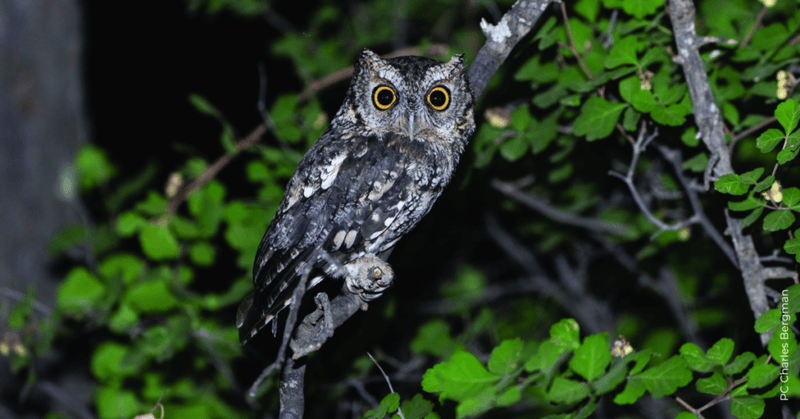
That soft trill or deep hoot drifting through your backyard after dark is one of the most recognizable sounds in Central Texas nights. Many homeowners wonder whether hearing it means something is wrong with their yard or whether a rodent problem is drawing predators close.
The answer is more interesting than either worry, and understanding it can change how you think about your outdoor space after sunset.
The call is communication, not a supernatural warning
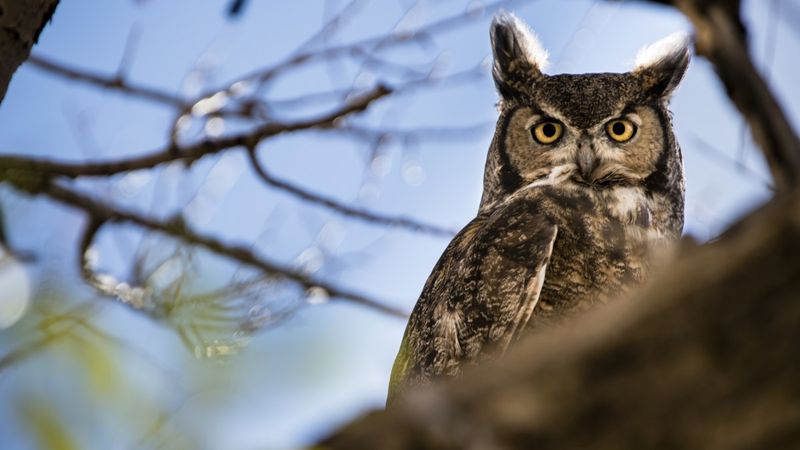
Across cultures and centuries, an owl calling near a home has been treated as a sign of death, a bad omen, or a warning from the spirit world. Those stories are part of human folklore, not wildlife biology.
When an owl calls near your yard after dark, it is almost certainly doing what owls do every night: talking to other owls.
Owl vocalizations serve several well-documented purposes. Cornell Lab of Ornithology’s owl call guide describes calls as a primary way owls establish territories and attract mates.
A peer-reviewed review published in The Condor identifies mate attraction, pair-bond maintenance, alarm, resource location, and territory defense as the main functions of nocturnal bird vocalizations. Any one of those purposes could explain the sound you heard.
Territory defense is especially common. An owl holding a home range will call to signal its presence and discourage rivals from moving in.
Pair-bond calls keep mated birds in contact through the dark. Alarm calls can erupt when a predator, a competing owl, or even a loud human disturbs the bird.
None of these scenarios requires a yard full of rodents to trigger them.
The folklore angle is understandable. Owls are nocturnal, cryptic, and associated with darkness in many traditions.
Audubon has noted that the omen interpretation says more about human psychology than about owl behavior. Read the sound as a wildlife clue instead: a wild predator is nearby, it is communicating with its own kind, and your neighborhood offers enough of what it needs to keep it calling.
Which Central Texas owl might be calling?
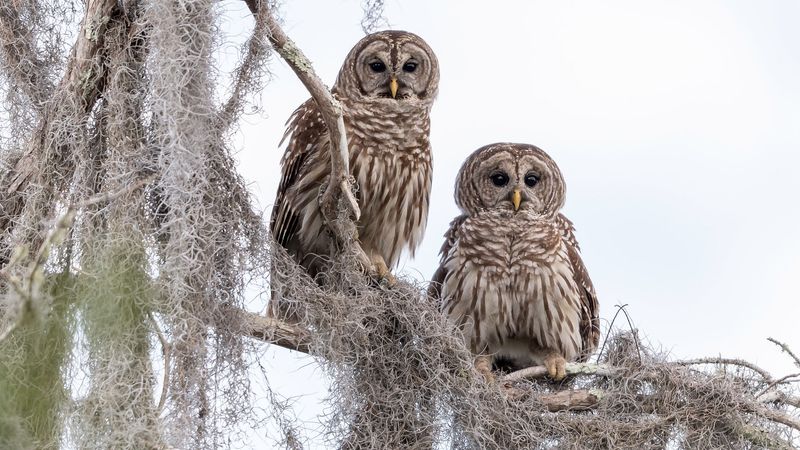
Three species are the most plausible nighttime callers in Central Texas suburban and urban areas: the Eastern Screech-Owl, the Barred Owl, and the Great Horned Owl. Each has a recognizable sound pattern, but treat any sound-only identification as approximate unless you record the call or see the bird clearly.
The Eastern Screech-Owl is a small, compact bird that thrives in parks, suburban yards, and open woodland. Texas Parks and Wildlife describes its most common vocalization as a descending whistled trill, sometimes called a whinny.
It can also produce a long, quavering trill on a single pitch. Despite its name, a screech-owl rarely screeches; the sound is actually quite musical once you know what to listen for.
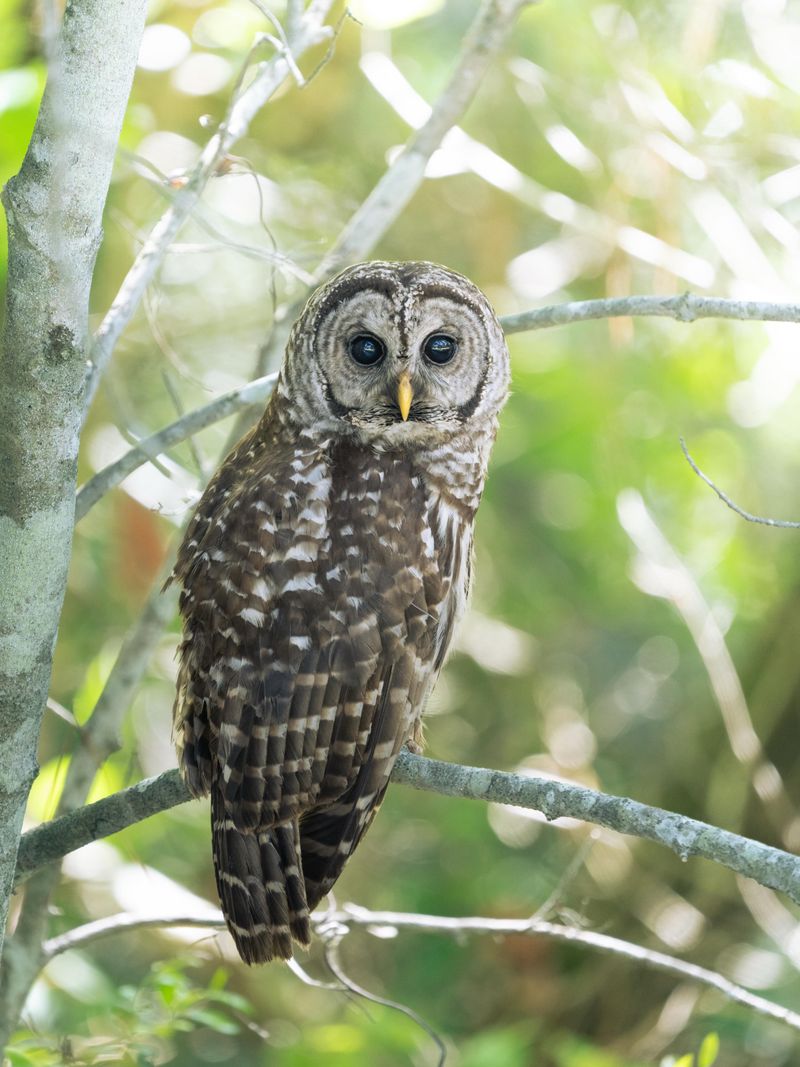
The Barred Owl produces a loud, rhythmic phrase that birders describe as “who cooks for you, who cooks for you-all.” TPWD’s Barred Owl guide identifies it as a familiar urban bird in Central Texas, particularly in neighborhoods near creeks, rivers, greenbelts, lakes, and ponds. If you live near a wooded drainage or a greenbelt corridor, a Barred Owl is a strong candidate.
The Great Horned Owl delivers a series of deep, resonant hoots, typically in a recognizable rhythmic pattern. TPWD’s Great Horned Owl resources confirm it as a widespread Texas resident capable of living in a wide range of habitats, from dense woodland to open suburban lots with mature trees.
A harsh scream or raspy hiss is not a hoot-style owl at all. All About Birds notes that Barn Owls produce a long, drawn-out shriek rather than a classic hoot, and other nighttime animals, including tree frogs and even cats, can generate confusing sounds.
Recording the call on your phone and comparing it against a reliable regional guide is a far better approach than trying to match a memory to a description.
What the sound reveals about your yard ecosystem
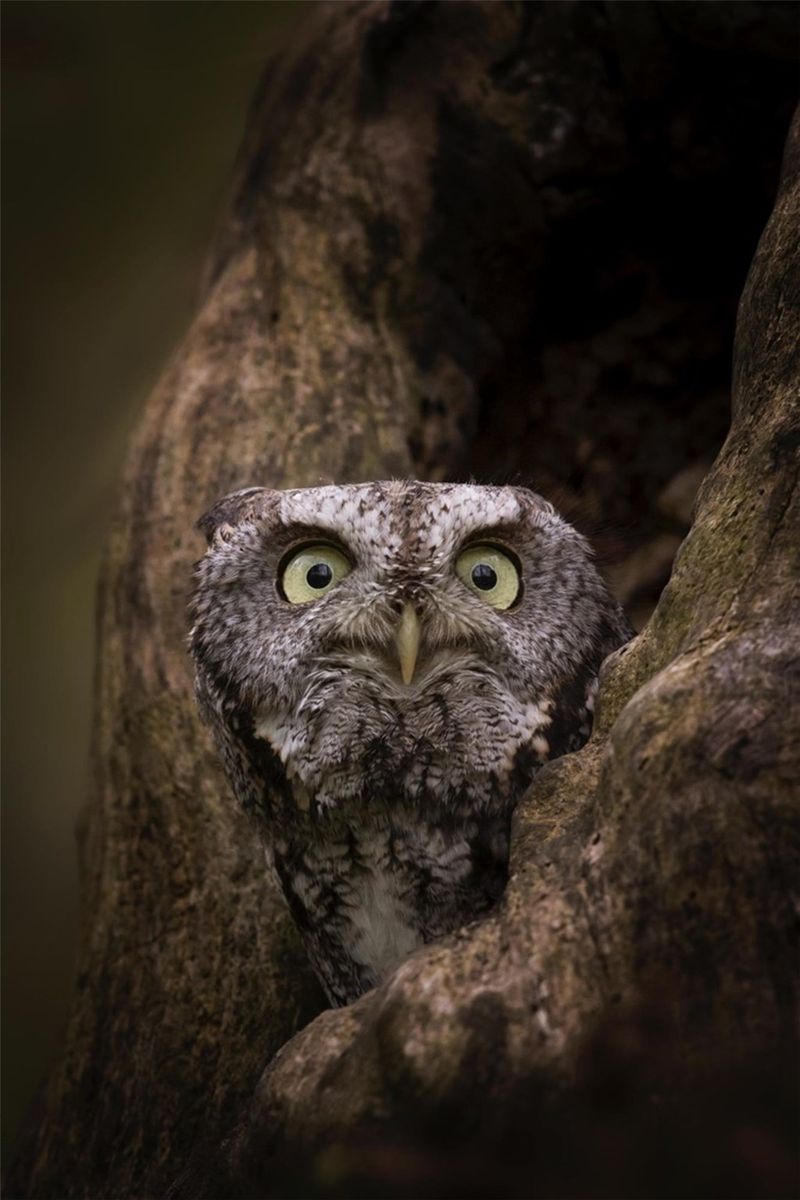
Hearing an owl call near your property does carry real ecological information, just not the information most people assume. The bird’s presence in the general area suggests that the surrounding landscape offers at least some combination of usable cover, perches, roosting or nesting opportunities, and prey.
That is a neighborhood-level signal, not a diagnosis of your specific yard.
A calling owl may be traveling through a territory that spans several blocks or even a larger area. The call alone cannot tell you where the bird hunted that night, what it ate, or whether your property contributed prey.
Research on nocturnal bird vocalizations reinforces that calls primarily reflect communication functions rather than a direct response to prey density at one location.
Central Texas research on Eastern Screech-Owls and residential nest-box use found that sites with bird feeders and bird-bath water showed an association with owl occupancy, possibly because those features can increase local prey availability and provide a water source. That peer-reviewed study documents the association carefully without claiming that feeders or baths cause owls to appear.
The distinction matters: a yard with those features is part of a landscape that may be broadly useful to owls, but no single feature guarantees an owl will hunt, nest, or even return to any particular property.
Think of the call as a reading of the broader neighborhood rather than a report card on your yard. Mature trees, natural shrubby edges, low-traffic green corridors, and access to water all contribute to habitat quality at a scale larger than a single lot.
When those elements exist nearby, owls pass through, rest, and call. Your yard is likely one piece of a connected landscape that a wild predator is navigating on its own terms.
A few clues can show whether the owl is using the property
Wondering whether an owl is actually spending time on your property rather than just passing through? A few physical signs can give you a reasonable answer, and none of them require staying up all night.
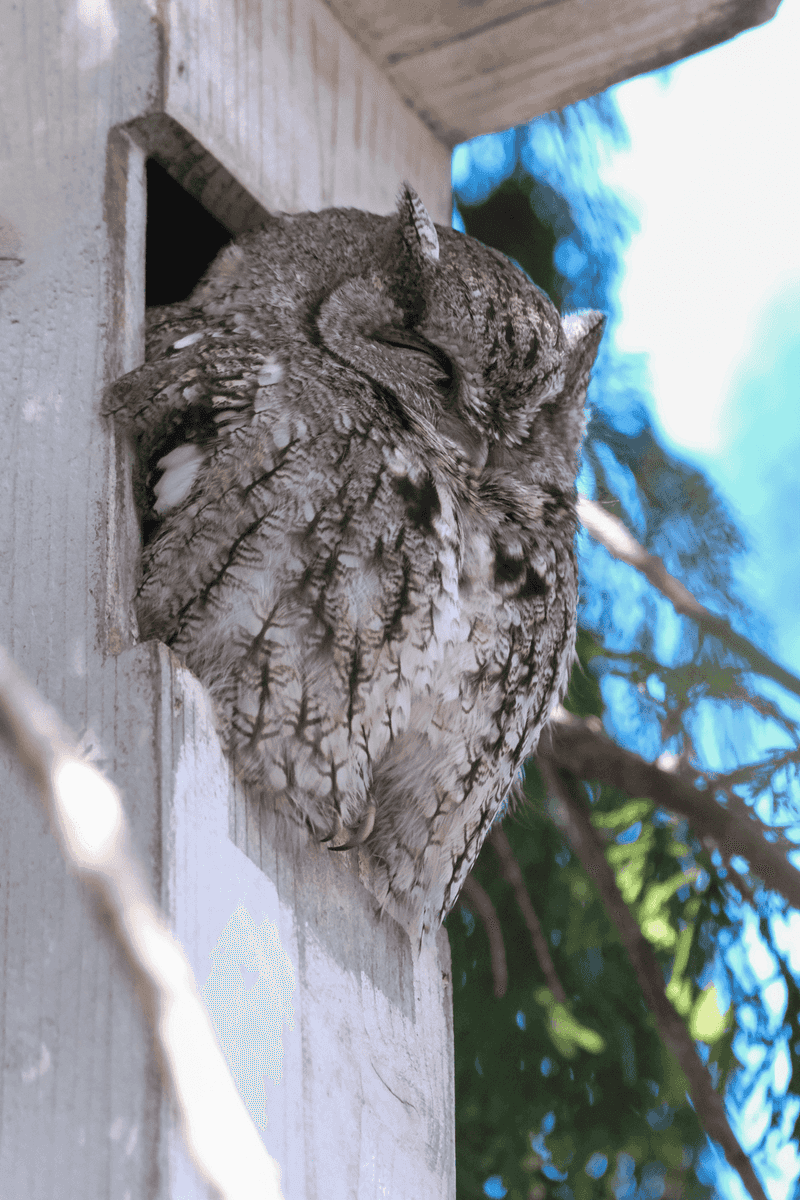
Eastern Screech-Owls are strictly nocturnal and spend much of the day roosting quietly in tree cavities or dense foliage, which is why most homeowners hear them far more often than they see them. Texas Parks and Wildlife notes that screech-owls may capture much of their prey during the first few hours after nightfall, so that is the window when an owl using your yard would be most active overhead.
The most useful physical clue is an owl pellet. Owls cannot digest fur, bones, feathers, or the hard outer shells of insects, so they compress those materials into a compact oval mass and regurgitate it from the spot where they perched after eating.
A fresh pellet is moist and dark; an older one dries out and lightens in color. Check the ground beneath large shade trees, especially live oaks and pecans, and look for a mass roughly the size of your thumb that contains visible fur or small bones.
Finding one beneath the same tree on more than one morning is a reliable sign that an owl has been roosting and hunting in that area.
A pellet tells you the owl used that perch; it does not tell you that your yard has an active rodent infestation or that the owl is providing pest control. The bird may have carried prey from a neighboring property or a nearby green space.
Treat the pellet as an interesting data point, not a cause for alarm or a reason to declare victory over pests.
Why the calling may suddenly become more noticeable
A stretch of nights when owl calls seem louder, more frequent, or suddenly noticeable after weeks of quiet is one of the most common reasons homeowners start asking questions. Several different circumstances can drive that change, and pinning it to a single cause from timing alone is not reliable.
Breeding activity is one of the most common explanations. Some Central Texas owl species begin courtship in late winter or early spring, and territorial and mating calls can extend into fall and winter as well.
Cornell Lab’s owl call resources note that calling intensity often peaks during these social periods. TPWD’s Eastern Screech-Owl page confirms that Texas screech-owls nest earlier than many people expect, making winter calling perfectly normal.
Fledged young are another driver. After owlets leave the nest, they spend weeks in the surrounding area calling persistently for food.
That juvenile begging call can sound quite different from an adult territorial call, and it often continues well past dark. If you are hearing a repetitive, raspy, or wheezy call from multiple directions, recently fledged owls are a strong possibility.
Weather shifts, disturbances from nearby construction or traffic, encounters with competing owls moving through the territory, and changes in prey activity can all affect how much and how often an owl calls on a given night. All About Birds’ overview of owl voices emphasizes that call behavior varies considerably by season, circumstance, and individual bird.
Rather than assigning a single meaning to a burst of calls, pay attention to the sound pattern, the location relative to your property, and whether the calling repeats over several nights. Multiple nights of calling from the same direction, especially near a large tree, carry more weight than one loud evening.
Support the habitat that brought the owl nearby
Once you know an owl is using your neighborhood, the most useful thing you can do is make the surrounding habitat a little easier for it to use. None of the steps below will guarantee an owl moves in or hunts on your lot, but they reduce hazards and preserve the conditions that wild predators need.
Start with light. Texas Parks and Wildlife recommends reducing unnecessary nighttime lighting as part of responsible owl stewardship.
Owls rely on low-light conditions to hunt effectively, and Audubon reporting on urban owl research notes that both artificial light and human noise can impair prey detection and reduce owl activity in disturbed areas. A peer-reviewed study on urban wildlife and environmental pollutants found that noise pollution can reduce owl species richness in heavily developed areas.
Turning off or redirecting decorative lights after midnight, switching to motion-activated fixtures, and choosing downward-facing outdoor lighting all help.
Preserve any safe snags, hollow trees, or natural cavities on your property. TPWD’s habitat resources for bird-friendly yards specifically list snags as valuable shelter and nesting structure for cavity-nesting birds, including Eastern Screech-Owls.
A dead limb or hollow section of a mature tree that poses no safety risk to people or structures is worth keeping.
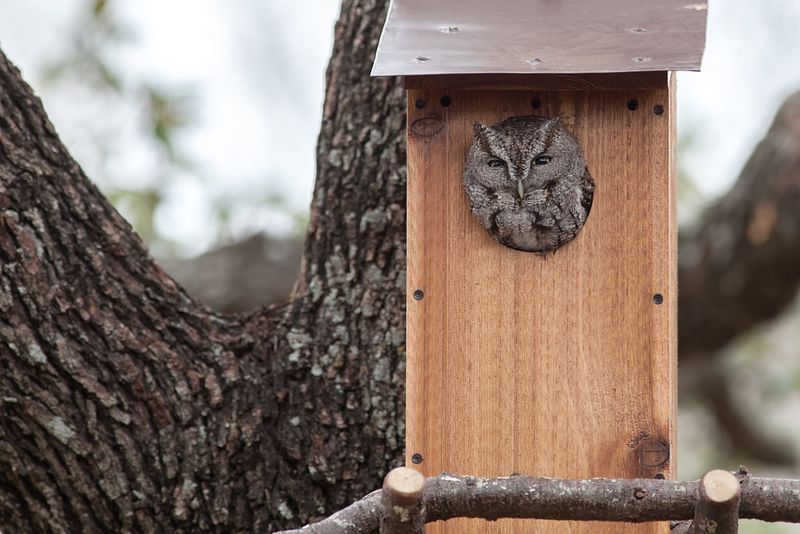
Where natural cavities are scarce, a screech-owl nest box can fill the gap. TPWD’s birdhouse guide recommends a box with an eight-by-eight-inch floor, 12-inch interior depth, and a three-inch entrance hole, placed between 10 and 30 feet above ground on a tree or post away from heavy foot traffic.
Mount it facing away from the prevailing wind and add a small layer of wood shavings inside. A box is a habitat improvement, not a guarantee; screech-owls choose their own real estate on their own schedule.
Control rodents without putting the owl at risk
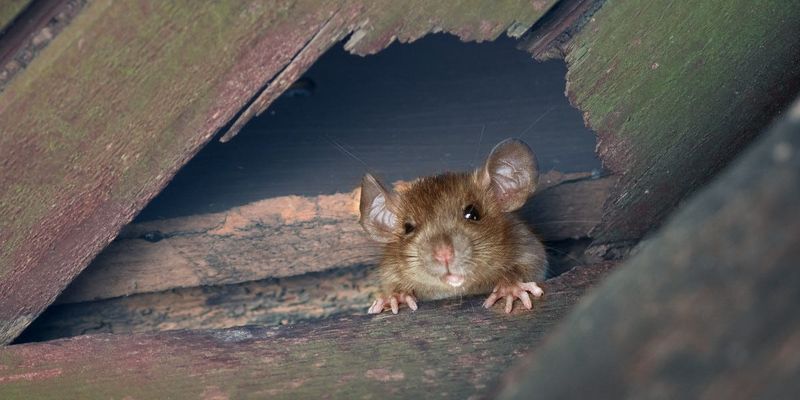
Hearing an owl near the yard often triggers a reasonable follow-up question: do we have a rodent problem? As established earlier, a call is not a rodent census, and the owl may be traveling through a territory that covers several properties.
Still, if you have independent evidence of rodents, such as droppings, gnawed food packaging, or visible entry points into the garage or attic, that is worth addressing on its own merits.
The safest starting point is integrated pest management. Penn State Extension’s rodent IPM guidance recommends identifying the specific problem first, then addressing the food, water, and shelter that sustain rodents.
Practically, that means sealing gaps in foundation walls and soffits, storing birdseed and pet food in hard-sided containers, securing compost and trash lids, and clearing dense ground cover close to the house. Appropriately placed snap traps in areas inaccessible to pets and children are an effective mechanical option when exclusion alone is not enough.
Outdoor rodenticides carry serious risks that go well beyond the target animal. EPA’s rodenticide safety review identifies secondary poisoning of birds and other predators as a significant concern.
A USGS study on brodifacoum exposure in Barn Owls found that owls consuming poisoned rodents can accumulate anticoagulant compounds at dangerous levels. That risk applies to other owl species and to hawks, foxes, and neighborhood cats as well.
Ecological research also cautions against expecting owls to solve a rodent problem. Predator-prey modeling studies show that predator effects on prey populations are species- and habitat-specific; a single owl pair cannot reliably control an established rodent population in a suburban setting.
Eastern Screech-Owls eat large insects, spiders, scorpions, earthworms, amphibians, and small reptiles alongside small mammals, so their diet is far more varied than the “natural mousetrap” reputation suggests. Manage rodents with sanitation and exclusion first, use mechanical traps when necessary, and avoid poison bait outdoors whenever possible.
Watch quietly and leave the owl in control
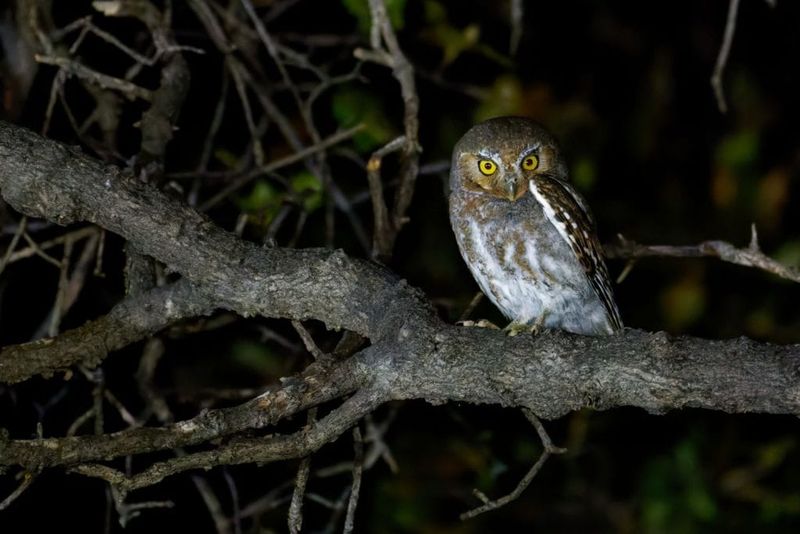
Getting a closer look at a calling owl is a natural impulse, but several common reactions can harm the bird or disrupt its behavior in ways that are hard to undo. Knowing what to avoid is just as useful as knowing what to do.
Feeding or baiting owls is one of the most tempting mistakes. Placing live or dead rodents, scraps of meat, or fake prey near the yard to attract a closer view seems harmless, but Audubon explains why baiting predatory birds is fundamentally different from filling a seed feeder.
A separate Audubon piece on owl baiting notes that it can habituate wild predators to human presence, alter their hunting behavior, and create safety concerns near roads and populated areas.
Playing owl recordings to provoke a response is similarly problematic. Audubon’s guidance on audio playback in the field warns that repeated recordings can provoke territorial responses that pull birds away from mates or nests, interfere with normal hunting, and cause measurable stress.
TPWD’s Eye on Nature newsletter advises against using playback specifically to lure owls. And shining a flashlight or camera flash directly at a perched owl can temporarily impair its ability to hunt or navigate in the dark; Audubon’s ethical photography guide recommends keeping artificial light away from nocturnal birds entirely.
On the legal side, native owls are protected under the federal Migratory Bird Treaty Act, which prohibits killing, capturing, possessing, or otherwise unlawfully taking them. Separately, All About Birds advises avoiding active nests and seeking current wildlife guidance before intervening near a nesting site.
If you find a young owl on the ground, do not automatically assume it needs rescuing. Healthy fledglings spend time on the ground as they develop flight skills.
Keep pets indoors, observe from a distance, and contact a TPWD-permitted wildlife rehabilitator only if the bird appears visibly injured, ill, or genuinely orphaned with no adult nearby after several hours.
Let the nighttime call sharpen your yard’s story
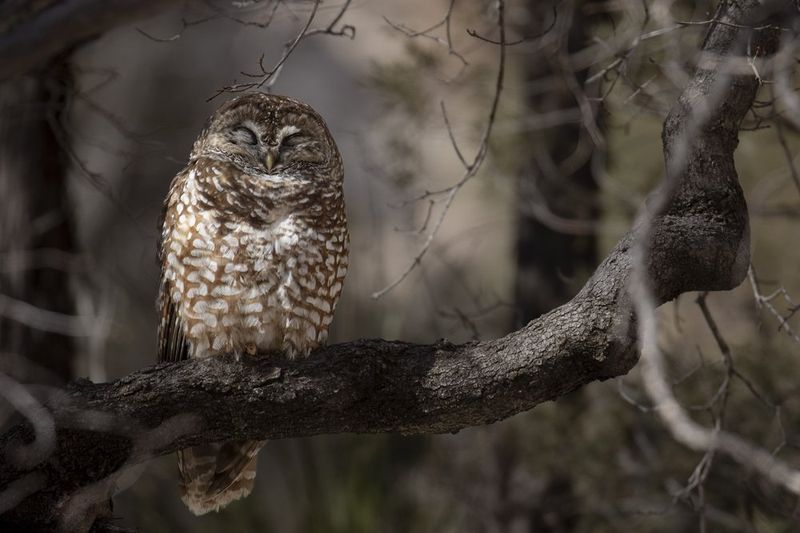
An owl calling after dark near a Central Texas yard is not a riddle that needs solving urgently. It is a neighboring wild predator communicating within a broader landscape that includes your property, your block, and likely a greenbelt or creek corridor somewhere nearby.
The call is its message to other owls, not a report on what is happening in your flower beds.
The most productive response is a quiet one. Observe from inside or from a comfortable distance, check for pellets beneath large trees over several mornings, reduce outdoor lighting where you can, and let the habitat speak for itself.
TPWD’s owl stewardship guidance and Cornell’s owl call resources both point toward observation and habitat support rather than intervention. If a real rodent concern exists, address it with exclusion and sanitation rather than outdoor poison, which puts the owl and other predators at risk as noted by EPA’s rodenticide safety review.
A yard that supports nighttime predators is one that retains mature trees, keeps some dark corners genuinely dark, and resists the urge to tidy every cavity and hollow branch away. Central Texas nights are richer than most residents realize, and the owl calling from the live oak is proof that the ecosystem around you is still working.