
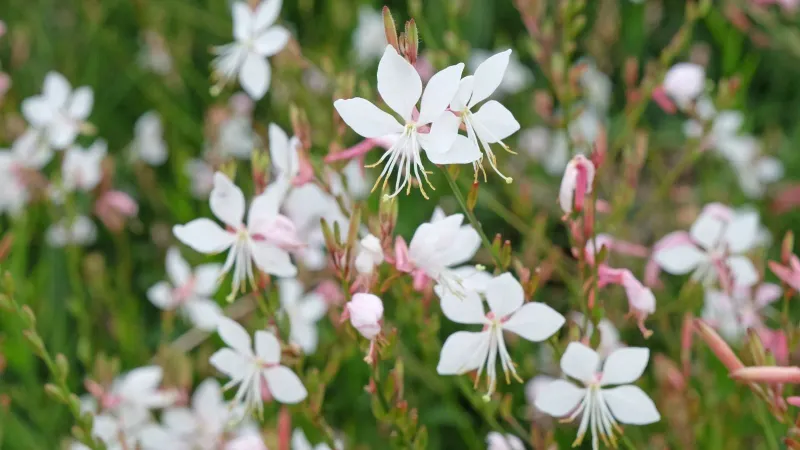
Somewhere in a sunny Texas garden bed, a plant with slender, wand-like stems waves clusters of white flowers from late spring all the way into fall, drawing bees and butterflies without demanding much water in return. That plant is Lindheimer’s beeblossom, sold in most nurseries as white gaura, and it earns its reputation as one of the toughest native perennials the Lone Star State has to offer.
What the eye-catching title promises and what the plant actually delivers are close but not identical, and knowing the real story helps you get the most out of it for years to come.
Meet Lindheimer’s beeblossom, the likely plant behind the claim
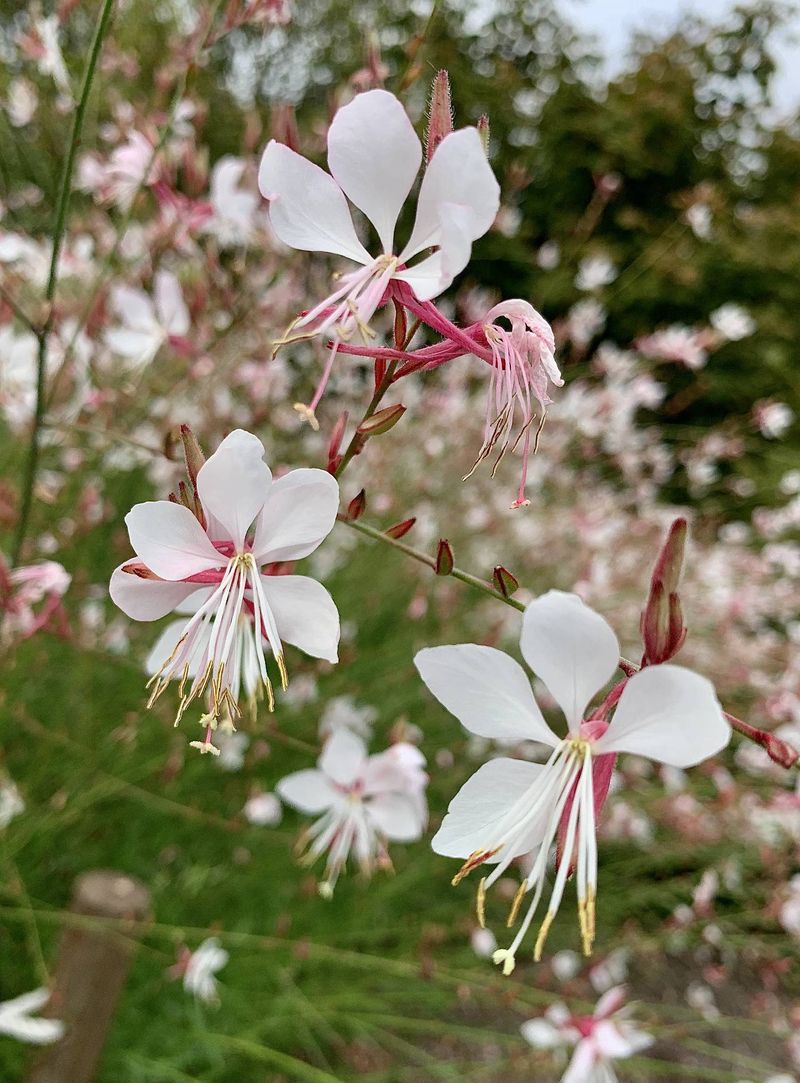
Lindheimer’s beeblossom goes by more names than almost any other Texas native. Nursery tags might read white gaura, butterfly gaura, wand flower, or whirling butterflies, but the plant behind all those labels is the same species: Oenothera lindheimeriGaura lindheimeri, which many horticultural references and older nursery catalogs still list under its former botanical name, .
Both names are correct in context, though Oenothera lindheimeri is the current accepted designation according to North Carolina State Extension’s Plant Toolbox.
The species is native to Texas and Louisiana, and it fits the classic description of a warm-climate workhorse: full-sun tolerance, strong heat resistance, and low water demand once established. Slender stems rise from a basal clump and arch outward, giving the plant a loose, airy silhouette that moves with any breeze.
The bloom period can stretch from spring or early summer into fall, making it one of the longer-flowering natives available to Southern gardeners.
One thing worth stating plainly at the outset: the plant behind the title is real and genuinely impressive, but the promise that any single plant will perform for a literal lifetime is not one the evidence supports. Texas Tech University’s Plant Resources specifically classifies it as a short-lived perennial.
That does not make it a poor choice; it makes it a plant worth understanding before you put it in the ground.
Its airy flowers provide a long succession, not a solid white wall
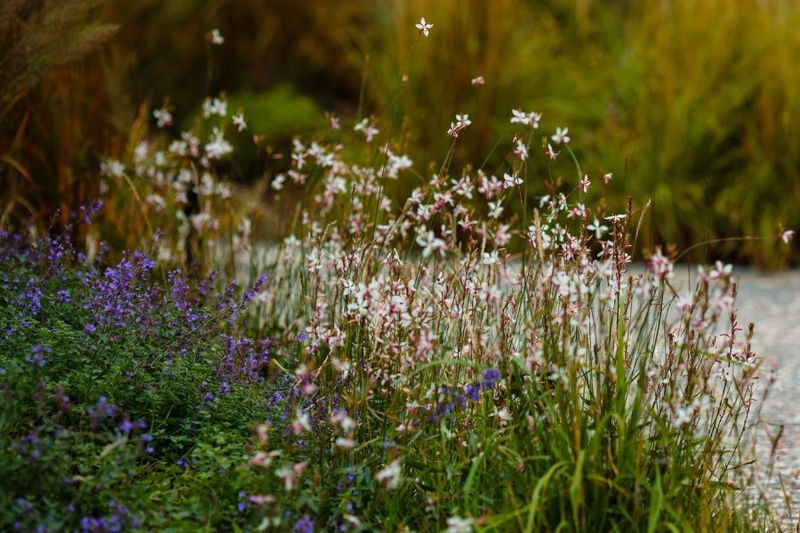
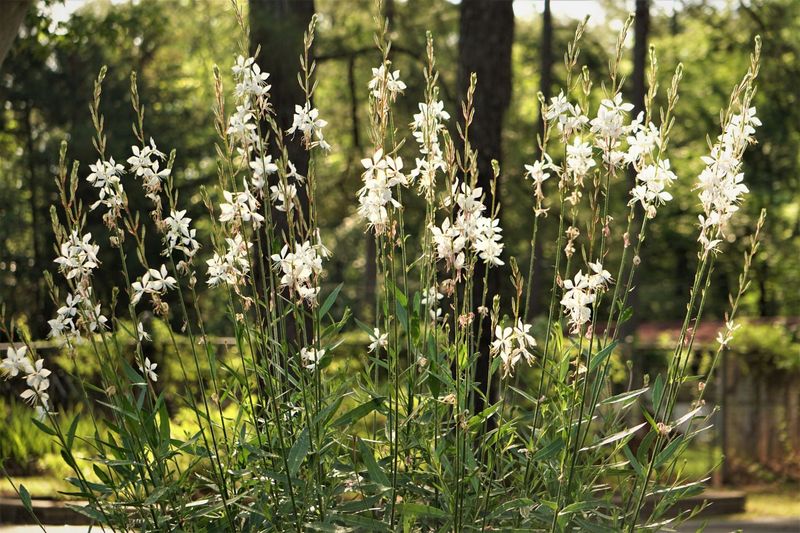
Stand back from a mature planting of Lindheimer’s beeblossom and the visual effect is unlike almost anything else in a summer border. Slender stems, sometimes reaching four feet or more, carry small flowers that seem to float rather than sit, giving the whole plant a shimmering, almost weightless look in a light wind.
The movement is part of the charm, and it is why one of the plant’s common names is whirling butterflies.
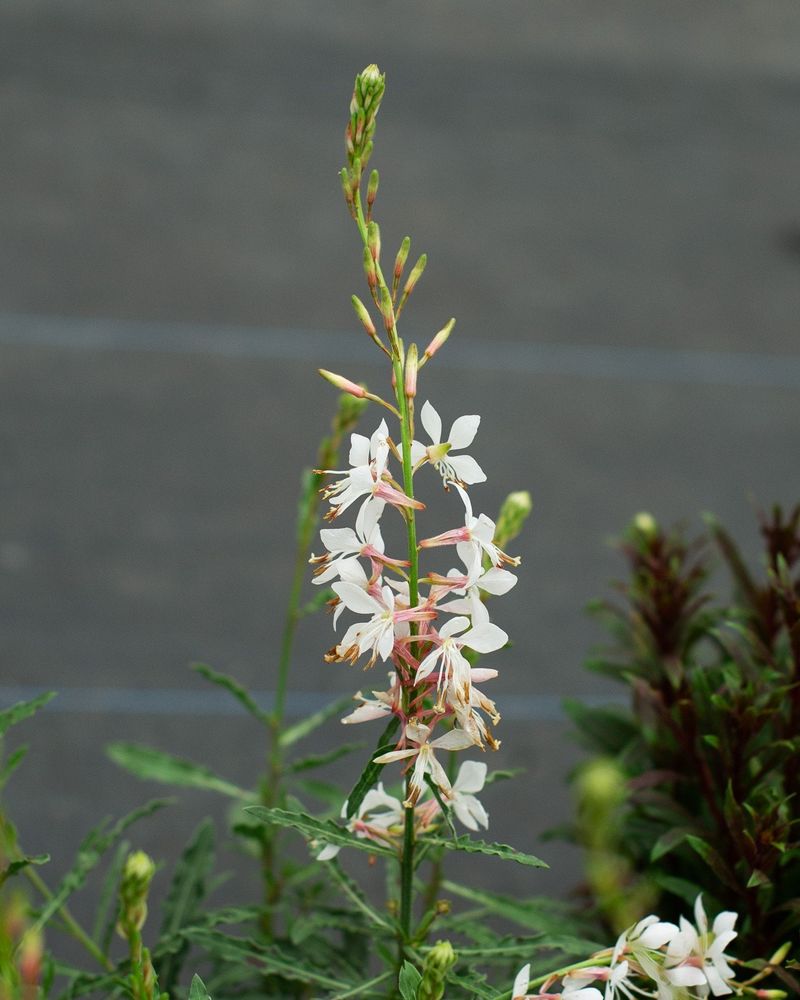
Look closer, though, and you will notice that the picture is more nuanced than solid white. North Carolina State Extension describes a flower cycle in which buds may carry a pink tint before opening, the newly opened blooms appear white, and older flowers can fade toward pink as they age.
On any given stem, you are likely to see all three stages at once. White-flowered cultivars are available and tend to lean whiter than the straight species, but pink undertones remain part of the plant’s natural palette.
The bloom period itself is genuinely long, spanning spring, summer, and fall in Texas conditions, with flowering potentially continuing through the first fall frosts in suitable climates. What that means in practice is a steady succession of new flowers opening as older ones finish, not a single flush of peak bloom that covers every stem simultaneously.
University of Arkansas Extension notes that flowering can slow during the hottest part of July and may benefit from shearing to encourage a later flush. Expect an extended, graceful display rather than a wall of white, and the plant will rarely disappoint.
Give it sun, room, and soil that drains well
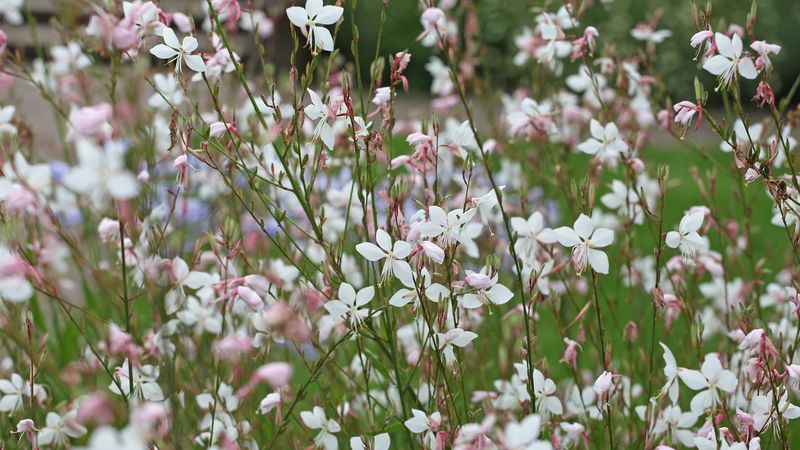
Site selection is where the difference between a thriving planting and a struggling one is usually decided. Lindheimer’s beeblossom performs best in full sun, which North Carolina State Extension defines as at least six hours of direct sunlight per day.
Some regional guides, including Texas SmartScape, also list partial shade as acceptable, but flowering tends to be denser and the plant’s structure more upright when it receives a full day of sun. In shadier spots, stems can reach toward light and become floppy well before they would in an open bed.
Drainage matters as much as sunlight. University of Wisconsin Extension and North Carolina State Extension both flag poor drainage as a root-rot risk.
The plant can handle clay soil when drainage remains adequate, but a bed that stays wet after rain or irrigation is a problem waiting to happen. If your native soil drains slowly, raise the bed slightly or amend with coarse material to improve water movement before planting.
Space is the third factor many gardeners underestimate. Texas SmartScape’s listing for North Central Texas gives a typical height of 2 to 4 feet and a spread of 1 to 4 feet, while North Carolina State Extension describes mature plants reaching 3 to 5 feet in height.
Compact cultivars stay considerably smaller and suit tighter borders or container plantings. Whatever size you expect at maturity, give each plant enough room so stems can arch naturally without crowding neighbors, which also improves air circulation and reduces the risk of fungal problems during humid stretches.
Water regularly at first, then take advantage of its drought tolerance
New plants need consistent moisture while their roots are finding their footing in native soil. Plan to water regularly for the first growing season, checking soil moisture rather than following a fixed calendar schedule, since Texas summer heat can dry out a new root zone faster than expected.
Once roots have spread and the plant shows strong new growth, you can begin backing off irrigation frequency.
Texas SmartScape rates Lindheimer’s gaura as a low-water-demand plant for North Central Texas, which reflects how established specimens perform under typical conditions. That rating is accurate, but low water demand is not the same as best flowering under drought.
University of Wisconsin Extension notes that while established plants tolerate drought, adequate moisture can improve bloom. During extended dry spells in summer, an occasional deep soak can help maintain flower production without pushing the plant toward the root problems that come with overwatering.
Fertilizer is a place where less is genuinely better. North Carolina State Extension and Wisconsin Extension both caution that excess fertility or overly rich soil can push the plant toward tall, floppy growth at the expense of flowering.
Lean, well-drained soil closer to the plant’s native habitat tends to produce more compact, floriferous plants than heavily amended beds. If your soil is already reasonably fertile, skip the fertilizer entirely and let the plant work with what it has.
Prune for shape, rebloom, and manageable self-seeding
Pruning is optional with Lindheimer’s beeblossom, not a survival requirement, but a couple of well-timed cuts can noticeably improve the plant’s appearance and extend its flowering window. The most useful intervention is a late-spring shearing before the main flush of summer bloom.
University of Wisconsin Extension recommends removing up to half the plant’s height at that point to reduce the flopping that tall stems can develop later in the season. The plant rebounds with a more compact form and typically resumes flowering within a few weeks.
Deadheading spent flower stems during the season serves a different purpose. Removing finished stems keeps the planting looking tidy, encourages the plant to redirect energy toward new flower production, and reduces the volume of seed that reaches the surrounding soil.
That last point matters if you want to control where seedlings appear, since the species can self-sow. University of Arkansas Extension notes that a full cutback during summer can also stimulate a later flush of bloom, though flowers may take roughly two to three weeks to return after a hard cut.
How aggressively you manage self-seeding depends on your goals. Gardeners who want the planting to renew itself naturally can leave some spent stems in place and allow seeds to fall.
Those who prefer a tidier bed or worry about seedlings spreading into other areas should deadhead consistently through the season. Either approach works; the choice comes down to how much informality suits your garden style and how much reseeding you want to encourage.
A lasting planting depends on reseeding, not an immortal original plant
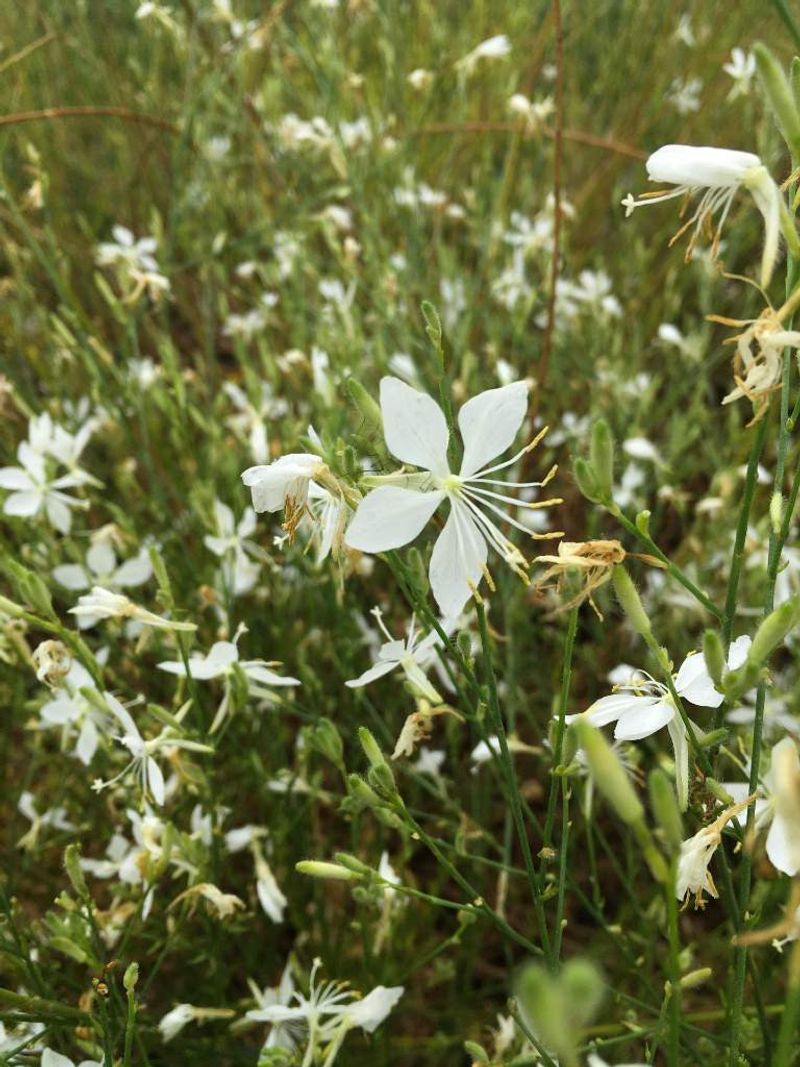
The strongest case for Lindheimer’s beeblossom as a long-term garden plant rests on its ability to reseed, not on any individual plant living indefinitely. Texas Tech University classifies the species as a short-lived perennial, which is a meaningful distinction from a truly long-lived one.
A short-lived perennial may thrive for two or three years, then decline regardless of care. That is not a flaw unique to this plant; many beloved garden perennials share the same trait.
University of Wisconsin Extension cautions that individual plants may not be long-lived, and it also notes that the species self-sows readily under the right conditions. When seeds fall near the parent plant and germinate the following season, the bed can appear to have the same planting year after year.
What is actually happening is a quiet, ongoing cycle of replacement: new seedlings grow up as older plants decline, and the colony maintains itself without any deliberate intervention from the gardener.
That distinction matters for setting expectations. A planting that has occupied the same bed for a decade is not proof that the original plant is still alive; it is more likely proof that the species reseeds well in that location.
University of Arkansas Extension reported limited reseeding in its growing conditions, which shows that self-sowing is not guaranteed everywhere. Cultivars also vary in fertility, with some producing few or no viable seeds.
The practical takeaway is straightforward: plan to replace individual plants as they decline, allow reseeding where conditions favor it, and treat the colony as a renewable resource rather than a permanent fixture.
Bees, butterflies, and moth caterpillars add wildlife value
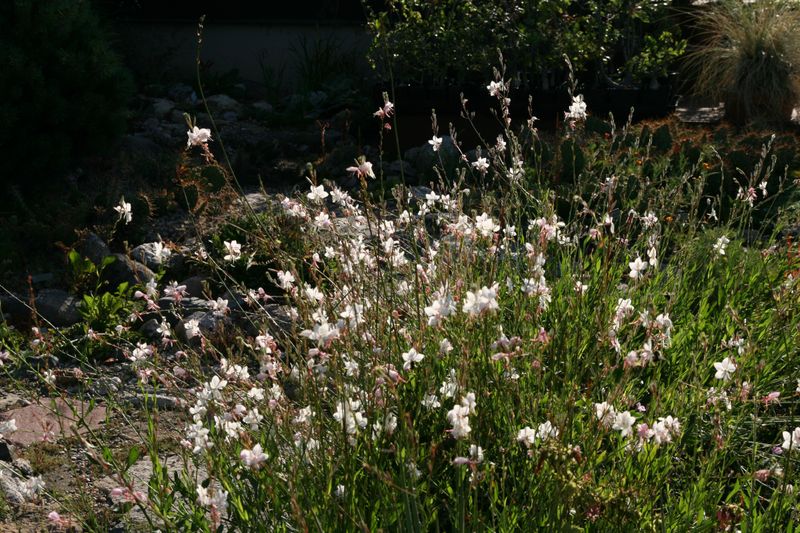
Lindheimer’s beeblossom earns its place in a wildlife-friendly garden through a handful of well-documented relationships rather than a vague claim of attracting everything that flies. Bees and butterflies visit the flowers regularly, drawn by accessible nectar on blooms that open one by one across a long season.
North Carolina State Extension identifies the plant as a host for white-lined sphinx moth caterpillars, which is a more specific and ecologically meaningful role than general pollinator support. Host plants support larval development, making them a more direct contribution to insect populations than nectar sources alone.
Texas SmartScape also lists pollinators among the plant’s wildlife beneficiaries, consistent with its broader reputation as a bee and butterfly plant across the Southern states. The succession of blooms across a long season means that wildlife value extends well beyond a single peak period, offering resources from late spring into fall when many other plants have finished.
On the deer question, the Native Plant Society of Texas and Texas SmartScape both describe the plant as generally deer resistant. That rating reflects typical browsing behavior rather than a guarantee.
Deer-resistant plants can still be damaged when population pressure is high, food sources are scarce, or deer are simply exploring unfamiliar territory. If deer pressure in your area is severe, pairing this plant with other strongly aromatic or textured species can reduce the risk of browsing, though no combination is completely foolproof.
Match the plant to your Texas region before you buy
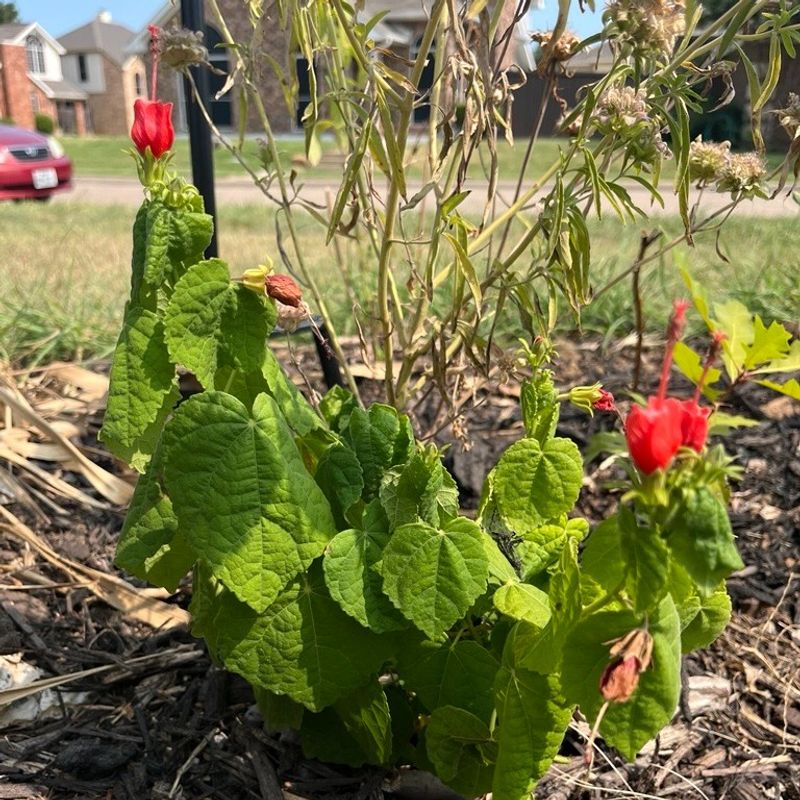
Texas is not one climate, and treating a single plant recommendation as statewide advice is one of the fastest ways to set up a gardening disappointment. Lindheimer’s beeblossom performs well across much of the state, but sun intensity, soil type, winter temperatures, humidity, and rainfall patterns vary enough between the Panhandle, West Texas, Central Texas, East Texas, and the Rio Grande Valley that local conditions should always inform the final decision.
Texas SmartScape’s listing for Lindheimer’s gaura is specifically evaluated for North Central Texas, not the state as a whole, and that distinction is worth noting when you are gardening in a different region.
For region-specific guidance, Texas A&M AgriLife’s Earth-Kind Plant Selector divides recommendations by regional zones and can help you confirm whether a particular plant suits your county before you invest in it. Cultivar choice also plays a role: compact selections bred for heat and humidity may outperform the straight species in some parts of the state, while cold-hardier types may be worth prioritizing in the northern Panhandle.
Florida gardeners face a different set of considerations. UF/IFAS lists the plant as a perennial for USDA Zones 6 through 9 with spring, summer, and fall flowering, which covers much of northern and central Florida.
However, a separate UF/IFAS invasiveness assessment rates the species Moderate Risk/Evaluate for Florida because available evidence was insufficient for a firm conclusion. Florida gardeners should check with local extension services before planting, particularly in natural-area-adjacent landscapes where escaped seedlings could become a concern.
Choose it for years of airy bloom, not a lifetime promise
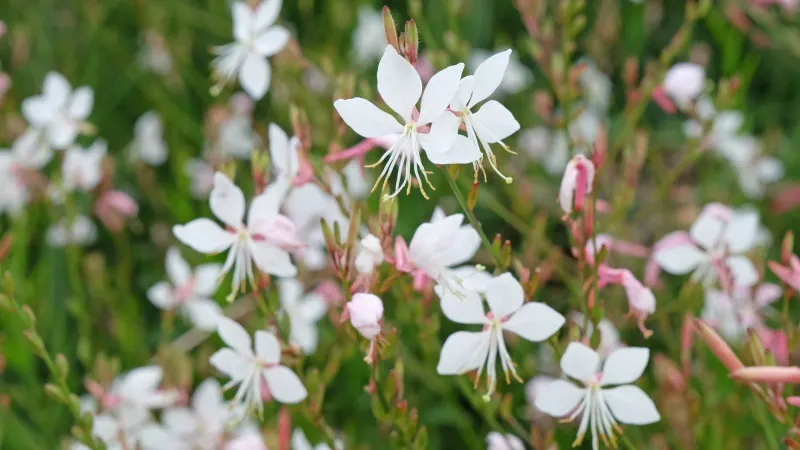
Lindheimer’s beeblossom suits a sunny, well-drained Southern bed because it can carry airy white flowers across a long warm-season window, tolerate triple-digit Texas heat, and need far less irrigation once roots are established. Texas Tech confirms its spring, summer, and fall bloom and its status as a low-water, high-heat-tolerance Texas native, which is a combination that genuinely earns a place in the garden.
Select a white-flowered form or cultivar that suits your bed’s scale, match it to local drainage and sun conditions, and allow reseeding if you want the colony to renew itself over time. Texas SmartScape and Wisconsin Extension both point toward the same practical conclusion: treat replacement as a routine part of maintaining this planting, not as a sign that something went wrong.
A bed that keeps flowering year after year through a mix of original plants and self-sown seedlings is not a compromise; it is exactly how this native was designed to work.