
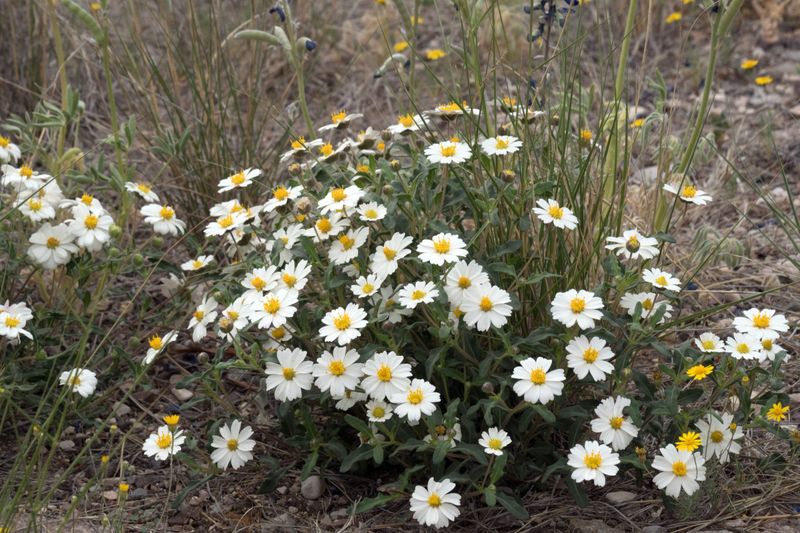
Finding a perennial that actually thrives in a Central Texas yard without constant babysitting sounds almost too good to be true. Blackfoot daisy is a Texas-native plant that blooms for months, handles heat and drought, and can occasionally send up volunteer seedlings that gradually fill a border.
Before you head to the nursery, though, there are real conditions attached to that promise, and the right site makes all the difference.
Blackfoot daisy fits the goal—but the title needs a correction
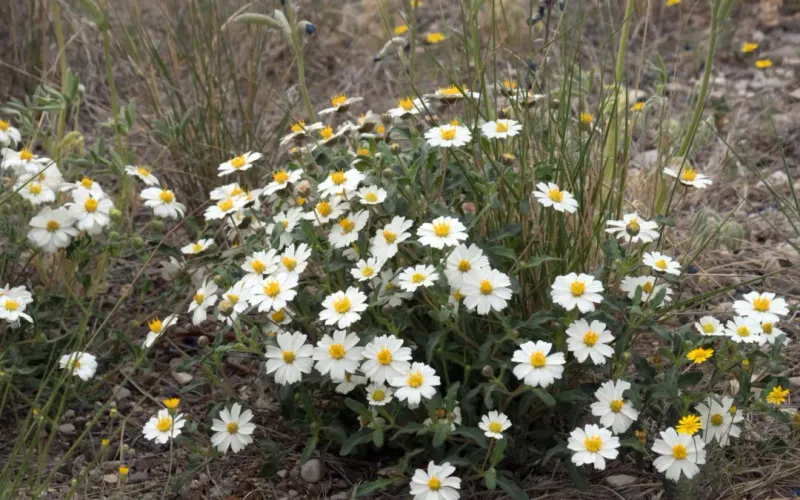
Blackfoot daisy, known botanically as Melampodium leucanthum, is a Texas-native herbaceous perennial that earns genuine attention from Central Texas gardeners. Texas Tech University’s plant database describes it as a rounded mound roughly 6 to 12 inches tall and 1 to 2 feet wide, with cheerful white ray flowers and yellow centers that bloom across much of the warm season.
That combination of compact form, long bloom period, and Texas-native roots makes it a practical candidate for a sunny, dry border where other plants falter.
The catch is that “practical candidate” is doing real work in that sentence. The headline premise attached to plants like this often promises more than the evidence supports.
Austin’s official plant guide uses careful language: the plant “occasionally reseeds” and requires dry conditions. That word “occasionally” matters.
Blackfoot daisy may persist for multiple seasons and may produce volunteer seedlings under the right conditions, but it does not guarantee permanent coverage or universal success across Texas clay beds.
Arizona Cooperative Extension describes the plant as semi-perennial and notes it may need replacement from time to time, particularly when conditions shift toward richer soil or heavier irrigation. Longevity varies enough that counting on any single specimen to anchor a bed indefinitely is a reasonable hope, not a reliable plan.
What blackfoot daisy genuinely offers is a lower-maintenance option than many alternatives on a suitable site, with the possibility of gradual self-renewal rather than the certainty of it. Whether your yard qualifies as a suitable site depends almost entirely on drainage.
Drainage matters more than the word clay
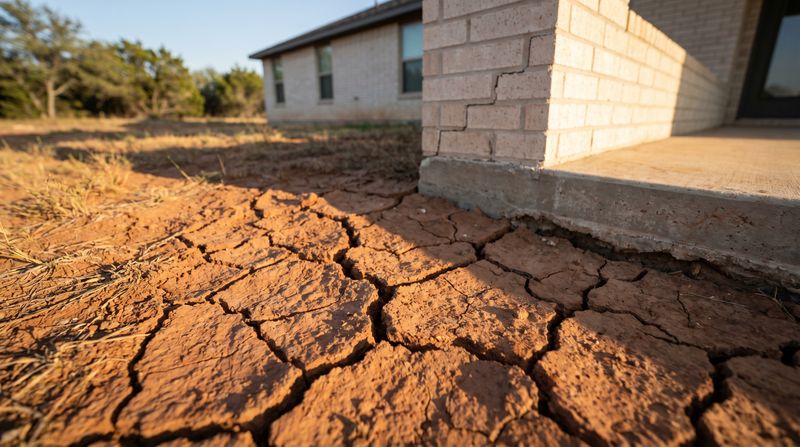
Central Texas is not one soil environment, and treating it as one is where many planting decisions go wrong. Travis County’s soil overview draws a clear contrast between the thin, rocky, alkaline ground common in the Hill Country and Edwards Plateau areas and the deep, dark, dense clay that defines much of the Blackland Prairie.
A blackfoot daisy planted in a rocky Austin backyard where water drains off in minutes is in an entirely different situation from one dropped into a low, compacted Blackland bed that stays soggy for days after a good rain.
“Clay tolerant” is a phrase that gets stretched past its useful meaning in plant descriptions. Austin’s plant guide lists blackfoot daisy as appropriate for well-drained conditions and flags it as a poor fit for rain gardens, downspout outlets, and beds that collect standing water.
Clay that drains adequately between rain events is a very different growing environment than clay that stays saturated. Roots sitting in oxygen-starved, waterlogged soil decline regardless of how drought-tolerant the plant is when dry conditions return.
The practical question to ask before buying is not whether your soil contains clay, but whether water moves through it. Pour a bucket of water onto the bed and watch what happens over the next few hours.
Texas Parks and Wildlife wildscape planting guidance consistently pairs blackfoot daisy with dry, well-drained conditions rather than ordinary clay. If your bed drains well and dries out between rains, blackfoot daisy may be a strong fit.
If water lingers for more than a few hours, the plant’s requirements are not being met, and no amount of enthusiasm for the species will change that outcome.
Self-sowing fills gaps gradually rather than covering ground fast
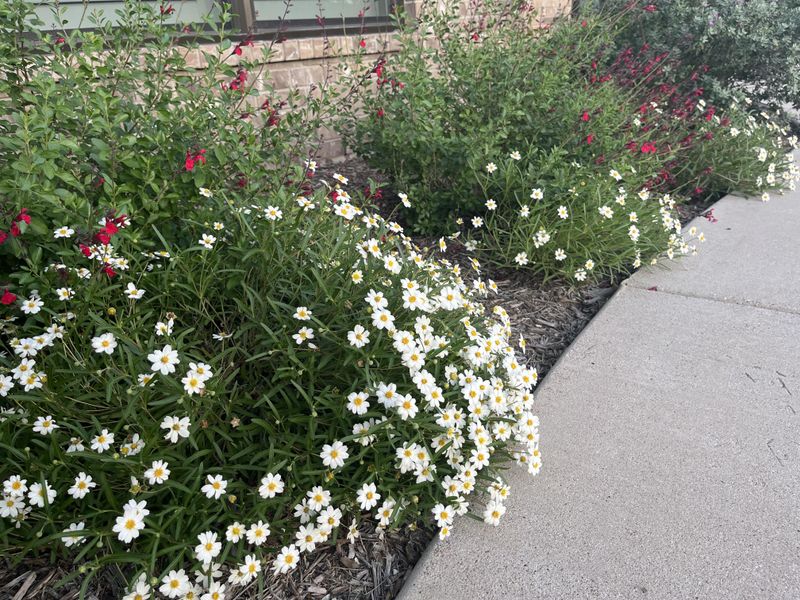
Gardeners sometimes picture a plant labeled as self-sowing filling a bed the way a groundcover would, spreading outward in a solid mat season after season. Blackfoot daisy does not work that way.
Central Texas Gardener’s resource on blackfoot daisy describes the plant as forming a rounded mound, which is the shape of a single, self-contained specimen rather than a spreading colony. New plants come from seed, not from runners, rhizomes, or stolons moving underground or along the soil surface.
The self-seeding process is genuinely occasional and uneven. Austin’s plant guide uses that cautious word “occasionally” for a reason: seed viability, weather timing, bare soil availability, competition from neighboring plants, and irrigation levels all shape whether a seedling germinates and survives long enough to establish.
Texas Tech’s plant profile confirms the rounded, mounding growth habit that distinguishes this species from more aggressive self-spreading perennials. A well-mulched, densely planted bed with little exposed soil may see few or no volunteers even from a healthy parent plant.
A more accurate expectation is gradual naturalization. Over several seasons, a planting that includes a few established parent plants in a sunny, dry bed may slowly develop new individuals in adjacent bare spots, filling gaps incrementally rather than rushing to cover ground.
That is genuinely useful if you manage the bed with it in mind, leaving some exposed soil near mature plants and allowing the natural cycle to proceed. Framing it as a plant that “spreads on its own” sets up the wrong picture; framing it as one that may gradually renew itself under cooperative conditions sets up the right one.
Raise or mound the planting area when clay holds water
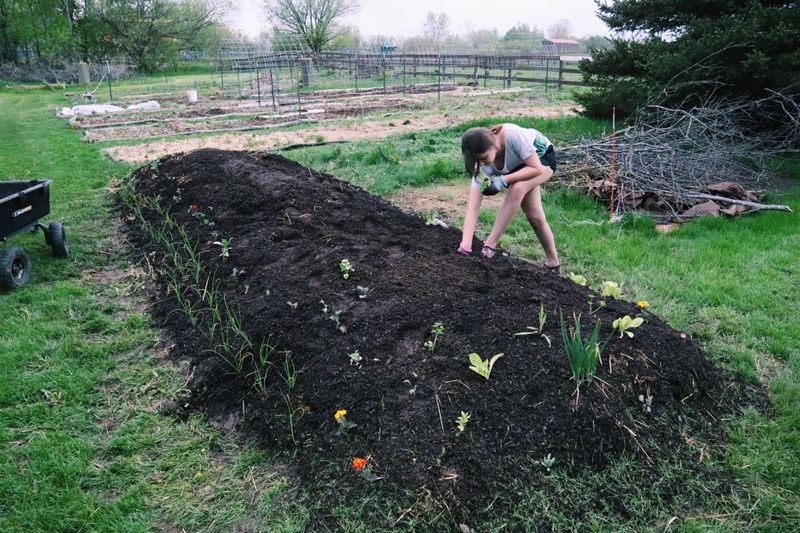
When a bed has clay soil that stays wet longer than blackfoot daisy tolerates, the most reliable fix is changing the physical structure of the planting area rather than hoping an amendment alone will solve the problem. Texas A&M AgriLife’s raised bed guidance identifies raised beds as a long-term solution when underlying clay remains too wet and oxygen-starved for healthy root development.
Elevating the planting area, even by six to eight inches, allows excess water to move away from the root zone instead of pooling around the crown.
A gently mounded planting area accomplishes the same goal with less construction. Pulling soil up into a low mound and setting the plant at or near the top keeps the crown out of the lowest point in the bed, where water naturally collects.
This is especially useful in yards where grading directs runoff toward a border or where the surrounding lawn sits slightly higher than the bed. The mound does not need to be dramatic; a few inches of elevation changes the drainage math meaningfully.
Texas A&M AgriLife Extension’s soil preparation guidance describes organic matter, gypsum, and structural changes as tools that depend on the specific site rather than a single recipe that works everywhere. Adding organic matter to clay can improve its structure and aeration over time, but that improvement does not justify planting blackfoot daisy in a spot where water still collects after amendment.
Soil preparation helps a marginal site become suitable; it does not transform a saturated, low-lying bed into a dry border. If water still stands in a bed after a rain, the drainage problem needs to be addressed before the plant goes in, not after.
Water new plants first, then let mature plants stay comparatively dry
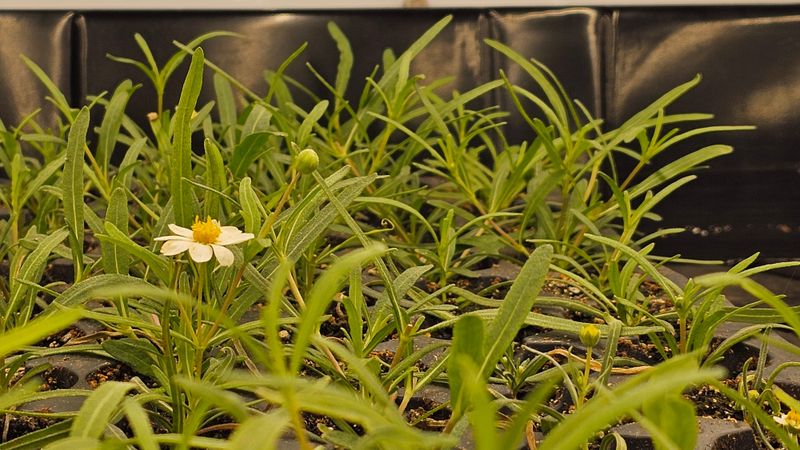
One of the more counterintuitive things about drought-tolerant plants is that they still need attentive watering when they are new. A blackfoot daisy pulled from a nursery pot has not yet built the root system that will eventually let it shrug off a Texas summer.
National Park Service Texas pollinator planting guidance recommends keeping new plantings moist during the first two weeks, then watering as needed or when plants show signs of drooping. That transition period is critical for root development, and skipping it can cost you a plant that would otherwise have thrived for seasons.
Once blackfoot daisy is established, the watering philosophy reverses. Austin’s plant guide lists low irrigation as a key requirement for mature specimens, alongside full sun and alkaline or calcareous soil.
A plant that has been in the ground through one full season and shows healthy new growth is ready to operate on rainfall alone for most of the year in a typical Central Texas climate, with supplemental water only during extended drought.
The temptation to keep watering, especially when a plant looks lush and productive, can actually shorten its useful life. NC State Extension’s blackfoot daisy profile notes that richer soil and abundant water may increase flowering in the short term but can reduce the plant’s longevity.
Overly irrigated specimens in heavy soil decline faster than those kept comparatively dry. The goal after establishment is benign neglect: full sun, minimal water, and the understanding that this plant performs best when you resist the urge to improve its situation.
Trim for a compact mound while preserving some seed heads
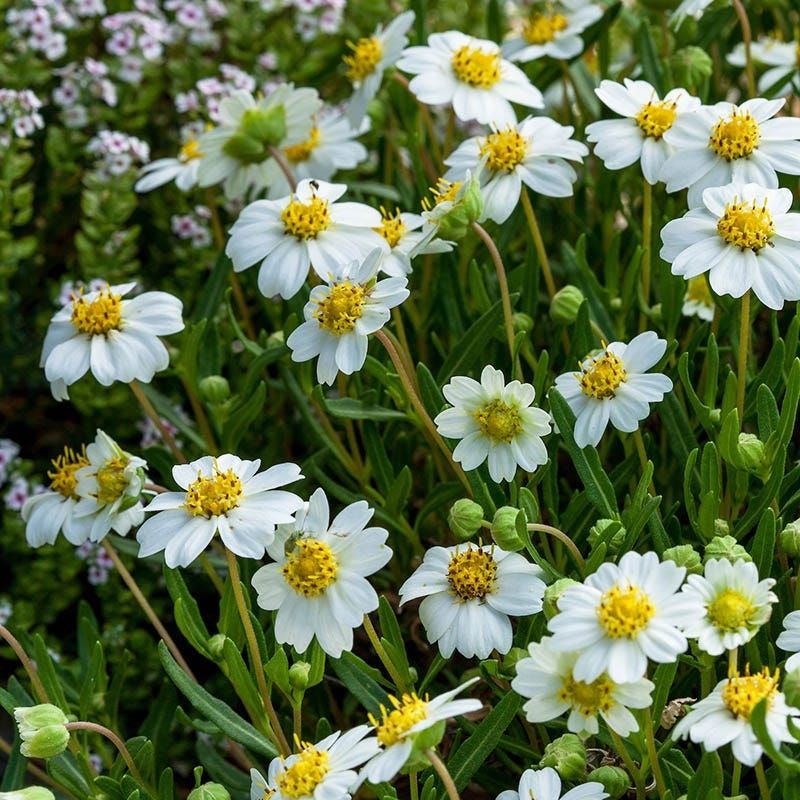
Left completely untrimmed, blackfoot daisy can become a bit open and sprawling over time, losing the tidy mounded shape that makes it useful in a border. Light shearing after the main flush of bloom helps the plant reset its form and often encourages a fresh round of flowers.
Central Texas Gardener’s blackfoot daisy resource recommends light trimming to maintain a compact shape and promote continued flowering through the season. The key word is light: cutting back hard into old wood can stress the plant more than it benefits it.
Gardeners who want volunteer seedlings in future seasons need to think carefully about when they trim. Removing every spent bloom before seeds mature eliminates the seed source entirely, which is a direct contradiction of the goal.
A practical approach is to allow at least a portion of the flowers to complete their cycle, letting seed heads dry on the plant before shearing that section back. Trimming in waves rather than all at once lets some seed mature while keeping the plant reasonably tidy.
National Park Service Texas pollinator guidance includes blackfoot daisy among recommended plants for supporting native bees and other pollinators, and extension and botanical references note that birds feed on the seeds. These are real benefits worth preserving, but they depend on flowers completing their cycle rather than being removed at the spent-bloom stage.
Setting realistic expectations matters here too: occasional reseeding will not guarantee that every gap in a bed fills in, and the wildlife activity around any single plant varies with yard conditions, nearby habitat, and season.
Choose blackfoot daisy for a dry border, not a saturated clay bed
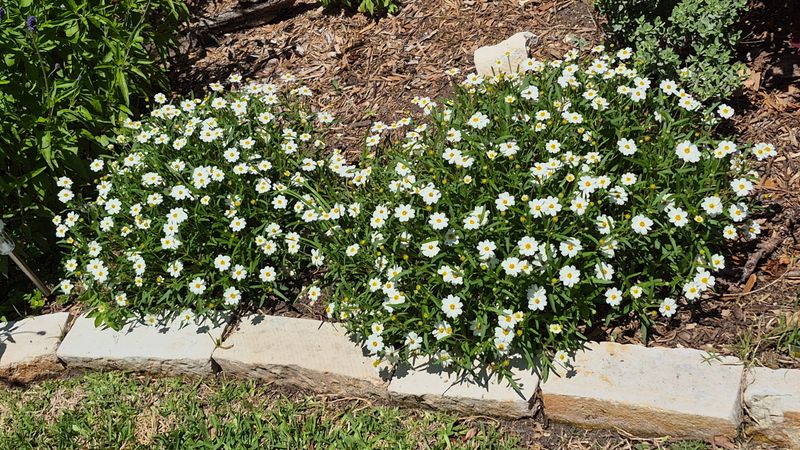
Before buying plants, the most useful question is whether your site actually matches what blackfoot daisy needs. A sunny, dry, sharply drained border is the right home for this species.
That includes clay-based sites that have been raised, mounded, amended to improve drainage, or naturally mixed with rock and gravel. Austin’s plant guide is clear that dry conditions and rapid drainage are non-negotiable requirements, not preferences.
When those conditions are present, blackfoot daisy is a genuinely lower-maintenance choice that may persist across multiple seasons and occasionally fill gaps with seedlings.
When a bed stays saturated after rain, the honest recommendation is to solve the drainage problem first or choose a different plant. Texas A&M’s raised bed guidance makes clear that clay which remains wet and oxygen-starved is a structural problem, not one that a drought-tolerant plant can work around.
Gardeners who want a taller, more meadow-like self-seeding option might consider Engelmann’s daisy (Engelmannia peristenia), which reaches roughly 1.5 to 3.5 feet and can reseed in clay-loam soils. However, Texas A&M’s rangeland database notes that Engelmann’s daisy also does not perform well in heavy clay, so it is an alternative with its own documented site limitations rather than a universal fallback.
The honest payoff from blackfoot daisy is real but conditional: fewer replacement plantings may be possible, and a planting may gradually renew itself over time. That outcome depends on the site, the season, and a bit of patience.
A plant that asks for sun, dryness, and good drainage in exchange for months of bloom and occasional self-renewal is a fair trade on the right Texas border.