
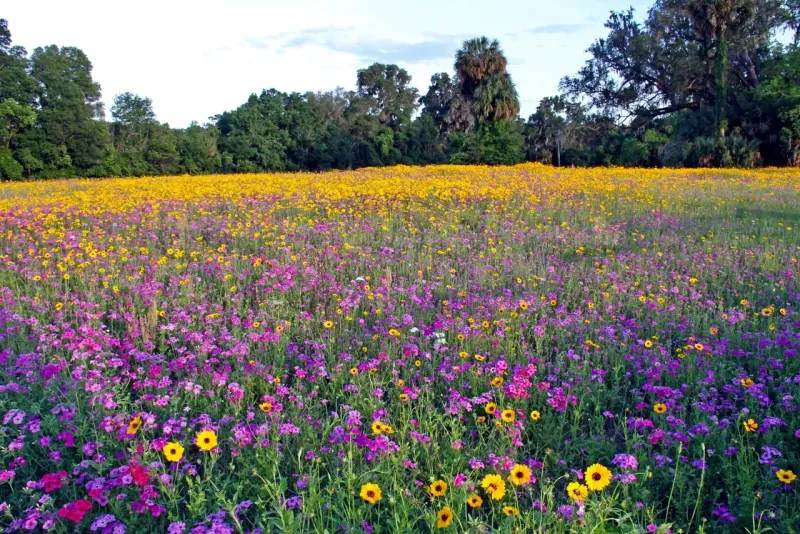
Many Florida butterfly gardens lean on the same few flowers, then wonder why the yard feels quiet. The right native wildflowers can bring in more butterflies, handle sandy soil, and keep blooming through long warm seasons.
Some of the best choices are still missing from home beds, even though they are tough, beautiful, and useful for local wildlife. Here are seven overlooked Florida natives that can turn a simple border into a busy butterfly stop.
1. Frostweed
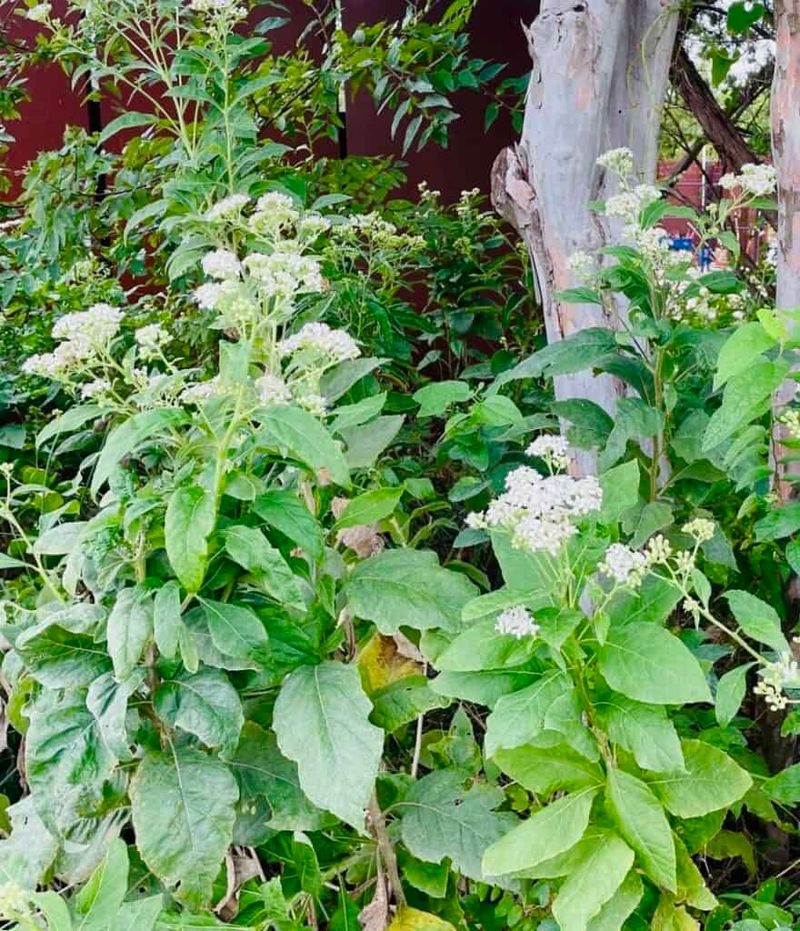
A shady corner does not have to be the quiet corner of a butterfly garden. Frostweed is one of those native wildflowers that feels almost too useful to be left out, yet many sunny-border plans skip it because it is not a compact bedding plant.
In Florida yards, frostweed shines along woodland edges, fence lines, and the back of a loose native bed. It can grow tall, often reaching several feet, with white late-season blooms that arrive when many showier flowers are slowing down.
That timing is its secret weapon. Fall butterflies need nectar too, especially in much of Florida where warm weather stretches deep into the year, and frostweed can help keep the garden active after summer color fades.
Plant it where it has room to lean and mingle rather than where you need a tight, formal look. It handles part shade better than many classic butterfly flowers, which makes it helpful for homeowners with live oaks, pines, or a bright side yard that only gets broken sun.
One quirky detail gives frostweed its name. On cold mornings, the stem can split and form curling ribbons of ice, a rare little Florida winter surprise in the northern part of the state.
2. Spotted Beebalm
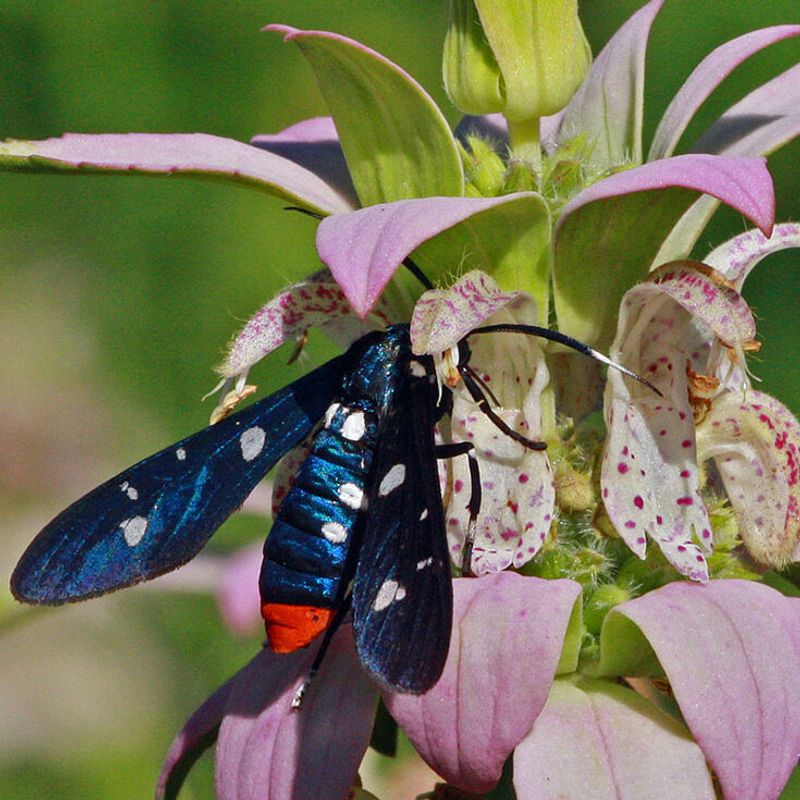
Pollinators seem to find spotted beebalm before people do. Its odd, stacked blooms look like little garden fireworks, with pale bracts and speckled flowers that make it stand apart from the usual orange and purple butterfly-garden palette.
For Florida homeowners dealing with sandy, fast-draining soil, spotted beebalm is a smart pick. It is native to much of the Southeast and is well suited to dry, sunny spots once established, which means it can work in roadside-style strips, mailbox beds, and low-water pollinator patches.
Butterflies visit the nectar, but the plant also draws bees and other beneficial insects, giving your yard a fuller wildlife effect. That makes it different from flowers that mainly serve as bright decoration with only short bursts of pollinator value.
Give it full sun and avoid rich, soggy soil. Too much pampering can make it flop, while leaner conditions often keep it looking more natural and sturdy.
Spotted beebalm may reseed when it is happy, so let a few seed heads stand if you want a casual meadow feel. In a Florida garden that needs toughness more than fussiness, that self-sufficient habit is part of the charm.
3. Carolina Wild Petunia
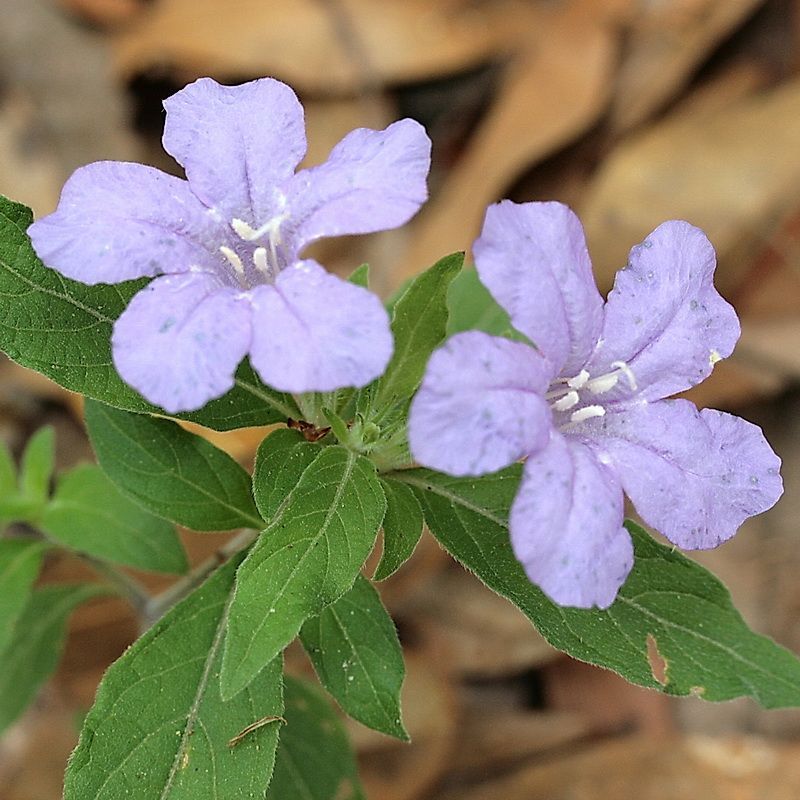
Do not confuse this polite native with the invasive Mexican petunia that causes headaches in Florida landscapes. Carolina wild petunia offers a softer, better-behaved way to get purple blooms without inviting a spreading problem into wet ditches or garden beds.
Its flowers are simple, pretty, and easy to tuck into the front or middle of a native border. The plant usually stays lower than many meadow wildflowers, so it works nicely along paths, beside a porch planting, or around taller nectar plants that need a tidy base.
Butterflies may stop for nectar, and the plant also supports native insects in a more layered backyard habitat. For gardeners who want a less wild-looking butterfly bed, Carolina wild petunia brings a neat shape without feeling stiff.
Florida soils vary, but this species can handle average sandy garden conditions once settled in. It appreciates sun to part shade, making it useful in beds that get morning light and afternoon protection.
The big homeowner payoff is replacement value. If you have been removing Mexican petunia because it spreads too aggressively, Carolina wild petunia gives you a native purple-flowering option that fits the butterfly-garden look without the same invasive baggage.
4. Lanceleaf Coreopsis
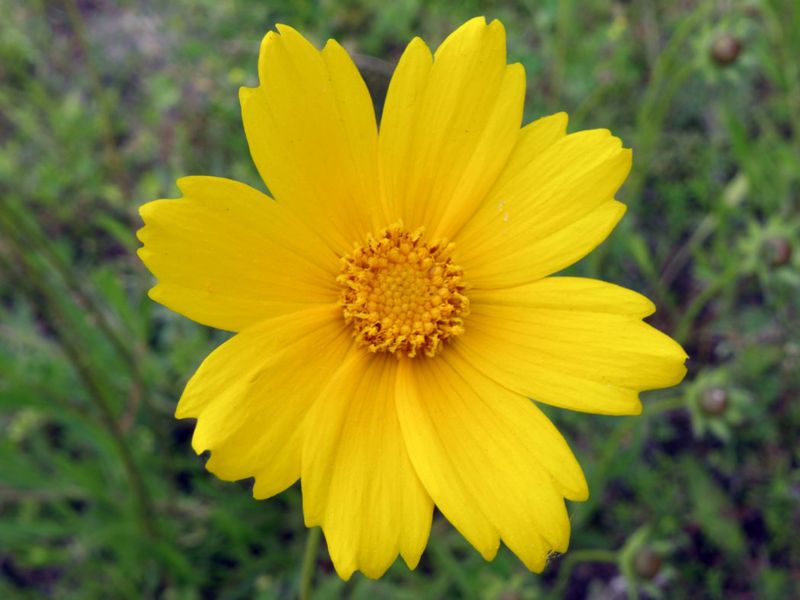
A patch of lanceleaf coreopsis can make a front bed look sunny even before the day fully warms up. The golden flowers have that cheerful roadside-wildflower look Florida gardeners recognize, but the plant is still left out of many butterfly gardens in favor of flashier nursery annuals.
Coreopsis is Florida’s state wildflower genus, which gives this choice a homegrown story as well as practical value. Lanceleaf coreopsis brings bright spring and early summer color, and in the right conditions it can help bridge the gap before later-season nectar plants take over.
Butterflies are drawn to the open, daisy-like blooms because the landing area is easy to use. That makes it especially friendly for smaller visitors that may struggle with deep tubular flowers.
Use it in full sun where drainage is good. Sandy Florida beds are often a problem for thirsty ornamentals, but lanceleaf coreopsis usually prefers not to sit in heavy, wet soil.
For the cleanest look, place it in groups rather than scattering one plant here and there. A small drift near a walkway, mailbox, or patio edge gives butterflies a clear target and gives your yard a brighter, more finished look with very little fuss.
5. Blue Mistflower
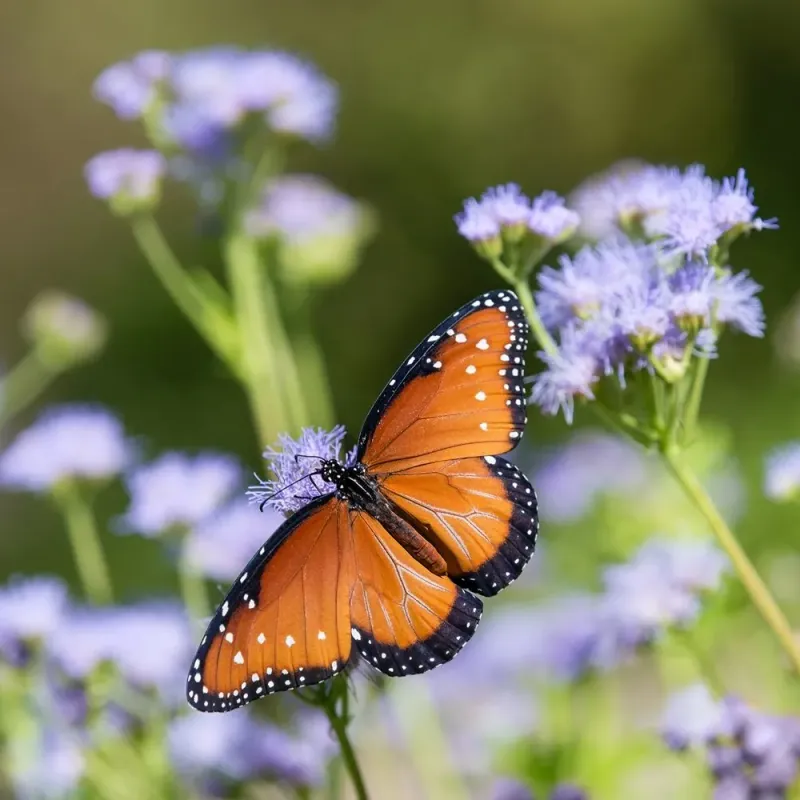
When blue mistflower is in bloom, butterflies can make it look like the plant is moving. The soft blue-purple flower clusters are small on their own, but together they create a nectar cloud that can be very busy in the right Florida spot.
Unlike the driest wildflowers on this list, blue mistflower is useful where the soil stays a bit more moist. Think rain-garden edges, low areas that drain after storms, or a bed near a downspout where tougher dryland plants may not be as happy.
Its biggest difference is the way it can fill space. Blue mistflower spreads by rhizomes, so it is better for a naturalized patch than a tiny formal bed beside clipped shrubs.
That spreading habit is not a flaw if you plan for it. Give it a defined area, pair it with sturdy neighbors, and cut it back when needed to keep the planting balanced.
Butterflies, including monarchs and queens, often visit mistflower-type blooms for nectar. In a Florida yard that gets heavy rain one month and baking sun the next, placing blue mistflower in the slightly damp zone can turn a problem area into one of the garden’s most active feeding stations.
6. Scorpiontail
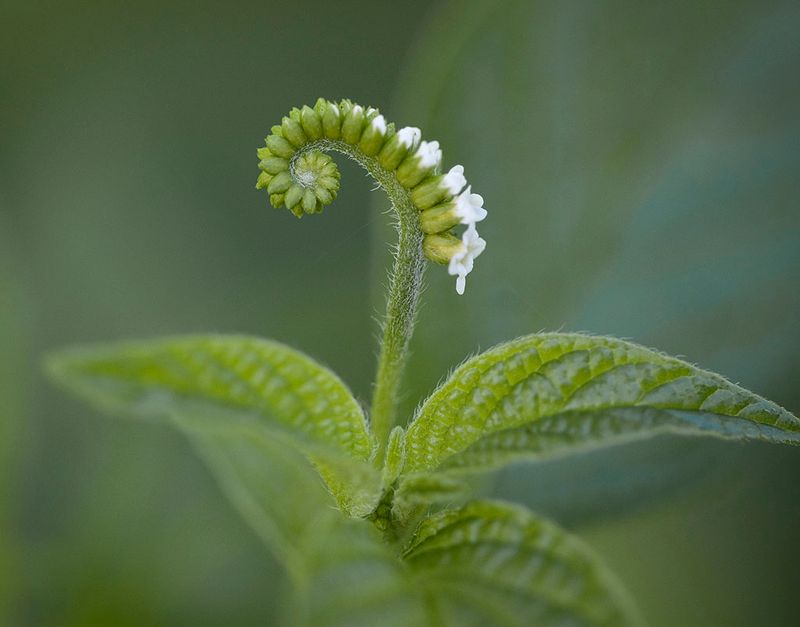
Small flowers can pull a surprising crowd, and scorpiontail proves it. The curled flower clusters look a bit like a scorpion’s tail, giving this native a fun shape that children and garden visitors tend to notice once someone points it out.
Scorpiontail is especially valuable in warmer parts of Florida, including South Florida landscapes where long bloom windows matter. It produces clusters of tiny white flowers that attract smaller butterflies and other pollinators that may be overlooked when gardens focus only on big, showy blooms.
That is what earns it a place here. Not every butterfly visitor is large like a swallowtail, and a strong garden should feed the little ones too.
Use scorpiontail in sunny to lightly shaded areas with well-drained soil. It can fit into informal borders, native cottage-style beds, or wildlife corners where a slightly loose look is welcome.
Because the flowers are modest, plant it where people can get close enough to see the detail. Near a path, patio, or birdbath, scorpiontail becomes more than filler.
It becomes a small-scale nectar stop that adds texture while supporting the kind of tiny pollinator traffic many yards are missing.
7. Pineland Lantana
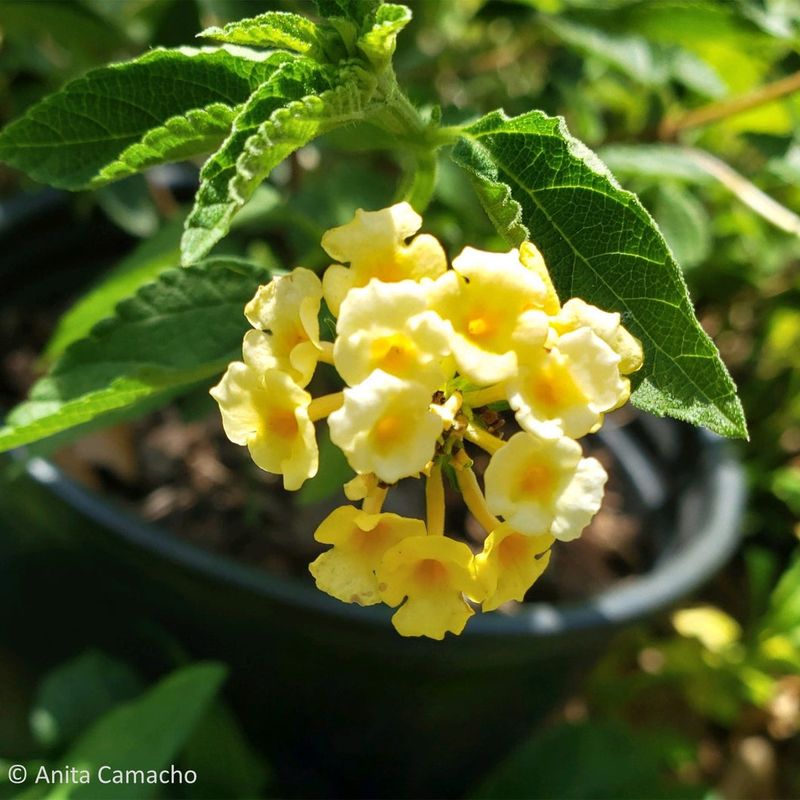
Garden centers often sell lantana, but the native pineland lantana is the one many Florida butterfly gardens forget to ask for. That matters because some nonnative lantanas can be weedy or genetically messy in Florida landscapes, while native choices better fit local habitat goals.
Pineland lantana brings clusters of yellow flowers that are easy for butterflies to find in full sun. It suits dry, open sites and can look right at home in sandy beds, coastal-style plantings, and sunny borders where irrigation is limited.
The plant stands out because it offers the familiar butterfly appeal of lantana with a stronger Florida-native connection. For gardeners trying to shift away from generic tropical color, that is a meaningful upgrade.
Drainage is the key. Avoid low, soggy spots and give it the kind of bright, lean conditions many Florida natives prefer.
Availability can be the trickiest part, so check native plant nurseries and local native plant sales rather than relying only on big-box selections. If you find it, pineland lantana can become a sunny anchor for a low-maintenance butterfly bed, especially when paired with coreopsis, beebalm, and other drought-tolerant natives.