
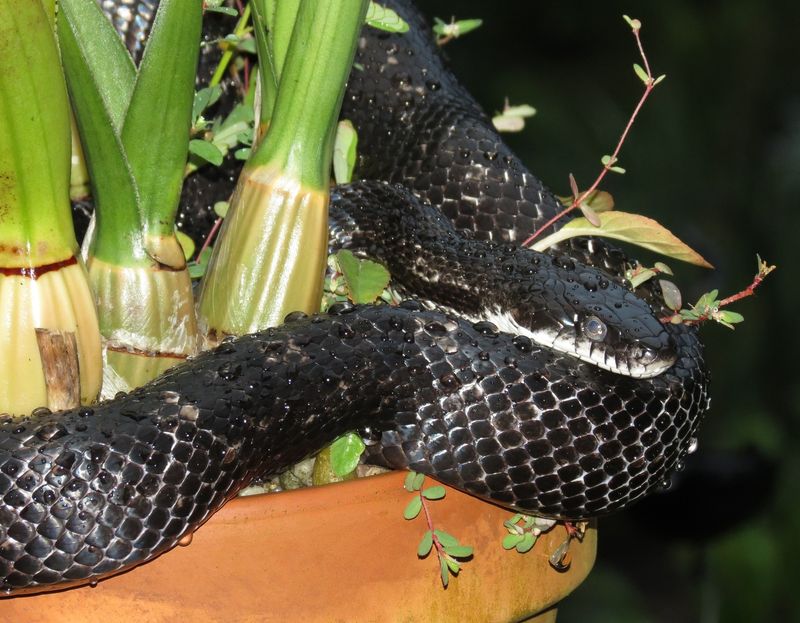
Stepping onto your porch and finding a dark snake curled near the steps is startling enough once, but when it keeps happening after every rain, it starts to feel like something is wrong in your yard. Before you assume the neighborhood suddenly has a snake problem, there is a much simpler explanation worth exploring.
Repeated sightings are less a population count and more a clue that something around your home, whether shelter, moisture, prey, or a gap in the foundation, is drawing wildlife close. Understanding what changed is far more useful than panicking about how many snakes might be out there.
A Porch Sighting Is Not a Population Count
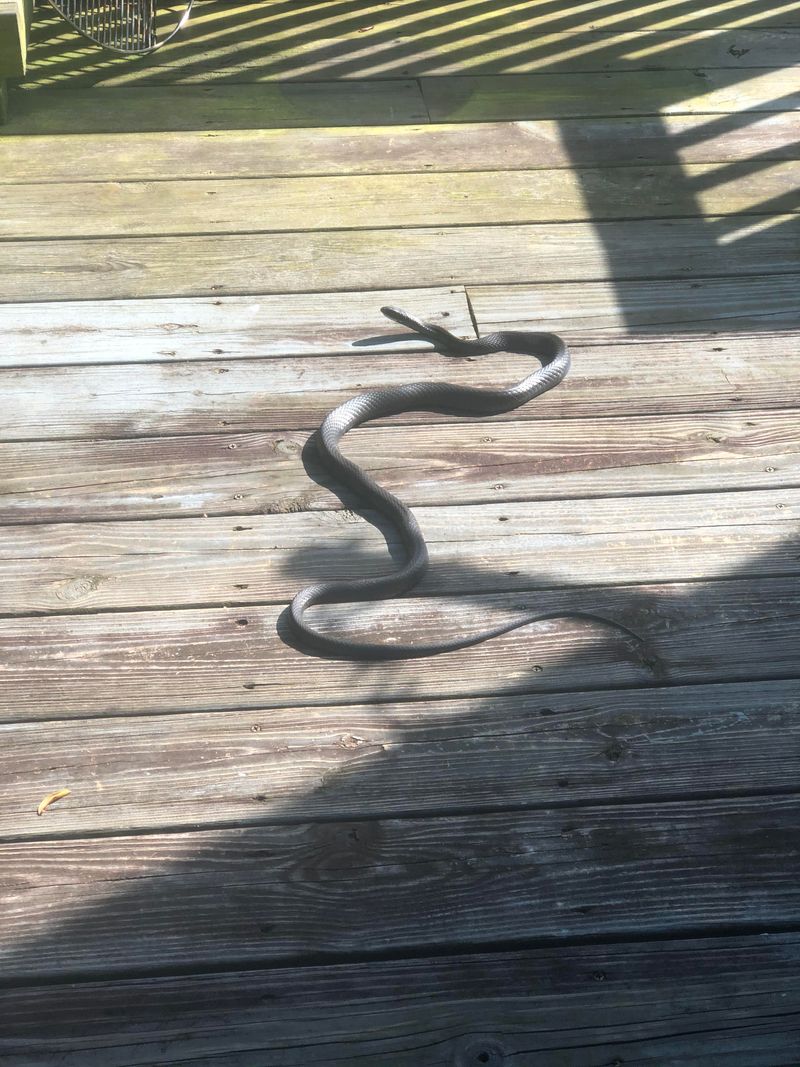
Seeing a snake on your porch after rain feels alarming, and seeing it happen again and again feels like evidence that your yard is overrun. The key correction to make right away is that repeated sightings do not equal more snakes.
Visibility and movement can both increase without a single new animal arriving in your yard.
One snake using a familiar shelter or travel corridor can generate multiple sightings across several weeks or months. Without photographs, location notes, and timing records, there is no reliable way to determine whether you are seeing one individual or several different animals.
NC State Extension guidance on snakes recommends identifying what your home offers, such as warmth, shelter, prey, and water, rather than assuming a surge in the local population.
A better way to read the situation is as a signal worth investigating. The porch is where you noticed the snake, but the actual story may be happening in the brush pile near the fence, the firewood stacked against the house, or the damp low spot beside your downspout.
Each sighting is a prompt to look at what changed nearby, not a census figure.
Research supports a cautious read of activity patterns. A study of 23 snake species in South Carolina’s Atlantic Coastal Plain found that snake activity was strongly tied to season and temperature, meaning that warmer months naturally bring more movement regardless of rainfall.
Sightings cluster during peak activity periods, so a string of porch encounters in June or September may simply reflect the calendar more than anything unusual happening in your yard.
Treating the sightings as a habitat inspection prompt, rather than a headcount, puts you in a much more useful position. You can look for what changed, address it if needed, and make informed decisions about the space around your home without overreacting to what is often a normal part of living near wildlife in North Carolina.
What the Rain Actually Changed
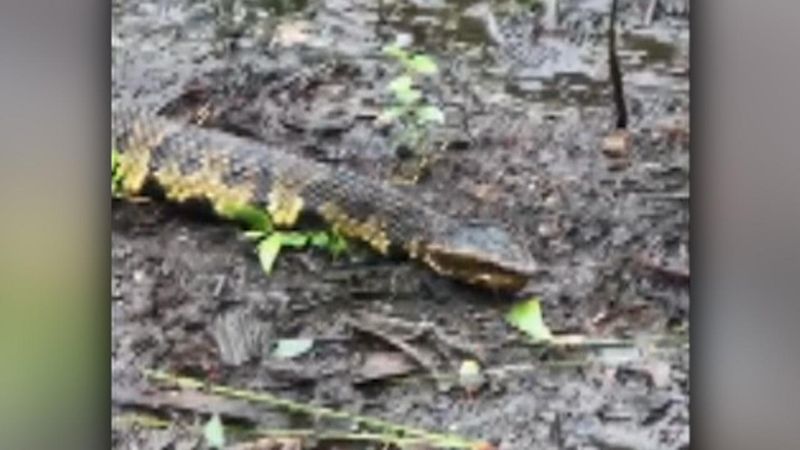
Rain is not one single condition, and treating it that way leads to oversimplified conclusions about snake behavior. An ordinary summer shower, a week of prolonged wet weather, a severe storm, and actual flooding each create different situations for snakes and for the yards they move through.
Getting that distinction right matters for understanding what you actually saw on the porch.
For routine rainfall, the connection to increased snake activity on porches is weaker than most people assume. The Atlantic Coastal Plain study found that after controlling for seasonal effects, precipitation actually had a negative relationship with overall snake movement.
In other words, snakes do not reliably emerge onto porches because it rained. The season and temperature doing the driving are the more consistent factors.
Flooding is a different matter. When water levels rise enough to push into burrows, low-lying cover, or ground-level hiding spots, snakes can be physically displaced and may move toward higher or drier ground, including porches, sheds, and foundations.
NC State Extension’s guidance on snakes after storms specifically addresses this scenario, noting that storm-related displacement is a real and distinct situation that calls for extra caution around debris and flood-affected areas.
Temperature and season may explain more post-rain sightings than the rain itself. A warm, humid evening after a summer shower is an active time for many snake species, and a porch that holds daytime warmth can look like an attractive resting spot.
NC State Extension’s wildlife handbook notes that snakes become more visible when they are basking or moving during their natural activity periods, which overlap heavily with the warm, wet conditions of a North Carolina summer.
Rain can also change what is visible around a yard without changing the snake itself. Wet conditions may push frogs, lizards, and small rodents into more exposed positions, which in turn moves a hunting snake into open view.
The rain shifts the whole ecosystem slightly, and the porch sighting is often just where that shift became obvious to you.
“Black Snake” Is Only a Starting Description
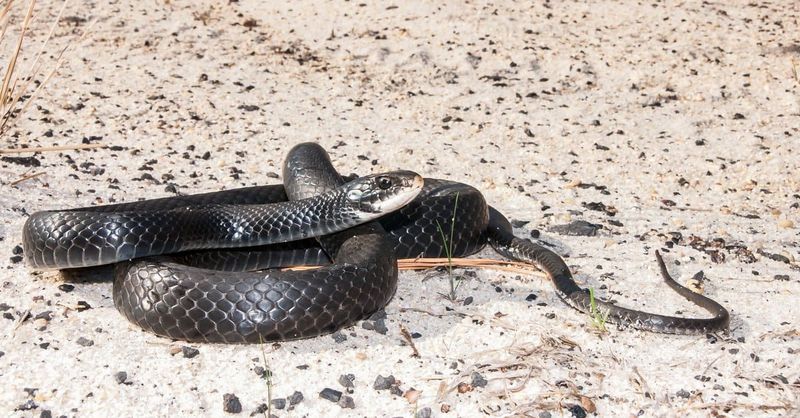
Color is one of the least reliable tools for identifying a snake, and “black snake” covers a surprisingly wide range of species in North Carolina. Knowing that an animal looks dark from several feet away tells you very little about whether it is venomous, what it eats, or how it is likely to behave.
The color gets you to a short list; it does not get you to a safe conclusion.
Two species come up most often in porch encounters. The black racer is found statewide, typically appears all black as an adult with smooth scales, is active during the day, and almost always tries to flee when approached.
The eastern rat snake is also statewide and may be black with a white or pale chin; it has weakly keeled scales, climbs well, and eats rodents, birds, and amphibians. NC State Extension’s Colubridae species profiles describe both in detail, including the behavioral and scale-level differences that help separate them from a careful distance.
Other North Carolina species can also appear dark or nearly black, including eastern kingsnakes, black-form eastern hognose snakes, and some water snakes that darken significantly with age. A photograph taken from a safe distance, showing the full body, head shape, and scale texture, is far more useful than any single field mark.
Relying on the triangular-head rule is especially risky because nonvenomous water snakes can flatten and widen their heads when threatened, mimicking the shape of a pit viper.
NC State Extension’s main snake resource identifies North Carolina as home to 38 native snake species, most of which are harmless to people. The state’s venomous species include copperheads, cottonmouths, three rattlesnake species, and the eastern coral snake.
Copperheads are statewide and are the most common venomous snake in North Carolina, which means they cannot be ruled out simply because a snake looks dark.
Adult cottonmouths can become very dark with age, and NC Wildlife’s venomous snake identification guide recommends using geographic range and multiple physical characteristics together rather than relying on any single visual rule. A dark snake near water in eastern North Carolina deserves more caution than the same color animal seen in a Piedmont backyard far from wetlands, because range matters as much as appearance.
Until you can make a confident identification using several characteristics, treat any unidentified snake as potentially venomous and keep your distance accordingly.
The Porch Reveals What the Yard Offers
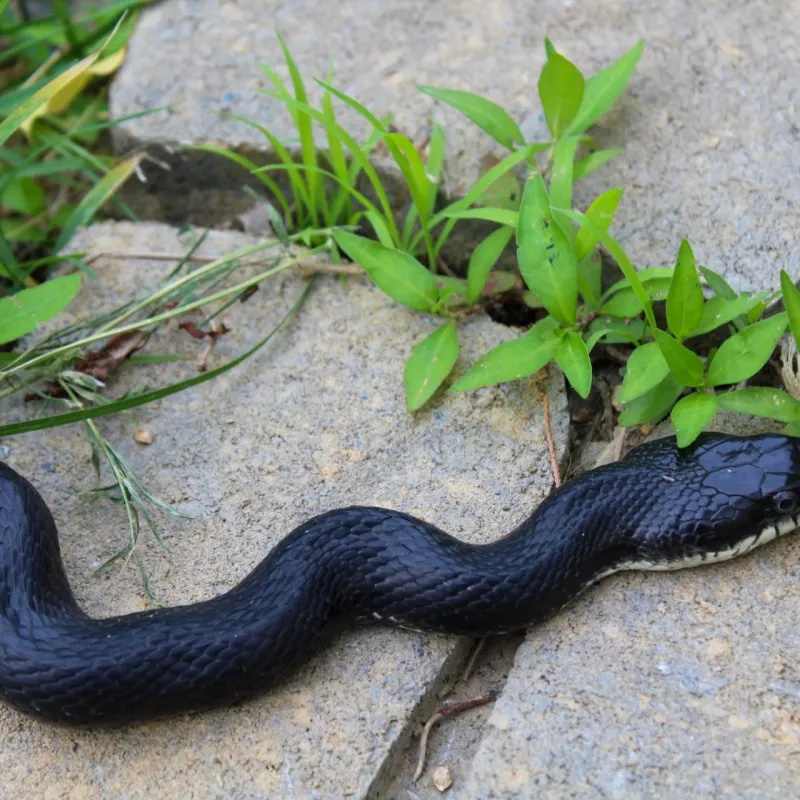
Your porch is the place you noticed the snake, but it is rarely the reason the snake showed up. Snakes follow food, shelter, warmth, and travel routes, and the porch is often just the visible endpoint of a chain of conditions that starts somewhere else in the yard.
NC State Extension lists warmth, shelter, prey, and water as the primary attractants that bring snakes close to homes, and a porch can supply all four without the homeowner realizing it.
Cover is one of the most important factors. Brush piles, stacked lumber, flat rocks, leaf accumulation near the foundation, and dense weedy edges all provide shaded, protected resting spots that snakes use during the day.
A snake spotted on the porch steps at dusk may have spent the afternoon under a board pile six feet away, then moved into the open as temperatures dropped and hunting began. The porch did not attract the snake; the nearby cover did.
Prey is the other half of the equation. Rodents that use gaps beneath porches or sheds, frogs drawn to a wet mulch bed or a puddle that forms after rain, and lizards basking on warm concrete all represent food that a hunting snake will follow.
NC State Extension’s species profiles note that rat snakes in particular are excellent climbers and will follow prey into elevated spaces, including porches and eaves.
A sighting does not mean snakes are nesting beneath the porch. They may be passing through on a regular travel corridor, using tunnels that rodents dug first, or sheltering under a single object like a doormat or a pot saucer.
UGA Extension’s coexistence guidance specifically notes that snakes may occupy tunnels created by rodents rather than digging their own, which means addressing a rodent problem can sometimes reduce snake presence indirectly.
Thinking about the porch as part of a connected system, rather than an isolated problem spot, makes the inspection that follows much more productive. The snake is telling you something about the yard around it, and the most useful response is to look outward from the porch rather than focusing only on the spot where the animal appeared.
A Focused Yard Audit Finds the Change
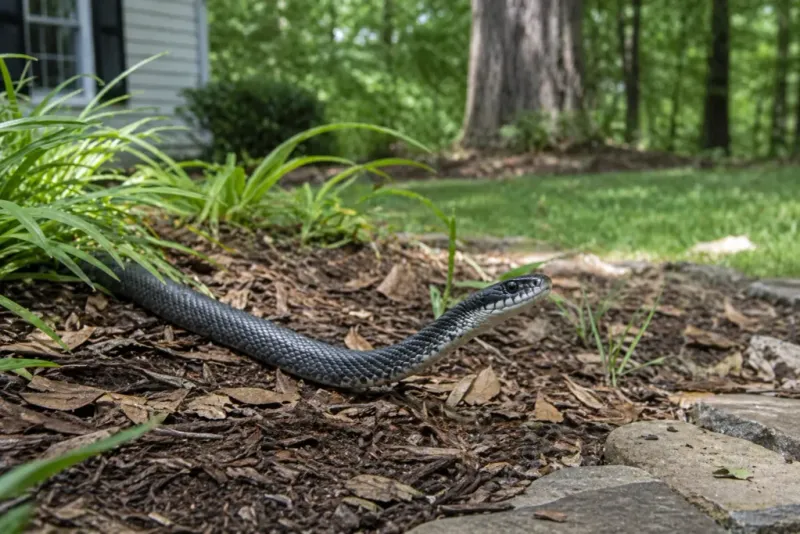
Once you decide to treat the sightings as a yard diagnostic, a focused inspection sequence gives you the most useful information in the least amount of time. Work through moisture, cover, prey, and entry points as separate categories rather than scanning the yard generally.
Start with water and drainage. After the next rain, walk the perimeter of your house and note where downspouts discharge, whether drains are clear, where puddles sit beside the foundation, and whether mulch beds stay wet for more than a day.
NC State Extension’s storm guidance connects wet areas to both prey habitat and snake movement, and UGA Extension’s stormwater management resource points out that directing runoff away from the house foundation reduces standing water that supports amphibians and insects, which are themselves prey for snakes.
Next, look at cover and stored materials. Brush piles, leaf piles, flat rocks, boards, lumber stacks, and discarded containers all function as ready-made shelter.
NC State Extension’s wildlife handbook recommends keeping firewood elevated and away from the foundation, moving brush and debris away from the house, and cutting back dense weedy growth along edges and fences. Move materials at least several feet from the foundation rather than simply reorganizing them in the same area.
Prey is the third category. Check for signs of mice, rats, or voles near the foundation, look for frog or toad activity in damp corners, and secure birdseed and pet food in sealed containers.
NC State Extension notes that snakes commonly use properties that supply food and cover together, so reducing prey access is one of the more direct ways to make a yard less appealing to a hunting snake.
Finally, inspect entry points. Look for openings at least one-quarter inch wide around doors, crawlspace vents, pipes, wires, and damaged masonry.
Seal gaps with mortar, foam, sheet metal, or fine hardware cloth depending on the material and gap size. A snake does not need a large opening to move through a foundation, and gaps that let in mice will also let in the snakes that follow them.
None of these steps guarantees that you will never see another snake near the porch. They reduce the conditions that make the porch an attractive stop on a snake’s route, which is a realistic and achievable goal for most North Carolina homeowners.
Safe Distance Matters More Than Fast Removal
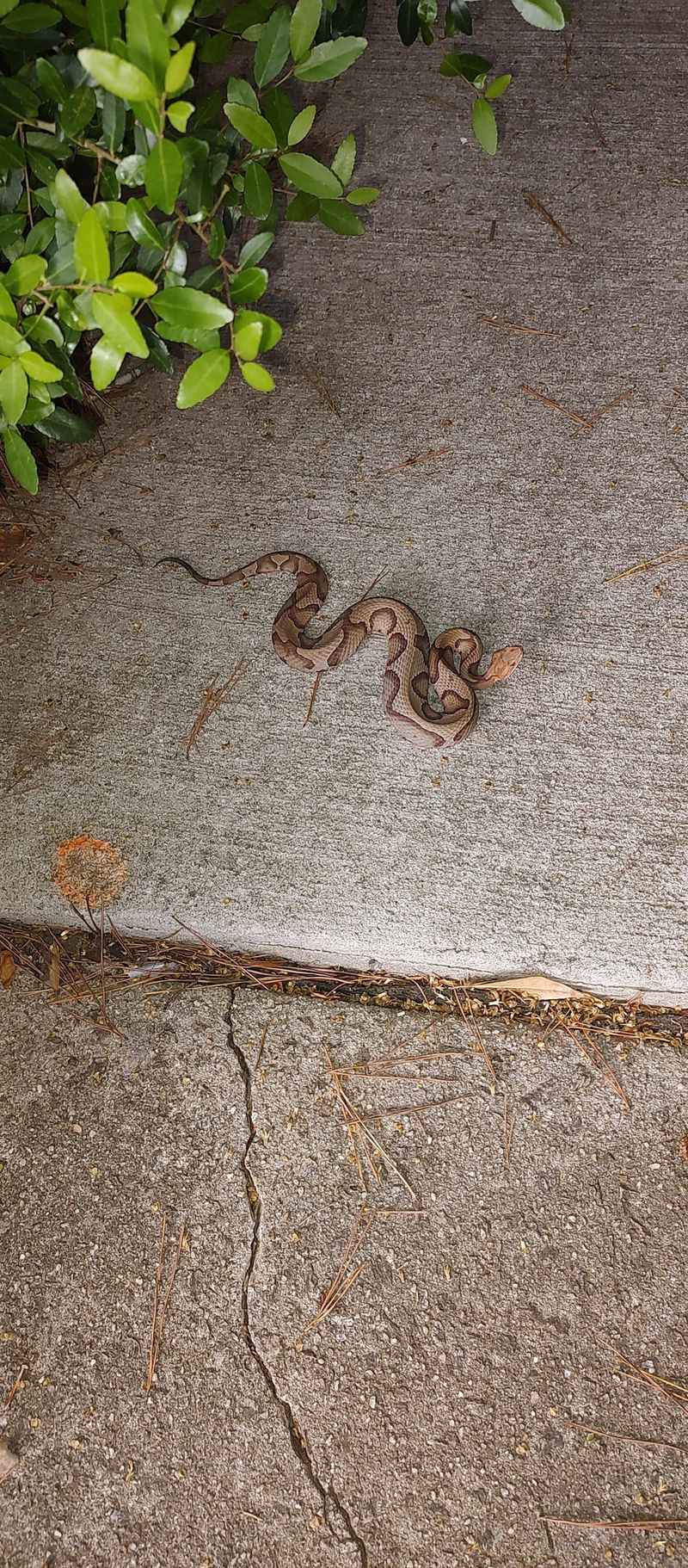
When you spot a snake on the porch, the most protective first move is to create space, not to act quickly. Keep children and pets inside or well away from the area, and resist the urge to corner, pin, or grab the animal.
A snake that feels trapped is far more likely to strike defensively, and a bite from a nonvenomous species can still break skin and introduce bacteria.
For an outdoor encounter, give the snake a clear path to leave on its own. Most snakes will move off within minutes if they are not threatened and can see a route away from the disturbance.
NC Wildlife’s copperhead guidance recommends allowing snakes space and an escape route rather than attempting to drive them off aggressively. If the snake is slow to move, a gentle spray from a garden hose used from a safe distance can encourage it to leave without requiring any direct contact.
An unidentified snake inside the house is a different situation and calls for a different response. Do not attempt to handle or trap it yourself.
NC Wildlife’s conflict prevention guidance directs homeowners to contact a certified Wildlife Damage Control Agent when a snake of uncertain species is indoors. These professionals have the training and equipment to remove the animal safely without risk to you or to the snake.
When working around wet vegetation, storm debris, wood piles, or rocky areas after rain, wear sturdy closed-toe boots, long pants, and gloves. Use a long-handled tool to move material rather than reaching underneath it with your hands.
CDC guidance on venomous snakes at work applies equally well to yard work at home: appropriate footwear and tools are the most practical protection available.
If a bite does occur, move away from the snake calmly, keep still, and remove rings or tight clothing near the wound. Wash and loosely cover the bite if possible, then seek emergency medical care immediately.
Do not cut the wound, try to suck out venom, apply ice or a tourniquet, or attempt to catch or kill the snake. None of those actions help, and several can cause additional harm.
The only effective treatment for a venomous bite is antivenom administered at a medical facility.
Read the Pattern, Then Fix the Conditions
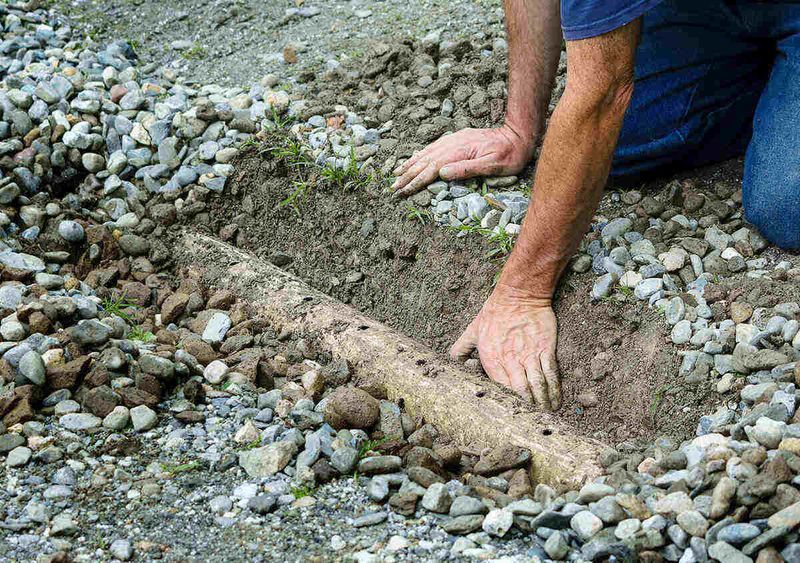
Repeated post-rain porch sightings are most useful when you treat them as a pattern worth reading rather than a crisis requiring immediate action. The question to ask is not how many snakes are out there, but what changed around your house that made the porch a regular stop.
Work through the sequence the sightings suggest: check whether the rain event involved actual flooding or was an ordinary shower, document the animal safely from a distance, then inspect moisture routing, cover, prey activity, and foundation openings. Correct what you find.
Move debris away from the foundation, seal gaps, address rodent harborage, and improve drainage. NC State Extension’s post-storm guidance and its main snake resource both frame habitat modification as the most dependable long-term approach.
Skip the chemical shortcuts. Mississippi State University Extension testing found that sulfur, mothballs, lime, cayenne, and other commonly recommended substances failed to repel black rat snakes, and some pose risks to people, pets, and other wildlife when used outdoors.
Commercial repellents have not been scientifically shown to work reliably either. Snakes may help keep rodent numbers in check on your property, but that benefit cannot be promised or predicted with any precision.
The realistic goal is a yard that is less inviting to wildlife near the doors and play areas, while remaining a functioning part of the North Carolina landscape a little further out.