
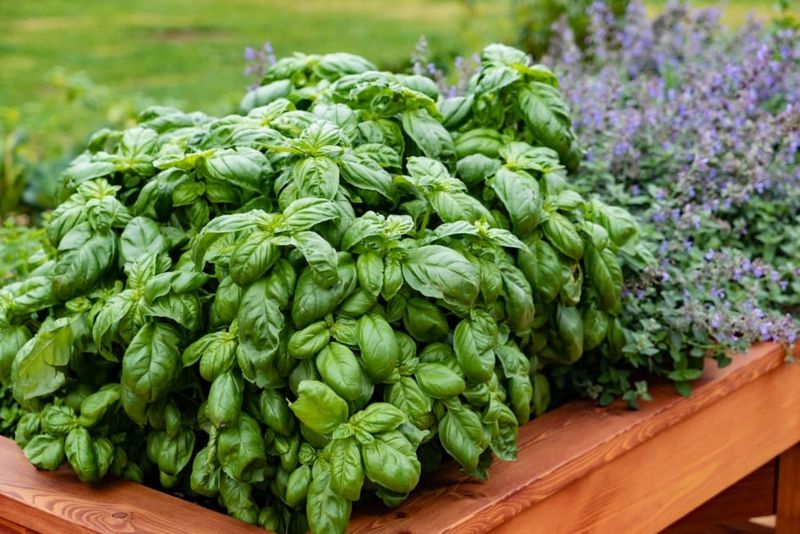
Growing basil through a North Carolina summer sounds simple until the plant shoots up, flowers, and turns bitter almost overnight. The good news is that a few consistent habits can push that leafy harvest well past the point where most plants would give up.
None of it is complicated, but timing matters more than most gardeners expect. This guide walks through exactly what it takes to keep basil producing flavorful leaves through the hottest months, and how to plan ahead so one plant’s decline does not end the season early.
Start the leafy harvest before flowering takes over
Keeping basil productive through North Carolina’s long, humid summers is less about a secret technique and more about starting the right habits at the right moment. The window that matters most is the one before flower buds open.
Once a basil plant commits to reproduction, its energy shifts away from producing the broad, aromatic leaves that make it worth growing. Catching that transition early, and acting on it consistently, is what separates a plant that fades in July from one that is still worth harvesting in September.
Basil is a tender annual with a built-in reproductive clock. Heat and water stress can speed up the journey toward flowering, but they are not the only drivers.
A well-watered, adequately shaded plant will still eventually push toward bloom as it matures. That is normal plant biology, not a sign that something went wrong.
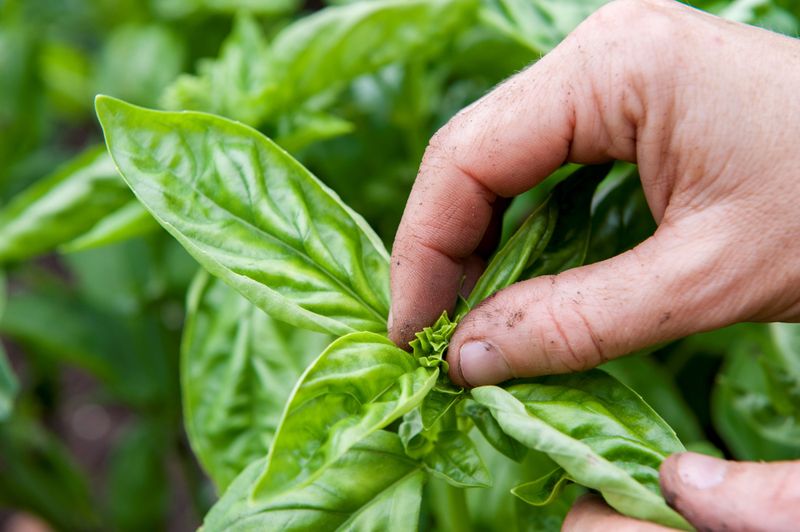
Penn State Extension’s basil guidance recommends pinching flowers throughout summer, framing it as an ongoing task rather than a one-time fix, which reflects how persistent the plant’s flowering impulse actually is.
The practical response is to remove flower buds as soon as they appear, before they open and before the plant has a chance to redirect resources into seed production. Illinois Extension is direct on this point: buds should come off the moment they form.
A few days of inattention during a hot week can let a plant cross a threshold that takes real effort to walk back.
Harvesting and bud removal work together rather than as separate chores. A gardener who trims stem tips regularly is also, by default, removing early flower structures before they mature.
That coordination is the core of what makes a long basil harvest possible. The sections that follow explain each piece of the routine, from how to make the right cut to when to start a replacement plant before the first one finishes.
Harvest above leaf nodes to encourage branching
Where you cut matters as much as when you cut. Pulling off a few lower leaves here and there does almost nothing to shape a basil plant or slow its push toward flowering.
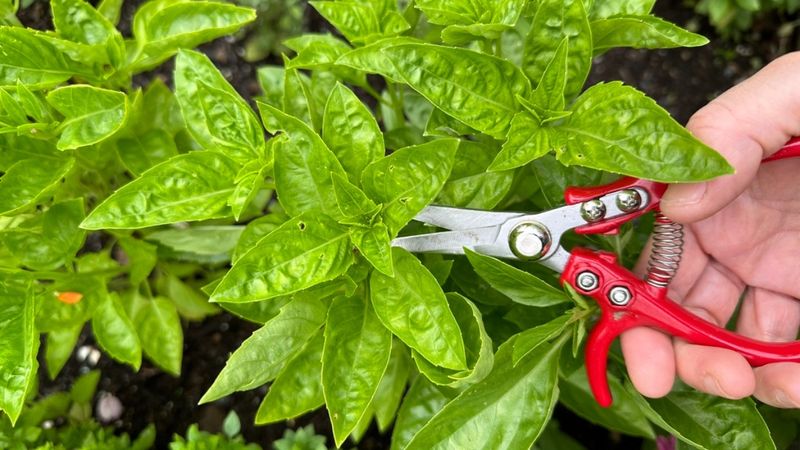
The move that actually works is cutting the terminal tip of each stem, removing the top two to three inches just above a healthy pair of leaves. That cut point, the node, is where two new side shoots will emerge.
Do it consistently across the plant and you end up with something bushy and multi-stemmed rather than a single tall stalk racing toward bloom.
NC State’s Southeastern Vegetable Crop Handbook describes cutting the terminal two-to-three-inch whorls once or twice weekly as the standard approach for small-scale fresh basil production. That cadence works well as a starting point, but it is not a universal rule.
A small transplant that just went in the ground needs a lighter touch than an established plant mid-season. Rainfall, fertility, cultivar, and how aggressively you cut last time all affect how fast the plant bounces back and how soon it is ready for the next harvest.
University of Minnesota Extension reinforces cutting just above a leaf pair as the method that promotes the most useful regrowth. The key is leaving enough stem and foliage behind that the plant can photosynthesize and recover.
Stripping a young or stressed plant down to bare stems is a fast way to stall production or kill it outright.
For established basil that has gotten ahead of you, a more substantial cut is possible. Illinois Extension notes that annual herbs can handle cuts removing fifty to seventy-five percent of growth, while its container herb guidance recommends leaving roughly four to six inches of shoot for regrowth.
Even a plant that has started to look leggy can often be brought back into a productive, compact shape with a well-placed cut above a strong node, provided the roots are healthy and the weather is still warm enough for recovery.
Keep basil growing steadily with sun, water, and restrained feeding
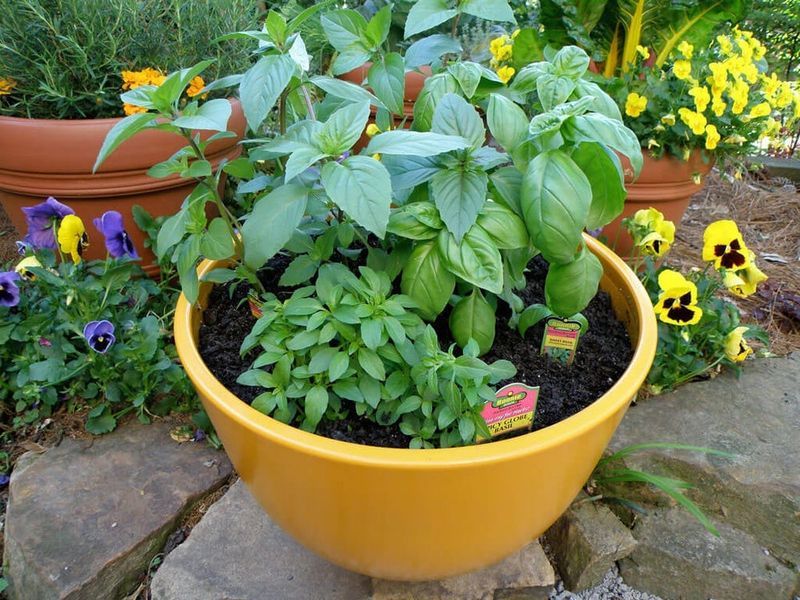
A pruned plant can only branch and regrow if it has the raw materials to do so. Sunlight is the starting point.
NC State’s Extension Gardener Handbook recommends at least six hours of direct sun for herbs, and most other Extension sources put basil’s preference at six to eight hours. Full sun supports stronger growth, more vigorous regrowth after cuts, and a higher concentration of the essential oils that give basil its flavor.
A plant sitting in too much shade may survive but will produce less and be slower to recover between harvests.
Containers are a specific case worth watching. A pot sitting on a south-facing patio in late July can heat up fast enough to stress roots even when the top of the soil looks fine.
If a container plant wilts repeatedly despite adequate watering, some afternoon protection, such as moving it to a spot with filtered light after two or three o’clock, can help reduce stress without sacrificing the morning sun the plant needs. This is a targeted fix for a specific problem, not a general recommendation to shade basil.
Water stress is one of the factors that can push a basil plant toward flowering ahead of schedule. Utah State University Extension reports that high temperatures combined with water stress can trigger early flowering and off-flavors in the leaves, recommending roughly one and a half inches of water per week as a baseline.
That number needs real-world adjustment: containers dry out faster than in-ground beds, heavy clay holds water longer than sandy coastal plain soils, and a week of afternoon thunderstorms changes the math entirely. University of Minnesota Extension also flags irregular watering as a factor that can hasten bolting, so consistency matters more than hitting a precise number.
Fertilizer deserves a light hand. NC State’s Piedmont container garden guidance suggests fertilizing basil at planting and again mid-summer, but cautions against overdoing it.
Illinois Extension’s backyard basil advice echoes this, noting that too much nitrogen can push weak, overly lush growth and reduce the aromatic oils that make basil worth harvesting. Steady, moderate nutrition supports the recovery growth you want after each cut without tipping the plant into excess.
Use airflow and dry foliage to reduce disease risk
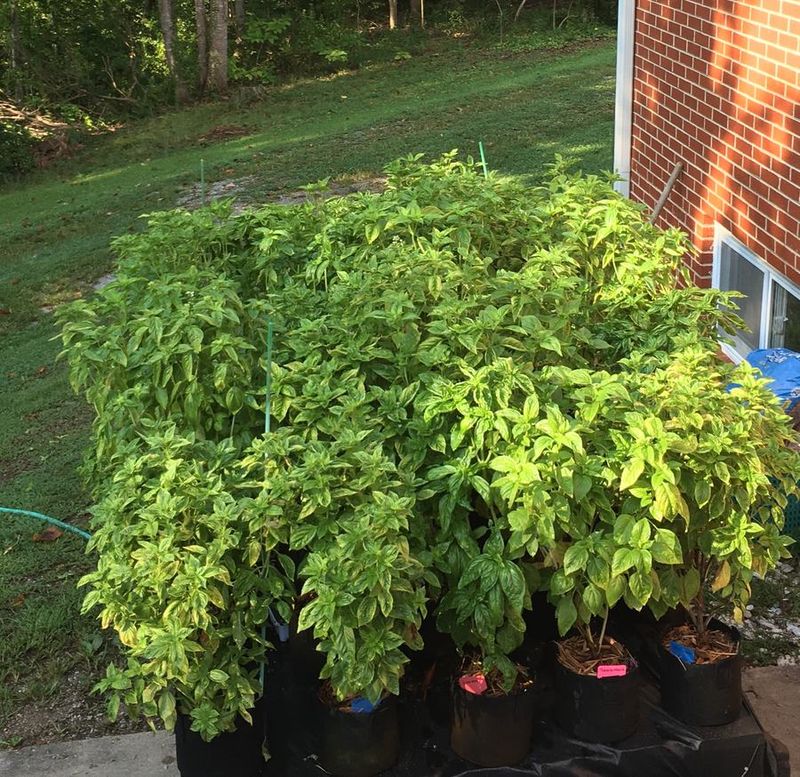
A basil plant that starts yellowing and dropping leaves in mid-summer is not always bolting or simply reacting to heat. In North Carolina’s humid conditions, those same symptoms can point to basil downy mildew, a water mold pathogen that has become a serious problem for home and commercial growers across the state.
NC State Extension’s downy mildew guidance describes the signature signs: yellowing between leaf veins on the upper surface, and a gray to dark purple fuzzy growth on the undersides of those same leaves. If you see that combination, the plant has a disease problem, not a flowering problem.
Removing flower buds will not cure downy mildew. The two issues are completely separate, and treating one as the other wastes time and lets the disease progress.
NC State Plant Pathology’s reporting on downy mildew in North Carolina confirms the pathogen spreads readily under humid, wet conditions, which describes much of the state’s growing season from June through September.
The practices that reduce disease risk are straightforward. Water at the soil line rather than overhead so leaves stay as dry as possible.
Space plants with enough room between them that air can move through the canopy and foliage dries quickly after rain. If plants in a bed have gotten crowded, selectively removing a few stems to open up the interior is worth doing even if it costs some leaf production in the short term.
Penn State Extension also recommends good airflow as part of basic basil care, and these practices become especially important in the coastal plain and Piedmont where summer humidity stays high for weeks at a time.
Do not harvest or eat visibly diseased foliage. Do not save seed from symptomatic plants, and do not bring infected plants indoors to overwinter, as that can introduce the pathogen into your home growing space.
Disposal guidance differs across Extension sources, with some recommending tilling infected material into soil and others recommending bagging and discarding it. Rather than following one blanket rule, check with your local NC State Extension office or county cooperative extension for current guidance that fits your specific situation.
Choose cultivars for specific advantages, not guarantees
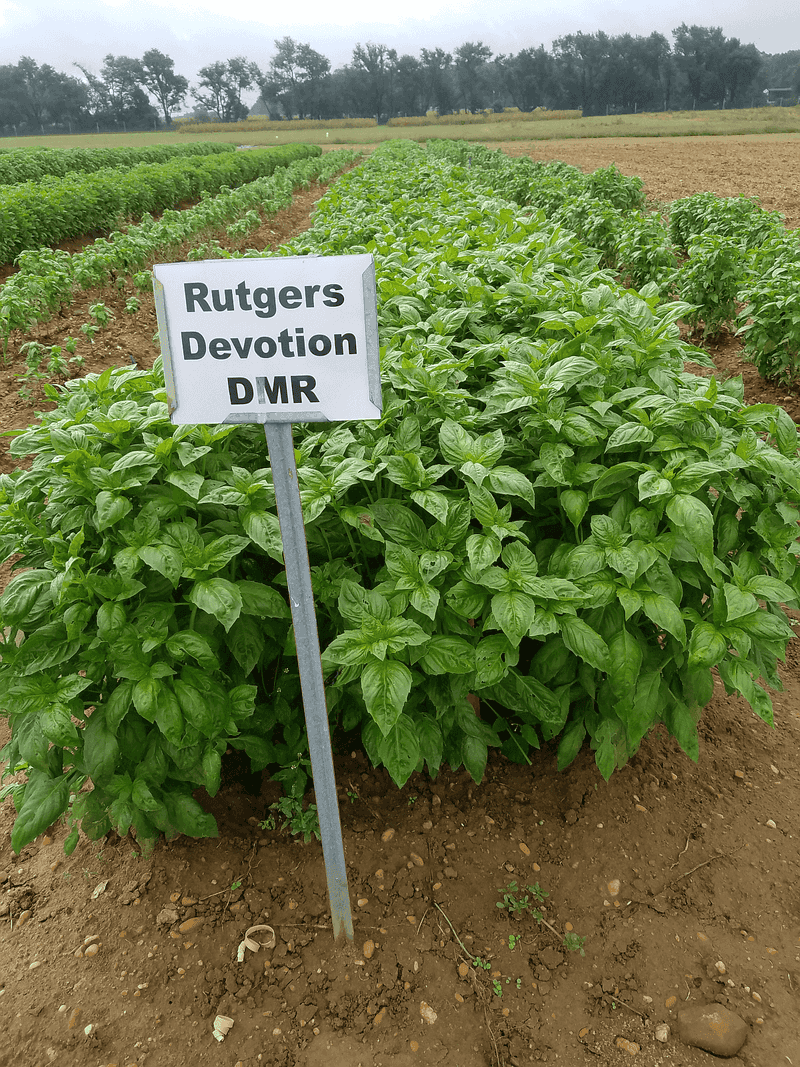
Cultivar choice can give you a meaningful head start, but only if you match your expectations to what the evidence actually shows. For North Carolina gardeners dealing with downy mildew pressure, the most directly relevant data comes from NC State trials.
NC State’s Plant Toolbox lists ‘Prospera,’ ‘Rutgers Passion,’ and ‘Rutgers Obsession’ as cultivars that performed well for disease resistance and garden or kitchen qualities in North Carolina observations. That evidence concerns downy mildew performance specifically, not how quickly or slowly a plant flowers under heat stress.
A disease-resistant cultivar can still bolt on the same schedule as a susceptible one.
For later-flowering characteristics, the available evidence comes from a different region. Illinois Extension’s basil variety observations describe Greek Columnar and Pesto Perpetua as types that tend to maintain their form and resist moving to flower in Illinois garden conditions.
Those observations are a useful lead, but they were not made in North Carolina’s mountains, Piedmont, or coastal plain, where humidity, temperature patterns, and disease pressure differ considerably. A cultivar that holds off flowering well in central Illinois may behave differently in a humid Piedmont summer or under the heat load of a coastal plain growing season.
The practical approach is to treat cultivar selection as one layer of a broader strategy rather than a substitute for consistent harvesting and bud removal. A disease-resistant variety gives you better odds of keeping foliage healthy through the humid months.
A cultivar described as later-flowering is worth trying, especially if you track how it performs in your specific location from year to year. Neither type eliminates the need for the hands-on routine the rest of this article describes, and no cultivar currently marketed for home gardens should be treated as reliably bolt-proof across all of North Carolina’s growing conditions.
Plan replacement plants before the first one declines
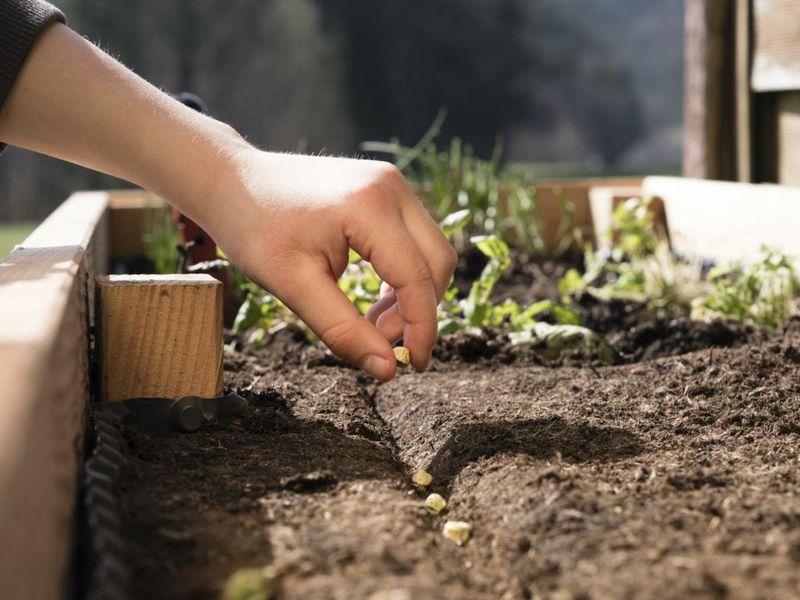
Prolonging one plant’s harvest is only half the strategy. The other half is having a replacement ready before the first plant gives out.
Basil is a warm-season annual outdoors in North Carolina, and no amount of pinching or pruning changes that fundamental fact. Plants eventually mature past the point where harvesting keeps them leafy, and frost ends the season for anything left in the ground.
Building continuity into the plan from the start keeps the kitchen supplied even when an individual plant runs its course.
Succession planting means starting new seeds or transplants every few weeks through the warm season rather than putting in one round and waiting. NC State’s Piedmont container garden guidance identifies basil as a warm-season crop suited to seasonal succession, and the same logic applies to in-ground beds.
The specific timing for starting new rounds varies across North Carolina: the mountains have a shorter frost-free window and cooler nights that affect transplant timing, while the coastal plain and Piedmont can often support basil production well into October if frost holds off.
Cuttings offer another path to replacement plants without starting from seed. A healthy four-to-six-inch stem tip, stripped of its lower leaves and placed in water or moist growing medium, will root in one to two weeks under warm conditions.
Penn State Extension confirms that basil propagates readily from cuttings, making it practical to multiply a cultivar you have had good results with.
Bringing a healthy container plant indoors before frost is an option worth considering if you have a bright enough spot. NC State’s herb winterizing guidance notes that basil can be kept indoors temporarily, but indoor plants still need substantial light and will eventually flower and decline without it.
University of Minnesota Extension echoes this, pointing out that inadequate indoor light leads to weak, unproductive plants. The indoor option buys time, not a permanent solution, and it only makes sense with plants that are healthy and free of disease.
Know when to harvest leaves and when to let flowers stay
Putting the full routine together looks like this: begin tip harvests while the plant is still young and compact, cut just above a healthy node each time, remove emerging flower buds before they open, keep the plant in adequate sun with consistent moisture and good drainage, watch the foliage for early signs of disease rather than attributing every problem to heat, and have at least one replacement plant coming along before the current one starts to decline. That sequence does not make basil a perennial or prevent it from ever flowering.
What it does is shift the plant’s productive window forward and extend it meaningfully through the hottest part of the season.
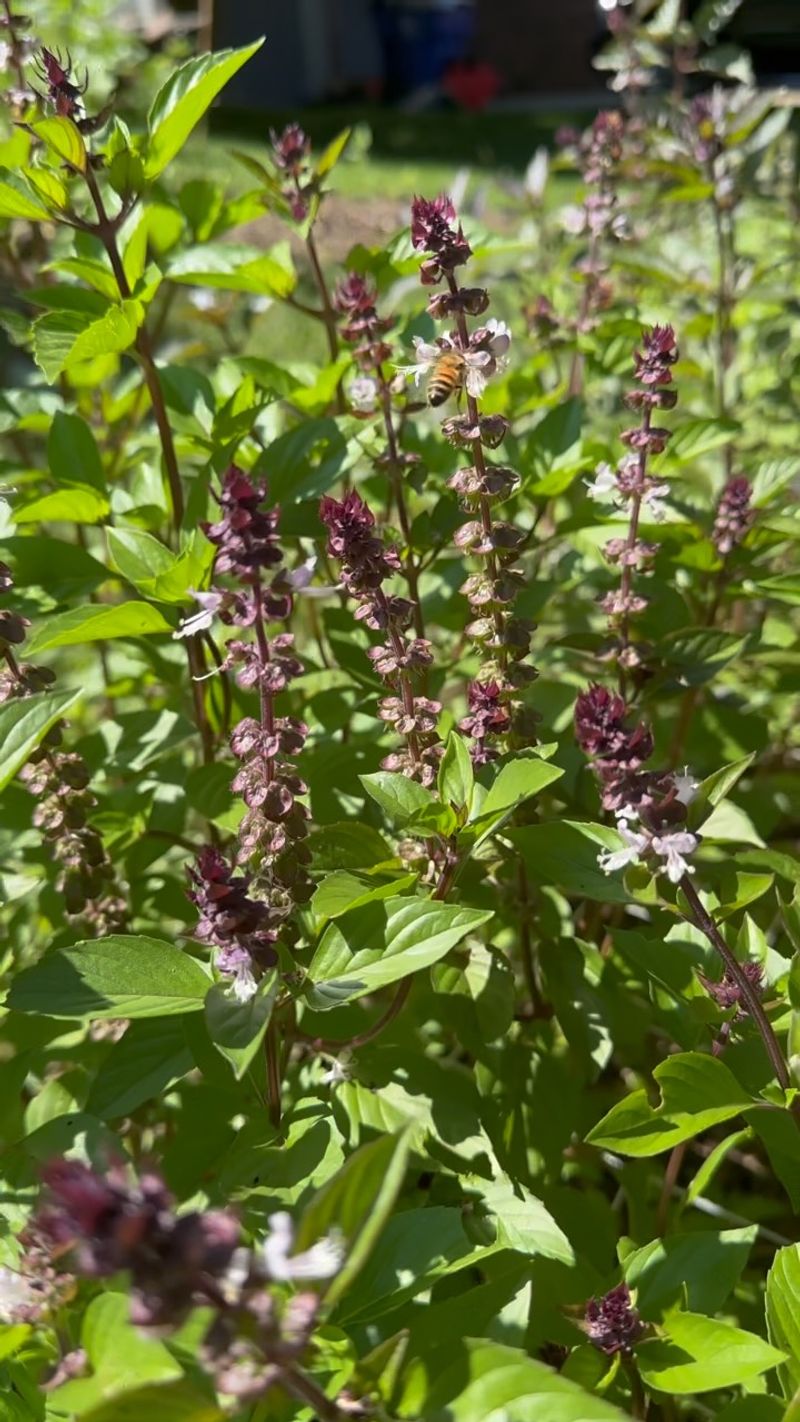
Not every gardener needs to remove every flower. Basil blooms attract pollinators, and Illinois Extension’s garden notes on basil point out that the flowers are genuinely useful to bees and other beneficial insects.
A practical middle ground is to manage one or two plants primarily for kitchen harvest, keeping them trimmed and bud-free, while allowing a separate plant or a few stems to flower for pollinator value. Penn State Extension notes this dual-use approach as a reasonable option for gardeners who want both leaf production and pollinator support from the same planting.
The clearest signal that a plant has run its course is a combination of woody stems, sparse new growth despite regular cuts, and persistent flowering even after repeated bud removal. At that point, the energy is better spent on the replacement plant already waiting in the wings.
NC State’s herb winterizing guidance frames the end of basil’s outdoor season as a natural transition rather than a failure, and that framing is worth carrying into the garden. A basil plant that produces well from late spring through early fall, then hands off to a healthy successor, has done exactly what you asked of it.