
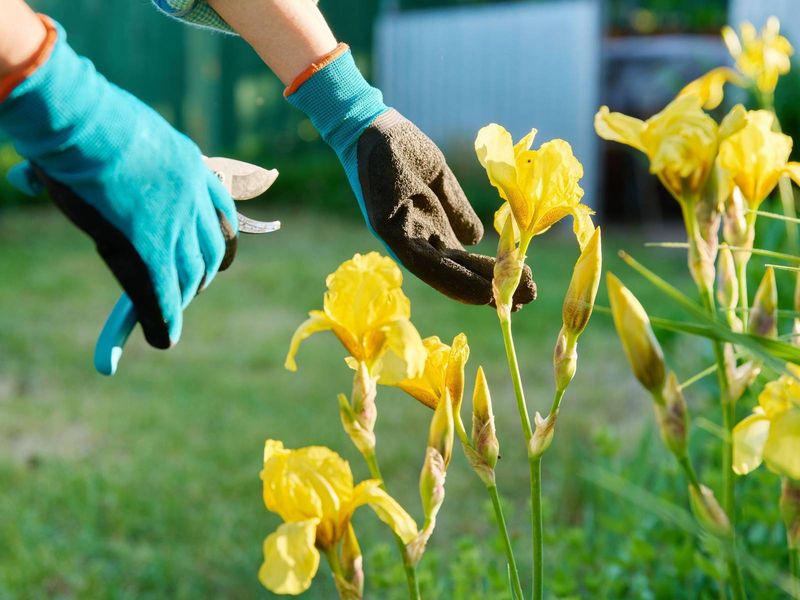
A headline promising that one missed September cut will wipe out your spring flowers sounds alarming enough to send gardeners straight to the shed for their shears. Before you start cutting, though, the story is more nuanced than that promise suggests.
Bearded iris does benefit from late-season attention, but what you cut, what you leave alone, and why you do it matters far more than hitting a single calendar date. Getting those details right is what actually protects next year’s performance.
September is a cleanup check, not a universal pruning deadline
Fall garden advice often arrives wrapped in urgency, and September headlines about pruning deadlines are no exception. N.C.
Cooperative Extension’s September garden guidance is clear on this point: significant shrub pruning generally does not belong in September or October. Fall cuts can push tender new growth that has no time to harden before winter, and pruning spring-blooming plants at this time of year risks removing the flower buds they have already set for next spring.
The calendar alone is not a good reason to pick up the shears.
The more useful September question is whether a specific plant has dead, diseased, or broken material that genuinely needs to come off. Removing that kind of damaged tissue is maintenance, and it can happen whenever the damage appears.
What September is not is a universal pruning window where every plant in the yard needs a hard cut to perform well next year.
Bearded iris is where a late-season cleanup argument has the most footing, and that is the plant this guide focuses on. Bearded iris can benefit from end-of-season attention, but even that benefit is tied to plant condition rather than the date on the calendar.
The lesson that applies to iris does not transfer automatically to azaleas, forsythia, camellias, or the hydrangea growing two beds over. Narrowing the advice to a specific plant and specific circumstances is what makes it actually useful rather than accidentally harmful.
North Carolina gardeners work across a range of climates, from the coast to the mountains, and plant condition varies accordingly. Basing any cleanup decision on what you see in the bed, rather than what a headline instructs, is the habit that protects plants across all those conditions.
The iris task worth checking is bearded-iris sanitation
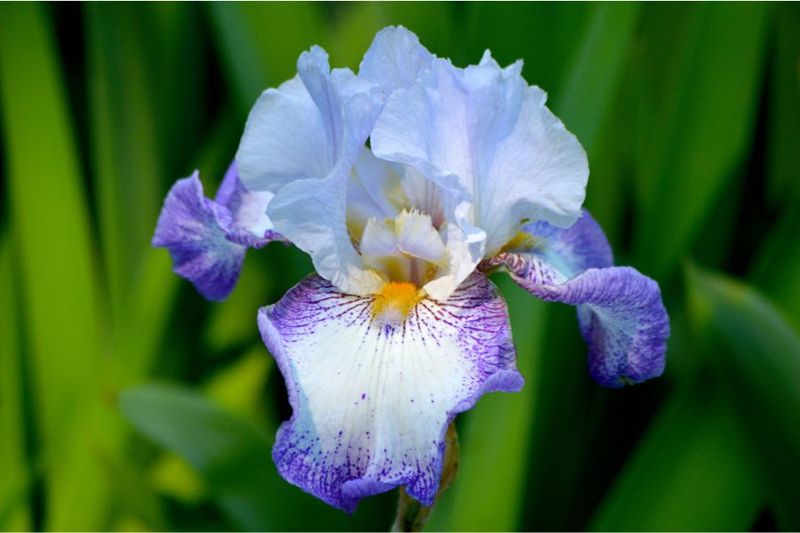
Bearded iris, known botanically as Iris x germanica, earns its place in a September garden guide because of one specific maintenance need: clearing old, dead, diseased, or insect-damaged material from the bed before the season closes. N.C.
State Extension’s plant profile for bearded iris describes it as a full-sun perennial that thrives in well-drained soil with its rhizomes planted shallowly, close to the soil surface. That shallow placement is part of why sanitation matters: debris that collects around the exposed rhizomes creates cover for pests and disease.
Calling this task “pruning for next spring’s blooms” overstates what the cleanup actually does. Removing dead and diseased foliage and old surface debris is sanitation and maintenance.
It can reduce pest pressure and improve air circulation around the plant, but it does not by itself produce flowers. Flowers come from healthy rhizomes, adequate sunlight, proper drainage, and the right planting depth, among other factors.
Bearded iris is also not interchangeable with other iris groups. N.C.
Cooperative Extension’s overview of iris types notes that Siberian, Louisiana, Japanese, Dutch, and native blue-flag irises have different moisture tolerances, soil preferences, pest pressures, and maintenance needs. The cleanup case described here applies specifically to bearded iris, particularly where iris borer is a recurring problem.
Applying bearded-iris care instructions to a Siberian or native blue-flag without checking the plant’s own requirements is a shortcut that can cause more problems than it solves.
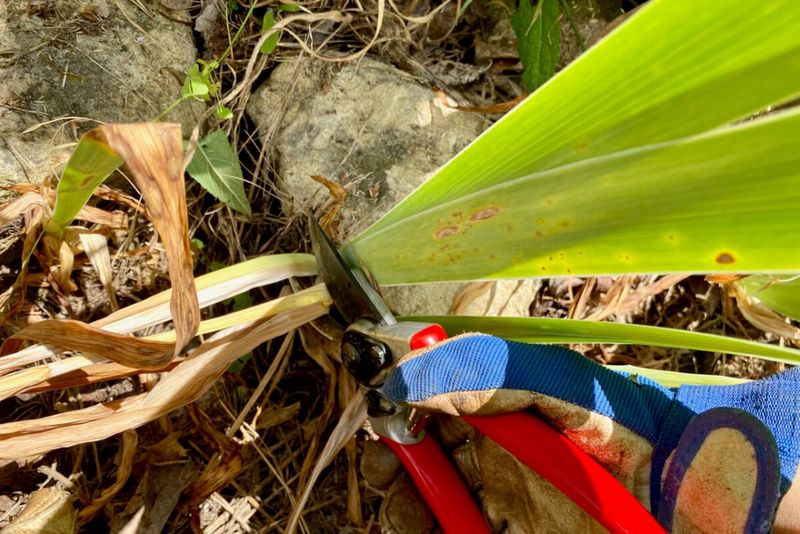
When you walk the bed in September, the goal is a clear-eyed inspection: look for foliage that is brown, spotted, mushy, or showing signs of insect damage, and remove it. Healthy green leaves stay exactly where they are.
What should you cut, and what should stay?
Spent flower stalks are the first thing to remove, and they come off right after the flowers are done. University of Connecticut Extension’s iris factsheet recommends cutting the stalk down to where it emerges from the leaves.
That is a clean, targeted cut on a structure that has finished its job. It is not the same as cutting down the entire foliage fan, and conflating the two is where gardeners can get into trouble.
The foliage fan is a working part of the plant. Green leaves are actively moving energy down into the rhizome, building the reserves that support next season’s growth.
Cutting healthy green foliage in September simply because September has arrived removes that energy source before the plant has finished using it. The right time to cut back the leaves is after they have turned brown on their own or after a killing frost ends the growing season for good.
Diseased or seriously damaged foliage is a different matter. Leaves showing soft rot, heavy spotting, or clear signs of insect damage should come off sooner rather than later, regardless of the month.
Leaving infected material in the bed creates a source of ongoing trouble. Remove it, bag it, and keep it out of the compost pile.
Organizing the decisions around plant condition rather than a fixed date keeps the logic clear. Ask what each leaf is doing before you cut it.
A brown, collapsed leaf fan is ready to come off. A firm, upright green fan is still working and should stay.
A mottled, soft, or streaked leaf may need to go now regardless of the calendar. That three-part check takes about thirty seconds per clump and prevents the most common September mistake: cutting back healthy foliage too early and leaving the rhizome without the energy supply it needs to perform well in spring.
A clean bed can interrupt the iris-borer cycle
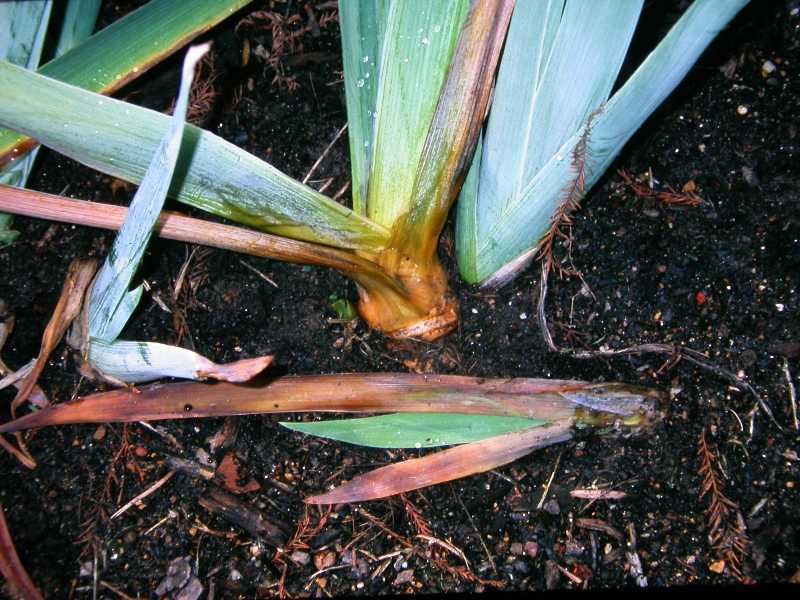
Iris borer is the pest most likely to undermine bearded iris performance in North Carolina, and end-of-season sanitation is one of the most practical tools for reducing its impact. N.C.
State Extension identifies iris borer as a significant concern for bearded iris and recommends clearing old foliage from the bed as part of managing the problem. The reason connects directly to how the pest overwinters.
Iris-borer moths lay their eggs on dying leaves and surface debris in late summer. Those eggs spend the winter right there in the bed, attached to the old plant material.
When spring arrives, the eggs hatch, the tiny larvae begin feeding on the foliage, and they work their way down into the rhizome by midsummer. A rhizome damaged by borer tunneling becomes an entry point for soft rot bacteria, and a badly affected plant may fail to bloom or may die back entirely.
Removing and discarding old iris foliage and surface debris in fall or early spring takes away the substrate where those eggs are waiting. It does not guarantee a borer-free bed, because moths can fly in from neighboring areas and lay fresh eggs the following season.
What it does is reduce the number of eggs starting the cycle from within your own planting. That reduction in local pest pressure can make a real difference in plant health over time.
Discarded foliage and debris should go into the trash rather than the compost pile. Home compost piles typically do not reach temperatures high enough to destroy insect eggs reliably.
Keeping that material out of the yard entirely is the safer choice when borer pressure is a concern.
The safe cleanup sequence protects the rhizome
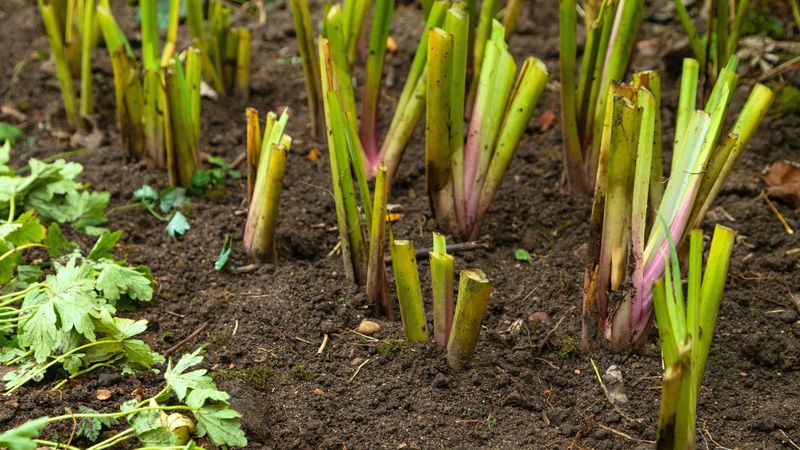
Working through a bearded iris bed systematically takes less time than it sounds, and doing it in the right order keeps you from making a cut you cannot undo. Start by walking the bed and looking at each clump before touching anything.
You want to know what you are dealing with before the shears come out.
Remove any spent flower stalks first if they are still present, cutting each one down to where it meets the leaf fan. Next, look at the foliage.
Pull or cut away any leaves that are fully brown and collapsed. If a leaf is green but showing soft, water-soaked patches, heavy spotting, or a foul smell, remove it and keep it separate from healthy debris.
University of Connecticut Extension recommends sanitizing cutting tools between divisions, and that same habit applies between plants during cleanup. Wiping blades with isopropyl alcohol between clumps prevents spreading soft rot or fungal disease from one plant to the next.
Once the foliage work is done, clear the surface debris from around the rhizomes. Old leaves, dried flower parts, and accumulated mulch sitting directly on top of the rhizomes create the moist, sheltered conditions that favor rot and provide overwintering habitat for iris-borer eggs.
Rake that material out and discard it.
Division is a separate operation and should not be folded into routine fall cleanup unless the clump is visibly overcrowded and the timing is right. N.C.
State Extension recommends dividing established bearded iris in mid- to late summer after flowering, not as an automatic September task. If you do divide, keep rhizome sections that are firm and have healthy leaf fans, and discard any that are soft, discolored, or smell off.
Replant shallowly so the top of the rhizome sits at or just above the soil surface. But do not let the possibility of division distract from the main point: foliage timing is the decision that most affects the plant going into winter.
Do not transfer the iris rule to shrubs
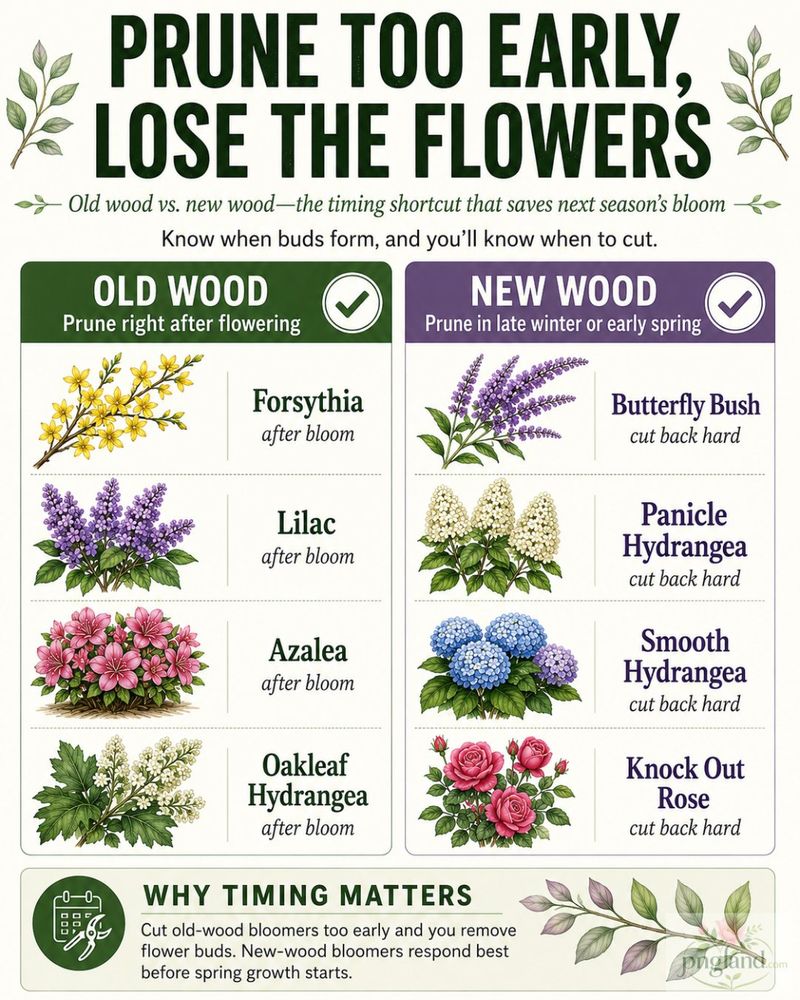
Knowing what to do with bearded iris in fall is genuinely useful. Applying that same logic to every other plant in the yard can cause real damage.
N.C. Cooperative Extension’s September task list specifically advises saving significant pruning for late winter or early spring and warns that spring-blooming shrubs should not be pruned before they flower because next year’s buds may already be present on the wood.
Azaleas, forsythia, and camellias are common examples. All three can carry next spring’s flower buds on wood that grew this past season.
A hard cut in September removes those buds before they ever open. The shrub survives, but the spring flower show does not appear, and the gardener is left wondering what went wrong.
Hydrangeas deserve particular attention because the pruning answer depends entirely on which type you have. N.C.
State Extension’s Woody Ornamentals chapter explains that bigleaf, mountain, and oakleaf hydrangeas can bloom on old wood, meaning a fall cut removes the buds already forming for next year. Smooth hydrangeas and panicle hydrangeas bloom on new wood that grows in spring, so they are less vulnerable to a fall prune, though late-winter or early-spring timing is still generally preferred.
Identifying which hydrangea you have before making any cut is not optional if you want flowers next year.
N.C. State Extension’s “Before the Cut” guide lays out the old-wood versus new-wood distinction clearly and is worth consulting before you prune any flowering shrub in fall.
The iris cleanup advice in this article is specific to bearded iris. Treat it that way.
Poor spring bloom has more than one explanation
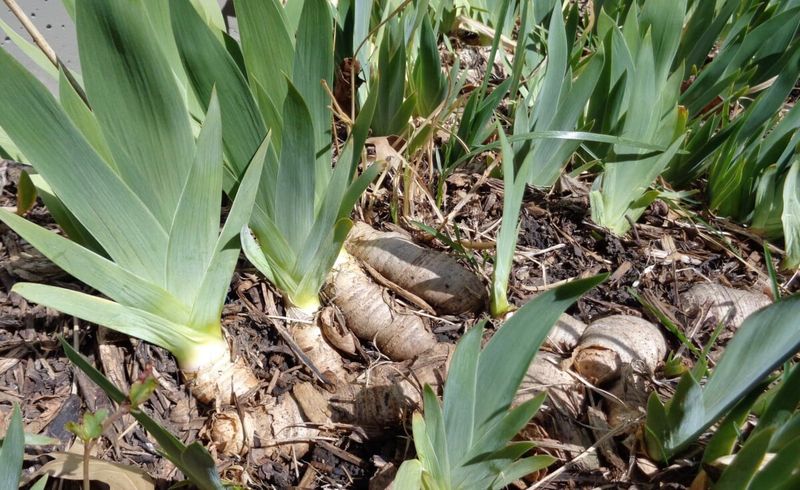
When bearded iris comes up green in spring but produces few or no flowers, the instinct is to look for one thing that went wrong. The reality is that several different problems can produce the same result, and skipping a September cleanup is rarely the sole explanation.
Crowding is one of the most common culprits. N.C.
State Extension notes that established bearded iris benefits from division every three to four years, generally after flowering and during mid- to late summer, when clumps become crowded. A congested clump competes with itself for light, water, and nutrients.
The rhizomes at the center of an overgrown clump often stop flowering even when the plant looks healthy from a distance. Division is the fix for crowding, but it is a separate operation from foliage pruning and should not be treated as an automatic September task.
Sunlight is another frequent factor. Bearded iris needs a full-sun location to perform consistently.
A bed that was sunny when the iris was planted may have shifted as nearby trees or shrubs have grown. Even partial shade can suppress flowering noticeably over time.
Improper planting depth, rhizome rot from excessive moisture, borer injury that went unnoticed, drought stress during the summer, and insufficient time for newly divided plants to establish are all additional contributors. University of Connecticut Extension’s iris factsheet points to drainage and planting depth as two of the most common reasons bearded iris underperforms.
Rhizomes planted too deep often refuse to bloom regardless of how well the rest of the care goes.
Running through this checklist when bloom is disappointing gives you a much better chance of identifying and fixing the actual problem, rather than defaulting to a single calendar-based explanation that may not apply to your situation at all.
Let the plant set the timing
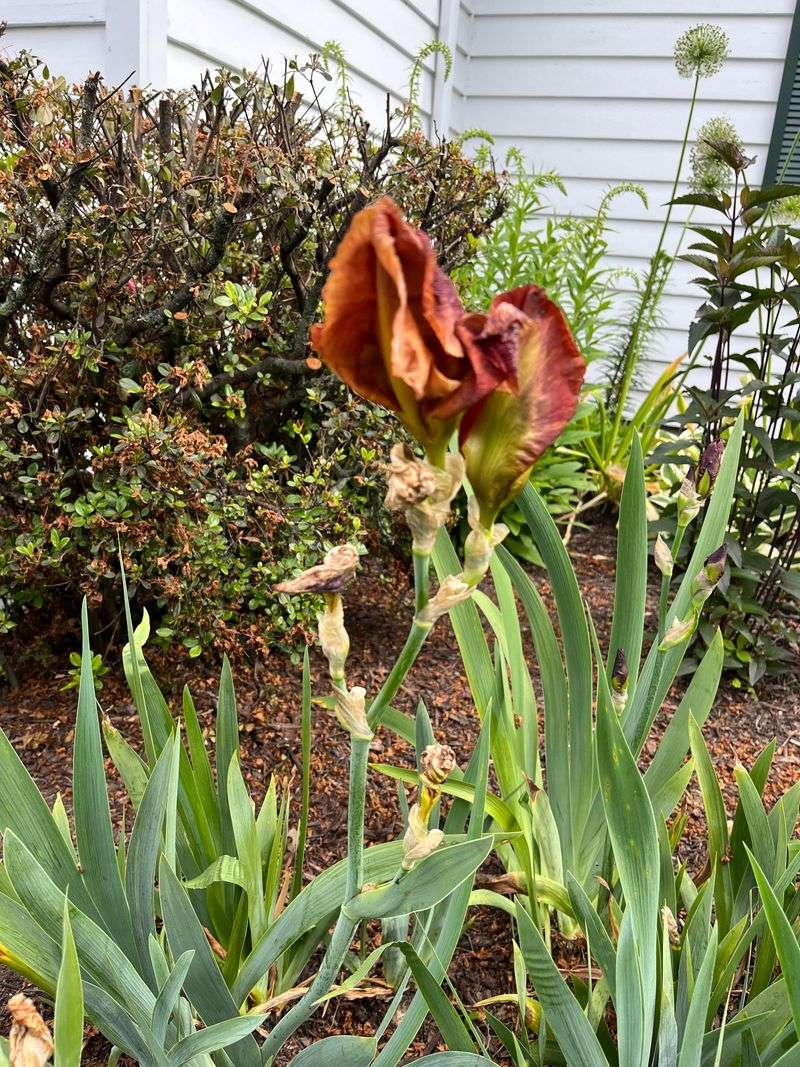
Condition-based decisions consistently outperform calendar-based ones in the garden, and bearded iris is a good example of why. Remove dead, diseased, or seriously damaged foliage when you see it, regardless of the month.
Leave healthy green leaves alone until they turn brown on their own or a frost finishes them. Once the foliage has died back, clear the bed of old debris to reduce the overwintering habitat that iris-borer eggs depend on.
Before pruning any shrub in September, identify it. N.C.
State Extension’s plant resources and N.C. Cooperative Extension’s September task guidance both support holding significant shrub pruning until late winter or early spring, when you can see clearly what is alive, what is dead, and what buds are forming.
A fall cut made without that information can cost you an entire season of flowers on an old-wood bloomer.
The realistic benefit of good iris sanitation is a healthier plant with less pest pressure heading into spring, not a guaranteed flower show. Gardening works that way: you remove the obstacles you can control and give the plant the conditions it needs.
What happens next is up to the plant. That is a fair trade, and it is a more honest promise than any September deadline can deliver.