
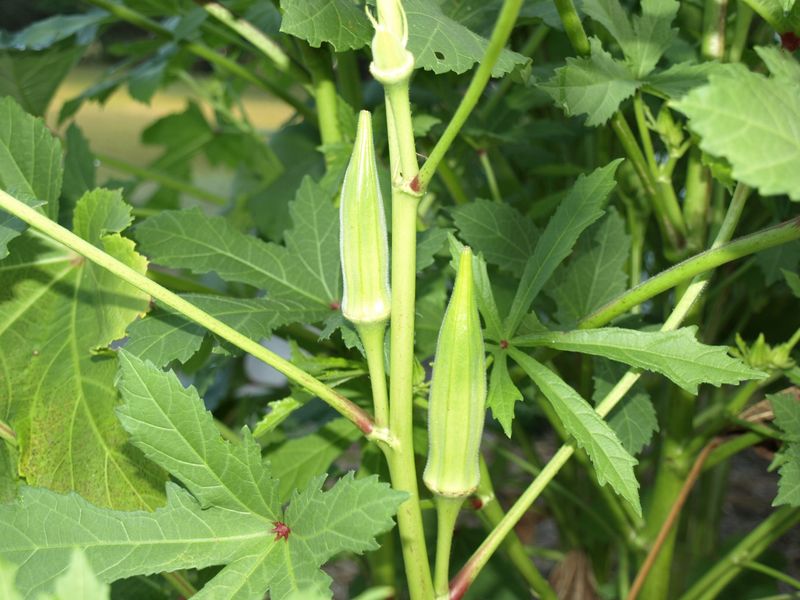
Most North Carolina gardeners know the feeling: it is the middle of July, the tomatoes are sulking, the lettuce bolted weeks ago, and the garden looks half-defeated. Then there is okra, still flowering and pushing out pods like the heat is doing it a favor.
Understanding why okra holds up so well when many other crops falter can help you get more food from your summer garden with less frustration. Getting the setup right makes all the difference.
Okra Is Built for a Warm North Carolina Summer
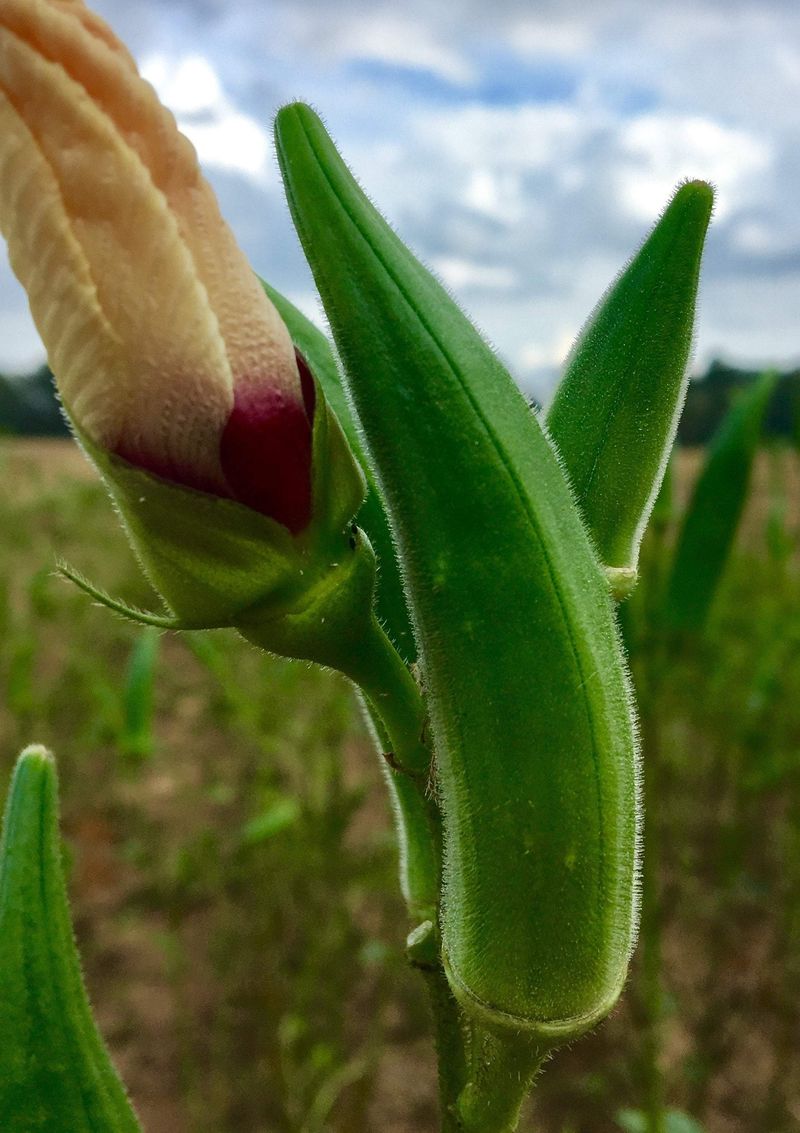
Okra did not arrive in American gardens from a temperate climate. Its roots trace back to tropical Africa, and that origin shapes everything about how it grows.
Where many vegetables slow down once summer temperatures climb past the comfort zone, okra begins to hit its stride. NC State Extension guidance on growing okra notes that the crop grows best when soil and air temperatures stay in the range of roughly 75 to 90 degrees Fahrenheit, which describes a large portion of North Carolina’s frost-free season from late spring through early fall.
Once that warm soil threshold is reached, okra establishes quickly. Seeds germinate with purpose in warm ground, seedlings push upward fast, and the plant begins flowering earlier in the season than many gardeners expect.
From there, it can keep producing pods right up until frost arrives, giving it one of the longest edible harvest windows of any summer vegetable in the state.
That said, warm-season adaptation is not the same as being invincible. Okra is unusually comfortable in North Carolina heat, but extreme temperatures above 100 degrees Fahrenheit, combined with drought, can still slow its growth, reduce photosynthesis, and cut into pod set and yield.
Research on physiological heat tolerance in okra confirms that substantial differences exist among varieties, and that even well-adapted genotypes show stress responses under the most severe conditions. The honest picture is a crop that thrives in the warm, humid summers typical of the Coastal Plain and Piedmont, performs well across much of the growing season, and outpaces many vegetables in heat tolerance, while still benefiting from good management when temperatures push toward extremes.
Why Many Garden Crops Falter Before Okra
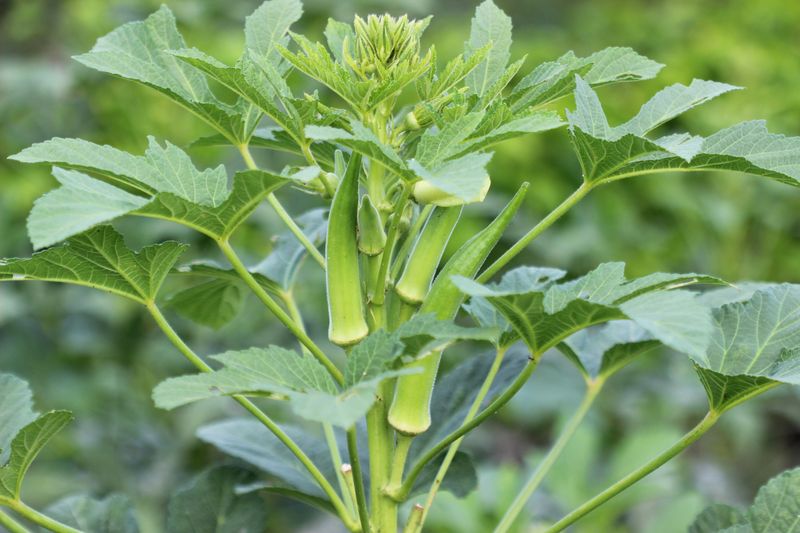
Cool-season vegetables such as lettuce, spinach, broccoli, and kale are built for spring and fall. Once daytime temperatures climb into the upper 80s and beyond, these crops bolt, turn bitter, or simply collapse.
Their productive window in North Carolina often closes well before the hottest weeks arrive, leaving a gap that warm-season crops have to fill.
Tomatoes occupy a more complicated middle ground. They are warm-season plants, but heat-related flower and fruit-set problems are well documented.
University of Maryland Extension guidance on tomato fruit set explains that high temperatures, particularly warm nights, can interfere with pollen viability and reduce fruit set substantially. Many standard tomato varieties slow their production during the hottest stretches of summer, even when the plants themselves look healthy.
Okra sidesteps most of those heat-related bottlenecks. Its flowers tolerate warm nights better than tomato blossoms typically do, and the plant keeps initiating new buds as long as conditions remain favorable and pods are removed regularly.
That sustained flowering through the warmest part of the season is what gives okra its reputation as a reliable summer producer.
Still, framing okra as the only crop left standing oversimplifies a real garden. Texas A&M AgriLife Extension groups okra alongside peppers and sweet potatoes as crops that genuinely like hot conditions, and southern peas and some heat-tolerant bean varieties can also continue producing when managed well.
Okra is a particularly strong fit for North Carolina’s brutal midsummer stretch, but gardeners who also grow southern peas, sweet potatoes, or heat-set tomato cultivars may find more than one crop still producing when the thermometer peaks.
Plant After Warm Soil Reaches Your Region’s Window
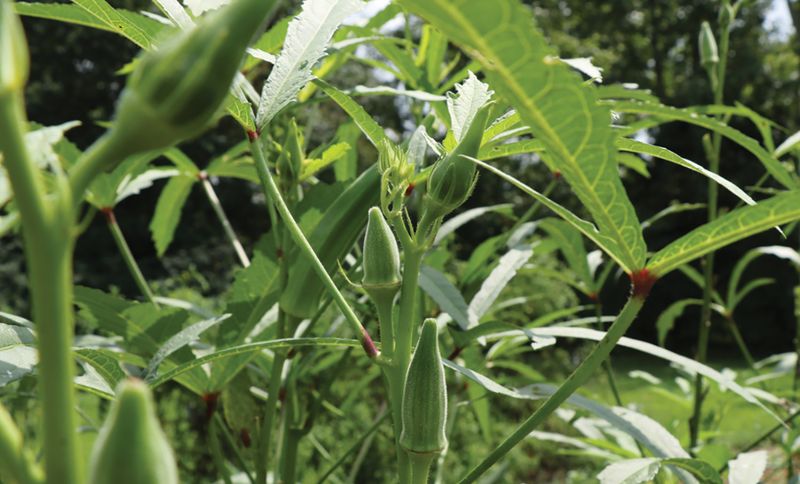
Timing is the first decision that determines whether your okra season is long and productive or short and disappointing. Cold soil is the main obstacle.
Okra seeds planted in soil below about 65 degrees Fahrenheit will sit, rot, or germinate so slowly that the seedlings struggle. Waiting until both nighttime air temperatures and soil temperatures have stabilized in the warm range pays off in faster, more uniform germination and quicker establishment.
Planting windows vary considerably across North Carolina’s three main regions. The NC State vegetable planting guide for the Coastal Plain and eastern Piedmont lists May 1 through May 30 as a spring planting window for eastern North Carolina.
Coastal Plain gardeners, particularly those near Wilmington or the Outer Banks, often benefit from earlier warm-up and a longer frost-free period, allowing some flexibility to start on the early end of that range. Piedmont gardeners in the Raleigh-to-Charlotte corridor can generally follow a similar window, though local conditions vary.
NC State’s estimated planting dates for the Piedmont place warm-season crops like okra in the April 15 through June 1 window, with soil warmth as the practical trigger.
Mountain gardeners face a shorter season and later last-frost dates. The Western North Carolina planting calendar from NC State shifts warm-season crop timing later to account for cooler spring soils and an earlier fall frost.
A gardener near Boone should not follow the same calendar as one near Fayetteville. Local frost dates and a soil thermometer are more reliable guides than any single statewide date.
Once you plant, space matters. NC State’s okra guide recommends about 12 inches between plants, full sun exposure, and well-drained soil.
Okra reaches harvest in roughly 60 to 70 days from seed, so a May planting in the Piedmont can put pods on the table by early to mid-July, with production continuing until frost if plants stay healthy and pods are picked consistently.
Rapid Pod Growth Makes Harvesting a Frequent Job
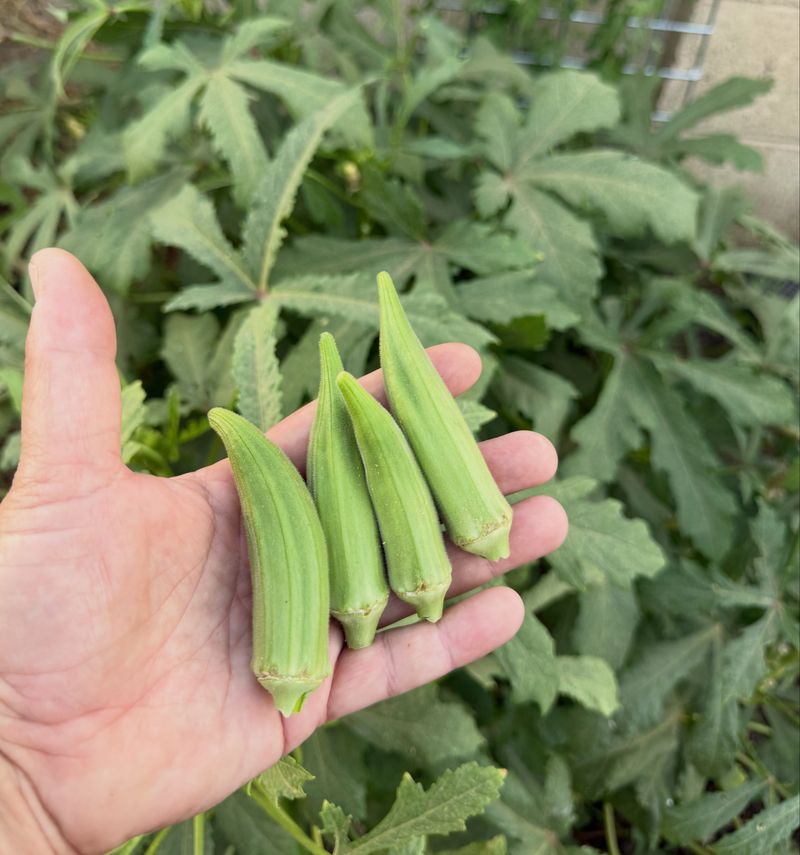
One of the most surprising things about growing okra for the first time is how quickly pods go from perfect to useless. A pod that measures two inches in the morning can be pushing four or five inches by the next day during the hottest weeks, and by the time it hits six or seven inches it has usually become tough, fibrous, and unpleasant to eat.
The window for tender, edible pods is genuinely short.
NC State Extension recommends harvesting pods when they reach roughly 2 to 4 inches in length, cutting every one to two days during periods of rapid growth. That rhythm keeps the plant in active production mode.
When mature pods are left on the plant, they signal the plant to slow or stop producing new flowers, which directly reduces the harvest you get from the rest of the season.
The USDA okra crop profile documents that pod development accelerates substantially as temperatures rise, which means your midsummer harvest schedule needs to be more aggressive than your late-spring one. What worked as a twice-a-week check in May may leave you with oversized pods by mid-July if you keep the same pace.
University of Georgia Cooperative Extension notes that daily harvest may be necessary during peak production to consistently capture small, tender pods. That does not mean every plant will produce at the same rate or that every flower becomes a pod.
Heat, drought, pest pressure, pollination conditions, and the cultivar you chose all influence how many pods actually develop. The practical takeaway is to check plants often, cut pods at the right size, and never assume you can skip a few days without consequence during the height of summer.
Heat Helps, but Consistent Water Sustains Production
A common misconception about okra is that its heat tolerance makes irrigation optional. The logic seems reasonable on the surface: if the plant loves hot weather, maybe it handles dry conditions just as well.
That assumption can cost you a significant portion of your harvest.
Texas A&M AgriLife Extension’s vegetable production resources identify water as important throughout okra’s growth cycle, not just at establishment. Drought stress reduces biomass, slows growth, and can cut into pod set and overall yield.
Published research on okra’s photosynthetic efficiency under stress shows that water retention capacity plays a meaningful role in how well plants maintain productivity when both heat and drought occur together. A plant that survives hot weather may still stop flowering or produce fewer, smaller, or misshapen pods when soil moisture runs short.
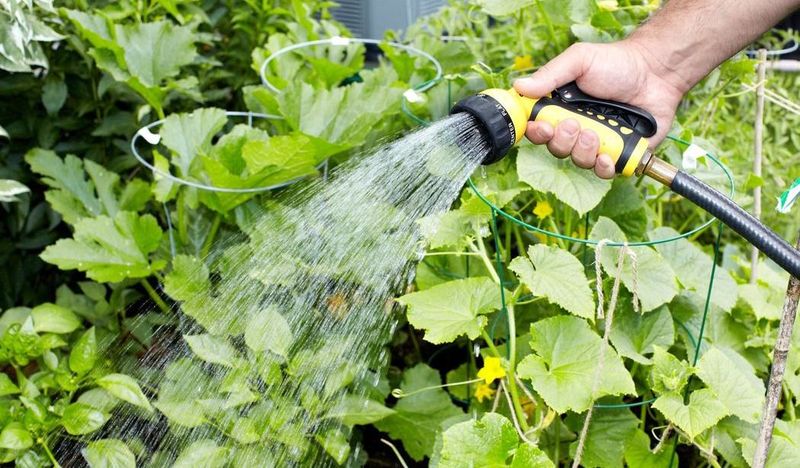
The practical approach is deep, consistent watering when rainfall does not provide enough. Allowing the soil to dry out severely and then flooding it stresses plants in a different way than steady moisture does.
During dry stretches in July and August, most North Carolina okra plantings benefit from supplemental water equivalent to about an inch per week, applied at the base of the plant rather than overhead where wet foliage can invite disease.
Weed control matters alongside irrigation. Weeds compete directly for the soil moisture and nutrients that okra needs to keep flowering.
NC State’s okra guidance specifically recommends maintaining even moisture and controlling weeds throughout the season. On fertilizer, restraint pays off: excess nitrogen encourages lush foliage at the expense of pod production.
A balanced approach at planting, followed by modest side-dressing if plants look pale or stall, is generally more productive than heavy feeding that pushes the plant into vegetative overdrive.
Respond to a Local Midsummer Production Pause
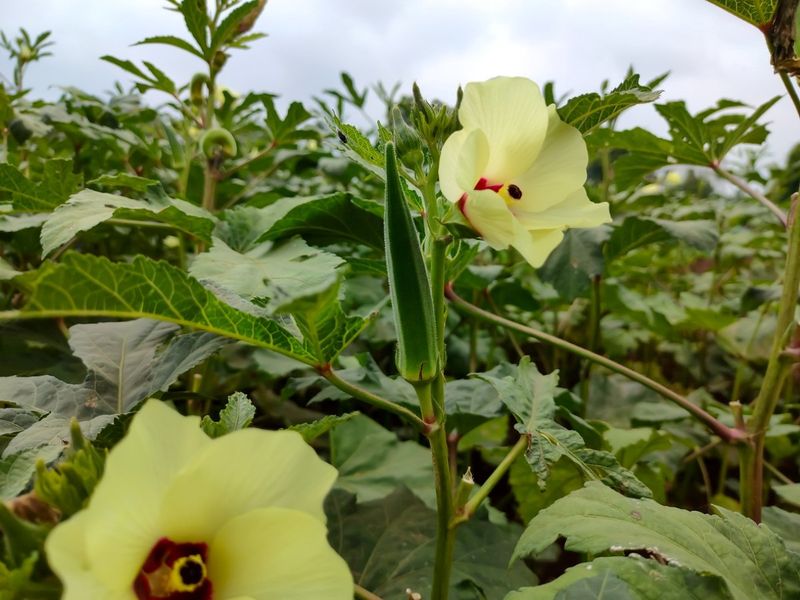
Experienced okra growers sometimes notice that their plants slow down or nearly stop producing pods during the most punishing stretch of summer. Flowers become scarce, new growth stalls, and the garden that was bursting with pods in late June feels strangely quiet in late July.
This kind of pause can happen in North Carolina gardens, but it does not follow a fixed statewide schedule and does not mean the crop is finished.
The most common triggers are intense heat combined with drought stress, particularly during stretches when overnight temperatures stay high and rainfall is absent for weeks. The pause is a stress response, not a permanent shutdown.
NC State Extension describes a recovery technique called ratooning: cutting the main stems back to approximately 6 to 12 inches above the soil, then applying fertilizer and resuming consistent irrigation to encourage a flush of new growth. When conditions improve and the plant has the resources to respond, new stems emerge and flowering can resume.
Ratooning is an option worth knowing, but it is not a guaranteed fix for every situation. NC State’s community food gardening resources reinforce that regional growing conditions across the Coastal Plain, Piedmont, and mountains vary enough that no single timing applies everywhere.
A gardener in the Piedmont might see a pause in late July while a coastal gardener in a wetter summer might not experience one at all.
Plants weakened by disease, root-knot nematodes, or severe pest damage may not respond well to cutting back. If the underlying problem is not heat and drought stress but something else, ratooning can remove what little productive growth remains.
Diagnose before you cut, and treat ratooning as a recovery tool for otherwise healthy plants rather than a routine step in every garden’s midsummer calendar.
Protect Your Hands and Diagnose Problems Before Treatment
Okra looks tough, and in many ways it is, but the plant brings its own set of challenges that can interrupt production if they go unaddressed. Knowing what to look for before reaching for any treatment keeps your response proportional and effective.
Start with physical protection. Okra stems, leaves, and pods are covered in short hairs or spines that irritate the skin of many gardeners, causing itching and redness that can last for hours.
Oklahoma State University Extension’s okra production guide recommends wearing gloves and long sleeves during harvest and handling. Cutting pods with clean shears or a sharp knife rather than pulling or twisting them protects both your hands and the plant.
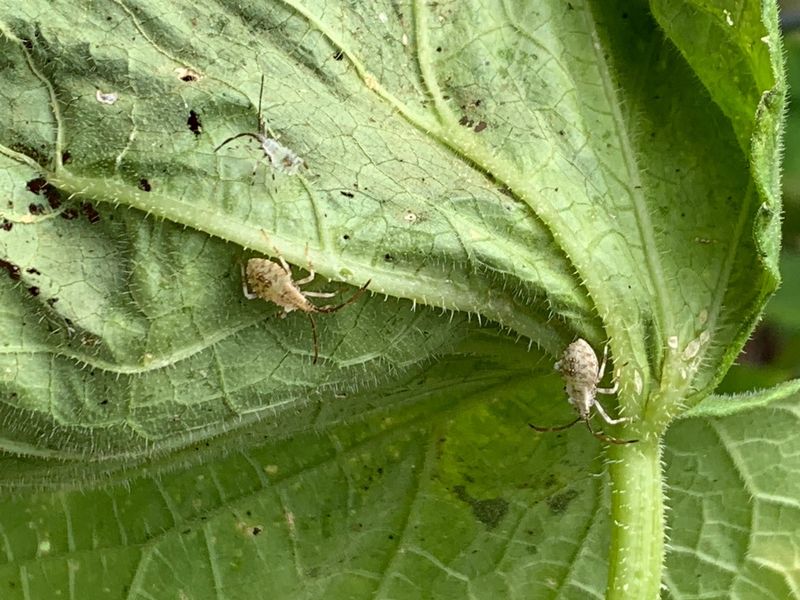
On the pest and disease side, NC State Extension’s guide to pests of okra identifies a range of common problems in North Carolina gardens, including stink bugs, leaffooted bugs, corn earworms, aphids, and Japanese beetles among the insects, along with root-knot nematodes in the soil. Disease problems include Southern stem blight, wilt, and blossom blight, which tends to show up during stretches of persistent wet weather.
Each of these problems calls for a different response, and treating the wrong one wastes time and money while the actual problem continues.
Accurate identification should always come before treatment. Many insects that land on okra are harmless or even beneficial, and spraying broadly because something is present can eliminate the predators that would otherwise manage the pest population naturally.
NC State’s guidance on root-knot nematodes points toward cultural and soil management strategies rather than immediate chemical intervention. When a pesticide is genuinely needed, it must carry an okra label and be applied strictly according to the current label instructions, including any required preharvest interval before picking pods for the table.
Cultural controls, physical removal, and biological options should be considered before chemical ones in the home garden.
Okra’s Real Summer Advantage
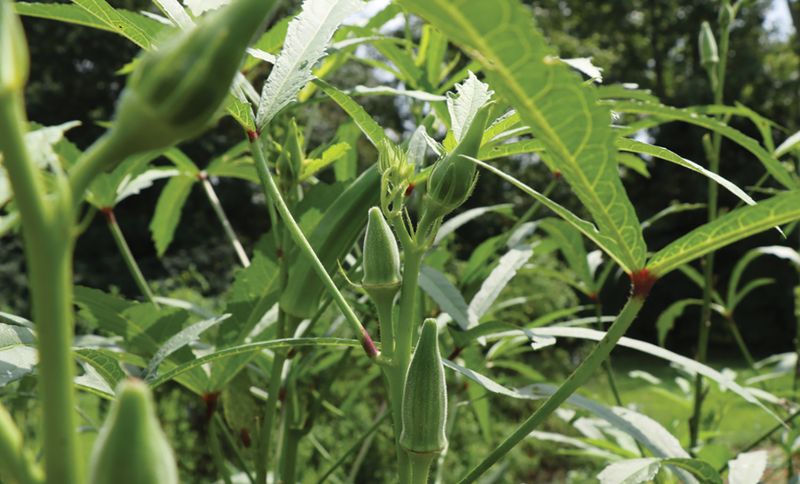
Okra earns its reputation as a summer workhorse not because heat makes it invincible, but because its tropical roots align naturally with what North Carolina summers actually deliver: warm soil, sustained high temperatures, and a long stretch of frost-free growing time. That alignment lets it establish fast, flower over a long season, and develop pods at a pace that rewards attentive gardeners.
NC State Extension’s okra guidance makes clear that the crop performs best when soil warmth, full sun, even moisture, and regular harvesting all work together. Heat is the backdrop, but steady water, regionally appropriate planting dates, and picking pods before they overmature are what convert okra’s warm-season advantage into an actual harvest.
Skip the water during a dry spell, plant too early in cold soil, or let pods go woody on the plant, and that advantage shrinks quickly.
Okra may outlast a lot of what you planted in spring, but the gardeners who get the most from it are the ones who show up consistently, check plants every day or two during peak heat, and treat the crop as productive rather than self-sufficient. A plant that thrives on summer is still a plant that responds to good care.