
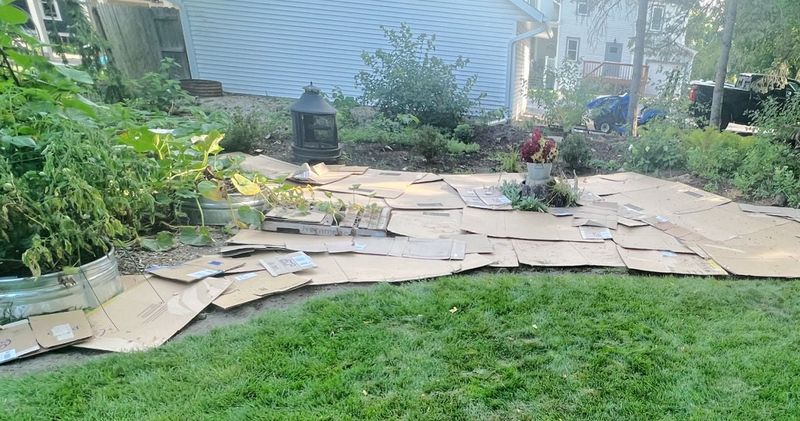
Weeds in a North Carolina garden bed can feel like a fight you can never fully win, no matter what you lay down between the plants. Two of the most popular weapons are landscape fabric and plain corrugated cardboard, and gardeners argue about which one works better every season.
The answer is less about picking a winner and more about picking the right tool for the right bed, because each material has situations where it helps and situations where it quietly makes things worse.
The evidence supports a fit-for-bed choice, not a North Carolina winner
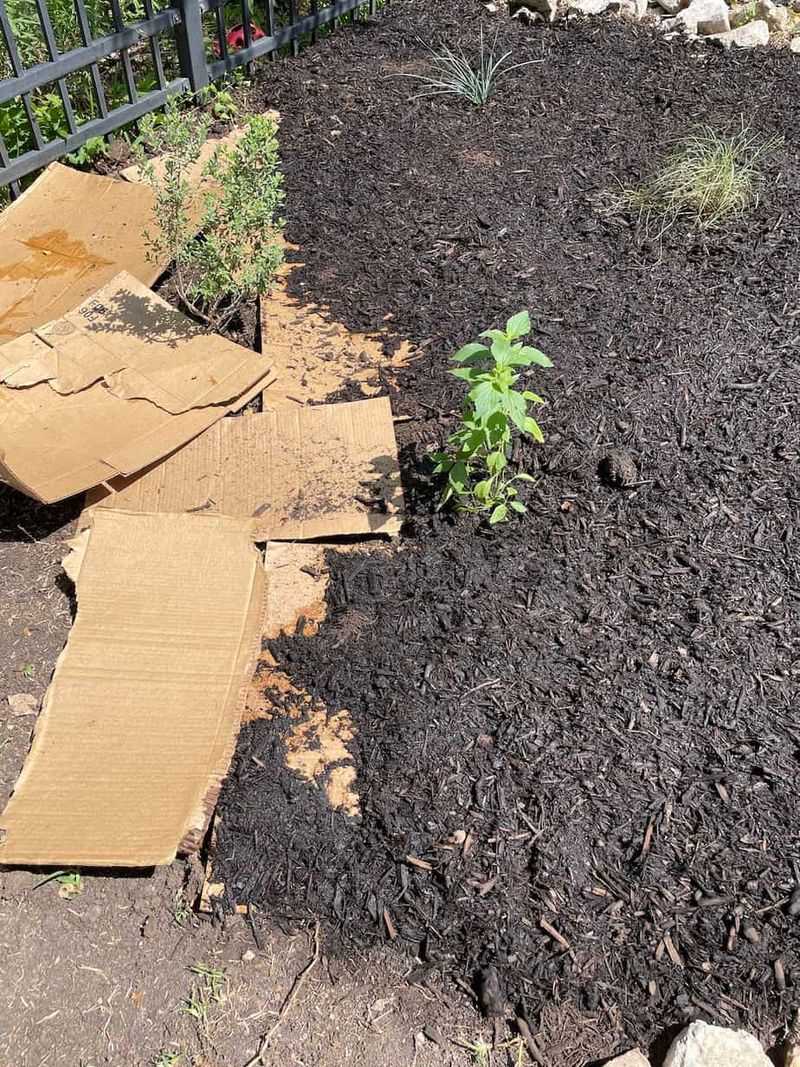
Corrugated cardboard and landscape fabric are not in a settled competition. No published field study has compared flattened corrugated cardboard directly against landscape fabric across a complete North Carolina growing season, so declaring one a clear winner overstates what the research actually shows.
The most relevant cardboard trial available was conducted in Minnesota using shredded cardboard rather than the flattened corrugated sheets most homeowners put down, which means its results suggest cardboard’s potential without translating directly to a North Carolina backyard.
What the evidence does support is a narrower, more useful distinction. Cardboard covered with organic mulch is a practical, temporary choice for new or renovated beds, garden paths, turf-smothering projects, and areas that get replanted frequently.
Landscape fabric, when installed correctly over porous woven or nonwoven geotextile material, can provide longer-lasting weed suppression in established woody plantings and in selected rock-covered areas where plants will stay put for years.
Bed lifespan, planting frequency, weed pressure, and how carefully either material gets installed all shape the outcome more than the material itself. NC State Extension is clear that mulches rarely provide 100 percent weed control and that neither barrier works permanently without proper preparation and upkeep.
The practical question is not which material wins but which one fits the bed you are building or renovating right now.
Cardboard blocks light and gradually becomes part of the bed
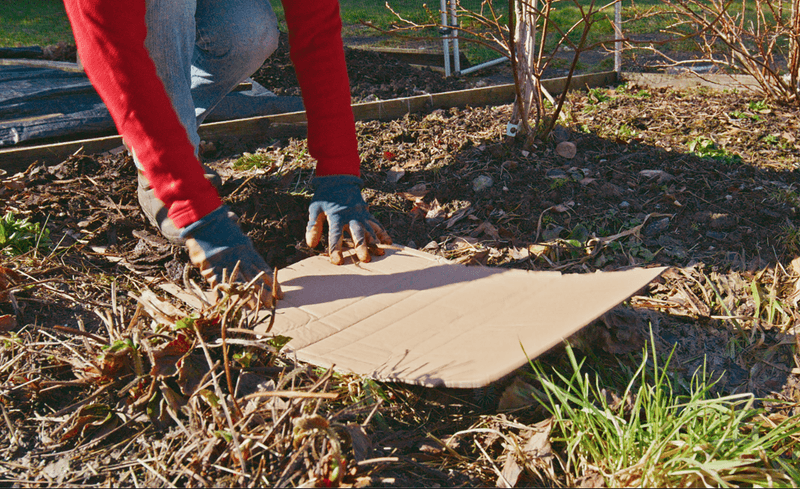
Cardboard suppresses weeds through a straightforward mechanism: it cuts off light. Without light, existing vegetation weakens and dies, and germinating seeds cannot push seedlings through a solid, opaque layer.
Oregon State University Extension’s sheet-mulching guidance explains that cardboard should always be covered with a coarse organic mulch so the sheets stay anchored, retain moisture, and are protected from wind and weather that would otherwise dry and crack them.
Decomposition is both cardboard’s strength and its limitation. As soil microbes and earthworms break it down over several months, the material contributes organic matter to the bed.
That makes cardboard well suited for establishing a new planting area, killing off an existing lawn, reclaiming a weedy path, or giving a freshly replanted bed a head start before perennials fill in. The breakdown timeline varies with moisture, soil type, temperature, and cardboard thickness, so gardeners in North Carolina’s humid Coastal Plain may see faster decomposition than those in the drier mountain foothills.
Two conditional risks are worth knowing about, though neither is inevitable. Iowa State Extension warns that thick paper or cardboard can restrict water and air movement into the soil, and recommends breaking it up after the vegetation underneath has died or after several weeks if it will stay in place long term.
Separately, cardboard has a high carbon-to-nitrogen ratio, which can temporarily tie up soil nitrogen. A University of Minnesota and SARE research project found no statistically significant difference in plant-available nitrate between cardboard, straw, and bare-soil plots in its first year, but researchers still flagged nitrogen immobilization as a plausible risk with thick layers or nitrogen-sensitive plants.
Neither concern should stop you from using cardboard, but both are good reasons to avoid burying plants under an unnecessarily heavy layer.
Install cardboard so seams, edges, and persistent weeds do not defeat it
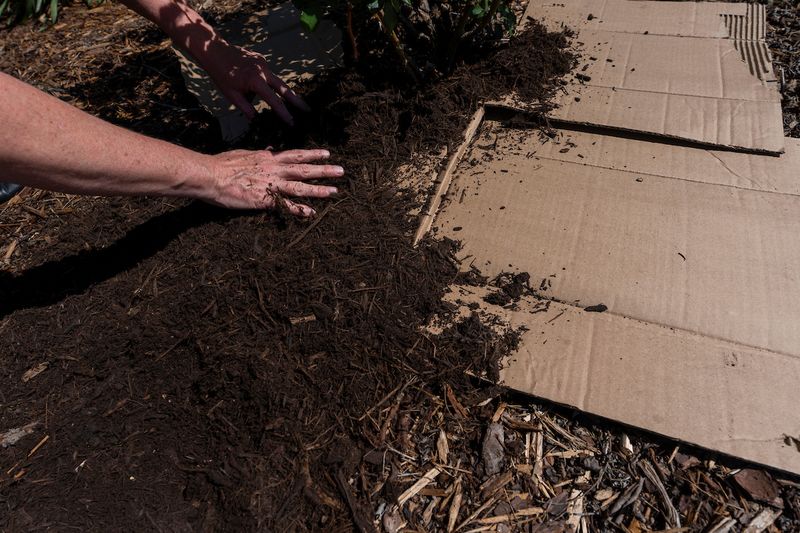
Good installation makes the difference between cardboard that holds weeds down for a full season and cardboard that fails within weeks. Start by cutting or mowing existing vegetation as low as possible.
Then pull or dig out any aggressive perennial weeds before laying a single sheet. OSU Extension specifically lists bindweed, blackberry, morning glory, and quackgrass as plants that sheet mulching may not reliably control, which means removing them first rather than hoping the cardboard will smother them.
Choose plain brown corrugated cardboard. Before laying it, remove all tape, staples, plastic labels, and glossy or heavily printed sections.
Clemson Cooperative Extension notes that colorful inks may contain heavy metals and that adhesives on heavy-duty box seams can contain unwanted chemicals, so plain and uncoated is the safest choice for garden beds.
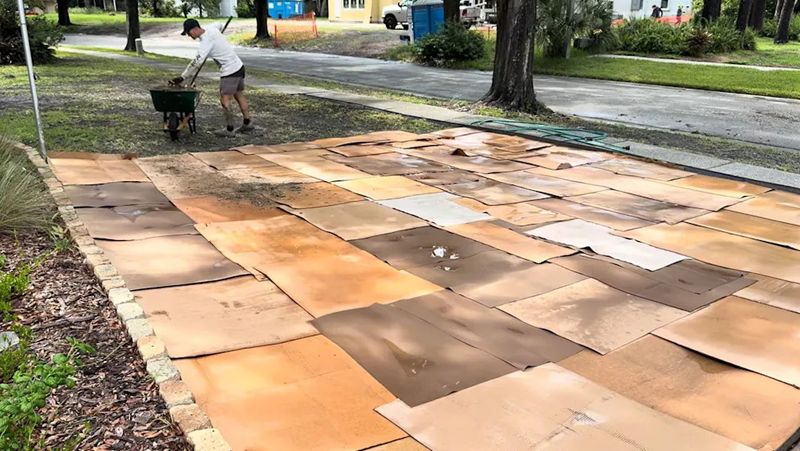
Overlap every sheet edge by at least 8 inches. Gaps are the most common reason cardboard installations fail because weeds can push through even a small opening within a few weeks.
After the sheets are positioned, wet them thoroughly with a hose so they conform to the soil surface and begin to soften. Anchor them with mulch right away rather than leaving them exposed to wind.
NC State recommends applying organic mulch at roughly 3 to 4 inches for perennial landscape beds, and warns that exceeding 4 inches can encourage weed seeds to germinate in the mulch layer itself while also stressing plant roots. Keep mulch and cardboard pulled back from plant crowns and woody trunks.
UF/IFAS mulching guidance recommends leaving a bare gap around the base of plants because excess moisture against stems promotes rot and can invite insect problems. Also keep mulch away from siding and foundations to preserve a visible inspection zone.
NC State’s community food garden handbook specifically recommends recycled cardboard or newspaper under wood chips for weed control in garden beds, reinforcing that this is a well-established, practical approach for North Carolina homeowners.
Landscape fabric remains a conditional option for permanent plantings
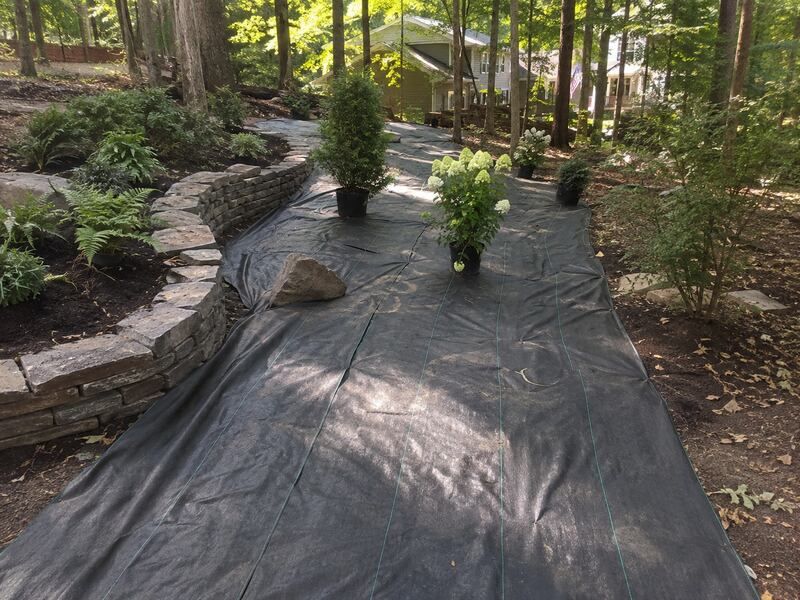
Porous landscape fabric is not a universal failure, and dismissing it entirely misses the situations where it genuinely holds up. Correctly installed woven or nonwoven geotextile fabric can provide longer-lasting weed suppression than cardboard in one specific scenario: an established woody planting where the same shrubs or ornamental trees will stay in place for four or more years.
NC State Extension supports this use, noting that fabric can be cost-effective when plants will remain in place long enough to justify the installation effort and material cost.
Preparation matters as much with fabric as it does with cardboard. Remove existing weeds before unrolling the material, overlap seams tightly, and pin the edges so the fabric lies flat against the soil without gaps or lifting sections.
Avoid putting soil on top of the fabric because a soil layer gives weed seeds a place to germinate above the barrier. Cover the fabric with a shallow mulch layer to limit ultraviolet degradation, which breaks down the material over time if it is left exposed.
One distinction worth making clearly: porous woven or nonwoven landscape fabric is not the same as solid black plastic sheeting. OSU Extension notes that geotextile fabrics allow air and water to move through the material, while solid plastic restricts both and is a poor long-term choice in landscape beds.
Solid plastic heats the soil, blocks rainfall, and can stress plant roots. When NC State or extension services endorse fabric for woody plantings, they mean permeable geotextile, not plastic film.
Fabric also has a legitimate supporting role beneath rock or gravel, where it helps prevent rock from sinking into the soil over time.
Frequent planting exposes fabric’s maintenance and removal problems
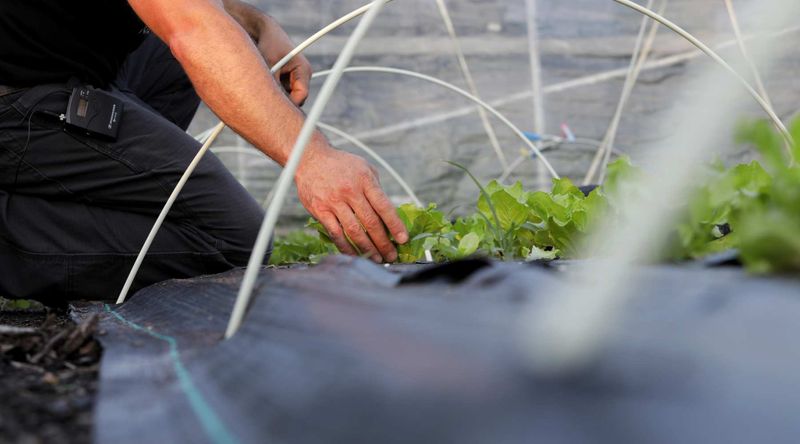
Annual vegetable beds, herb gardens, and any planting area that gets turned over each season expose landscape fabric’s biggest weaknesses fast. Cutting holes for transplants leaves raw edges that fray and curl.
Replanting means cutting new holes or moving the fabric entirely, and after a few seasons the material looks like a patchwork of slits and torn sections rather than a clean barrier.
Weeds find those openings. Perennial species with deep roots or rhizomes can push through the fabric from below, while weed seeds that land on top germinate in the decomposed mulch that accumulates above the barrier over time.
NC State Extension explains that mulch placed over fabric eventually breaks down into a thin layer of organic material that acts as a new growing medium, giving surface-arriving seeds exactly the foothold they need. Once weeds root into the fabric from above, pulling them tears the material further and leaves roots behind.
Removal is the step gardeners rarely think about at installation. A contaminated fabric membrane, laced with roots and covered by mulch, can take significant time and effort to pull out without disturbing the surrounding soil and plants.
NC State’s community food gardening handbook flags this directly, noting that landscape fabric can tear and shred over time, leaving a difficult-to-clean mess.
Two additional NC State cautions apply here. Ground covers that spread by runners or stolons cannot move naturally through solid fabric, so the material actively works against the planting design.
In heavy clay soils, which are common across much of the North Carolina Piedmont, fabric can contribute to saturated conditions and root rot by slowing drainage that is already poor. Cardboard sidesteps both problems because its expected decomposition means it is gone before it becomes a long-term obstacle, making it a more honest fit for beds that see regular change.
Weather, weed species, and maintenance decide how long either barrier works
A Minnesota trial offers the most detailed cardboard comparison available, but its results require careful reading before applying them to a North Carolina yard. The University of Minnesota and SARE study found that shredded cardboard reduced weed biomass and weeding time compared with straw and bare soil.
The advantage was real but not uniform: it diminished in some plots over time and varied depending on timing, irrigation practices, whether mulch was refreshed mid-season, and other site conditions. The trial also used shredded cardboard rather than the flat corrugated sheets most homeowners lay down, which may behave differently in terms of coverage and breakdown rate.
North Carolina’s climate adds another layer of variability that the Minnesota data cannot resolve. A garden in the western mountains deals with cooler temperatures, higher elevation, and different weed communities than a bed in the Piedmont clay belt or a Coastal Plain plot that stays warm and wet well into autumn.
Cardboard may break down faster in a humid coastal environment than in a drier mountain setting, meaning the barrier could lose effectiveness earlier in one region than another. OSU Extension notes that soil type and precipitation both affect how quickly cardboard decomposes, reinforcing why a single performance timeline cannot apply to all North Carolina beds.
Both cardboard and landscape fabric share a common vulnerability: they cannot stop every weed. NC State Extension is straightforward on this point, stating that mulches rarely provide 100 percent weed control.
Perennial weeds with established root systems, rhizomes, or tubers can survive beneath either barrier or push through gaps. Seeds carried by wind, birds, or foot traffic land on top of the mulch layer and germinate there regardless of what is underneath.
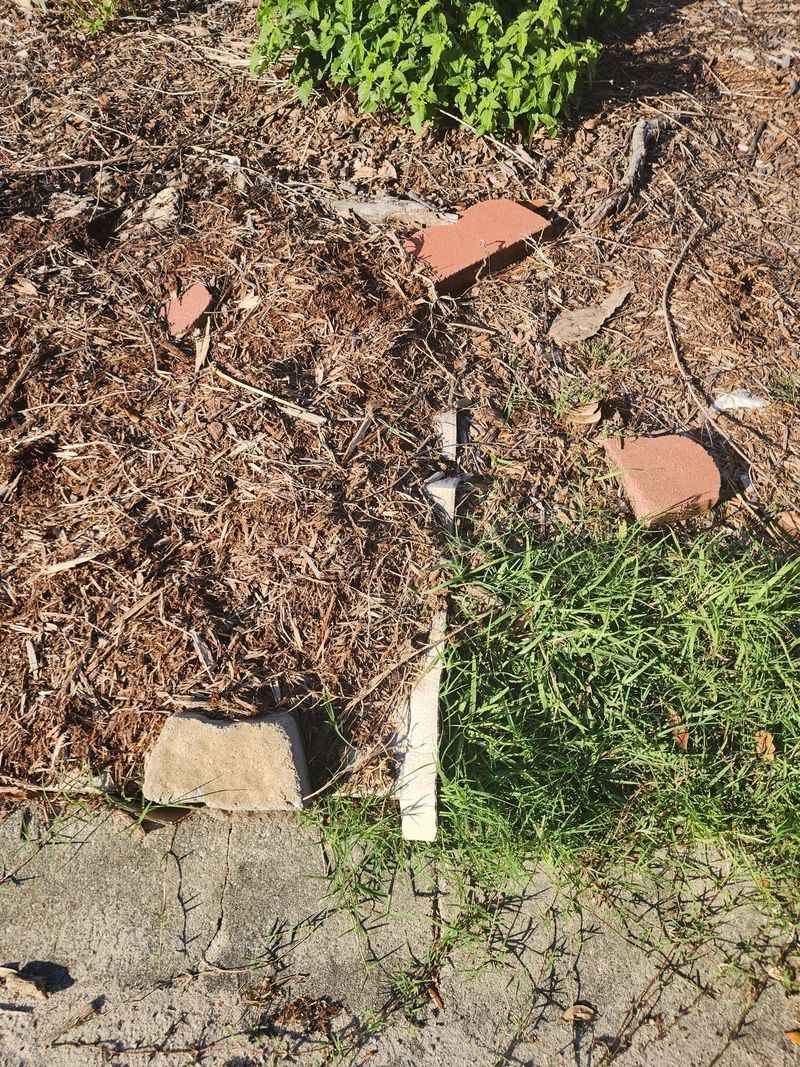
Exposed edges at bed borders are a consistent weak point for both materials. Plan for seasonal inspection, spot hand weeding, and a mulch top-up when the layer thins below 2 inches, because maintenance is what keeps either method working through a full growing season.
Choose the material according to the bed’s future
A simple question guides the decision: how often will this bed change? For new or renovated beds, paths, areas where you are smothering an existing lawn, or any planting that will be turned over seasonally, plain brown corrugated cardboard under 3 to 4 inches of organic mulch is the practical starting point.
NC State’s food garden guidance recommends exactly this combination for community and home garden beds, and the decomposition that eventually ends cardboard’s life as a barrier also means it leaves no difficult residue behind.
Reserve correctly installed porous landscape fabric for established, long-term woody plantings or selected rock-covered areas where frequent replanting is not part of the plan. NC State’s planting guidance supports fabric in those narrower situations, particularly where plants will remain in place for four or more years and where the installation is done carefully from the start.
OSU Extension reinforces that fabric also serves a useful role beneath gravel, where it keeps rock from working down into the soil over time.
Neither material is permanent or maintenance-free. Cardboard will need mulch refreshed as it breaks down; fabric will need weeds pulled before they root into the material.
The defensible North Carolina conclusion is not that cardboard won a full-season head-to-head test, but that each material earns its place in a specific type of bed. Match the barrier to the bed’s future, install it carefully, and the weeding load gets lighter without creating a new problem to solve later.