
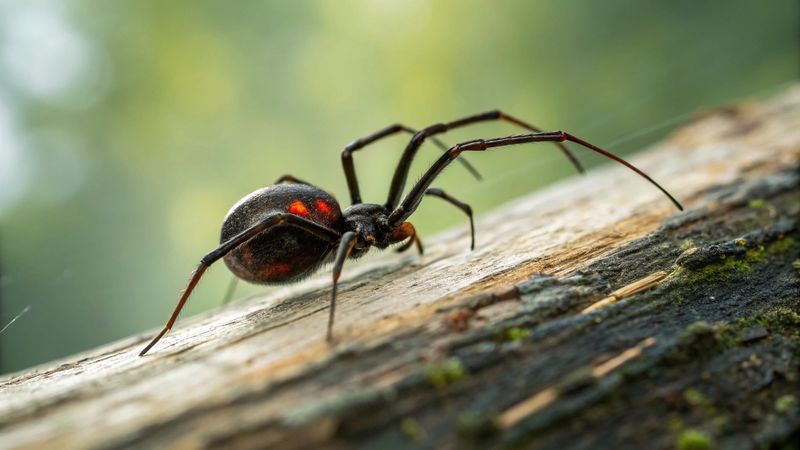
Reaching under a pot or picking up a board in a Florida garden can sometimes end with a sharp sting and a sinking feeling that something bit you. If you suspect a black widow was involved, the next few minutes matter, even if the bite looks minor at first.
Florida has several widow spider species, and knowing the right steps before panic sets in can make a real difference. This guide walks you through exactly what to do, from the moment you feel that bite to when you need professional help.
Move Away and Sit Down
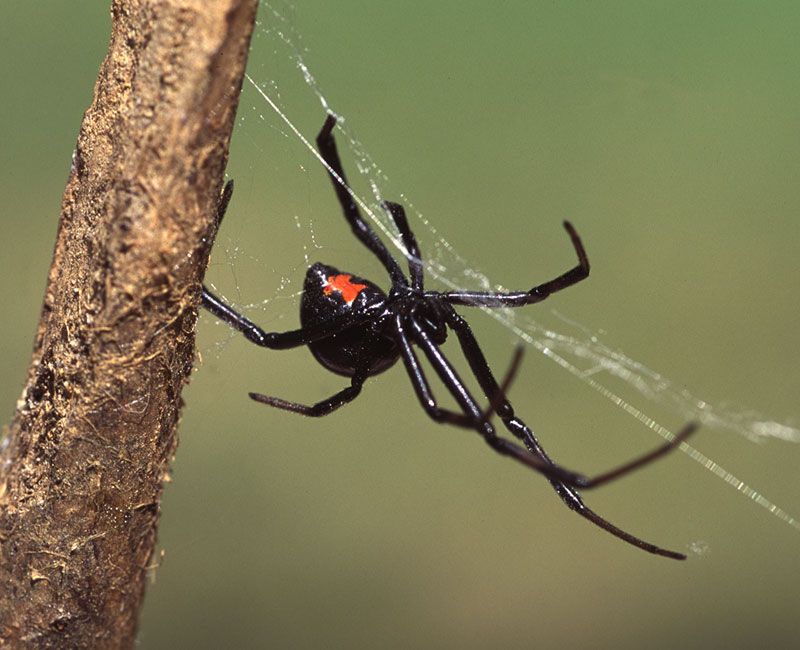
Your first move is the simplest: leave the spot where the bite happened and put a few feet between yourself and the area. Widow spiders do not chase people.
Florida Department of Agriculture guidance notes that these spiders are generally shy and bite defensively when accidentally pressed against skin, such as when you reach under boards, pots, or garden debris. Once you have moved away, the risk of a second bite drops sharply.
After stepping back, sit down somewhere stable. Stopping strenuous activity is sensible first aid because exertion can worsen how you feel as symptoms develop, and the last thing you need is to be standing over a garden bed while you sort out what happened.
Set down your tools, take a slow breath, and focus on the steps below rather than on trying to locate or identify the spider.
Widow spiders in Florida are most often found hiding in sheltered, dark spots: under pots, inside gloves left outside, beneath lumber piles, and in dense ground cover. CDC/NIOSH guidance for outdoor workers reinforces that these spiders react to being trapped rather than seeking out people.
That context matters because it means you are not in continued danger once you have moved away from the spot, which helps you stay calm and start first aid without rushing.
Keeping your composure right now is practical, not just reassuring. Clear thinking helps you wash the bite, remove jewelry, and make the right phone call, all of which come next.
Wash the Area and Remove Tight Items
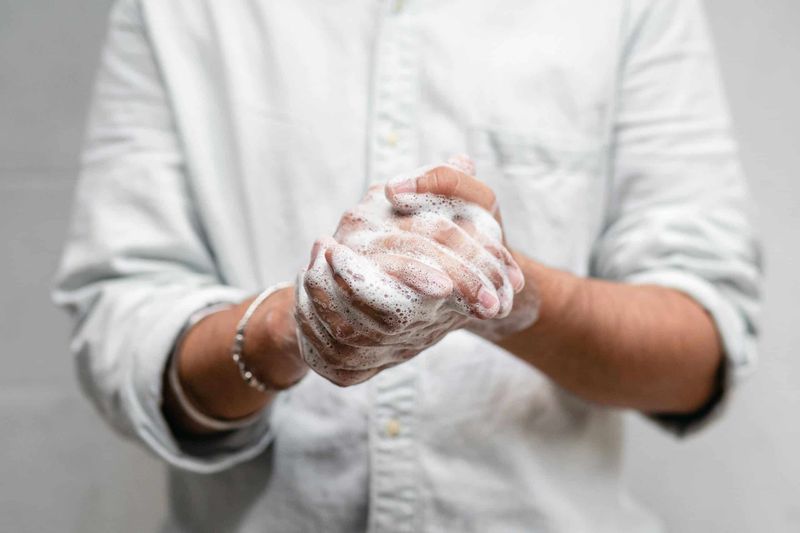
Running water and soap over the bite site is one of the most consistently recommended steps across every major poison control and medical authority. Poison Control’s guidance on black widow spider bites lists washing with soap and water as an immediate first-aid step, and the same recommendation appears in CDC, MedlinePlus, and Florida Poison Control guidance.
You do not need anything special, just regular hand soap and clean water applied gently for at least 20 to 30 seconds.
While the area is still accessible, take off any rings, watches, bracelets, or tight sleeves near the bite. Swelling can develop over the next hour or two, and jewelry that fits perfectly right now may become painfully constricting or very difficult to remove later.
Getting it off early takes about ten seconds and avoids a much bigger problem.
One thing to keep in mind: the way the bite looks right now tells you very little. MedlinePlus’s black widow spider article notes that a bite may feel like a small pinprick or may initially go unnoticed, and local redness, minor swelling, or one or two tiny puncture marks can appear with many types of bites and skin conditions.
The OSHA black widow fact sheet makes the same point: wound appearance alone cannot confirm the spider species or predict how the bite will progress.
Washing and removing tight items are not a substitute for calling Poison Help, but they are the right things to do with your hands while you prepare to make that call. Keep the affected area as still and relaxed as you can after cleaning it.
Use a Wrapped Cool Compress
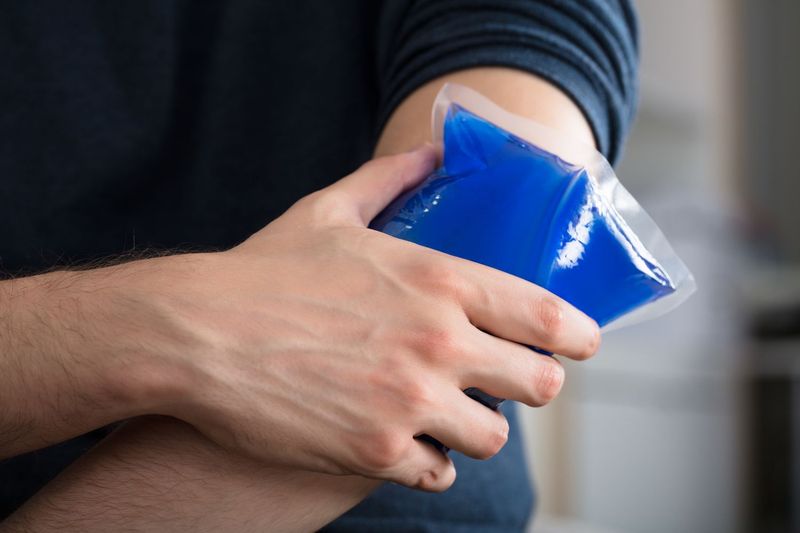
A wrapped cool compress can take the edge off local pain and minor swelling while you wait for professional guidance. The key word is wrapped: never place ice directly on bare skin, as that can cause a cold injury on top of an already irritated area.
Fold a thin towel or cloth around a cold pack or a bag of ice before it touches your skin.
MedlinePlus recommends applying ice wrapped in cloth for 10 minutes on, then 10 minutes off, repeating as needed. Florida Poison Control also recommends cool compresses for bite and sting care.
The Merck Manual’s spider bite guidance supports the same approach for reducing discomfort at the bite site.
While the compress is in place, keep the affected limb as still as you comfortably can, and if it is practical, rest it in a slightly elevated position. Stillness and gentle elevation are reasonable comfort measures while you arrange a call to Poison Help, but they are not treatments in themselves.
Do not delay calling because you are waiting to see whether the compress helps enough on its own.
A few things to skip entirely: no rubbing alcohol, no topical heat, and nothing stronger than cool water temperature. The goal right now is simply reducing discomfort and keeping the area calm while medical guidance is on the way.
Cooling and stillness set the stage for the next and most important step, which is getting expert eyes on your situation through a phone call.
Call Poison Help Promptly
After washing the area and applying the compress, pick up the phone and call Poison Help at 1-800-222-1222. The call is free, confidential, and available around the clock every day of the year.
You do not need to have identified the spider to call, and you do not need to wait for symptoms to get worse before reaching out.
Florida’s Poison Control Centers handle bites and stings as a core part of their services, and contacting Florida Poison Control connects you with specialists who can give you case-specific guidance based on the person’s age, weight, symptoms, and medical history. That kind of personalized guidance is something a general article simply cannot replace.
Poison Control’s national contact page confirms the same number, 1-800-222-1222, reaches poison centers across the United States, including Florida.
The specialist on the line will ask what happened, what the bite area looks like, and how the person is feeling right now. They can help you figure out whether the situation can be safely monitored at home with telephone check-ins or whether the person needs to be seen in person urgently.
Florida Poison Control’s insect and spider guidance reflects that local-only symptoms are sometimes manageable with wound care and follow-up by phone, while systemic symptoms point toward emergency evaluation.
Keep the number saved in your phone before you ever need it: 1-800-222-1222. If you are helping someone else who was bitten, stay with them during the call so you can relay information accurately.
Poison Help is not a replacement for 911 when a true emergency is unfolding, but for the large majority of suspected bites where the person is alert and stable, it is the right first call to make.
Recognize a 911-Level Emergency
Most people bitten by a suspected widow spider remain alert and stable enough to call Poison Help and follow the steps above. A smaller number develop symptoms that require 911 right away.
Knowing which is which prevents two opposite mistakes: calling 911 for a bite that Poison Help can manage, or waiting too long when a true emergency is developing.
Call 911 immediately if the person has trouble breathing or swallowing, collapses, has a seizure, cannot be awakened, or shows signs of altered consciousness such as confusion, unresponsiveness, or slurred speech. Poison Control’s immediate assistance guidance identifies these as situations requiring emergency services, not a phone consultation.
Do not wait to see whether the symptom resolves on its own if any of these are happening.
Separate from those life-threatening signs, there is a second category that deserves urgent in-person medical evaluation even if 911 is not the right call at that exact moment. Severe or spreading pain, muscle cramping or rigidity, abdominal or chest tightness, nausea, vomiting, heavy sweating, weakness, or a general sense that something is wrong systemically all point toward a possible envenomation effect that goes beyond the bite site.
Florida Poison Control’s bite and sting guidance and MedlinePlus both identify these as reasons to seek emergency care.
Mayo Clinic’s spider bite overview notes that systemic symptoms including muscle pain and cramping, elevated blood pressure, and sweating can develop after a widow spider bite. If the person is stable enough to communicate, call Poison Help first so the specialist can guide the decision about driving to an emergency department versus calling 911.
If the person’s condition is deteriorating fast, skip the Poison Help call and dial 911 directly.
Keep Watching as Symptoms Develop
One of the trickiest things about a suspected widow spider bite is that the first few minutes can feel almost unremarkable. The bite may sting briefly and then settle, and local redness may be minor.
That early calm does not mean the situation is resolved.
Florida Department of Agriculture’s widow spider information and MedlinePlus both note that systemic symptoms, including spreading pain, muscle cramping, abdominal discomfort, sweating, and nausea, can begin within roughly 15 minutes to three hours after the bite, and timing varies from person to person. An initially mild-looking bite does not rule out envenomation.
Certain groups need closer attention and a lower threshold for urgent in-person evaluation. Young children can develop more severe illness than healthy adults from the same bite.
Older adults and people with significant heart conditions or other serious health problems are also at higher risk for a more difficult course. Pregnancy adds another layer of concern: published case reports of black widow envenomation in pregnancy have documented uterine contractions and other complications, which means any pregnant person with a suspected widow bite should seek emergency evaluation promptly rather than waiting to see how symptoms progress.
While you are watching for changes, do not take over-the-counter pain medicine or antihistamines on your own judgment. The right dose depends on age, pregnancy status, allergies, and other medicines the person takes.
Merck Manual guidance on spider bites reflects that pain management decisions belong with a clinician or Poison Control specialist. If you are already on the phone with Poison Help, ask them directly.
Do Not Chase a Diagnosis or Try Folk Remedies
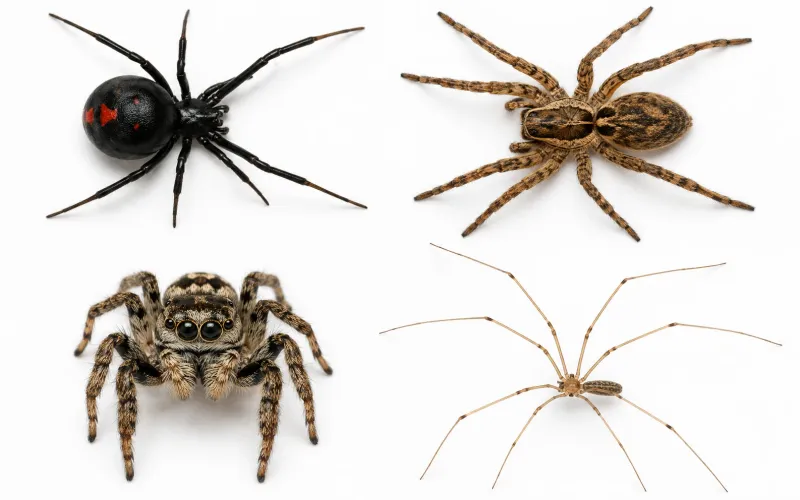
Florida has four documented widow species: the southern black widow, northern black widow, red widow, and brown widow. UF/IFAS’s guide to common Florida spiders points out that markings vary between species and even between individuals of the same species.
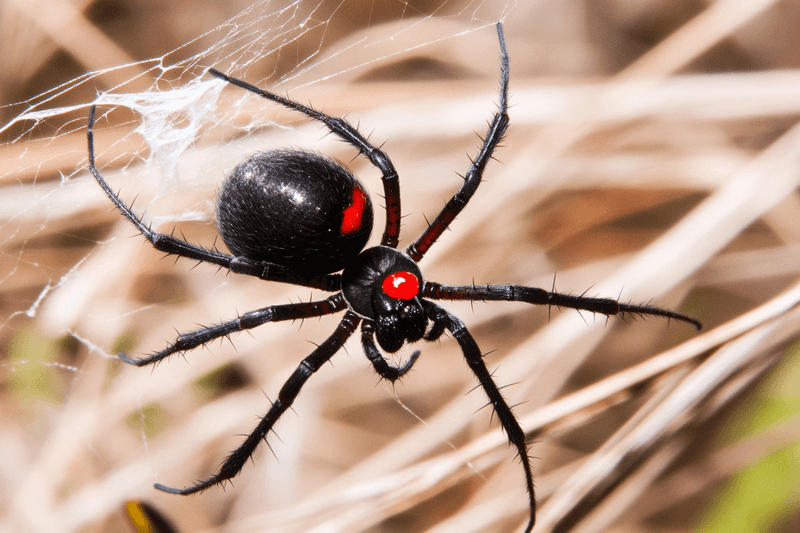
A perfect red hourglass on a glossy black abdomen is not required for a spider to be a widow, and seeing that pattern does not prove one is. Color alone is not enough to confirm a spider’s identity.
UF/IFAS’s southern black widow profile and UF/IFAS’s broader spider identification resource both reinforce that Florida has many harmless dark-colored spiders, including jumping spiders, that are routinely mistaken for black widows. Meanwhile, two puncture marks, a round lesion, or a red bite area can all result from insect bites, skin infections, or other conditions entirely unrelated to spiders.
FDACS guidance notes that many Florida skin lesions are incorrectly attributed to spiders. Brown recluse spiders, in particular, should not be the automatic explanation for a Florida garden wound because they are not established across most of the state.
Do not try to capture, trap, kill, or handle the spider. The NCBI Bookshelf review of black widow spider toxicity advises against handling a suspected widow, and getting a second bite while trying to collect the first one would be far worse than arriving at the emergency department without a specimen.
If the spider is still visible and you can photograph it safely from a distance without approaching or disturbing it, that image may help the treating clinician, but care must never wait for identification.
Reject every folk remedy without hesitation. Poison Control has documented real harm from improvised bite treatments, and CDC Yellow Book guidance on envenomations explicitly rejects cutting the wound, sucking out venom, applying a tourniquet, using electric shock, and applying heat or herbal preparations.
None of these work, and several cause direct harm on top of the original bite.
Let Clinicians Decide Further Treatment
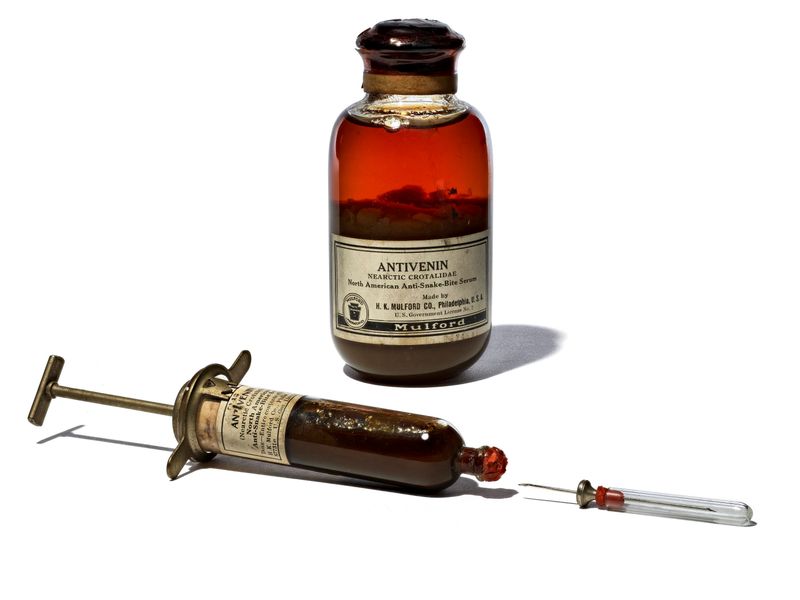
Once you reach an emergency department or urgent care facility, the clinician’s job begins where home first aid ends. Treatment focuses on controlling pain, relieving muscle spasms, managing blood pressure changes, and addressing any other systemic effects.
The NCBI Bookshelf review of black widow spider toxicity outlines these as the core goals of medical management, with most patients responding well to supportive care including pain medicine and muscle relaxants.
Antivenom for black widow envenomation exists and can be highly effective, but it is not automatic. A randomized trial examining black widow antivenom and earlier clinical studies of black widow envenomation treatment both reflect that antivenom is generally reserved for severe or inadequately controlled cases because allergic reactions are possible.
The decision belongs to the emergency clinician or consulting toxicologist, not the patient, and it is never something to seek or administer outside a clinical setting.
Wound care at the facility may also include a review of tetanus protection. CDC clinical guidance on tetanus wound management distinguishes clean minor wounds from puncture or contaminated wounds and factors in vaccination history when determining whether a booster is needed.
Bring up your vaccination history with the treating provider rather than trying to assess it yourself.
Fatal outcomes from widow spider bites are rare in healthy adults, and Florida Poison Control treats these cases routinely. The safe sequence remains: move away, wash the bite, remove tight items, apply a wrapped cool compress, keep the limb still, call Poison Help at 1-800-222-1222, and escalate immediately for life-threatening or systemic symptoms.
Most people who follow these steps and get timely professional evaluation do well, which is exactly the outcome good preparation is designed to produce.