
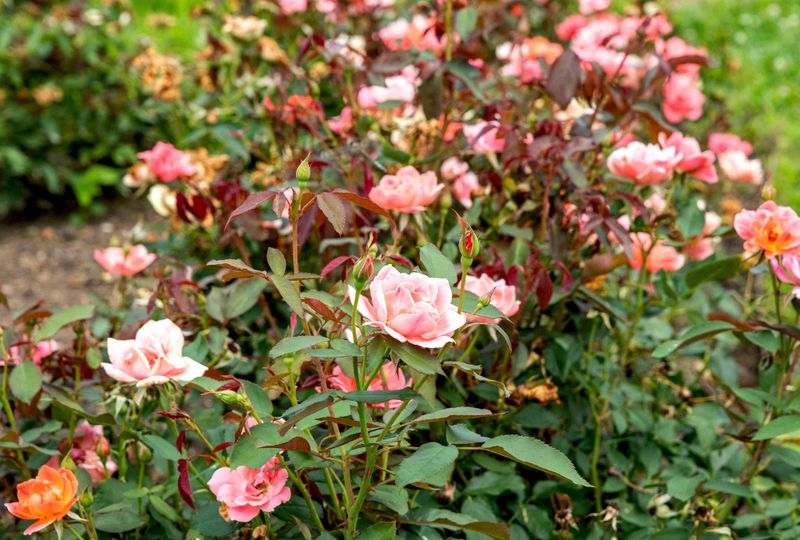
Japanese beetles can turn a healthy Knockout rose into a ragged mess of skeletonized leaves and chewed blooms in just a few days. Many North Carolina gardeners assume the worst damage comes in fall, but the real window for adult beetle feeding runs from late spring through summer.
Knowing when beetles actually show up, and what to do the moment they arrive, can make a real difference for your roses this season.
North Carolina’s adult beetle season usually arrives before fall
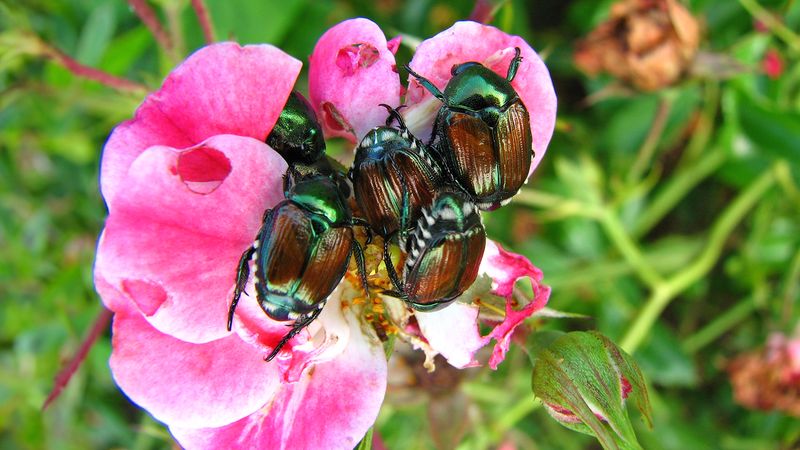
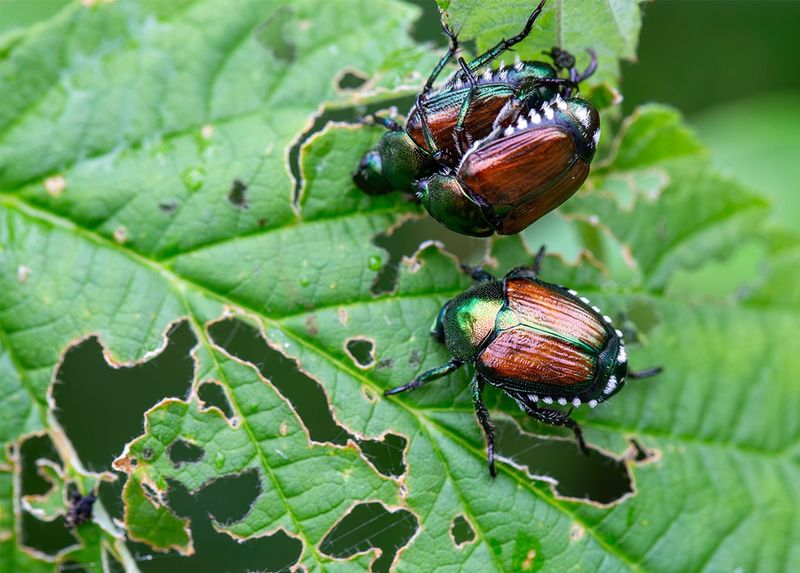
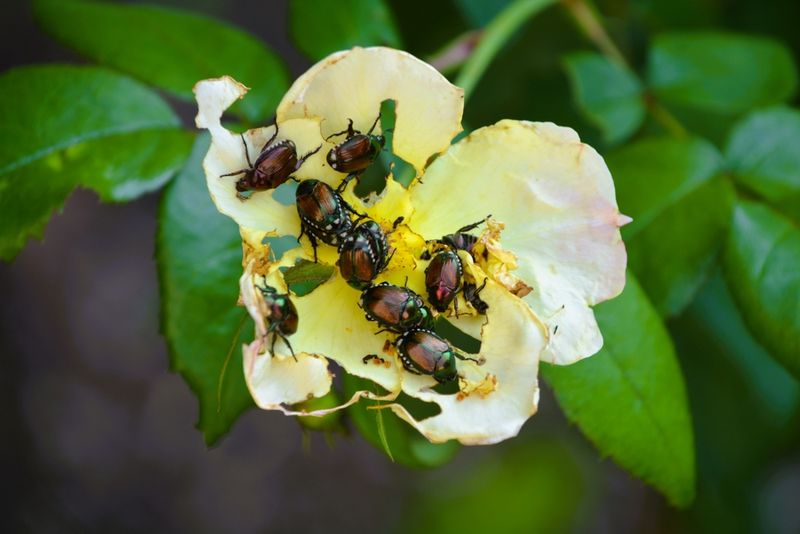
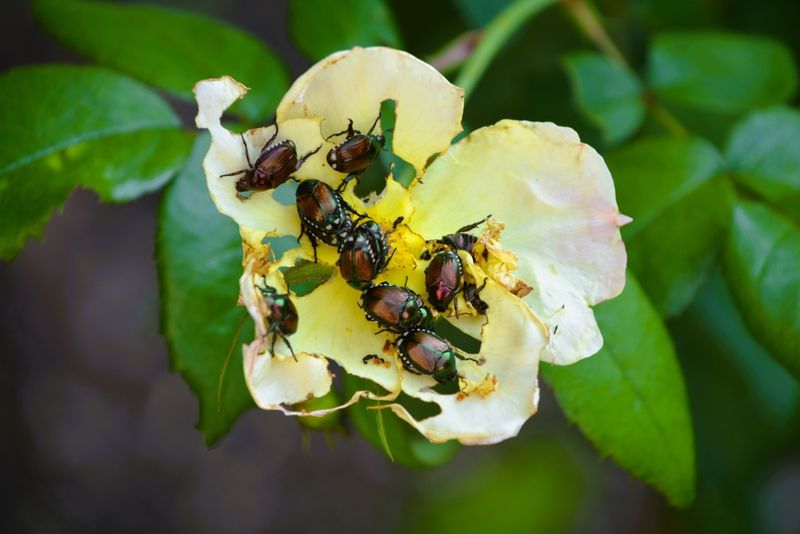
Japanese beetles do not wait until fall to attack roses. Adult beetles feed on rose leaves, buds, and flowers, leaving behind a lace-like skeleton of leaf tissue where healthy foliage used to be.
Blooms and buds may develop ragged edges or disappear entirely. NC State Extension’s rose pest guide confirms that roses are among this insect’s preferred host plants.
The adult season in North Carolina generally begins around mid-May, with eastern parts of the state sometimes seeing beetles even earlier. Activity peaks several weeks after the first adults emerge, then gradually diminishes during August.
Fall is not the primary feeding period for adults. That season belongs to the next generation of larvae, which are soil-dwelling grubs working through turfgrass roots underground, not foliage above ground.
The practical takeaway is simple: start watching your roses in mid-spring, not mid-fall. USDA APHIS tracking data shows how broadly this pest has spread, and the APHIS program manual documents adult emergence timing across the beetle’s established range.
Waiting for a supposed fall return means missing the actual damage window.
Knockout roses are prized for repeat blooming, disease resistance, and low-maintenance performance. NC State’s plant profile for the Knockout group highlights their ability to flower through fall, which makes protecting them during the summer beetle period worthwhile.
That disease resistance and rebloom habit, however, do not make them pest-proof. Japanese beetles will feed on Knockout roses just as readily as on any other rose variety.
Why daily hand removal works well for a small rose planting
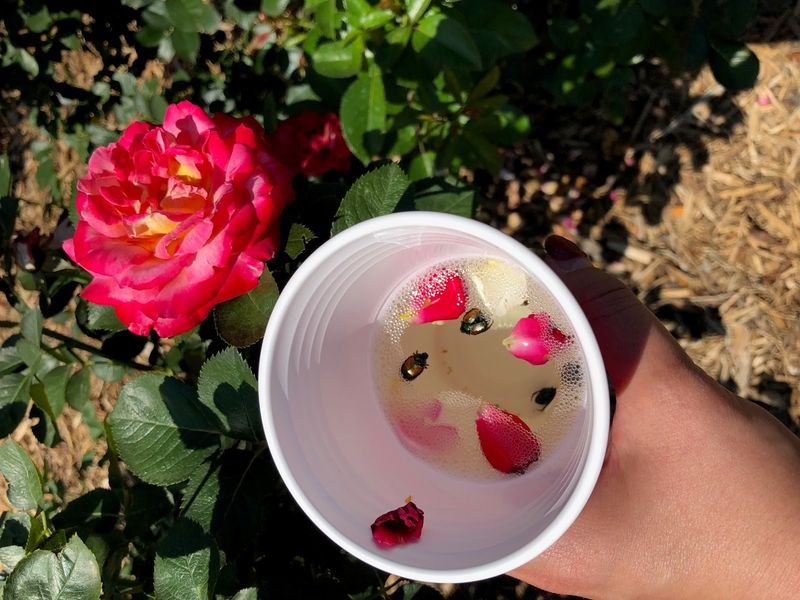
Hand removal sounds tedious, but for a homeowner with two or three Knockout roses, it is one of the most practical tools available. The process works best when you start at the first sign of beetles rather than waiting for a heavy infestation to develop.
Grab a wide container, fill it with water and a squirt of dish soap, hold it under a rose stem or bloom cluster, and then shake the plant firmly so the beetles drop in. Most adult beetles are sluggish in the early morning and in the evening, which makes those times ideal for collecting them before they can fly away.
Iowa State University Extension’s Japanese beetle rose guidance recommends starting removal as soon as adults appear and repeating the task daily, especially during the first several weeks of activity when beetle numbers tend to be highest. The soapy water kills the beetles quickly, and disposing of the container contents away from the garden prevents any surviving beetles from returning.
After each removal session, scan the entire plant, not just the most visible blooms. Beetles often cluster on the upper side of leaves and inside open flowers where feeding is easiest.
A thorough check takes only a few minutes per bush, and the cumulative effect of consistent daily removal adds up quickly.
This method is best suited for a small number of high-value plants. It will not stop every beetle from arriving, since adults can fly in from neighboring yards, and it requires commitment over several weeks.
Think of it as a repeatable routine rather than a one-time fix. A single thorough removal session will not protect new growth that emerges over the following days, so returning each morning or evening while beetles remain active is what keeps feeding pressure manageable.
Persistence limits feeding pressure but cannot stop arrivals
Research from the University of Kentucky found that daily hand removal reduced both beetle numbers and plant damage over the course of the adult feeding period. The proposed explanation is that beetle-damaged plants may become more attractive to additional beetles.
Reducing the number of feeding adults on a given plant could, in turn, reduce the signals that draw new arrivals. That is a meaningful finding, but it comes with honest limits.
New adult beetles can emerge and take flight over a period of several weeks. Your neighbors’ lawns and gardens also harbor populations that will not be affected by anything you do on your own property.
University of Kentucky Entomology guidance is clear that Japanese beetle management is difficult at the individual-yard scale, and no single method eliminates the problem entirely.
What persistence does accomplish is keeping feeding pressure lower than it would otherwise be. A plant checked and cleared daily suffers less cumulative leaf loss than one left unattended through the peak feeding weeks.
That distinction matters for a repeat-blooming rose that you want to look its best through summer. One thorough session followed by a week of inattention will not deliver the same result as a consistent daily check.
Build a simple rhythm: walk out to the rose each morning or evening while beetles are active, run through the removal process, and move on. On days when you find only a few beetles, the job takes under five minutes.
On heavier days, it takes longer, but those are also the days when staying consistent pays off most. Keep going until you notice several consecutive days with little to no beetle activity, which usually signals that the adult season is winding down for the year.
Use exclusion and bloom-protection tactics selectively
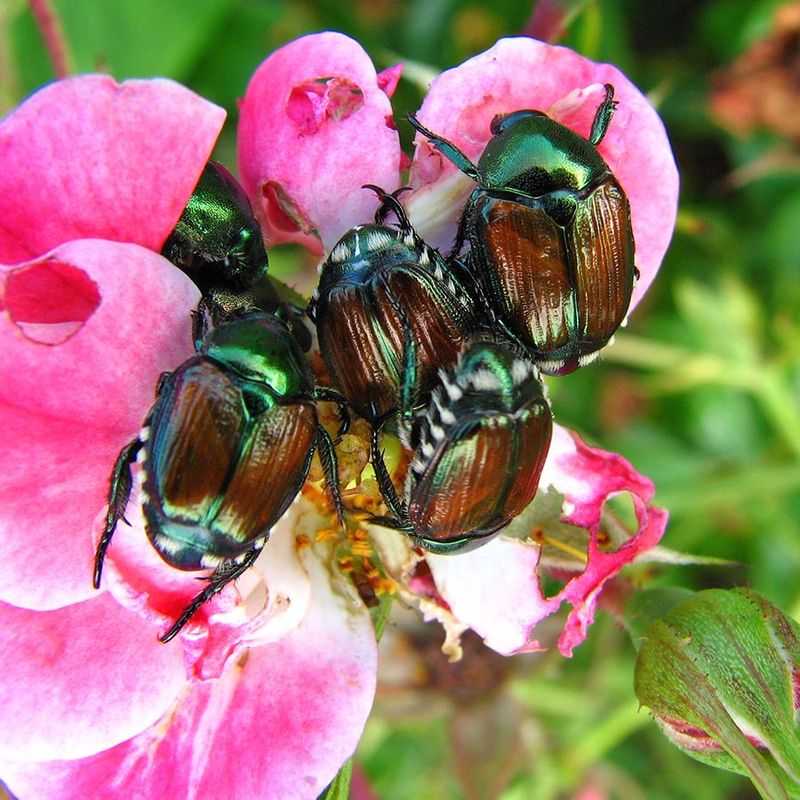
For a particularly prized rose or a small plant you want to protect completely during the worst of beetle season, fine mesh netting or cheesecloth offers a physical barrier that beetles simply cannot cross. Drape the material loosely over the plant and secure the edges so beetles cannot crawl underneath.
University of Illinois Extension recommends this kind of exclusion approach for high-value plants during peak beetle activity. Keep in mind that netting reduces the wider beetle population by exactly zero.
It protects the covered plant only, and you will need to remove it temporarily when you want to enjoy the blooms or allow pollinators to visit.
NC State’s rose pest guide includes a useful bloom-preservation option: when you first notice beetles arriving, nip the developing buds and protect the foliage until beetle numbers decline. Once adult activity slows, allow the bush to produce its next flush of blooms.
This is a practical tactic for saving a specific bloom cycle on a prized plant, not a method for reducing how many beetles visit your yard overall.
Deadheading, or removing spent flowers, is a different practice entirely. NC State’s Knockout rose profile notes that removing spent blooms can encourage faster rebloom on this cultivar group.
That is a genuine benefit, but deadheading is not established as a way to deter or reduce Japanese beetle feeding. Removing a faded flower does not make the plant less attractive to beetles, and treating it as pest control could give you a false sense of security during active beetle weeks.
Use exclusion netting when you have one or two roses you genuinely cannot afford to let beetles reach, such as a plant in full bloom for a special occasion or a young specimen still getting established. For a larger planting, daily hand removal is more practical than draping and securing netting across multiple bushes each day.
Treat fall grubs as a separate lawn problem
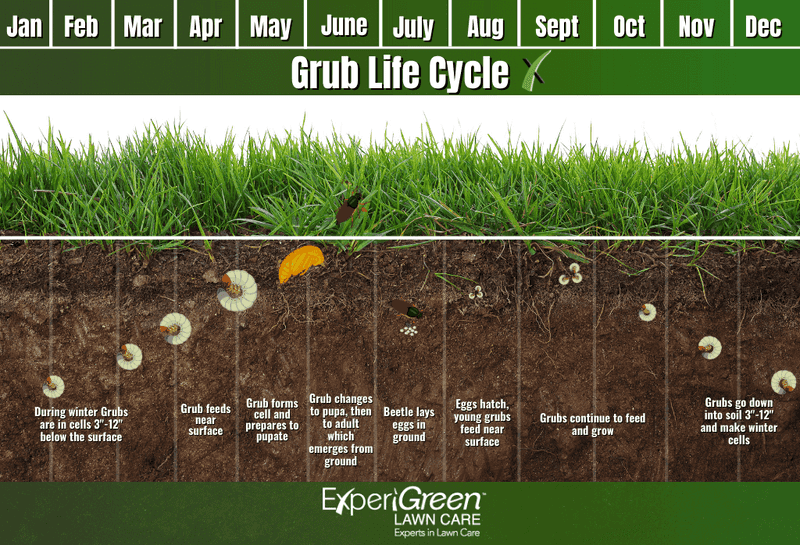
Adult Japanese beetles and their soil-dwelling larvae are two entirely different problems that happen to involve the same insect at different life stages. Adults feed above ground on leaves, buds, and flowers from late spring through summer.
Larvae, commonly called white grubs, live in the soil and feed mainly on turfgrass roots. Iowa State University Extension’s Japanese beetle encyclopedia entry describes this two-stage cycle clearly, and understanding it prevents a common mistake: assuming that treating your lawn for grubs will protect your roses from adult beetles.
A late-summer or fall grub treatment targets larvae in the soil. It has no effect on adult beetles that are already feeding on your rose foliage above ground.
NC State’s shrub pest guidance keeps these two control strategies separate for exactly this reason.
Even if a grub treatment successfully reduces the larval population in your lawn, that does not guarantee less rose damage the following summer. NC State’s Japanese beetle factsheet and University of Kentucky Entomology both note that adult beetles can fly in from neighboring properties, sometimes traveling considerable distances.
Reducing the grub count in your own yard does not create a barrier against adults emerging from surrounding land.
Fall grub management is a legitimate lawn care practice if you are seeing turf damage, brown patches that lift like loose carpet, or increased bird and wildlife digging activity. Treat it as a lawn health issue with its own timing, products, and application windows.
Just do not count on it to substitute for the adult-control routine your roses need during the summer feeding season.
Skip beetle traps and check every spray label
Beetle traps seem like a logical solution. They catch beetles, and the bags can fill up fast, which feels like progress.
The problem is that those traps use floral and sex-based lures that are highly attractive to adult beetles, and they tend to pull in more beetles from the surrounding area than they actually capture. NC State’s Japanese beetle factsheet and University of Minnesota Extension both caution against using traps near susceptible plants.
Iowa State University Extension’s trap FAQ echoes this concern, noting that traps can increase nearby feeding damage rather than reducing it. If you choose to experiment with a trap, place it well away from your roses, not beside them.
When hand removal and exclusion are not enough, a labeled pesticide may be worth considering. The key phrase is labeled pesticide: the product’s current label must specifically list both roses and Japanese beetles.
Iowa State Extension’s rose beetle FAQ notes that spot treatments may provide only several days of protection, so repeat applications are often needed during the adult season. The North Carolina Agricultural Chemicals Manual is a reliable starting point for identifying products registered for this use in the state.
Before spraying anything on a blooming rose, read the label for bloom-time restrictions, temperature limits, application intervals, and pollinator precautions. Knockout roses in flower attract bees and other beneficial insects, and broad-spectrum insecticides applied at the wrong time or in the wrong conditions can harm those visitors.
EPA pollinator protection guidance and the NC State turfgrass and pest blog’s Japanese beetle alert both highlight the importance of timing and label compliance when spraying near blooming plants.
No botanical spray, homemade mixture, or broadly marketed organic product should be assumed universally safe or reliably effective. Product performance varies, some formulations can injure foliage, and repeat applications are often required regardless of the active ingredient.
When in doubt, stick with the label and consult your local NC Cooperative Extension office for product recommendations specific to your county.
Start when adults appear, not when fall arrives
When the first Japanese beetle lands on your Knockout rose, that is your signal to begin. Check the plant in the morning or evening, hold a container of soapy water beneath the stems and blooms, and shake or pick the adults in.
Repeat the process every day while beetles remain active. University of Kentucky research and Iowa State Extension guidance both support daily removal as a practical, low-input option for small plantings.
This routine reduces feeding pressure rather than guaranteeing a beetle-free plant. New adults can still arrive from neighboring properties, and the method works best when you stay consistent over the several weeks that adult activity typically lasts.
A few missed days during peak season will set you back more than a few missed days near the end of the season, so front-load your attention when beetles first appear.
Fall grub care is a separate matter. If your lawn shows signs of grub damage, address it on its own timeline with products labeled for that purpose.
Grub management does not replace the adult-control routine, and adult-control does not substitute for grub treatment when turf health is the concern. The two seasons call for two distinct responses.
The beetle you shake into a soapy bucket in June is the one doing the damage now, and that is where your attention belongs first.