
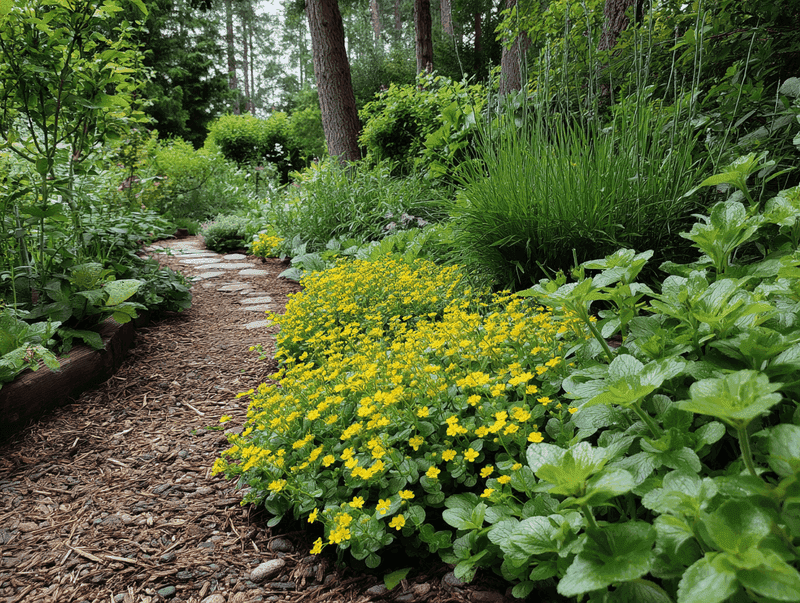
Ajuga is one of the most popular shade groundcovers in the South, but plenty of North Carolina gardeners have watched it creep into their lawn or crowd out plants they actually wanted to keep. If that sounds familiar, a native alternative called green-and-gold might be worth a closer look.
Chrysogonum virginianum grows low, blooms bright yellow, and suits the shaded borders found across the Piedmont, Coastal Plain, and Mountains. The catch is that no groundcover stays perfectly put, so the goal is choosing a plant that fits your site and is realistic to manage.
Choose an alternative to ajuga for a specific border problem
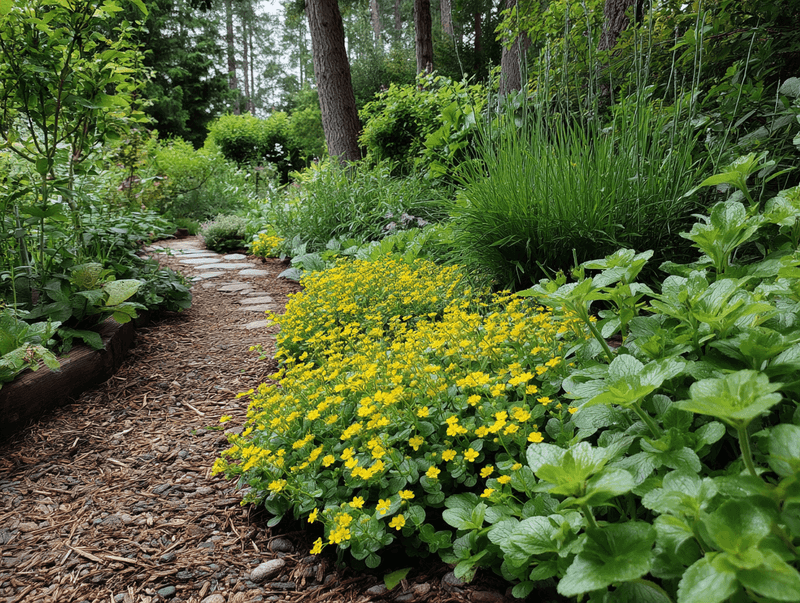
Ajuga works well as a low, dense groundcover in many shade gardens, and plenty of North Carolina homeowners plant it on purpose. The problem tends to show up a season or two later, when the mat has crept well beyond the bed edge and is threading through turf grass or shouldering out nearby perennials that cannot hold their ground against it.
According to the NC State Extension plant profile for ajuga, the plant forms a dense mat and spreads in ways that can create removal problems near perennial beds or lawns. That same source currently rates ajuga as a low threat to native plant communities in North Carolina, so calling it a statewide ecological emergency would be an overstatement.
The issue is more practical than ecological: once ajuga has moved into turf or crowded a less-competitive neighbor, getting it back out takes real effort.
The JC Raulston Arboretum at NC State also notes ajuga’s stoloniferous or rhizomatous spread, and some extension sources specifically advise using barriers or pulling it back from turf. Assessments vary by region, too.
The UF/IFAS program in Florida rates ajuga as a high invasion risk and does not recommend it there, but that assessment applies to Florida’s conditions, not North Carolina’s.
Green-and-gold is worth considering if you want a low native mat for a shade border, or if ajuga has already created a management headache at your specific site. This is not a universal swap recommendation.
It is a practical option for gardeners who want a native groundcover or who have found ajuga harder to contain than expected in their particular yard.
Green-and-gold supplies a low native mat with yellow flowers
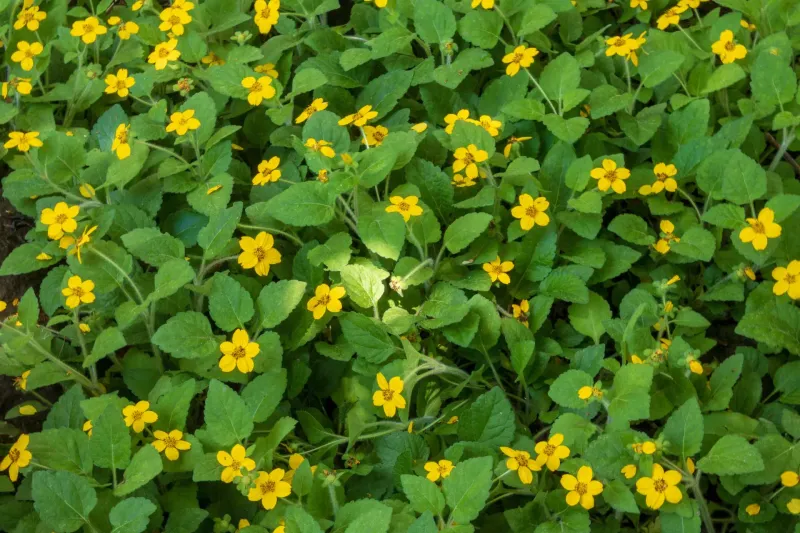
Chrysogonum virginianum, commonly called green-and-gold, is native to the eastern United States and is recognized by NC State Extension as suitable for all three major North Carolina regions: the Coastal Plain, the Piedmont, and the Mountains. That native status matters for gardeners who want a plant with a genuine ecological connection to the landscape rather than an imported ornamental that happens to tolerate shade.
Visually, the plant forms a low foliage mat, typically around 1 to 2 inches tall at the leaf level, while flowering stems rise above to carry bright yellow, daisy-like blooms. NC State Extension describes green-and-gold as a semi-evergreen, rhizomatous plant that can spread 18 inches or more from the original planting point.
That mature width means a single plant can cover a modest patch of bare ground over time, though it will not carpet a wide border quickly on its own.
The flowers are one of the plant’s strongest selling points. Yellow, five-petaled, and roughly an inch across, they sit above the green foliage in a way that reads clearly even at a distance.
The foliage itself stays green rather than offering the bronze, purple, or variegated leaf colors that ajuga cultivars provide. Gardeners who love the look of dark-leaved ajuga will notice that difference, and it is worth acknowledging upfront rather than pretending the two plants are visually interchangeable.
What green-and-gold does offer is a low, spreading, flowering mat that belongs in North Carolina’s native plant palette. For a shade border where the goal is ground coverage, pollinator value, and regional appropriateness, that combination is genuinely useful.
Match the plant to moist, shaded, well-drained soil
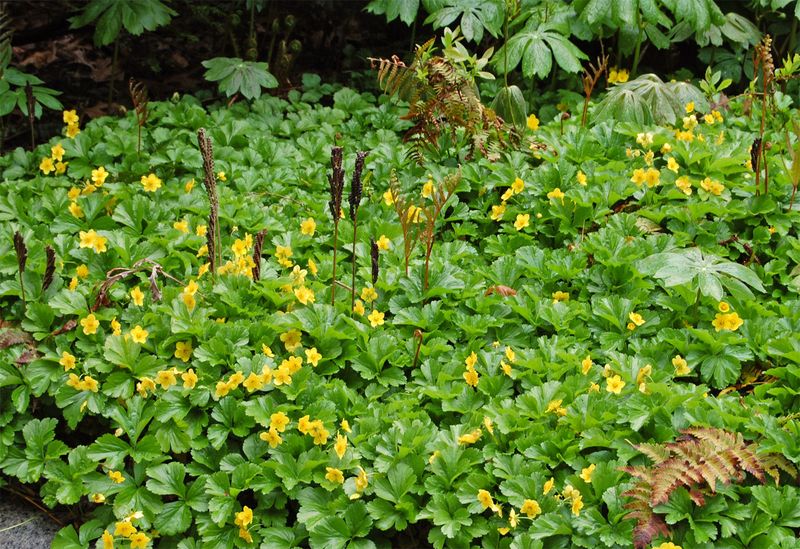
Before buying plants, run a quick site check. Green-and-gold performs best in part shade to full shade with moist, humus-rich, acidic, and well-drained soil.
Those conditions show up naturally under deciduous trees with open canopies, along shaded bed edges that receive good rainfall, and in woodland garden settings across all three North Carolina regions. If your border fits that description, the plant has a reasonable chance of settling in and filling out over a few seasons.
The tricky sites are the ones that only look like they qualify. Dry shade under a shallow-rooted mature tree, compacted ground near a foundation, heavy clay that holds water after rain, and saturated low spots can all reduce performance noticeably.
NC State Extension notes that while green-and-gold can tolerate occasional dryness, full sun requires consistently moist soil and is the less reliable placement for most North Carolina summers. Part shade to full shade is the safer general recommendation for this region.
Heavy clay deserves special attention because so much of the North Carolina Piedmont is built on it. Clemson Extension recommends improving heavy clay with organic matter and drainage before planting, because wet or poorly drained conditions can increase the risk of root problems.
Working in compost or aged leaf material and ensuring the bed sheds water rather than pooling it will give green-and-gold a much better start.
Mountain gardeners generally have an easier time meeting the moisture and drainage requirements, especially in coves or north-facing slopes with naturally rich, leafy soil. Coastal Plain gardeners in sandier soils may need to add organic matter to hold moisture.
The point is that “shade tolerant” does not mean “thrives anywhere the sun does not reach.” Matching the plant to the right microsite is the most consequential decision you will make before the first plant goes in the ground.
Treat “stays where you put it” as a management goal, not a guarantee
The article title makes a strong promise, and honesty requires walking it back a little. Green-and-gold spreads by rhizomes or stolons and may also self-seed, which means it can move beyond the original planting area over time.
Calling it a plant that stays permanently where you put it would be misleading, and gardeners who expect that will be surprised when stems appear a foot or two past the bed edge.
NC State Extension describes green-and-gold as rhizomatous and spreading, and the Clemson Extension factsheet specifically mentions stolons as a mechanism of spread. The more realistic way to think about the title’s promise is this: for a gardener who has already watched ajuga thread through their turf or crowd a neighboring hosta, green-and-gold in a properly sited shade border may prove easier to monitor and edge back.
That is a conditional, site-specific expectation, not a proven general rule.
Part of what makes ajuga harder to manage in some situations is how aggressively it can enter turf grass and less-competitive perennials. NC State’s ajuga profile notes the plant’s spreading nature can create removal problems, and the JC Raulston Arboretum record points to stoloniferous or rhizomatous growth that some sources advise managing with barriers or regular pulling.
Green-and-gold spreads too, but in a well-defined shade border with a clear edge, periodic boundary maintenance is usually straightforward.
Plan for occasional edging along the border perimeter, especially where green-and-gold meets lawn or an adjacent planting. A sharp spade or hand edger run along the bed line once or twice a season will keep the mat from wandering.
Even native plants require that kind of light oversight, and building it into your routine from the start is far easier than reclaiming ground after several seasons of unchecked spread.
Use multiple plants for a faster visual fill
A single green-and-gold plant will eventually spread to fill a meaningful patch of ground, but “eventually” can feel like a long wait when you are staring at bare soil. A practical way to speed up coverage is to install several nursery plants or divisions across the area you want to cover, spacing them so their mature widths will overlap as they fill in.
That approach gives you a fuller display in the first season while the plants work toward knitting together.
NC State Extension lists division and seed as propagation methods for green-and-gold. Division is a commonly practical option for multiplying plants you already have: dig an established clump in early spring or fall, separate it into sections that each have roots and foliage, and replant the divisions at the spacing that fits your border.
Seed is also documented, though germination and establishment take longer than division for most homeowners.
For spacing, follow the container label or ask your nursery rather than relying on a single universal formula. Mature plant width from NC State sources is approximately 12 to 18 inches or more, and that figure gives you a working reference for estimating how many plants to buy.
A border that is three feet wide and six feet long, for example, might hold four to six plants depending on the label guidance and how quickly you want coverage.
Buying nursery-grown plants is the right move here. The NC Native Plant Society recommends obtaining natives from nurseries or responsible sources rather than digging specimens from natural areas, and that advice protects wild populations while also giving you plants that are already accustomed to container or nursery conditions.
Let spring flowers add measured wildlife value
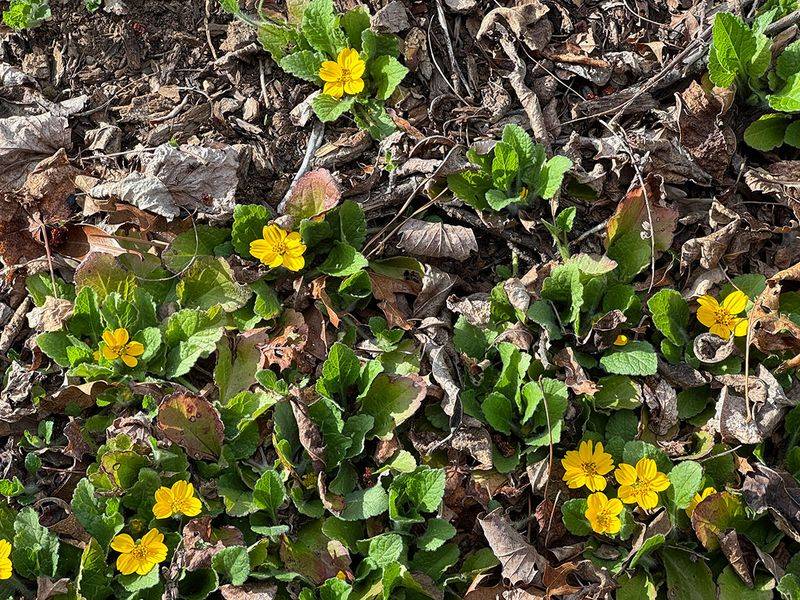
Green-and-gold earns its name in spring, when yellow flowers open across the mat from roughly March through June. The bloom period aligns with the window when many early pollinators are actively foraging, which makes the plant a useful addition to a shade border that might otherwise offer little for bees and butterflies during that stretch of the season.
NC State Extension notes that the flowers attract bees and butterflies and that the seeds provide food for songbirds. Those are real benefits worth having in a yard, and they add up across a border planting with multiple established plants.
The scale of the benefit is proportionate, though: a patch of green-and-gold will support pollinators that visit it and offer seeds to birds that forage nearby. It will not by itself produce a dramatic increase in wildlife abundance or act as a meaningful control for ticks, mosquitoes, or other household pests.
Hot weather tends to slow or interrupt flowering. During North Carolina’s midsummer heat, blooms may become sparse or pause altogether, particularly in the Piedmont and Coastal Plain where temperatures stay high for extended stretches.
A light fall rebloom is possible as temperatures drop, though it is not guaranteed and will not match the spring display in density.
Spent flower stems can be left in place for birds or trimmed back for a tidier look. Neither choice significantly affects the plant’s health, so this is a low-stakes decision based on how you want the border to look through summer.
The foliage stays as the main feature once the main bloom period winds down.
Maintain the border even after the plants establish
Low maintenance is not the same as no maintenance, and green-and-gold is honest about that distinction. Once established, the plants need far less attention than many ornamentals, but a few recurring tasks will keep the border looking its best and prevent the mat from wandering where it is not wanted.
Watering during establishment is the most important early commitment. New plants need consistent soil moisture for the first growing season while their root systems develop.
After that, NC State Extension describes green-and-gold as tolerating occasional dryness, but extended drought will stress the plants and may thin the mat. During dry spells, a deep watering every week or two is usually enough to carry them through.
Foliage density can vary with winter conditions. Green-and-gold is semi-evergreen, which means it may hold attractive foliage through mild winters but can look thin or ragged after a hard freeze or under prolonged stress.
Expect some seasonal variation rather than a reliably dense carpet year-round. Light cleanup of damaged leaves in early spring can help the planting look refreshed as new growth emerges.
Occasional division or thinning keeps older clumps from becoming crowded and gives you propagation material for expanding the planting. Clemson Extension supports division as a practical management and propagation technique.
Edging the border perimeter once or twice a season addresses plants that cross into turf or adjacent beds. Any stems or divisions that root outside the intended area can be pulled or dug out while they are still small.
When it comes time to add plants or replace ones that have declined, buy from a reputable native plant nursery. The NC Native Plant Society recommends sourcing natives from nurseries or responsible suppliers rather than collecting from natural areas, a practice that protects wild populations and ensures you are starting with healthy, garden-ready stock.
Choose green-and-gold when its site and spread fit your goals
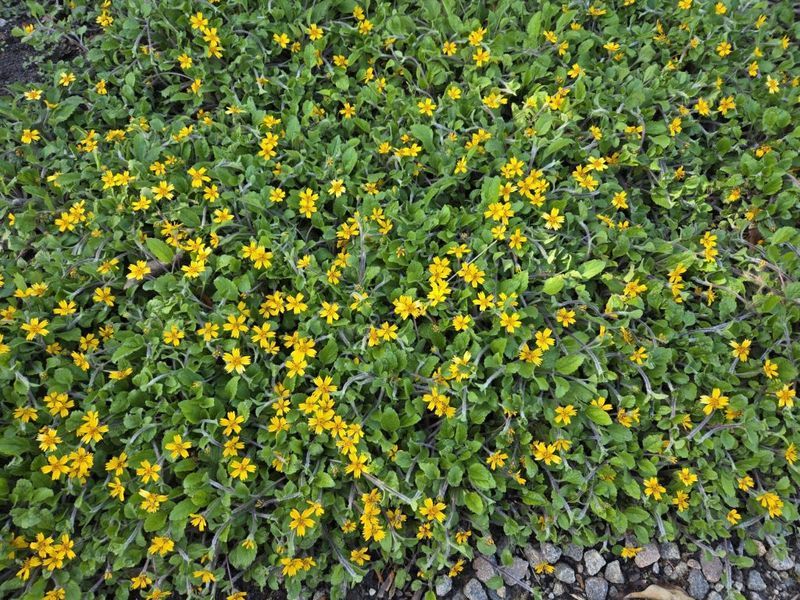
Green-and-gold earns a place in a North Carolina shade border when the site fits: part shade to full shade, moist and well-drained soil, and a gardener who is prepared to do occasional boundary maintenance. NC State Extension recommends it for woodland gardens, shade borders, and native or pollinator plantings across the Coastal Plain, Piedmont, and Mountains, which gives it broad regional credibility as a practical choice.
The honest trade-off is that this plant spreads by rhizomes or stolons and may self-seed. Calling it a groundcover that stays perfectly confined would repeat the same management problem gardeners are trying to leave behind.
What it offers instead is a native, yellow-flowering mat that, in a suitable site, may be more straightforward to edge and monitor than ajuga that has already moved into turf or neighboring beds. That is a meaningful advantage for the right yard, not a blanket promise for every shade garden in the state.
A plant that belongs here, blooms reliably in spring, and asks only for occasional edging and a drink during drought is a reasonable exchange for bare ground under a tree. The best groundcover is always the one you are willing to tend.