
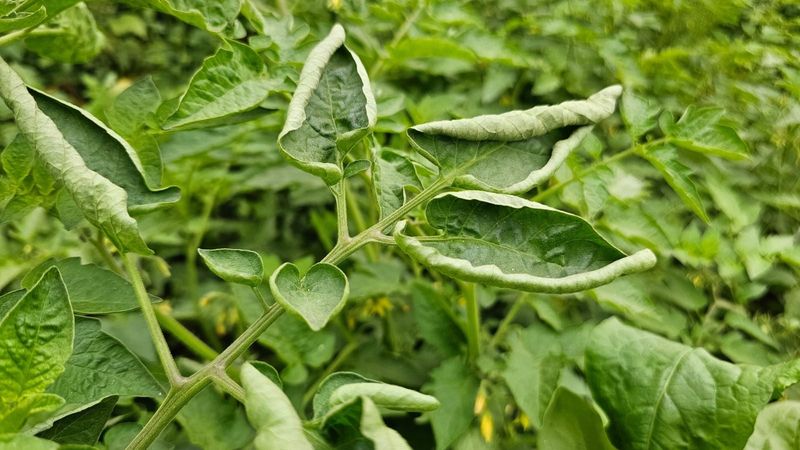
Tomato leaves curling up in the July heat is one of the most unsettling sights in a North Carolina garden, but the cause is not always what it looks like. Many gardeners reach for the hose first, assuming the plant is begging for water, when the soil may already be plenty moist.
Understanding what is actually happening inside those curled leaves can save your plant from the wrong fix and help you make smarter choices all summer long.
The summer symptom is often physiological leaf roll
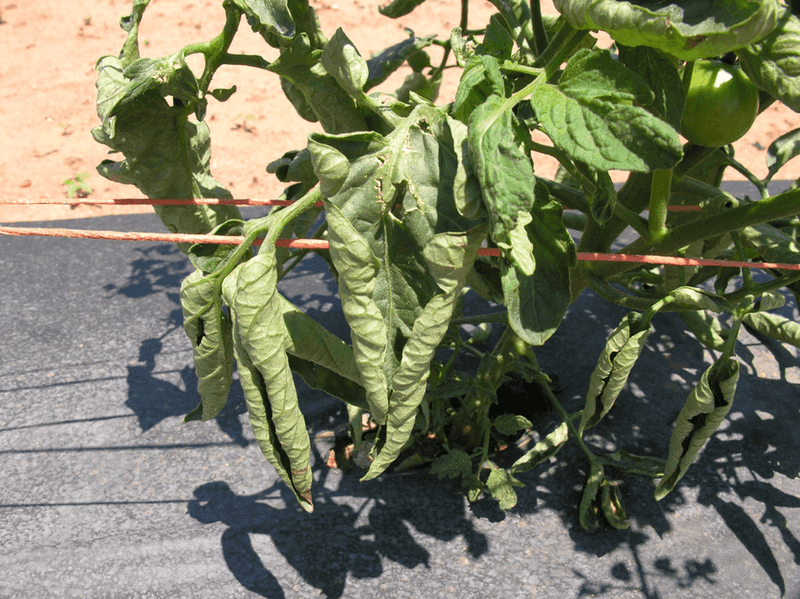
Walk down a row of tomatoes on a hot North Carolina afternoon and you may spot something alarming: the lower and middle leaves have curled upward along their edges, sometimes rolling so tightly they form a narrow tube. The plant itself looks green.
No spots, no yellowing, no wilting – just that tight, leathery curl on the older foliage.
What you are likely seeing is physiological leaf roll, a noninfectious response that tomato plants can produce when heat and disrupted water balance put stress on their tissues. According to University of Minnesota Extension’s tomato diagnosis guide, affected leaves typically curl upward and inward, may feel thick or leathery to the touch, and often remain otherwise green while the plant continues to grow and set fruit.
In many cases, the disorder has little or no measurable effect on yield or fruit quality.
The visual checklist to keep in mind: older or lower leaves curl upward or inward, the leaf tissue stays green and relatively firm, and the top of the plant keeps pushing out new growth normally. That combination makes physiological leaf roll the most plausible explanation – though not a guaranteed one.
Where this reassurance has limits is when the newest, youngest leaves at the top of the plant are severely distorted, when you notice yellowing, mottled patches, or unusual coloring alongside the curl, or when the plant looks stunted or drops flowers unexpectedly. Those signs push toward a different diagnosis entirely.
For now, if the curl is confined to older foliage and everything else looks healthy, heat-related leaf roll is worth considering before you take any action.
Why leaves can curl when the soil is moist
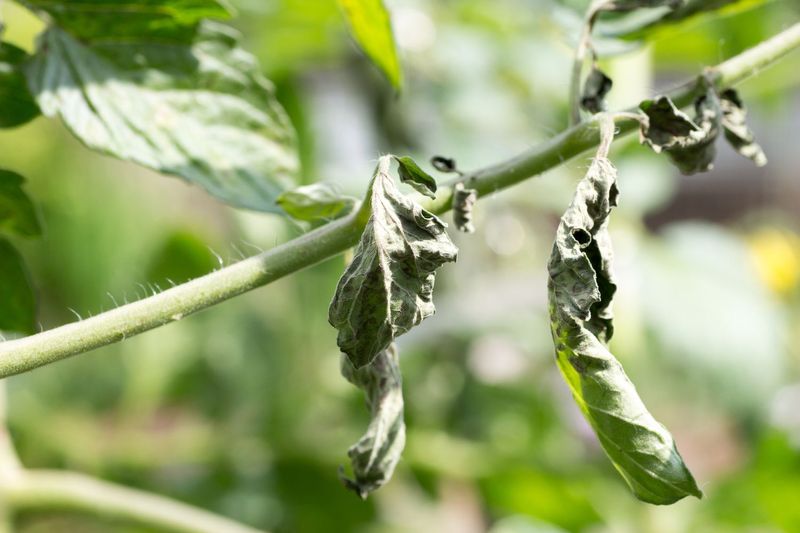
One of the more confusing things about physiological leaf roll is that it can appear even when you have been watering faithfully. Touching the soil and finding it damp does not rule out the disorder, and that fact trips up a lot of gardeners who assume curled leaves always mean a thirsty plant.
Tomato leaf roll is better understood as a water-balance problem than a simple drought problem. When summer temperatures climb and the air dries out, a tomato plant loses water through its leaves faster than its roots can replace it – even if the soil contains adequate moisture.
Utah State University Extension’s vegetable IPM advisory notes that inconsistent moisture, excessive soil moisture, root damage, transplant shock, high fruit load, heavy pruning, and excess nitrogen have all been linked to the disorder – a list that makes clear this is not simply about underwatering.
Root damage is worth pausing on. Roots that have been nicked by a hoe, compacted by foot traffic, or damaged by saturated soil cannot move water efficiently even when moisture is present.
A plant carrying a heavy crop load is also pulling hard on its water supply, which can tip the balance toward leaf roll during a heat wave.
Excess nitrogen adds another wrinkle. Heavy fertilization can push lush vegetative growth that the root system struggles to support during peak heat.
NC State research on tomato production in North Carolina highlights how temperatures above 95 F can disrupt normal plant function, and NC State’s plastic mulch guidance for tomato production addresses heat management as a real production concern in this state’s climate. The takeaway for home gardeners: moist soil is a good sign, but it does not automatically explain or fix the curl.
Check the root zone before watering
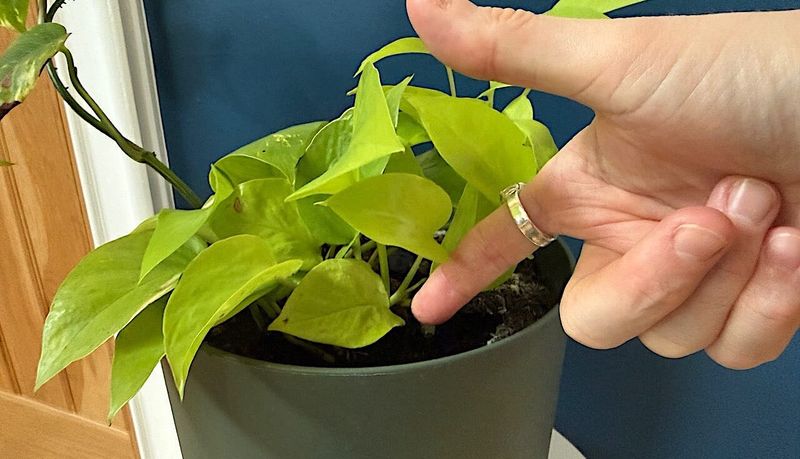
Before adding any water, take sixty seconds to actually check the soil. Push a finger, a trowel, or a wooden dowel two to three inches into the ground near the base of the plant – not right at the stem, but out toward where the roots are actively feeding.
If the soil feels moist at that depth, the plant probably does not need more water right now, regardless of what the leaves look like.
For a practical moisture target, NC State Extension’s guide to growing tomatoes in the home garden recommends about 1.5 inches of water per week during the fruiting period, counting any rainfall that falls during that time. The broader vegetable guidance from NC State puts the general range at approximately 1 to 2 inches per week and emphasizes keeping moisture even rather than alternating between dry and saturated conditions.
Those numbers are starting points, not strict rules. Sandy soils in the coastal plain drain faster and may need more frequent watering in smaller amounts.
Clay-heavy Piedmont soils hold moisture longer and can become waterlogged if over-irrigated. Container-grown tomatoes dry out faster than in-ground plants and need more frequent checks.
During a stretch of 95-plus-degree days, evaporation accelerates, and even a plant that was fine on Monday may need attention by Wednesday.
When the root zone genuinely is dry, water deeply enough to wet the active root zone. NC State’s Extension Gardener Handbook chapter on vegetable gardening describes approximately 6 inches as a useful general target for wetting the root zone during a deep soak.
The goal is to reach that depth without leaving the soil saturated for hours afterward, which can cut off oxygen to roots and make the water-balance problem worse rather than better. Even, consistent moisture protects the plant far more reliably than alternating drought and flood cycles.
Manage moisture and heat instead of adding water automatically
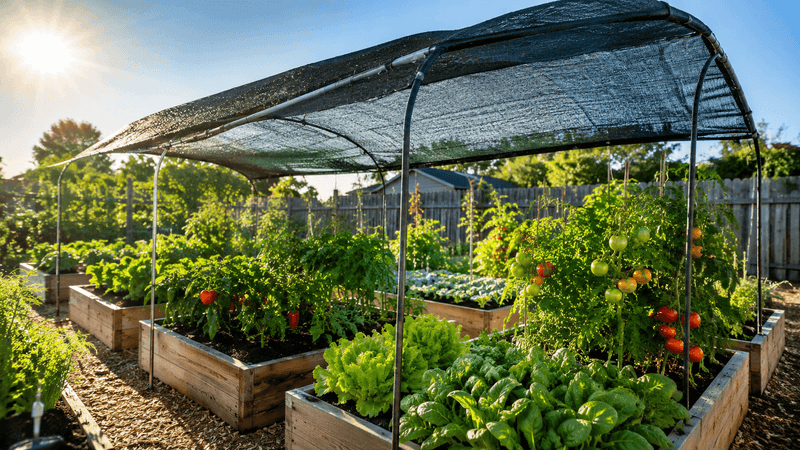
For an established tomato plant whose soil is already moist and whose leaves are still green, the most useful action is usually not more water – it is better management of the conditions causing stress. Start with mulch if you have not already applied it.
A 2- to 3-inch layer of straw, shredded leaves, or wood chips over the root zone slows evaporation, keeps the soil temperature from spiking during the hottest part of the day, and reduces the splash of soil-borne pathogens onto lower leaves during rain or irrigation.
When you do water, aim at the soil rather than the foliage. Wet leaves sitting in humid summer air create conditions that several tomato diseases prefer.
UGA Extension’s tomato troubleshooting guide recommends early morning as the best time for overhead irrigation, giving leaves the full day to dry before nightfall. Drip lines or soaker hoses at the soil surface sidestep the issue entirely and deliver water directly where roots can use it.
Afternoon heat is the other lever worth pulling when practical. A temporary shade cloth rated at 30 to 40 percent shade, draped over the west or southwest side of the plant from roughly 2 p.m. to 6 p.m., can reduce the leaf temperature and the rate of water loss during the hottest hours.
NC State Extension’s season-extender guidance cautions that covers and tunnels should be ventilated when temperatures approach or exceed 90 F for extended periods, because trapping heat under a cover can do more harm than good.
Permanent or dense shade is not the answer. Tomatoes need strong light to flower and set fruit, so blocking afternoon sun temporarily is defensible, but moving a plant into full shade or leaving a dense cover in place all day will reduce your harvest.
The NC State vegetable gardening chapter reinforces that even moisture, proper drainage, and soil health are the foundation – afternoon shade is a supplement during extreme heat, not a substitute for good root-zone management.
Avoid fertilizer, calcium, pruning, and spray shortcuts
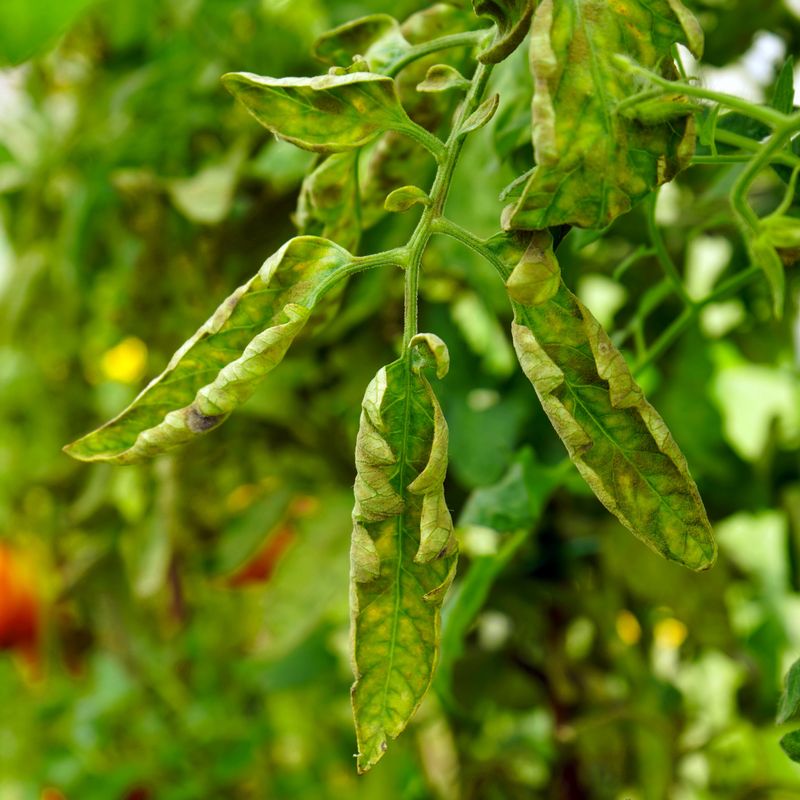
When something looks wrong in the garden, the impulse to do something – anything – is strong. For tomato leaf roll, several common interventions can actually make the situation worse, and knowing which ones to skip is just as useful as knowing what to do.
Nitrogen fertilizer is near the top of the list. The Utah State vegetable IPM advisory identifies excess nitrogen as one of the documented contributors to physiological leaf roll, because heavy nitrogen pushes rapid vegetative growth that the root system may struggle to support in peak summer heat.
Unless a soil test or documented nutrient deficiency points to a nitrogen shortage, hold off on fertilizing a plant that is already rolling its leaves.
Calcium supplements come up frequently in online garden forums as a cure for curled leaves, but the evidence does not support that connection for ordinary leaf roll. NC State’s home tomato guide links calcium-related problems in tomatoes to blossom-end rot, a condition tied to inconsistent moisture and impaired calcium movement into developing fruit – not to the upward curling of otherwise healthy older leaves.
Adding calcium to a plant that does not need it will not uncurl the leaves and may interfere with other nutrient uptake.
Heavy pruning during a heat wave is another intervention to avoid. Removing large numbers of leaves when the plant is already stressed reduces the foliage available for photosynthesis and can itself trigger additional leaf roll.
Save major pruning for cooler conditions or the beginning of the season.
Pesticides and fungicides deserve the same caution. NC State’s diagnostics chapter recommends identifying the host, pest, or pathogen before reaching for any chemical treatment.
Spraying a broad-spectrum product on a plant showing only physiological leaf roll can damage beneficial insects, stress the plant further, and solve nothing. And removing every curled leaf from an otherwise healthy plant adds unnecessary stress without addressing the underlying cause.
Save the pruners for confirmed disease or clearly dead tissue, and let OSU Extension’s guide to non-infectious tomato diseases remind you that physiological disorders rarely require the same aggressive response as an active infection.
Use warning signs to rule out other causes
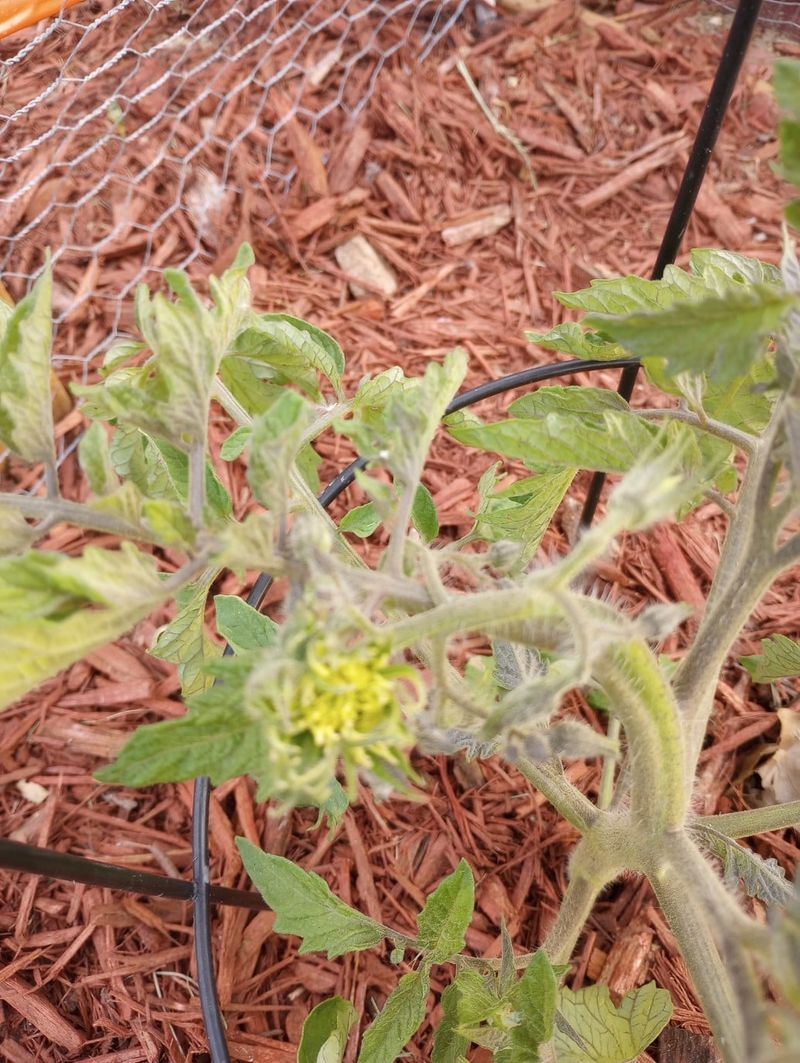
Physiological leaf roll is reassuring to diagnose when the evidence fits, but it should never become a reason to stop looking. Several serious tomato problems can produce curled or distorted leaves, and telling them apart before you act is one of the most useful things you can do for your garden.
Start with the newest growth at the top of the plant. Physiological leaf roll almost always begins on older, lower leaves, and new growth tends to emerge normally even while older leaves remain curled.
If the youngest leaves at the growing tip are severely twisted, crumpled, or cupped, that pattern points somewhere else. NC State’s tomato yellow leaf curl virus publication describes a disease that primarily affects young growth, causing yellowing between leaf veins, upward or downward curl, stunting, unusual bushiness, flower drop, and serious yield loss.
The virus has been observed in western North Carolina, and because several disorders can look alike, NC State recommends confirmation before drawing conclusions about any individual plant.
Herbicide injury is another cause that gardeners in suburban and rural NC sometimes overlook. Twisted, cupped, narrowed, or thickened new leaves – especially when the distortion is worse on one side of the plant facing a neighbor’s lawn or a recently treated area – can indicate drift or volatilization from broadleaf herbicides.
NC State’s weed management chapter notes that tomatoes are particularly sensitive to certain herbicide families, and exposure can come from contaminated soil or compost as well as direct spray.
Insects require a hands-on check. Flip the affected leaves over and look closely at the undersides.
Aphid colonies, whiteflies, and other piercing-sucking insects can cause curling, distortion, and stunting, and whiteflies are important because they transmit tomato yellow leaf curl virus. University of Minnesota Extension’s tomato leaf curl diagnosis tool flags aphids and other sucking insects as causes of leaf curl that require direct inspection to find.
Spots, water-soaked lesions, concentric rings, white powdery or fuzzy growth on the underside of leaves, or foliage that dies rapidly rather than simply curling all suggest a foliar disease. NC State’s late blight publication describes the kind of rapid tissue death that has nothing to do with heat stress and will not respond to moisture management.
And a plant that wilts completely during the day, appears to recover overnight, and then wilts again despite moist soil is showing a classic sign of bacterial wilt. NC State’s bacterial wilt guide describes exactly this pattern of sudden green-plant collapse that temporarily improves before recurring.
Any of these warning signs calls for a proper diagnosis – not automatic watering, fertilizer, or a spray product – before you decide on a response.
Judge recovery by the next leaves
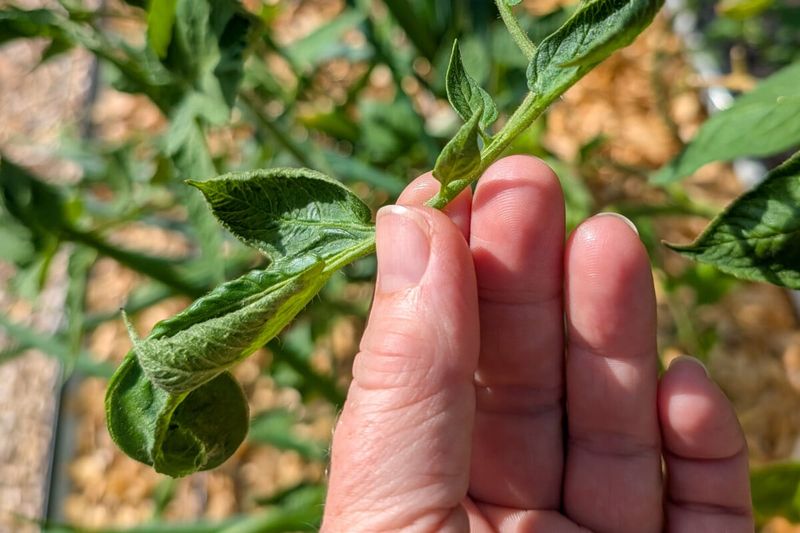
Once you have checked the soil, corrected any moisture imbalance, refreshed the mulch, and stepped back from unnecessary inputs, the hardest part is waiting. Curled leaves that developed during a heat event often stay curled.
The cell changes that caused the roll are already set in that tissue, and no amount of water, fertilizer, or pruning will flatten them back out.
What to watch instead is the new growth coming from the top of the plant. Utah State Extension’s vegetable IPM advisory is clear that existing rolled leaves may remain curled while new growth can emerge normally after heat and root-zone stress ease.
Normal-looking new leaves, continued flowering, and developing fruit are more reliable indicators of recovery than the appearance of the older foliage. A plant that keeps growing and setting tomatoes is doing its job even if the lower canopy looks rough.
The sequence that serves NC tomato growers well through the rest of summer is straightforward: inspect the soil before watering, add water only when the root zone is genuinely dry, keep moisture even without saturating, use mulch to stabilize temperature and reduce evaporation, and limit afternoon heat exposure when you can do so without blocking the light the plant needs. Avoid adding fertilizer, calcium, or pesticides without a documented reason.
And if warning signs appear on new growth – distortion, yellowing, mottling, lesions, or repeated wilting despite moist soil – treat that as a prompt for diagnosis rather than more of the same response.
Physiological leaf roll is a signal worth taking seriously, but a tomato plant that keeps producing new green growth has more resilience than it looks like from the bottom up.