
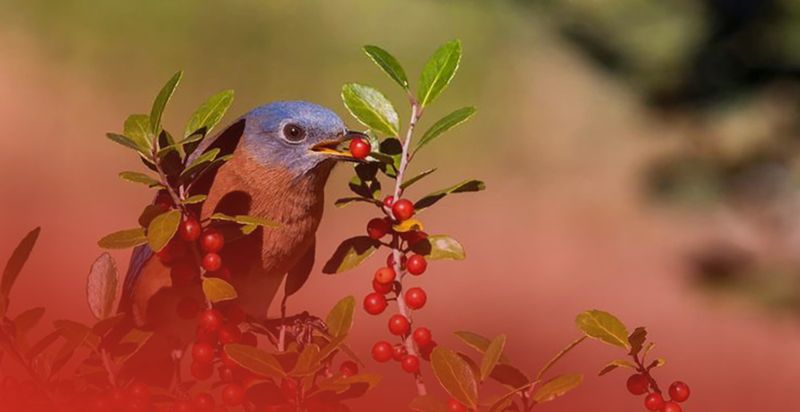
Some songbirds do not care much about a plain lawn or a single feeder. They look for real cover, safe perches, berries, seeds, insects, and places to hide from hawks and cats.
Florida native plants can give them those things while also handling sandy soil, heat, storms, and wet spells better than many fussy ornamentals. Plant the right mix, and your yard starts to feel less like a stopover and more like home.
1. Beautyberry
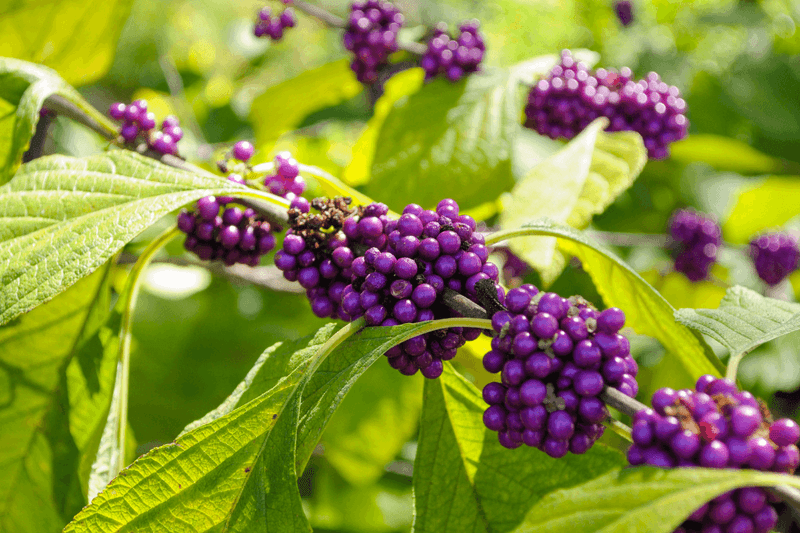
A flash of purple in a green yard can stop you in your tracks, and beautyberry is famous for that little surprise. Its bright berry clusters wrap around the stems like beads, giving songbirds an easy-to-spot food source when many yards are running short on natural snacks.
Mockingbirds, cardinals, catbirds, towhees, and other berry-loving birds often check beautyberry shrubs once the fruit ripens. The plant also has a loose, airy shape that gives smaller birds a quick place to duck into when the feeder area feels too exposed.
Beautyberry earns its spot because it offers color for people and food for birds without asking for much in return. In much of Florida, it handles sandy soil, part sun, full sun with enough moisture, and the kind of mixed border where many homeowners want something pretty but not high-maintenance.
For best results, plant it where you can enjoy the berries from a porch, patio, or kitchen window. A light pruning in late winter can keep it tidy, but do not shear it into a stiff ball, since its loose branches are part of what makes it useful to birds.
2. Firebush
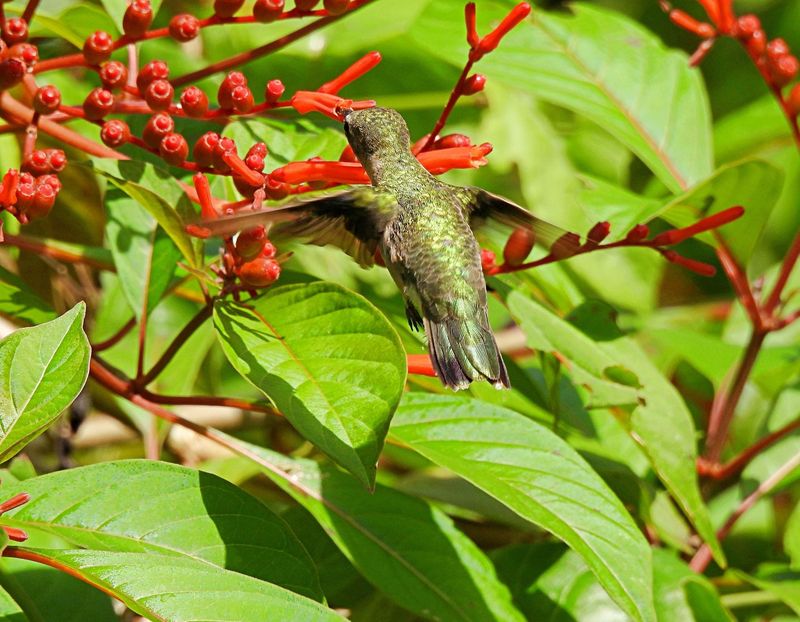
Few shrubs look as alive in Florida heat as firebush. When the weather turns sticky and other plants sulk, its orange-red blooms keep drawing insects, hummingbirds, and the small songbirds that follow that busy little food web.
Firebush is different from a simple berry plant because it helps build a moving buffet. Warblers and vireos are not usually showing up for the flowers themselves, but they may hunt the caterpillars, flies, beetles, and other insects that gather around healthy native growth.
Gardeners in central and south Florida often use firebush as a foundation shrub, hedge, or back-of-border plant. In north Florida, cold snaps may knock it back, but it can return from the roots in many sites if planted in the right place and protected from the harshest exposure.
Give firebush sun to part sun and room to grow into its natural rounded shape. It is a smart pick near patios and side yards where you want color, movement, and a better reason for birds to linger than a feeder alone can offer.
3. Simpson’s Stopper
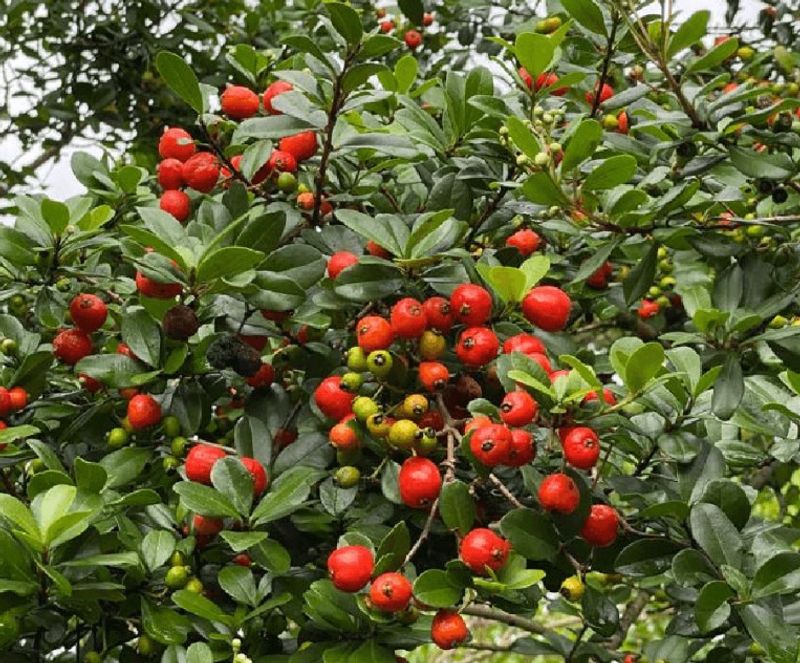
Picture a neat evergreen screen that does more than block the neighbor’s trash cans. Simpson’s stopper brings glossy leaves, fragrant white flowers, reddish berries, and a polished look that fits both formal and relaxed Florida yards.
Birds notice the fruit, especially when shrubs are planted in groups or layered with other native plants. Cedar waxwings, mockingbirds, cardinals, and thrushes may feed on the berries, while dense branching gives shy songbirds a safer route through the yard.
Simpson’s stopper belongs on this list because it solves a homeowner problem at the same time it helps wildlife. Many bird-friendly plants look a little wild, but this one can serve as a hedge, small tree, privacy planting, or entry garden feature without making the yard feel messy.
It usually performs best in sun to part shade and can handle many Florida soil conditions once established, including sandy sites with reasonable care during the first year. Use it along a fence, beside a driveway, or near a porch where evergreen structure matters.
A small bonus: the crushed leaves have a spicy, citrusy scent that makes the plant feel distinctly Florida. Birds may come for the berries, but homeowners often keep it for the year-round good looks.
4. Wild Coffee
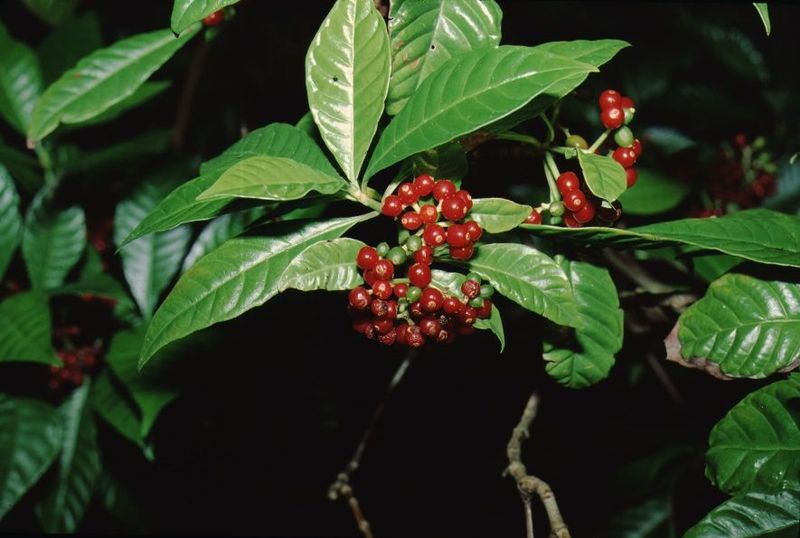
Shady corners can feel like the forgotten rooms of a Florida yard, especially under live oaks or along the north side of a house. Wild coffee turns those dim spaces into bird-friendly cover with glossy leaves, small white flowers, and red fruit.
Despite the name, it is not the coffee people brew in the morning. The plant is a Florida native shrub, and its berries can attract cardinals, catbirds, mockingbirds, and other fruit-eating birds when conditions are right.
Wild coffee stands out because it fills a niche that many bright, sun-loving natives cannot handle. If your yard has filtered light, sandy soil with leaf litter, or a tucked-away side path that needs life, this shrub gives birds a sheltered place to move and forage.
Plant it in part shade to shade, then mulch with leaves or pine straw to help protect roots and hold moisture. It is especially useful near windows where you want to watch quiet bird traffic instead of only feeder drama.
In colder parts of north Florida, wild coffee may be damaged by freezes, so gardeners there should place it in a protected microclimate or choose another shrub for exposed spots. In warmer regions, it can become one of the easiest ways to make shade feel useful.
5. Marlberry
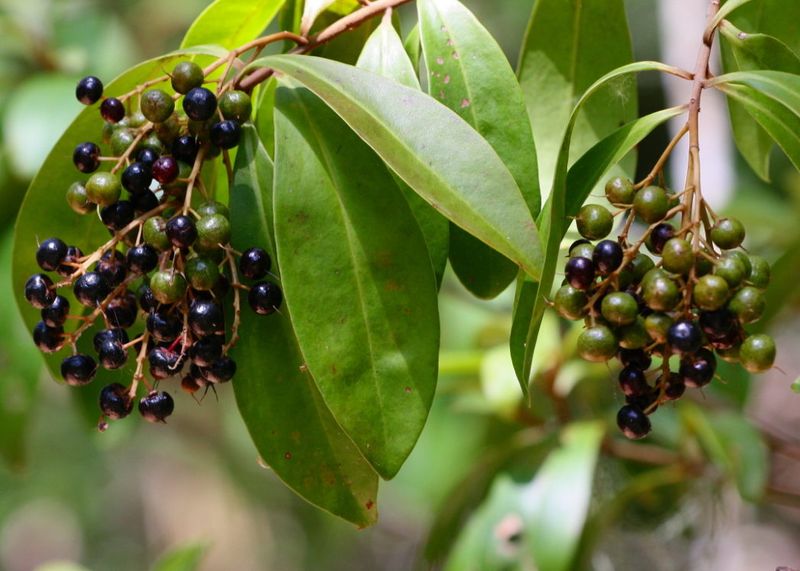
Some bird plants shout with bright flowers, while marlberry works more like a quiet back-room pantry. Its clusters of small white flowers give way to dark berries that can help feed fruit-eating birds, especially in warmer Florida landscapes.
Marlberry is valuable because it brings evergreen cover and food into tighter spaces than many large native trees. Catbirds, thrushes, mockingbirds, and other songbirds may use the shrub for both berries and shelter, while insects around the flowers add another layer of feeding activity.
South Florida gardeners have a special reason to look at this plant. Marlberry fits naturally into hammocks, coastal gardens, and layered native borders where birds need safe stepping-stones between trees, shrubs, and groundcover.
Use it in part shade or filtered sun, especially where you want a soft screen that does not look stiff. Once established in a suitable site, it can be a fairly low-fuss addition, but young plants still need steady water while they settle into sandy ground.
The best bird yards are not built from one superstar plant. Marlberry shines as part of a layered planting, paired with stoppers, wild coffee, coontie, or native trees that create a richer, safer habitat than open lawn.
6. Dahoon Holly
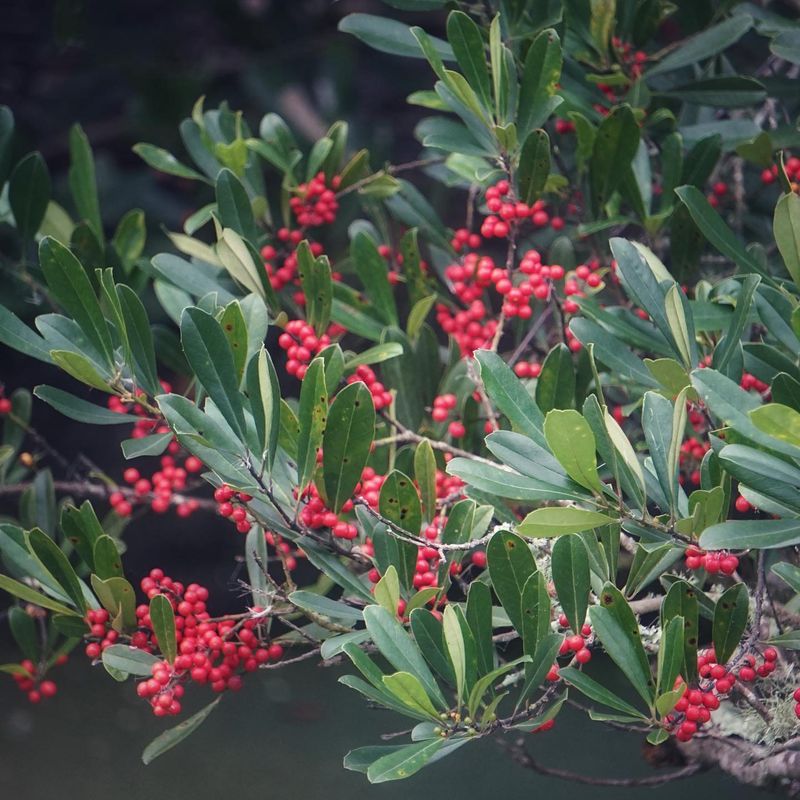
After a heavy Florida rain, low spots in the yard can look more like a problem than an opportunity. Dahoon holly is one of the native plants that can turn a damp edge, swale, or rain garden area into a bird magnet.
Its red berries are the big draw. Robins, cedar waxwings, bluebirds, mockingbirds, and other birds may feed on hollies, especially when fruit is available during cooler months and migration windows.
Dahoon holly earns a place here because it suits wetter parts of Florida yards where many common landscape shrubs struggle. It can grow as a small tree or large shrub, giving songbirds higher perches, escape cover, and fruit in one useful package.
Plant it where the soil stays moist but not permanently stagnant, such as near a pond edge, drainage area, or the back of a mixed border. In sandy yards, extra water during establishment matters, and mulch can help reduce stress while roots spread.
For berries, remember that hollies have male and female plants, and female plants need a compatible male nearby for good fruiting. If songbirds are the goal, ask a local native nursery for help choosing plants that improve your odds of berry production.
7. Coontie
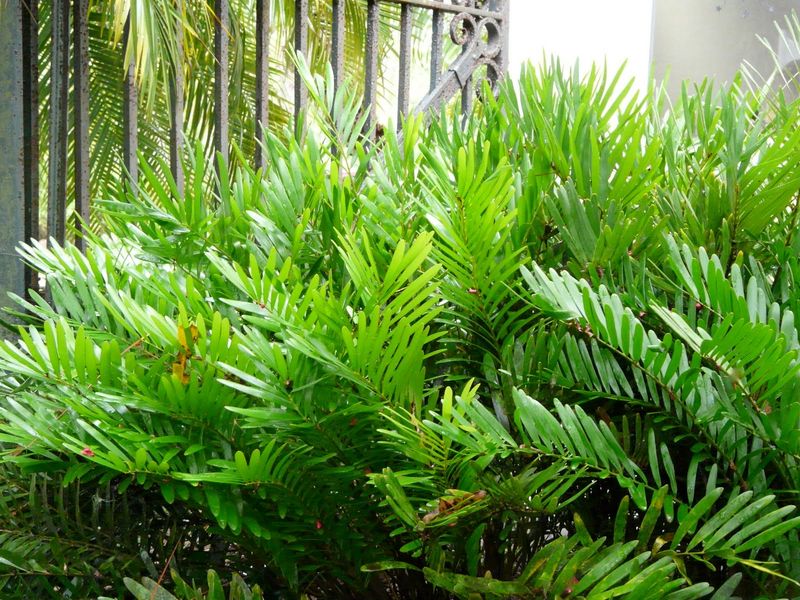
Coontie does not wave flashy berries in the air, so it can be easy to underestimate. Look closer, and it becomes one of those sturdy Florida natives that helps a yard feel settled, layered, and alive from the ground up.
Songbirds depend on more than fruit. Many need insects, protected edges, and low cover where they can forage without standing in the open, and coontie helps create that lower layer beneath shrubs and small trees.
Its biggest claim to fame is as a host plant for the atala butterfly, a striking native butterfly with a dramatic comeback story in Florida. More butterfly activity usually means more caterpillars and insects in the yard, which can matter a great deal for birds feeding young.
Coontie is especially useful in sandy, well-drained beds, foundation plantings, and spots where homeowners want a tidy native that can handle heat once established. It has a palm-like look, stays relatively low, and works well with beautyberry, firebush, Simpson’s stopper, and native grasses.
Place it where its texture can soften walkways, porch beds, or mailbox plantings. While birds may not flock to it the way they do to a fruiting holly, coontie helps build the kind of layered habitat that makes picky songbirds trust a yard enough to keep returning.