
A fence line can do more than mark the edge of your yard. With the right Florida native shrubs, it can feed birds, soften a plain view, and make mosquitoes feel less welcome.
The trick is choosing plants that offer berries, shelter, flowers, or insect habitat without creating a damp, tangled mess. These seven shrubs are useful, good-looking choices for Florida yards with heat, sandy soil, storms, and long mosquito seasons.
1. Wax Myrtle
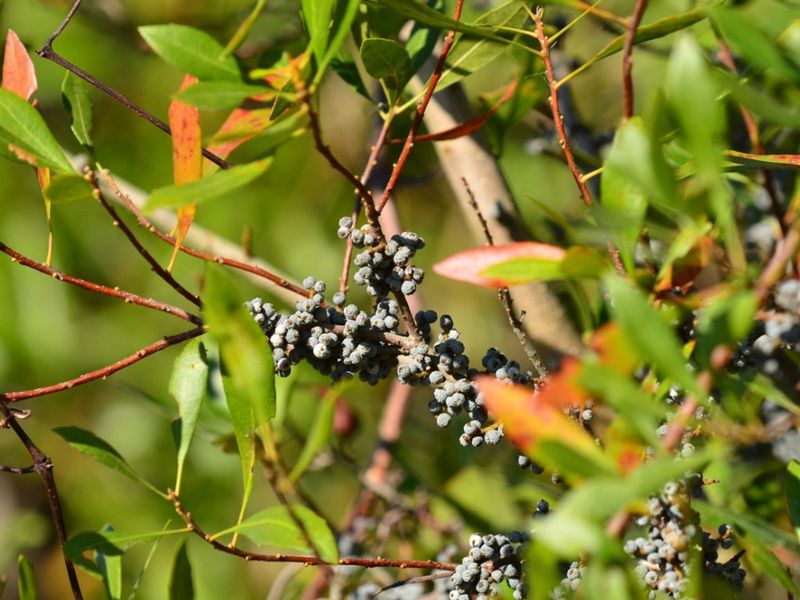
Walk past a wax myrtle after rain, and you may catch that clean, spicy scent from its leaves. That fragrance is one reason Florida gardeners like it near patios, gates, and fence corners where people brush by often.
For birds, wax myrtle is a practical pantry. The waxy gray-blue berries are especially useful for winter visitors and resident birds such as yellow-rumped warblers, catbirds, mockingbirds, and cardinals.
The dense evergreen growth also gives small birds quick cover when hawks or neighborhood cats pass through.
Along a fence line, wax myrtle earns its spot by being fast, tough, and forgiving. It handles sandy soil, sun, part shade, salt spray in many coastal areas, and occasional wet spells better than many ornamental shrubs.
Prune it lightly rather than shearing it into a hard wall, so air can move through the planting.
That airflow matters for mosquitoes. Wax myrtle will not work like a spray, but an open, well-spaced hedge is less inviting than a damp thicket.
Keep leaf litter from piling against fence boards, remove saucers or buckets nearby, and let the shrub bring in berry-eating birds that also pick at insects while they patrol the yard.
2. American Beautyberry
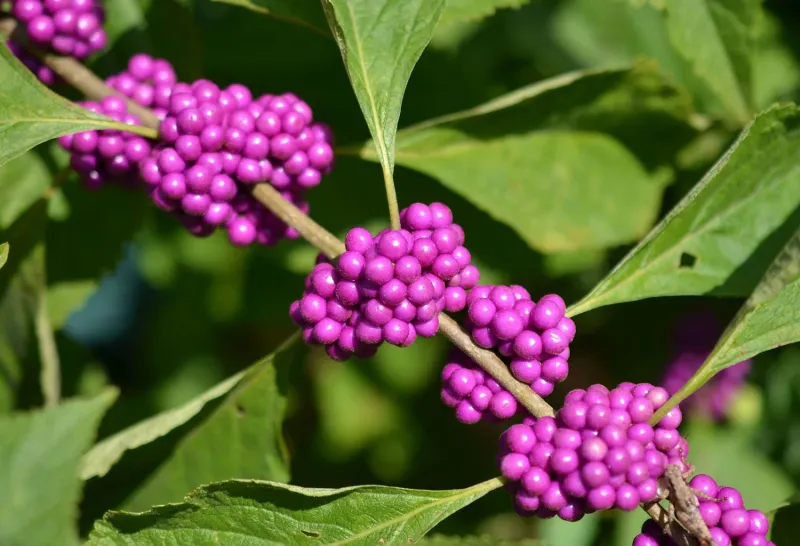
Purple berries wrapped around the stems like beads make American beautyberry look almost too bright to be real. Kids notice it, neighbors ask about it, and birds usually find it before the gardener gets tired of admiring it.
Beautyberry is different from the other shrubs on this list because its fruit display is so bold in late summer and fall. Mockingbirds, cardinals, towhees, robins, and other birds eat the berries, often hopping deep inside the loose branches for cover.
It is a natural fit for a relaxed fence line, especially where a stiff formal hedge would feel out of place.
Florida gardeners also appreciate that beautyberry is not fussy once established. It grows in sun to part shade, tolerates sandy soils, and can be cut back in late winter if it gets leggy.
A light hand is best during the growing season, since flowers and berries form along the stems.
Beautyberry has another interesting backyard trait: its leaves contain compounds that have been studied for mosquito-repelling properties. A living shrub will not clear the yard of mosquitoes on its own, but placing it where foliage stays dry and breezy can help avoid the damp, still pockets mosquitoes favor.
Pair it with good yard cleanup, and it becomes both a bird buffet and a smart fence-line choice.
3. Firebush
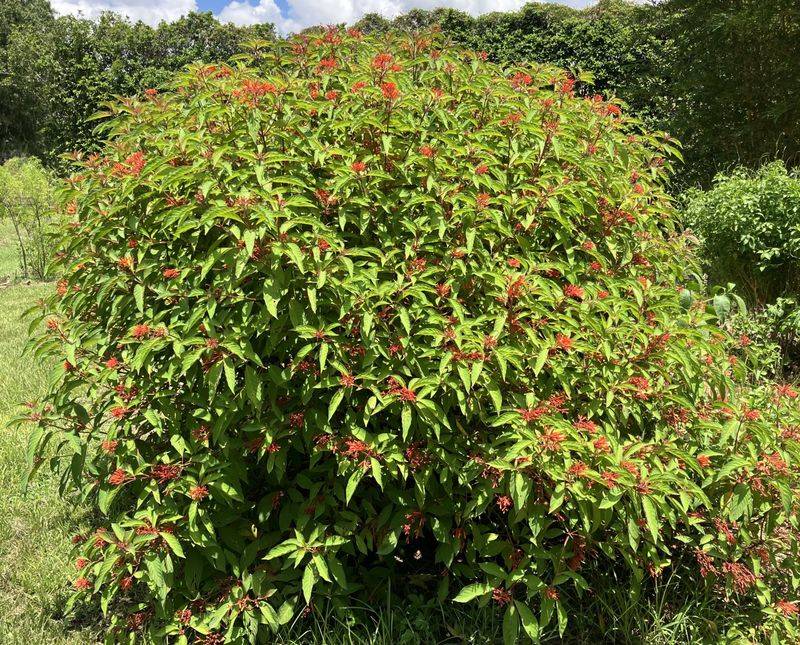
Few native shrubs look as lively in Florida heat as firebush. When many plants sulk, its orange-red tubular flowers keep drawing attention from hummingbirds, butterflies, and anyone walking by the fence.
Firebush brings a different kind of bird value than the berry-heavy shrubs. Hummingbirds visit the flowers for nectar, while other birds may eat the small dark fruits later in the season.
The plant also attracts a steady crowd of pollinators and tiny insects, which can bring insect-hunting birds into the same strip of yard.
Use firebush where the fence line gets plenty of sun and has room for a loose, rounded shrub. In South Florida it can become a large, semi-evergreen screen, while in colder parts of North Florida it may die back after frost and return from the roots.
It handles heat, sandy soil, and dry periods once established, though it looks best with occasional water during long droughts.
For mosquito control, firebush helps most by making the fence line active instead of stagnant. More bird visits, more predatory insects, and less bare, weedy clutter can all improve the area.
Give each plant space, avoid overwatering, and do not let irrigation hit the fence every day, since soggy corners and standing water are what mosquitoes really want.
4. Yaupon Holly
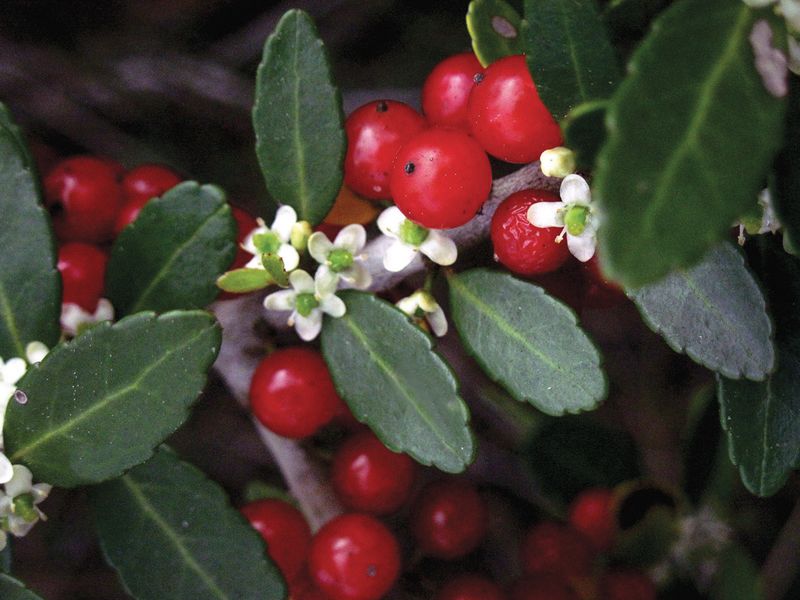
A neat yard does not have to be a lifeless yard, and yaupon holly proves it. Its small glossy leaves can look polished enough for the front yard, yet its berries can turn a plain fence into a winter bird stop.
Female yaupon hollies produce red berries when a male plant is nearby for pollination. Those berries feed birds such as cedar waxwings, robins, mockingbirds, bluebirds, and cardinals, often during cooler months when other food is less showy.
The evergreen branches also offer year-round structure, which is helpful along a fence that needs screening without a wild look.
This shrub stands out for its design flexibility. It can be grown as a natural shrub, pruned into a small tree form, or used in a mixed native hedge.
Yaupon holly tolerates full sun, part shade, sandy soil, occasional drought, and many urban conditions found in Florida neighborhoods.
Keep it mosquito-smart by pruning for a slightly open shape rather than a dense green block. A hedge that catches every leaf and traps damp air can become a resting area for mosquitoes, especially near shaded fences.
Rake out heavy debris, fix low spots where water sits, and let yaupon holly do what it does best: provide tidy cover and bird food with very little fuss.
5. Simpson’s Stopper
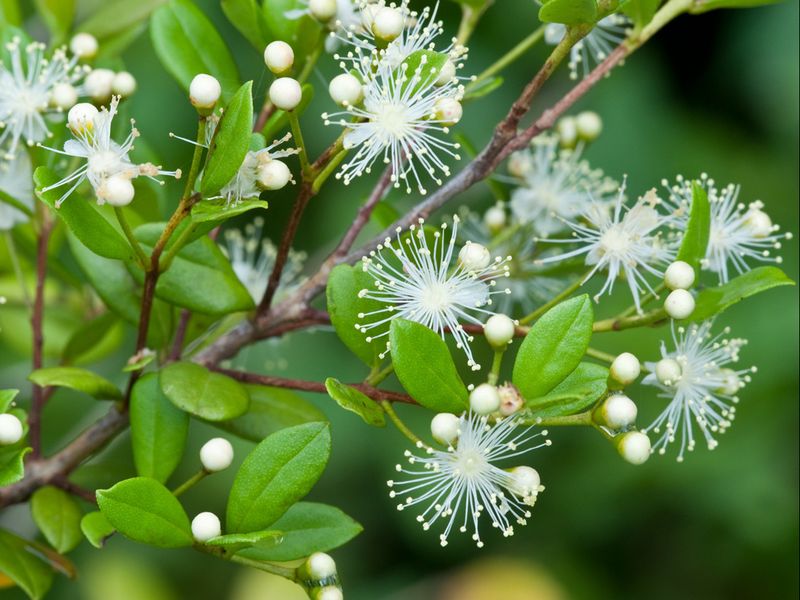
There is a quiet charm to Simpson’s stopper that sneaks up on you. The leaves are glossy, the flowers are small and fragrant, and the red-orange fruits look like little sparks tucked into the greenery.
Birds use Simpson’s stopper for both food and cover. The fruits attract species such as cardinals, mockingbirds, catbirds, and other fruit-eating birds, while the dense branching gives them a safe place to pause.
It is especially useful where you want privacy without planting something that looks oversized or rough.
Florida gardeners often choose it for coastal and central Florida landscapes because it handles heat, limestone or sandy soils, and salt exposure in many sites. It can be grown in sun or part shade, though fruiting is usually better with brighter light.
Along a fence, it works nicely as a medium-height screen or as part of a layered native border with grasses and wildflowers in front.
Simpson’s stopper also helps avoid one common mosquito mistake: overplanting fast, messy shrubs that turn the fence into a humid tunnel. Its naturally tidy habit is easier to manage.
Space plants so the mature canopies barely meet, mulch lightly, and keep irrigation aimed at roots instead of leaves and fence boards.
6. Walter’s Viburnum
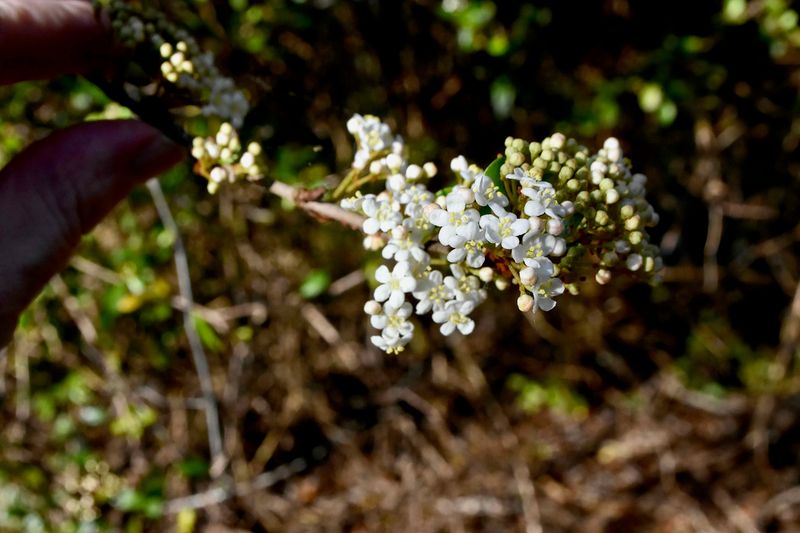
Need a fence-line shrub that can look crisp without turning your yard into a high-maintenance project? Walter’s viburnum is one of Florida’s best native answers for gardeners who like a cleaner hedge shape.
In spring, clusters of small white flowers attract pollinators and add a soft look to the fence. Later, berries provide food for birds, while the evergreen growth supplies shelter.
It is a strong pick when you want wildlife value but still need a shrub that can behave near a walkway, gate, or neighbor-facing boundary.
Walter’s viburnum has several forms, from compact selections to larger shrubs. That matters because choosing the right size at the start saves years of heavy pruning.
It grows in sun to part shade and adapts to many Florida soils, including sandy sites, though it appreciates water while getting established.
For mosquitoes, the advantage is structure and manageability. A properly spaced viburnum hedge can screen a fence while still allowing light and air to pass through the lower area.
Avoid clipping it into a dense, wet box, and clear out fallen leaves after storms. When the planting stays airy, birds can use it and mosquitoes have fewer quiet, humid pockets to rest in.
7. Wild Coffee
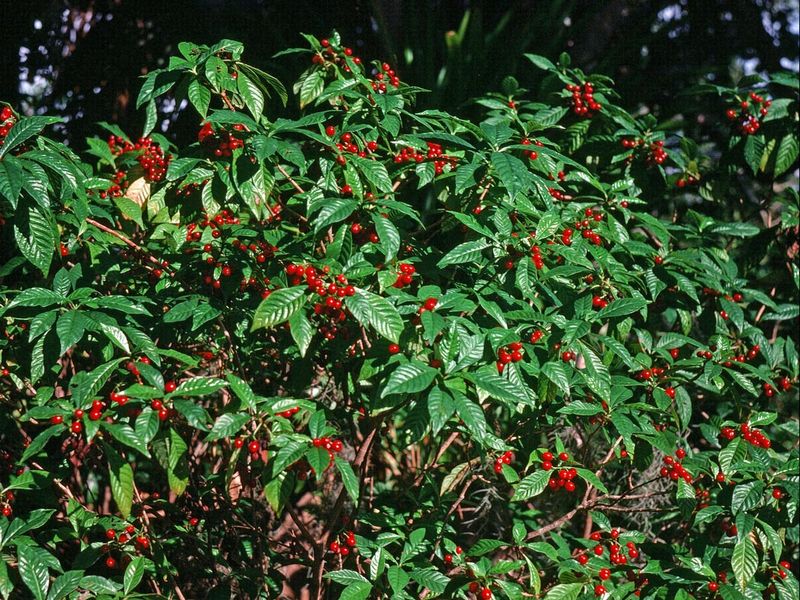
Shady fence lines can be tricky, especially when grass thins out and bare sand starts showing. Wild coffee turns that problem spot into a glossy green planting that feels cool, layered, and alive.
Despite the name, wild coffee is not the plant used for your morning cup. Its red fruits are valuable to birds, and its small white flowers attract pollinators.
Catbirds, cardinals, mockingbirds, and other backyard visitors may use the shrub as both a snack stop and a sheltered perch.
This Florida native is especially helpful under oaks, along east-facing fences, or in bright shade where sun-loving shrubs struggle. It prefers part shade to shade and does best with some organic mulch over sandy soil.
In colder parts of North Florida, it may need a protected spot, while Central and South Florida gardeners often use it as an easy understory shrub.
Wild coffee helps with mosquito pressure by improving a neglected shady strip without turning it into a wet jungle. Keep mulch a few inches away from fence posts, avoid overwatering, and prune out crowded stems when needed.
A healthy shade shrub, clean ground layer, and no standing water nearby make the area better for birds and less comfortable for mosquitoes.