
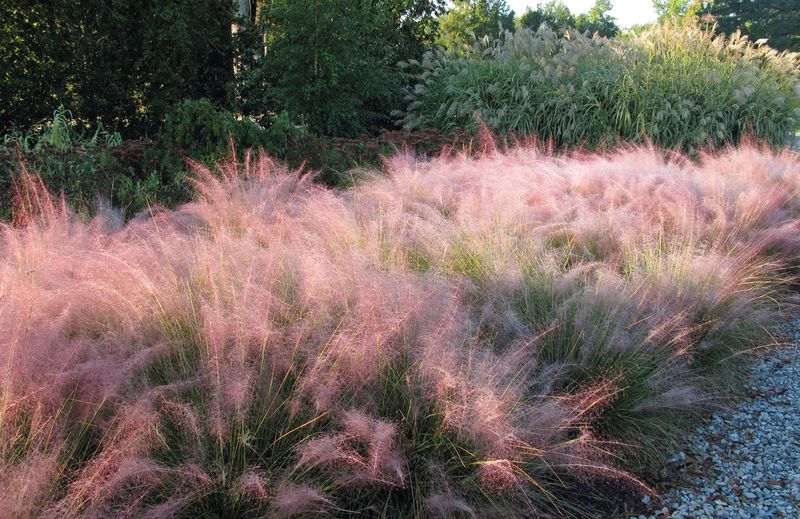
Hard concrete edges can make a patio feel cold and uninviting, but the right plant along that border changes everything. One native grass does the job quietly and beautifully, asking for very little water once its roots settle in.
That grass is pink muhly, Muhlenbergia capillaris, and it deserves a closer look from any North Carolina homeowner who wants softer outdoor edges without a heavy watering schedule.
An overlooked grass for a softer patio border
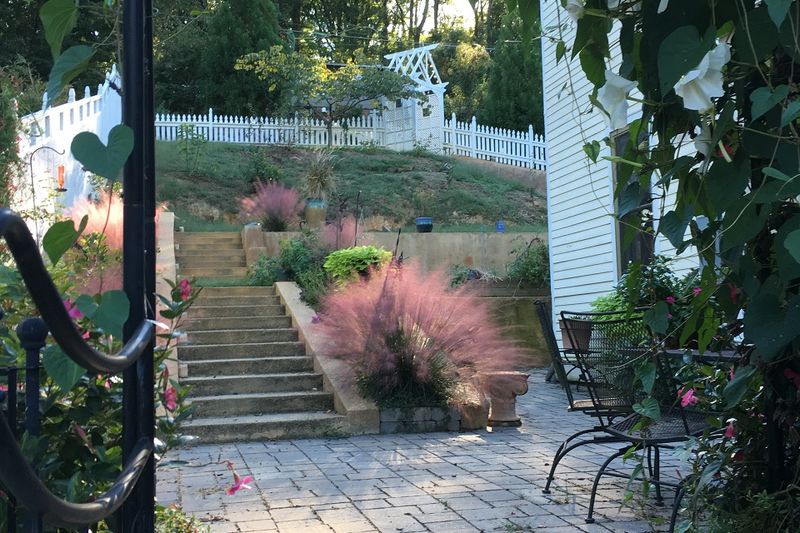
Concrete patios have a way of announcing themselves. The edges are sharp, the surface is flat, and nothing about them invites you to linger.
Planting a border of pink muhly grass, Muhlenbergia capillaris, beside that hard line changes the feeling of the whole space without adding a complicated care routine.
Pink muhly is a warm-season, clump-forming perennial native to parts of North Carolina. NC State Extension’s plant toolbox describes it as a fine-textured grass with airy pink to purplish-red flower plumes that appear in fall, softening any rigid edge it grows beside.
The green foliage carries the border through spring and summer, and the tan seed plumes that linger into winter add quiet structure when the rest of the garden goes dormant.
A few things are worth knowing before you buy a flat of starts. Pink muhly is not a spreading lawn grass or a low groundcover.
NC State’s mule grass profile describes mature clumps reaching roughly 2 to 4 feet tall and 2 to 3 feet wide, so each plant commands real space along a patio edge.
The water advantage is real but staged. Newly planted clumps need regular irrigation while their roots establish, and even settled plants may need a deep soak during a prolonged summer drought.
Once established in a site with adequate sun and well-drained soil, though, pink muhly generally gets by on rainfall alone during a typical North Carolina growing season. That combination of native character, seasonal color, and low routine water demand is what makes it worth serious consideration for a sunny patio border.
Its North Carolina roots are real—but not evenly distributed
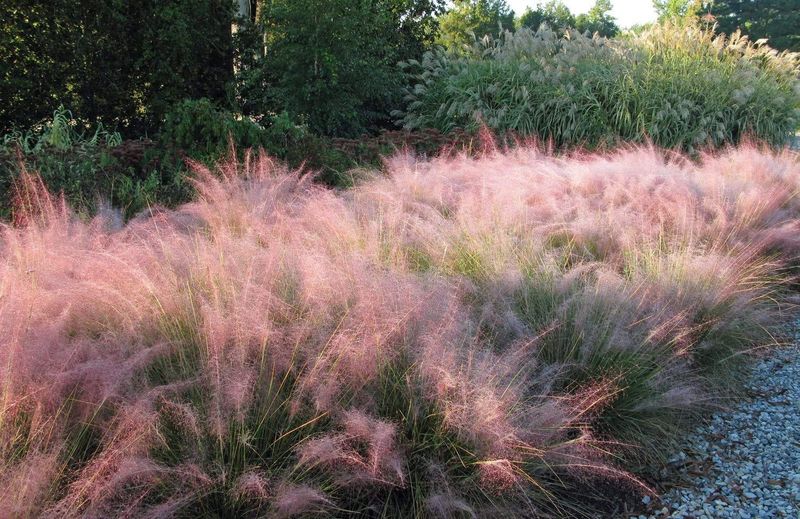
Calling a plant a North Carolina native is accurate shorthand, but it can paper over real geographic variation. Pink muhly’s native range within the state is concentrated in specific regions, and knowing where it actually grows wild helps you set realistic expectations for your own yard.
NC State Extension’s native plants handbook lists pink muhly as native to the Piedmont and Coastal Plain. The North Carolina vascular plant account adds more precision: the grass is frequent to uncommon in the Coastal Plain, Sandhills, and eastern two-thirds of the Piedmont, but becomes scarce in the mountains and western Piedmont.
That is a meaningful distinction for a homeowner in Asheville compared to one in Wilmington or Raleigh.
Native status does not automatically equal statewide suitability. A plant that evolved in the warm, sandy soils of the Sandhills performs reliably in those conditions, but that same plant placed in a compacted mountain clay with limited summer heat may struggle.
The closer your site matches the conditions where pink muhly grows naturally, the more confidently you can count on low-maintenance performance.
The practical takeaway is to use native origin as a useful starting signal, not a guarantee. Homeowners in the Coastal Plain, Sandhills, and eastern Piedmont are working with conditions closest to the plant’s natural habitat.
Those in Charlotte or the western Piedmont can still grow it successfully with careful site selection, particularly if sun and drainage are good. Gardeners in the mountains should be more cautious and may want to trial a single plant before committing to a full patio border planting.
Give the clump room beside the concrete
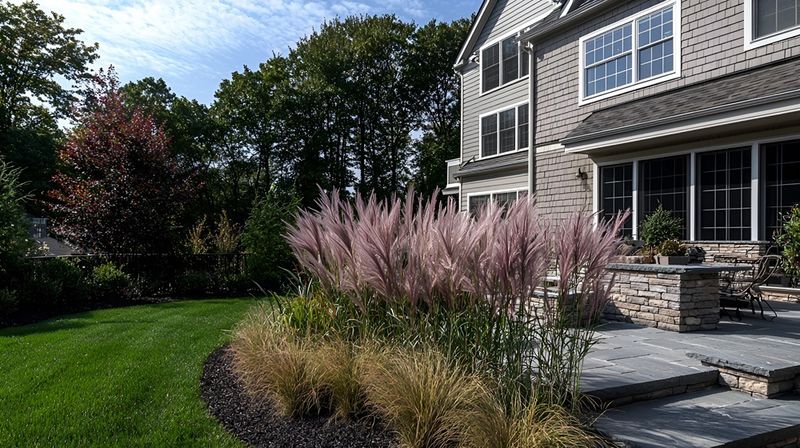
Mature pink muhly does not behave like a tidy strip of liriope. Each clump grows into a rounded mound, roughly 2 to 4 feet tall when in bloom and 2 to 3 feet wide at the base.
Treating it like a narrow edging plant sets up a frustrating situation where the foliage flops onto the patio surface or blocks a walkway within a season or two.
The smarter approach is to plant it in a prepared sunny bed set back from the concrete edge by at least 18 to 24 inches, leaving room for the clump to mature without encroaching on foot traffic. NC State’s gulf muhly profile describes the plant as well-suited to borders and mass plantings, which confirms that a row of clumps beside a patio is a natural use, provided each plant has space to develop its full form.
Spacing matters more than many gardeners expect. UF/IFAS muhly grass guidance supports a practical spacing range of approximately 24 to 36 inches on center.
Wider spacing gives each plant room to mature without crowding, though the visual mass of overlapping plumes takes longer to develop. Closer spacing creates a fuller border faster but may require thinning or division as plants mature.
University of Georgia Extension consistently recommends planting in groups of three or more for the strongest visual impact. A single clump reads as a specimen; three or five clumps planted at 30-inch centers create a soft, flowing border that genuinely transforms a hard patio edge.
Before finalizing placement, also check that the bed does not sit in a drainage path where roof runoff concentrates after rain, since standing water near the root zone works against this grass’s preference for well-drained conditions.
Establishment comes before low-water performance
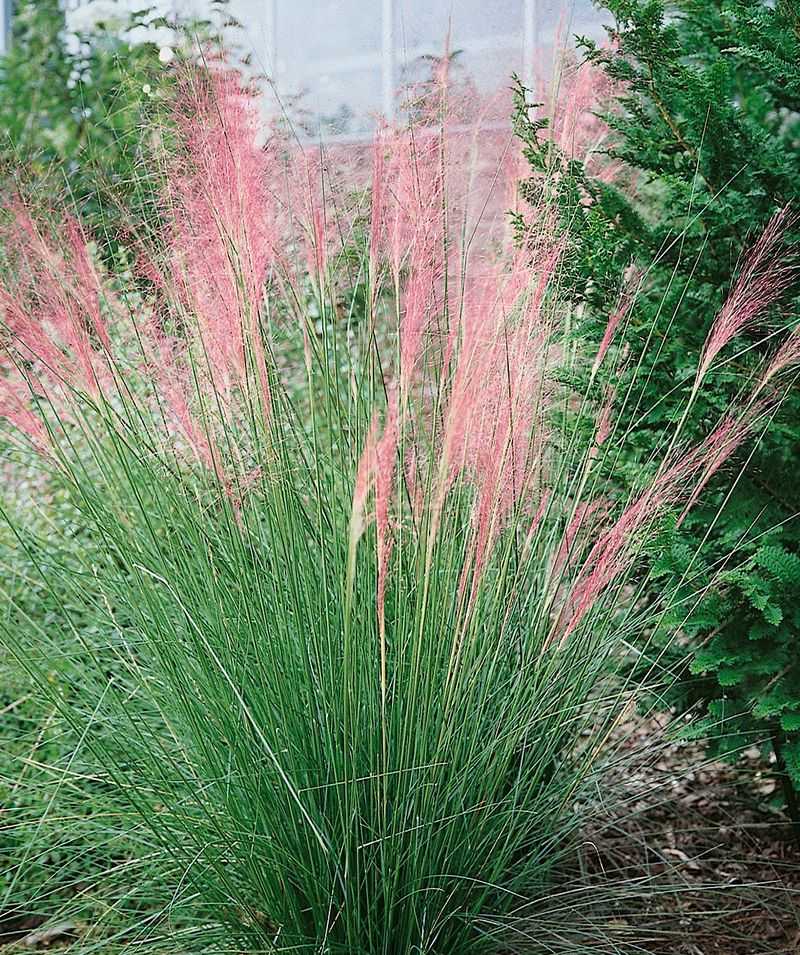
Drought tolerance is not an instant trait. A freshly planted pink muhly clump has a small root ball surrounded by soil it has not yet grown into, which means it depends heavily on the water you provide during the first growing season.
Skipping establishment irrigation because the plant is described as drought-tolerant is one of the most common reasons newly planted ornamental grasses fail.
Iowa State University Extension’s ornamental grass guidance is direct on this point: new grasses need regular watering while their roots establish, and even drought-tolerant species may need supplemental water during the first season and during unusual dry spells after that. Plan to water newly planted clumps every few days during dry stretches in the first summer, tapering off as the plants show active new growth and the season cools.
Once established, the irrigation strategy shifts. Rather than watering on a fixed schedule, check actual soil moisture a few inches below the surface before reaching for the hose.
NC State Extension’s drought guidance advises watering deeply at the root zone and allowing soil to dry between sessions, which encourages roots to grow deeper rather than staying near the surface.
NC State’s mule grass profile describes the species as highly tolerant of heat, humidity, drought, and poor soil once it is settled in. Practically, that means a second- or third-year clump in a well-drained sunny bed will usually get through a typical North Carolina summer on rainfall alone, with perhaps one or two deep supplemental waterings during an extended heat wave.
The low-water reputation is earned through that staged approach, not handed out from planting day forward.
Sun and drainage determine whether it thrives
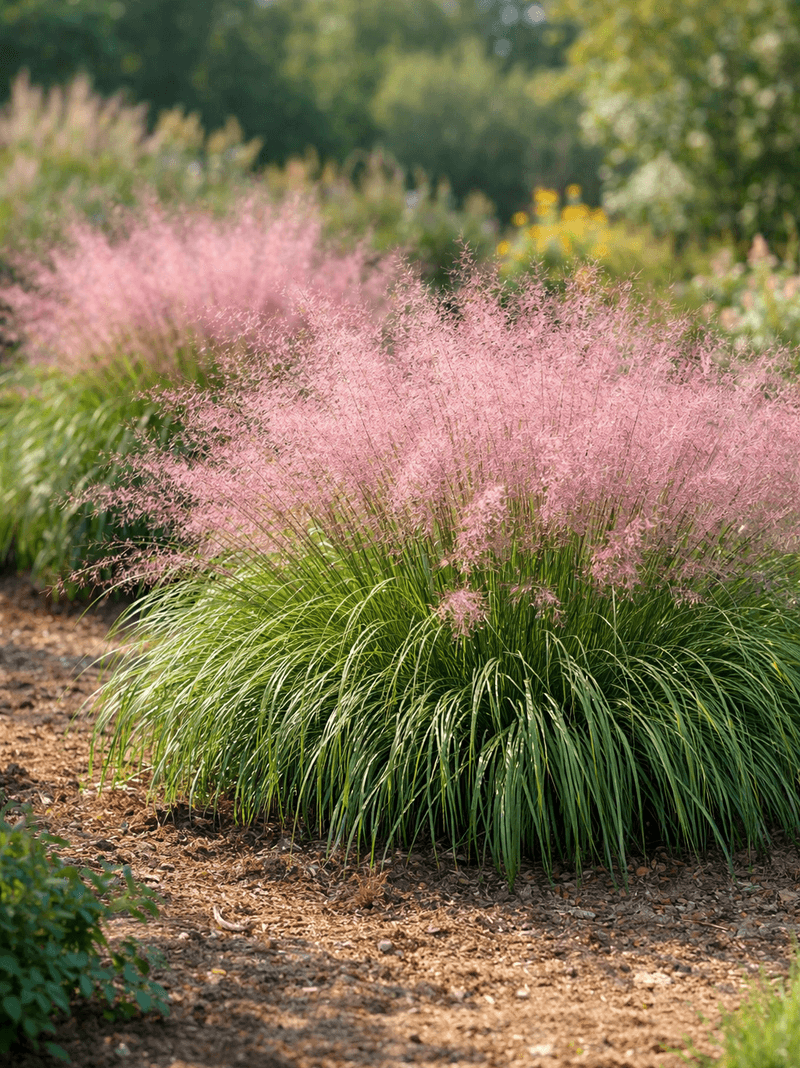
Before buying plants, walk the intended planting spot at different times of day and note how many hours of direct sun it receives. Full sun, generally six or more hours of unobstructed direct light, is the safest recommendation for pink muhly.
Plants grown in full sun produce denser foliage and more abundant flower plumes in fall. Partial shade is sometimes listed as tolerated, but the flowering display weakens and the clump can become open and floppy in lower light conditions.
Soil drainage is equally important. NC State’s mule grass profile notes that the species tolerates sand, loam, clay, and shallow rocky soil, and is adapted to heat, humidity, drought, and poor fertility.
That broad tolerance is genuine, but it applies to soil texture and fertility rather than to waterlogged conditions. A bed that drains freely after rain is consistently the most reliable setting.
Patio-adjacent beds introduce a few specific challenges worth evaluating before you plant. Reflected heat from concrete can intensify afternoon temperatures, which pink muhly generally handles well given its heat tolerance.
More problematic are compacted soil with little pore space for roots, narrow planting strips with restricted rooting volume, and low spots where roof runoff pools after heavy rain. NC State’s gulf muhly profile supports heat tolerance and broad soil adaptation, but no source suggests the grass performs equally well in every concrete-edge microclimate.
A simple site test helps clarify drainage: dig a hole about 12 inches deep, fill it with water, and check how long it takes to drain. Water that disappears within an hour or two suggests adequate drainage.
Water that sits for several hours or overnight points to a drainage problem that should be corrected before planting, either by amending the soil, raising the bed, or choosing a different location. Occasional wetness after a heavy storm is manageable; permanently saturated soil is not a good match for this grass.
Seasonal care preserves the color and form
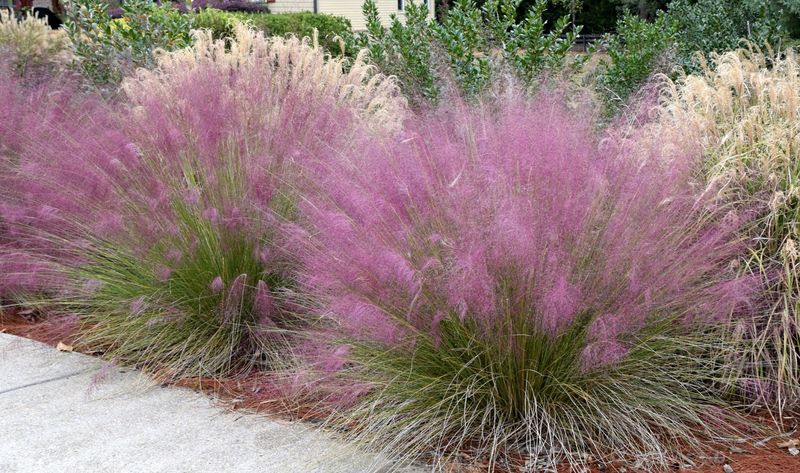
Pink muhly earns its reputation as a low-maintenance plant, but low-maintenance does not mean no maintenance. A small amount of seasonal attention keeps the clumps looking their best and prevents the kind of neglect that leads to a messy, declining border.
The most important annual task is cutting back old growth in late winter or early spring, before new green shoots emerge from the base. Mississippi State University Extension recommends cutting clumps back to about 6 inches at this time.
Timing matters: cutting too early in fall, before the plant has fully gone dormant, can reduce the following season’s vigor. If your clumps still show some green foliage heading into winter, wait until late February or early March in most North Carolina locations before making the cut.
Fertilizer is another area where restraint pays off. UF/IFAS guidance on ornamental grasses warns that overfertilizing produces weak, floppy foliage and reduces the quality of flower stems.
Pink muhly is adapted to low-fertility soils, so a light application of balanced fertilizer in spring, if a soil test suggests the bed needs it, is usually sufficient. Skipping fertilizer entirely in reasonably healthy soil is often the better choice.
The seasonal display itself follows a clear rhythm. Spring and summer bring fresh green, fine-textured foliage that softens the patio edge with texture and movement.
The payoff arrives in late summer and fall, when airy pink or purplish plumes rise above the foliage in a cloud-like display. After frost, the plumes fade to tan but hold their shape, offering quiet winter interest before the spring cutback.
One practical safety note applies to any homeowner in a fire-prone area or near dry wildland edges. University of Nebraska Extension fire-risk guidance advises treating dry standing ornamental grasses cautiously near structures.
If your property borders dry woods or open land, consider cutting back old growth promptly after the winter display rather than leaving it standing through a dry spring.
Choose it for the site, not for an absolute promise
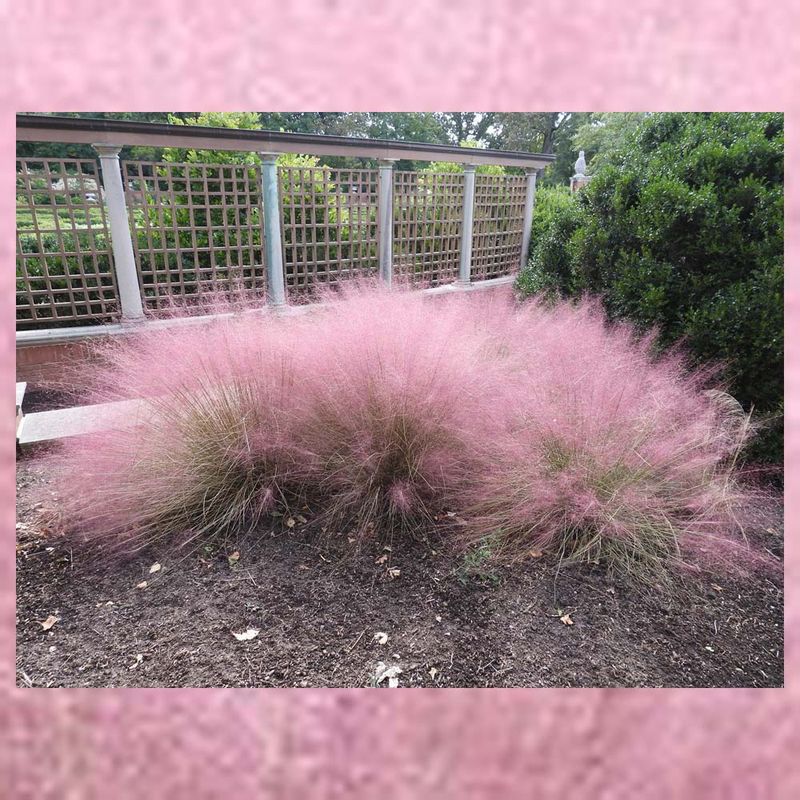
Pink muhly makes a genuinely appealing choice for a sunny patio border, but the decision should be based on honest site conditions, not on a promise that it never needs water or works everywhere. The grass earns its place when the setting suits it.
The clearest green light: a bed that receives at least six hours of direct sun, drains reliably after rain, has enough soil volume for roots to grow, and leaves adequate clearance for a mature clump 2 to 3 feet wide. When those conditions are present, NC State Extension confirms that pink muhly delivers native character, fine texture, and a seasonal color display that few other low-water ornamental grasses can match in the Carolina landscape.
The honest caveats are worth repeating briefly. New plants need regular establishment water during their first growing season, as Iowa State University Extension makes clear.
Established clumps may still need a deep soak during an extended drought. Regional prevalence varies, with the grass most at home in the Coastal Plain, Sandhills, and eastern Piedmont, as NC State’s native plants handbook documents.
When you shop, check the plant label for the scientific name Muhlenbergia capillaris rather than relying on the common name alone. Several muhly species are sold under overlapping names, and verifying the species ensures you are getting the plant described here.
Treat pink muhly as a low-maintenance living border that rewards a good site and proper establishment, and it will soften that concrete edge season after season with almost no prompting from you.