
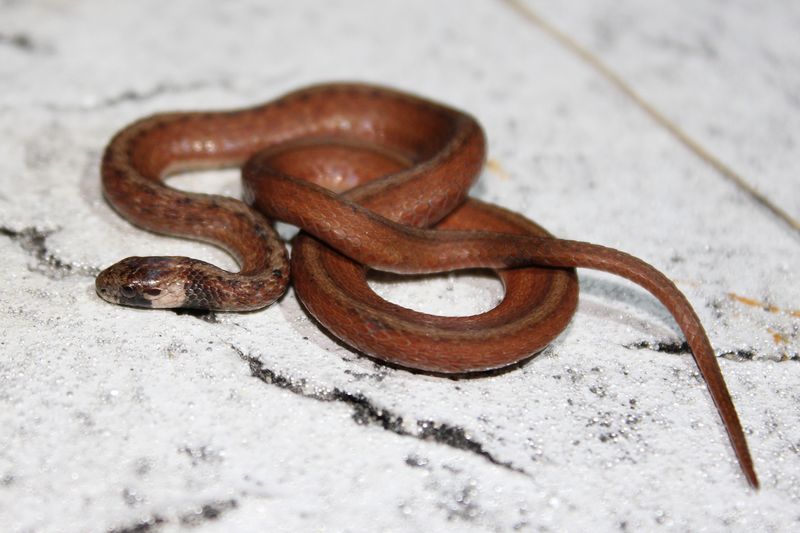
Open your garage door or step onto your porch this September and you might spot something thin and quick slipping through the shadows. Small snakes near Florida homes can feel alarming, but most of what you are seeing has a straightforward explanation tied to the season, recent weather, and what is happening in your yard right now.
Understanding why some Florida homeowners notice more of these animals in late summer and early fall can help you respond calmly, make practical changes, and avoid the mistakes that can turn a brief yard encounter into a bigger problem.
September can make some Florida snakes more noticeable—not create a statewide invasion
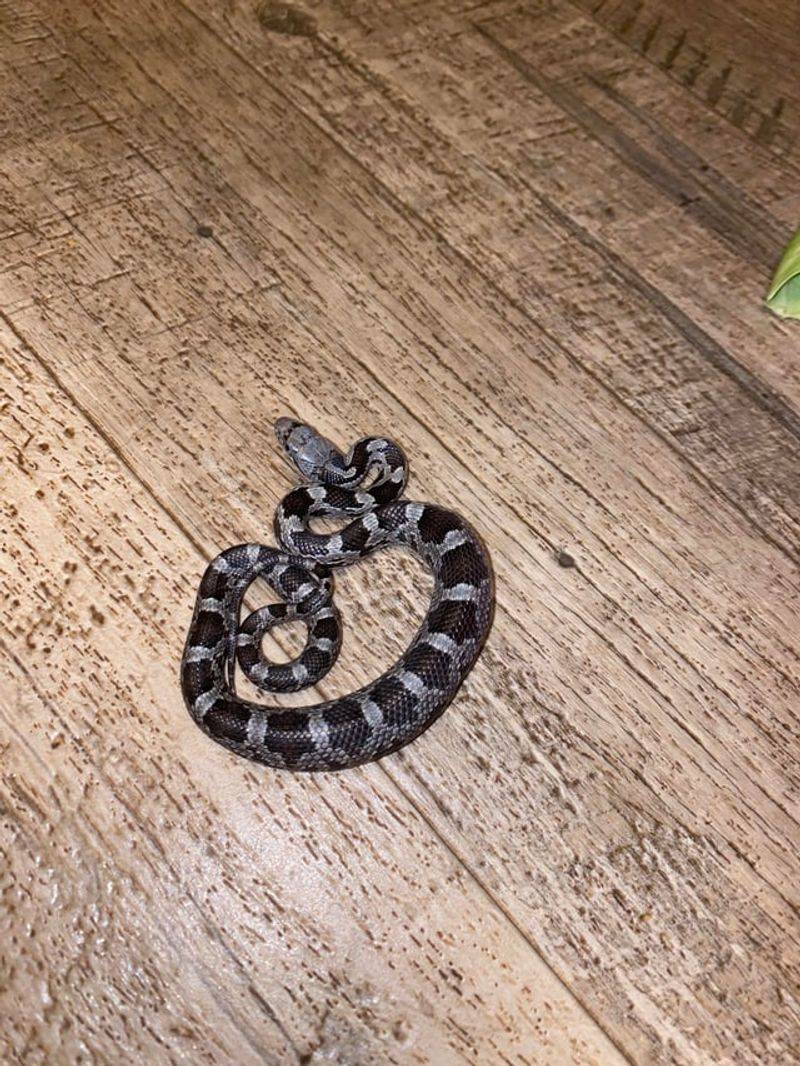
Florida does not experience a confirmed, uniform statewide spike in snake activity every September. What some homeowners notice in late summer and early fall is real, but the reasons behind it vary depending on which part of the state you live in, what species are nearby, how much rain has fallen, and what your yard looks like.
Treating every September sighting as part of a statewide invasion misses the nuance that actually helps you respond well.
Three overlapping explanations account for most of what homeowners notice. First, some species hatch or disperse young in late summer and early fall, adding small snakes to yards and gardens.
Second, heavy rain or flooding can push snakes out of saturated hiding spots and onto higher ground, including porches, driveways, and garages. Third, certain species show fall breeding movement, with males traveling farther in search of mates.
Any one of these factors, or a combination of them, might apply to a particular sighting, but none applies equally to every Florida yard.
The clearest regional documentation comes from Florida’s western Panhandle, where a UF/IFAS Extension account of fall snake encounters linked increased September home sightings to a major rainfall event, flooding, and fall breeding activity among 15 of 40 locally occurring species. That account also noted that spring produced more reported encounters in their observation project, a reminder that fall is not automatically the peak season everywhere.
Conditions in the Panhandle do not describe identical behavior in central Florida, south Florida, or coastal wetland areas.
A peer-reviewed Everglades study found that snake movement in that region correlated with air temperature and rainfall, while also showing that seasonal activity patterns differed significantly among species. Increased visibility around a home does not necessarily mean there are more snakes in your area overall.
It may simply mean that the snakes already living nearby are moving in ways that bring them closer to structures.
Late-summer hatchlings can add small snakes to the places homeowners notice
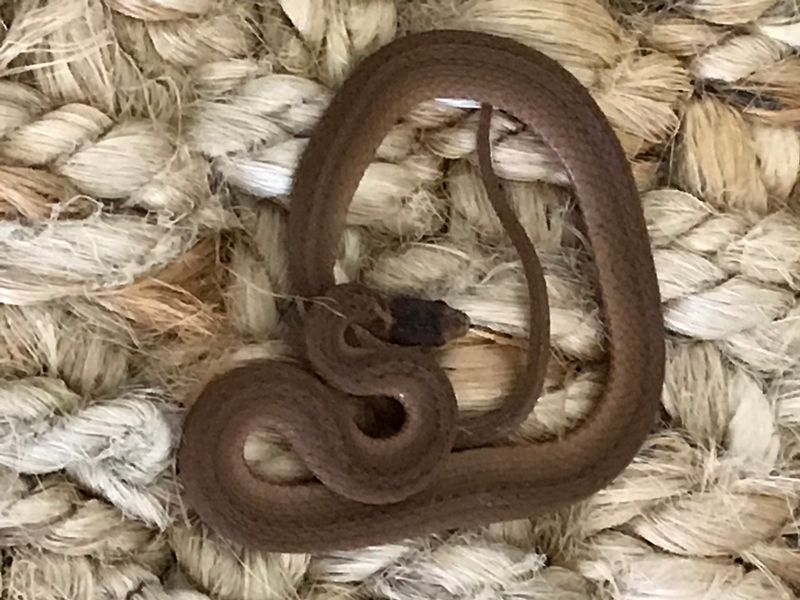
Seasonal reproduction puts newly hatched snakes into yards and visible areas during the exact window when many Florida homeowners are spending time outdoors in the evenings. Several species time their hatching to late summer and early fall, which means small, freshly dispersed snakes may appear in places where residents are likely to spot them near doors, under potted plants, or along garden beds.
Ring-necked snakes typically hatch in late summer or early fall. According to the Florida Museum of Natural History’s ring-necked snake profile, these animals are generally 8 to 14 inches long, nonvenomous, and commonly found in mulch, leaf litter, and beneath logs or rocks.
Southern hognose snake eggs typically hatch in September and October, and Florida pine snake eggs also hatch in September and October. None of these species is found uniformly across the entire state, so hatching activity in your area depends on the range of each species and the habitat available near your home.
Florida brownsnakes, another common yard species, are usually 10 to 12 inches long and feed largely on earthworms and slugs. Both brownsnakes and ring-necked snakes show up regularly in residential gardens, and UF/IFAS Gardening Solutions notes that Florida’s native nonvenomous snakes play a genuine role in keeping pest populations in check.
Hatchlings from any species will be smaller than adults, which can make identification harder rather than easier.
Size alone tells you nothing reliable about whether a snake is dangerous. UF/IFAS guidance on identifying commonly encountered Florida snakes cautions that juveniles can be difficult to tell apart and that harmless species sometimes resemble venomous ones.
A small snake in your yard may be a harmless hatchling, but do not assume that from size alone.
Heavy rain can move snakes onto the higher ground around a house
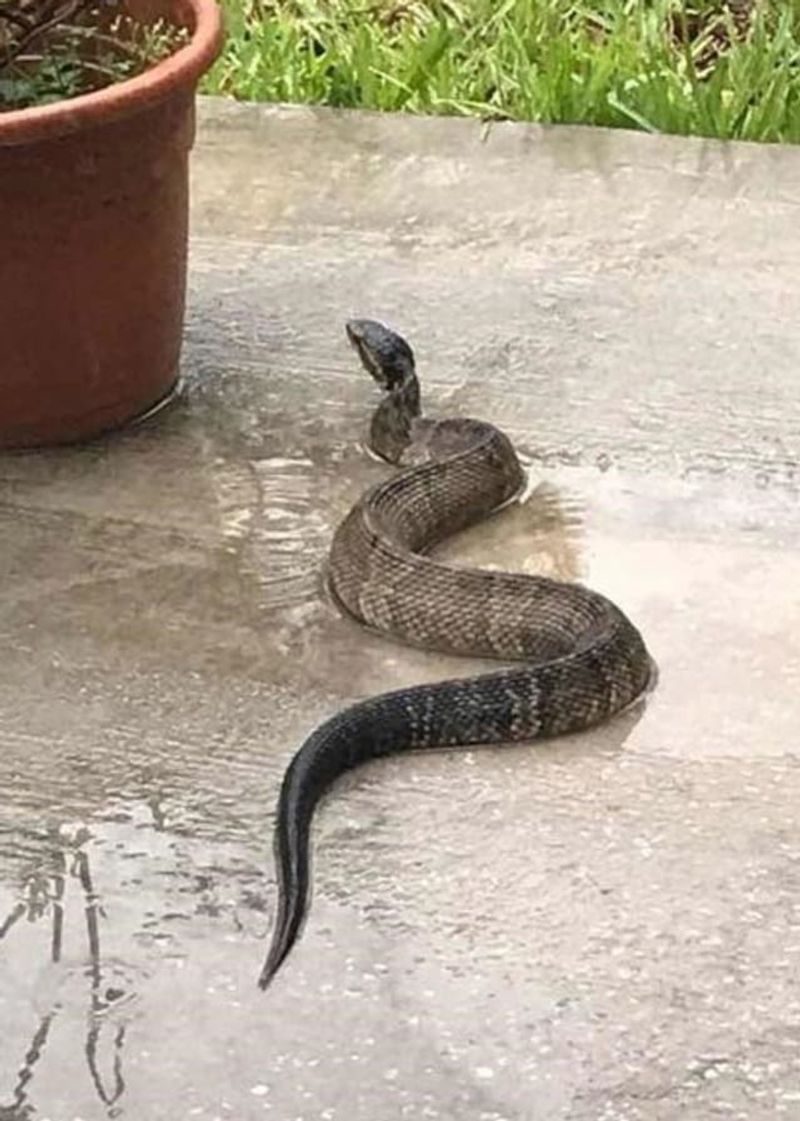
After a significant downpour, the saturated ground, flooded leaf piles, and waterlogged burrows that snakes use for shelter can become unusable. A snake that was living quietly beneath a brush pile or in a patch of dense ground cover may have nowhere to go except higher, drier ground, which often means a porch, garage floor, or the edge of a driveway near your home.
The western Panhandle UF/IFAS account specifically tied an increase in September home encounters to a major rainfall event and flooding in that region. That connection is real and useful, but it applies most directly to areas experiencing significant flooding or prolonged saturation.
A brief afternoon shower that does not flood low-lying cover is unlikely to produce the same result. The difference between a rain shower and a flooding event matters when you are trying to interpret why a snake appeared near your door.
Research from a different Florida habitat reinforces the complexity. A peer-reviewed study of snake movements in the Everglades found that road-crossing activity was associated with both air temperature and rainfall, but also noted that seasonal activity patterns differed meaningfully among species.
Rainfall is a contributing factor in some situations, not a switch that reliably increases snake encounters for every species across every Florida region.
When a snake appears on your porch or near your garage right after heavy rain, displacement from flooded cover is a reasonable explanation. That snake is not seeking your home specifically.
It is looking for dry ground, and your elevated porch or garage floor happened to be the nearest option. Giving it space and time usually resolves the situation without any intervention from you, since the snake will move on once conditions improve or it finds cover elsewhere.
Nearby food, water, and cover can prolong a yard encounter
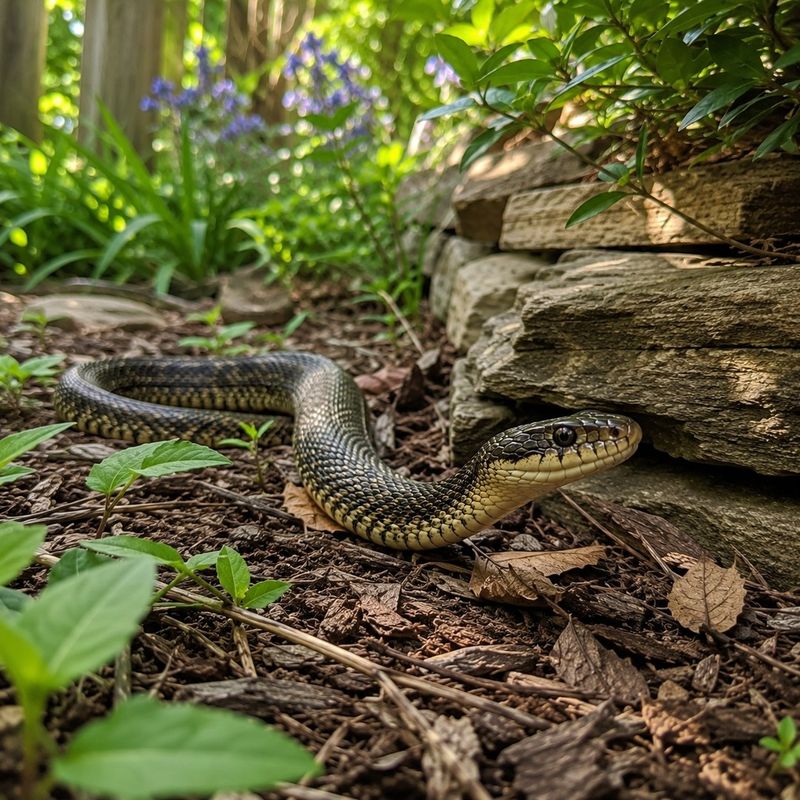
A snake that wanders into your yard because of rain or hatchling dispersal may not stay long. One that finds reliable food, water, and shelter near your home is more likely to linger.
Yard conditions do not explain every sighting, but they can affect how long an encounter lasts and how often you notice snakes in the same spots.
Snakes eat what is available nearby. UF/IFAS guidance on preventing residential snake encounters identifies rodents, frogs, anoles, earthworms, and slugs as relevant prey.
A yard with a rodent problem, a thriving frog population near a pool or pond, or dense ground cover full of earthworms and slugs gives snakes a reason to return. Spilled birdseed attracts rodents, and rodents attract the snakes that hunt them.
Pet food left outside, unsecured compost, and accessible garbage can create the same chain.
Water matters too. UF/IFAS Sarasota County Extension notes that dripping irrigation heads, leaking hoses, and standing water near structures can support the prey populations that draw snakes in.
Reducing persistent moisture near your home’s foundation is a concrete step that addresses several attractants at once.
Cover is the third factor. Leaf litter, loose boards, rock piles, brush piles, stacked debris, and firewood placed directly on the ground all create the kind of dark, concealed spaces where snakes rest and hunt.
FWC’s living-with-snakes guidance confirms that removing these features from the area immediately around your home reduces the chances of an encounter. That said, a snake displaced by flooding or dispersing as a hatchling can still pass through a tidy yard.
Reducing attractants lowers the odds and duration of encounters, but it does not guarantee you will never see one.
Reduce shelter and attractants beside the house
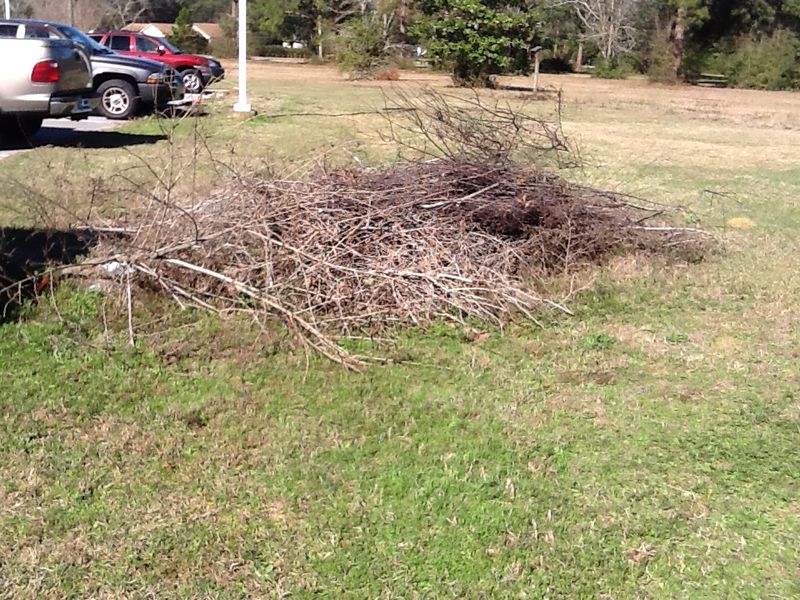
A yard reset focused on the area closest to your home is one of the most practical things you can do after a September sighting. Start within 10 to 15 feet of your foundation, where snakes are most likely to transition from the yard into a building opening.
Clear brush piles, loose boards, rock piles, and stacked debris from near the house. Mow tall grass and trim back dense ground cover that creates concealed corridors.
UF/IFAS guidance on managing conflicts with wildlife recommends stacking firewood tightly on a rack or elevated platform and moving it away from exterior walls, since ground-level firewood is a reliable shelter spot for small snakes and the rodents they pursue. Wearing boots when working in tall grass or deep leaf litter and using thick gloves when dismantling debris are basic precautions worth keeping in mind.
UF/IFAS residential snake prevention guidance also recommends storing birdseed, pet food, and human food in tightly sealed containers, cleaning up spilled seed promptly, and securing garbage and compost. These steps reduce the rodent activity that brings snakes closer to the house in the first place.
Check garages, sheds, and storage areas for signs of rodents such as droppings or chewed materials, and address any active infestation without using outdoor rodent poison. Poisoned rodents that die in the open can expose pets, raptors, and other wildlife to secondary poisoning, which creates a separate problem while doing nothing to discourage the snakes themselves.
Repair dripping irrigation heads, leaking hose connections, and any other persistent moisture sources near the foundation. UF/IFAS habitat modification guidance identifies reducing cover, food, and water near structures as the core of any effective habitat adjustment.
The UF/IFAS Sarasota County Extension adds that overwatering and leaky systems support the prey populations that attract snakes. The goal of all this work is fewer encounter opportunities near your home, not a completely snake-free property.
That standard is realistic and achievable; a guaranteed snake-free yard is not.
Seal openings that let a yard sighting become an indoor encounter

Yard improvements and building exclusion work best together. A snake that cannot find shelter or food near your home has less reason to stay, but one that does wander close can still get inside if your building has easy access points.
Checking both the landscape and the structure gives you the most complete protection.
Work through the building’s perimeter systematically. UF/IFAS residential snake prevention guidance points to gaps under doors, holes in walls, roof openings, uncovered drainpipes, and gaps around wiring or plumbing as common entry routes.
Install or replace door sweeps on exterior doors and check garage door thresholds for gaps. Inspect porch screens for tears, holes, or loose edges along the bottom frame.
Look at roof vents and make sure screens are intact. Check where plumbing and electrical conduit pass through exterior walls, and seal any gap larger than a quarter inch with appropriate caulk, hardware cloth, or foam backer.
Sheds and detached garages deserve the same attention as the main house. UF/IFAS wildlife conflict management guidance notes that outbuildings often have gaps at the foundation, around doors, and at rooflines that go unnoticed until a snake or rodent finds them first.
For situations where a yard itself needs a physical barrier, correctly installed exclusion fencing is an option in limited circumstances. UF/IFAS guidance on exclusion fencing describes barriers using aluminum flashing, quarter-inch hardware cloth, or silt fencing approximately 2 to 3 feet high and buried about 6 inches deep.
An incomplete barrier can be worse than none at all, since it may trap a snake inside the protected area. Exclusion fencing is a specialized tool, not a general substitute for habitat and building management.
Treat every unidentified small snake cautiously
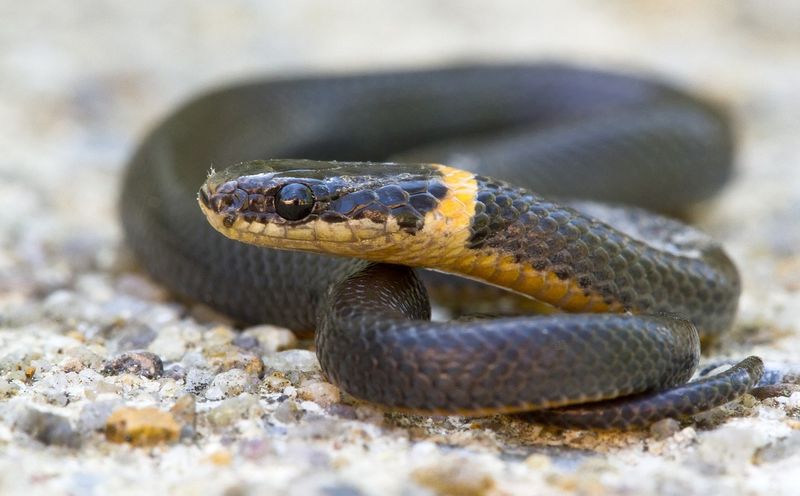
Many of the small snakes Florida homeowners encounter near doors and garages are completely harmless. Ring-necked snakes, Florida brownsnakes, and other common yard species pose no threat, and several of them quietly reduce pest populations while passing through.
Knowing that most Florida snakes are nonvenomous is useful background, but it is not a safe identification method for a specific snake in front of you.
FWC reports that only six of Florida’s approximately 50 snake species are venomous: the eastern coral snake, southern copperhead, cottonmouth, eastern diamondback rattlesnake, timber rattlesnake, and dusky pygmy rattlesnake. That is a small fraction, but juveniles of some venomous species are small and can be difficult to distinguish from harmless ones.
UF/IFAS identification guidance cautions that harmless species may resemble venomous ones and that size alone is not a reliable safety indicator.
Outdoors, the safest default is to give the snake space and let it leave on its own. Most snakes avoid people and will move away quickly if not cornered or provoked.
If a snake has made it inside a garage or outbuilding, UF/IFAS recommends closing any door that connects to the living area of the house, then opening an exterior door to give the snake a route out. For a homeowner who is confident in the identification, gently guiding a nonvenomous snake into a large container using a broom is a described option.
Do not pick up a snake you cannot identify with certainty, and do not attempt to capture or photograph a venomous snake.
If a bite does occur, the response is straightforward. UF/IFAS snakebite guidance and CDC guidance on venomous snakes both direct you to call 911 immediately and not wait for symptoms to appear.
Do not use a tourniquet, apply ice, cut the wound, attempt suction, or try to catch or kill the snake. Keep the bitten limb at or below heart level and stay calm while waiting for emergency responders.
Build a less inviting perimeter instead of trying to create a snake-free yard
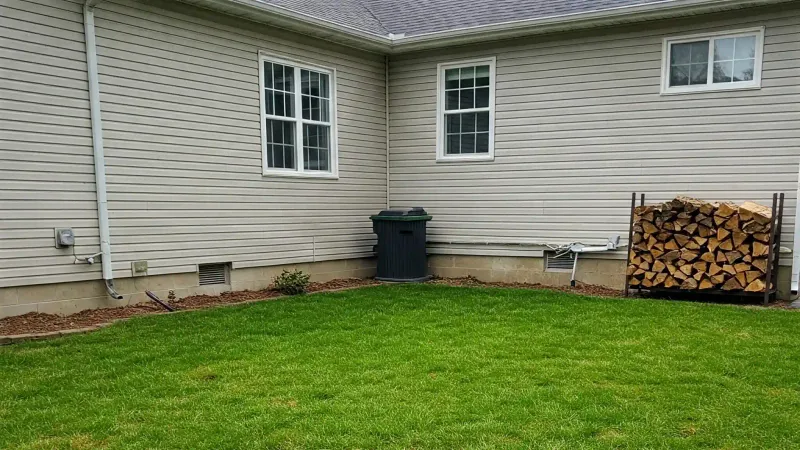
After a sighting, a short check-in can help you figure out what to address first. Think about whether the encounter followed heavy rain or flooding, then look around for obvious shelter or prey near the building.
Correct any leaks or irrigation drips, store food in sealed containers, and clear cover from the area directly beside doors, garages, and sheds. Then check the building itself for gaps and seal anything larger than a quarter inch.
UF/IFAS residential prevention guidance treats habitat reduction and building exclusion as complementary steps rather than a strict sequence.
Avoid mothballs, sulfur, essential oils, commercial snake repellents, and any other home remedy. None of these products has reliable evidence behind it, and some carry real risks to people, pets, and local wildlife.
Killing nonvenomous snakes removes animals that help manage rodents, slugs, and other pests. Ring-necked snakes, for example, eat slugs, earthworms, and small lizards, making them quiet allies in a Florida garden.
FWC notes that Florida’s nonvenomous snakes provide genuine pest-control benefits and encourages homeowners to leave them alone when possible.
September visibility around some Florida homes reflects a mix of seasonal and local conditions, including hatchling activity, recent rainfall, and what your yard happens to offer. The evidence from the western Panhandle shows that these factors can overlap in meaningful ways, but the pattern is not identical across every region of the state.
A perimeter that offers less shelter, less prey, and fewer gaps is the most honest goal you can set, and for most Florida homeowners, it is enough to keep encounters rare.