
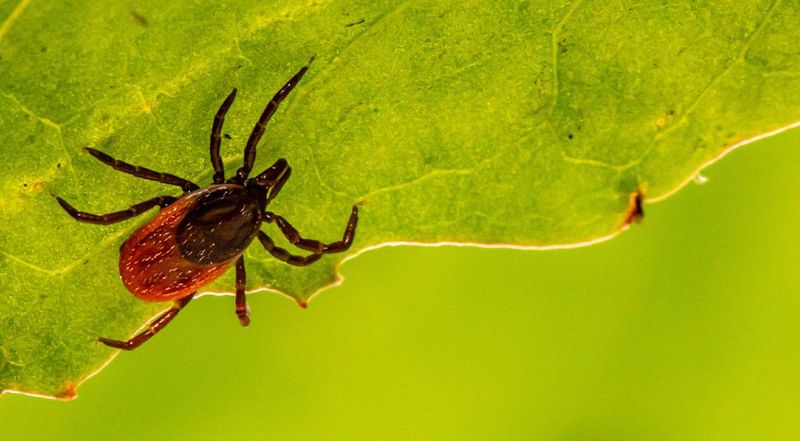
Ticks are a real concern for North Carolina homeowners, especially during the warmer months when people and pets spend more time outside. A lot of advice online points to mulch as the problem, but the truth is more useful than that simple story.
How mulch is placed and maintained matters far more than whether you use it at all. Understanding that difference can help you make smarter choices for your yard without giving up the landscaping you already have.
Mulch is not the culprit in every North Carolina yard

Mulch gets blamed for a lot in tick conversations, but the science behind that claim is more complicated than most online advice suggests. North Carolina is home to several medically relevant tick species, including the lone star tick, American dog tick, blacklegged tick, Gulf Coast tick, and the relatively newer longhorned tick.
NC DHHS tick surveillance data shows that exposure can happen in yards near wooded, brushy, or grassy habitat, and that multiple illnesses, including ehrlichiosis, spotted fever, Lyme disease, and STARI, are tracked across the state.
What actually matters is the condition and placement of the mulch, not the simple fact that mulch exists in a yard. A maintained, relatively dry wood-chip or gravel strip can serve as a useful transition zone between lawn and wooded edges.
By contrast, deep, wet, decomposing mulch mixed with leaves, brush, or other organic debris can hold moisture and preserve the cool, shaded conditions that favor some ticks and the small mammals they feed on.
That distinction is important because CDC guidance on where ticks live emphasizes habitat features such as leaf litter, tall grass, brush, and wooded edges, not mulch as a standalone cause. NC Cooperative Extension’s pest alert on ticks in the landscape similarly focuses on habitat separation rather than treating mulch itself as an attractant.
A study of 143 residential yards in Dutchess County, New York, found that mulch, gravel, and wood-chip barriers showed no detectable effect on tick abundance in that sample, though only two properties had such barriers, limiting what the study could actually measure. Stronger associations in that research involved trash, stone walls, and fencing.
Direct evidence tying excessive mulch alone to higher tick numbers in North Carolina residential yards remains limited, so treating ordinary mulch as the primary problem misses the bigger picture.
Placement determines whether mulch separates people from tick habitat

Location is the variable that changes everything about how mulch interacts with ticks. A continuous, relatively dry wood-chip or gravel strip running between a wooded edge and a lawn, patio, or play area can increase the physical separation between tick habitat and the places people actually use.
That separation is the goal, and the strip is the tool for achieving it.
The problem shows up when mulch is spread through a shaded, damp, brushy bed that runs right up against the house or connects edge habitat to high-traffic areas without any break. Deep, wet material mixed with leaves, brush, or decomposing debris holds moisture and provides cover for mice, voles, and other small mammals that host ticks at various life stages.
In that situation, the mulch is not creating separation; it is preserving the conditions that make the edge habitat more continuous.
CDC tick prevention guidance recommends placing a barrier of wood chips or gravel between lawn and wooded areas specifically to restrict tick movement into high-use spaces. A CDC review of tick-borne disease control strategies notes that results depend on surrounding landscape features, shade, initial tick pressure, and maintenance.
The strongest field studies on wood-chip barriers focused on blacklegged ticks in the Northeast and Canada, and those results should not be read as a guaranteed outcome for every North Carolina property or tick species. Lone star ticks, which are among the most commonly encountered ticks in many parts of North Carolina, behave differently and are not as well represented in the barrier research.
The practical takeaway is that placement and maintenance shape what mulch does in your yard, and a well-placed, maintained strip is a different tool than mulch scattered through a damp, shaded bed.
Build a roughly three-foot transition zone at the woodland edge

Putting a transition zone in place is a straightforward afternoon project that follows guidance from both CDC and NC Cooperative Extension. The goal is a continuous strip of relatively dry wood chips or gravel running approximately 3 feet wide, or wider where space allows, wherever your mowed lawn or heavily used outdoor area meets a wooded or brushy edge.
Think of it as a physical gap in the landscape rather than a chemical treatment.
CDC’s tick prevention recommendations specifically call out this kind of barrier as part of a tick-safe yard design. NC Cooperative Extension’s guidance for North Carolina homeowners adds that pruning branches and shrubs that brush against people, removing groundcover from frequently used paths, and discouraging deer from lingering near activity areas all reinforce what the transition zone is trying to accomplish.
Useful locations for the strip include the perimeter where woods meet the lawn, around children’s play equipment, along the edge of patios or decks that face wooded areas, and beside paths that run near brushy or shaded sections of the yard. Gravel tends to stay drier than wood chips and requires less frequent replenishment, while coarse wood chips work well when kept free of leaf accumulation.
One important qualification: CDC’s supporting landscape handbook makes clear that this zone is a management recommendation, not an exclusion barrier. Ticks can cross a wood-chip strip, and people, pets, deer, rodents, and birds regularly move ticks from one area to another.
The strip works by increasing separation and reducing the ease of movement from edge habitat into high-use areas, not by creating an impenetrable line.
Keep the boundary dry, open, and free of leaf litter
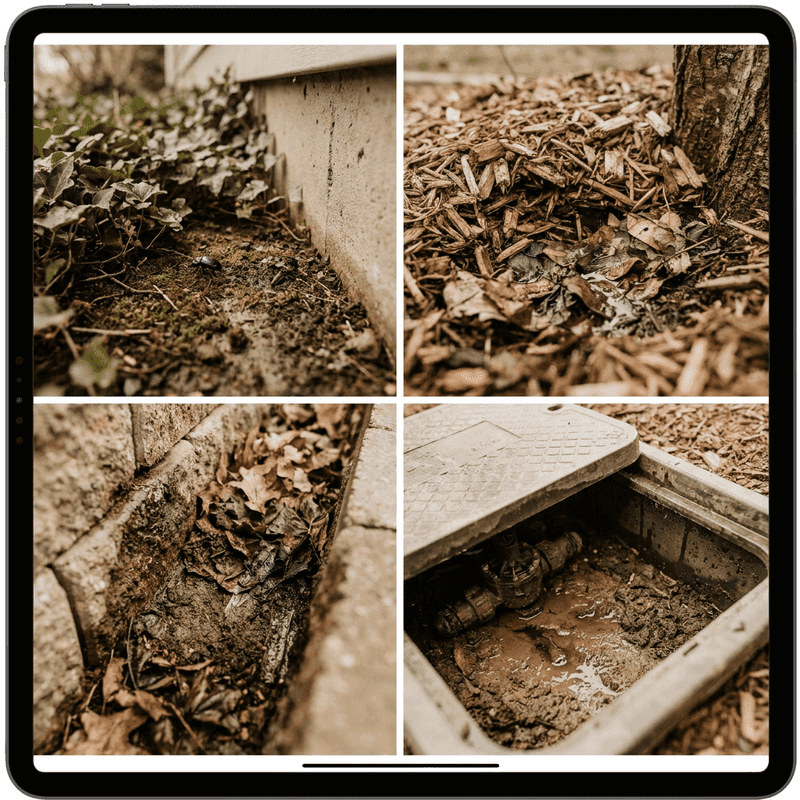
Putting in a transition zone is only half the job. Once it is in place, regular maintenance determines whether it keeps working or quietly becomes part of the problem it was meant to address.
The most common way a wood-chip strip loses its value is through leaf accumulation. Fallen leaves trap moisture, break down into organic matter, and create the same shaded, damp microhabitat conditions the strip was designed to interrupt.
CDC’s landscape management handbook specifically notes that wood chips containing leaves can break down into a material more like leaf litter over time, losing the intended drying effect. Clearing that accumulation before it becomes a thick layer is the single most important maintenance step for keeping the strip functional.
A practical routine looks like this: rake leaves and debris off the strip after major leaf-fall events, check for compaction or wet spots after heavy rain, and replenish or reshape the material when it becomes thin, flattened, or mixed with organic debris. CDC tick prevention guidance also recommends removing leaf litter and clearing tall grass and brush as part of the broader yard maintenance that supports a tick-safe landscape.
NC Cooperative Extension adds that keeping grass mowed regularly, pruning branches that brush against people as they walk through the yard, and clearing vegetation from frequently used paths all reinforce the work the transition zone is doing. None of these steps eliminate ticks from a yard entirely, but together they reduce the amount of favorable habitat directly adjacent to the places where your family spends time.
A strip that is checked twice a year and refreshed when needed will outperform one that was installed once and left alone.
Do not confuse a boundary strip with deep planting-bed mulch

The transition zone at a woodland edge and the mulch in your planting beds are two different tools with different purposes, and the guidance for one does not automatically apply to the other. Standard horticultural practice for planting beds calls for roughly 2 to 4 inches of mulch depending on the material and application.
NC State Extension’s planting guidance and the NC State Extension Gardener Handbook for woody ornamentals both caution against excessive depth and advise keeping mulch away from trunks and stems.
Overfilling a bed creates problems beyond aesthetics. Deep, compacted mulch stays wet longer, can interfere with water penetrating to the root zone, and provides cover for mice and voles, which are hosts for tick larvae and nymphs.
That is a real concern for beds that sit in shaded, damp areas close to the house or near wooded sections of the yard, though it does not mean that any mulched bed automatically becomes a tick problem.
EPA landscaping guidance reinforces the value of appropriate mulch depth for water conservation and plant health, which aligns with keeping beds from staying excessively wet. Proper depth, good drainage, and keeping beds clear of accumulated leaves address most of the conditions that could make a planting bed less favorable for ticks and their hosts.
A note on cedar mulch: some laboratory research found that certain wood products, including cedar-derived materials, impeded blacklegged tick movement in controlled conditions, but common wood chips lost that activity within about three days in the same experiment. That result does not support treating retail cedar mulch as a reliable tick-control product.
Choose mulch type based on its horticultural fit for the bed and its drainage characteristics, not on claims that a particular product will repel or kill ticks.
Layer landscape changes with personal and pet protection

Landscape changes set up better conditions in your yard, but they work best as one layer in a broader plan rather than as a standalone fix. Regular mowing keeps grass short and reduces the shaded, humid ground level that some ticks prefer when questing for hosts.
Keeping recreation areas, children’s play equipment, and frequently used seating away from wooded or brushy edges adds another layer of physical separation on top of what the transition zone provides.
Pet protection is a step that many homeowners overlook even when they are actively managing their yards. Dogs and cats move freely between maintained lawn areas and brushy edges, and they are efficient carriers for bringing ticks back into the spaces where families gather.
Year-round tick prevention for pets, using products recommended by a veterinarian, addresses a reintroduction pathway that no amount of wood chipping will close.
For personal protection, CDC recommends EPA-registered repellents such as DEET or picaridin on exposed skin and 0.5% permethrin-treated clothing or gear for anyone spending time in or near wooded and brushy areas. NC DHHS tick guidance and a 2025 NCDHHS press release on tick and mosquito prevention both emphasize tick checks after outdoor exposure and prompt removal with fine-tipped tweezers as key steps for reducing illness risk.
On the question of pesticide spraying, CDC is direct that homeowners should not rely on broad yard applications alone to reduce the risk of tickborne illness. Targeted acaricide treatments in specific high-risk areas can be part of a plan, but University of Minnesota Extension tick guidance and NC Cooperative Extension both note that broad spraying can affect beneficial insects and should be weighed carefully.
Preserving native shrubs, plants, and habitat features away from high-use areas supports the wildlife that belongs in a North Carolina yard without undermining the separation you have worked to create. NC State Extension Gardener’s wildlife-friendly landscaping guidance offers a practical framework for keeping that balance.
Aim for a maintained buffer, not a tick-proof yard
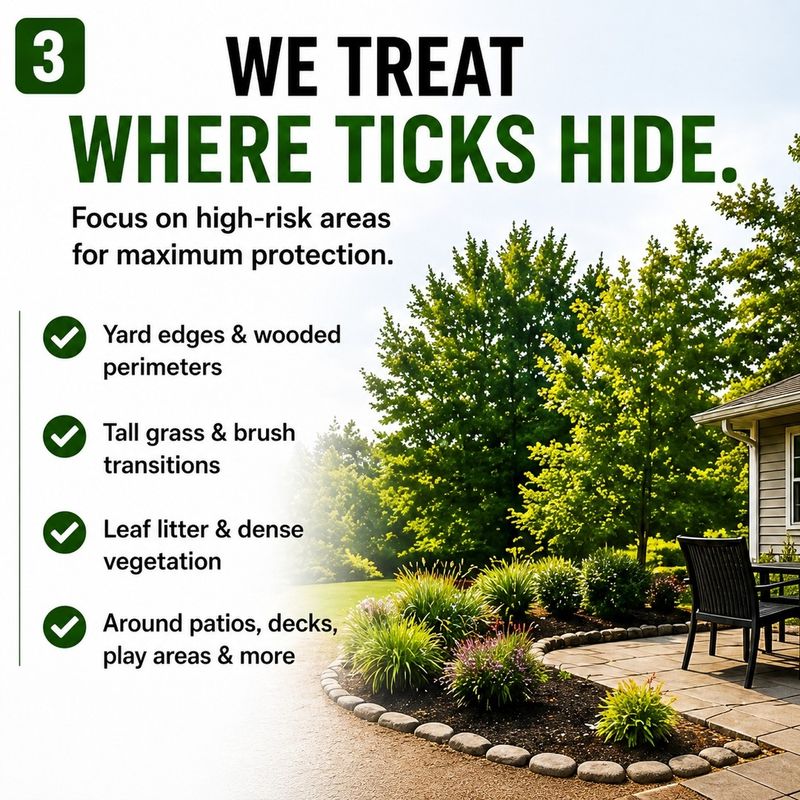
A useful checklist for North Carolina homeowners comes down to a few concrete actions. Walk the perimeter of your yard and identify where mulch or organic debris sits closest to the places your family actually uses.
Remove any accumulated leaves, wet clippings, or decomposing brush from those areas first. Then assess whether a roughly 3-foot maintained transition zone exists between your lawn or patio and any wooded or brushy edge, and establish or restore it where it is missing.
CDC tick prevention guidance and NC Cooperative Extension’s landscape recommendations both support that sequence as a practical starting point. Keep the strip dry and free of leaf accumulation, continue mowing regularly, and maintain pet and personal protection year-round regardless of how well the landscape is managed.
Placement and condition are what determine whether mulch supports separation from tick habitat or preserves favorable conditions for some ticks and their hosts near human activity. CDC’s landscape handbook is clear that ticks can cross any barrier, and deer, rodents, birds, and pets regularly move ticks into maintained areas.
No mulch strategy creates a tick-proof yard or proves that mulch was responsible when a tick turns up.
The honest goal is a yard where the conditions closest to your family favor separation over connectivity, and where personal and pet protection fill the gaps that landscape management cannot close. A well-maintained buffer does real work even when it cannot do everything.