
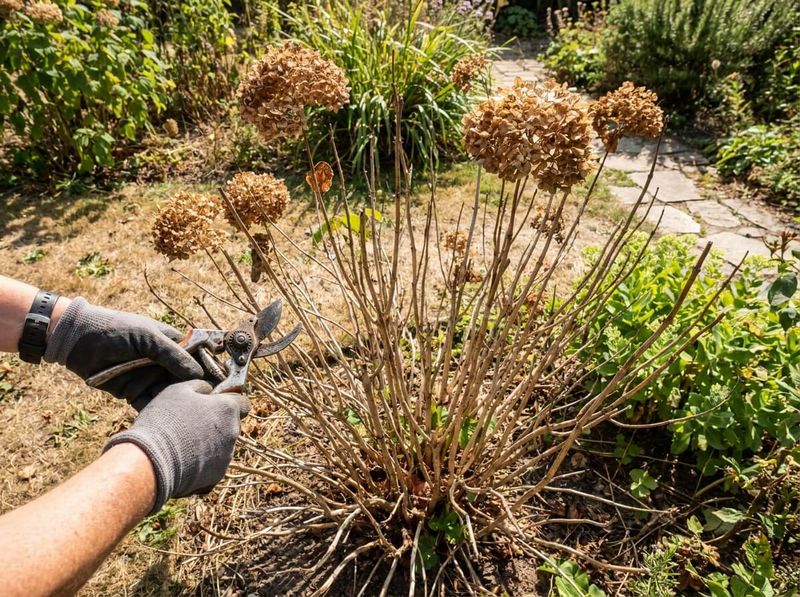
Picking up pruning shears when the air cools down feels like responsible garden care, but for hydrangeas, that instinct can cost you an entire season of flowers. The problem is not pruning itself.
The real issue is cutting back the wrong stems at the wrong time before you know what kind of hydrangea you have. Understanding which plants need their older wood to bloom next year is the single most useful thing a Southern gardener can do before fall cleanup begins.
The risky fall move is hard-pruning an unidentified hydrangea
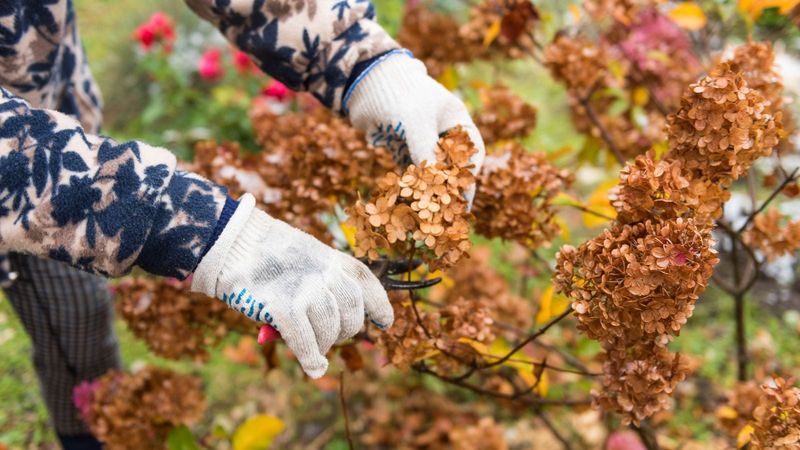
Hard-pruning a hydrangea in fall before knowing its type is the one move most likely to cost you next year’s flowers. Shearing the whole shrub, cutting it back to a compact shape, or removing most of its stems at once can strip away the older wood that certain hydrangeas depend on for blooming.
The consequence is not that the plant gets erased or permanently ruined. The real loss is the flower-bearing wood the shrub spent the growing season building.
Bigleaf hydrangeas, oakleaf hydrangeas, and climbing hydrangeas generally form next season’s flower buds on older stems during late summer and into fall. By the time the air cools and leaves begin to drop, those buds are already sitting on wood the plant produced earlier in the year.
A broad fall cut removes that wood, and UGA Cooperative Extension guidance on bigleaf hydrangeas makes clear that the result is usually few or no flowers the following season, not certain plant death.
The practical takeaway is simple: leave uncertain stems alone until you can confirm the plant’s flowering habit. University of Minnesota Extension’s pruning guide notes that not every hydrangea follows the same pruning calendar, and University of Illinois Extension reinforces that timing is the central factor separating a full bloom season from a disappointing one.
Preserving unidentified stems through fall costs nothing and protects everything the plant worked to produce.
Old wood carries the next season’s flower buds
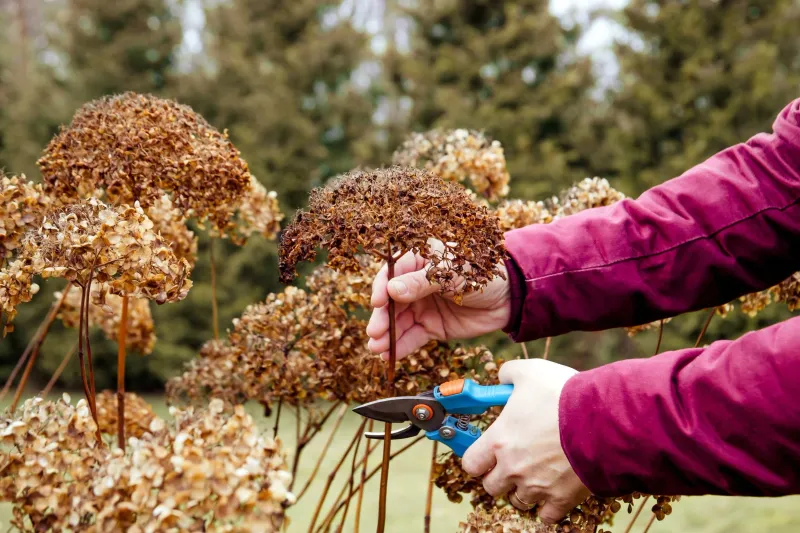
Cooler temperatures and falling leaves can make a hydrangea look like it is ready for a hard reset, but for old-wood bloomers, those mature stems are doing important work. Bigleaf, oakleaf, and climbing hydrangeas generally form next year’s flower buds on growth produced during the current season.
By late summer, those buds are already in place on older wood, quietly waiting out the winter.
For bigleaf hydrangeas specifically, UGA Cooperative Extension’s bigleaf hydrangea publication notes a conservative guideline of avoiding pruning after August 1 to protect developing buds. That date is a useful reference point for old-wood types, but it is not a universal rule for every cultivar, location, or Southern climate.
A gardener in North Florida or Central Texas with a later bloom season or a more heat-tolerant cultivar may have a slightly different practical window.
Oakleaf hydrangea follows the same general principle. UGA Extension’s identification guide confirms that oakleaf types bloom on old wood and should be pruned shortly after flowering rather than in fall.
In Florida, UF/IFAS notes that oakleaf hydrangea is native to the region but still benefits from partial shade and careful timing. The underlying point across all three old-wood types is the same: leaf drop does not signal that stems are expendable.
Identify the hydrangea before choosing a pruning date
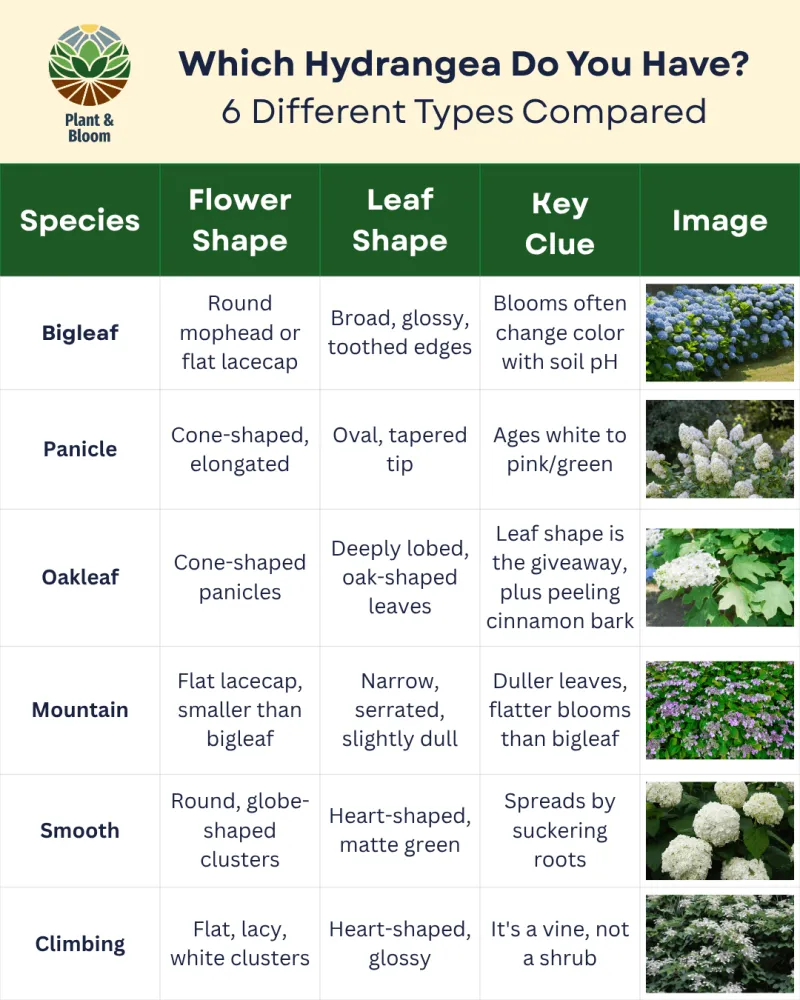
Hydrangeas are not one plant when it comes to pruning. The species in your yard determines when and how much you can cut without losing next year’s flowers.
Grouping them all under the same schedule is what gets gardeners into trouble every fall.
Bigleaf hydrangeas, also called French hydrangeas, including both mophead and lacecap forms, are old-wood bloomers. Oakleaf hydrangeas and climbing hydrangeas fall into the same category.
UGA Extension’s hydrangea identification resource lays out these distinctions clearly, and University of Minnesota Extension echoes that these types carry next year’s buds on older stems, making fall hard pruning a risk to the following bloom season.
Panicle hydrangeas, such as ‘Limelight,’ and smooth hydrangeas, such as ‘Annabelle,’ bloom on new wood produced during the current growing season. For these types, late-winter or early-spring pruning is generally preferred, and a fall cut is less likely to remove next year’s flower buds.
University of Illinois Extension’s pruning guide confirms this new-wood distinction.
Reblooming bigleaf cultivars, sometimes marketed as remontant types, can flower on both old and new wood. They are more forgiving than traditional bigleaf hydrangeas, but a heavy fall cut can still reduce their early-season display by removing older buds.
In Florida, UF/IFAS guidance on hydrangeas notes that French hydrangeas perform best in North and Central Florida with shade and moisture. Knowing the type is always the first step before any pruning decision.
When the variety is uncertain, preserve the existing stems
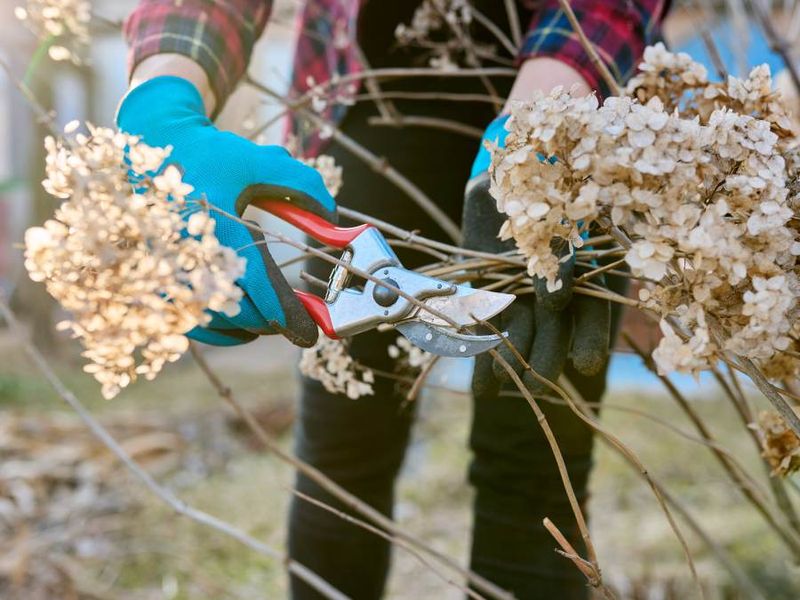
An unidentified hydrangea in fall deserves a cautious approach. The safest move is to skip hard pruning entirely and limit any cuts to wood that is clearly dead, broken, or showing signs of disease.
That kind of selective removal is a corrective measure, not the same as shearing the whole shrub back. UGA Extension’s fall pruning guidance supports this distinction, noting that corrective pruning for dead or damaged material can be done when needed without committing to a full-scale cutback.
Spent flower heads are another area where restraint pays off. Leaving dried blooms in place through winter adds visual structure to the garden and does no harm to the plant.
University of Minnesota Extension notes that those heads can be removed in late winter or spring without any penalty to the plant’s health or next season’s flowering.
When cleanup cuts are necessary, aim for a healthy bud, a lateral branch, or a main stem rather than leaving a stub. Sharp tools reduce tearing and lower the chance of disease entry.
UGA’s ornamental pruning publication recommends sanitizing tools between plants, especially when removing diseased material. Use a commercial disinfectant or an Extension-approved method according to the product label.
UGA Extension Fulton County’s pruning guide reinforces that targeted cuts protect plant health while a broad shrub-wide cut risks far more than it gains.
Match the pruning window to the hydrangea’s wood
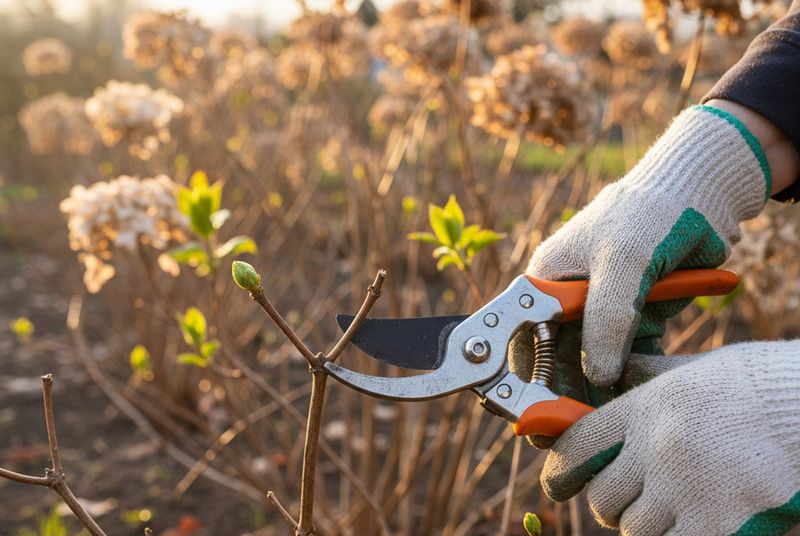
Knowing what not to do in fall is only half the answer. Each hydrangea type has a better pruning window, and working within that window is how you protect next year’s display while still keeping the shrub manageable.
For bigleaf and oakleaf hydrangeas, the generally recommended approach is to prune shortly after flowering ends, while the season is still active. That timing lets you remove spent flower heads or selected older growth without touching the newer stems that will carry next year’s buds.
UF/IFAS guidance on French hydrangeas specifically recommends pruning as soon as flowers fade and retaining productive older wood, which is especially relevant for Florida gardeners managing these plants through heat and humidity. UF/IFAS also notes that oakleaf hydrangea benefits from this same post-bloom approach in Florida conditions.
Panicle and smooth hydrangeas operate differently. Their flowers form on new growth each season, so late-winter or early-spring pruning, before new shoots begin, is the standard recommendation.
University of Illinois Extension confirms this timing, and University of Minnesota Extension adds that these new-wood types do not automatically need a severe annual cut to perform well.
Texas gardeners should be aware that Texas A&M AgriLife Extension lists hydrangea among summer-flowering shrubs generally pruned while dormant, but that broad schedule should not override species-specific guidance for old-wood types. Local warmth, cultivar selection, and bloom timing all affect the practical window in Southern climates.
An untimely cut often reduces flowers without killing the shrub
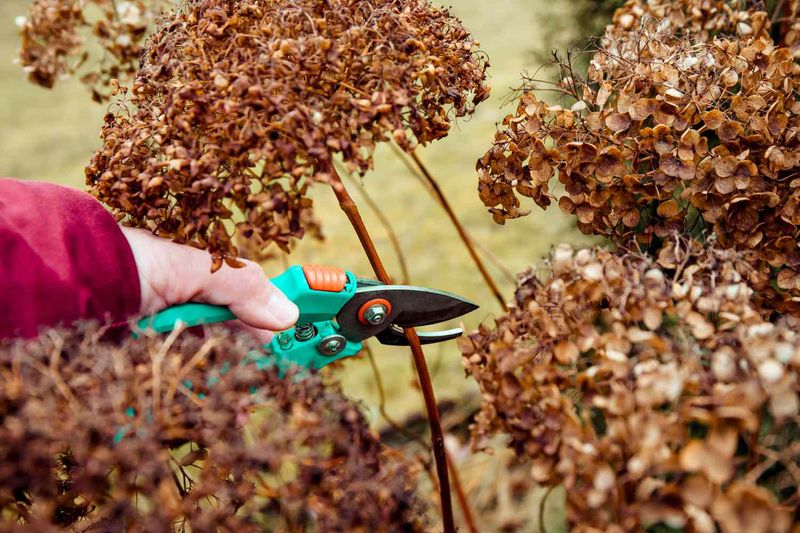
Gardeners who already cut back an old-wood hydrangea in fall are understandably worried, but the situation is not as catastrophic as it might feel. The plant will often survive and may continue producing vegetative growth, including new leaves and stems.
What the fall cut can remove are the buds that would have opened into flowers, which means the next bloom season may be sparse or nearly absent rather than nonexistent entirely.
UGA Cooperative Extension’s bigleaf hydrangea guide identifies mistimed pruning as one recognized cause of failure to flower, alongside winter or freeze injury, excessive shade, and excess nitrogen. That list matters because poor flowering after a fall cut is not proof that the plant is ruined.
Other factors can produce the same result, and recovery depends on conditions that vary by yard, cultivar, and season.
The wrong response to an untimely cut is to add extra fertilizer or perform another round of pruning to compensate. Excess nitrogen is actually listed as a contributor to poor flowering in bigleaf hydrangeas, so heavy feeding after a mistimed cut can make the following season worse rather than better.
University of Illinois Extension and the Illinois Extension gardener’s corner resource both support waiting for the next appropriate pruning window rather than forcing intervention. Give the plant a season, observe how it responds, and prune correctly the following year when the right window opens.
Protect next year’s flowers with a smaller fall checklist
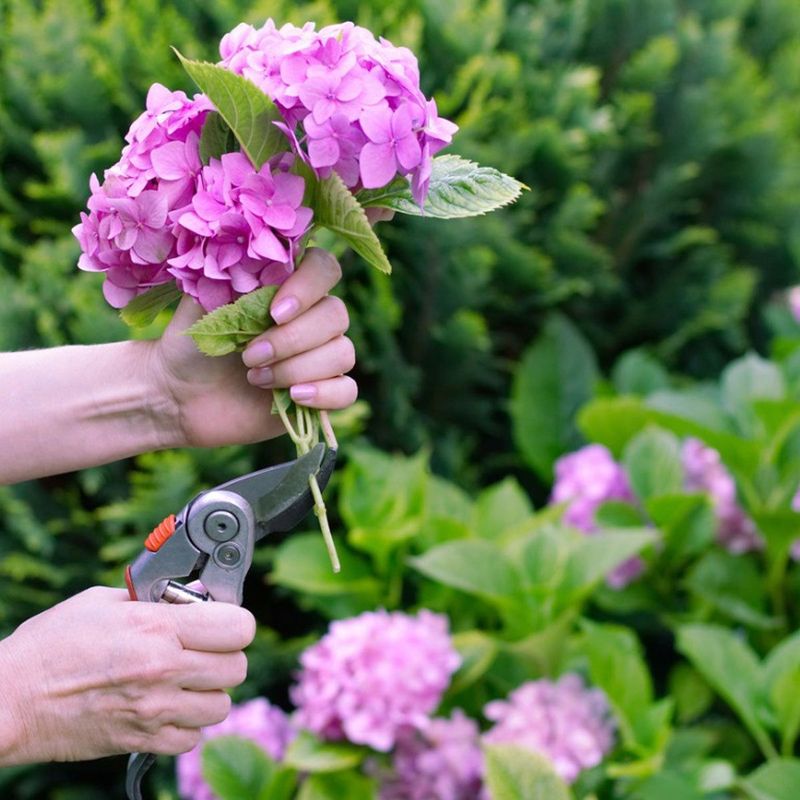
Fall hydrangea care does not require a long to-do list. A short decision sequence covers most situations: identify the plant, avoid hard pruning on old-wood or unknown types, remove only clearly dead or damaged material, and save planned pruning for the species-appropriate window.
Florida and Texas gardeners have additional variables to weigh. Local warmth, shade levels, moisture availability, cultivar selection, and bloom timing can all shift what the right window looks like in practice.
UF/IFAS guidance on hydrangeas in Florida notes that French hydrangeas perform best in North and Central Florida with shade and protection from intense heat, which affects both bloom timing and how post-bloom pruning fits into the local calendar. University of Minnesota Extension reinforces that spent flower heads can simply remain through winter and be removed in late winter or spring without any cost to the plant.
A dormant-looking hydrangea is not automatically ready for a severe cut. Bare stems and fallen leaves are normal seasonal changes, not an invitation to shear.
UGA Extension’s fall ornamental pruning guidance supports a selective, species-aware approach over a broad cutback. Preserving uncertain stems through fall is the lowest-risk choice available, and the blooms that follow in spring are the payoff for that patience.