
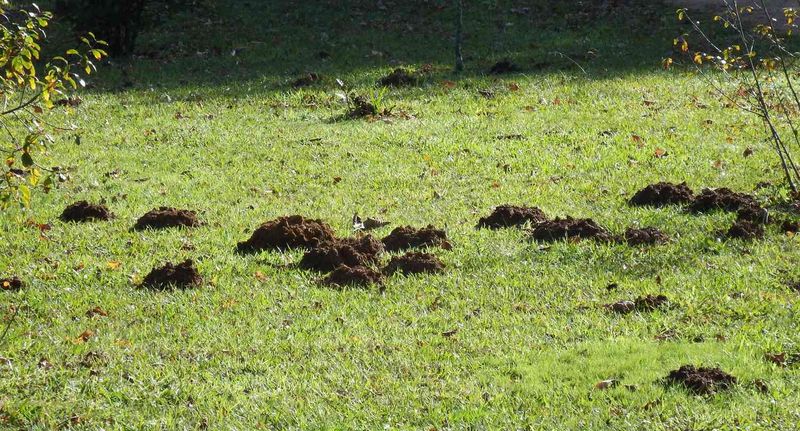
Waking up to a yard full of fresh holes is one of those gardening surprises that turns a quiet morning into a mystery. Something moved through your beds or lawn after dark, and now you have scattered pits, disturbed mulch, or peeled-back sod to show for it.
Figuring out which animal is responsible matters more than any quick fix, because the wrong response wastes time and can make the problem worse. Reading the signs carefully gives you a real shot at reducing the damage.
Shallow cone-shaped pits suggest a nocturnal forager, not a certain culprit
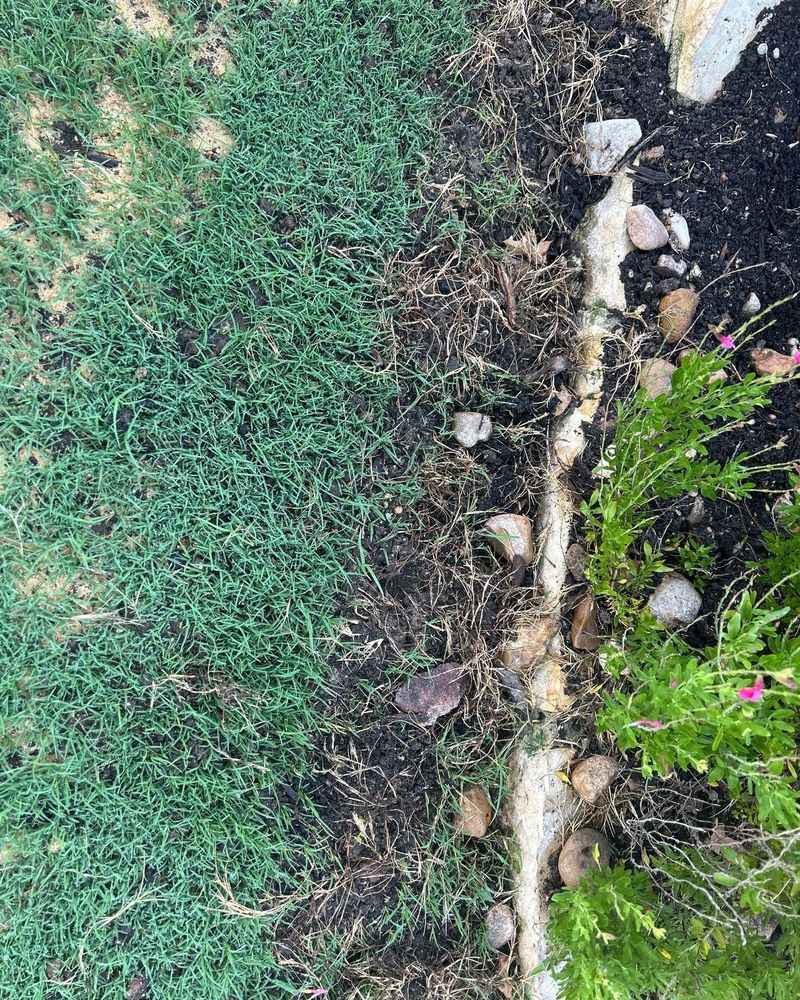
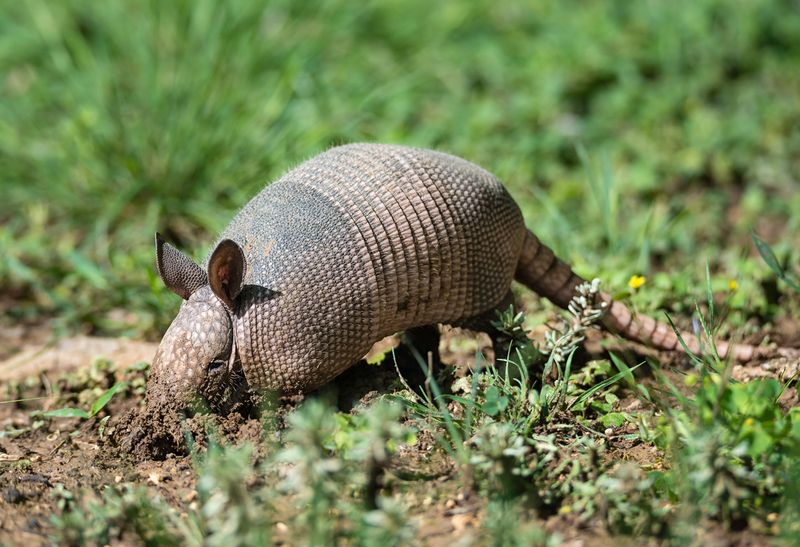
Scattered, shallow pits appearing overnight in a Florida or Texas yard point toward an animal that was searching for food just below the soil surface. The shape matters: a cone-shaped hole with loose, displaced dirt around the rim is consistent with a small-bodied animal probing or rooting for prey rather than digging a den.
That said, hole shape alone cannot tell you which species visited or whether the animal was feeding, caching food, or doing something else entirely.
Where armadillos are present, which covers most of Florida and a wide stretch of Texas, they are a plausible suspect when the pits match the pattern described in UF/IFAS guidance on nine-banded armadillos: roughly 1 to 3 inches deep and 3 to 5 inches wide, often appearing in clusters across a lawn or bed. Armadillos forage for insects, beetle larvae, earthworms, ants, termites, and other invertebrates living in the top few inches of soil.
The pits show up where the animal detected prey, not necessarily where prey is most concentrated.
Skunks and raccoons can produce similar shallow disturbances, so the same cone-shaped pattern does not automatically confirm an armadillo. Treat the hole shape as a useful first hypothesis, not a diagnosis.
The next step is to look at the full picture: how many holes appeared, how they are distributed, whether tracks or other signs are nearby, and what the surrounding yard offers as a food or water source.
Compare the whole pattern with skunks, raccoons, moles, and gophers
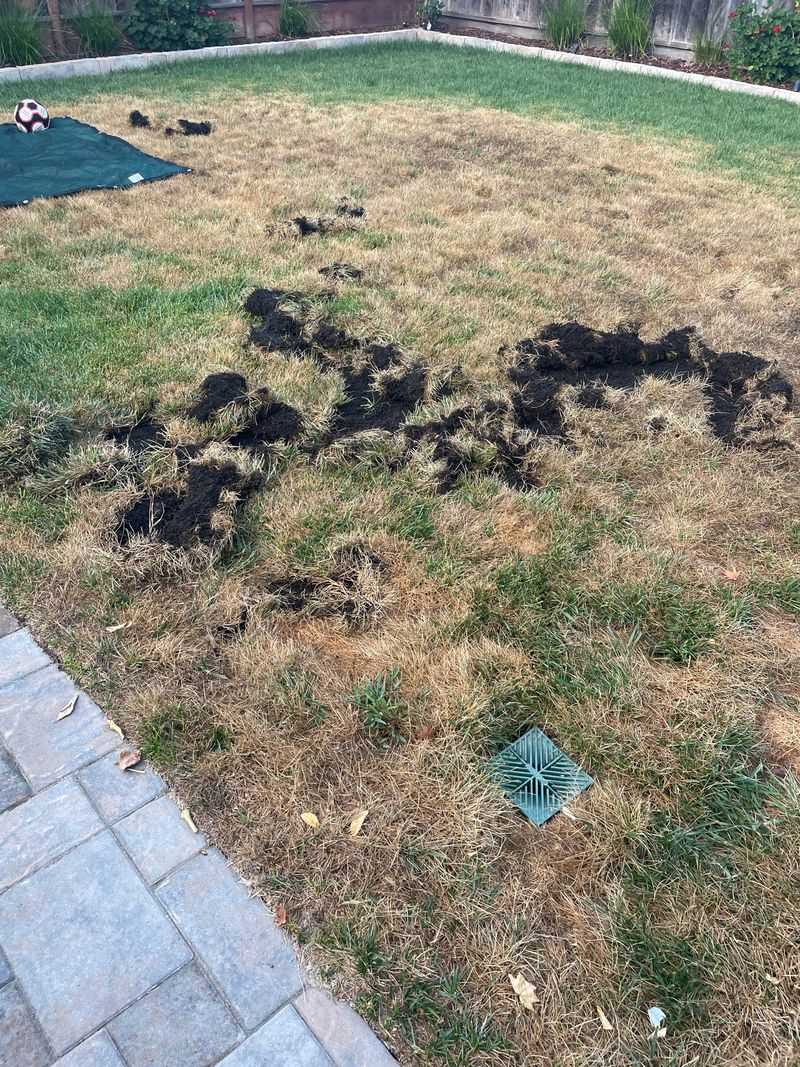
Once you have noted the hole shape, step back and take in the broader damage pattern. The surrounding signs often do more to identify the animal than the holes themselves.
University of Minnesota Extension’s turf diagnosis tool points out that tracks, distribution, and turf disturbance are key details that help separate one culprit from another.
Skunks tend to leave small, round divots or cone-shaped excavations that can make a lawn look as if someone punched it repeatedly with a golf club. According to Penn State Extension’s skunk guidance, they commonly search for white grubs, beetles, and earthworms, so the holes often cluster where grub populations are highest.
Raccoons work differently: they may scatter a few holes, but a more telling sign is sections of newly laid sod that have been rolled or peeled back. Raccoon tracks show five toes and a hand-like print, which is distinctive if you find them in soft soil or near a water source.
Moles and pocket gophers leave damage that looks nothing like scattered open pits. Moles push up raised surface tunnels and volcano-shaped mounds, and UF/IFAS wildlife guidance notes that moles primarily eat earthworms and soil insects, not plants.
UGA Extension’s pocket gopher profile describes their mounds as asymmetrical or horseshoe-shaped with the entrance plugged or offset, a mound-and-tunnel system rather than scattered open divots. Wild pigs leave a different scene altogether: deeper, broader rooting across a wide area, sometimes with wallows in wet ground nearby.
If the damage covers a large patch and the soil looks churned rather than neatly pitted, wild pigs deserve serious consideration. Use tracks, scat, and the full distribution of damage together before settling on a suspect.
Penn State Extension’s mole resource reinforces that a mole problem and an armadillo problem require different strategies, so misidentifying the animal early leads to wasted effort and ongoing damage.
Gather several clues before you treat the yard
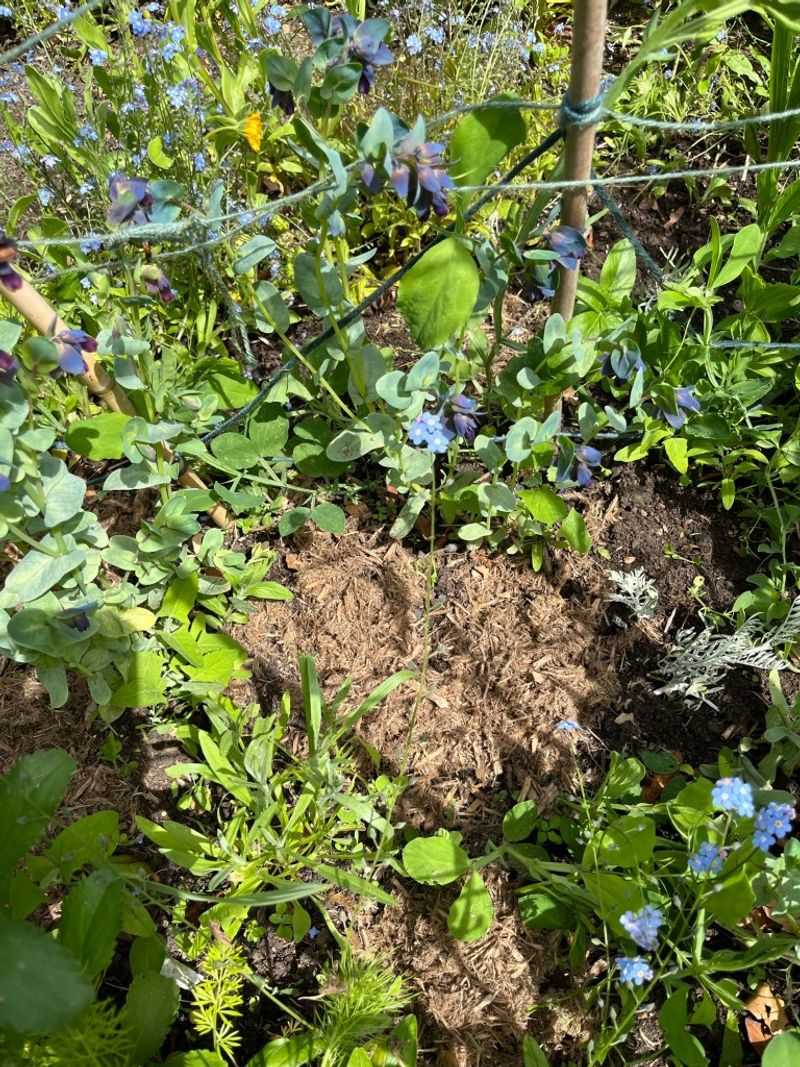
Before reaching for any product or calling a pest company, spend a few minutes gathering evidence. Photograph each hole next to a ruler or common coin so you have a record of its approximate width, depth, and shape.
Note whether the holes are clustered in one spot, scattered randomly, or lined up in a trail across the yard. That distribution pattern is often as informative as the hole shape itself.
Walk the surrounding area and look for raised tunnels, soil mounds, scat, disturbed mulch, rolled turf, or burrow openings near fences, flowerbeds, or the base of structures. A nighttime wildlife camera can help identify a visitor without requiring you to be outside in the dark, but keep realistic expectations: Utah State Extension’s wildlife damage guide notes that an intermittent animal can easily pass through on a night the camera misses, and a recorded image does not by itself prove that the same animal caused every hole you found.
Treat camera footage as one useful piece of evidence rather than a definitive answer.
A light dusting of flour near the damaged area before dark can reveal tracks by morning. Keep the flour away from pets and children, and check it early before foot traffic disturbs the prints.
If you find tracks, compare them to reference images for five-toed raccoon prints, the distinctive armadillo claw pattern, or the paired skunk print before drawing conclusions.
Pull back a small section of damaged turf and look for insects or larvae in the top two inches of soil. Ask Extension’s soil-pest FAQ and University of Minnesota Extension’s yard-digging explainer both caution that wildlife may be responding to earthworms or other prey rather than white grubs alone.
Finding a few grubs does not automatically make insecticide the right next step.
Remove only the attractants that fit the suspected animal
Cutting off a food or water source can reduce repeat visits, but only when the property is actually supplying what the animal wants. UGA Cooperative Extension’s nuisance wildlife guide and the Texas Parks and Wildlife Department’s wildlife management handbook both recommend removing predictable food sources as a first practical step.
Bring pet food and water dishes inside before dark, secure garbage can lids with bungee cords or locking hardware, and pick up fallen fruit from citrus, pecan, or fig trees before evening.
Raccoons are particularly drawn to bird feeders, decorative fish ponds, and open garbage, so those adjustments matter most when raccoon signs are present. For skunks, the grub and earthworm population in the soil is usually the real draw, so removing outdoor food sources may help at the margins without fully solving the problem.
For suspected armadillo activity, some extension sources suggest avoiding unnecessary overwatering or overfertilizing. Moist, heavily fertilized soil can support more earthworms and insect larvae near the surface, which may make a yard more attractive to foraging armadillos.
UF/IFAS armadillo guidance and UGA Extension’s nuisance wildlife post present this as a possible site-management option, not a reliable cure. Adjusting irrigation and fertilizer may shift conditions slightly, but it will not eliminate soil prey from the yard.
Grub-targeted insecticide is sometimes suggested as a fix, but Ask Extension’s pest-investigation resource recommends confirming a damaging insect population first and noting that armadillos, skunks, and raccoons all forage for earthworms alongside beetle larvae. Killing grubs may not remove enough food to change the animal’s behavior, and broad pesticide use can harm beneficial insects and other organisms in the process.
Use species-appropriate exclusion around valuable beds
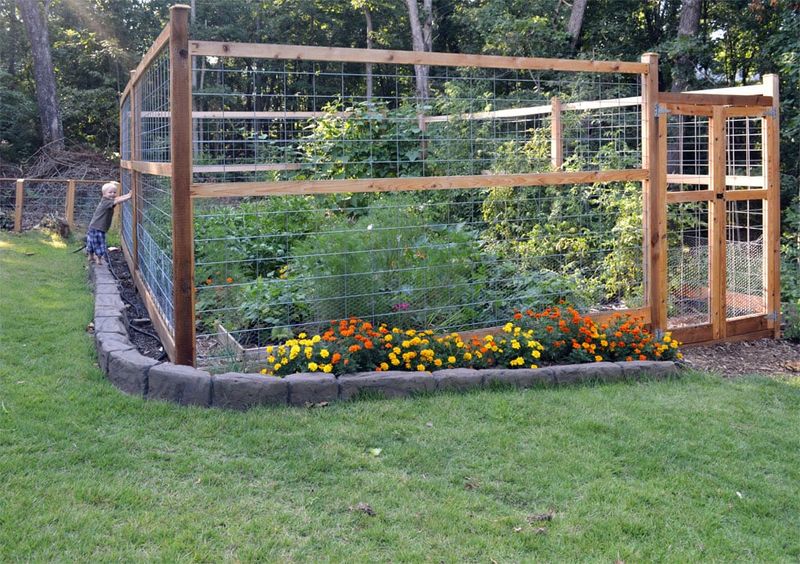
Physical barriers are the most reliable targeted protection available for individual beds or high-value plantings, but the design has to match the animal you are trying to exclude. A fence that keeps armadillos out of a vegetable bed may do nothing to stop a raccoon, and a barrier sized for skunks may not be buried deep enough to deter a pocket gopher.
Identify the most likely suspect before selecting mesh size, fence height, burial depth, or apron configuration.
UGA Extension’s wildlife exclusion guidance recommends fencing with an outward-bent buried apron to discourage animals that try to dig under the barrier. The apron extends horizontally away from the bed at the base of the fence, so an animal that reaches the fence and begins digging hits the buried wire and turns away.
UF/IFAS exclusion guidance for armadillos specifies a fence at least 2 feet high with the bottom 18 inches buried or bent outward at a 90-degree angle for areas where armadillo activity is confirmed.
Hardware cloth with a half-inch mesh works well for smaller animals. Chicken wire is less durable and offers wider openings that some animals can push through.
For raccoons, additional height and a floppy or electric top wire may be needed, since raccoons climb readily. No single fence design covers every scenario, so treat exclusion as a targeted investment for your most valuable beds rather than a property-wide solution.
A well-designed barrier around a raised vegetable bed can provide meaningful protection when it is matched to the right animal and installed correctly.
Treat scare devices as temporary experiments, not a cure
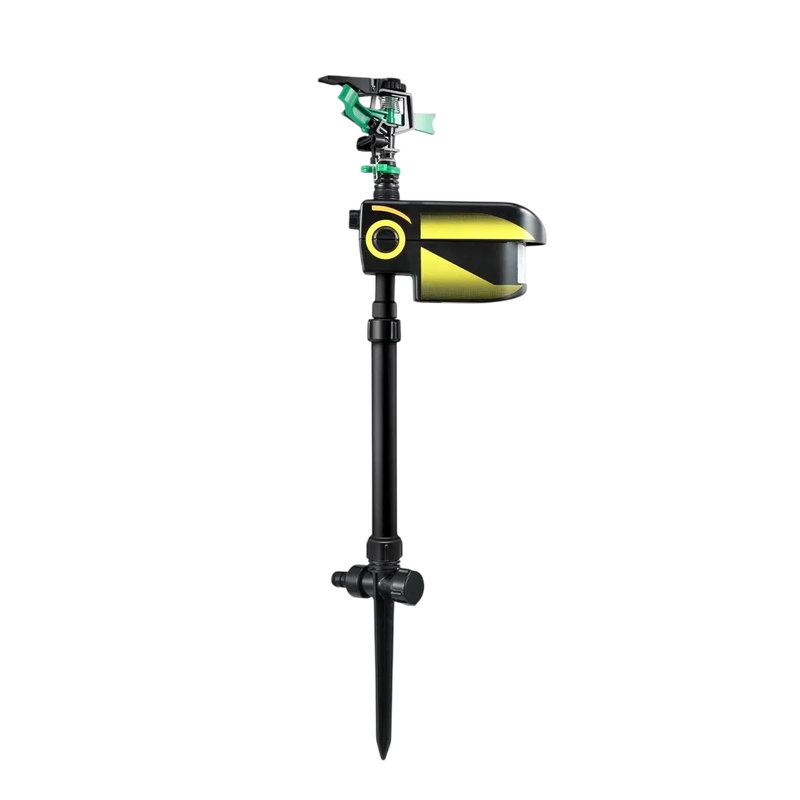
Motion-activated sprinklers, floodlights, ultrasonic emitters, and similar devices sometimes reduce wildlife activity around a yard, at least for a while. UGA Cooperative Extension’s nuisance wildlife publication describes frightening devices as incompletely tested and notes that many animals habituate to repeated stimuli over time.
A sprinkler that startles an armadillo on the first night may be ignored by the third or fourth visit.
UGA Extension’s wildlife damage management circular reinforces that scare tactics work best as one part of a broader management plan rather than a standalone fix. If you try a motion sprinkler or a light, combine it with the attractant reduction and exclusion steps that fit the suspected animal.
Moving the device periodically may slow habituation, but it is not a guarantee.
Homemade chemical deterrents, including mothballs, ammonia, bleach, cayenne, and similar household substances, are not supported by authoritative extension sources and may be hazardous to people, pets, plants, or groundwater. Skip them entirely.
Broad pesticide applications aimed at soil insects are also not a reliable first response: confirm a damaging insect population and confirm that treatment is warranted before using any pesticide, and recognize that the animal may return even after grub populations drop if earthworms and other prey remain available. Ask Extension’s pest-investigation FAQ makes clear that soil prey diversity means one targeted treatment rarely removes the full food supply.
Wildlife control can create legal and health risks before anyone touches an animal
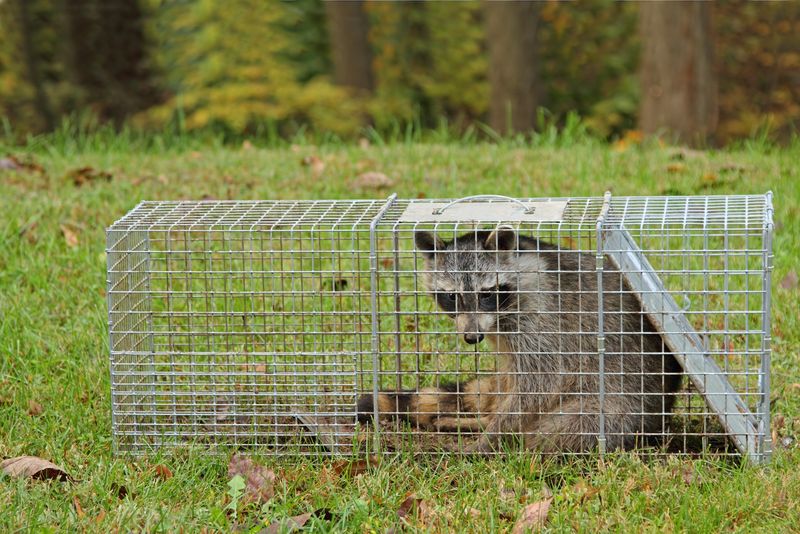
Trapping, transporting, and releasing wildlife sounds straightforward, but it carries legal and safety complications that apply even before any direct contact with an animal. Florida residents should check with the Florida Fish and Wildlife Conservation Commission before taking any action, since rules on trapping, transport, release locations, and protected species vary and change.
FWC’s relocation guidance describes moving wildlife as stressful, potentially fatal for the relocated animal, and capable of spreading disease or displacing existing wildlife at the release site. Texas residents should consult Texas Parks and Wildlife Department’s protected species and rehab resources for local rules before trapping or relocating any animal.
Do not release a trapped animal at a park or natural area without confirming that it is legal in your state and locality. Do not attempt to seal a burrow or den opening until you have confirmed that no animal or young are inside.
A qualified wildlife control professional or your state wildlife agency is the right resource when an animal may be using a burrow, when young are involved, or when damage is ongoing and severe.
Health concerns are real even without direct contact. CDC information on Hansen disease notes that some armadillos in the southern United States carry the associated bacteria, though the risk of transmission to most people is very low.
Raccoons and skunks are significant rabies-risk animals in the United States, as described in CDC rabies prevention guidance. Raccoon feces can contain Baylisascaris roundworm eggs; CDC Baylisascaris prevention guidance recommends avoiding contact, keeping children and pets away from raccoon latrines, and following specific cleanup precautions.
Anyone who experiences a bite, scratch, or other direct exposure to wildlife should contact a medical provider or local public health authority promptly.
Repair shallow damage and monitor what returns
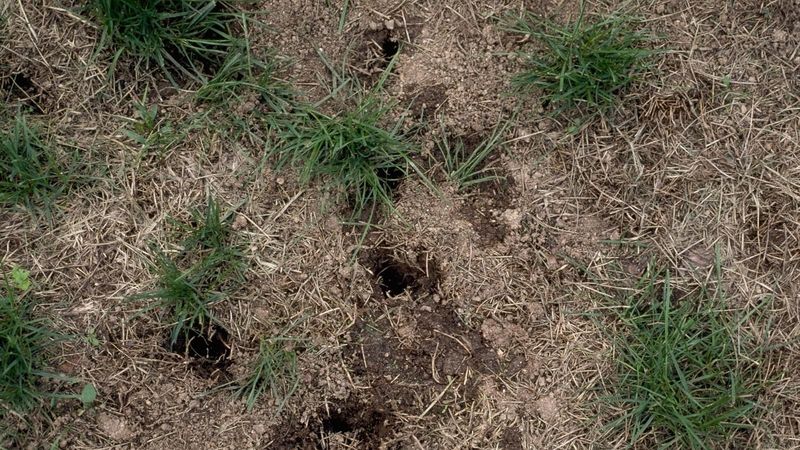
Repairing the physical damage is straightforward when the holes are shallow. Rake or scratch the loose displaced soil back into each pit, tamp it lightly with your foot or the back of the rake, and check whether the area needs reseeding.
Ask Extension’s turf repair guidance notes that superficial divot damage of this type can often be corrected without major lawn renovation. Water the reseeded spots gently and keep foot traffic off them for a week or two.
Repair does not remove whatever attracted the animal, so monitor the yard over the following week or two after making any changes. If new holes appear in the same area, note whether the shape, depth, and distribution match what you saw before or whether the pattern has shifted.
A change in pattern can mean a different animal visited, or that the first animal has moved to a new foraging spot. If cone-shaped pits continue, revisit the attractant and exclusion steps for the suspected species.
If tunnels, mounds, or deeper rooting appear instead, restart the identification process from the beginning.
UGA Cooperative Extension’s nuisance wildlife publication frames the overall approach honestly: careful diagnosis supports safer, more targeted damage reduction than any unverified repellent or pesticide. No method guarantees that a wild animal will stop visiting a yard, but a gardener who reads the signs accurately is far better positioned to protect the beds that matter most.