
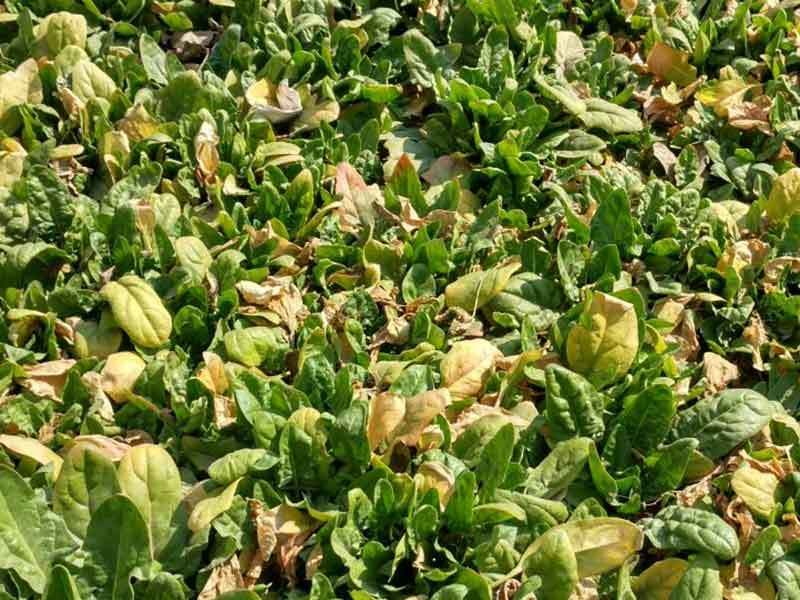
You sow spinach in the fall bed, watch it push up those first true leaves, and then something goes wrong fast. The seedlings turn yellow, sag, and tip over at the soil line before you have a chance to figure out what happened.
That collapse is telling you something specific, and the fix is not as simple as watering more or cutting back completely. Understanding what you are actually looking at can save the rest of your stand and help your next sowing come up strong.
The soil-line collapse points to more than ordinary thirst
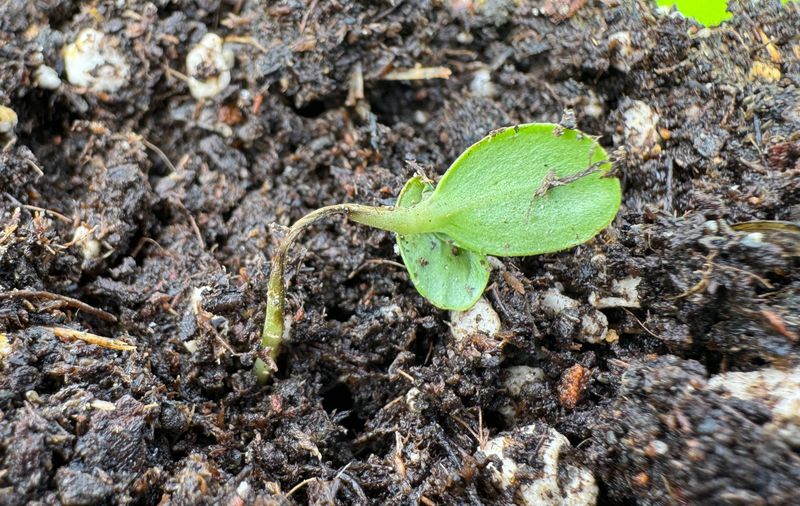
When spinach seedlings tip over suddenly, most gardeners assume the plants ran out of water. Seeing the leaves yellow and the stem go limp feels like a drought signal, but the location of the failure matters more than the color of the leaf.
A seedling that collapses at the soil line, especially when the stem at that point feels soft, looks water-soaked, appears narrowed or constricted, or shows dark discoloration, fits a pattern that points toward post-emergence damping-off or early root and crown rot rather than simple thirst.
UC IPM’s spinach damping-off and root rot guide describes this collapse as often accompanied by roots that are brown, black, water-soaked, girdled, or stripped of fine root hairs. A plant that wilts from underwatering tends to recover when water arrives; a plant felled by damping-off stays down and usually rots where it fell.
Yellowing alone, without that stem or root evidence, cannot tell you the cause. University of Minnesota’s spinach leaf discoloration diagnostic lists downy mildew, leafminer injury, viruses, nutrient deficiency, heat stress, and water stress as documented causes of yellowing.
Before you change your watering routine, crouch down and look at where and how the plant failed. The stem and the roots give you far more useful information than the leaf color alone.
Why a constantly wet seedbed makes young spinach fail
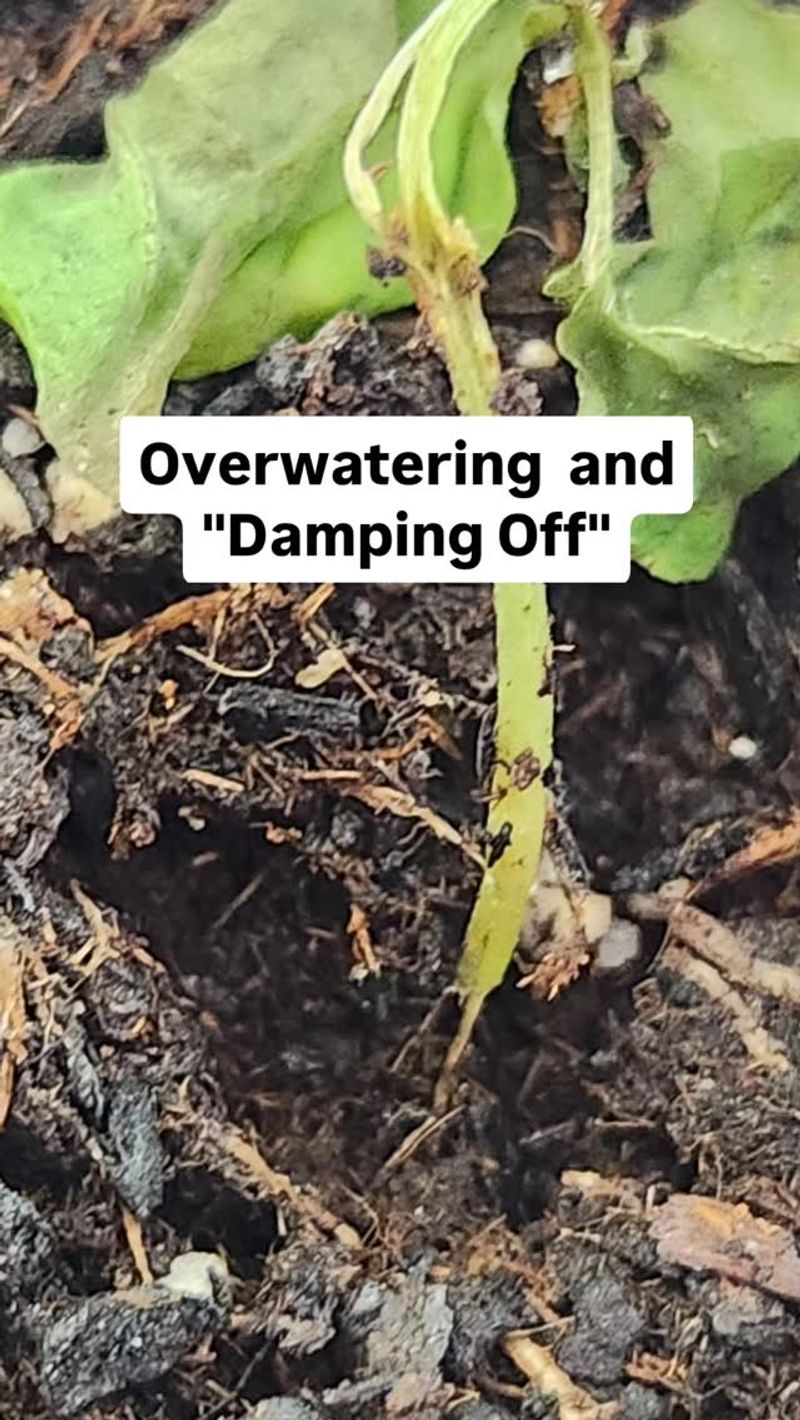
Saturated soil does not just drown plant roots by cutting off oxygen. When the seedbed stays wet for extended periods, it creates exactly the environment where damping-off organisms thrive.
UC IPM identifies the main organisms in this disease complex as Pythium, Fusarium, and Rhizoctonia, each capable of attacking seedling stems and roots when conditions favor their spread. Wet soil, poor drainage, overcrowding, and slow plant growth all increase that risk.
Waterlogged soil can also damage young roots even when no pathogen is involved at all. Spinach roots sitting in standing water lose access to the oxygen they need to function, which disrupts the plant’s ability to take up water and nutrients.
The result can look nearly identical to disease: yellowing leaves, wilting, stunting, and then sudden collapse. Utah State Extension’s damping-off guide for leafy greens notes that poor drainage and overcrowded seedlings compound the problem by slowing air movement around the stems and keeping moisture levels high near the soil surface.
Crowding makes things worse in a second way. Seedlings packed too close together shade the soil surface, slow evaporation, and limit airflow, which means the seedbed takes longer to dry between waterings.
The combination of wet soil and crowded stems creates a much harder environment for young spinach to survive than either problem would produce on its own.
Spinach needs steady moisture, not a saturated root zone
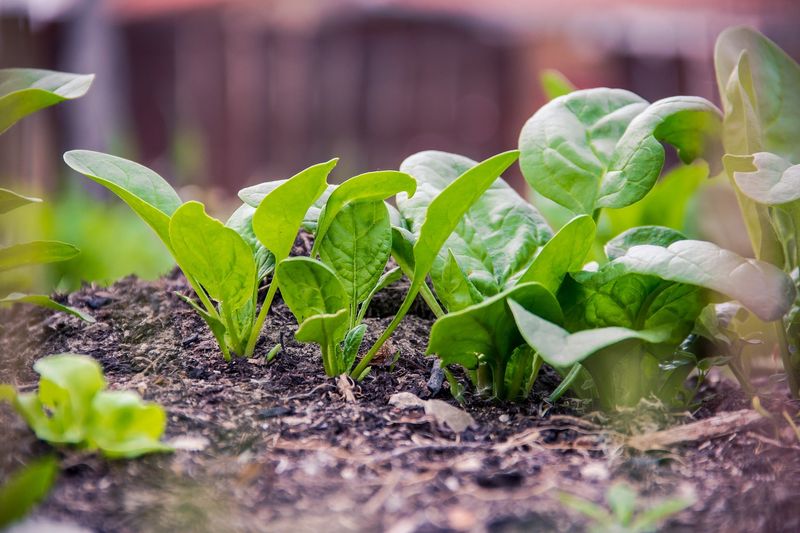
Pulling back on water entirely is not the answer when you suspect wet soil is causing trouble. Spinach is shallow-rooted, and its roots cannot reach deep into the soil to find moisture during a dry spell.
Georgia Extension’s Southeast Vegetable Guide describes spinach as vulnerable to water stress between rains while also sensitive to overwatering and waterlogging. The target is even moisture, not wet and not dry.
During germination, the seedbed needs to stay consistently moist so seeds can absorb water and push through the soil surface. Once seedlings have emerged, the goal shifts.
Stop repeating irrigation whenever you check and find the soil is still wet from the last watering or from recent rain. Never allow water to stand around seedlings.
Letting puddles sit at the base of young plants, even briefly, raises the risk of the stem and crown problems described in the first two sections.
UC IPM’s spinach watering guidance recommends irrigation that suits spinach’s shallow root system while avoiding saturated conditions that encourage crown and lower-leaf rot. A general benchmark of about 1 to 2 inches of water per week applies to established crops under average conditions, but Texas A&M AgriLife Extension advises checking soil moisture and adjusting for sandy versus heavy soil, hot weather, and recent rainfall rather than following a fixed calendar schedule.
After seedlings emerge, direct water toward the soil at the base of plants rather than overhead, which keeps leaves and crowns drier and reduces persistent surface wetness.
Remove the failures before you try to save the stand
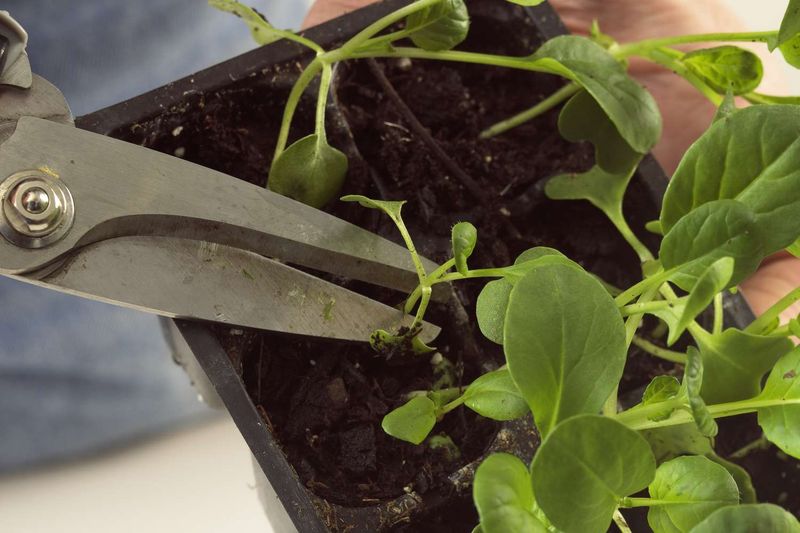
Once you spot a seedling that has tipped over with a soft or darkened stem at the soil line, remove it right away. Leaving collapsed plants in the bed gives damping-off organisms more material to work with and keeps the source of infection close to the seedlings that are still standing.
Pull the affected plants and discard them in the trash, not the compost pile. Do not reuse soil or plant debris from a bed where damping-off is suspected.
Penn State Extension’s damping-off prevention guide and University of Minnesota Extension’s seedling damping-off resource both recommend cleaning tools and containers after working in an affected bed to avoid spreading pathogens to healthy areas. After removing the failed plants, thin the remaining seedlings so survivors are not crowded together.
Thinning improves airflow, helps the soil surface dry faster between waterings, and reduces the chance that the problem spreads through the stand.
Fertilizer is not the right first response to unexplained yellowing or suspected damping-off. NC State Extension’s guide to damping-off in vegetable seedlings notes that fertilizing stressed or diseased seedlings can worsen salt stress and further damage already weakened roots.
Fungicide is also not a reliable rescue for seedlings that have already collapsed; badly affected plants rarely recover.
Any pesticide you consider must carry a label that specifically lists the crop and the pathogen you are targeting, and sanitation and drainage improvements should come first.
Reset the bed or container for the next sowing
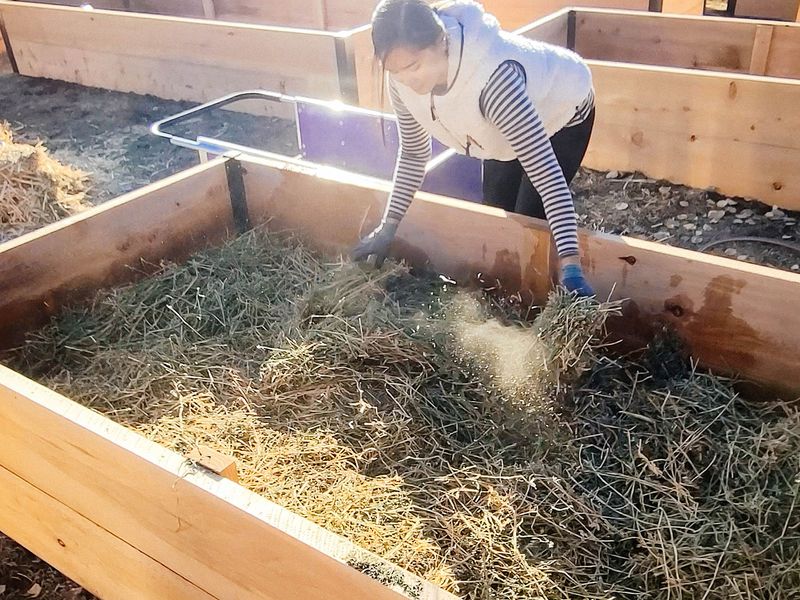
A bed that collected standing water during the failed sowing will do the same thing to the next one unless something changes. For in-ground or raised beds, the first step is to identify where water pools after a rain or irrigation.
Low spots in the bed or the surrounding area funnel water toward seedlings and keep the root zone saturated longer than higher ground. Relocating the spinach planting to a naturally better-drained spot is often the most effective fix.
Where that is not practical, regrading the bed to encourage runoff, building a slightly raised row or mound, or improving subsurface drainage can all reduce the problem. Do not simply add more soil on top of a low spot without addressing why water collects there.
UC IPM’s damping-off resource and University of Minnesota Extension both recommend using clean, well-draining growing media for containers and seed-starting trays. Containers must have functional drainage holes.
Preferably use new soilless mix rather than reusing mix from a previous sowing where damping-off occurred.
Timing also matters in the South, and lingering heat can be just as damaging as poor drainage. Alabama Extension warns that spinach will not germinate when soil temperatures exceed 85 degrees F, which is a real concern in the early fall across much of the region.
Planting windows vary by state: UF/IFAS lists September through March for north and central Florida and October through February for south Florida, while UGA’s home garden planting chart places middle Georgia’s window around September 1 through October 15. Texas A&M AgriLife and LSU AgCenter also identify fall as the correct season for spinach but use different date ranges.
Check your local Extension office for the window that fits your county and watch soil temperature, not just the calendar date.
Use the stem and soil to guide the next watering decision
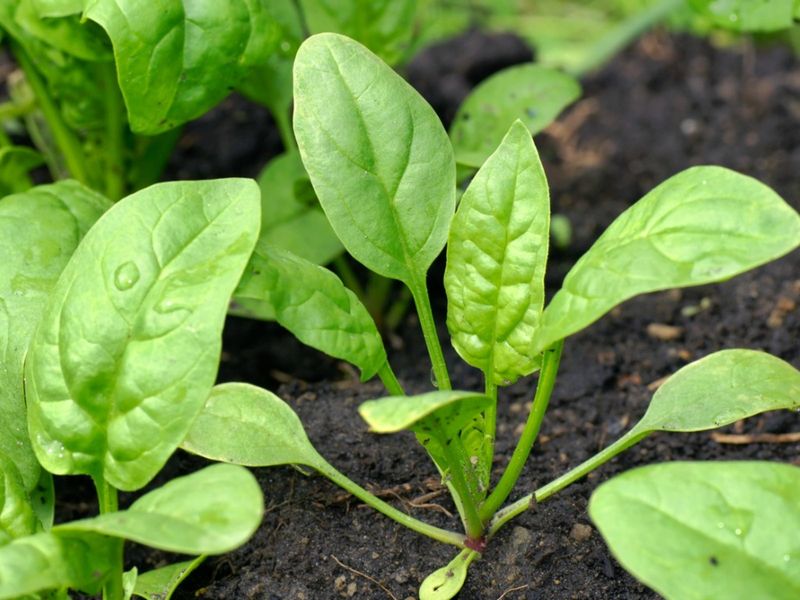
A simple routine can prevent the next stand from running into the same problem. Keep the seedbed consistently moist from sowing through emergence, then check the soil with a finger before watering again.
If the top inch still feels damp, skip that irrigation cycle. UC IPM’s spinach watering guidance supports soil-directed irrigation after emergence to limit persistent wetness around leaves and crowns.
Prevent standing water from forming, thin seedlings early, and point the hose or drip line at the soil rather than the foliage.
When yellowing appears without any soft or constricted stem at the soil line and without rotten or missing roots, a broader diagnosis is warranted before you reduce watering. Cutting back moisture on a plant that is actually stressed by heat, nutrient deficiency, or disease can make things worse.
The stem and the roots are the most reliable evidence you have. Healthy spinach grown in evenly moist, well-drained soil with good spacing is far more likely to reach harvest than any seedling pushed through soggy ground on a fixed watering schedule.