
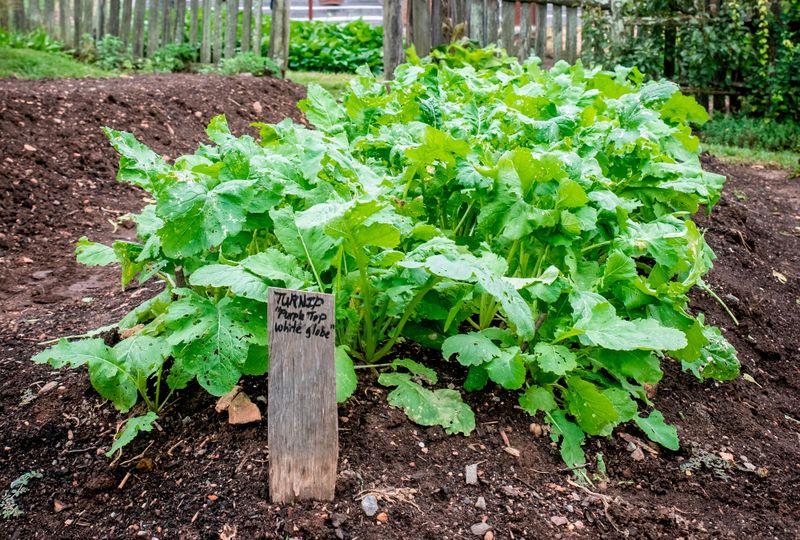
Growing turnips in the South can feel like a guessing game when the plants look beautiful above ground but disappoint at harvest. Big, dark-green leaves often give gardeners the false impression that everything is on track, yet the roots underground stay small, tough, or sharply flavored.
That frustrating gap between lush foliage and a poor root harvest usually has more than one cause, and nitrogen timing is just one piece of the puzzle worth checking.
Lush tops and small roots point to several possible imbalances
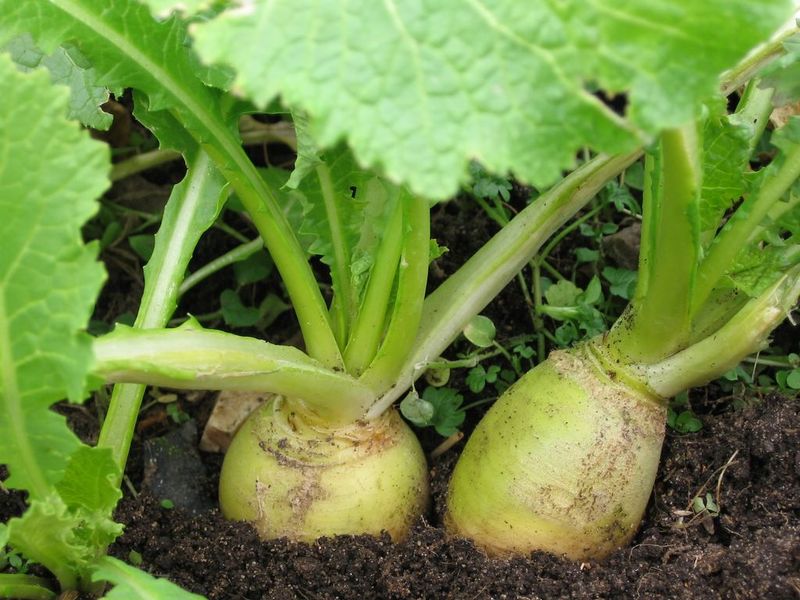
Vigorous, dark-green turnip foliage paired with undersized roots is a symptom pattern, not a finished diagnosis. When top growth outpaces root development, excessive or poorly timed nitrogen is one fertilizer possibility worth investigating, but it is far from the only explanation.
Utah State University Extension guidance on root-crop fertility notes that over-applying nitrogen can produce excessive leaf growth and reduce root development, making it a plausible first suspect when foliage is unusually lush.
However, several other factors can produce the exact same picture. A tops-oriented variety bred for abundant greens rather than large roots, crowded spacing that forces plants to compete for light and space, heat, inconsistent moisture, poor soil structure, root damage from cultivation, soil pests, or disease can all result in small roots beneath a healthy-looking canopy.
UC IPM’s cultural tips for turnips point out that dry soil or soil crusting can impair root growth even when leaves appear fine.
Leaf color alone cannot confirm excess nitrogen. A soil test is the only reliable way to know whether nitrogen levels are actually elevated.
Equally important, bitterness should not be lumped together with small root size as proof of a single feeding mistake. Strong or sharp flavor in turnip roots has its own set of possible causes, including heat, drought, stress, and overmaturity, and those require a separate look.
Excess nitrogen can favor leaves without making nitrogen the enemy
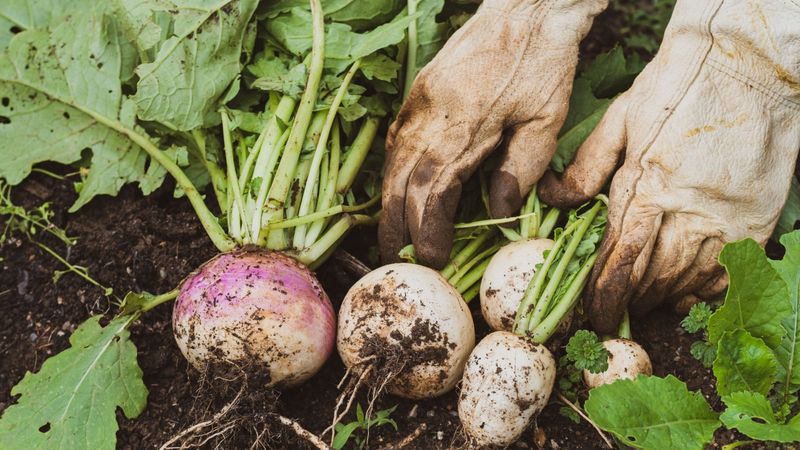
Nitrogen is a nutrient that plants use primarily to build leaves, stems, and other green tissue. When turnips receive more nitrogen than they can redirect into balanced growth, the plant often channels that energy into producing more foliage rather than enlarging the storage root.
This is the mechanism behind the lush-tops-and-small-roots pattern that gardeners growing turnips for the table find so discouraging.
The critical distinction is between appropriate nitrogen and excessive or poorly matched nitrogen. A field study published through Sindh Agriculture University found that root and leaf measurements improved as nitrogen rates increased up to a point, with no meaningful advantage beyond a certain upper range.
Nitrogen at a suitable rate can actually improve root yield. The concern is not nitrogen itself but an oversupply relative to what the crop needs at its current growth stage.
Gardeners who want large, flavorful roots should also avoid copying a fertilizer schedule designed for heavy greens production. Oklahoma State University Extension’s soil test interpretation table for vegetables lists a lower total nitrogen recommendation for turnips grown for roots than for turnips grown primarily for tops, with nitrogen divided between a preplant application and a single sidedress.
Applying repeated or heavy nitrogen doses because the leaves still look green is the pattern most likely to push growth in the wrong direction. The fix is not to abandon nitrogen entirely but to apply it at the right rate, at the right time, and only when the soil and crop actually call for it.
Feed turnips by soil results and growth stage
Before applying any fertilizer to turnips, get a soil test. Most Southern land-grant universities and county extension offices offer affordable testing, and the results tell you what is already in your soil rather than leaving you to guess.
Applying nutrients on top of an already adequate or elevated soil level is wasteful at best and counterproductive at worst.
A practical, extension-supported feeding framework for root turnips starts with preplant fertility based on test results, followed by one modest nitrogen sidedress during early active growth. Mississippi State University Extension guidance on vegetable fertilizing places this sidedress for root turnips at roughly four weeks after sowing.
Texas A&M AgriLife Extension’s turnip and mustard greens guide recommends sidedressing when plants reach about 4 to 5 inches tall, while UC IPM’s turnip cultural tips suggest waiting until plants are 3 to 4 inches. These windows are general frameworks, not fixed rules.
Rates vary with your soil type, its baseline fertility, whether you are growing primarily for roots or greens, and your local growing conditions.
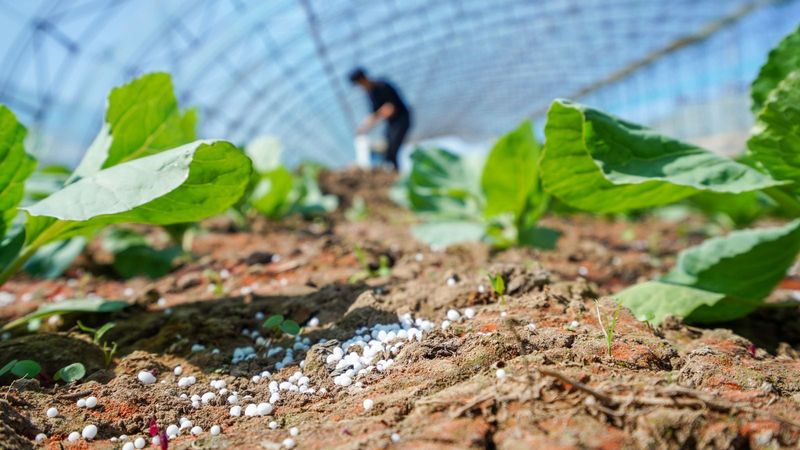
When applying granular fertilizer, place it beside the row rather than directly against stems or developing roots, then water it in thoroughly so nutrients move into the root zone without burning plant tissue. If your turnips are already dark green and pushing vigorous foliage, resist the urge to sidedress again.
Another blanket nitrogen application on an already lush crop is unlikely to improve root size and may make the imbalance worse. The planned sidedress is a scheduled tool, not a reflexive response to green leaves.
When the tops are already oversized, pause and diagnose
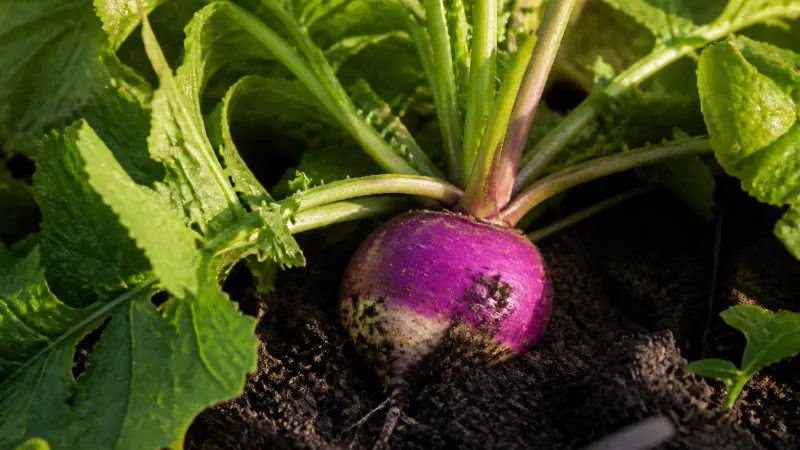
Finding a crop of towering turnip greens with almost no root to show for it is frustrating, but the worst response is reaching for another bag of fertilizer. When foliage is already very large and dark green, the most useful immediate step is to stop any additional nitrogen application and begin a systematic check of everything else that could be holding the roots back.
Start by looking at spacing. Are the plants crowded?
Check whether the soil has stayed consistently moist or has swung between wet and dry. Think about the variety – was it selected for abundant greens rather than large roots?
Consider the timing: did the crop go in during a warm stretch that kept temperatures above what turnips prefer? Utah State’s root-crop fertility guidance emphasizes that lush tops do not by themselves prove the soil contains excess nitrogen, and a soil test is needed before drawing that conclusion.
Resist the impulse to respond with a large dose of phosphorus or potassium in hopes of forcing root development. University of Georgia Extension’s home gardening bulletin and Oregon State Extension’s guide to NPK fertilizers both support applying these nutrients only when testing and local recommendations show a genuine need.
Adding phosphorus or potassium to already sufficient soil is unnecessary and can create environmental runoff problems. Arrange a soil test, hold off on further feeding, and use the time to inspect the crop for crowding, root damage, pests, or disease before deciding on any corrective action.
Check spacing, moisture, and heat before blaming fertilizer
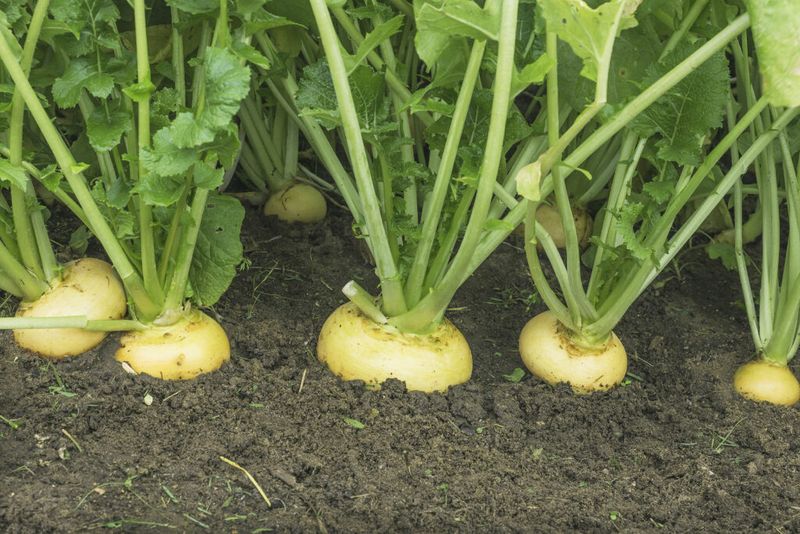
Crowding is one of the most common and overlooked reasons turnip roots stay small. When plants grow too close together, they compete for light, water, and nutrients, and the roots have nowhere to expand.
For turnips grown primarily for roots, thinning to approximately 2 to 4 inches between plants is a standard recommendation, though the right spacing depends on the cultivar and your production goal. UC IPM’s turnip growing tips and Texas A&M’s greens guide both include spacing guidance as a basic requirement for adequate root development.
If you have not thinned your planting, that single correction may matter more than any fertilizer adjustment.
Moisture consistency matters almost as much as spacing. Utah State University Extension’s turnip and rutabaga guide notes that moisture fluctuations can contribute to cracking, woody or pithy roots, and off flavors.
The goal is steady, even moisture in the root zone, not daily heavy watering or permanently saturated soil. Overwatering reduces soil aeration, can promote root diseases, and leaches nutrients away from where they are needed.
Heat and stress deserve their own honest accounting when roots are small or taste sharp. Texas A&M AgriLife’s turnip FAQ connects bitter or pungent flavor in turnip greens with stress, slow growth, and hot growing conditions.
Utah State similarly points to heat and moisture swings as contributors to bitter or off flavors in roots. Bitterness is a quality issue with multiple possible causes, and it does not prove nitrogen overfertilization.
Before adjusting your feeding plan, rule out whether the crop simply grew during the wrong part of the season or experienced drought stress between waterings.
Match the planting window and cultivar to root production
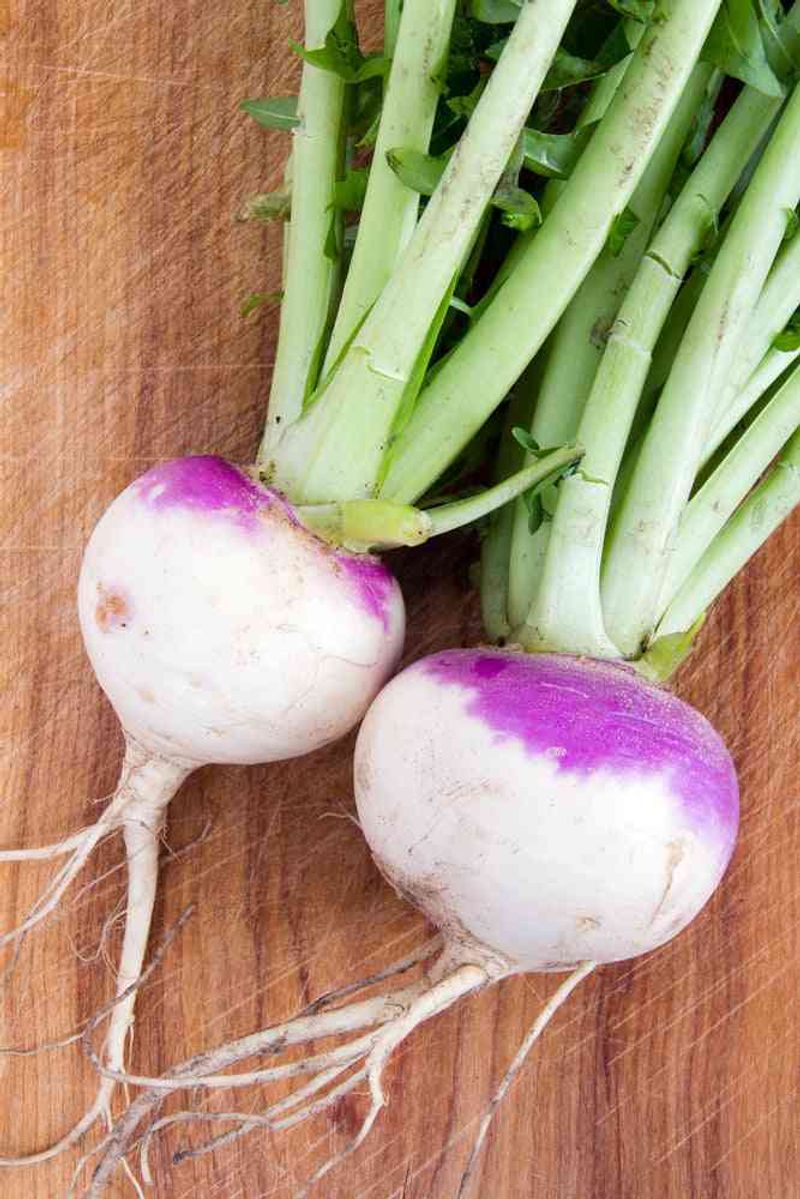
Turnips are cool-season crops, and their flavor, texture, and root size all benefit from growing during the cooler part of your local Southern season. The challenge is that cool in Texas is not the same as cool in North Florida or coastal Georgia, and planting windows differ meaningfully across the region.
Texas A&M AgriLife Extension advises fall planting when daytime temperatures average below about 80 degrees F, using local temperature patterns rather than a fixed calendar date as the trigger.
Florida gardeners have a longer fall-to-winter planting window but still need to match timing to their specific region. UF/IFAS planting date guidance places turnip sowing approximately in September through October for North Florida, September through February for Central Florida, and September through January in South Florida.
These are broad regional frameworks, not a substitute for watching your local forecast and understanding your cultivar’s days-to-maturity. University of Georgia Extension’s fall vegetable gardening guide provides similar regional context for Georgia gardeners.
Cultivar choice is just as important as timing. Texas A&M identifies varieties like Crawford and Shogoin as types grown primarily for tops that may not produce large, high-quality roots.
Utah State Extension lists Purple Top, White Globe, Just Right, and Tokyo as varieties suited for both greens and roots. If your goal is a good root harvest, starting with a variety selected for that purpose removes one avoidable obstacle before the season even begins.
Harvest young roots and use the full diagnosis next time
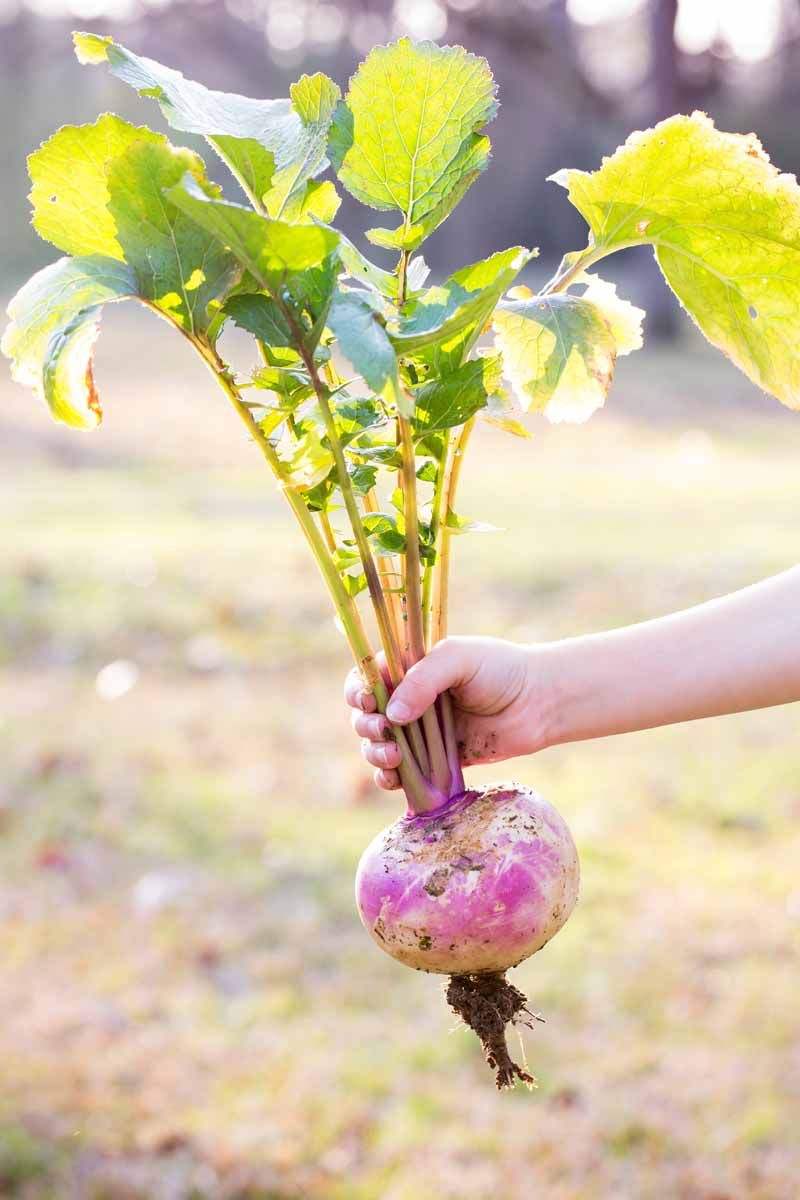
Turnip roots left in the ground past their prime tend to become tough, pithy, or strongly flavored. Harvesting while roots are still young and tender, commonly around 2 to 3 inches in diameter depending on the cultivar, gives you the best chance at mild, firm texture.
Virginia Cooperative Extension’s root crop guidance and Utah State’s turnip and rutabaga guide both support timely harvest as a key quality factor. Checking root size regularly in the final weeks of the season, rather than waiting for a calendar date, keeps you ahead of overmaturity.
For next season, run through the full checklist before planting. Get a soil test and set preplant fertility based on the results.
Plan one early sidedress timed to active growth, roughly when plants reach 3 to 5 inches tall or about four weeks after sowing, and skip any additional nitrogen if the crop already looks lush. Thin plants to appropriate spacing for your chosen variety, keep moisture steady in the root zone without saturating the soil, and time your planting so the roots mature during genuinely cool weather.
Oklahoma State’s vegetable soil test interpretation guide is a useful reference for matching nitrogen rates to a root-crop goal rather than a greens goal.
No single adjustment guarantees a perfect harvest, but working through the checklist systematically gives each factor a fair hearing. A crop that grows its best roots is almost always the result of several things going right at once, not one magic fix.